2001: Mona Fandey, witch doctor

On this date in 2001, former pop singer and shaman Mona Fandey was hanged with two accomplices at Kajang Prison outside Kuala Lumpur, closing the noose on one of the world’s weirdest and most sensational recent crimes.

Aging B-list pop crooner Maznah Ismail — “Mona Fandey” was her stage name — had transitioned to a gig as a high-rent spiritualist and healer, known locally as a bomoh.

In that capacity, she and hubby Mohd Affandi Abdul Rahman landed a politician with more money than sense. After collecting a bunch of cash from him, they got him to lie down with his eyes closed as part of a ritual that was supposed to make money fall from the skies. Instead, the couple’s assistant Juraimi Hussin chopped off his head, and Mona went on a shopping spree.

The effect of the grisly celebrity murder was heightened by Mona’s cheery demeanor throughout the trial and thereafter, as if a murderess’ notoriety was the pinnacle she never achieved as an entertainer.

She and her husband maintained an unsettling placidity about their demise to the very end. Some sources say she uttered the mysterious remark, “I will never die” just before her hanging. (Others have everyone silent.)

The end of the three killers was hardly the end of such a headline-grabbing case in the public memory. Her cell is becoming a protected “heritage site”, and her story has been treated on screens both small and silver.

On this day..

2007: Not Earl Wesley Berry … for the time being

Minutes before he was to die this day last year, the lethal injection of Mississippi murderer Earl Wesley Berry was stayed by the Supreme Court — the signal that it had imposed a de facto moratorium on executions while it considered the constitutionality of lethal injection.

Condemned to die for kidnapping and beating to death Mary Bounds in 1987, Berry was your basic unappealing death row case with no particular issue either substantive or technical likely to help him out in the courts.

Luckily for Berry, the fundamental issue of whether whether the lethal injection regime used in Mississippi and in most of the United States was cruel and unusual punishment had reached the high court at just time time.

Also luckily, the phone lines were open: Berry got his reprieve with about 15 or 20 minutes to spare.

Berry’s stay finally clarified a few weeks of uncertainty that prevailed after the Court took last year’s lethal injection challenge, Baze v. Rees.

Could executions still go forward while lethal injection was under review? Would the holdup be limited to Kentucky, where the appeal originated? Was there any manner of case-by-case flexibility?

Berry was the bellwether. The execution-friendly Fifth Circuit Court let Berry’s scheduled date go ahead, making the hapless killer “the last best chance for prosecutors to restart executions this year [2007].”

But Earl Wesley Berry’s luck was only about seven months long: he was executed on May 21, 2008, the second prisoner put to death after the moratorium expired upon the Court’s rejection of Baze.

On this day..

2007: Five young men

Last year on this date, according to a Deutsche Presse-Agentur report of the Syrian news service, five youths were publicly hanged in Aleppo, Syria.

Syria executed five youths by hanging in a public square on Thursday after they were convicted of murder and robbery, the Syrian news agency reported.

The hanging was carried out in Bab al-Faraj, a public square in the centre of the city of Aleppo, 350 kilometres north of Damascus, in the early hours on Thursday, according to the agency.


Bab al-Faraj square.

A military court had convicted the men, aged between 18 and 23, of premeditated murder for the purpose of committing robbery, according to the online news service, Syriano.

Syrian human rights groups have called for the abolition of military courts, which were installed under emergency law in 1963.

On this day..

2005: Wang Binyu, desperate migrant laborer

On this date in 2005, a Chinese murderer who became the unlikely symbol of migrant laborers’ desperate plight was — quickly and quietly — put to death.

Binyu knifed four people to death, which isn’t the typical stuff to earn a public outpouring. In the course of things, he’d ordinarily have gone to his grave in the anonymity that attends most Chinese executions, perhaps not even a number to international monitors who struggle to ballpark China’s executions to the nearest thousand.

But the government news service published a surprisingly sympathetic interview of him, raising the case up for public comment that state authorities surely did not intend.

Jobbed

Wang earned his sentence during an altercation that occurred as he tried to collect years of unpaid back wages from his employer. It was the last of several encounters of escalating desperation driven by Wang’s father’s need for expensive medical treatment. Wang’s boss kept refusing to settle with his man, ultimately barring him from the factory premises.

In a China shaken by industrialization — proletarianization — Wang’s plight struck a chord. (Although there may have been a mistaken sense that he killed the nasty boss; in fact, the victims were the foreman and other factory employees who’d been detailed to force him out.) China has 200 million migrant workers like Wang, collectively owed billions in unpaid wages they have scant prospect of recovering.

I want to die. When I am dead, nobody can exploit me anymore. Right?

Exploitation at an end, Wang Binyu became the subject of a Pulitzer Prize-winning profile* in the New York Times; some additional coverage is here. The briefly vigorous conversation about his case in China, however, was forcibly shut down.

* The Pulitzer was actually awarded to the Times’ Joseph Kahn and Jim Yardley for a series of articles on the Chinese justice system; the linked story on Wang Binyu is one of eight.

On this day..

2007: A factory manager in a packed stadium

Last year on this day, six people were reportedly trampled to death when a massive crowd stampeded after watching the execution of a 75-year-old factory manager in North Korea.

The man, who is not named in English-language sources I’ve perused, had fabricated his father’s past as a good Communist when in fact dad worked to suppress the reds. That con kept the family among North Korea’s privileged elite for years.

According to the South Korean nonprofit Good Friends, he faced a snap tribunal and immediate execution in Suncheon this day, in a stadium with 150,000-plus* onlookers, part of a campaign of stepped-up public executions that Good Friends says (.doc) has been driven by the insular country’s decade-long famine. (See another one — illicitly filmed graphic video included — here.)

And he wasn’t the only one to depart the premises in a body bag. The stampede is said to have occurred after the proceedings as spectators were leaving; the cause, if there was one, is sketchily described, although some news reports call it a “melee.” Thirty-four others were reportedly injuried in the crush.

* The figure 170,000 is also cited.

On this day..

2004: Mamoru Takuma, for the Osaka school massacre

On this date in 2004, Mamoru Takuma was hanged for one of the most notorious crimes in modern Japan — the Osaka school massacre.

On June 8, 2001 — a day the 11-time arrestee was due in court for assaulting a bellhop — Mamoru Takuma (English Wikipedia entry | Japanese) entered the Ikeda Elementary School in Osaka and knifed 20-plus people, killing eight young students.
Even when taking on 7- and 8-year-old children, that’s an astonishing body count for a guy packing only a blade. Some staff at the school finally tackled the guy.

“I want others to know the unreasonableness that high-achieving children could be killed at any time.”

Takuma had been institutionalized even more often than he had been arrested, so the shocking crime pitted public outrage against the judiciary’s capacity for handling mentally ill offenders.

Guess which won out. In the wake of the crime, in fact, the government toughened laws on crimes committed by mentally ill offenders.

Takuma was hanged barely three years after the attacks, and even though he pushed for his own execution, the lightning-fast completion of the sentence (most death penalty cases in Japan drag on for decades — here’s an extreme example) raised misgivings both domestic and international.

Though his case remains an outlier, those concerns already seem a bit passe: Takuma also turned out to presage the distinctly more aggressive pace of executions in Japan in recent years.

On this day..

2003: Paul Hill, anti-abortion martyr

Five years ago today, minister Paul Hill was put to death by lethal injection for murdering an abortion provider and a clinic escort nine years before.

Hill rose to prominence in the early 1990’s as a fire-eating abortion foe, who openly preached the righteousness of defending unborn life by force — a divisive position among anti-abortion activists that got him excommunicated from the Presbyterian church.

On July 29, 1994, in the abortion conflict’s ground-zero of Pensacola, Fla., Hill put his theology into action by gunning down Dr. John Britton and his septuagenarian escort, along with Britton’s wife (who survived the shooting).

Creepy. It sure looks like the song and image pairings were done in earnest, not in irony.

He never betrayed the least scruple about his act, hoping only to use his trial to present a “justifiable homicide” defense; the judge’s suppression of this line was and remains a grievance of Hill’s fellow-travelers against the judiciary.

Nor did Hill betray the least concern to die for his beliefs; if anything, in dropping appeals that would at the least have prolonged his life, he cut a figure thirsty for the martyrdom he attained this day.

To what end?

Hill left a plentiful documentary record — like this manifesto, among the pro-Hill documents collected on the Army of God website:

I knew that [killing an abortion provider] would uphold the truths of the gospel at the precise point of Satan’s current attack (the abortionist’s knife). While most Christians firmly profess the duty to defend born children with force (which is not yet being disputed by the government) most of these professors have neglected the duty to similarly defend the unborn. They are steady all along the battleline except at the point where the enemy has broken through. I was certain that if I took my stand at this point, others would join with me, and the Lord would eventually bring about a great victory.

One can question whether this proved to be the case or not. The infamy (in most circles) of the killing arguably dampened enthusiasm for the cause, at least as measured by the sulfur level on clinic sidewalks. At the same time, Hill’s was only the most spectacular instance of a campaign to terrorize abortion providers that drove many out of business and made some areas of the country virtual abortion-free zones.

Whatever may have surprised him about the way the issue played out over the 1990’s, he was serene about his choices when interviewed the day before his execution.

To some in the movement, he’s a holy martyr, the John Brown of slavery’s modern-day parallel.

And even if Paul Hill’s name is taboo in the respectable public discourse of abortion today, with four relatively young rock-ribbed anti-Roe v. Wade votes now entrenched at the Supreme Court, it’s far from obvious that Hill won’t get what he was after all along … even if he didn’t live to see it.

Part of the Themed Set: Judging Abortion.

On this day..

2004: Enzo Baldoni

On this day four years ago, an Islamic militants in Iraq executed* hostage Enzo Baldoni, an Italian freelance journalist and Red Cross volunteer.


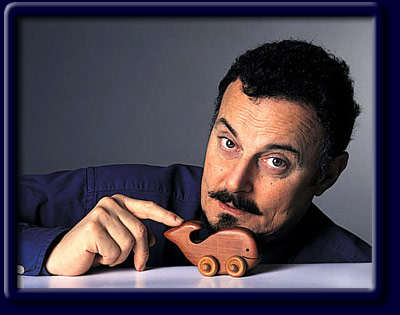
Baldoni had a variegated copyriting career, often working through his company Le Balene Colpiscono Ancora (“The Whales Strike Again”)

Baldoni (English Wikipedia page | Italian) made his writing chops with advertising copy, but also translated (notably the American comic strip Doonesbury, whose creator saluted him “Enzo the miraculous” in this FAQ) and segued into journalism. He was an early adopter of blogging and made a habit of traveling to the world’s hot spots; he had interviews with Subcomandante Marcos and Xanana Gusmao under his belt … but he was no scavenger of human misery.

Some people think I am some sort of a Rambo who loves strong emotions and seeing people die. I am miles away from that mentality. I am a convinced pacifist and for that reason I am curious to understand what make normal people brandish a gun.

Baldoni reported from Iraq for the Italian weekly Diario and kept a blog from the ground as well. On August 21, he was kidnapped after being caught in a firefight between Baghdad and Najaf.** Three days later, Al Jazeera aired his captors’ demand for Italian withdrawal within 48 hours; Baldoni was killed when that demand was ignored.

The day after Baldoni’s death, the black armband-clad Azzurri defeated the upstart Iraqi soccer team for the Olympic bronze medal.

The final legacies of Baldoni’s work well reflected his generous principles. The last entry on his blog Bloghdad (now defunct; here’s how it looked four years ago) was this picture:

And his (translated, obviously) “last testament” as released by a fellow journalist described a man who would not want this blog post to linger on mawkishly.

[At my funeral] I want people to smile — did you notice? Funerals always end up with someone smiling: it’s natural, it’s Life taking over Death. And let people smoke freely anything they like; I’d also be pleased if new love stories would come out, and I’d even consider some casual sex an offer to Life rather than an offense to Death.

At about eight or nine o’clock, with little or no ceremony, bring my coffin quietly to the crematorium, while the party and the music should last until late night.

About my ashes … throw them into the sea. Or do as you want, who fucking cares? Just nothing phony like in The Big Lebowski.

Ciao, Enzo.

* Obviously, this is a case of a borderline execution, owing to the Islamic Army in Iraq’s non-state credentials — in a legal sense, Enzo Baldoni was murdered. But it was precisely the point of his killing to contest legitimate state authority, and according to a later interview with an alleged spokesman of the faction, there was even a juridical proceeding “convicting” Baldoni of espionage.

** According to Reporters Without Borders, a stupefying 142 journalists — Baldoni among them — were killed in Iraq from 2004 through 2007, nearly half the worldwide total of 299 reporters who died in their line of work during that span.

On this day..

2007: Frank Duane Welch, a cold case CSI caught

One year ago today, justice was served better late than never, courtesy of the crime lab.

The 1987 rape and murder of Jo Talley Cooper, a pregnant 28-year-old Norman woman killed while her infant son lay unharmed in the next room, had stood unsolved for a decade.

Coincidentally — unluckily for Frank Duane Welch — forensic DNA testing was just coming online during that decade. A match in another case led the database to its culprit, in the Cooper murder and a similar crime around the same time.

Apart from the manner of his capture — and the incidental minor distinction of being the last person killed in Oklahoma’s busy death chamber before the 2007-2008 execution moratorium due to court challenges to lethal injection — Welch is an almost wholly unremarkable character, central casting for the modern American death row, a paragon of the banality undergirding appalling, life-shattering crimes.

The penpal site of the Canadian Coalition to Abolish the Death Penalty still preserves Welch’s c. 1999 appeal for correspondence:

My name is Frank Duane Welch, I am a 38 yr. old white male who is confined on Death Row within the Oklahoma Department of Corrections. I enjoy watching numerous sporting events, such as football, baseball, tennis and rodeo. Here on Death Row we have only two options of exercise, basketball or handball. I try and take advantage of both in order to stay in shape. Besides sports, I enjoy a good book, novels mostly. My tastes in music are first country and then some light rock, no heavy metal. My educational background consists of a bachelors degree in Animal Science. Now as for what I am looking for in a pen pal. I am looking for a friend, age not important. One who is willing to be straight forward with me, no games. For I will be straightforward with them. I need someone who is willing to help me both emotionally and financially. Someone who, when I am having a bad day, is willing to listen and give support. I am a proud man, but it is hard being alone in this place, no one to share your thoughts and feelings with. For this is the reason I have written this letter. If you are willing to accept me as I am and not hold my faults against me, I would love to hear from you.

According to the macabre* blog Dead Man Eating, Welch checked out with a belly full of pizza and a two-liter Coke, tritely last-wording:

There is nothing that can change the horrible thing I done. There is nothing that can change that. I take full responsibility for what I done. I am truly, truly sorry for all the hurt and pain I have caused you. I take full responsibility for what I’ve done. There’s no excuse for it. There never was. It was just me.

I love y’all. God bless y’all. I’m ready.

Maybe that’s as much closure as one can have in this world. That infant child who survived the horror had grown into a 20-year-old man who had never known his mother. Travis Cooper’s testimony at the clemency board hearing helped seal Welch’s fate.

It would be different if my mother would have died of natural causes. It would be different if it was God’s will, but the truth is that an evil man named Frank Welch took her life … And the unspeakable things he did to her, my mother, is what fills me with anger, the pain, and the loneliness that I feel to this day.

“None of this will ever bring my mom back,” Cooper told reporters after the execution. “I miss my mom.”

* Pot. Kettle. Black.

On this day..

2006: Mohamed Amin Mohamed Razali, mystical Malaysian militant

Two years ago today, the strange leader of a mystical Islamic fight club was hanged at Malaysia’s Sungai Buloh prison for waging war on the king.

Caption Contest?: The Headsman could be mistaken, but based on an altogether amateur comparison to the Razali shot on this BBC story, I believe that’s him in the white. Photo from the sect website.

The heretofore obscure Al Ma’unah — just a couple dozen guys — had descended on an army camp in July 2000 and made off with a handsome cache of weapons and a few hostages, apparently the opening gambit in a bid to launch an Islamic fundamentalist revolution in Malaysia.

What actually happened was the army hunted them down and engulfed them a couple of days later.

You’d never know the ambitious designs of this clique from its web site (still online as of this writing), whose English “about us” page rings harmlessly loopy (all grammatical manglings [sic]):

Al-Ma’unah … is a Non-Govermental Organisation (NGO) … involved in the teaching of martial arts particularly the development of one’s inner power and the practice of Islamic traditional medicine.

Literary, the term “Ma’unah” is an Arabic word which means, something extraordinary that happens to an ordinary Muslim individual, for example extra sensory perception or the ability to see “things” in another dimension (paranormal).

“Al-Ma’unah Inner Power” can be defined as “something extraordinary bestowed to a righteous Muslim (in the form of assistance from Allah) in accordance with specific adherence to tradition and proper sequence emphasising on the Islamic principles and Allah’s commandments as stipulated in the holy Quran”.

In teaching the martial art and traditional medicine, the brotherhood placed more emphasis on spiritual development and enlightenment of its members or “ikhwan” as it is known in Al-Maunah, in order to achieve the highest level of proficiency in the art and to attain great healing powers.

… although a section entitled “The Usage of the Inner Power” suggests the training achieves the sorts of useful martial superpowers more commonly found on a Dungeons & Dragons treasure table:

Among the benefit of Al-Ma’unah Inner Power can be listed as follows:

o For health and vitality, both physically and spiritually.
o Making an enemy/attacker to freeze on the spot and to be hurled sprawling backwards without being touch.
o Invincible from sharp objects, weapons, boiling water, fire etc.
o To transfer temporarily the inner energy to another object.
o Able to attain healing powers.
o Able to tie enemies without using rope.
o Able to hypnotise a violent aggressor to sleep or forget his intention.
o Able to pull back a fleeing snatch thief or robber from great distance (without physical body contact).
o Able to make attackers to drop to their knees or fall down with the blink of an eye.
o For marital bliss.
o Able to increase influence over others.

Too bad it didn’t protect against hemp.

Most of the 19 who survived the manhunt and went on trial eagerly cut deals, groveled (“Please don’t send us to the gallows!” one said during the hearing), and pointed the finger at the former army private. Razali didn’t say boo at trial and died stoically at about 6 a.m. this morning.

Although there were 359 executions in Malaysia from 1970 to 2001, the practice has dropped into disuse in this decade; Razali appears to be the last person executed in Malaysia as of this post’s publication. Amnesty International has suggested that Malaysia’s zero figure might conceal some secret (presumably extrajudicial) executions. While the government angrily denied that suggestion, the death penalty has come under growing scrutiny in Malaysia.

On this day..