On this date in 1941, Finnish pacifist Arndt Pekurinen was executed at the front for refusing to fight.
Initially conscripted in the 1920’s, Pekurinen had refused to serve under arms and spent 1929-31 in prison for his troubles. He was a minor cause celebre; British MPs and big international names like Einstein and H.G. Wells pressed for his release.
A change in the Finnish conscription law — the bill was called the “Lex Pekurinen” — finally saw him freed to civilian life, but he was drafted anew to fight the Soviet Union in the “Continuation War”. When he again refused, he was shot at Suomussalmi without trial — though two men refused to do it before someone finally agreed to be the executioner.
“Kun ihmisiä ei syödä, on niitä turha teurastaa.” (“As people are not eaten, butchering them is of no use.”)
A neglected figure during the Cold War, he’s enjoyed a latter-day rediscovery since the 1998 Erno Paasilinna book Courage: The life and execution of Arndt Pekurinen. In the decade since, Pekurinen has become a household name and a widely-admired figure. (The link is in Finnish.) A park in Helsinki was recently named for him. (Finnish again.)
Tangentially, the Nordic stock of our day’s victim and his era of militarism call to mind the hero of e.e. cummings’ “i sing of Olaf glad and big”. The allusions of this poem are American, and there’s no reason to associate it directly with Pekurinen — but it so happens that it was published in 1931, the year international pressure forced the end of Pekunin’s first prison stint:
i sing of Olaf glad and big
whose warmest heart recoiled at war:
a conscientious object-or
his wellbelovéd colonel(trig
westpointer most succinctly bred)
took erring Olaf soon in hand;
but–though an host of overjoyed
noncoms(first knocking on the head
him)do through icy waters roll
that helplessness which others stroke
with brushes recently employed
anent this muddy toiletbowl,
while kindred intellects evoke
allegiance per blunt instruments–
Olaf(being to all intents
a corpse and wanting any rag
upon what God unto him gave)
responds,without getting annoyed
“I will not kiss your fucking flag”
straightway the silver bird looked grave
(departing hurriedly to shave)
but–though all kinds of officers
(a yearning nation’s blueeyed pride)
their passive prey did kick and curse
until for wear their clarion
voices and boots were much the worse,
and egged the firstclassprivates on
his rectum wickedly to tease
by means of skilfully applied
bayonets roasted hot with heat–
Olaf(upon what were once knees)
does almost ceaselessly repeat
“there is some shit I will not eat”
our president,being of which
assertions duly notified
threw the yellowsonofabitch
into a dungeon,where he died
Christ(of His mercy infinite)
i pray to see;and Olaf,too
preponderatingly because
unless statistics lie he was
more brave than me:more blond than you.
Fully engaged with the liberal intellectual currents of the Enlightenment, de Gouges spent the 1770’s and 1780’s in Parisian salon circles cranking out plays (over 40) and petitions, pamphlets and manifestos on animal welfare, poverty, the treatment of orphans, and ending slavery.
The latter issue, and not women’s rights, was the cause her contemporaries would have most associated with her.
But the natural-born gadfly didn’t pick her battles with injustice, and the Terror was a bad period to be indiscriminate. Like some of her Girondist associates, she risked the Paris mob’s wrath by openly opposing Louis XVI‘s execution — right in character, Olympe was down on the whole idea of the death penalty — and she carried principle into foolhardiness by printing broadsides savaging Robespierre.
There can be no mistaking the perfidious intentions of this criminal woman, and her hidden motives … calumniating and spewing out bile in large doses against the warmest friends of the people, their most intrepid defender.
Olympe de Gouges, born with an exalted imagination, mistook her delirium for an inspiration of nature. She wanted to be a man of state. She took up the projects of the perfidious people who want to divide France. It seems the law has punished this conspirator for having forgotten the virtues that belong to her sex.
And strange to say, that condescension outlived Robespierre by centuries.
Only recently, as mainstream thought has (sort of) caught up with de Gouges, has the scope of her work (French link) attracted renewed appreciation, and Olympe been acknowledged an Olympian herself.
* Article 10: “Woman has the right to mount the scaffold; she must equally have the right to mount the rostrum.” The work was dedicated to Marie Antoinette.
On this date in 1822, four sergeants from La Rochelle were guillotined at the Place de Greve with “Vive la liberte! on their lips for plotting to overthrow the restored Bourbon monarchy.
And in a right-wing reaction following a royal assassination, Louis found himself in the anomalous position of having a government more monarchist than he himself. Though not renowned for his sagacity, the sovereign had the wit to see that completely reversing the Revolution was a nonstarter. His ultra-royalist deputies, however, wanted nothing less than the full restoration of an absolute monarchy.
The Chief Minister [Villele] had the merit of keeping constantly in mind the fact that his friends owed their power to the forces of reaction and alarm, aroused in the country by the dagger of an assassin who had mortally wounded a member of the royal family. To keep this fear awake, in order to establish his authority, was his first care. In this he succeeded. The Liberals, finding themselves compelled to prudence, organized themselves into secret societies; and the Republcians, imitating the Neapolitans, actually formed in 1821 the Charbonnerie francaise, which avowedly aimed at giving back “to the French nation the free exercise of the right to choose its sovereign.” In order to give battle to the ancien regime and its Bourbon protectors, they recruited their soldiers and captains without hesitation from among the officers, commissioned and non-commissioned, of the old Imperial army. Villele showed particular skill in the discovery, exaggeration, and signal punishment of these conspiracies … With a magistracy obedient to its orders, the Ministry devoted itself assiduously to representing isolated movements no sooner known than crushed, as forming part of a permanent conspiracy organized by the Liberals, not only against the monarchy, but against society itself.
Les quatre sergents de La Rochelle — by the names of Bories, Goubin, Pommier and Raoulx — comprised perhaps the most egregious such case.
Driven underground (the link is French) like the rest of the Liberal opposition, they had joined the charbonnerie, a loose network modeled on Naples’ carbonari. (Lower-level officers were prime recruits for the dissidents, since their career prospects were truncated by aristocratic privilege in the upper brass.)
It was never clear that their subversiveness extended to anything beyond their affiliation with a criminalized ideology, and they kept their own peace to protect other associates in the charbonnerie. Guillotining them on this basis conformed neatly to the principles of, say, an Ann Coulter: “We need to execute [these] people … in order to physically intimidate liberals, by making them realize that they can be killed, too. Otherwise, they will turn out to be outright traitors.”
Back to The Cambridge Modern History:
It seemed that the Ministers were eager to multiply these trials and executions. Since certain deputies of the Liberal Opposition, Lafayette* among others, and D’Argenson, had openly associated themselves with these enterprises, which otherwise were devoid of danger, this supplied a fair pretext for exhibiting them publicly as criminals. The indictment with the King’s Procurator, Marchangy, formulated, in order to obtain the condemnation of the four sergeants of La Rochelle, left no doubt as to the intentions of the Government. Its chief aim was to terrorise the French people “by this vast conspiracy against social order, against the families of citizens, which threatened to plunge them once more into all the horrors of anarchy.” While keeping up the appearance of saving society, Villele gained forthwith the power to govern it in accordance with the wishes of his friends. The threat of anarchy, exploited by the judges in his service, allowed him to organise a despotism.
The public execution reportedly had its onlookers appalled, (more French) and as word of the young men’s heroic deaths got around, they elbowed into the vast host of (somebody’s) martyrs. (In Balzac’s Human Comedy, the courtesan Aquilina is said to have been involved with one of the four sergeants; in her appearances after the executions, she always commemorates him by wearing something red.) The Lantern Tower in their garrison’s city — depicted below in a 1927 Paul Signac painting — was renamed in their honor, Tour de Quatre Sergents.
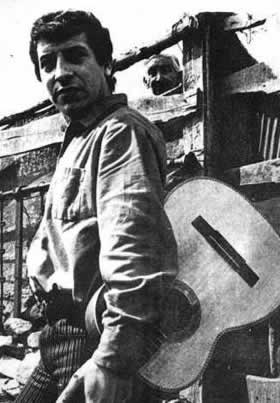
At an unknown time on this evening in 1973, or else the early hours of the following day, Chilean putschists ushering in the Pinochet dictatorship machine-gunned folk singer Victor Jara near the Santiago stadium that today bears his name.
“I don’t see why we need to stand idly by and let a country go communist due to the irresponsibility of its own people,” said Henry Kissinger of Allende’s election. Victor Jara had another idea.
Four days before, Chile’s September 11 had seen General Augusto Pinochettopple the elected leftist government of Salvador Allende, murdering the president in his palace. (Or, go some accounts, Allende committed suicide — “pausing only twice to reload.”)
A long pall of evil settled over the country, with all the accustomed chilling familiars: “disappeared” people, mirrored shades, Jeane Kirkpatrick.
The day after the CIA-backed coup, popular folk singer and activist Victor Jara, a pioneer of the Nueva Cancion (“New Song” movement) then teaching at Santiago’s Technical University, was among thousands of undesirables rounded up and packed off to a makeshift prison camp at the city’s Chile Stadium — a stadium Jara had performed at.*
Left there to the tender mercies of a thuggish Chilean officer, Jara was beaten and tortured over the intervening days — evocative but possibly undependable tradition holds that the guitarist’s hands were cut off, shattered or otherwise destroyed. According to the U.S.-based United States Institute of Peace,
[t]he the last day Víctor Jara was seen alive was September 15. During the afternoon he was taken out of a line of prisoners who were being transferred to the National Stadium. In the early morning of the next day, September 16, shantytown dwellers found his body, along with five others, including that of Littré Quiroga Carvajal, near the Metropolitan Cemetery. As the autopsy report states, Víctor Jara died as a result of multiple bullet wounds (44 entry wounds and 32 exit wounds).
The Commission came to the conviction that he was executed without due process of law by government agents, and hence in violation of his fundamental human rights.
To say the least.
And as the text implies, Jara was only the most recognizable name among unknown hundreds killed as the military cemented its control of the country.
Jara remains larger-than-life martyr figure in Latin America and liberation movements worldwide, but he’s almost unknown north of the Rio Grande. Pinochet was our bastard; in the weird way history writes its own geography, Jara became a political emblem behind the Iron Curtain for the perfidy of the capitalist powers: obscure in Peoria, but a household name in Potsdam, as the credit roll from this 1978 East German film suggests.**
That’s Jara himself on the soundtrack, of course. The pat conclusion for such a figure is that his art is his legacy, and that Jara’s body of work as against Pinochet’s will be a walkover in posterity. Is that enough? Pinochet died in his bed at age 91; earlier this year, the Jara case was closed in underwhelming fashion. Thirty-five years down the road, most authors of Pinochet’s human rights depredations are dead or lost or decrepit. Justice delayed is justice denied.
Victor’s widow, Joan Jara — today director of the Fundacion Victor Jara (it’s a Spanish-only site); you can hear her interviewed on Democracy Now! for the 25th anniversary of her husband’s death in 1998 — managed to leave the country with some of his works.
Her publication of a poem he wrote while imprisoned, an untitled, unfinished work generally known as “Estadio Chile,” made it a signature cry of hope amid desperation. Here it is in the Spanish rough-hewn under the shadow of death; there’s an English translation here.
Somos cinco mil
en esta pequena parte de la ciudad.
Somos cinco mil
¿Cuantos seremos en total
en las ciudades de todo el pais?
Solo aqui, diez mil manos que sembran
y hacen andar las fabricas.
¡Cuanta humanidad
con hambre, frio, panico, dolor
presion moral, terror y locura!
…¡Y Mexico, Cuba y el mundo?
¡Que gritan esta ignomonia!
Somos diez mil manos menos
que no producen.
¿Cuanto somos en toda la Patria?
La sangre del companero Presidente
golpea mas fuerte que bombas y metrallas.
Asi golpeara nuestro puno nuevamente.
¡Canto que mal me sales
cuando tengo que cantar espanto!
Espanto como el que vivo
como el que muero, espanto.
De verme entre tanto y tantos
momentos de infinito
en que el silencio y el grito
son las metas de este canto.
Lo que veo nunca vi,
lo que he sentido y lo que siento
hara brotar el momento…
Whether or not it’s enough, his work is his legacy after all.
* Some 7,000 people were held at Chile Stadium in the days after the coup, most later moved in with other detainees at the larger Estadio Nacional. The USIP excerpt alludes to Jara being pulled out for execution during such a move.
** In a similar vein, Stanford has a small online exhibit of Jara-themed East German propaganda art. Not to be outdone, there’s a Soviet rock opera about Jara, and an asteroid discovered by a Soviet astronomer was named in Jara’s honor within a week of his execution.
As dark fell on the evening of September 7, 1943, a mass execution of 186 death row prisoners — including six with unresolved clemency appeals — began at Berlin’s bomb-damaged Plotzensee Prison, continuing by candlelight until the following morning.
An Allied air raid the night of September 3-4 had struck the facility, allowing four prisoners to escape and damaging the guillotine and execution shed where sentences were normally carried out. Coincidentally, that had come hours after Hitler had (as was his wont, in common with many a politician to the present day) castigated the judiciary for the dilatory rigmarole that allowed the condemned to delay their fate with legal appeals.
That is the last thing we need, that after the air raids a few hundred condemned to death would be let loose on the population in the Reich capital. -Goebbels
Protestant pastor Harold Poelchau described (pdf) what he witnessed.
As darkness fell on September 7 the mass murders began. The night was cold. Every now and then the darkness was lit up by exploding bombs. The beams of the searchlights danced across the sky. The men were assembled in several columns one behind the other. They stood there, at first uncertain about what was going to happen to them. Then they realized. Eight men at a time were called by name and led away. Those remaining hardly moved at all. Only an occasional whisper with my Catholic colleague and myself … Once the executioners interrupted their work because bombs thundered down nearby. The five rows of eight men already lined up had to be confined to their cells again for a while. Then the murdering continued. All these men were hanged. … The executions had to be carried out by candlelight because the electric light had failed. It was only in the early morning at about eight o’clock that the exhausted executioners paused in their work, only to continue with renewed strength in the evening.
And as Poelchau intimates, the fearful harvest of September 7-8 was not the end of the massacre. Dozens more followed over the ensuing days, for a total of more than 250 executions at Plotzensee September 7-12.
Notable among the victims was 27-year-old German-Dutch concert pianist Karlrobert Kreiten, memorialized at this German page. He’d been a little too loose with his distaste for Hitler and been arrested on the eve of a concert a few months before.
Five years ago today, minister Paul Hill was put to death by lethal injection for murdering an abortion provider and a clinic escort nine years before.
Hill rose to prominence in the early 1990’s as a fire-eating abortion foe, who openly preached the righteousness of defending unborn life by force — a divisive position among anti-abortion activists that got him excommunicated from the Presbyterian church.
On July 29, 1994, in the abortion conflict’s ground-zero of Pensacola, Fla., Hill put his theology into action by gunning down Dr. John Britton and his septuagenarian escort, along with Britton’s wife (who survived the shooting).
Creepy. It sure looks like the song and image pairings were done in earnest, not in irony.
He never betrayed the least scruple about his act, hoping only to use his trial to present a “justifiable homicide” defense; the judge’s suppression of this line was and remains a grievance of Hill’s fellow-travelers against the judiciary.
Nor did Hill betray the least concern to die for his beliefs; if anything, in dropping appeals that would at the least have prolonged his life, he cut a figure thirsty for the martyrdom he attained this day.
I knew that [killing an abortion provider] would uphold the truths of the gospel at the precise point of Satan’s current attack (the abortionist’s knife). While most Christians firmly profess the duty to defend born children with force (which is not yet being disputed by the government) most of these professors have neglected the duty to similarly defend the unborn. They are steady all along the battleline except at the point where the enemy has broken through. I was certain that if I took my stand at this point, others would join with me, and the Lord would eventually bring about a great victory.
One can question whether this proved to be the case or not. The infamy (in most circles) of the killing arguably dampened enthusiasm for the cause, at least as measured by the sulfur level on clinic sidewalks. At the same time, Hill’s was only the most spectacular instance of a campaign to terrorize abortion providers that drove many out of business and made some areas of the country virtual abortion-free zones.
Whatever may have surprised him about the way the issue played out over the 1990’s, he was serene about his choices when interviewed the day before his execution.
And even if Paul Hill’s name is taboo in the respectable public discourse of abortion today, with four relatively young rock-ribbed anti-Roe v. Wade votes now entrenched at the Supreme Court, it’s far from obvious that Hill won’t get what he was after all along … even if he didn’t live to see it.
On this date in 1966, author and intellectual Sayyid Qutb was hanged for plotting to overthrow the Egyptian state.
Qutb — whose names can be transliterated many ways (Saïd, Syed, Seyyid, Sayid, or Sayed; Koteb, Kotb, Qutub or Kutb) — was one of the most influential Islamist thinkers of the 20th century, and helped shape the ideas of Osama bin Laden.
A traditionally-minded Muslim civil servant in a westernizing Egypt, Qutb’s journey to radicalism is traditionally dated to his late 1940’s study abroad in the U.S. at what is now the University of Northern Colorado, where the decadence, materialism, and lax morality of the global hegemon saw him seeing existential evil in the everyday all around him:
The American girl is well acquainted with her body’s seductive capacity. She knows it lies in the face, and in expressive eyes, and thirsty lips. She knows seductiveness lies in the round breasts, the full buttocks, and in the shapely thighs, sleek legs — and she shows all this and does not hide it.
Qutb left Greeley, Colo., in 1950 with a master’s degree and an intention to mount an Islamic revolution in his home country that would implement sharia and keep shapely thighs safely under wraps. (Qutb never married, bemoaning the scanty pickings of pure fish in the sea. He may have faced the gallows a virgin.)
He hooked up with the outlawed Muslim Brotherhood, landed in Egypt’s famously savage prisons (future president Anwar Sadat was one of his judges), and the experience of torture hardened his commitment to a vanguard-led revolution. He kept up his prolific writing output, penning perhaps his most notable work, Milestones (the text was later used against him at his capital trial).
Qutb’s release in 1964 was only for a few months, before Egyptian security got wind of a new Muslim Brotherhood plot to overthrow the government and rounded up Qutb as the supposed ringleader — or just railroaded him because it didn’t like where he was going with passages like
there are many practical obstacles in establishing God’s rule on earth, such as the power of the state, the social system and traditions and, in general, the whole human environment. Islam uses force only to remove these obstacles so that there may not remain any wall between Islam and individual human beings.
With the benefit of hindsight, one can readily imagine that his martyr’s death did not squelch his movement, but greatened his stature to admiring eyes.
But it was hardly a direct path into an un-critiqued hall of martyrs in an undifferentiated “radical Islam”. While Qutb had his own influence in Egypt, Cairo has managed to keep the lid on the Muslim Brotherhood. Qutbism, however, was exported to Saudi Arabia — which intentionally imported it for various practical and geopolitical reasons — where it flourished, often in a fractious relationship with official Saudi Wahhabism.
One of Qutb’s students was the uncle of Ayman al-Zawahiri, and the hanged intellectual greatly influenced Zawahiri’s own path into radicalism and to al-Qaeda. Since September 11, of course, the path Qutb himself followed has become of much more pressing interest to the West as well as within the Muslim world.
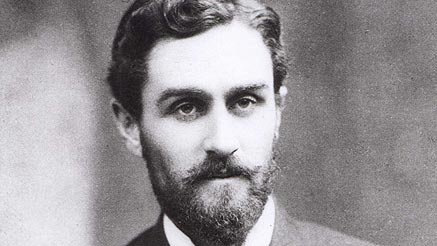
On this date in 1916, Roger Casement was hanged for treason by the British crown that had knighted him only a few years before.
Casement died for his part in the Easter Rising, but this Irish nationalist hero’s layered story has long made him a very different sort of cultural marker than, say, James Connolly.
Casement came to public prominence for his damning report on Belgium’s atrocious treatment of natives in its Congo colony, e.g.:
[T]he great decrease in population, the dirty and ill-kept towns, and the complete absence of goats, sheep, or fowls — once very plentiful in this country — were to be attributed above all else to the continued effort made during many years to compel the natives to work india-rubber. Large bodies of native troops had formerly been quartered in the district, and the punitive measures undertaken to his end had endured for a considerable period. During the course of these operations there had been much loss of life, accompanied, I fear, by a somewhat general mutilation of the dead, as proof that the soldiers had done their duty.
. . . Two cases (of mutilation) came to my actual notice while I was in the lake district. One, a young man, both of whose hands had been beaten off with the butt ends of rifles against a tree; the other a young lad of 11 or 12 years of age, whose right hand was cut off at the wrist. . . . I both these cases the Government soldiers had been accompanied by white officers whose names were given to me. Of six natives (one a girl, three little boys, one youth, and one old woman) who had been mutilated in this way during the rubber regime, all except one were dead at the date of my visit.
[A sentry in the employ of one of the concessionary private companies] said he had caught and was detaining as prisoners (eleven women) to compel their husbands to bring in the right amount of rubber required of them on the next market day. . . . When I asked what would become of these women if their husbands failed to bring in the right quantity of rubber . . , he said at once that then they would be kept there until their husbands had redeemed them.
Casement’s is an honorable name in the campaign for the Congo, an early human rights and anti-colonial struggle; in this 92-minute BBC documentary on the notorious depredations in the Congo, the Casement report’s creation and impact are treated from about 1:15:15 through the end:
A similar investigation undertaken in Peru — where the lens focused on British employers, rather than strictly the malfeasance of foreign states — earned him knighthood in 1911, but Casement’s personal evolution from loyal Protestant* imperial operative with a sympathy for the Irish cause to revolutionary nationalist was already underway. “This journey into the depths of the Congo has been useful in helping me discover my own country and understand her situation, her destiny, her reality,” he wrote his sister. “I’ve also found my true self: the incorrigible Irishman.”
He resigned from the consular service and began recruiting for the Irish Volunteers.
As World War I opened, Casement identified British aggression as its cause, an extension of the violent imperial hegemony he chronicled in The Crime Against Europe:
The British Empire was not founded in peace; how, then can it be kept by peace, or ensured by peace-treaties? It was born of pillage and blood-shed, and has been maintained by both; and it cannot now be secured by a common language any more than a common Bible. The lands called the British Empire belong to many races, and it is only by the sword and not by the Book of Peace or any pact of peace that those races can be kept from the ownership of their own countries.
While any Irish Republican would have agreed with that sentiment, the resulting moral and tactical calculus for the Irish cause to ally with the German was not universally embraced — and was certainly anathema to the British.
All that was beautiful and just,
All that was pure and sad
Went in one little, moving plot of dust
The world called bad.
Came like a highwayman, and went,
One who was bold and gay,
Left when his lightly loving mood was spent
Thy heart to pay.
By-word of little street and men,
Narrower theirs the shame,
Tread thou the lava loving leaves, and then
Turn whence it came.
Ætna, all wonderful, whose heart
Glows as thine throbbing glows,
Almond and citron bloom quivering at start,
Ends in pure snows.
Casement spent the first two years of the Great War in Germany itself, and arranged a shipment of guns that would have supported the Easter Rising, but thought the aid too little and too late. He had a German U-boat drop him at Ireland, trying to get word to the Republican leadership to postpone the revolt.** Instead, he was picked up three days before the doomed rising and hanged after a sensational trial.†
His “treason” — and of course, the very crime of which he was convicted imports a British legitimacy in Ireland that Casement explicitly rejected — shocked many old associates, but he still had friends in high places. To dampen the international clemency campaign, England circulated the notorious “Black Diaries,” photographs of supposed Casement diary pages detailing the author’s homosexuality.
This dirty (and successful) trick brings a personal-is-political quality to Casement’s legacy as well as an enduring debate over the diaries’ authenticity. Since Irish nationalism gained mainstream acceptance well before homosexuality, right-thinking folk long held the Black Diaries a forgery, and time was you solicited a black eye by saying otherwise in the wrong company.
The gay rights movement has seen a posthumous redefinition of Casement; although homosexuality was not on the indictment against him, one could argue that it was the reason he hanged. Given recent handwriting forensics that support the diaries’ authenticity, the general‡ consensus about the Black Diaries has inverted with the effect of only heightening sympathy for their alleged author, albeit at the expense of some tension over how to situate that characteristic within the whole of Casement’s life and thought.
And that is only one aspect of the shifting place of Casement in the firmament of Republican martyrs since his death. His hagiography waxed in the interwar years, with Yeats among those calling for the return of Casement’s remains in The Ghost of Roger Casement”.
But the humanitarian’s German ties were an inconvenience as World War II raged, and not until afterward was that cause renewed. When his body was finally returned in 1965, an Irish state funeral elided the matter of the diaries.
Even Casement himself, who would be the last to die for the Easter Rising, had a hand in the myth-making. His last mission’s purpose to avert the Easter Rising fit neither the government’s interest in maximizing his perfidy nor Casement’s own in identifying with the Irish cause; he himself therefore owned the Rising fully in his defense which made him fine fodder for Republican hymns like “Lonely Banna Strand”:
RTE radio’s What If? series recently explored Casement’s complex legacy:
As Casement put it in his voluminous personal writing, “It is a cruel thing to die with all men misunderstanding — misapprehending — and to be silent forever.”
* Casement’s father was Protestant and his mother was Catholic; he lived with a somewhat split identity between the two faiths, but formally converted to Catholicism while awaiting execution (which surely did not hurt his memory to the Irish cause) and his last meal was simply the Host.
** The guns themselves were interdicted by the British navy and ended up scuttled to the ocean floor.
† Since Casement’s incitements to rebellion had occurred on foreign soil, there was some fine legal parsing over whether he could be tried for “treason.” The dispute resolved to the placement of a comma in a medieval law — leading to the epigram/-taph that Casement was “hanged by a comma.” In the midst of war and before an English jury, however, punctuation was an even weaker defense than it sounds.
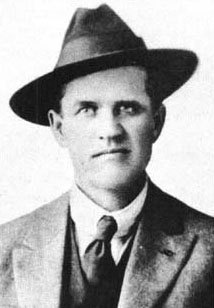
On this date in 1917, Wobbly labor organizer Frank Little was abducted from his hotel and hanged from a railroad trestle in Butte, Montana.
An executive board member of the radical Industrial Workers of the World, the half-Cherokee Little had only rolled into Montana’s copper mining hub two weeks before. A roving agitator who had organized workers all around the west, he would be a signal martyr to America’s nascent Red Scare.
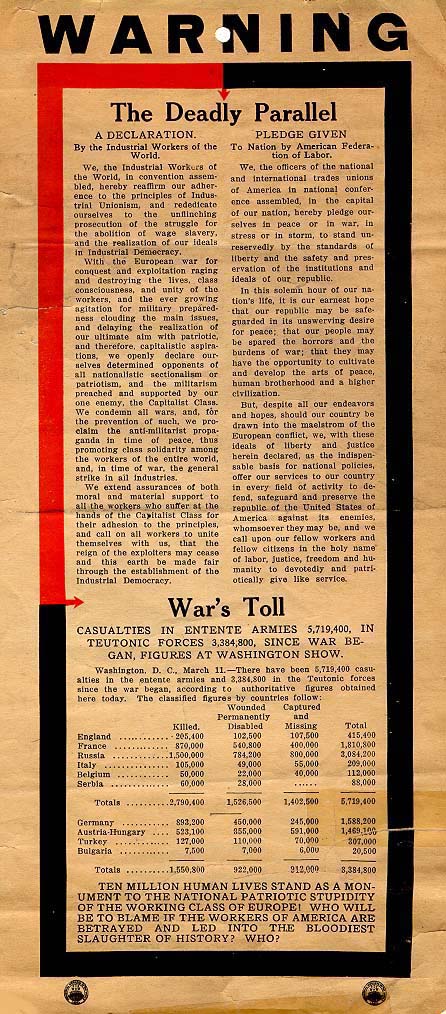
It was a fraught moment nationwide, and worldwide. After winning re-election on the slogan “He kept us out of war,” Woodrow Wilson upon his inauguration immediately (try to act surprised) got the United States into World War I. Just as it had in Europe, the question of war put American labor to the test: would it transfer opposition to war into resistance, or would it line up patriotically with its state?
This outstanding IWW poster (via the University of Arizona’s web exhibit on the labor deportations that had expelled Frank Little from Arizona just days before he arrived in Butte) pits the militant Wobbly position against the nationalist American Federation of Labor.*
And Little was one of the most stridently anti-war in his movement.
Either we’re for their capitalist slaughter fest or against it. I’m ready to face a firing squad** rather than compromise. (Source)
Anaconda Copper could nowise welcome this character’s arrival, where he would organize already-striking miners and mix in militant anti-war rhetoric with incendiary potential in the cocktail of immigrant workers being asked (in many cases) to wage war on their homelands.
The local labor conflict, an exceptionally brutal instance of a pattern across the country and especially in western mining country, was probably savage enough on its own to make Little a marked man. Whether his anti-war activity or his union activity motivated his death is not sure, but the dilemma was probably a false one for his killers just as it was for Little himself: they were two heads of the coin. As American troops poured into Europe, and particularly as the Bolshevik Revolution later in 1917 spurred a worldwide Communist scare (and a separate American military expedition), both public and private power violently pursued left-wing elements.
Caption: Copper Trust to the Press: “It’s all right, pal; just tell them he was a traitor.” (Source.)
The film An Injury To One (review) deftly weaves those themes and others together into the tale of a crime which is also the tale of a time and place:
This note was found pinned to Little’s body. “3-7-77”, a Montana vigilante calling card, indicates the dimensions of a grave.
Officially (again, act surprised), it’s an unsolved crime. Even though the New York Timesreport the day after the hanging quoted a labor official claiming “certain” knowledge of five of the six men in the posse, and a prosecutor vowing, “it is a cold-blooded murder and every effort will be used to apprehend the men who did it,” nobody ever went on trial for lynching Little.
Company goons, likely aided by the infamous union-busting Pinkerton detective agency, are the presumed culprits. And it is the nature of lynchings to make extrajudicial the rough justice sought by a certain constituency, as expressed by Montana’s Helena Independent:
Good work! Let them continue to hang every I.W.W. in the state. The time has come. It is beyond the comprehension of the average citizen why the war department has not ordered certain leaders arrested and shot. The people will not stand for much more.
A massive funeral turnout brought federal troops to quash labor unrest in Butte … and in the years to come, the IWW would be hunted from pillar to post.
Pro-Wobbly sites give adoring biographical treatment and fairly extensive resource lists on Little here and here.
In the intervening years, relations between the Low Countries and the Spanish crown that ruled them had deteriorated into outright revolt — the germ of the decades-long struggle that would result in Dutch independence.
Haarlem had initially tried to keep its head down in the conflict, but had declared against Spain in 1572. That brought it into the sights of a vengeful Spanish army that greatly outnumbered Haarlem’s 4,000 defenders. Spurning any talk of compromise or capitulation, city governor Ripperda rallied his garrison and held out against the Spanish siege throughout the winter and spring.
In the end, starvation did the work that engines of war could not. Haarlem fell on July 12, 1573.*
Ripperda was beheaded with a lieutenant a few days later, but in winning the battle, Spain had suffered a setback in the war: besides the seven-month delay, other Calvinist strongholds took heart from the effective resistance and got a lot less cowed by the royal army.
While this day’s martyrdom made “Ripperda” a fixture in Haarlem place names, and despite a somewhat illustrious family tree that also includes a signatory of the Peace of Munster and a fascinatingly disreputable 18th century politician, actual Ripperdas are apparently hard to find in present-day Holland. According to American Tom Ripperda, who runs the family site ripperda.org, the name lives on only in the U.S. and Germany.
“In the 1830s the last of the Dutch Ripperdas died,” Ripperda told me. “There are no Ripperdas in the Netherlands since they moved to Germany (about 200 or so) and on to America (about 600 or so).”
* As to the vengeful mass executions visited on Haarlem, John Lothrop Motley conveys this anecdote.
Instead of Peter Hasselaer, a young officer who had displayed remarkable bravery throughout the siege, the Spaniards by mistake arrested his cousin Nicholas. The prisoner was suffering himself to be led away to the inevitable scaffold without remonstrance, when Peter Hasselaer pushed his way violently through the ranks of the captors. “If you want Ensign Hasselaer, I am the man. Let this innocent person depart,” he cried. Before the sun set his head had fallen.

 Initially conscripted in the 1920’s, Pekurinen had refused to serve under arms and spent 1929-31 in prison for his troubles. He was a minor cause celebre; British MPs and big international names like Einstein and H.G. Wells pressed for his release.
 Most recognizable today for her
  In the

 An executive board member of the radical Industrial Workers of the World, the half-Cherokee