Alimohammadi, a Tehran University physics professor, was slain in January 2010 by a booby-trapped motorcycle parked next to his car just as he left for work in the morning.
Whether that’s specifically true in Alimohammadi’s case is arguably a bit harder to judge, since he was not directly involved in Iran’s nuclear program. Iran’s western opponents have speculated that Tehran itself murdered him because he was a (low-key) supporter of the country’s opposition who in death could serve as an official martyr.
That would be awfully convenient: official martyrs come cheap but Iran doesn’t exactly have a limitless supply of particle physicists.
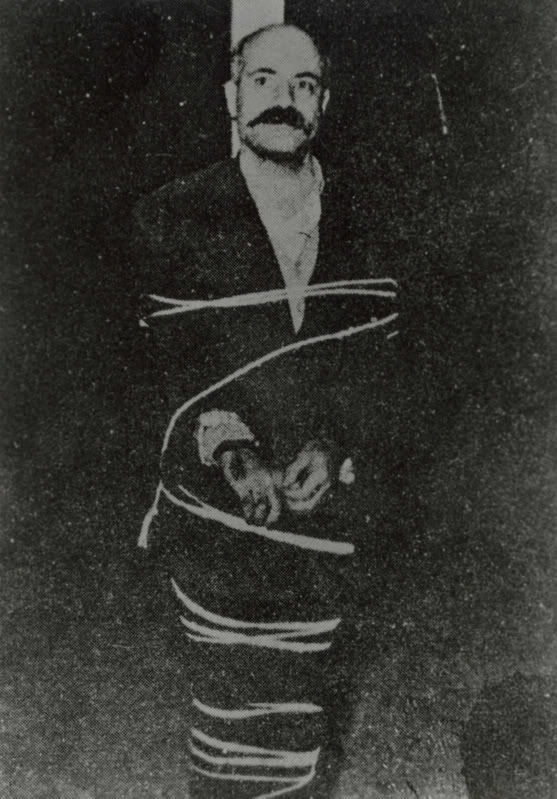
Accurately or not, Fashi confessed to carrying out Alimohammadi’s assassination, claiming that he was recruited, paid, and trained by the Mossad for the job.
Further to that body’s sanguinary campaign against papal political domination, they authored an attempted kidnapping and/or assassination of the Vatican’s Romagna enforcer, Cardinal Rivarola. Rivarola had recently issued mass condemnations against carbonari.
Which is very nice. But they didn’t get the Cardinal.
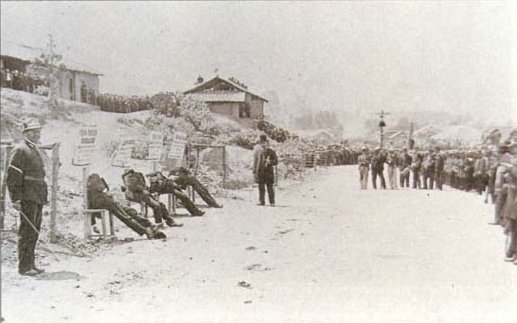
Ubiquitous 19th century papal executioner Mastro Titta conducted the executions — the 266th through 269th of his career (he’d also done Gaetano Montanari’s better-known brother Leonida three years before) — and devoted a chapter of his memoirs to the occasion. You can call the carbonari terrorists if you wish, but the Ravenna populace’s fearsomely cinematic display of solidarity with the doomed makes eloquent historical testimony on their behalf.
The execution took place on May 13 on a large square in Ravenna, occupied by the military so that nobody could not approach the gallows other than the executioners, the soldiers, and the prisoners. The windows and doors of the city and the shops were all closed and many were hung with black. Not a person was seen on the streets. Ravenna seemed transformed into a necropolis. All attempts to convert them were vigorously rejected by the prisoners, who did not want confession nor religious comforters, and protested against the accompaniment of two friars ordered by the Cardinal.** The wagon crossed streets deserted and silent, all surrounded by soldiers on foot and horseback riding at a brisk trot. Arrived at the foot of the gallows, the condemned went down with a firm step, and one by one they boldly climbed the stairs of the gallows, and before the gallows clutching their necks shouted in a voice strong and fearless:
– Viva Italia! Down with the papacy!
The execution was conducted rapidly. I departed with my aide that night under guard, because it was rumored that the conspirators wanted to skin us.
* It appears to me — although it’s not completely clear from what I’ve seen — that a fifth man, a Jewish poisoner named Abramo Isacco Forti (aka “Machino”), was also executed in this group, for collaborating with the carbonari on a different murder. He’s listed on Titta’s roster of victims without date or explanation, but specifically named in, e.g., this Italian book’s roster of death sentences handed out by that same court.
Thousands were arrested, and brutally tortured into betraying their comrades. While most weren’t put to death, Roozbeh was both a true militant — he opposed moderates’ attempt to make common cause with the liberal Mossadegh government that the Shah had deposed — and the organizer of a network of military infiltrators. The British embassy called him the “Red Pimpernel” for his uncanny talent for slipping traps and getting about in disguise. But that act never has a long shelf-life.
Roozbeh was finally winged in a 1957 shootout and taken into custody, where he was tortured into his own confessions (e.g., that he had assassinated Tudeh members who were too willing about their police collaboration). After spending his last night on this planet putting NaNoWriMo to shame by cranking out a 70-page political manifesto, he’s supposed to have met his executioners defiant to the last, refusing a blindfold and crying “Long Live the Tudeh Party of Iran! Long Live Communism! Fire!”
But the volley that silenced Roozbeh’s cry can be seen in retrospect to mark the definitive elimination of communism from Iran’s political stage, the piece de resistance for SAVAK’s campaign of suppression.
After Roozbeh, Tudeh slipped into irrelevancy (Spanish link) … leaving little but the outsized myth of its most renowned martyr.
On this date in 1945, in the dying days of the Third Reich, 42-year-old Johann Georg Elser was executed by gunshot in the German concentration camp Dachau. He died for a failed attempt on Adolf Hitler’s life more than five years before.
It goes without saying that, had he been successful, he would have changed history immeasurably.
Elser, who went by his middle name, didn’t fit the profile of someone who would try to kill Hitler.
He wasn’t a Jew, a Communist or a member of any of the other minority groups the Nazis persecuted. He wasn’t political at all, in fact.
A carpenter by trade, with one illegitimate son, his hobbies included playing the zither and the double bass.
He was the kind of ordinary, working-class German the National Socialists tried to reach out to. But from the very start, he made it clear how much he despised them and all that they stood for.
He was a practical man at heart and was not interested in political discussions. He had no desire to change other people’s minds, but he steadfastly refused to make any accommodation to the new regime. When Hitler’s speeches were broadcast, he would silently leave the room… In May 1938, a Nazi parade threaded its way through his hometown of Königsbronn. Elser, like many others, turned out to watch, but as those around him gave the Hitler salute, he refused to do likewise. When a colleague reminded him that it might be sensible to conform, he replied curtly, “You can kiss my ass.” He then ostentatiously turned about and started whistling to himself.
How Elser’s silent, passive resistance turned into action is unclear, but by the autumn of 1938 he had made up his mind to kill the Führer.
Unsure how to accomplish this, he traveled to Munich to get some ideas. Every year on “Die Neunte Elfte”, the November 8-9 anniversary of the Beer Hall Putsch, Hitler came to the Bürgerbräukeller and gave a speech to the old guard.
That day in 1938, actually just hours before another would-be assassin tried to kill Hitler, Elser slipped into the beer hall pretending to be an ordinary customer and “noted the layout of the room, the position of the lectern and the patent lack of effective security measures.”
He had found his place and his time: he decided that the following year, he would plant a bomb in the Bürgerbräukeller, timed to go off right in the middle of Hitler’s big anniversary speech and kill him and as many Nazis as possble.
Elser’s meticulous planning and preparations over the next twelve months were nothing short of amazing. He stole a fuse and some gunpowder, and got a job at a quarry specifically so he could acquire some explosives. Knowing nothing about bombs, he made countless prototypes and tested them in empty fields in the countryside.
In the spring of 1939, he went back to Munich and the Bürgerbräukeller to make some detailed sketches of the building and find an appropriate place to hide the bomb. He chose a thick stone pillar behind the lectern, which supported a balcony. In August, he brought his tools and bomb-making materals to Munich to set about with his final phase of the plan.
The fastidious assassin’s modus operandi was shockingly simple, and shockingly bold.
He would visit the Bürgerbräukeller every night at around 9:00 to take his evening meal. An hour or so later, he would sneak up to the gallery of the function room, where he would hide in a storeroom until the bar closed and the building was locked.
Thereafter, he was free to work by flashlight until the bar staff returned at around 7:30 a.m., when he could sneak out of a back entrance.
His first priority was to chip out a cavity in the stone pillar to hold the bomb. But, finding the pillar was now dressed with wooden cladding, Elser was forced to spend three nights sawing a hole in the wooden surround.
Every sound had to be muffled, every speck of sawdust collected and disposed of: he could afford to leave no evidence of his presence. Even the sawn wooden panel was fashioned into a flush-fitting secret door.
Good thing he was a carpenter.
Having accessed the pillar, he could now begin to dig out a recess for the bomb. Using a hand drill and a hammer and chisel, he spent most of the following month loosening mortar and prising out bricks — all of which, of course, had to be meticulously tied and removed from the scene in a cloth sack.
Progress was painfully slow.
In the cavernous hall, every hammer blow he struck echoed like a gunshot, and to escape detection he had to time his blows to coincide with external sounds, such as the passing of a tram or the automatic flush of toilets. Working by night preparing the pillar in the Bürgerbräukeller, he labored by day putting the finishing touches to his bomb and, of course, the elaborate timing mechanism.
It all took two months.
On November 2, six days before the Big Day, Elser finally concealed his bomb, which had been put in a wooden box lined with cork to muffle the ticking sound of the timing mechanism, in its hidey-hole. Hitler’s speech was scheduled to start at 9:00 p.m. on November 8 and would last for an hour. The bomb was set to go off at 9:20.
It did so, right on time, with a spectacular explosion that smashed the stone pillar, brought down the overhead balcony and ceiling, shattered windows, blasted out doors, killed eight people and injured 67 more.
The only problem was, Hitler wasn’t among the dead or wounded. In fact, he wasn’t even there.
He had pressing business in Berlin and wanted to get back that same night, so he had rescheduled his speech for 8:00 p.m. instead of nine. He finished and left the building at 9:07, thirteen minutes before the big reception Elser had prepared for him. By the time the bomb went off, Hitler was already on the train back to Berlin.
That Elser failed was through no fault of his own: it was just sheer, terrible, rotten luck.
British Prime Minister Benjamin Disraeli once said, “Assassination has never changed the history of the world.” Perhaps he is right in most cases, but it’s hard to believe that statement is true when it comes to Hitler. In this case, thirteen minutes substantially altered the history of Europe for the rest of the century.
Getting back to Elser: ever the careful planner, he knew what to do to protect himself once the bomb went off. He was miles away from Munich at the time, trying to sneak over the border into Switzerland. Unfortunately, he was caught by German border guards.
At first they thought it was a routine arrest, but then they saw the contents of his pockets, which included a postcard of the Bürgerbräukeller and sketches of his bomb design. The guards didn’t yet know about the assassination attempt, of course, but what they saw made them suspicious and they turned him over to the Gestapo.
On November 13, Elser confessed everything. When a flabbergasted Hitler read the preliminary investigative report which supported Elser’s lone-bomber story, he demanded, “What idiot conducted this investigation?”
He couldn’t wrap his mind around it, and neither could anyone else.
In the wake of the assassination, mass arrests were made: anyone who seemed unusually interested in the Munich speech, or didn’t express sufficient enthusiasm for the Nazi Party, could fall under suspicion of being part of the plot.
At Munich’s Feldherrnhalle on Nov. 11, Hitler conducts a memorial ceremony for the victims of Elser’s assassination bid.
As Moorhouse explains,
To many Nazis, Elser was simply an enigma. He was an ordinary German. He exhibited none of the typical signs of “degeneracy” that they claimed to be combating: apart from his brief flirtation with Communism, he was a virtual teetotaler, not promiscuous, did not consort with Jews, and was not close to the Church. In fact, he was exactly the sort of solid, upstanding, working-class German that they thought they had won over — and, indeed, that had become the backbone of the Nazi Party.
Unable to believe Elser’s claims of full responsibility, the Nazis concluded he must have been “led astray” at the very least, perhaps by agents of British intelligence. In spite of beatings, torture, and other coercion, however, Elser stuck to his story, even building another bomb, identical to the first, right in front of his interrogators to prove he could do it by himself.
He never managed to fully convince them; in fact, for decades after the war, historians and other scholars theorized about who else was in on his plan. Some speculated that the attack was even engineered by Hitler himself, to gain support for his cause and to create an excuse to crack down on dissidents.
It wasn’t until 1970 that two German historians who studied the matter announced there was no evidence that Elser had acted in concert with anyone else or even told anyone about his plans.
It may seem surprising that Elser managed to live for four and a half years after his attempt on Hitler’s life, but there was a explanation perfectly reasonable from the standpoint of a totalitarian bureaucracy.
After his confession, Elser was sent to the the Sachsenhausen Concentration Camp. He was given enough to eat, and two rooms, and even allowed to play the zither again, but he was kept in solitary confinement all those years. The Nazis — still operating on the theory that the British were ultimately behind the assassination attempt — stashed Elser away as a witness in a show trial against British leaders after the German invasion of the British Isles. Talk about hubris.
Of course, this invasion never happened, and as the tide of war turned against the Germans it became clear that Elser had outlived whatever usefulness he might have had. In February 1945, he was transferred from Sachsenhausen to Dachau.
He met his end quietly, taken outside his cell by a young SS officer and shot in the back of the neck. A week later, it was reported that he had been killed in an Allied bombing. By the end of the month, Dachau was in Allied hands.
At least six cities in Germany, including Königsbronn and Stuttgart, have places named after him, or monuments or plaques erected in his memory.
BOGOTA, Colombia, Tuesday, March 6. — The three men who on Feb. 10 attempted to assassinate Gen. Reyes, the President of the Republic of Colombia, were shot to-day at the spot where the attack took place.
-New York Times, March 8
Reyes had parlayed a successful military career into politics (Spanish link), and was the elected-ish but also dictatorial president of Colombia.
He had the misfortune to ascend to this illustrious post on the heels of a bitter civil war that had seen its Panama department break clean away. To Reyes’ administration would fall a variety of civil society infrastructure projects (more Spanish): constitutional reform, military modernization, a central bank, reconciliation with the Liberal party.
Marco Salgar (left) and Roberto Gonzalez, two of the failed assassins.
He couldn’t make these omelets without breaking a few eggs and his authoritarian power was challenged with at least two coup attempts and multiple assassination plots, as well as a bid by other Colombian territories to break away and join up with Panama.
But the most notorious angry-with-Reyes event was the 10th of February 1906 — also the title (Spanish again) of a book of photographs documenting the incident — when three gunmen ambushed Reyes on the outskirts of Bogota and somehow all managed to miss both the president and his daughter.
Reyes’ vengeance was extrajudicially old-school: the executions he arranged were not permitted under Colombian law at all, and by having them publicly shot at the scene of the crime, he added a downright medieval twist of lese-majeste.
Images from here. These are the three shooters mentioned by the Times, as well as a fourth accomplice.
However rough his methods, Reyes did accomplish some important reforms for his country, and he did have the grace to resign his position in 1909 under fire for financial and diplomatic mismangement. (The man’s five-year administration has its own periodization in Colombian historiography: the quinquenio.) There have been worse entries in the annals of dictatorship.
On this date in 1836, three men were guillotined for a spectacular but unsuccessful regicide attempt.
Giuseppe Fieschi
This was in the days of the July Monarchy, a much-despised government of the country’s wealthiest elites that generated opposition both right and left and a ceaseless string of assassination attempts (French link) against King Louis-Philippe.* As Marx put it,
when the liberal banker Laffitte led his compère, the Duke of Orléans, in triumph to the Hôtel de Ville, he let fall the words: “From now on the bankers will rule”. Laffitte had betrayed the secret of the revolution.
It was not the French bourgeoisie that ruled under Louis Philippe, but one faction of it … the so-called financial aristocracy. It sat on the throne, it dictated laws in the Chambers, it distributed public offices, from cabinet portfolios to tobacco bureau posts.
Hard to imagine such a state of affairs.
Fieschi (English Wikipedia page | French) et al conceived a bold attempt to destroy the entire ruling family in a single fusillade, and to that end constructed a machine infernale of 25 gun barrels mounted together to fire on a single fuse.
Unleashed upon a royal procession along the Boulevard du Temple on the fifth anniversary of the monarchy’s founding July days, this monster proved quite impressively destructive.
The assassination attempt of Fieschi, 28 July 1835 by Eugene Lami.
The infernale barrage took out an esteemed marshal and a bunch of bystanders, but somehow managed to miss everyone in the royal family. (Louis-Philippe himself was grazed … and his horse was hit.)
Exploiting the familiar power of a terrorist incident to enact horrible new policies not available in normal times, “Parliament was hastily recalled and in a near-panic atmosphere passed severe measures against the newspaper press,” notes William Fortescue. “Approximately thirty more republican newspapers were closed down by the September 1835 Press Laws.”
Police soon traced the conspiracy to Fieschi, a truly Gallic character of mixed-up national pride, personal honor, class envy, and opportunistic lechery, who had fought for Bonaparte and helped Joachim Murat on the latter’s fatal attempt to re-take “his” kingdom of Naples back in his youth. But lately, a more worn-out and middle-aged Fieschi had been booted out by his mistress and lost all his money.
Fieschi, according to Barricades: The War of the Streets in Revolutionary Paris, 1830-1848, basically became a dependent of Morey and Pepin, true-blue republicans who helped channel Fieschi’s unmoored passions into engineering his hydra-headed musket. He’d be back on the French-nationalism side by the end.
“I’m going to appear before God,” Fieschi said on the scaffold, after Morey and Pepin had preceded him. “I have spoken the truth. I die content. I have rendered a service to my country in signaling my accomplices … I regret my victims more than my life.”
More repressive laws and radical-hunting followed. They did not slake the thirst abroad in France for regicide.
One was the Sun King, Louis XIV of France, whose decades-long rivalry with William tracked William’s interesting career all the way to the throne of England.
William III, equestrian. Consider yourself foreshadowed.
Another was Sir John Fenwick, an English nobleman whom William supposedly slagged* when they were fighting together in the Low Countries — and who likewise still carried the enmity when William had become his sovereign.
On this date in 1697, the latter rivalry came to a fatal end for John Fenwick on the headsman’s block. The funny thing was that the stroke turned out to cost King William III his own life as well.
You couldn’t say that Fenwick came late to the Jacobite cause; he’d been a strong adherent of the beleaguered Catholic-esque Stuart dynasty, and signed off on the 1685 execution of its previous Protestant challenger Monmouth.
But if it prosper, none dare call it treason. In 1688, the Low Countries prince with the low estimation of Baronet Fenwick hopped the channel and successfully overthrew the last Stuart monarchking James II.
With the Glorious Revolution, Fenwick’s personal and political were very conveniently aligned in loyalty to the exiled James … except that his formerly patriotic loyalty to James was now the traitorous cause of Jacobitism.
Fenwick kept up his Jacobiting in the 1690s, got arrested and released once, and then finally found himself implicated in a plot to murder William. Though his allies managed to spirit one of the potential witnesses against him away to the continent, Parliament passed — ever so narrowly — a bill of attainder to condemn Fenwick to death. (There’s a more detailed account of the legal and political maneuverings here and here.)
A failed assassin in life, Fenwick would blunder Gavrilo Princip-like into accidental success … but only after his own execution.
As a condemned traitor, Fenwick’s estate was seized by the crown, and the king personally claimed his prey’s equine ride (either a horse with a sorrel coat, or a horse named Sorrel, or both).** Not long after Fenwick’s death, this horse stumbled on a molehill, throwing its royal rider. William broke his collarbone in the accident, developed pneumonia, and died — leading Jacobite sympathizers to dote on the animals (both horse and mole) who had authored their enemy’s misfortune.
Illustrious steed, doubtless most worthy of the sky,
To whom the lion, bull, and bear would give place;
What happy meadows bore thee happily?
What happy mother gave you her nutritious teats?
Is it from the land of Erin you are come to oblige your country,
Or is it Glenco or the Fenwick race which produced you?
Whoever thou art, mayst thou prosper, I pray memorable one: and
May saddle never more press thy back, nor bit thy mouth.
Avenger of the human race, when the tyrant dies,
Mayst thou thyself enjoy the liberty thou wilt give to others.
A lovely sorrel enjoys the liberty of a happy meadow. (Nutritious teats not pictured.) (cc) image from SMALLORBIGOFMEN.
* During the Dutch campaign, William “had reflected very severely upon his [Fenwick’s] courage, which occasioned his making returns that provoked the Prince to say, that if he had been a private person he must have cut Sir John’s throat.” Just your basic primate poo-flinging.
** Leaving aside his ultimate fate, quite an understandable move by William: the Fenwicks were famous for their horse husbandry.
On this date in 1801, a Jacobin chemist was wrongly executed for Royalists’ plot against Napoleon.
Our scene is France, the year following Napoleon’s coup of 18th Brumaire (November 9, 1799 on the stodgy old Gregorian calendar). Marx’s “first time as tragedy”* saw the Corsican achieve monarch-esque power, and the months ensuing saw a plethora of plots against him.
The ranks of aggrieved potential assassins included both Jacobins, incensed at the military dictatorship, and Bourbons, incensed that it wasn’t their dictatorship — in both cases exacerbated by Napoleon’s decisive battlefield triumphs which consolidated his hold on power.
On Christmas Eve 1800, the man on horseback was a man in a carriage, careening through Paris to catch a performance of Haydn’s oratorio The Creation.
When, all of a sudden, a gigantic explosion on the Rue Saint-Nicaise attempted to un-create the First Consul. It failed, exploding after Napoleon had passed and before Josephine’s family followed, “merely” killing and maiming fifty-some miscellaneous Parisian bystanders instead.
Kablamo! The explosion of the Infernal Machine.
The Catherine Delors historical novel For the King (author’s teaser) is built around investigating the Plot of the Rue Saint-Nicaise.
shocked with the wild atrocity of such a reckless plot, became, while they execrated the perpetrators, attached in proportion to the object of their cruelty. A disappointed conspiracy always adds strength to the government against which it is directed; and Buonaparte did not fail to push this advantage to the uttermost.
This “Infernal Machine” had actually been built by disgruntled monarchists at the instigation of intriguer Georges Cadoudal, as was swiftly discerned by Napoleon’s Minister of Police, the ruthless ex-revolutionary Joseph Fouche.
Realpolitik exigencies — Napoleon was trying (unsuccessfully) to reach political terms with the royalist faction — instead drove a rush to pin the detonation on the Jacobins.
Who, it should be said, made themselves the primary suspects by virtue of the fact that they’d also been trying to blow up Napoleon. Chevalier had been arrested a couple of months before when a bomb of his, evidently an experiment for a similar Jacobin plot, loudly blew up near Salpetriere.
Four other Jacobins followed Chevalier to death later in January (and two royalists actually involved in the bomb got the same treatment). Some 130 other prominent Jacobins (French link) were expelled on Napoleon’s say-so — no legislative consultation — to the empire’s far-flung colonies, pretty much putting the remains of the long-supine revolutionary left permanently out of the picture as a political force.
Never averse to breaking a few eggs, Gandhi led her country (sometimes autocratically) for four terms from 1966 to 1984, sandwiched around a stint under a legal cloud for political corruption.
She backed East Pakistan’s breakaway from India’s neighbor and rival, but also negotiated a Kashmir settlement with her Pakistani opposite number; oversaw the Green Revolution; pushed ahead with a nuclear weapons program; maneuvered between American and Soviet foreign policy.
The omelet that cost her life was the June 1984 Operation Blue Star, when she had the Indian military storm a Sikh shrine that armed militants had turned into a virtual fortress, even using tanks and artillery in the shrine’s residential area.
Although the operation “worked,” hundreds — maybe a thousand or more — lost their lives and the shrine itself suffered heavy damage.
Sikhs were incensed — including, apparently, Beant Singh and Satwant Singh, two Sikh bodyguards of the Prime Minister who probably ought to have been reassigned. Maybe that’s just hindsight speaking, after they took the opportunity afforded by an escort assignment on Halloween 1984 to suddenly gun down their charge.
Beant Singh was shot down on the spot by other guards, but Satwant Singh was arrested.
He and Beant Singh’s uncle and alleged inciter Kehar Singh would later stand trial for their lives — but not before the assassination triggered an apparently government-blessed four-day anti-Sikh pogrom. The disturbing orchestration and four-figure body count of this infamous affair remain sensitive subjects on the subcontinent to this day, especially insofar as nobody has ever been punished for it.
The accused assassins were not so lucky — although they were more than content to accept martyrdom for avenging Operation Blue Star.
I have no hatred for any Hindu, Muslim, Christian, neither hatred for any religion. After my Shaheedi, let no Sikh throw any rock at any Hindu. I am not in favor of any retaliation or bloodshed over my Shaheedi. If we do create bloodshed, then there is no difference between us and Rajiv Gandhi. I am proud of the task that I did! I do ardas in front of Waheguru! If I am blessed with a human life, then give me a death of the brave when I am hanged. Forget one life, if I could I would give up a thousand lives to kill dushts like Indira Gandhi, and laugh as I become Shaheed by hanging.
The killers were then and are still held in high regard by many Sikhs. (Satwant’s fiancee even married his picture.)
Indira Gandhi’s son Rajiv Gandhi followed her as head of state — and followed her fate when he was assassinated by Tamil terrorists in 1991. The Nehru-Gandhi family remains a powerful force in Indian politics.
On this date in 1932, the Japanese shot Korean Yoon (or Yun) Bong-Gil for bombing a parade dais in Shanghai.
A parade to celebrate the emperor’s birthday may be standard enough fare on the home front, but in a China being swallowed by said emperor’s empire it was a provocative act.
In the first months of 1932, Japan had merrily exploited — or incited — anti-Japanese incidents in Shanghai as pretext for an imperialist mini-war, won handily by Japan.
When the aggressors presented their celebratory pageant of arms in the city’s Hongkou Park (today, Lu Xun Park), our young Korean terrorist* “threw a narrow tin box high in the air. In an ear-splitting roar, the grandstand flew apart like a mechanical toy.” (Time magazine, excerpted in this useful Axis History Forum thread.) All seven of the Japanese VIPs on the dais were casualties, and two of them died: one instantly and another succumbing to his injuries a month later.
“A young Korean patriot has accomplished something tens of thousands of Chinese soldiers could not do,” remarked an admiring Chiang Kai-shek. Coming just months after another Korean activist had taken a whack at Hirohito in Tokyo, the generalissimo couldn’t help but appreciate his brothers in resisting colonization.
For this accomplishment Chiang would later go to bat for postwar Korean independence. But for his part, the patriotic Yoon got only a free trip to Japan for military trial and execution.
You’ll find another subtle memorial to this incident in pictures from the decks of the USS Missouri, where a Japanese delegation surrendered to end World War II on September 2, 1945. Leading the delegation is a distinguished gentleman with a top hat and a cane: it is Mamoru Shigemitsu, walking with an artificial leg thanks to Yoon Bong-Gil’s bomb 13 years before.**
Mamoru Shigemitsu aboard the USS Missouri.
* Note: calling Yoon Bong-Gil a “terrorist” is controversial in Korea. We use the word without moral censure.
** Mamoru Shigemitsu had been Japan’s ambassador to China at the time of the assassination bid.


 It goes without saying that, had he been successful, he would have changed history immeasurably.




 A parade to celebrate the emperor’s birthday may be standard enough fare on the home front, but in a China being
