1951: The first four of the Martinsville seven

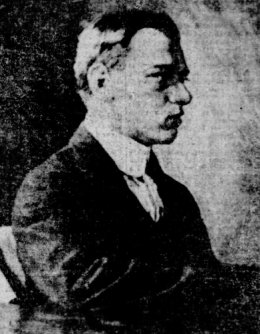
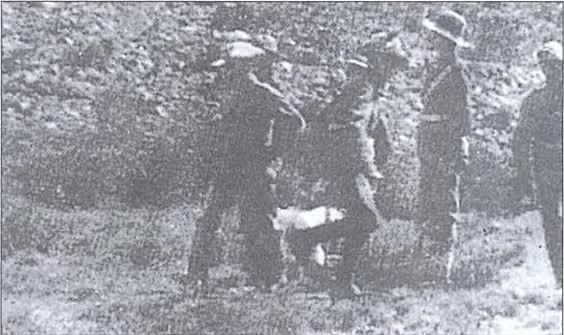
On this date in 1951, the first of two batches comprising the “Martinsville Seven” — black, all — went to the Virginia electric chair for gang-raping a white woman. (The remainder were executed on Feb. 5)


Newspaper scan (click for larger image) via Mr. Beaverhousen (cc).

Somewhat forgotten today, the Martinsville Seven were in their day the locus of radical activism against Jim Crow in the South — very much like Willie McGee, who was put to death in Louisiana later that same year.

In fact, this case generated a bit of a legal milestone: a month before the executions began, the U.S. Supreme Court declined an appeal seeking relief on the then-novel grounds of equal protection — rather than due process.

The argument was that the Old Dominion’s superficially race-neutral rape statute was anything but; that argument was buttressed by data showing that Virginia had executed 45 black men for raping white women from 1908 to 1950, but never once in that period executed any white man for raping a black woman. (The high court only declined to take the appeal; it wouldn’t get around to explicitly ruling equal protection claims based on racial patterns out of bounds until 1987’s McCleskey v. Kemp.)

This seems to be the debut use for this gambit, bound to become an increasingly powerful one both in and out of the courtroom during the civil rights movement.

And it was available — and necessary — here because the Martinsville Seven basically looked guilty as sin. Their confessions and the victim’s accusation and the testimony of a young eyewitness said that, drink-addled, they had opportunistically grabbed a white Jehovah’s Witness housewife when she was proselytizing on the wrong side of the tracks.

Eric Rise, author of The Martinsville Seven: Race, Rape, and Capital Punishment, noted in a scholarly article,*

certain striking characteristics distinguished the proceedings from classic “legal lynchings.” The evidence presented at trial clearly proved that nonconsensual sexual intercourse with the victim had taken place. All seven defendants admitted their presence at the scene, and although some of the men may not have actually consummated the act … The prosecution emphasized the preservation of community stability, not the protection of southern womanly virtues, as the dominant concern of Martinsville’s white citizens. Most significant, the trial judge made a concerted effort to mute the racial overtones of the trials. Although white juries decided each case, blacks appeared in every jury pool. Race-baiting by prosecutors and witnesses, notably evident at Scottsboro and other similar trials, was absent from the Martinsville proceedings. By diligently adhering to procedural requirements, the court attempted to try the case “as though both parties were members of the same race.”**

The standard playbook for fighting a “legal lynching” case was leveraging outrage over a plausibly innocent convict and an outrageous kangaroo court.†

Paradoxically, by taking these elements out of the mix (relatively speaking), the Martinsville Seven perfectly isolated the extreme harshness of the penalty and the structural discrimination under which it was imposed. The NAACP took up the case on appeal strictly for its discriminatory characteristics, steering for its part completely clear of any “actual innocence” argument.

These challenges posed discomfiting questions that jurists shrank away from. The Virginia Supreme Court, in denying an equal protection application, fretted that actual legal relief could mean that “no Negroes could be executed unless a certain number of white people” were, too. Timeless.

Though a later U.S. Supreme Court would completely overturn death-sentencing for rape, based in part on its overwhelming racial slant, justices have generally avoided meddling to redress broad statistical patterns rather than identifiable process violations specific to particular cases.

Those questions of substantive — rather than merely procedural — equality in the justice system remain potently unresolved, still part of Americans’ lived experience of the law from death row to the drug war to driving while black. As if to underscore the point in this instance, just two days prior to the first Martinsville executions, the Wall Street bankster acting as American proconsul in conquered Germany pardoned imprisoned Nazi industrialist Alfried Krupp, and restored him to the fortune he had amassed working Jewish slaves to death during the war. It was a very particular quality of mercy the U.S. showed the world in those days. (The Martinsville case was known, and protested, worldwide.)

Carol Steiker (she used to clerk for liberal Justice Thurgood Marshall, who as an NAACP lawyer worked on the Martinsville case) argues‡ that the Martinsville Seven’s legacy is linked to their later obscurity, for “[t]heir attempt to present statistical proof of discrimination in capital sentencing represents a ‘road not taken'” — neither in 1951, nor since.

The road taken instead had Joe Henry Hampton, 22, Howard Hairston, 21, Booker Millner, 22 and Frank Hairston, 19 electrocuted one by one this morning in 1951. Their three co-accused, John Clabon Taylor, 24, James Luther Hairston, 23, and Francis DeSales Grayson, 40, followed them on February 5.

* “Race, Rape, and Radicalism: The Case of the Martinsville Seven, 1949-1951” in The Journal of Southern History, Aug., 1992.

** This quote an actual trial admonishment of the judge, Kennon Whittle.

† Graded on a curve: this is still Jim Crow Virginia. Six trials were wrapped up at warp speed in 11 days, with a total of 72 jurors — each one white. The implied comparison is something along the lines of, all seven tried together in the course of an afternoon, with a good ol’ boy defense attorney mailing it in.

‡ Review of Rise’s book titled “Remembering Race, Rape, and Capital Punishment” in the Virginia Law Review, Apr., 1997

On this day..

2002: Daniel Pearl

“I decapitated with my blessed right hand the head of the American Jew, Daniel Pearl, in the city of Karachi, Pakistan. For those who would like to confirm, there are pictures of me on the Internet holding his head.”

-9/11 mastermind Khalid Sheikh Muhammad, in a claim made after torture in Guantanamo but nonetheless considered accurate according to a detailed 2011 report on Pearl’s death*

Warning: Although the filming was botched, this execution video still has plenty of gore and a severed head.

On this date in 2002, American hostage Daniel Pearl was executed by his captors in Karachi, Pakistan.

The 38-year-old Wall Street Journal reporter had been abducted January 23 by Islamic radicals while pursuing an interview with a (mistakenly) suspected handler of shoe bomber Richard Reid. Instead of being taken to the interview, Pearl was disappeared and held hostage for a variety of implausible demands targeting the United States’ relationship with Pakistan’s military government.

The reporter’s death this day was not confirmed until late February, when his killers released a video on the Internet interspersing images of American and Israeli violence with footage of Pearl speaking — and then, horrifically, of Pearl being beheaded with a knife.** It was the first of several hostagebeheading videos various militants would release in the next few years.

Pearl’s captors drew a direct line from his Jewishness to his murder in the statements they forced him to make:

My name is Daniel Pearl. I am a Jewish American from Encino, California USA … I come from, uh, on my father’s side the family is Zionist … My father’s Jewish, my mother’s Jewish, I’m Jewish … My family follows Judaism. We’ve made numerous family visits to Israel … Back in the town of B’nei Braq there is a street named after my great grandfather Chayim Pearl who is one of the founders of the town.

It was the more startling because Pearl himself was a very secular Jew. Pearl did not set out to be a martyr for his cultural or religious heritage: that identity as the identity was thrust upon him.

And it’s been suggested that it was thrust upon Pearl’s captors as well, whose object in kidnapping an American reporter might have been a much more parochial kidnapping commonplace — publicity, cash — but who became politically boxed in when their hostage was publicized by the media as a “Jewish-American reporter”. One of the emails the captors had pre-drafted actually announced Pearl’s release. It was edited after the kidnapping … to announce Pearl’s execution within 24 hours, as a Mossad agent. Al-Qaeda’s Khalid Sheikh Mohammed seems to have been summoned from outside the abductors’ circle as a ringer with the captors unsure of how to dispose of their prey.

As an investigative reporter, Pearl’s own work had in some notable instances countered the preferred narratives of American hegemony. For instance, his reporting rubbished American charges that the Khartoum pharmaceutical factory Bill Clinton ordered bombed in 1998 was actually a chemical weapons plant. His work in Kosovo led him to contradict the most bellicose “genocide” allegations from that region’s dirty ethnic war.

He was a star reporter in the prime of his life, a man who poured out words that defined a career and a public persona. From February 1, 2002, suddenly and without justice, that text was torn from his hands. In its place, during the charged months after September 11 and the American invasion of Afghanistan, came a silent Rorschach blot.

Pearl, the Jewish martyr. Pearl, the victim of blowback. Pearl, the journalistic icon. Pearl, the naive liberal in the heart of darkness. Pearl, the mandate for waterboarding and Iraq.

Pearl, the object lesson.

Pearl, the axe for others’ grinding.

Omar Sheikh, a Pakistani militant reportedly linked to Britain’s MI6 and the author of the kidnapping, was arrested within days of Pearl’s murder. He remains imprisoned under sentence of death in Pakistan for the crime.

* Mohammed also claimed that he wanted to kill Pearl personally to “make sure I got the death penalty” if he were eventually arrested.

** Among the many bone-chilling details to emerge from the subsequent investigation, it became clear that the actual murder was not shown — only some quick flashes of re-enacted throat-cutting — because the cameraman missed the shot of the kill.

On this day..

1912: Albert Wolter, white slaver

A century ago today, 20-year-old Albert Walter strolled the 15 feet from the death cell to the Sing Sing electric chair, calling out “Good-bye boys” to his fellow-prisoners as he died for the murder of 15-year-old Ruth Wheeler in a possible white slavery crime two years earlier.

Wolter left a note steadily — all the reports remark on the youth’s sangfroid; he took a nap while the jury went to deliberate with his life in its hands — avowing his innocence, and indulging the “hope there may come a time when the conscience of the perpetrator will overpower him, and he will come to the front and acknowledge his guilt.” He charitably added for “those who have maliciously prosecuted and killed me, for them I pray God’s forgiveness.”

Lots of New Yorkers would have had to ask it.

Despite his cool under fire, Wolter was overwhelmingly acclaimed the guilty party, the evidence against him being as close to airtight as circumstantial gets.

Newsmen ravenous for virginals despoiled by outlanders instantly sunk fangs into the story of the layabout 18-year-old German immigrant — idle lifestyle the product of parasitism upon the drudgery of a young countrywoman toiling 12-hour days at a bakery — who lured the “saintly” stenographers’ school graduate to his apartment with the promise of work and had her charred and headless trunk bundled up on the fire escape by morning. (Other charred remains, and Wheeler’s monogrammed signet ring, were retrieved from inside the apartment.)

Reporters soon sketched the persona of a burgeoning little pimp who had already routed several girls into prostitution. In amid the decadence and displacement of fin de siecle industrialization, you couldn’t ping a more heart-racing (pdf) moral panic than white slavery.*


Sale in a Roman Slave Market, by Jean-Leon Gerome (1883).

Congress was at that very moment in the process of legislating the (still-extant) Mann Act named for the Illinois legislator who sponsored it after a notorious 1909 Chicago case.

But the Big Apple, as the country’s largest city and its gateway for Europe’s polyglot huddled masses, was the reputed center of the whole reputed business.

This illustration from Fighting the Traffic in Young Girls is outstandingly captioned:

“THE FIRST STEP. Ice cream parlors of the city and fruit stores combined, largely run by foreigners, are the places where scores of girls have taken their first step downward. Does her mother know the character of the place and the man she is with?”

The men and the women who engage in this traffic are more unspeakably low and vile than any other class of criminals. The burglar and holdup man are high-minded gentlemen by comparison. There is no more depraved class of people in the world than those human vultures who fatten on the shame of innocent young girls. Many of these white slave traders are recruited from the scum of the criminal classes of Europe.

And in this lies the revolting side of the situation. On the one hand the victims, pure, innocent, unsuspecting, trusting young girls — not a few of them mere children. On the other hand, the white slave trader, low, vile, depraved and cunning, — organically a criminal.

-Chicago U.S. District Attorney Edwin Bell, prefacing the bodice-ripping 1910 Fighting the Traffic in Young Girls**

While the Empire State enacted its own Wolter-inspired law charging schools with vetting the employers who recruit their graduates, Wolter entered the criminal justice system on greased lightning (just like he left it). He was a condemned murderer within five weeks of Ruth Wheeler’s death.†

Wolter himself (evidently surprised to learn that he was old enough for the death penalty; that may not have been the case where he was from) tried to put the blame on a phantom Teuton, one “Frederick Ahner” who was the mastermind in Wolter’s own fall and who must have done the Wheeler business while Wolter was out at the park. That’s “the perpetrator” to whom Wolter’s last letter refers: his conscience never led Ahner to so much as materialize, much less to confess.

The fate of Wolter’s bakery-girl cohabitant — and, one might think, prospective accessory — Katchen “Katie” Mueller was very different. She precipitously aligned herself with her lover’s prosecutors, urged “My dear Al” to confess (almost successfully), and got respectable patronage “to break away from the life she had been leading”. A year after Wolter’s electrocution, Mueller’s redemptive next marriage made the society pages.

* Wolter may have been (pdf; see p. 61 footnote) a specific inspiration of the 1919 Theodore Dreiser play “The Hand of the Potter”, which is all about the era’s white slavery panic.

** Similar dubious (pdf) vice-crusader porn is to be had in (among many other period pieces) a 1911 tract by another Chicago prosecutor, Clifford Roe. Though The Great War on White Slavery is in the public domain, I haven’t been able to locate a complete text online — only this excerpt.

† On the other hand, the then-protracted period of 22 months required to proceed from conviction to execution made Wolter “dean of the death house” by the time he died.

On this day..

1961: Wasyl Gnypiuk, sleep-killer

(Thanks to Meaghan Good of the Charley Project for the guest post. -ed.)

On this day in 1961, a Polish/Ukrainian immigrant with the unpronounceable name of Wasyl Gnypiuk was hanged for murder in Lincoln, England.

The 34-year-old Gnypiuk was living in a toolshed in Worksop when he murdered his 62-year-old landlady, Louise Surgey, on July 17, 1960. He had spent some time in Nazi concentration camps during World War II, and suffered terrible nightmares as the result of his ordeal. The night of the murder, he broke into Surgey’s house while she was sleeping, drank some of her liquor, and passed out.

Gnypiuk — so he later claimed — had a dream where he was fighting Nazis. When he woke up, Surgey lay dead at his feet: he had strangled her in his sleep.

The authorities treated his claims with understandable skepticism. He didn’t help his case by trying to hide the body and stealing some money that had been lying around the house. He had a two-day trial in November and was duly convicted and sentenced to death. Gnypiuk was the last person to be hanged in Lincolnshire before the UK abolished the death penalty in 1965.

The truth about what happened will never be known for sure, but Gnypiuk is still regularly listed among cases of homicidal sleepwalking.

On this day..

1936: Allen Foster, who fought Joe Louis

More than twenty-five years ago, one of the southern states adopted a new method of capital punishment. Poison gas supplanted the gallows. In its earliest stages, a microphone was placed inside the sealed death chamber so that scientific observers might hear the words of the dying prisoner to judge how the human reacted in this novel situation.

The first victim was a young Negro. As the pellet dropped into the container, and the gas curled upward, through the microphone came these words: “Save me, Joe Louis. Save me, Joe Louis. Save me, Joe Louis…”

It is heartbreaking enough to ponder the last words of any person dying by force. It is even more poignant to contemplate the words of this boy because they reveal the helplessness, the loneliness and the profound despair of Negroes in that period. The condemned young Negro, groping for someone who might care for him, and had power enough to rescue him, found only the heavyweight boxing champion of the world. Joe Louis would care because he was a Negro. Joe Louis could do something because he was a fighter. In a few words the dying man had written a social commentary. Not God, not government, not charitably minded white men, but a Negro who was the world’s most expert fighter, in this last extremity, was the last hope.

-Martin Luther King, Why We Can’t Wait

This story isn’t precisely accurate as Dr. King told it, but the factual basis for this empathetic legend is Allen Foster.

On this date in 1936, Foster was the first man executed by lethal gas in North Carolina — and en route to this minor distinction he punched his ticket for commemoration in civil rights literature when he flourished a flamboyant uppercut to witnesses as he was led to the gas chamber and cried out, “I fought Joe Louis!” It was an allusion to having matched with the world champ when both were youngsters in Alabama.

This coincidental brush with celebrity was about as strange as the fact that it occurred in a gas chamber at all.

After the arrival of the electric chair, the South adopted it virtually across the board; North Carolina had switched from hanging to electrocution in 1910.

But the Tarheel State was also generally more progressive than its neighbors;* V.O. Key would write of North Carolina, “It has been the vogue to be progressive. Willingness to accept new ideas, sense of community responsibility toward the Negro, feeling of common purpose, and relative prosperity have given North Carolina a more sophisticated politics than exists in most southern states.”

Part of that “sophisticated politics” was, in the 1930s, a growing debate about the application — indeed, the mere existence — of capital punishment.

According to Trina Seitz’s “The Kiling Chair: North Carolina’s Experiment in Civility and the Execution of Allen Foster” (North Carolina Historical Review, Jan. 2004):

North Carolinians were beginning to doubt the effectiveness of the sanction and the method used to enforce it. Furthermore, private citizens, humanitarians, and state institutions alike were increasingly scrutinizing the demographics of those being put to death.

Though this scrutiny did not lead so far as actual abolition, it provided the receptively reformist environment for Mitchell County Dr. Charles Peterson’s “pet project” of switching the execution protocol to lethal gas.

The reason for his fascination with gas seems to be obscure; the method had never been employed east of the Mississippi. Maybe it had something to do with 1932’s remarkably smooth gassing of a North Carolinian from nearby Burke County in Nevada, the nation’s gas chamber pioneer.

Whatever the reason, Peterson took a seat in the legislature in 1935 and won adoption for his idea in this very first session.

Unfortunately for Peterson — and doubly so for Foster — North Carolina didn’t have quite the same facility with hydrogen cyanide, and Foster’s execution was a notorious botch that immediately got people back on the electrocution bandwagon.

Foster was doomed for raping a white woman — this may be progressive North Carolina, but it’s still the South — and according to Seitz’s rendering of the News and Observer‘s first-hand report:

“Good-bye.” The Negro’s lips framed the words so clearly that no man in the witness room could doubt what he had said. As he said it, he winked and then forced a smile at the faces peering in at him. Then he began to suffer. No man could look squarely into his eyes and fail to perceive that they were registering pain. The Negro fought for breath, knowing he was going to die and fighting to get it over with as quickly as possible …

he sucked the gas desperately until his head rolled back three minutes later, indicating to physicians that the man finally had lost consciousness. But after a period of quiescence, his small, but powerfully built torso began to retch and jerk, throwing his head forward on his chest, where witnesses could see his eyes slowly glaze … The torturous, convulsive retching continued spasmodically for a full four minutes.

Officially, it took about 11 minutes for Foster to die, and as those agonizing minutes dragged by a physician broke the witness room’s mortified silence by exclaiming, “We’ve got to shorten [the execution method] or get rid of it entirely.” Um, yeah? The prison warden was quoted the next day as saying that even hanging was preferable to this.

The ensuing political controversy, however, did not succeed in reverting the method to electrocution.

Like the original electric chair, North Carolina’s gas chamber was the beneficiary of some hasty technical fixes: heating the gas chamber (it was at the freezing point when Foster died; Colorado executioners advised North Carolina that this would impede the gassing); tweaking the chemical formula.

The very next week, a white murderer named Ed Jenkins followed Foster into the toxic plume, this time to rave reviews: he “died painlessly and the method of execution was humane”. These advances were enough to keep the gas chamber in place, although the state legislature considered several bills to return to electrocution from 1937 to 1943.

During one such debate, North Carolina playwright Paul Green testified to the assembly (per Seitz),

Some day the electric chair and the gas chamber will be set up in the State Museum as symbols of an age of horror and ignorance. School children will look at them and feel superior to us as they look back upon an era of ignorance

Three hundred sixty-two people ultimately died in North Carolina’s gas chamber. And as Green anticipated, the execution chair resides today in the state’s Museum of History.

* This is still true of North Carolina: it has employed the allegedly more humane method of lethal injection since 1984, when no other Southern state save Texas used the needle until the 1990s; that use has been sparing enough that its per-capita execution rate remains markedly lower than most other former Confederate states; and in 2009, North Carolina implemented a stillcontroversial Racial Justice Act empowering condemned prisoners to challenge their sentence with statistical evidence of racial disparity even though courts don’t require this at all.

On this day..

1536: The Münster Rebellion leaders

On this date in 1536, Bernhard Krechting, Bernhard Knipperdolling, and Jan van Leiden were chained to stakes in the Münster public square, tortured with flesh-ripping tongs for more than an hour, killed with daggers thrust into their hearts, and their remains hoisted in cages in the city cathedral as a warning against any kindred misbehavior in the future.


Detail view (click for the full image) of Jan van Leiden et al being put to death in Münster. In the background, the Lambertuskirche spire shows the three cages in which the victims’ remains were gibbeted.

And the point was taken: the appalling deaths of these men also marked the death of early Anabaptism’s pretensions to secular political power.

These three unfortunates were the top surviving leaders of the Münster Rebellion, a revolution that turned that city into an Anabaptist commune for more than a year.

Just a few years before, southern Germany had been shaken by an apocalyptic peasant rebellion led by Thomas Muntzer, a sort of proto-Anabaptist.*

Though northern Germany was spared that particular maelstrom, that same religious tension and social discontent soon blew a hyperborean wind.

In the early 1530s, “Melchiorites” — Anabaptist followers of radical preacher Melchior Hoffman — proliferated rapidly among workers of the long-prosperous but now-waning Hanseatic territories in northern Germany and the Low Countries.

And these converts did not intend the meek example of evangelical martyrdom. They meant to rule.

In 1535, Democratic-Anabaptist types stormed the Amsterdam city hall; in a separate action, others seized and fortified a Friesland monastery before being overrun. An allied movement, less theologically distinct, won temporary control of Lübeck in 1533, before being expelled by force of arms.

Only in Münster did the Anabaptists realize the full flower of their project, albeit for a very brief period of time. Winning power over the course of the year 1533 by dint of internal politicking, energetic recruitment, and fortuitous imperial distraction, Münster Anabaptists booted out the 1% and started turning the place into a visionary “New Jerusalem.”

Among those visions, the most notorious was polygamy (pdf), introduced by Jan van Leiden when he inherited leadership after the charismatic firebrand Jan Matthys died in a sortie against a siege in April 1534. The story has it that van Leiden wanted to marry Matthys’s attractive widow Divara, though whether motivated by considerations of the loins or legitimacy is up to the reader’s good conscience.

There’s quite a controversial historiography surrounding their polygamous turn: while contemporary enemies were pleased to ascribe it to libertine devilries, German Communist intellectual Karl Kautsky vociferously defended the Münster Anabaptists — arguing that they resorted to polygamy for social stability when the gender disparity in the city had fallen past 3:1 owing to the vicissitudes of war.

And war, as Kautsky noted, was the commune of Münster’s essential condition, just like that of Paris.

Community of goods was the basis of the whole Baptist movement. For its sake the great fight was waged at Münster. It was not, however, the chief factor in determining the character of the Münster Baptist government, that factor being the siege. The town was a great war-camp; the demands of war took precedence of all other matters, and sentiments of freedom and equality were active only in so far as they were compatible with military dictatorship.

After a year and more under siege, Munster finally succumbed to Prince-Bishop Franz von Waldeck.

Jan van Leiden, by this time dignified the “King of Jerusalem”, was taken along with two of his chief aides and designated for this superlative punishment (many others less exalted faced less exalted executions, too).


For decades after the execution, the Anabaptists’ remains rotted publicly in cages on the tower of St. Lambert’s — like these still displayed there to this day. (cc) image from Rüdiger Wölk, Münster.

For Anabaptists as a whole this catastrophe commenced a long period of persecution and reckoning. But from such travails would the movement leave its mark. Indeed, it was also in January 1536 that a young Dutch priest named Menno Simons accepted adult baptism … and began a religious career that would make him the founding namesake of the Mennonites.

Dan Carlin’s “Hardcore History” podcast treats the Münster rebellion here.

On this day..

1880: Daniel Searles, the first hanging in Tioga County

From the New York Evening Express, January 21, 1880.

DANIEL SEARLES HANGED.


THE NEGRO MURDERER OF OLD MR. REWEY

Sketch of a Brutal Crime — The Condemned Man Owns His Guilt and Admits the Justice of His Sentence.

OSWEGOOWEGO, N.Y., January 21. — The first instance of capital punishment in Tioga county occurred here to-day at noon. The extreme penalty of the law was inflicted upon Daniel Searles, an illiterate negro, who in June last murdered Eldridge Rewey, an aged farmer, who lived alone in the neighboring vilage of Newark Valley.

The murder was for the purpose of robbery, and was one of fiendish atrocity. Calling at the farmer’s house in the early evening of June 25, Searles felled him senseless to the floor, and then cut his throat with a razor.

He obtained about $300 by searching the house, and, on preparing to leave, noticed that his victim had revived. Rewey had also drawn a knife from his pocket, as if to defend himself, which the negro wrested from him, and with which he nearly decapitated his helpless victim.

He was arrested next day, tried before Judge Follett at OswegoOwego, and on December 8 was sentenced to be hung to-day.

Searles has made no attempt to deny his guilt, openly confessing the crime and saying he deserved to die for it. He has preserved a brave exterior throughout, and passed his last night on earth seemingly with less anxiety than did his executioner.

The execution took place in a temporary frame structure in the jail-yard, erected for the purpose. A cordon of military attended. The gallows was the same on which Penwell was executed at Elmira in July, 1877, for wife murder. The ponderous drop weighed three hundred pounds.

The spectators were in attendance at 11:45, some two hundred being present. Prayers were said in the prisoner’s cell at noon and the death warrant read to him.

Part of the Daily Triple: 1880 and Death.

On this day..

1880: Andrew Scott and Thomas Rogan, bushrangers

On this date in 1880, Andrew George Scott and Thomas George “condemned to death for the part they took in the outrage at Wantabadgery, resulting in the death of constable Bowen, were executed at Darlinghurst Gaol.”


Andrew George Scott, aka Captain Moonlite (top); Thomas Rogan (bottom)

Scott is our main man here, an Anglican lay reader turned grifter turned flat-out outlaw with the nom de plunder “Captain Moonlite”: one of the strangest characters in Australia’s criminal annals.

How did a fellow with such a family-friendly alias end up involved in an “outrage”?

This colorful, charismatic immigrant (from Ireland, via New Zealand — and, legend has it, with a side trip to Italy to fight with Garibaldi) became a notorious public figure when, in outlandish masked getup, he robbed the bank of the South Victoria gold rush town of Mount Egerton.

His distinctive voice — remember, he was a parish reader — was recognized by his erstwhile friend at the other end of the gun, but Scott brazenly reversed the accusation and actually had his victim in the dock for a time. This Mount Egerton crime is the source of the man’s luminescent nickname, after the signature placed on a stickup note.

When he got out of prison in 1879 — having defended himself with panache, and escaped once along the way — he had a public profile, and actually got out on the lecture circuit for a brief spell.

But he soon returned to the annals of preposterous criminality.

Gathering five young followers, Moonlite went full-time into the bush. Allegedly spurned in a bid to join Ned Kelly‘s gang, Moonlite et al sought work at Wantabadgery Station.

When this refuge, too, turned them away, the outlaws found themselves in a rather pathetic state of hunger and desperately seized the place by main force. The resulting “outrage” was not a wholesale plunder of the station or wanton abuse of the prisoners (no rapes, no murders … although Moonlite did conduct a kangaroo “trial” of one of his hostages for attempting to escape: the verdict was not guilty): it was the inevitable ensuing shootout with police in which the bushrangers James Nesbitt and Augustus Wernicke died, along with the constable Bowen.

Two of the other three who survived this shootout also survived their brush with the law by blaming Captain Moonlite. The “Captain” may have been plenty eager to accept this fatal inculpation for reasons beyond those of mere honor.

In his prolific prison correspondence awaiting execution, Scott avowed his broken-hearted love for James Nesbitt, one of the two companions who had been killed in the shootout. The terms are astonishingly explicit for the time.

“My boy with a golden heart who died trying to save me … He was my constant companion; we had the deepest, truest bond of friendship. We were one heart and soul, he died in my arms and I long to join him, where there shall be no more parting. He died in my arms; his death has broken my hear. When I think of my dearest Jim, I am nearly driven mad. My dying wish is to be buried beside my beloved James Nesbitt”

Scott hanged wearing a ring of the late Nesbitt’s hair,* but his wish to share a burial plot was not honored — until Captain Moonlite was exhumed and reburied in 1995.


(cc) image from AYArktos.

* Asserted in Who’s Who In Gay and Lesbian History from Antiquity to World War II.

Part of the Daily Triple: 1880 and Death.

On this day..

1902: Gideon Scheepers, Boer guerrilla

Scheepers lives because they shot him.”

-Hermi Baartman, Graaf-Reinet Museum

On this date in 1902, Kommandant Gideon Jacobus Scheepers was shot by the British for his exploits in the Boer War.

The young Dutch-descended Scheepers (here’s his Afrikaans Wikipedia page) was a soldier from the still-independent Boer states which were being reduced in this war to British dependencies.

In 1901, late in the proceedings, Scheepers took a column of irregulars into the British Eastern Cape Province and wrought havoc behind the lines. Some exploits are the stuff of legend, like the time he rode into a town, released all the Boer prisoners, locked up the British magistrate, and hauled down the Union Jack — to the delight of the Boer locals.

He would spend that year giving the British much better than he got, but the war was also infamously dirty.

According to David Harrison’s The White Tribe of Africa: South Africa in Perspective, “Scheeepers’ men also flogged and shot natives who helped the British, looted as well as burned farms, and executed Boer ‘traitors’.”

Was any of that criminal?

Since Scheepers was over enemy lines, the Boers who joined him could be held liable for treason … but that didn’t hold for Scheepers himself. His execution turned on holding these unsavory acts as war crimes: his 30-count charge sheet included seven arsons, seven murders, and various and sundry abuses of prisoners and blacks. Scheepers was really sore about the last; natives were supposed to be kept out of the fighting, but the prisoner very credibly insisted that the ones he “murdered” were under arms as scouts for the British.

“We Afrikaners will never find justice under the English,” Scheepers wrote as a prisoner. “Everything is for the kaffirs.”

(There’s a vociferous defense of Scheepers from a pro-Boer history here, and a more sober one by a London press correspondent here.)


Scheepers is read the death warrant on January 17, 1902 — before Graaf-Reinet townspeople assembled by British orders.

For non-Loyalist Boers and for many throughout the world — the U.S. House of Representatives even moved a resolution calling for Scheepers to be accorded POW status according to the Geneva Convention — it smacked of a setup.


Gideon Scheepers (mostly obscured by his guards) tied to a chair for execution.


Just shot, Gideon Scheepers slumps backward in his chair.

While martyrdom guaranteed Scheepers a lasting legacy, bizarre posthumous turns helped elevate it into legend. When the dead man’s family turned up after hostilities to retrieve his bones, the grave turned out empty, leading to a years-long saga with colorful frauds presenting bogus remains, a mentally ill man doing the Grand Duchess Anastasia act and claiming to be Scheepers, and the actual corpse remaining stubbornly elusive.

The bereaved mother’s ultimately fruitless search for her son’s final resting place inspired the poem “Gebed om die Gebeente”(“Prayer for the Bones”), by D.J. Opperman. (Here’s a translated version.) That verse was recently set to music as a cantata by composer Hendrik Hofmeyr.

Scheepers’ allies, however, had simply been beaten in the field. On May 31, 1902 they capitulated to the British.

If we are asked why in 1978 a memorial should be erected for a man who died in 1902, then the answer is simple. The life and work of this man was such that history placed him in the heroes’ gallery and nothing and no one can deprive him of that place.

-Nationalist Prime Minister John Vorster upon the unveiling of a Scheepers monument

This interesting “On the Trail of Gideon Scheepers” series has a detailed and richly illustrated narrative of the man’s final year.

On this day..

2003: Daniel Juan Revilla

On this date in 2003, Daniel Juan Revilla was executed in Oklahoma for beating his girlfriend’s daughterson to death.

“Daniel gave his last few years to his project in the hope that his laughter and good spirit would live on through his work.”

Six months after his 18th birthday, Revilla appeared at the Jackson County hospital with his girlfriend’s infant son, screaming that the child had stopped breathing. The boy never revived.

Doctors trying to save little Mark Gomez couldn’t help but notice a catalogue of injuries: burns, bruises, cuts, brain hemorrhaging. Revilla’s explanation of careening through the house Homer Simpson-esque with the child — scalding him by trying to revive him with bathwater, bonking his head on the door running out to the hospital — didn’t persuade many.

Indeed, trial testimony from the mother and others tended towards the notion that Revilla openly disliked the kid because it wasn’t his, and was given to violently taking out his frustrated reproductive rivalry. He may have tried to “accidentally” kill the child previously.

The victim’s father, Juan Gomez, emerges from the news reports as a distinctly more impressive character, remembering the “short time, but still a good time” he had with Mark without losing empathy even for his murderous rival.

“I do forgive Mr. Revilla,” Juan Gomez told the media. “He was young at the time and I don’t think he realized what he did until it was too late. And I feel very sorry for his family for the loss of their son.”

Some thoughts of Daniel’s (about death row and the death penalty; he didn’t remark on the facts of the case) remain preserved on an ancient Internet page here. Sample:

The death penalty is unequivocally imposed arbitrarily. If you can’t afford justice, you’ll receive just as much justice as you can buy. In the case ofthe poor, that equals : none. There are those on death row, right now, with witnesses, evidence, DNA proof…etc, who can prove their innocence, if only they could afford it. Sadly, they can’t. Nor can they fight the Goliath system that oppresses them…They will die… The indigent, since they cannot afford to hire competent legal representation, are forced to capitulate. They abdicate their lives to the states ‘indigent defense system.’ An unimpressive, underfunded, jerkwater organization; implemented and appointed by the state, to facilitate the state’s desire to escort you through the formalities and into the execution chamber.

A comic series he drew during the half of his life he spent being escorted through the formalities and into the execution chamber was recently published as Dirt Road.

On this day..