1784: Jean Saint Malo, New Orleans Maroon

On this date in 1784,* Jean Saint Malo was hanged in the New Orleans square that’s since been christened Jackson Square, after American president Andrew Jackson.

Saint Malo, the namesake of a 19th century fishing village that formed perhaps the first Filipino settlement in the U.S., was the leader of outlaw settlements of escaped slaves who found refuge in the French colony’s bayous.

“Prior to the sugar boom,” writes Daniel Rasmussen in his well-received American Uprising, “New Orleans was a poor, multi-cultural city with very few social controls.”

The lines between slavery and freedom were not clearly drawn, and slaves frequently escaped into the swamps to form maroon colonies. There was a history of armed resistance in these areas that drew on French, Creole, and Kongolese traditions. These insurrectionary traditions shaped the lives of the slaves and represented an alternative political culture to that of the planters.

As testimony to that hazy line, Saint Malo had widespread support not only from the escaped slaves who joined him, but from those that remained on plantations. The communities were linked by blood and by trade; attempts to send creole militias out to hunt the maroons tended to founder on the draftees’ fear of retaliation by the kith and kin of their targets.

According to Gwendolyn Midlo Hall, Saint Malo’s prosecutor complained that slaves would grumble, affront their masters, leave land uncultivated … and that owners dared but few disciplinary measures lest they disappear into the swamps.

“Malheur au blanc qui passera ces bornes” (“Woe to the white who would pass this boundary”), was the declaration attributed our man, burying an ax dramatically into a tree outside his largest village, Ville Gaillarde. (The maroons lived in permanent settlements.)

It took several years, several tries, and more than several casualties for Louisiana planters to finally bring Saint Malo’s maroons to heel. And when they did — well, the dirge recorded from a fellow maroon (as related in Creole New Orleans: Race and Americanization) describes Malo’s fate.

Alas, young men, come make lament,
For poor St. Malo in distress!
They chased, they hunted him with dogs,
They fired a rifle at him.
They dragged him from the cypress swamp.
His arms they tied behind his back.
They tied his hands in front of him.
They tied him to a horse’s tail.
They dragged him up into the town.
Before those grand Cabildo men.
They charged that he had made a plot
To cut the throats of all the whites.
They asked him who his comrades were.
Poor St. Malo said not a word!
The judge his sentence read to him,
And then they raised the gallows tree.
They drew the horse — the cart moved off
And left St. Malo hanging there.
The sun was up an hour high
When on the levee he was hung.
They left his body swinging there
For carrion crows to feed upon.

* Coincidentally, June 19 would later become Juneteenth, marking the end of slavery in the United States at the conclusion of the Civil War.

On this day..

1944: George Stinney, Jr., age 14

(Thanks to Meaghan Good of the Charley Project for the guest post. -ed.)

On this date in 1944, a five-foot-one-inch, ninety-pound prisoner walked into the death chamber of the Central Correctional Institute in Columbia, South Carolina and was executed in the electric chair.

He was so small that the guards had trouble strapping him into the chair and fitting the electrodes on. When the first jolt of electricity hit him, the mask fell off his face, revealing an expression of horror.

His name was George Junius Stinney Jr., and at fourteen years, seven months and twenty-six days, he was the youngest person to be legally executed in the U.S. in the 20th century. In spite of this startling distinction, his death went practically unnoticed in the press.

Stinney, a black youth from a poor family in the town of Alcolu, was condemned for the double murder of two white girls he knew: Betty June Binnicker, age 11, and Mary Emma Thames, age 8. The girls had gone out on their bicycles on March 23, 1944, and along the way they saw Stinney and his sister and asked where to look for flowers. The Stinneys said they didn’t know.

The next day, the two girls’ bodies were found in a muddy, water-filled ditch. They had both sustained severe head injuries; their skulls were shattered. A fifteen-inch railroad spike was found nearby.

A few hours later, Stinney was arrested and locked in a room with several police officers and no one else. According to later testimony, at first he claimed the girls had suddenly attacked him and he hit them with the railroad spike in self-defense. However, a short time later he gave a second statement confessing to premeditated murder.

Stinney allegedly stated he had wanted to have sex with Betty June, but he couldn’t do so until the younger girl was out of the way, so he killed Mary Emma with the railroad spike. Betty June ran away, but Stinney caught up with her. When she resisted his sexual advances, he killed her too and dragged both bodies into the ditch. That’s the story.

When the townspeople found out that Stinney had confessed and would be charged with murder, a lynch mob formed outside the jail. Authorities took the boy to another jail in Columbia, fifty miles away, for his own safety; fearing for their own lives, Stinney’s family also fled town.

The trial took place on April 24, one month and one day after the murders, beginning at 2:30 p.m. Virtually the only evidence against Stinney was the testimony of the sheriff who heard the confession: there was no written record of the confession. Stinney’s defense attorney, who planned to run for state office, did not contest the confession and called no witnesses, but only claimed his client was too young to be held responsible for the murders. However, under South Carolina law at the time, a fourteen-year-old was legally an adult.

The jury was sent out at 5:00 p.m. and returned with a guilty verdict just ten minutes later.

There was no appeal.

Some local churches and the NAACP asked the governor for a commutation, citing Stinney’s age — but the governor allowed the execution to proceed. The entire drama from homicides to execution spanned less than 90 days.

One of Betty June Binnicker’s sisters reflected fifty years later, “Everybody knew that he done it, even before they had the trial they knew that he done it. But I don’t think that they had too much of a trial.”

More than sixty-five years after Stinney died, a community activist called for the case to be reopened, suggesting Stinney may have have been innocent. The evidence against him was absurdly slight. He had no history of violent behavior, and it seems unlikely that this short, slender boy would be strong enough to overpower two girls and beat them to death. Stinney’s brother, now a pastor in Brooklyn, said the family always believed in his innocence. Both his brother and his sister recalled that he had been a smart boy, a good student and artistic, and their family had been a close and loving one.

As one article noted, “Stinney’s trial and subsequent execution were suspicious at best and a miscarriage of justice at worst … This was South Carolina in 1944, with a black male defendant, two young white female victims, and an all white, male jury. Stinney never stood a chance.”


Stinney-inspired scene from the TV movie Carolina Skeletons.

On this day..

1915: 20 Hunchakian gallows

On this date in 1915, twenty activists of the Armenian Hunchakian political party were publicly hanged in Istanbul’s Beyazit Square.


A couple of other very grainy (newspaper?) images are here.

These unfortunates had participated in a 1913 convention that resolved — secretly, so they thought — upon treating to a programme of political assassinations of the nationalist Young Turks then driving belligerent policy against Armenians.

Unfortunately for them, the Sublime Porte had sublime ears.* It pounced on the prospective terrorists at the first opportunity, and gave them a couple of years in a dungeon before a wartime show trial days just days after Armenian genocide had commenced.

Paramaz, who’s probably the most individually famous of the twenty, has a recently-erected monument in Meghri. He’s also credited with a movingly humane exchange with an Ottoman judge, each reflecting on their respective impasse vis-a-vis nationhood and self-determination.

“The attributes of history in our reality are arranged in such a way that what constitutes ‘patriotism’ for one is viewed as destructive treason by the other,” quoth the judge (!!!) to the defendants.

And thus the mutual relations between nations living together amount to the negation of international law and social concepts. Today is the last session of these trials … There was something unusual and unqualifiable in these trials. Unqualifiable because neither you nor us had enough wisdom to penetrate each other’s [worlds].

You cannot imagine, effendis, that it is with such grief that I will pronounce the depth of my conviction regarding the patriotism accumulated in you. What can be more heartbreaking tht warm blooded beings like you full of life have sacrificed logic to sentiments … What great deeds vigorous individuals like you could have accomplished, if the ideal of a common welfare had been pursued under one banner … What benefits could have been borne from a mutual understanding that eluded [us], the other end of which is sad and dark. You languished with the idea that you are struggling against injustice; while have felt, every minute, that the rules of the world are abasing higher tendencies under the weight of cruel necessities.

This reflection led Paramaz, who today is an Armenian national hero for his martyrdom at the Turks’ hands, to reciprocate:

I, who has never cried in my life … I am not ashamed to say that I was deeply moved by the sincerity of [the judge] Khurshid Bey’s speech … and I cried, I, Paramaz, because Khurshid Bey put his finger on the wound when he stated, ‘What good deed could have been accomplished …’ I cried because in those words I found the brilliance of truth.

[Yet] we would be asking the same question, and add, What was left that we did not do for the welfare of this country. We accepted such sacrifices, we spilled so much blood and spent so much energy to bring about the brotherhood of Armenians and Turks; we lived through such suffering to elevate each other through trust. And what did we see? Not only did you condemn our gigantic efforts to sterility but also consciously pursued our annihilation …

Gentlemen, judge people by their work, by their traditions, within the realm of their ideas. I am not a separatist from this country. On the contrary it is [this country] that is separating itself from me, being incapable of coming to terms with the ideas that inspire me.

(Both quotes are as cited by Gerald Libaridian’s chapter exploring the Hunchak party’s history and doctrine, from A Question of Genocide: Armenians and Turks at the End of the Ottoman Empire.)

Mutual empathy notwithstanding, the end for these twenty was indeed sad and dark.

* An Armenian informant named Arshavir Sahagian attended the conference and finked out its design. He was killed for his troubles on December 25, 1919, according to Raymond Kevorkian.

On this day..

2001: Jay Scott, trend-setter

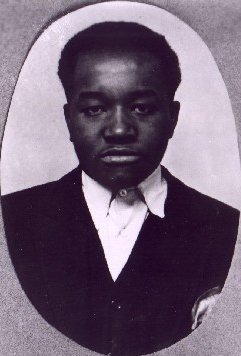
Not Ohio’s first execution in the “modern” era — that distinction belongs to Wilford Berry, who voluntarily waived his appeals to hasten a 1999 execution — Jay Scott, who was put to death by lethal injection on this date in 2001, stands at the headwaters of Ohio’s 21st century death penalty binge.

Prior to Scott’s death, Ohio had carried out only that one execution, Berry’s, in all the previous 48 years.

But it’s made up for lost time with another 45 executions in the eleven years since Scott died.

A paranoid schizophrenic and career criminal, Scott entered an East Cleveland deli in May 1983, ordered bologna and crackers, and then shot the 74-year-old proprietess at point-blank range after she served him. Then he went for the restaurant brace by gunning down a security guard at another restaurant. (That death sentence was eventually reversed; technically, Scott died for the first murder only.)
By the time he paid for the crimes, Scott had gotten to know the fledgling Ohio execution process pretty well.

Scheduled death dates on April 17 and May 15 had both been stayed at the last moment over legal appeals around his mental competency — on that latter date, he was three minutes from execution with the shunts that would carry the lethal chemicals already stuck in his arms.

Laborious as it was to finally consummate, Scott’s was the only Ohio execution in 2001.

But the state conducted three the next year — and it’s never carried out fewer than two in any year since then.

Part of the Themed Set: Ohio.

On this day..

1930: Lee Akers, after the Ohio Penitentiary Fire

On this date in 1930, Lee Akers was electrocuted in Ohio for murdering a Cleveland man at a gas station stickup.

Akers had been held at the death house at the Ohio Penitentiary bound in the end for a May 2, 1930 execution.

The “lucky” break that bought him six extra weeks of life was just the deadliest prison fire in history. (n.b. — Recently surpassed in Honduras)

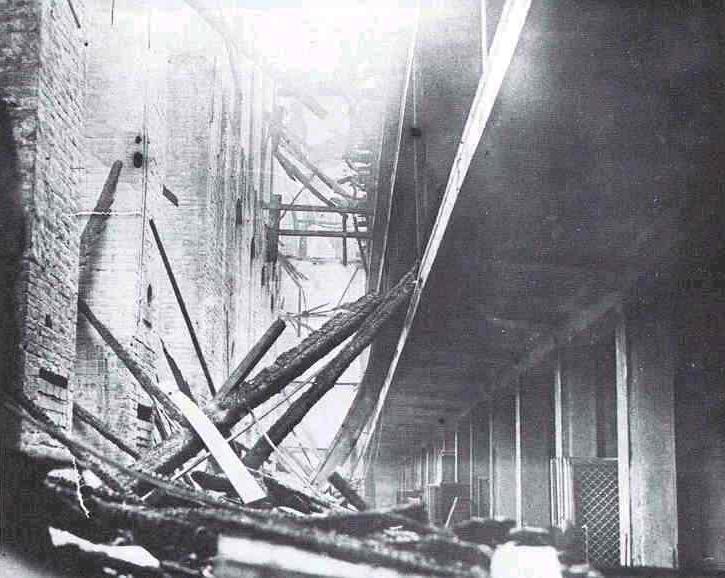
Already a century old and packed to triple its 1,500-soul capacity, the penitentiary had a fire break out* shortly after supper on April 21 in Section “I”. This fire

licked along dry timber into Section “H”, from Section “H” to Section “G”, and thence upward to where 300 prisoners, trapped like caged animals, tore futily [sic] at steel bars that became their pyre.

It was a twilight of indescribable horror.

Some 320 perished from burns, suffocation, and smoke inhalation. Most of the casualties were those who never got out of their locked prison cells, and couldn’t move a meter as death enveloped them.


20th century literary great Chester Himes also happened to be serving a sentence for armed robbery at this prison:** indeed, it was during that sentence that he began to write at all, setting him on a path towards his life’s work.


1991 cinematic adaptation of Himes’s A Rage in Harlem.

Himes’s novel from his time in the Ohio penitentiary was only published well after his death, in 1998 … the same year the disused Ohio Penitentiary was finally torn down.

One of Himes’s first published works was a short story in Esquire in 1934, written while Himes was still incaracerated. Titled “To What Red Hell” (an allusion to Oscar Wilde’s meditation on prison and death row, The Ballad of Reading Gaol: “For none can tell to what red Hell / His sightless soul may stray.”), this story follows the experience of the Ohio prison inferno through the fictional inmate “Blackie”, who beholds tormented prisoners like “condemned souls jumping flame pots in the ante room of Hell” … but also notices the ironic safety of death row, where the literal condemned souls remained un-burned.

From where he stood he could see the death house, a low, red brick building at the end of the cell block. Just above it was a wall parapet. A guard stood on the cat-walk with a sub-machine gun cradled in his arm. Two searchlights shone in opposite directions down the sides of the gray, stone wall. The green door of the death house looked black in the vague light.

The end of the parade! The last mile! What a joke! The death house was on the other side of the yard tonight, he was thinking. It was quiet over here in the shadows with the scared ghosts of the executed men.

In fact, someone had managed to spring the death house doors, momentarily “liberating” the doomed men. As militia arrived on the scene, they attempted to forestall any general uprising or wholesale prison break by setting up machine gun emplacements on prison towers, with orders to shoot to kill.

When the death row prisoners were collared — they hadn’t actually gone anywhere or tried anything** — they were offered transportation to the city jail for their own safety against these potentially itchy trigger fingers. While three of them took the refuge, the others (Akers included) refused, on the sensible grounds that they could hardly be much worse off being shot dead than being electrocuted.


The inmates — reported to have labored heroically alongside guards, firefighters, civilian nurses, virtually without incident — were understandably incensed at the disaster, charging that guards had allowed most of the victims to die out of needless reticence over releasing anybody as the fire began to spread — and that the refusal to turn the keys went straight to the top. William Wade, “a big Negro prisoner” who had sledgehammered a cell open to save 25 men, was quoted in the next day’s New York Times saying simply, “They could have saved these men. They let human beings burn to death.”

Warden Preston Thomas, who comes off in the story as an unmitigated shit,† was the focus of the prisoners’ ire … and when he showed himself, the focus of their raucous jeers (Thomas tried to dump the blame on lower-level guards, who in turn claimed that they’d been directed by their superiors not to open cells). The Ohio governor’s refusal to dismiss Warden Thomas soon triggered a riot in the prison and the arrival of the National Guard for several tense days of teargas-punctuated negotiations.

This mutiny was only just being settled when Akers’s original May 2 execution date came up. The charred prison clearly had some other priorities at that moment than orchestrating an execution, so Akers and another man, John Richardson, both got a gubernatorial reprieve until things were peaceful enough for orderly killing.

The inferno, meanwhile, opened space for some humanitarian reforms: since overcrowding (which had been fretted in internal reports in the years preceding the fire, and had also contributed to several other prison disturbances) was widely understood to be part of the disaster, a parole board was formed in 1931 that released 2,300 prisoners. “Mandatory minimum” sentences that stuffed minor offenders into these dungeons were widely rolled back.


According to the Justice Policy Institute (pdf), the total United States prison population in 1930 was a mere 180,889.

Although we may have made some provisions to avoid spectacular catastrophes like the Ohio Penitentiary fire in our present-day overcrowded prisons, the routine catastrophe of imprisonment itself — “the moral scandal of American life” — has grown more than twelvefold since 1930.

* The mysterious fire was eventually found to have been started by some (non-death row) prisoners in an abortive breakout bid: two of them later hanged themselves in remorse. However, and rather amazingly, there were no reported escape attempts during the nighttime chaos.

** Himes wasn’t the Ohio penitentiary’s only noteworthy litterateur. The facility’s prison yard was named in honor of the pseudonym that a previous scribbling inmate had concocted there in order to get published while doing his time: O. Henry.

† e.g., a committee formed by the legislature to investigate the fire took testimony from convicts that Warden Thomas was a tyrannous martinet even apart from the disaster, even as Thomas was publicly threatening the angry inmates who were demanding his ouster: “If these prisoners don’t quiet down pretty quick, I’ll use forceful methods against them if it takes a soldier to every man.”

Part of the Themed Set: Ohio.

On this day..

2008: Curtis Osborne, poorly represented

Nach Golde drängt,
Am Golde hängt
Doch alles.

Goethe, Faust

On this date in 2008, Curtis Osborne suffered lethal injection in Georgia for a double murder.

In the words of the Atlanta Journal-Constitution report, “Osborne was executed for shooting Arthur Jones and Linda Lisa Seaborne on Aug. 7, 1990. Osborne allegedly killed Jones because Osborne didn’t want to give him the $400 he got for selling Jones’ motorcycle. Seaborne was killed because she was there.”

Pretty awful.

It’s very difficult to capture in individual cases the structural dimensions of the death penalty system, simply because individual cases are, well, individual. The many plausible actual innocence cases are one thing. Here what you’ve got is a guy who unquestionably shot dead two humans so that he could feed his cocaine habit: making some procedural argument for Curtis Osborne is going to sound like a lot of special pleading.

But those procedural arguments are the very guts of the animal. The U.S. death penalty proposes, as an institution, to attempt not the question, does Curtis Osborne deserve to die?, but the question, among hundreds of Curtis Osbornes, do we have the apparatus to justly distinguish the ones that deserve to die?

As an impoverished drug addict, Osborne was represented at trial by a since-deceased public defender named Johnny Mostiler.

If you search this case, the thing you’ll find immediately is that another defendant being represented at the same time by Mostiler would later swear that Mostiler told him, speaking of Osborne, “that little nigger deserves the chair.” And the context of the conversation was about how Mostiler had just received a plea offer that Mostiler didn’t plan even to relay to Osborne, for the aforementioned reason.

Pretty awful.

This sort of thing is hard to substantiate: the allegation comes from a man serving a murder sentence of his own, and Mostiler isn’t around to defend himself. But on its own, it’s a shocking claim and a reminder of how profoundly the trial attorney’s performance shapes the entire legal experience. As Time magazine put it, what if your lawyer wants you executed?

Whether Mostiler really dropped an N-bomb on Osborne’s case, we really don’t know. But it’s been said that capital punishment means those without capital get the punishment, and the fact of the matter is that not many of any race who have recourse to indigent defense are served at the bar by Atticus Finch.

Leave aside even that shocking racism allegation, one that no court saw fit to adjudicate. (Prosecutors called the racism claim “outlandish”; appellate court ruled it procedurally out of bounds.) Just reckon the structural situation.

The American Prospect profiled the blinged-out, fast-living Mostiler after his death — breathing not a word about Osborne’s case, which was nowhere on anybody’s radar — and described, essentially, the neoliberal project in action for public defenders.

Mostiler represented not only Osborne, but virtually every poor defendant in Spalding County, Georgia … because, in 1990, he’d pitched the county on a fixed annual contract. Mostiler argued that the county was

wasting money paying as many as 20 court-appointed attorneys $50 an hour to handle indigent cases without knowing exactly how many hours those attorneys would bill during any given year. Mostiler proposed instead that the commissioners pay him a flat fee to handle all of the county’s indigent cases, regardless of the number. That way the county would have to deal with only one lawyer, and it would know its final bill at the start of the fiscal year rather than at the end.

Let justice be done though the heavens fallwithin the confines of fiscal probity. This grift was going to be worth a good deal more than $400 … and come with its own body count, too.

Mostiler bragged about saving the county a good million bucks over the course of the nineties. That’s a new definition of the adversarial judicial process, fresh-minted for the race-to-the-bottom era: every exertion by a defense attorney on his client’s behalf costs him part of his own paycheck.

Small wonder that Mostiler hardly ever tried cases — no more than seven a year, he said, out of as many as 900 felonies. Most were dispatched within minutes in shotgun plea deals and no small number of those momentary clients remain on the inside of a Georgia penitentiary as we speak. Did we mention that Mostiler did all this “lawyering” in only 60% of his lawyer time? He kept up a lively private civil practice, too, one where he probably averaged more than 100 minutes per case.

Death sentences, of course, don’t result from plea bargains — but at Mostiler’s zero-sum rates he also wasn’t going to prep this like the Dream Team. Slate reported that

Mostiler never hired a psychiatrist to examine evidence that Osborne was a victim of childhood abuse, and was borderline retarded, despite a court-ordered sanity evaluation that had found “indications of depression, paranoia, and suicidal ideation.” He never examined the history of mental illness in Osborne’s family because, he said, he didn’t know how to conduct that kind of investigation. Mostiler called no expert witnesses to testify for his client and didn’t bother to interview the state’s experts before they appeared at trial. And he rejected appointment of a second attorney to help with Osborne’s defense, which the American Bar Association and all serious death penalty litigators say is essential if a capital murder defendant is to receive a fair trial.

Pretty damn awful.

Once Osborne’s conviction was in the books at the trial level, no appellate court could intervene without clearing a very high bar: would the evidence un-investigated and the argument un-made likely have made a difference? Could anyone prove that Mostiler described his client with a racial slur? Nobody could really say so. End of story.

It was 18 years between the time Osborne laid those two souls in the ground and the time he laid himself down on the gurney. The irony is that all that time, all those exhaustive appeals, left the most salient and troubling questions in his case un-examined. There were substantive questions here, but Georgia prevailed in a procedural argument that those questions remain closed.

All this unsalved death and sorrow, and all for what? So Curtis Osborne could have another hit. So Spalding County, Georgia wouldn’t have to trouble the property levies with billable hours. For nothing but a little bit of money.

On this day..

1967: Luis Monge, America’s last pre-Furman execution

Forty-five years ago today, Luis Monge was gassed in Colorado for murder — the last execution in the United States before a decade-long lull in capital punishment in the U.S.

Monge, an insurance salesman with no prior history of violence, had a hearty brood of 10 children, but when his wife found out he was having an incestuous relationship with one of them, Monge bludgeoned the wife to death, and killed three of the young children just for good measure.

Monge pleaded insanity, and then when doctors found him sane enough to stand trial, just pleaded guilty — eventually dropping all appeals and asking to be hanged in public at the Denver City and County Building.

Despite the culprit’s preferences, his execution was stayed for all of 1966 while Colorado voters weighed a referendum on continuing the death penalty. They ultimately voted 3-1 in favor. (See this detailed history of the death penalty in the Columbine State.)

Even though Monge himself embraced execution willingly, his seven remaining children (also the children of, and siblings of, his victims: surely a difficult position) still fought for clemency, and shared Monge’s last meal with him.

Had Monge maintained his appeals, he — like four other Colorado inmates whose death dates were also on hold in 1966 — would likely have made it into the nationwide unofficial moratorium on executions that settled in while courts sorted out death penalty standards in the late 1960s and early-to-mid 1970s.* That period led into 1972’s landmark Supreme Court decision Furman v. Georgia, invalidating all existing death sentences in the country and sparing men much more nefarious than Luis Monge.

Instead, this date’s principal went to his death clutching a black rosary (and allegedly, and one must suspect apocryphally, asking if the gas would trouble his asthma)** and became a nigh-forgotten denouement from a closed chapter of death penalty jurisprudence, and the last man put to death in America until Gary Gilmore almost ten years later.

Apart from his milestone status vis-a-vis capital punishment nationwide, Monge is also the last person to die in the Colorado gas chamber.


The gas chamber that killed Luis Monge, now retired to Colorado’s Museum of Prisons. (cc) image from Cowtools, who also has a photo of Monge’s bullet-riddled grave marker.

In fact, Monge is currently still the second-last put to death in Colorado, period. It would be fully 30 years before Colorado executed again — in 1997, by lethal injection. As of this writing, it hasn’t done so again since.

* If Monge had avoided execution, the “last pre-Furman execution” milestone would be held instead by California’s Aaron Mitchell, the only man executed on the authority of California governor (and future U.S. president) Ronald Reagan.

** The man who pulled the lever for Monge’s execution, Canon City penitentiary warden Wayne Patterson, was not enthusiastic about the job. He describes his experience here, saying that “Monge was a guilt-ridden man who was nearly suicidal before he was executed. Those were the [kind of] guys who were executed — not the people I thought belonged in the chamber.”

On this day..

1985: Marvin Francois, back to Africa

On this date in 1985, Florida electrocuted Marvin Francois (to the disappointment of this unknown anti-death penalty protester).

Francois’s last statement, via Last Words of the Executed:

“I am as a grain of sand on the beach of the black race. The black race has lost its pride and dignity and is slowly dying from within and without. My death ends my tears, and the fortune of watching my race slowly die. If there is such a thing as an Antichrist, it ain’t one man, but the whole white race.”

Francois had donned a mask and, with a couple of confederates, stuck up a drug house in 1977.

The mask slipped, exposing Francois’s face — and the home invaders decided to murder the eight prisoners to keep them from making the ID. All were shot in the head execution-style.

Somehow, two survived to identify Marvin Francois. It was an easy conviction. (A confederate, Beauford White, was executed for the same crime in 1987.)

Once the death sentence was on the books, appellate attorneys developed a genuinely sympathetic profile of Francois’s background, if not his crime. A federal appeals court on the day before Marvin Francois died could not help but agree that

[t]he proffered evidence shows that Francois was the product of a sordid and impoverished childhood environment. His parents were not married. His father was a habitual heroin addict who never worked, who brought other addicts into the home for the ingestion of heroin in front of Francois when a child, and who beat Francois because he would not fight with other children when he was a boy. Francois’ mother often worked as a prostitute and was of little benefit to Francois during his childhood. She married but Francois’ step-father abused him. Francois grew up as a child of the street. At the same time he was smart, and although not finishing school, he obtained his G.E.D.

The behavioral scientists in their affidavits posit that “… some offenders, like Marvin Francois, are themselves victims of circumstances that shape their lives in ways beyond their deliberate control.” They suggest that given Francois’ chaotic antisocial upbringing, “clear mitigation of punishment compellingly surfaces.”

Nevertheless, the panel concluded that, given the extent of the crime (and his existing history of violence), all this sob-story stuff “would not have affected the sentencing outcome in this case had it been submitted to the jury.”

That was that.

It was a touching parting for at least one good friend on death row with him. “We wanted to send him out on a high,” a fellow-prisoner later remembered of sharing a last cigarette with Francois while imagining it a joint. “It took a little out of me when they killed him. I’d grown real attached to him.”

According to David von Drehle’s Among the Lowest of the Dead, that disattachment was rather unusually distant: Marvin Francois’s final resting place is … the sea off Dakar, Senegal.

Francois had asked that his ashes be scattered in Africa. Susan Cary, the longtime activist … was determined that this last wish would be honored. But it was one thing to find bus fare for a condemned man’s family, and quite another to raise the money for a trip to Africa. Cary collected the cremated remains of Marvin Francois and put them in a shoebox in her closet, where they sat for two years while she tried to figure out how to get them across the ocean.

In 1987, Michael Radelet, Cary’s frend and fellow activist, announced that he was going to Senegal to visit a relative. Take Marvin, Cary suggested. Radelet was game, but there were rules — human remains can’t just be toted from country to country. Uncertain as to the relevant legalities, Radelet contacted John Conyers, a prominent black congressman from Detroit; Conyers strongly opposed the death penalty, he was well known in Africa, and he had offered more than once to help Florida’s anti-death penalty crusaders any way he could. The congressman pulled the right strings, and shortly before his trip Radelete received an official letter announcing that the Senegalese government would be happy to welcome “Brother Marvin” home.

… Radelet had a darkly comic view of the world. Traipsing around Senegal, shoebox in hand, he would place the box on the opposite chair at restauants and say things like “Marvin, would you like some water?” On sightseeing jaunts, he would take snapshots of the shoebox in front of important buildings and picturesque vistas. Finally, Radelet carried the box to a bluff outside Dakar, a lovely spot with the city in the distance and the Atlantic spread out below. He took one more snapshot – “Marvin at the seashore” — then opened the box and sprinkled the ashes on the sun glittered waves. As he gazed into the oceanic expanse, it occurred to him that this very water might have rocked and sloshed all the way from Florida; now, the waves lapped the shores of Africa, bearing the remains of Marvin Francois to his dreamland.

The aforementioned Michael Radelet — now at Colorado University, not Florida — holding forth on more up-to-date death penalty trends:

On this day..

1881: Po’olua, “darkened in my mind”

This date in 1881 saw the hanging of a native Hawaiian named Po’olua for a homicide of domestic jealousy tinged by almost tragic remorse.

This case is described in the 1991 essay “A Short History of Hawaiian Executions, 1826-1947” by Joseph Theroux.

In 1881, the Hawaiian [Po’olua] grew enraged when his when his common-law wife, according to the papers, “paraded her infidelity” before him and slaughtered her with a “big butcher knife.” Then, in a fit of remorse, he draped his house in mourning with black crepe paper.

… The experts of the day — family doctors and preachers — were conducted in to interview the bewildered man. They questioned him and concluded that he was not insane. Po’olua himsel agreed that he was sane but “darkened in my mind.” … the Reverend H.H. Parker explained the man’s actions this way: “A Hawaiian would do many things which a white man would not.”

When it as found that Po’olua had a heart abnormality and that he would likely die soon anyway, letters of clemency were circulated on his behalf. But he was hanged on May 20, 1881. Permission was sought for a post mortem to investigate the state of his heart, but officials denied the request. The Advertiser remarked that it “should have been done. Being attended to, might have laid him quiet in his grave; but being forbidden, his spirit will rise up Banquo-like for many a day to come.”

On this day..

1917: Emil Rebreanu, Forest of the Hanged inspiration

On this date in 1917, Romanian Lieutenant Emil Rebreanu was hanged for attempted desertion by the Austro-Hungarian army.

Here’s Rebreanu’s entry at the Enciclopedia Romaniei, which says in brief that he was one of 14 (!) brothers born in the part of present-day Romania that was then attached to the Kingdom of Hungary.

Upon the outbreak of World War I, Rebreanu was drafted into the Austro-Hungarian forces and fought on several fronts. But his removal to the lines to fight against the independent Romanian state was a front too far: he attempted to cross the lines to the Romanians on the night of May 10-11, but was captured, court-martialed, and sentenced to hang.

However, tragedy for the sizable Rebreanu family was a boon to world literature.

One of Emil’s many brothers was author Liviu Rebreanu, one of the greats of Romanian letters.

The latter’s 1922 novel Forest of the Hanged clearly draws upon his brother’s fate: in Forest, a Romanian officer uneasily serving in the Habsburg army first condemns a Czech deserter to death as part of a tribunal, then attempts himself to desert to Romania.

For his trouble, the character suffers the exact same fate as Emil Rebreanu.

A 1965 Romanian film, also called Forest of the Hanged, adapts this novel for the silver screen.

On this day..