1476: Israel, the last execution of the Trent blood libel trial

We have covered in these pages the horrific blood libel trial that sent most of the Jews of Trent to execution for the supposed ritual murder of the child Simon of Trent.

The moral panic (and torture-aided interrogation) that broke out when Trent’s Jews were suspected of having killed a Christian child led to a batch of executions in June 1475. But that was only the first act of a drama that would reach all the way to the courts of popes and emperors in the subsequent months … a conflict that would not end even when the last “murderer”, Israel, was broken on the wheel on January 19, 1476.

Trent lay at the southern fringe of the Habsburg Holy Roman Empire,* literally halfway from Vienna to Rome … and Trent’s ambitious prince-bishop Johannes Hinderbach was likewise beholden to both those poles of authority.

The sitting pope, Sixtus IV, was pretty sympathetic to Jews in general and very definitely not okay with Hinderbach’s theater of torture and execution. Sixtus was certainly also feeling plenty of pushback from other Jewish communities in Europe to make sure Trent wouldn’t be a precedent for similar freakouts in the future, and from Christian elites who didn’t want muddleheaded fanatics running around.

In Trent, “the Jews” meant literally three households — a tiny handful of people. By contrast, in cosmopolitan, humanist Rome, Jews were prominent among the intelligentsia and their presence taken for granted. Sixtus had Jewish “advisors and physicians in the papal court. They were teachers of music, theater, and science. Rome was a center of Hebrew literature and publishing … Sixtus IV, like most of his predecessors, took his role as a defender of Jews from violence more or less for granted.”**

Sixtus ordered the proceedings halted “because many and important men began to murmur,” and instituted an apostolic commission to investigate.

But Hinderbach and the Trentini refused to cooperate (Italian link) with the investigation. Hinderbach, for his part, was all-in on the Simonino story: just like today, nobody on the hook for a wrongful execution is going to advance his career by acknowledging that fact.

Resentfully, Hinderbach put his unwelcome papal visitor Battista Dei Guidici up in a crappy room, and “many people, moved more by furor than reason, temerity than devotion, threatened to kill the commissioner in the streets of the city, if he did not confirm the miracles and the asserted martyrdom” of little Simon. If anyone in Trent thought otherwise, he did not dare make it known to the closely-watched investigator.

Trent still had Jews in prison at this point, but Hinderbach resolutely prevented the pope’s agent from interviewing with them. “It was to be feared,” Hinderbach said, “that if he talked to them, he or his men could give some sign to the Jews, who would be rendered more obstinate, since they were always saying, ‘A man will come to free us.'”

Book CoverThese quotes are via R. Po-Chia Hsia’s Trent 1475: Stories of a Ritual Murder Trial, which is likewise our guide for the tense diplomatic battle ensuing over the autumn of 1475.

After having bribed a servant to deliver word to the imprisoned Jewish women that they had an advocate, Dei Guidici relocated to nearby Venetian territory — “where innocent people are not killed, where Christians do not plunder Jews, as it was in Trent” — and papers started flying.

Dei Guidici appealed to — and eventually ordered — Hinderbach to release the remaining Jews in his custody, while the pope sent out directives quashing any preaching on Simon’s “martyrdom.” Italian Jews poured into Dei Guidici’s offices appealing for their fellows and attesting that they could not travel through Trent for fear of mob violence.† A verse from a Veronese rabbi dating to late 1475 curses the nearby city: “Hills of Trent, may you not have rain or dew / Seven times may you fall and not rise.”

Hinderbach, for his part, sent his own envoys to German cities that had persecuted Jews for ritual murder in the past to get his own paper trail establishing that, yes, the Hebrew liked a good drink of Christian blood. More significantly, as a prince-bishop, Hinderbach also sent his own appeals up the Holy Roman Empire’s secular chain of command, objecting to the ecclesiastical meddling.

Hinderbach’s only concession to his apostolic scold was to release the children he had in custody. In October 1475, his political machinations with the Habsburgs yielded authorization from the powerful Tirolean Archduke Sigismund to resume judicial proceedings against “the Jewish men and women you have in prison” and “render justice as it should be, and let the death sentences be carried out.”

Interrogations for six Jewish men still in custody resumed on October 25, again with the aid of the horrible strappado to confirm and elaborate upon the already-determined official story of Simon’s martyrdom.

Denial — or even confessing, but guessing the wrong detail to “admit” — was not an option, as this October 26 interrogation record indicates.

He was asked whether he saw the murdered boy.

JOAFF [one of the Jewish households’ servants]: In the ditch.

PODESTA: Think again.

JOAFF: In the antechamber of the synagogue.

PODESTA: Anywhere else?

JOAFF: No.

He was ordered stripped, tied by the rope, and hoisted up.

JOAFF: Let me down, I’ll speak the truth.

PODESTA: Speak it on the ropes.

JOAFF: I have never done anything evil.

He was hoisted up and dropped.

This continues until Joaff has been dropped enough times to agree that he saw Simon’s body on Saturday night, on a bench in the synagogue. They knew that was the truth because it confirmed what they already wanted to hear.

This would be the end of Trent’s Jewish men in January 1476.

Israel, a 23-year-old copyist, was the last to die, and his fate is particularly poignant.

He had half-escaped the pall of death by accepting baptism the previous spring, and lived freely during the following months under the name Wolfgang. Dei Guidici interviewed him, one of the few productive sessions the pope’s man was able to arrange in Trent, and learned thereby of the details of Hinderbach’s interrogations.

Once Dei Guidici withdrew to Venetian soil, Jews of that principality would begin reaching out to “Wolfgang” in their efforts to communicate with the remaining imprisoned Jews.

This skullduggery came came apart when the persecution fired back up in October, and Israel was re-arrested, and put again and repeatedly to the rope. He was a man bound to be crushed by the legal machinery arrayed against him, but it was not only that. As Israel was well-traveled, he was tortured for information about ritual murders in other German cities; his forced denunciation of 14 named Jews in Regensburg initiated a blood-libel proceeding in that city that was only aborted by intervention from the Emperor himself.

And while Israel struggled to portray himself as a faithful convert and appeal to little Simon for an exculpatory miracle that never came, he at least once threw aside the mask to give his tormenters a piece of his mind.

PODESTA: What did he think of the Christian faith?

ISRAEL: He wants to say the truth. He does not believe in anything of the Christian faith … It is a joke to say that God came down from heaven to earth, walked around and lived among men. He believes only in God and nothing more. He believes also that the Jewish faith is right and holy.

PODESTA: Does he believe that it is right, according to Jewish law, that Jews kill Christian children and drink and eat their blood as he himself had said.

ISAREL: He believes firmly that it is right that Jews kill Christian children and eat their blood. He wants to have Christian blood at Easter, even now that he is baptized he wants to die a Jew.

Four other Jews from Trent died by hanging earlier in January 1476. The last one put to death was Israel on January 19 — “thief, eater and drinker of Christian blood, poisoner, blasphemer, traitor, and an enemy of Christ and Godly majesty.”

Even his death did not finally put a stop to the affair, for the women of the Jewish community were still in prison, and still being tortured as late as March. They would eventually accept baptism as the price of their release.

Meanwhile, Hinderbach and Dei Guidici carried their scrap to the curia. Hinderbach’s dogged advocacy of his burgeoning cult of Simon — and the odd ad hominem against his foe here and there — won some allies against Dei Guidici’s protests against “the peril which would be incumbent on the Christian religion, on account of the dealings in Trent, and the lies that would reach the ignorant.”

In the end, the Church decided it on political grounds. It could not encourage more Trents; neither could it invite the scandal of disavowing the one that had already taken place. It upheld Hinderbach’s conduct while also reiterating standing prohibitions against blood-libel trials or oppressing the Jews.

Hinderbach very naturally took this as vindication and spent the balance of his life propagating the Simonino cult. Artwork throughout northern Italy, some of it still visible in situ today in its original public monuments and chapel frescoes, attested to his success.


The Martyrdom of Simonino, by Gandolfino d’Asti.


The Martyrdom of Saint Simonio, from the Trento school of Nicklaus Weckmann. (Via)

Indeed, the city of Trent itself‡ still has a street-viewable bas-relief depiction of Simonino’s ritual murder, with the Latin inscription:

In the dungeons of these buildings, where once a synagogue stood, and now a shrine, the blessed martyr Simon of Trent, in his 29th month of life, was killed with excruciating pain by the Jews in the deep of the night of April 10, 1475 A.D.

The Simon of Trent cult — never the face of Christianity that the institutional church really wanted to feature — was only officially suppressed in the 20th century with the Second Vatican Council.

* Trent’s position on the frontier of the Italian and German worlds is also the reason the next century’s major anti-Reformation Council of Trent was held there.

** Sixtus wasn’t all good news for Jews. More from political necessity than affirmative desire, he also authorized the Spanish Inquisition and appointed Torquemada.

† During this time, Dei Guidici also managed to extract a Trent resident named Anzelino Austoch. Under Dei Guidici’s torture, Austoch accused the man named der Schweizer, “the Swiss” — the very man who had suggested that the Jewish homes be searched for Simon’s body — of committing the murder. Dei Guidici clearly believed that either the Schweizer, or Austoch, or both, had actually killed Simon and intentionally framed the city’s Jews.

‡ Trent does not, of course, still avow the legitimacy of these proceedings; the city has elsewhere put up plaques apologizing for it.

On this day..

2013: Two from cranes in Pakdasht

Iran carried out two public hangings on this date in 2013 in the city of Pakdasht, according to the National Committee of Resistance of Iran.

On this day..

1949: Hiroshi Iwanami

On this date in 1949, Dr. Hiroshi Iwanami was hanged on Guam for murdering ten American POWs during World War II.

The commanding officer of the naval hospital on Japan’s South Pacific stronghold of Truk, Iwanami was condemned by the postwar U.S. Navy war crimes tribunal for overseeing — and rather reveling in — the sadistic murders of ten American POWs that fell into his hands in 1944.

As described in Timothy Maga’s Judgment at Tokyo: The Japanese War Crimes Trials:

From the Newcastle (NSW, Australia) Morning Herald & Miners’ Advocate, July 16, 1947

In addition to murder, Iwanami was charged with “preventing the honorable burial” of bodies and with “dissection” and “mutilation” of them. Iwanami had used all ten of his victims for so-called medical experiments. Four of his January 1944 victims had tourniquets placed on their arms and legs by Iwanami for long periods. Two of the POWs had their tourniquets removed in two hours, and the other two at the end of seven hours. The latter two died immediately of shock, but the former survived. On the same day, four others were injected with streptococcus bacteria to cause blood poisoning. All four developed high fevers and soon died.

On February 1, 1944, the two survivors from the tourniquet experiment were marched to a hill in back of the hospital. Naked, with their legs stretched out as far as possible, the men were tied to stakes. Iwanami’s staff then placed a small explosive charge three feet in front of each foot of each victim. The resulting explosion blew off the feet of the men, but both victims survived. Their amazing endurance was short-lived, because Iwanami ordered the men strangled; an aide accomplished the task with his bare hands. Their bodies were returned to the hospital, where they were dissected, and all vital organs were placed in specimen jars. Only some of the organs from the blood poisoning victims were kept, and their bodies were tossed off a nearby cliff.

During an evening meal near the end of July 1944, Iwanami asked his staff if they would assist him in experiments on two more POWs. Instead of answering quickly in the affirmative, the men asked about the value of such experiments. Refusing to discuss the issue, Iwanami ordered his men, instead, to participate in the execution of the two POWs. This time there was no opposition to the order. The two Americans were suspended from a bar placed between two trees. With the order to “stab with spirit,” the hospital staff then began their bayonet practice. There was little left of the bodies after the practice was over, and those bodies, one of them headless, were buried near the scene of the execution. Shortly before his capture, Iwanami had the bodies exhumed and thrown into the sea.

… the trial was as bizarre as the defendants. Three of Iwanami’s old hospital staff members committed suicide, leaving word that they would rather die than testify against their commanding officer. Another, Lt. Shinji Sakagami, took great pride in the fact that he had strangled two POWs. A staunch advocate of the Japanese war effort and, like so many of his colleagues, convinced that death was better than surrender, he hoped his actions in Truk would serve as a warning to the future enemies of Japan. Iwanami was sentenced to death, although he attempted to cheat the hangman. Smuggling a small, sharpened pencil into his holding cell, Iwanami stood at one end of the tight quarters, shouted “Banzai,” and vaulted against the opposite wall. The pencil was held close to his heart, but it did little damage. Both witnesses on the scene and the commission wondered why a surgeon would have failed to aim the pencil properly. Iwanami’s hanging proceeded as planned, and the most generous verdict for a member of his staff was ten years in prison.

On this day..

2013: A day in the death penalty around the world

United States

The first U.S. execution of 2013 was that of Robert Gleason, Jr. in Virginia last January 16.

Gleason was serving a life sentence for another murder when he conned a fellow-prisoner into letting him tie his hands as part of a supposed escape attempt. Instead, Gleason choked the poor bastard to death with a urine-soaked sponge.

The killer said he did this precisely in order to be executed.

“I murdered that man cold-bloodedly,” he told a reporter in 2010. “I planned it and I’m gonna do it again. Someone needs to stop it. The only way to stop me is to put me on death row.”

He was as good as his word. That summer, he got a necklace around the throat of a prisoner in a neighboring solitary pen and horribly throttled him to death. Virginia obliged Gleason’s heart’s desire with a death sentence that the killer did not contest.

Unusually, Gleason chose to die in the state’s 104-year-old oak electric chair, rather than by lethal injection. Virginia at the time was one of 10 states still allowing an inmate to choose electrocution, but Gleason was the first person to do so since 2010.

His last words: “Well, I hope Percy ain’t going to wet the sponge. Put me on the highway to Jackson and call my Irish buddies. Pog mo thoin. God bless.” As was widely reported after the fact, Pog mo thoin is Gaelic for “kiss my ass.”

His last words — and everything else about him — are remembered here by a reporter who got to know Gleason during his three-year journey to the death chamber.


Somalia

Dennis Allex, an agent of French intelligence held captive for over three years by al-Shabaab militants, was allegedly summarily executed on January 16 following an unsuccessful French raid to free him.

Allex, whose name is thought to be a pseudonym, had been seized in Mogadishu in 2009 and forced during his captivity to broadcast his captors’ demands.

Following the French intervention in Mali last January — an event potentially raising the danger for French hostages throughout the Islamic world — a commando unit attempted to free Allex on January 12.

The French suspect that Allex might have been killed during that operation. His captors, however, claimed that Allex survived it, and that they thereafter “reached a unanimous decision to execute the French intelligence officer, Dennis Allex.

“With the rescue attempt, France has voluntarily signed Allex’s death warrant”


Iran

On this date in 2013, Iran hanged a man in public in the city of Sabzevar.

Also in Sabzevar on the same day, another man suffered a spectacular public lashing.

Still another prisoner was reportedly hanged privately in Mashhad on January 16 in Iran.

On this day..

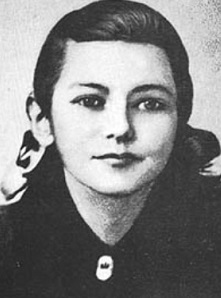
1944: Zinaida Portnova, Komsomol hero

On this date in 1944, Soviet partisan Zinaida Portnova was executed by the Germans occupying Belarus.

The youngest-ever female Hero of the Soviet Union (she was posthumously decorated in 1958), the Leningrad-born Portnova had a rude start in insurgency when the German blitz swept past her summer camp in Belarus and trapped her behind lines.

Said to have been radicalized when occupying soldiers struck her grandmother, the girl joined the youth arm of the local resistance, dubbed the “Young Avengers”.

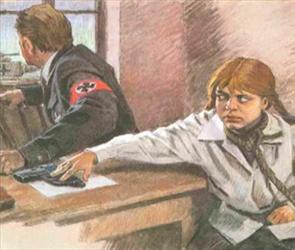
From surveilling enemy troop deployments and assembling weapons caches, Zinaida Portnova graduated to sabotage and ambushes … and capture. Even then she pulled off an action hero escape by snatching a gun and shooting her way out of custody, only to be re-arrested shortly thereafter.

She was shot a month shy of her 18th birthday.

A large number of Pioneer youth groups were subsequently dedicated to Zinaida Portnova, as was a museum of the Komsomol underground and a public monument in Minsk. She remains to this day an honored martyr of the Great Patriotic War.

On this day..

1876: Michael DeHay, in fire and maddened frenzy

(Thanks to Michael DeHay for the autobiographical guest post, originally published — too late for DeHay to see the byline — in the Prescott, Arizona Miner‘s January 21, 1876 edition. Prescott’s Sharlot Hall Museum unearthed this fascinating frontier confessional and posted it on its library archives site. The Prescott Daily Courier also published an abridged version, complete with an old photo of 1870s Cerbat (it’s a ghost town today). -ed.)

I, Michael DeHay, being fully aware of my approaching fate, and though recognizing the justice of my sentence, feel impelled to give to the world this, my dying statement, hoping that my fate may prove a warning to others similarly situated as I have been, and praying that the circumstances which have hurried me on to a disgraceful end may be avoided by others so situated.

I was born in Mongoup, Sullivan Co., N.Y., April 10, 1830, and am now 45 years of age. At 18 years of age, I went to Greenwood, McHenry Co., Ill., where my father and family had previously settled. In 1850 I went to California — crossing the plains. For three years I was mining and prospecting in different places there, and then returned to Illinois; afterwards going to Minnesota and thence to Wisconsin, where in 1856 I became acquainted with and married Esther Hemstock, near La Crosse.

In 1857 I returned to California with my family, where I remained for four years, working at mining and at my trade as a carpenter. These dates may not be correct, as I have only my memory to rely on, but they are as near as I can now remember.

In 1861 I removed to Nevada with my family; lived at Aurora in Esmerelda County, about seven years or until 1868, and then removed to White Pine, and the next Spring to Pioche, and thence to Parabnega Valley in Lincoln County, where my family resided, until in August 1875, at which time I was at work in Groom District (60 miles distant from my family), as there was no work nearer my home where I had a ranch.

I was working to get money ahead with which to remove my family to some place where I could educate my children, whom I deeply love. I was one of a Committee to get a school started, and had hired a teacher and made arrangements to remove my family to Hiko (NV). At this time, when I was filled with bright hopes for the future for my children, I was almost crazed to learn that my wife had left my home, taking with her my children, team and wagon and most of my household goods, and had started towards Arizona with a Mr. Suttonfield, an entire stranger to me, and who I learned had camped for a few weeks on my ranch. The man who gave me this information was a Constable, who at the same time served a summons on me in favor of Mr. Wilson, a store keeper, for $51, most of which my wife had obtained in supplies just before leaving for Arizona.

I immediately returned to my desolate home, and the next day started in pursuit. My first and great object in following was to get possession of my dear children. I passed them at Chloride, six miles from Mineral Park, where they had camped. Had I then followed the dictates of my almost crazed brain, I should have then and there stopped and shot both the man and woman who had, as I felt, brought ruin on both myself and children, but my better judgment prevailed and I went on to Mineral Park and laid my case before Mr. Davis, to whom I had been recommended to go for advice. Under his advice, I got out a process and had them brought into Mineral Park, but nothing came of it.

I then got a house for my family to live in, and went to work and got provisions for us to live on. I did all I could to make them comfortable, and tried by every means to induce my wife to live with me as before and was willing to forgive the past. To all my appeals she turned a deaf ear, continually declaring that she never would resume her marital relations with me.

During this time I was informed that she, from time to time, met Suttonfield at his house. This continued pressure upon my mind affected me both by day and night. I was troubled with horrid dreams, and at times was nearly crazed. The night the act was committed, I was completely weighed down with trouble and sorrow, and being suddenly awaked from my troubled sleep saw, or thought I saw, my wife standing over me with a butcher-knife in her hand. She had been sleeping in one room in our only bed with some of the children, and I in an adjoining room on the floor.

When I was thus suddenly awakened, I jumped up, clutching my revolver which was under my head and rushed after her into her room. She jumped into the bed and curled down, and I, in my frenzy, fired at her and drew her out on to the floor. When I saw the blood, and saw what I had done, I was horror-struck and rushed out of the house, determined to take my own life, and with this intent, placed my pistol to my breast and fired twice. I then ran down town and for hours have but a faint recollection of what occurred, except that I went up and down a ladder into a hay-loft. At the time I committed the deed, my brain seemed to be on fire and that my head was the center of fire and maddened frenzy.

During all the time after my arrival at Mineral Park, I had never thought or meditated on the murder of my wife, or to revenge myself on her for her act of desertion, but I had at times meditated on revenge upon Suttonfield, as I felt that he was the cause of all my misery. I had never had any serious difficulty with my wife more than a few hasty words such as are likely to occur between other husbands and wives.

I make this statement with a full knowledge that my end is drawing nigh, and that another day will launch me into eternity, where I shall meet my Maker face to face. I forgive all who have wronged me, as I hope myself to be forgiven by a kind and merciful God.

On this day..

1809: Seven Valladolid ruffians, by Napoleon

Upon this a question arises: whether it be better to be loved than feared or feared than loved? It may be answered that one should wish to be both, but, because it is difficult to unite them in one person, is much safer to be feared than loved, when, of the two, either must be dispensed with. Because this is to be asserted in general of men, that they are ungrateful, fickle, false, cowardly, covetous, and as long as you succeed they are yours entirely; they will offer you their blood, property, life and children, as is said above, when the need is far distant; but when it approaches they turn against you. And that prince who, relying entirely on their promises, has neglected other precautions, is ruined; because friendships that are obtained by payments, and not by greatness or nobility of mind, may indeed be earned, but they are not secured, and in time of need cannot be relied upon; and men have less scruple in offending one who is beloved than one who is feared, for love is preserved by the link of obligation which, owing to the baseness of men, is broken at every opportunity for their advantage; but fear preserves you by a dread of punishment which never fails.

Machiavelli, The Prince

This date in 1809, Napoleon gave that dread of punishment to the Spanish with the execution of seven insurgents at Valladolid, where he had come to collect grudging oaths of loyalty from that conquered nation’s grandees to his brother and puppet king Joseph.

We get this entry from Adolphe ThiersHistory of the consulate and the empire of France under Napoleon. We’ve added some paragraph breaks for readability.

Napoleon very distinctly discerned in the alleged devotion of the Spanish people for the house of Bourbon the demagogue passions that stirred them, and which took that strange way to manifest themselves; for it was the most violent democracy under the appearance of the purest royalism.

This people, extreme in all things, had in fact begun again the work of assassination in revenge for the disasters of the Spanish armies. Since the murders of the unfortunate marquis de Parales in Madrid, and of Don Juan Benito at Talavera, they had massacred in Ciudad Real Don Juan Duro, canon of Toledo, and a friend of the prince of the Peace; and at Malagon, the ex-minister of finance, Don Soler. Wherever there were no French armies, honest men trembled for their property and their lives.

Napoleon, resolving to make a severe example of the assassins, ordered the arrest in Valladolid of a dozen of ruffians known to have been concerned in all the massacres, particularly in that of the unfortunate governor of Segovia, Don Miguel Cevallos; and he had them executed, notwithstanding the apparent entreaties of the principal inhabitants of Valladolid.

“You must make yourself feared first, and loved afterwards,” was his frequent remark in his letters to his brother. “They have been soliciting me here for the pardon of some bandits who have committed murder and robbery, but they have been delighted not to obtain it, and subsequently everything has returned to its proper course.”

Our historian encloses as a footnote the text of a Napoleonic correspondence, documenting not only this date’s particular entry into the annals of execution but the Corsican’s methods generally.

The historian Thiers, it transpired, would soon be called upon to implement the sanguinary lessons of his study.

To the king of Spain

Valladolid, January 12, 1809 — noon.

The operation effected by Belliard is excellent. You must have a score of rascals hanged. To-morrow I hang seven here, notorious for having committed all sorts of atrocities, and whose presence was an affliction for the honest folks who secretly denounced them, and who are recovering courage since they are quit of them. You must do the same in Madrid. If a hundred incendiaries and brigands are not got rid of there, nothing is done. Of these hundred have a dozen or fifteen shot or hanged, and send the rest to France to the galleys. I have had quiet in France only in consequence of arresting 200 incendiaries, September murderers, and brigands, whom I sent off to the colonies. Since that time the tone of the capital changed as if at a whistle.

On this day..

1874: Three for misshapen love

On this date in 1874, two men and a woman hanged at H.M. Prison Gloucester for unsatisfactory affairs of the heart.

Charles Edward Butt

On August 17 of the previous year, Charles Edward Butt had besought the company of a Miss Amelia Phipps for an excursion to the next day’s Gloucester Cheese Fair.

Miss Phipps, long the object of the young farmer’s amorous suit, had unfortunately pledged her company to another gentleman, which disappointment Butt remedied by shooting the young lady to death.

Mary Anne Barry and Edwin Bailey

On that very same August 17, a Bristol teen mother named Mary Susan Jenkins attempted to relieve her baby’s colic by reaching for a packet of Steedman’s Soothing Powders.

Plumped for use by teething children, these packets had been helpfully delivered by the local Dorcas Society, a charitable network set up to provide essentials to the poor. And Miss Jenkins was quite poor indeed, after having been dismissed from her domestic service by a prosperous cobbler named Edwin Bailey after the latter impregnated her, and then refused to pay for the upbringing of his whelp.

Minutes after the treatment with Steedman’s, however, the whelp had breathed his last.

Investigation soon determined that the packages had been laced with lethal quantities of strychnine, and the package from the “Dorcas Society” in fact appeared to have been addressed by the hand of Edwin Bailey himself — whose maintenance payments of five shillings per week had now been mandated by a court.

Bailey’s motivation in the affair is obvious; much less so is that of Mary Anne Barry. Barry was another of Bailey’s servants, and she had taken to visiting the Jenkins family over the preceding months under the name only of “Anne” — representing herself as an emissary of the Dorcas Society.

Barry claimed that she had simply been dispatched by Bailey to attempt to ferret out the bastard child’s real paternity which he still violently denied. But a few days before the rat poison was administered it was she who had recommended Steedman’s powders and suggested that they could probably be procured of the Dorcas Society. Though this surely convinced her jury, that panel strongly recommended her to mercy, perhaps not entirely certain on the judge’s charge to them “whether there was not a view of her case consistent with her innocence.” Considering that she was informing Edwin Bailey of the conversations in what she perhaps thought was merely the capacity of a detective, there is indeed such a view.

Robert Anderson Evans

Aging executioner-relic William Calcraft, who would be forced into retirement later this year, was too sick to officiate, so the honors were done by Welsh hanging-hobbyist Robert Anderson Evans instead. Evans only rates a faint and distant blot on the British executioners’ star chart; this date’s trio was probably his piece de resistance. At Evans’s suggestion, the gallows was constructed not as a rising stage, but as a platform level with the ground, and built over a pit.

Evans was a doctor by training, but despite this he gave these patients an increasingly outdated physic: the short drop hanging, soon to be rendered entirely obsolete by William Marwood‘s variable-drop tables.

While the fall Anderson allowed on this occasion was sufficient for the men, the lightly-built Mary Anne Barry — for whom Marwood’s calculations would have called for a longer fall — choked to death for several minutes. Anderson even had to resort to pressing down on her dangling body to speed her death, possibly reflecting as he did on the advantage the elevated stage had for effecting this sort of extremity. (It was a regular occurrence at Calcraft executions.)* Ms. Barry, who confided on the platform that her dreams had long foretold this fate for her, turned out to have the distinction of being the last Englishwoman to die with a short-drop hanging.

* Anderson’s undistinguished hanging career might have been lengthened had he taken to heart the idea that the separation is in the preparation. Anderson didn’t even bring three ropes with him because he assumed that the woman in the group would be reprieved (and that he wouldn’t break a rope and have need for a handy backup). Mary Anne Barry’s noose was made up at short notice in the prison by a former navy man.

On this day..

1830: William Banks, housebreaker

On this date in 1830, William Banks, the leader of a gang of West Moulsey robbers was hanged at London’s Horsemonger Lane Gaol.

Despite a freezing day and a ferocious northerly wind that newsmen enhanced “almost to a hurricane” (London Morning Chronicle, January 12, 1830), a vast concourse of onlookers turned out to witness the execution.

The case attracted such enormous public interest for the boldness of the thieves in plundering the home of a Rev. William Warrington and his wife. That couple “had just undressed for bed,” explain the newspapers (this the Dec. 30, 1829 London Morning Chronicle), “when they were alarmed by the sound of several footsteps walking towards the door of their room.”

Mr. Warrington grabbed for a pistol he kept at the ready as the gang barged into the room, but couldn’t get a shot away before both were seized, trussed up, and deposited in the cellar with two tied-up maids.

Having the place at their disposal now, the robbers made a leisurely search of chests, drawers, cupboards, and the like and loaded up the domestic valuables on one of the house’s own gigs, finally driving it off under the locomotion of one of the house’s own horses at about 4 in the morning.

Though widely reported at the time it happened — way back in November 1828 — there was no break in the case until a year later when a gang member in prison on an unrelated case started informing against them in exchange for a remittance of his own punishment.

The gang’s leader, our man William Banks, “had repeatedly sworn that he would not be taken alive,” the Morning Chronicle reported in its January 12, 1830 account of the hanging. But with a gun literally to his head, he thought better of resistance and surrendered with the accurate prophecy, “I am a dead man.”

Even in 1830, housebreaking was among the two hundred-odd non-homicide crimes eligible for a capital sentence by the terms of England’s Bloody Code; indeed, Frank McLynn observes that it “was treated particularly harshly, as it violated privacy and exposed householders to assault.”

Banks, “a dark but handsome and very muscular man” of 35, dismayed the chaplain with his indifference to his spiritual salvation — for “all he cared about hanging was the pain it would give him, for he knew nothing about a hereafter.”

England in the early 1830s abolished the death penalty for a number of property crimes, including (in 1833) housebreaking.

On this day..

1430: Ten men beheaded, and an eleventh man married

(Thanks to Sabine Baring-Gould for the guest post, from this piece on Helene Gillet‘s miraculously surviving her beheading. -ed.)

In the Middle Ages there were two chances of life at the last moment accorded to a malefactor condemned to death, besides a free pardon from the sovereign. One of these was the accidental meeting of a cardinal with the procession to execution; the other was the offer of a maiden to marry the condemned man, or, in the case of a woman sentenced to death, the offer of a man to make her his wife.

The claim of the cardinals was a curious one. They pretended to have inherited the privileges with which the vestal virgins of old Rome were invested. In 1309 a man was condemned to be hung in Paris for some offence. As he was being led to execution down the street of Aubry-le-Boucher, he met the cardinal of Saint Eusebius, named Rochette, who was going up the street. The cardinal immediately took oath that the meeting was accidental, and demanded the release of the criminal. It was granted.

In 1376, Charles V was appealed to in a case of a man who was about to be hung, when a young girl in the crowd cried out that she would take him as her husband. Charles decreed that the man was to be given up to her.

In 1382, a similar case came before Charles VI, which we shall quote verbatim from the royal pardon.

Henrequin Dontart was condemned by the judges of our court in Peronne to be drawn to execution on a hurdle, and then hung by the neck till dead. In accordance with the which decree he was drawn and carried by the hangman to the gibbet, and when he had the rope round his neck, then one Jeanette Mourchon, a maiden of the town of Hamaincourt, presented herself before the provost and his lieutenant, and supplicated and required of the aforesaid provost and his lieutenant to deliver over to her the said Dontart, to be her husband. Wherefore the execution was interrupted, and he was led back to prison … and, by the tenor of these letters, it is our will that the said Dontart shall be pardoned and released.

Another instance we quote from the diary of a Parisian citizen of the year 1430.* He wrote:

On January 10, 1430, eleven men were taken to the Halles to be executed, and the heads of ten were cut off. The eleventh was a handsome young man of twenty-four; he was having his eyes bandaged, when a young girl born at the Halles came boldly forward and asked for him. And she stood to her point, and maintained her right so resolutely, that he was taken back to prison in the Chatelet, where they were married, and then he was discharged.

This custom has so stamped itself on the traditions of the peasantry, that all over France it is the subject of popular tales and anecdotes; with one of the latter we will conclude.

In Normandy a man was at the foot of the gibbet, the rope round his neck, when a sharp-featured woman came up and demanded him. The criminal looked hard at her, and turning to the hangman, said: —

A pointed nose, a bitter tongue!
Proceed, I’d rather far be hung.

* This would have been during the English occupation of Paris in the Hundred Years’ War, even as Joan of Arc was delivering the country from the hands of its antagonists.

On this day..