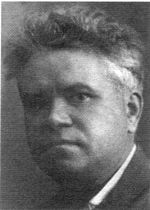
1649: Robert Lockyer, Leveller

On this date in 1649, Robert Lockyer (or Lockier) was shot before the scenic backdrop of London’s St. Paul’s Cathedral* for the Leveller-inspired Bishopsgate mutiny.

These weeks following the epochal execution of the late king Charles I were also the climax of a pivotal intra-party conflict among the triumphant Parliamentarians … one whose class dimensions map a lot more readily to a modern template. Levellers were, “in a small way, the precursors of the ‘Socialists’ of 1849” in the words of this popular history.

The prosperous gentry represented by the Grandee faction were just fine with the whip hand they’d obtained in government by overturning the monarchy; against them were arrayed the more radical Levellers (or “Agitators”) who could not fail to notice that they had no say in electing the Parliament upheld by their victorious arms, and an oligarchy governing them that bore a suspicious resemblance to the supposedly defeated nobility.

So there was that.

Meanwhile, up in high statecraft, Oliver Cromwell was preparing to make his name accursed of Ireland by smashing up the island and the Grandees hit upon an arrangement as expedient for fiscal ambitions as for territorial: the soldiers assigned to this expedition would have the opportunity to opt out of it, for the low low price of forfeiting the substantial back pay they were due from those years of civil war — pay whose fulfillment was naturally a chief Leveller demand.

How did this cunning plan to pillage the soldiery’s pensions to conquer Ireland go over in the ranks? Reader, not well.

Since the same reason that shall subject them unto us in generall, or any of us singly, may subject us unto them or any other that shall subdue; now how contrary this is to the common interest of mankind let all the world judge, for a people that desire to live free, must almost equally with themselves, defend others from subjection, the reason is because the subjecting of others make(s) the subdued strive for Dominion over you, since that is the only way you have left them to acquire their common liberty.**

So there was that, on top of that.

Grumblings gave way to refusals to march, and the refusal by a regiment stationed in Bishopsgate to leave London lest it also leave its leverage soon became the eponymous mutiny of this post — the Bishopsgate Mutiny.

Grandees quelled this particular insubordination without need of bloodshed, but thought it meet to deliver a little anyway as proof in this fraught political environment against the next such affair. Six of the soldiers drew military death sentences; Cromwell pardoned five, but let known Leveller/Agitator firebrand Lockyer go to his death over the appeals of Leveller leaders like John Lilburne and Richard Overton.

The signal was unmistakable — certainly to the thousands who donned Leveller colors to follow Lockyer’s funeral procession through London.

In the days following Lockyer’s execution, several Leveller-inspired regiments would openly rise … what proved to be the movement’s last great stand, efficiently crushed by Cromwell.

*The Parliamentarians had twisted high church dogmatists by putting Old St. Paul’s Cathedral to profane use as a cavalry stable, which employment actually made it a sort-of suitable place for a military execution. (The current structure was rebuilt on the same site after the previous church succumbed to the Great Fire of London.)

** From Mercurius Militaris, quoted by Norah Carlin, “The Levellers and the Conquest of Ireland in 1649,” The Historical Journal, June 1987 — which, however, makes the case that while the Levellers were obviously not cool with the pay expropriation, their opinion on the Ireland conquest in the abstract was far from uniformly anti-imperial.

On this day..

1938: Yakov Peters, Siege of Sidney Street survivor

On this date in 1938, a Soviet purge claimed (among others*) Yakov (Jacob) Peters, former Cheka executioner and once the subject of a headline-grabbing trial in England.

Peters was a trusted (and ruthless) operator in the Soviet internal police from the start of the Revolution: he helped interrogate Lenin‘s would-be assassin Fanya Kaplan in 1918.

And he was the guy Trotsky had on speed-dial when Cheka founder Felix Dzerzhinsky was arrested by the Left SRs during their abortive 1918 uprising against their erstwhile revolutionary allies, the Bolsheviks.**

Dzerzhinsky was disarmed and locked in a room. his assistant, M.I. Latsis, was captured in the Cheka Lubianka headquarters. “No point in taking him anywhere, put this scum against the wall!” shouted a sailor, but one of the leaders, Alexandrovich, intervened, saying, “There is no need to kill, comrades; arrest him, but do not kill.” Dzerzhinsky’s assistant Yakov Peters was urgently summoned by Trotsky, who ordered him to crush the uprising by attacking the Left Eser headquarters. Alexandrovich was caught at a railway station, and Latsis, whom he had saved from execution, personally shot him. Mass executions in Cheka prisons followed. (Source)

Like a lot of old Bolsheviks, Peters’s early service to the cause didn’t age too well. He ran afoul of some bureaucratic intrigue or point of party discipline or other and caught a bullet in 1938. (Khrushchev rehabilitated him.)

For anyone in England watching the fate of this distant apparatchik, the proximity to bloodbaths would have had a familiar hue.

Peters was one of a gang of Latvian revolutionaries who came to cinematic public attention in London when, in the course of being rounded up for a December 1910 murder, they engaged the police in a stupendous East End firefight on January 2, 1911 — the Siege of Sidney Street. (It’s also known as the Battle of Stepney.)

Armed like soldiery, the Latvians easily outgunned the bobbies who had them hemmed into a cul-de-sac, and they fired on John Law with ruthless effect. This necessitated a call to the Scots Guard — whose deployment was okayed by Home Secretary Winston Churchill, the latter captured on film that day awkwardly milling about the scene of the urban combat.


(Translated directly to the city’s cinemas as soon as that same evening, Churchill’s image came in for public catcalls owing to his support for a relatively open immigration policy for eastern Europeans.)

This incident was a landmark in crime, policing, media — recognizably modern in its trappings of nefarious immigrant terrorists, politicized state funerals for policemen, and of course, the live-on-the-scenes camera work.

Since Britain was a ready hand with the noose at this time, one might think an execution would have been just the denouement.

However, responsibility for the policememen slain in the affray had been officially assigned to a different gang member, George Gardstein — who was killed when the besieged house burned down — and there was little usable evidence against those who were finally put on trial for the gang’s various crimes. Most of the witnesses were dead, fled, or completely unreliable, so the surviving Latvians all walked.

(Since the identity of one of the first guys to start shooting when the police rang always remained murky, there are some theories — such as in this out-of-print book — that Peters himself had been one of the gunmen on-site, and/or that he could be identified with the absconded and never-captured gang leader “Peter the Painter”.)

Whatever the exact measure of blood on Yakov Peters’s hands from Sidney Street, there would be a lot more where it came from.

While Peters went off to his different fate in revolutionary Russia, the dramatic scene he left behind has naturally attracted continuing retrospective attention in England. The testimony of witnesses, who also recollect the shootout’s anti-immigrant fallout, is preserved in this BBC Witness radio program:

[audio:http://downloads.bbc.co.uk/podcasts/worldservice/witness/witness_20110127-0950a.mp3]

And, on this BBC Four television special:

* e.g., Russian Civil War officer Nikolay Gikalo and Romanian Jewish revolutionary Leon Lichtblau.

** And in favor of resuming Russia’s ruinous involvement in World War I!

On this day..

1942: Not Hersh Smolar, saved by Genesis

(Thanks to Meaghan Good of the Charley Project for the guest post. -ed.)

On this day in 1942, the Nazis issued an ultimatum to the Judenrat of the Minsk Ghetto in Belarus: turn over Hersh Smolar for torture and execution by noon, or they would all face execution themselves.

Smolar, a dedicated Communist who was a writer and editor in civilian life, had been a problem for the Germans for quite some time. He was a leader in the resistance of the Minsk Ghetto, and that resistance was a force to be reckoned with. Smolar and others like him formed an underground organization that printed leaflets about Soviet successes in the war, occasionally hid non-Jewish Communists and escaped Russian prisoners of war within the ghetto (the infectious disease ward of the hospital was a great hiding place: the Germans never went there), and above all tried to save the lives of as many Jews as possible.

The Minsk Ghetto underground formed links with underground resistance organizations on the outside and they worked together. Unlike the rest of Eastern Europe, the general population of Belarus was as a whole sympathetic and helpful to the Jews. The result was that Jews were able to escape the ghetto and join partisan groups in the forest by the thousands, surviving and taking out Nazis at the same time.

The Minsk Ghetto leaked like a sieve. By the time it was liquidated, 10,000 of its residents had joined partisan groups in the forest.

Smolar, of course, had tried to keep his activities a secret from the Nazis, but he couldn’t avoid their attention forever. Unfortunately the Minsk Ghetto Underground wasn’t very good at keeping itself a secret and twice it was decimated by mass arrests.

By the spring of 1942, Smolar was a hunted man, and in hiding. On April 1 he was in the hospital’s infectious disease ward, disguised as a typhus patient, meaning his face could be covered. (Typhus patients suffer extreme sensitivity to light.) The Judenrat paid him a visit and told him about the Nazis’ ultimatum.

Some of the Judenrat members were prepared to turn Smolar in, so only one person would have to die. Of course, the ideal solution would be where no one would die. They turned to the Tanakh for guidance, specifically the story of Joseph. When Joseph’s brothers sold him into slavery in Egypt and told their father he had died, they dipped his coat in the blood of a kid and presented this as proof of his death.

Displaying the sincerest and brassiest form of flattery, one of the Judenrat members took a blank passport, filled it out with Smolar’s photograph and details, smeared it with blood from a recent Nazi victim, and took it to the Gestapo officers. He explained that they had apparently gotten Smolar in a random shooting, as the passport had just been found on a mutilated body at the cemetery.

And the Germans actually fell for this. April Fools!

Barbara Epstein’s excellent book The Minsk Ghetto 1941-1943: Jewish Resistance and Soviet Internationalism records the rest of the story: Smolar remained in hiding in the hospital for another four months. Eventually he left the infectious disease ward and moved to a specially constructed hiding place in the attic chimney, which was only large enough to stand in.

Presumably he was very happy in August 1942, when the time came for him to leave the ghetto and join a partisan group in the forest. He survived the war … as did about 4,500 other Jewish partisans from the Minsk Ghetto.

Smolar wrote a memoir about his experiences and the Minsk Ghetto Underground in general, titled The Minsk Ghetto: Soviet-Jewish Partisans Against the Nazis. He died in Israel in 1993, age 88.

On this day..

1906: Pyotr Schmidt, Sevastopol uprising leader

On this date* in 1906, tsarist Russia executed the naval officer who had made bold to style himself Commander of the rebellious Black Sea Fleet.

During the unsuccessful 1905 Russian Revolution, our firebrand Pyotr Schmidt was lieutenant commander of a destroyer stationed at the Black Sea port of Sebastopol/Sevastopol.

Schmidt made an impassioned revolutionary speech that got him arrested, and was in turn freed by protesting workers and soldiers.

So they knew just the guy to call when a collection of Black Sea Fleet vessels finally out and mutinied. And Pyotr Schmidt knew how to talk the talk.

The glorious Black Sea Fleet, sacredly devoted to the people, demands Your Majesty to immediately call a meeting of the Constituent Assembly, and no longer obeys orders of Your ministers.

Commander of the Fleet P. Schmidt.

Nicholas II decided he was better advised to just order the mutinying ships stormed, and Schmidt was taken prisoner.

The most famous ship under Schmidt’s “command” was, of course, the battleship Potemkin, which trumps the cruiser Aurora as the revolutionariest hulk of floating steel in the Russian fleet by virtue of Sergei Eisenstein‘s silent cinematic celebration of the Sevastopol mutiny, The Battleship Potemkin.

With this sort of insurrectionary credential, Schmidt was a popular choice for Soviet-era naming and renaming — streets, bridges, other naval vessels.

(And come this, er, sea change in fortunes, the commander of the firing squad that did Pyotr Schmidt to death was himself arrested, and shot in 1923 by the Cheka.)

Schmidt thereby contributed his name to an entirely different innovation in the Russian language: in one Ostap Bender novel, there’s a “Children of Lieutenant Schmidt” network of con artists each claiming (in a different part of that vast country) to be the martyred mutineer’s progeny and mooching the material comforts due such an impressive lineage.

So striking and popular was this portrayal that “children (or sons) of Lt. Schmidt” remains a going Russian idiom for anyone running a similar scam.

* March 19 was the Gregorian date; it was March 6 by the obsolete Julian calendar still hanging on in Russia at this time.

On this day..

1931: Severino Di Giovanni, anarchist

On this date in 1931, Italian anarchist Severino di Giovanni was shot in Buenos Aires for a terroristic bombing campaign.

Having just cracked his twenties, the young Abruzzo native fled to Argentina with the rise of Benito Mussolini.

Argentina was a popular destination for Italian emigrants, so Giovanni landed right in a yeasty community of emigre anarchists. And Argentine anarchists, for that matter: anarchism burgeoned in early 20th century Buenos Aires.

Giovanni was among the most active — and most vocal. He founded his own paper, Culmine, to advocate his brand of propaganda of the deed.

Its pages summoned comrades to arms in support of those worldwide icons condemned in Massachusetts, Sacco and Vanzetti.

Iconoclasts! Rebels against all oppression and injustice! Young temperaments uncowed by all the storms of life, the time has come when we must COOPERATE with all our powers in order to save the lives of Sacco and Vanzetti, and the revolutionary dignity which moves us. Let us light the fuse on the dynamite of vengeance! Let us destroy the obscene caste of slavers and let us commit ourselves to the most desperate struggle for the complete liberty of the two inmates of the jail at Charlestown!”

And Giovanni wasn’t just messing around.

Though little-known to present day Anglophones, Severino Di Giovanni was one of the most energetically committed anarchist terrorists in history, and a giant (and controversial, among his comrades) on the Argentine anarchist scene.

Further to Sacco and Vanzetti’s cause, Giovanni bombed the U.S. embassy in Buenos Aires (withstanding police torture upon his subsequent arrest), a George Washington statue, a Ford Motor Company concession, a tobacco firm attempting to commercialize the Sacco and Vanzetti name, and U.S. banks as part of his campaign. After Sacco and Vanzetti’s execution, Giovanni attempted to orchestrate a strike on the American President-elect Herbert Hoover during his state visit to the southern cone.

The Braintree martyrs were far from Giovanni’s sole concern, however; late in the 1920s his circle authored a number of bombing attacks on various targets of reactionary violence and bourgeois complacency, including the Italian embassy, locally-based fascists, and possibly even the editor of one of the rival anarchist journals that opposed his dynamite-oriented politics.

Spending monotonous hours among the common people, the resigned ones, the collaborators, the conformists; that isn’t living, that’s a vegetative existence, simply the transport, in ambulatory form, of a mass of flesh and bones. Life needs the exquisite sublimity experienced by rebellion of mind and arm.

Haters gonna hate, and collaborators gonna collabor-ate.

The anarchists who’d been complaining that Giovanni’s bomb-chucking would only make a right-wing coup more likely must have been in full I-told-you-so mode when a right-wing coup happened in 1930. Weeks later, Giovanni was finally taken in a firefight, along with his comrade Paulino Scarfo.

In a drumhead military tribunal, their lawyer was so impolitic in his advocacy that he himself was arrested after the sham proceedings, and eventually deported.

Giovanni met his firing squad fusillade with an energetic “Evviva l’Anarchia!” Scarfo shared his fate a few hours later.

On this day..

1550: The leaders of the Prayer Book Rebellion

On this date in 1550, the leaders of England’s Prayer Book Rebellion were hanged, drawn, and quartered at Tyburn.

When Henry VIII dropped dead in 1547 and pitched his contentious realm and dubious progeny into the mid-Tudor crisis, Henry’s old theological henchman Thomas Cranmer really got to work.

During the unsteady regency of Henry’s sickly heir, Cranmer would push frenetically to make the religious reformation that his former boss never completely backed. The Archbishop sent to the continent for Protestant theologians like Peter Martyr who could help him “do away with doctrinal controversies and establish an entire system of true doctrine.”

The piece de resistance of Cranmer’s project was his Book of Common Prayer — a reformed liturgy, and in English, to go with the new English Bible. Many centuries — and revisions — later, it’s still the basis of Anglican services and of rites in many other Protestant denominations.

In 1549, it debuted to decidedly mixed reviews.

Enforced by Parliament’s Act of Uniformity, the Book of Common Prayer replaced all Latin liturgies on Whitsunday 1549, and for many of England’s Catholics, it was one affront too many. (The country’s bumpy economic realignment couldn’t have helped matters.)

On Whitmonday, traditionally-minded parishioners in West Devon unimpressed* with this newfangled vernacular service forced their local cleric to break out the old vestments and say Mass in Latin. State attempts to enforce the ban soon produced a martyr for the cause — one William Hellyons, melodramatically impaled on a pitchfork — and a march to Exeter that spiraled into outright revolt, heavy with suppressed Cornish nationalism.

We, the Cornishmen, whereof certain of us understand no English, utterly refuse this new English.

Religion, theology, the liturgy, the text of the Scripture … these were things that early modern Europeans were ready to fight and die for.

Yet the most problematic demand made by the men of Cornwall was probably not for the dead tongue of Latin, but for a partial reversal of the Dissolution of the Monasteries.

Since this considerable plunder of Church wealth had been widely redistributed to the English gentry, talk about repossessing it really emptied the pews of potential allies.

At any rate, neither Latin nor monastic restoration would be provided as carrots; London under Lord Protector Edward Seymour instead put down the rising with the more customary stick.

After the bloody Battle of Clyst Heath and the conclusive Battle of Sampford Courtenay, English troops rounded up and summarily executed survivors and sympathizers.

Such principals as remained were reserved a more awful fate: drawing and quartering at Tyburn. These seem to be the chaps who endured it:

  • Henry Bray, Mayor of Bodmin
  • Landowner and military leader Humphrey Arundell
  • Landowner John Wynslade
  • Thomas Holmes
  • John Bury

Bill Ind, Anglican Bishop of Truro, made news in 2007 acknowledging “that the English government behaved brutally and stupidly” in crushing the rebellion.

The Book of Common Prayer was never translated into Cornish, a circumstance sometimes credited with speeding the tongue‘s demise.


A stone commemorates the Prayer Book Rebellion at Penryn. (cc) image from Drewhound

* Petitioning:

We wyll haue the masse in Latten, as was before.

We wyll haue the Sacrament hang Oller the hyeghe aulter, and there to be worshypped as it was wount to be, and they whiche will not thereto consent, we wyll haue them dye lyke heretykes against the Holy Catholyque fayth.

We wyll haue . . . images to be set vp again in euery church, and all other auncient olde Ceremonyes vsed heretofore, by our mother the holy Church.

We wyll not receyue the newe seruyce because it is but lyke a Christmas game, but we wyll haue oure old seruice of Mattens, masse, Euensong and procession in Latten as it was before.

On this day..

1911: Sugako Kanno, radical feminist

On this date in 1911, Japanese anarchist writer Sugako (“Suga”) Kanno was executed for the High Treason Incident — the only woman ever hanged for treason in Japan.

Radicalized by suffering rape in her teens, Kanno was known for her discomfiting engagement with Japan’s unsettled “woman question.”

More to the point, she was one of the handful of the treason trial subjects who was directly involved in the actual plot to assassinate the emperor. (Her diaries are full of anguish for those tried with her who were merely guiltly by association.)

Kanno is often subsumed in retrospective accounts by Shusui Kotoku, the more famous male anarchist who was also her lover.

But Kanno was also one of her country’s first female journalists, first notable feminists … a prolific writer of fiction and nonfiction, and a radical intellectual in her own right.

Her voluminous diaries in the run-up to her hanging are reprinted in Reflections on the Way to the Gallows: Rebel Women in Prewar Japan.

[E]ven among anarchists I was among the more radical thinkers [she told her interrogators]. When I was imprisoned in June 1908 in connection with the Red Flag incident I was outraged at the brutal behavior of the police. I concluded that a peaceful propagation of our principles could not be conducted under these circumstances. It was necessary to arouse the people’s awareness by staging riots or a revolution or by undertaking assassinations … Emperor Mutsuhito, compared with other emperors in history, seems to be popular with the people and is a good individual. Although I feel sorry for him personally, he is, as emperor, the chief person responsible for the exploitation of the people economically. Politically he is at the root of all the crimes being committed, and intellectually he is the fundamental cause of superstitious belief. A person in such a position, I concluded, must be killed.

Succinct. Little wonder she admired Russian assassin Sophia Perovskaya … and that she shared Perovskaya’s fate.

She mounted the scaffold escorted by guards on both sides. Her face was covered quickly by a white cloth … She was then ordered to sit upright on the floor. Two thin cords were placed around her neck. The floor-board was removed. In twelve minutes she was dead.

-newspaper account

Sugako Kanno is profiled more extensively in Treacherous Women of Imperial Japan: Patriarchal Fictions, Patricidal Fantasies.

She was back in the news in 2010 when a long-hidden secret message of hers surfaced, corroborating the orthodox historical take that while Kanno was up to her eyeballs in a real plot to murder the emperor, Shusui Kotoku was not part of it.

On this day..

1911: Shusui Kotoku and ten other anarchists

A century ago today, eleven Japanese anarchists were hanged for plotting the assassination of the Emperor.

Radical journalist Shusui Kotoku challenged Meiji Japan from the insurrectionary anarchist left.

A socialist early on — he helped translate The Communist Manifesto into Japanese — Kotoku turned towards anarchism when he read Kropotkin while serving time for opposing the Russo-Japanese War. He “had gone [to jail] as a Marxian Socialist,” he said, “and returned as a radical Anarchist.”

After his release, and a trip to America which had just birthed the anarcho-syndicalist Industrial Workers of the World, Kotoku returned to Japan as his nation’s patriarch of anarchism.*

All of this, naturally, drew a Sarah Palin-sized targetsurveyors’ symbol on Kotoku’s back.

So, when police uncovered an apparent plot by other radicals to off Emperor Meiji, and opportunistically used it to sweep up as fellow-travelers a nationwide “conspiracy” of twenty-plus alleged plotters, Kotoku was naturally one of the bad apples they were pleased to indict.**

The twelve ultimately doomed to death were slated to receive their judicially appointed sanctions on this occasion, just six days after conviction. (The rest of the anarchist movement was harshly suppressed in the years ahead.)

Among the most noteworthy of these Japanese Saccos and Vanzettis:

The first eleven (all men) took so long that the twelfth doomed soul, Suga Kanno — Kotoku’s lover and a genuine bomb-plot participant, who enjoys the distinction of being the only woman her country ever hanged for treason — had her execution put off to the 25th for want of daylight.

Though he’s never been officially [judicially] exonerated, Kotoku’s native Nakamura voted in 2000 to declare his rehabilitation. A secret letter that surfaced only in 2010 appears to support that position.

* Shusui Kotoku in turn greatly influenced Chinese anarchism.

Some of Kotoku’s writing is available online in Japanese here.

** George Elison translated a Kotoku Shusui letter denying any interest in the anarchist assassination racket. It appears as “Discussion of Violent Revolution, From a Jail Cell,” in the Vol. 22, No. 3/4 (1967) Monumenta Nipponica.

How is the anarchist revolution to be brought about if not by bomb-throwing attempts upon the life of the sovereign? The Japanese word for “revolution” — kakumei — is Chinese in origin. In China, the term was used to describe the process in which the emperor of dynasty A, receiving the Mandate of Heaven, replaced the emperor of dynasty B; so it signified mainly the change of emperors, the change of sovereigns. Our “revolution” has quite a different meaning. We do not place much value upon the mere transfer of power between potentates; we do not use the word “revolution” except to mean a fundamental change in the governmental system and in the organization of society.

… they who for the sake of universal peace and liberty participate in this revolution must endeavor as best they can to avoid violence, to avoid producing victims to the revolution. For it seems that the great revolutions of the past were accompanied by much violence and required a great number of victims … I only hope for the disappearance of the misconception that the anarchist revolution has as its objective the assassination of the sovereign …

the prosecution and the examiners first put the title “Violent Revolution” to what I had said and contrived the stern-sounding phrase “death-defying band,” with other similar phrases. And I believe they condemned us under this syllogism: “The anarchist revolution is concerned with the destruction of the Imperial Family. But Kotoku’s plan was to carry out a revolution by violence. Therefore, all who were party to this plot planned to commit the crime of High Treason.” So the fact that these people used to discuss such things as direct action and the revolutionary movement has now served to get them into trouble! This I deeply regret.

On the other hand, Kotoku openly celebrated the assassination of Ito Hirobumi by a Korean nationalist.

Part of the Daily Double: The High Treason Incident.

On this day..

1943: Hemu Kalani, Sindh revolutionary

On this date in 1943, the British hanged India independence activist Hemu Kalani in Sukkur for attempting to sabotage a rail line.

You could say the Sindh youth was not cowed by the Empire’s suppression of the Quit India movement.

“In the face of this shameful capitulation of the ‘left’ leaders,” he raged of respectable pols prepared to accept office at the pleasure of the British during wholesale confinement of political prisoners, “what should the rank and file ‘leftists’ do?”

It is only by waging unremitting struggle against capitulation in every form, by fighting against dissolution of their own organizations, that they can seriously fight to attain the goal. Intransigent opposition to every capitulationist masquerading as a ‘leftist’!

As the British rounded up the Quit India leadership, less conciliatory young people like Kalani came to the fore (pdf) and then were further radicalized by British intransigence.

If you’re going to lock up Mr. Nonviolence himself, Mahatma Gandhi, you’re going to get to deal instead with the elements he keeps in check. That was certainly Gandhi’s argument: he refused to condemn violence, observing that the British themselves had called it up.

Mass protests gave way to more aggressive direct action; in Kalani’s case, that meant derailing a train bringing ammunition to the European forces occupying his native province.

Caught in the act, he refused under torture to shop his comrade, earning a hemp necktie from the occupiers and the tribute of posterity on the subcontinent.

Somewhat ironically, the relative intransigence of Quit India supporters during this period, as compared with the Muslim League‘s greater support for Britain’s immediate World War II exigencies, helped to cleave apart Pakistan and India when independence did come in the late 1940s … which is why the Hindu Kalani is most honored in India, even though his native soil is now in Pakistan.

On this day..

1905: Rebellious workers of the Red Presnia district

On this date in 1905,* the last bastion of the abortive 1905 Russian Revolution was smashed with mass executions of the radical Russian proletariat who constituted Moscow’s Presnia district.

The long, uphill struggle of tsarist Russia to adapt its economy and political institutions to modernity was nearing its final failure.

A shadow play of that approaching cataclysm would unfold in 1905, when popular dissatisfaction won a short-lived period of constitutional government.

Radicals disdained these half-measures, however, and shook the realm with a general strike in December 1905 — a small quake only, since Russia’s proletariat was still too small to constitute a real threat to the state.

And the capital of insurrectionary labor was Muscovite factory district of Presnia or Presnya. There, a botched attempt to suppress strikers resulted in an armed standoff; “Red Presnia” (Krasnaia or Krasnaya Presnia) ended in carnage when the overmatched workers were besieged by the Semyonovsky Guard.


A political cartoon trilogy on the annihilation of Red Presnia: from the top, The Entrance, The Battle, and The Pacification (picturing the Kremlin sinking in blood). They’re from this public domain Google book; scroll up from the link to pp. 35-38 for more unflattering drawings of the tsar as a tinhorn murderer.

Trotsky recounted the last days of Red Presnia.

On the night of the sixteenth Presnya was encircled in an iron ring of government troops. Soon after 6:00 a.m. on the seventeenth these troops opened a remorseless cannonade. Guns were fired as much as seven times a minute. This continued, with an hour’s respite, until 4:00 p.m. Many factories and houses were destroyed and set on fire. The barrage was conducted from two sides. Houses and barricades were in flames, women and children darted about the streets in clouds of black smoke, the air was filled with the roar and clatter of firing.


Detail view (click for the full image) of an illustration of a Red Presnia barricade under fire from the Semenovsky Guard. (Source)

The glow was such that miles away it was possible to read in the streets late at night, as though it were day. Until noon the druzhiny [the workers’ militia] conducted successful operations against the troops, but continuous enemy fire forced them to stop. Only a small group of druzhinniki remained under arms on their own initiative and at their own risk.

By the morning of the eighteenth Presnya had been cleared of barricades. The “peaceful” population were allowed to leave Presnya; the troops were careless enough to allow people to leave without searching them. The druzhinniki were the first to leave, some of them still with arms. Later, there were shootings and other violence by the soldiers, but by then not a single druzhinnik remained in the area.

The “pacification troops” of the Semyonovsky regiment, who were sent to “pacify” the railway, were ordered not to make arrests and to proceed with out mercy.** They met with no resistance anywhere. Not a single shot was fired against them, yet they killed approximately 150 persons on the railway line. The shootings were carried out without investigation or trial. Wounded men were taken from ambulance wagons and finished off. Corpses lay around without anyone daring to carry them away. One of those shot by the Petersburg guards was the engine-driver Ukhtomsky, who saved the lives of a group of druzhinniki by driving them away on his engine at colossal speed under machine-gun fire. Before they shot him, he told his executioners what he had done: “All are safe,” he concluded with calm pride, “you’ll never get them now.”

“No single act during this period of governmental vengeance,” one chronicle remarked, “stands out more senseless than the punitive expeditions of the Semyonovsky Regiment on the Moscow-Kazan railroad.”

And no single victim exemplified the butchery like the legendary Engineer Ukhtomsky. A journalist relates the story:

In the course of my inquiries about the activities of the Semyonovski regiment along the Moscow-Kazan line, I heard many stories about Engineer Ukhtomski, who showed heroic firmness in the last moments of his life. Part of this information was given by the captain of the Semyonovski regiment which executed him in Lubertzy,† together with three other workingmen. The captain, who observed him in his last moments, was charmed by his personality; the soldiers felt a deep reverence for him, their esteem being expressed in the fact that after the first volley he remained untouched. Not one bullet had grazed him.

His appearance was in no way striking. Of medium height, with vivid, clever eyes, he gave the impression of a very modest, almost bashful, man.

It was a mere accident that he fell into the hands of the punitive expedition. He was traveling in a carriage, when he stopped in the Lubertzy inn, ignorant of the presence of soldiers at the station. He was searched and a revolver was found in his pocket, which caused his arrest. He was brought before the officer in charge.

Questioned as to his name, he refused to reveal it. The officer went over the lists and the photographs of the revolutionists, comparing them with the live original before him. then he exclaimed:

‘You are Engineer Ukhtomski; you will be shot!’

‘I thought so,’ Ukhtomski answered coolly.

This happened in the afternoon, about three o’clock. He was asked whether he did not want to take the communion, and expressed his desire to do so.

After the communion he was taken, together with three workingmen of the Lubertzy brake-factory, to the place of execution. He made the following statement, addressing the officer:

‘I knew that, once in your hands, I should be shot; I was prepared for death, and that is why I am so calm. … ‘

At the place of execution they wanted to blindfold Ukhtomski. He asked the favor of meeting death squarely, face to face. He also refused to turn his back to the soldiers.

The soldiers fired. The workingmen dropped. Ukhtomski was not hurt. He stood erect, arms folded on his breast.

The soldiers fired again. He fell on the snow, but he was still alive and fully conscious. He looked around, with eyes full of anguish.

The captain gave him the coup de grace.

Months later, another Russian revolutionary avenged the Presnia charnel house by assassinating the general who orchestrated it. The tsar reaped a still more fearful whirlwind.


Mother, a 1926 silent film by Vsevolod Pudovkin valorizing the 1905 revolution.

Standing just thirteen years later over the remains of that vanquished tsarism, V.I. Lenin paid the martyrs of Presnia tribute for sacrifices “not in vain”:

Before the armed insurrection of December 1905, the people of Russia were incapable of waging a mass armed struggle against their exploiters. After December they were no longer the same people. They had been reborn. They had received their baptism of fire. They had been steeled in revolt. They trained the fighters who were victorious in 1917 and who now, despite the incredible difficulties, and overcoming the torments of hunger arid devastation caused by the imperialist war, are fighting for the world victory of socialism.

Long live the workers of Red Presnya, the vanguard of the world workers’ revolution!


Moscow metro station Krasnopresnenskaya. (cc) image from Pavel Popov.

* New Year’s Eve by the Gregorian calendar; tsarist Russia was still on the archaic, 13-days-slower Julian calendar, so the dates within Russia were (as reflected in the Trotsky passage) Dec. 17 for the storming of Red Presnia, and Dec. 18 for this date’s slaughter.

** “Act without mercy. There will be no arrests.”

† Summary executions continued for some days, but a Jan. 2, 1906 London Times wire dispatch datelined Jan. 1 appears to situate the particular slaughter that would have claimed Ukhtomsky:

The majority of the revolutionaries in the Presnia quarter succeeded in escaping. About 100 surrendered to General Min to save the houses of the poor from destruction. Artillery and troops are clearing the Kazan railway and are capturing station after station. Three hundred railwaymen have been killed and yesterday 70 were summarily shot at Lubertsy. Moscow is becoming quiet.

“The river Moskva at the Presnia Verck,” the correspondent observed, “is covered with corpses of revolutionaries scattered over the ice.”

On this day..