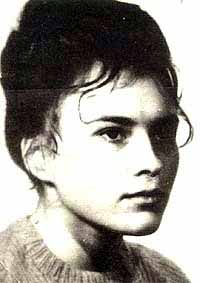
1945: The women of the Endphaseverbrechen at Neuengamme

On the night of April 21, 1945 (possibly verging into April 22), 12 women political prisoners were hanged at Hamburg’s Neuengamme concentration camp.

This forced labor camp had its own nasty history during the war, including medical experiments on children that would get the camp doctor hanged after the war. Those unfortunates had just been disposed of the day before.

It was in the spirit of disposing that Neuengamme on April 21 received 71 political prisoners from the Fühlsbüttel prison/satellite camp. This site, one of the very first concentration camps in Germany, was being emptied out (as Neuengamme also soon would be) with the approach of Allied forces from the west: many Fühlsbüttel prisoners were released outright, while several hundred were sent on a death march to another camp.

These special 71, who weren’t especially major antifascists and hadn’t been convicted of anything, thought their transfer to Neuengamme was just a halfway house to their own release — whether directly by the Germans, or via the imminent arrival of Germany’s foes.

All were elated. They showed each other pictures of their husbands and children (Erika Etter did not know that her husband had been executed), made their clothes as nice as possible. Erika, the youngest, wore white knee socks and borrowed lipstick, with her pretty hair down. (From the German Wikipedia page about these killings)

They were in for an unpleasant surprise: although Nazi Germany was going down, there were elements within it still looking to cripple the Left of whatever would emerge postwar. These 71 people — 58 men and 13 women — were communists, or White Rose activists, or other ideological foes whom the camp bureaucracy had tagged as “non-transferrable” elements.

Annemarie Ladewig, a young artist who’d been booted from the academy due to a partial Jewish ancestry, painted this watercolor of a dancer. (More.) Ladewig’s brother and father were among the 58 male political prisoners killed at Neuengamme over the next few days.

They were eliminated over the period from April 21 through April 24.

The women were the first to be put to death on this night, hanged naked in two groups of six. Either the aforementioned Erika Etter or else the actress Hanne Mertens (German link) was killed separately; the other was hanged, along with these eleven (all links below are to German Wikipedia pages):

From the Themed Set: The Death Rattle of the Third Reich.

On this day..

1961: Marie Fikacková, Beast of Sušice

On this date in 1961, Czechoslovakian maternity ward nurse Marie Fikackova was hanged at Prague’s Pankrac Prison for murdering newborns in her care.

Fickakova, nee Schmidlova, was a well-liked 24-year-old with a failed marriage already at her back when she was arrested in February 1960 after two infants died of brain injuries the same night during her shift at the Sušice hospital.

Under lengthy interrogation, Fikackova finally confessed to having developed the habit of relieving the agitation of her menses (her story, not mine!) by permanently silencing newborns who bawled too much. We all have our personality quirks, but if hers was “homicidally enraged by crying babies” then it’s safe to say she was in the wrong line of work.

“When I was pressing little Prosserová’s head, I could feel my fingers sinking into it,” she described. “I did not feel any skull cracking at that time. I was just pressing the little head and my fingers got deeper and deeper. My anger faded away after a while and I could continue working.”

Fikackova proceeded to cop to ten-plus additional therapeutic attacks on children, but police had a very difficult time substantiating them relative to documented injuries and the nurses’ shift calendar. In the end, the courts hung her with the original two.

We have seen, in these pages, better-balanced subjects issue more outlandish auto-denunciations under less police pressure, so while we’re in no position to assert anything with certainty, we’re inclined to take the absence of corroborating evidence from an institution that ought to have plenty of it for the asking to suggest the strong possibility that Fikackova’s confessions tended to the fantastical.

Nevertheless, the public has been inclined to take the woman at her claim of double-digit homicides, and magnified Fikackova into a legendary mass murderer and the authoress of every neonatal abnormality in town. Even now she’s sometimes mentioned as Czechoslovakia’s most prolific serial killer, or blamed for the infirmities of any and all folks born in late-Fifties Sušice. (Both links in this paragraph are in Czech.)


For this staged demonstration of her baby-slaying technique, authorities even let Marie Fikackova put on the nurse outfit. (Source of the images)

On this day..

1652: Joan Peterson, the Witch of Wapping

“Let the sceptical read the ‘Country Justice’ to see what subtle threads were strong enough for a witch-halter!” (Source)

On this date in 1652, Joan Peterson was hanged at Tyburn for witchcraft.

Joan is a long time in the ground, and her dying refusal to be cowed by the officious prelate ordained to badger her into self-incrimination would alone stand her in very worthy stead in these pages. Even the hangman got annoyed when Joan, at the gallows,

was by the Ordinary nine on ten times earnestly pressed to confesse something against the said Mrs. Levingstone: Whereupon the Executioner told the Ordinary, he might be ashamed to trouble a dying woman so much, to which he replyed, he was commanded so to doe, and durst doe no otherwise. And afterwards the said Ordinary still insisting in his discourse, and very often pressing the said Peterson to confesse and discharge her conscience before God and the world; she answered that she had already confessed before the Bench, all she had to confesse; that she had made her peace with God; and therefore desired to dye in quiet, for now she was to appeare before God who presently would Judge her, and that God was witnes, that she dyed Innocently, and was in no wise guilty of what was laid to her charge.

Go, Joan.

This account comes to us from one of the surviving pamphlets (pdf) about her case, a document that, were it produced today, would probably draw a severe sanction under Britain’s nasty libel laws for its scandalous indictment of Joan’s persecutors.

It lays out an unscrupulous conspiracy of local grandees scrabbling after inheritance money, in which the “Witch of Wapping” swung for being the only honest broker in the room. Sure, we can’t prove it. But the rival, anti-Joan pamphlet (also at that same pdf link) has a lot of rot about our woman damningly chattering with a diabolical familiar in the cunning guise of a squirrel.


Satan’s minion. (cc) image from alphakilo2bravo.

According to the pro-Joan pamphleteer, the trouble started when an elderly woman named Lady Powell died, leaving her wealth to a particular relative — the “Mrs. [Anne] Levingstone” mentioned in the excerpt above — and stiffing several others.

These others contrived a scheme to charge Anne Livingston with witchery in order to separate her from her windfall and get their own hands on it. Though witch-hunting never really reached the epidemic dimensions in England that it often achieved on the continent — the English ban on torture helped prevent self-sustaining cycles of forced denunciations — it did have its moments, and the characters in question may have been encouraged by the recent exploits of notorious witch-diviner Matthew Hopkins in preposterous judicial homicide.

But they weren’t targeting Joan Peterson at all. They just wanted to use her to get at Livingston.

When Peterson, a local healer with a knack for fixing migraines, refused a bribe to accuse Livingston of sorcering, the plotters made it an offer she couldn’t refuse (and protected themselves from exposure) by accusing Joan herself.

Our pamphlet presents a riveting and revolting story of the conspirators essentially being one with the local judicial officials — in fact, when it comes to trial, they’re literally Joan Peterson’s judges — but even as they groped her for witches’ teats and the like, they endeavored “to perswade the said Peterson to confess [since] she needed not fear what she confessed, for it was not her life they aimed at, but to have matter whereby to accuse one Mrs. Levingston, who had gotten the said Lady Powels estate, and thereby had undone 36 Persons of the said Ladyes Kindred.”

Playboy parliamentarian (and, recently, regicide) John Danvers* made a rare appearance in the neighborhood to help orchestrate events. Danvers was a sound man to have for an expedient financial racket; he was famous for acquiring his fortune by marrying an older widow. She’d since died, and he’d since squandered it.

Even with the fix in, however, Joan’s ability to produce physician testimony and a written post-mortem ascribing Lady Powell’s death to natural causes — the doctors were impressed she’d managed to make it to age 80 what with the “the Dropsie, the Scurvey, and the yellow Jaundies” — ran that whole case aground.

Considering the incriminating threats and blandishments Joan had heard, however, they just got her on a second, simultaneous indictment — for bewitching one Christopher Wilson, on the grounds that he’d gone to her for a cure, gotten a little better, and then relapsed. If you think modern libel law is harsh, you should see Protectorate malpractice law.

Wilson, one should add, did not make this complaint himself: others were induced to level the charge on his behalf, while the court itself barred most defense testimony with threats to imprison the witnesses as probable witches themselves. (Nevertheless, some did appear for Joan.) Somehow, this was enough for conviction.

Even after her condemnation,

the said confederates and their agents went very often to her promising her a Repreive or Pardon if she would confesse that Mrs. Levingstone had Imployed her to make away the life of the Lady Powell, to which she replyed she could not, because it was altogether false. But one of the said confederates urging her againe to say something against Mrs. Levingstone, she told him he was a rogue, and gave him a blow on the face, which made his nose bleed: Where it is to be noted, that what for love of money they could not tempt her to, they resolved at last for love of her life to force her to, by necessitating her either unjustly to confesse a notorious falsehood against the said Mrs. Levingstone or else to dye without mercy or Repreive, which otherwise was proffered her by the said Confederates, to make her unjust in doing the same.

Go, Joan.

* There’s a street named for him in Chelsea. His family name (though not selected specifically for John Danvers) also adorns the town of Danvers, Massachusetts … which was renamed in the 18th century to help bury its notoriety as Salem Village, an epicenter of the Salem witch trials.

On this day..

1763: Elizabeth Morton, bad with kids

(Thanks to Meaghan Good of the Charley Project for the guest post. -ed.)

On this date in 1763, fifteen-year-old Elizabeth Morton was hanged on Gallows Hill, Nottingham for the murder of her employer’s two-year-old daughter.

Elizabeth, a servant girl employed by the farmer John Oliver and his family in the parish of Walkeringham, was caught after attempting to kill one of the Olivers’ other children. Loretta Loach describes Elizabeth’s crime in her book The Devil’s Children: A History of Childhood and Murder:

In August 1762, Mrs. Oliver found one of her children under some straw in a barn, “struggling in the agonies of death, the blood gushing from its mouth, nose and eyes.” The child recovered and accused Elizabeth. The servant was immediately suspected of having strangled the family’s two-year-old daughter Mary, who had been found dead in her cradle months earlier.

Elizabeth confessed to the crime, but said she had been incited to commit it by a gentleman in black who came to bed with her and told her she must murder two of her master’s children. She could not feel easy, she said, until she had done as he directed. Despite the fact that the report in the Annual Register suggested she was an “idiot” (which would have been grounds for a pardon), she was executed…

After she was hanged, her body was dissected and then buried in a village near her home.

On this day..

1686: A man and a woman broken on the wheel in Hamburg

The New York Times of Dec. 30, 1900 provides this date’s entry, featuring the unusual scene of a woman being broken on the wheel.


In the diary of that remarkable man, Gen. Patrick Gordon, who left Scotland in 1651 a poor, unfriended wanderer, and, when he died, in 1699, had his eyes closed by the affectionate hands of his sorrowing master, the Czar Peter the Great, the following entry is to be found, under date Hamburg, March 22, 1686:

This day, a man and a woman, a burgher of the towne being the womans master, for murthering, were carted from the prisone to the house where the murder was committed; and there before this house, with hotte pinsers, the flesh was torren out of their armes, and from thence were carted to the place of justice without the towne, and there broken and layed on wheeles.


Executions by breaking wheel: early 18th century engraving. (Source: Wikipedia).

On this day..

1644: Mary Latham and James Britton, adulterous lovers

One James Britton, a man ill affected both to our church discipline and civil government, and one Mary Latham, a proper young woman about 18 years of age, whose father was a godly man and had brought her up well, were condemned to die for adultery, upon a law formerly made and published in print.

It was thus occasioned and discovered. This woman, being rejected by a young man whom she had an affection unto, vowed she would marry the next that came to her, and accordingly, against her friends’ minds, she matched with an ancient man who had neither honesty nor ability, and one whom she had no affection unto.

Whereupon, soon after she was married, divers young men solicited her chastity, and drawing her into bad company, and giving her wine and other gifts, easily prevailed with her, and among others this Britton. But God smiting him with a deadly palsy and fearful horror of conscience withal, he could not keep secret, but discovered this, and other the like with other women, and was forced to acknowledge the justice of God in that having often called others fools, etc., for confessing against themselves, he was now forced to do the like. The woman dwelt now in Plymouth patent, and one of the magistrates there, hearing she was detected, etc., sent her to us.

Upon her examination, she confessed he did attempt the fact but did not commit it, and witness was produced that testified (which they both confessed) that in the evening of a day of humiliation through the country for England, etc., a company met at Britton’s and there continued drinking sack, etc., till late in the night, and then Britton and the woman were seen upon the ground together, a little from the house. It was reported also that she did frequently abuse her husband, setting a knife to his breast and threatening to kill him, calling him old rogue and cuckold, and said she would make him wear horns as big as a bull. And yet some of the magistrates thought the evidence not sufficient against her, because there were not two direct witnesses; but the jury cast her, and then she confessed the fact, and accused twelve others, whereof two were married men. Five of these were apprehended and committed, (the rest were gone,) but denying it, and there being no other witness against them than the testimony of a condemned person, there could be no proceeding against them.

The woman proved very penitent, and had deep apprehension of the foulness of her sin, and at length attained to hope of pardon by the blood of Christ, and was willing to die in satisfaction to justice. The man also was very much cast down for his sins, but was loth to die, and petitioned the general court for his life, but they would not grant it, though some of the magistrates spake much for it; and questioned the letter whether adultery was death by God’s law now.* This Britton had been a professor in England, but coming hither he opposed our church government, etc., and grew dissolute, losing both power and profession of godliness.

March 21 [1643/44*]. They were both executed, they both died very penitently, especially the woman, who had some comfortable hope of pardon of her sin, and gave good exhortation to all young maids to be obedient to their parents, and to take heed of evil company, etc.

John Winthrop‘s journals, specifically this volume

While Puritan courts were certainly known to execute for sexual transgressions, Mary and James appear to be the only documented case in the history of [what is now] the United States of an outright execution for adultery.**

The crime and the setting inevitably call to mind Nathaniel Hawthorne’s The Scarlet Letter, and indeed he would likely have known about this case from Winthrop’s journals.

There are, however, even more compelling parallel cases — which, if they do not end on the scaffold, are at least as dramatic from the standpoint of posterity.

The case of the woman branded for adultery first appeared in the records of York, in what is now Maine. Dated 15 October 1651, the entry reads:

We do present George Rogers for, & Mary Batchellor the wife of Mr. Steven Batcheller minister for adultery. It is ordered by ye Court yt George Rogers for his adultery with mis Batcheller shall forthwith have fourty stripes save one upon the bare skine given him: It is ordered yt mis Batcheller for her adultery shall receive 40 stroakes save one at ye First Towne meeting held at Kittery, 6 weekes after her delivery & be branded with the letter A.”

Beside that entry, written in the same hand, is the notation, “Execution Done.” It appears that Charles Edward Banks, in his History of York, Maine (1935), recognized the connection between Hawthorne’s novel and this case, for he refers to Mary Batchellor’s branding in a section titled “The Scarlet Letter.”

… the similarities between Hester Prynne and Mary Batchellor are so outstanding that is is tempting to argue for a direct source. For example, Mary Batchellor’s adultery is the only known case involving a child that can be linked to Hester’s plight. By postponing execution of the sentence until six weeks after Mrs. Batchellor’s delivery, the officials of York obviously considered the health of the unborn child. Hawthorne suggests a similar delay in the novel, for when Hester and Pearl appear in the opening scaffold scene, Pearl is “some three months old”.

It’s rather interesting to notice that in Latham and Britton’s case, even the judges who ultimately sentenced the lovers to die were overtly reluctant about doing so: the subtext of Winthrop’s narrative suggests to this reader that, had the pair not confessed, everyone would have been more than happy to use the “two witnesses” loophole to avoid noosing a concupiscent teenager stuck in a barren marriage. Whatever our caricature of them, Puritan elites too had some sense of proportionality about these things.

Even in Hawthorne, where the protagonist is punished only with public shaming, one of the crowd complains,

“This woman has brought shame upon us all, and ought to die. Is there not law for it? Truly, there is, both in the Scripture and the statute-book. Then let the magistrates, who have made it of no effect, thank themselves if their won wives and daughters go astray.”

And they have, ever since.

Thanks to Laura James of the (alas) dormant true-crime blog CLEWS for bringing this case to our attention.

* 1643/44: England was observing the legal new year on March 25 at this point.

** See the Espy file.

On this day..

1428: Matteuccia di Francesco, San Bernardino casualty

On this date in 1428, Matteuccia di Francesco was condemned and burned as a witch in the Perugian town of Todi. It’s one of the oldest witchcraft cases in Italy for which a complete trial record survives.

Matteuccia was a local wise woman or sorceress dispensing the herbal remedies, potions, and incantations that comprised the everyday magic as experienced by popular superstition — like a homemade contraceptive (ashes of a mule’s hoof mixed into wine: drink up!) for the mistress of the local prelate.

The woman seems to have practiced this openly and (for aught we know) happily in Todi … until Bernardino of Siena holy rolled into town.

Bernardino, now considered a Catholic saint, was a mendicant Franciscan who crisscrossed Italy inveighing against Jews, sodomites, and (you guessed it) witches. Think Savonarola: like that later austere and charismatic firebrand, Bernardino even had bonfires of vanities.

The turmoil was large and the people trembled. The Church and piazza Santa Croce was full of citizens and peasants, women and men, several thousands in number. The shouting of little children and young boys was loud when friar Bernardino stopped preaching and went to the piazza with many other friars and set on fire a pile of four tables of games, several baskets of dice, more than four thousands pairs of old and new card games of great numbers, and placed and attached and hung on every side were much hair and flounces of dresses of women and other things and with a lot of wood underneath. You have never seen a more beautiful fire, and the flames spread in the air and confused the demon enemy of God, bringing glory, honor and praises to the reverence of our master Jesus Christ the highest God.*


Detail view of Sano di Pietro’s 1445 St. Bernardino Preaching in the Campo, showing the saint (brandishing his trademark prop tablets) drawing a crowd in his native Siena’s central plaza. There are many paintings, stretching to centuries after his death, on the theme of Bernardino’s, er, spellbinding sermons.

As pertains specifically to witchcraft, one might say that the import of preachers like Bernardino thundering from the pulpits in the early 15th century was to delegitimate the many Matteuccias around.

Thanks to decades of evolving thought, this formerly accepted sphere of “white magic” was now going to be understood as outright devil-worship: your classic theological zero-tolerance policy.

O you who have used the charm for broken bones, to you, and to him or her who says that she is bewitched, and who makes you believe she is — to all these I say, take heed! For the first to feel the strokes from God’s scourges will be those who have trusted in these enchantments and followed them; and next vengeance will overtake those who have not brought them to justice … When such people say that they wish to cure anyone, do you know what you should do? There is nothing better to do than cry, “To the fire! To the fire! To the fire!”

Wherever one may be, and whoever may know him or her, in any place whatsoever inside or outside the city, straightaway accuse her before the Inquisitor … every witch, every wizard, every sorcerer or sorceress, or worker of charms and spells … such enchanters, every time they have worked any charms or spells have denied God by doing so.

-San Bernardino (Source)

Inspired by our itinerant zealot, Todi tightened up witchcraft laws in 1426, and prescribed the stake and the fagot for violations.

“The church now equated the performance of common sorcery, involving only a few words or simple gestures and aimed at curing or causing illness or affecting the weather, with … a preexisting pact between the sorcerer and demons that made such magic possible,” writes Michael Bailey.** “Indeed, such sorcerers, whom in an earlier era the church had seen more as victims and dupes of demonic illusions and had hardly taken seriously, now became all the more terrible in that they were capable of commanding demonic forces with only a few simple words or signs.”

Matteuccia didn’t have long to enjoy her newfound demonic-command powers before she ran afoul of Todi’s eager witch-hunters. Her words, as filtered through her interrogators, capture the evolving theology-cum-jurisprudence around magic.

After copping to countless trifling hocuses and pocuses — philters for lovers, poultices for injuries, aid and comfort for battered women (apparently, counseling these women was one of her specialties: “adding evil to evil,” according to her persecutors) — her narrative suddenly shifts to the phantasmagorial.

Presumably under torture or the promise thereof, the corner pharmacist is suddenly reporting that she drank children’s blood and transformed into an animal to fly off to Lucifer’s convocations at Benevento. (This is also one of Italy’s first documented invocations of flying to a witches’ sabbat.) Not surprisingly, these scenes are straight out of Bernardino’s own descriptions of what witches do.

The intellectual framework of the inquisitors who pursued Matteuccia now expected to find the latter variety of supernatural diabolism as a corollary and precondition for stocking an impotence enchantment. And like inquisitors are always prone to do, they made sure to find what they were looking for.

* 1424 account of a Bernardino spectacle in Florence, quoted and translated in Nirit Ben-Aryeh’s “Jews and Judaism in the Rhetoric of Popular Preachers: The Florentine Sermons of Giovanni Dominici (1356-1419) and Bernardino da Siena (1380-1444)”, Jewish History, Vol. 14, No. 2 (2000),

** Bailey, “From Sorcery to Witchcraft: Clerical Conceptions of Magic in the Later Middle Ages”, Speculum, Vol. 76, No. 4 (Oct., 2001).

On this day..

1995: Flor Contemplacion, OFW

On this date in 1995, Filipina maid Flor Contemplacion was hanged for murder in Singapore.

Contemplacion had, four years before, strangled a fellow-maid and drowned that maid’s four-year-old charge.

That’s what she confessed to, at least. Even though Contemplacion’s camp would eventually argue that the confession had been coerced, or that she’d been possessed by a strange epileptic, Contemplacion herself never really walked back that admission.

Still, Flor Contemplacion the cause celebre and Flor Contemplacion the cultural phenomenon was never only about the woman’s innocence, even if many do still believe she was framed.

By whatever happenstance of timing and circumstance, widespread publicity of her case in the Philippines during the months leading up to her hanging tapped a national discontent among her countrymen and -women about “OFWs” — overseas Filipino workers.

This economic sector — exported labor — had been intentionally nurtured (pdf) by Manila beginning with a 1974 labor code, and over the ensuing generation ballooned twentyfold into a positively enormous phenomenon.* By the time Flor Contemplacion hanged, everybody in the Philippines knew people who had worked overseas, and whose wage remittances were indispensable (pdf) for supporting their families in the Philippines. (And increasingly, the entire national economy.)


Boom of the overseas Filipino workers sector, 1975 – 2000 (1975 = 1). Source of figures; there are more official OFW stats here.

Ascendance of the OFW industry brought with it the discontents attendant with scattering wholesale quantities of the populace to unfamiliar corners of the globe, many of them to confront the timeless varieties of workplace abuse from positions of special vulnerability: “The dark reality,” one organization says this year, of “low wages, horrid working conditions, little protection for human rights, exploitation, harassment, threats, illegal arrests, imprisonment, criminalization, and deportation.”

To say nothing of the political discontents raised by such a discomfiting abdication of autarky, and the “domestic anxieties” (pdf) of developing “the embarrassing reputation that we are a country of DHs [domestic helpers], entertainers, and even prostitutes.” This is, truly, a rich and complex tapestry.

Flor Contemplacion is practically the patron saint of the indicted Filipino/a abroad, and her fruitless clemency appeal the political breakout of OFWs and their allies as a constituency to reckon with.

The effect was immediate. Contemplacion hadn’t had any great level of consular support early in her criminal process — the time when it might have made the most difference. (The Philippines embassy in Singapore later took considerable heat for this fact.)

But as the story made headlines and some sketchy witnesses accused the victim’s widower husband of being the real perpetrator, the case became a national sensation. Recently-elected president Fidel Ramos, who campaigned on restoring the previously-abolished death penalty in the Philippines, not only had to put on the full-court press for this condemned woman but incongruously declared her a “national hero”; his wife personally received Contemplacion’s remains at the airport. Leaders and ordinary people from Catholics to Communists rallied (sometimes rioted) in anger.

(Singapore was just at this time establishing its own reputation as the place that never gives diplomatically expedient clemencies. Never.)

Whatever the domestic controversies, the labor-export business has only continued to grow in the generation since Contemplacion’s hanging. To this day, the Filipino public has shown great sympathy with OFWs entangled in alien criminal justice systems, and demanded diplomatic support — regardless of particular individuals’ putative guilt.

Regrettably, it is often called to do so: from Saudi Arabia to China, the plight of Filipinos executed abroad remains a recurrent and emotionally charged theme in the country.

Flor Contemplacion’s name, well-known still anywhere in the archipelago, was back in the news last year … when her three sons all drew lifetime prison sentences for drug-smuggling.

On this day..

1719: Mary Hamilton, lady in waiting

On this date in 1719, Mary (Marie) Hamilton, lady-in-waiting upon the tsaritsa Catherine I, was beheaded in St. Petersburg for infanticide.

A frightened Mary Hamilton contemplates her imminent execution in this 1904 painting by Pavel Svedomsky.

Lady Hamilton — her Scottish family had emigrated generations earlier — did not like to wait on her libido.

She could tell you if Peter the Great deserved his nickname, and dish on any number of other courtiers, nobles, and hangers-on.

This pleasing sport, of course, assumes with it the risks imposed by an equally impatient biology. Hamilton’s gallantries two or three times quickened her womb.

Her decision to dispose of these unwanted descendants in the expedient way — once by abortion, and again by infanticide — was done on the sly (voluminous court gowns helped) but surely also with no expectation of such a severe sanction in the unlikely event of detection.

But according to Eve Levin,* Russia’s longtime slap-on-the-wrist policy for infanticide was changing, and beginning “to distinguish between a woman who killed her child to hide illicit sexual conduct, and a woman who killed her child because she was too poor to care for it. In the first instance, the killing of the child reflected selfish behavior and was considered to be murder.”

Mary Hamilton was obviously not too poor to raise children.

In 1717, an unrelated investigation of another of Hamilton’s lovers led him to accuse the libertine lady-in-waiting of practicing post-natal birth control, which Mary admitted to,** certainly expecting her mistress the queen and her paramour the king to look forward, not back.

Peter, the towering and intense “learned druzhina” with his eye fixed on the West and a modernity that Russia lagged behind, was a liberal man in many respects. But he remained eminently capable of ruthlessness in service of an idea. This affair played out, after all, in his brand-new capital St. Petersburg, built on the bones of thousands peasants who threw up the city over swampland at Peter’s command. In 1718, he’d had his own son knouted to death.

Apparently infanticide was one of those ideas.

After all, executing women for infanticide was happening where the Hamiltons had come from. And it would still be good enough for late 18th century Enlightenment philosophers.

On the day of the execution, the prisoner appeared on the scaffold in a white silk gown trimmed with black ribbons. Peter climbed the structure to stand beside her and spoke quietly into her ear. The condemned woman and most of the spectators assumed that this would be her last-minute reprieve. Instead, the Tsar gave her a kiss and said sadly, “I cannot violate the laws to save your life. Support your punishment with courage, and, in the hope that God may forgive you your sins, address your prayers to him with a heart full of faith and contrition.” Miss Hamilton knelt and prayed, the Tsar turned away and the headsman struck.

Then, the bystanding tsar picked up the severed head that had once shared his pillow and discoursed to the multitude on its anatomical features — another idea imported from the West. That strange tsar afterward had the disembodied dome preserved in a jar until Catherine the Great ran across it and (after remarking that the woman’s youthful beauty had been preserved this half-century) had it decently buried.

Something else of Mary Hamilton outlasted her pickled cranium, however.

In one of those unaccountable twists of history, Hamilton maybe became conflated with the “four Marys”, Ladies-in-Waiting of Mary, Queen of Scots — and the story seemingly became translated backwards into this altogether different time and place. This is a much-disputed hypothesis† but for purposes of a blog post is well worth the noticing, while resigning to wiser heads the literary forensics at stake.

There was no “Mary Hamilton” among the Queen of Scots’s attendants, but in at least some of the many different versions of this ballad that survive, a person of this name is held to have become the lover of the king (“the highest Stuart,” in this case) and been put to death for killing her illegitimate child.‡ It is, at the very least, rather difficult to miss the parallel.

O little did my mother ken,
The day she cradled me,
The lands I was to travel in,
Or the dog’s death I wad d’ee!

Variants of this ballad remain popular to this day.

* “Infanticide in Pre-Petrine Russia,” Jahrbücher für Geschichte Osteuropas, Neue Folge, Bd. 34, H. 2 (1986).

** She had also pilfered some effects from the Queen.

† Dissenting opinions on identifying the “Mary Hamilton” of the ballad with our Mary Hamilton can be read here and here.

Presumed basis for the conflation: an actual 1563 infanticide scandal featuring the illicit offspring of Mary’s apothecary and “a Frenchwoman that served in the Queen’s bedchamber.”

On this day..

1975: Olga Hepnarova, tram spotter

On this date in 1975, 23-year-old Olga Hepnarova was hanged at Prague’s Pankrac Prison.

On July 19, 1973, a splenetic Hepnarova had lived out the road rager’s fantasy by barreling her three-ton Praga RN lorry into a tram stop* — killing eight elderly commuters.

Caught on the scene where her Truck of Death came to rest, Hepnarova’s authorship was not in question — only her culpability.

Three days after the bloodbath, she was telling police about her hatred of and alienation from her “brutal” fellow-beings, of beatings from her father and every form of humiliation and disrespect among her peers. This had been a lifelong theme with Hepnarova; the wounds of the world pierced her deeply, and she had spent time in a psychiatric institution after a teenage suicide attempt. In her short working life, she’d been unable to hold down any job for long. Truck-driving, tragically, was only her latest (and last) gig.

About the same time the tormented Hepnarova was owning her actions to the authorities, editors at two newspapers received nearly-identical letters she had posted before she made herself famous, touching much the same themes.

I am a loner. A destroyed person. A person destroyed by people… I therefore have a choice – to kill myself or to kill others. I choose – TO AVENGE MY PERSECUTORS. It would be too easy to leave this world as an unknown suicide. Society is too indifferent, rightly so. My verdict is: I, Olga Hepnarová, the victim of your bestiality, sentence you to the death penalty.

Doctors who examined her did not find her sufficiently off her rocker to have not known what she was doing, and the remorseless Hepnarova accepted the court’s verdict and sentence with equanimity. There are reports, however, that by the last day her placidity had crumbled and that she fought the execution team and had to be dragged, swooning, to the noose.

For this documentary, have your Czech handy. (And the same — or the online translator of your choice — for this Czech website about Olga Hepnarova’s life and legal case.)

Hepnarova was the last woman ever hanged in Czechoslovakia. (Or either of its death penalty-less successor states, if you want to count it that way.)

* The street where this shocking scene was enacted is today named for Milada Horakova, who preceded Hepnarova on Pankrac’s gallows.

On this day..