1628: Milady de Winter, Three Musketeers villainess

Late this night* in 1628 was the fictional execution of The Three Musketeers antagonist Milady de Winter.

Milady de Winter, as the heroine of Agnes Maupre’s revisionist French graphic novel series (Author interview | Another (Both in French)).

This conniving minx bears the fleur-de-lis brand of a teenage crime upon her shoulder — a very naughty beauty-mark indeed — but becomes a secret agent of Cardinal Richelieu. (Richelieu is a point of friction for the Musketeers right from the start.)

This novel — which has long been in the public domain (Text at Gutenberg.org or ClassicReader.com | Free audio book at Librivox.org) — features Milady continually bedeviling the protagonist d’Artagnan. He loves her; she keeps trying to kill him. Pretty typical for these grim annals. (She also used to be Athos’s wife, years ago, until he tried to murder her. Long story.)

To skip to the end of things, Milady is portrayed as having orchestrated at Richelieu’s behest the (actual, historical) assassination of the Musketeers’ buddy the (actual, historical) Duke of Buckingham, which Milady accomplishes by seducing and manipulating his (actual, historical) assassin, John Felton. In reality, Felton was motivated by the stirring Republican sentiment that would soon generate a revolution; in Dumas, he’s a horny dupe who beholds his seductress escaping by sea even as he’s placed under arrest.

Buckingham was (actually, historically) murdered on August 23.

The fictional narrative picks up on August 25, when the escaped Milady writes to Cardinal Richelieu from the safety of Boulogne. Unbeknownst to her, her hours are numbered.

Milady proceeds the next morning to a convent in Bethune where she chances to encounter the mistress of her old foe d’Artagnan … and, by that night, to slay said mistress with poison just ahead of the arrival of the Musketeers.** But the Musketeers are able to track the escaping murderess down by the next evening. There, they subject her to a snap “trial”:

“We wish to judge you according to your crime,” said Athos; “you shall be free to defend yourself. Justify yourself if you can. M. d’Artagnan, it is for you to accuse her first.”

D’Artagnan advanced.

“Before God and before men,” said he, “I accuse this woman of having poisoned Constance Bonacieux, who died yesterday evening.”

He turned towards Porthos and Aramis.

“We bear witness to this,” said the two Musketeers, with one voice.

D’Artagnan continued: “Before God and before men, I accuse this woman of having attempted to poison me, in wine which she sent me from Villeroy, with a forged letter, as if that wine came from my friends. God preserved me, but a man named Brisemont died in my place.”

“We bear witness to this,” said Porthos and Aramis, in the same manner as before.

“Before God and before men, I accuse this woman of having urged me to the murder of the Baron de Wardes; but as no one else can attest the truth of this accusation, I attest it myself. I have done.” And d’Artagnan passed to the other side of the room with Porthos and Aramis.

“Your turn, my Lord,” said Athos.

The baron came forward.

“Before God and before men,” said he, “I accuse this woman of having caused the assassination of the Duke of Buckingham.”

“The Duke of Buckingham assassinated!” cried all present, with one voice.

“Yes,” said the baron, “assassinated. On receiving the warning letter you wrote to me, I had this woman arrested, and gave her in charge to a loyal servant. She corrupted this man; she placed the poniard in his hand; she made him kill the duke. And at this moment, perhaps, Felton is paying with his head for the crime of this fury!”

And so forth.

Then these obviously impartial judges judge her guilty, and have the executioner of Lille — whom they have thoughtfully procured in advance — chop off her head and dump her in a river.

“The executioner may kill, without being on that account an assassin,” said the man in the red cloak [i.e., the executioner himself], rapping upon his immense sword. “This is the last judge; that is all. Nachrichter, as say our neighbors, the Germans.”

Extrajudicial is as extrajudicial does. And in this case, Richelieu is just as happy to be rid of his duplicitous agent and, admiring the protagonist’s moxie, commissions d’Artagnan a lieutenant in the Musketeers. D’Artagnan is the fourth of the titular “three Musketeers”, so this denouement means that he’s finally made it … and he should stand by for duty in sequels continuing to mix-and-match Dumas’s fictional characters with actual, historical events.

Indeed, in the next volume of the series, Twenty Years After, it’s Milady’s vengeful son Mordaunt who acts as Charles I‘s executioner.

This date’s captivating femme fatale has appropriately been portrayed by a ravishing host of silver screen sirens including Lana Turner, Mylene Demongeot, Antonella Lualdi, Faye Dunaway, Rebecca de Mornay, Emmanuelle Beart, and (most recently as of this writing), Milla Jovovich.

* August 27-28, right around midnight. Dumas isn’t specific as to pre- or post-midnight.

** In the novel, it’s Madame de Chevreuse who has arranged this rendezvous of d’Artagnan with his lover — another actual, historical person whom we have met elsewhere in these pages.

On this day..

1889: Auguste Neel, on St. Pierre

On this date in 1889, the only guillotine execution in North America took place on the tiny French remnant colony of Saint Pierre, just off Newfoundland.

August(e) Neel had capped a Dec. 30, 1888 drinking binge with fellow fisherman Louis Ollivier by breaking into a boat captain’s cabin they expected to find empty. Instead, they found the armed captain ready to defend himself … so they overpowered him and stabbed him to death.

And then, for some reason — “because we were sloshed and we wanted to find out how much fat the old seadog had in his body,” Neel told the court — the murderous sots dismembered the body.

While the murder was not particularly premeditated, it occurred during a perceived crime wave, and the post-mortem butcher’s act really grossed out the court. (They probably also didn’t do themselves any favors at the bar by having attempted to sail to Newfoundland.) All in all, a prime case for example-setting: Neel, as the lead culprit in the caper, was sentenced to the worst example possible. His partner got 10 years at hard labor.

Now, St. Pierre hadn’t had an execution and didn’t have the infrastructure for it. But French law didn’t let the locals in far-flung islands just do a practical straightforward thing like hang a bloke or shoot a bloke. And it wouldn’t do to have the colony send Neel somewhere where executions were a done thing. It was there in black and white that executions had to be conducted by guillotine, near the site of the crime. And so an old spare guillotine was disassembled, boxed up, and shipped up to St. Pierre from Martinique, expressly to sever Neel’s head.

Neel seems to have been the calmest man on the island, almost philosophically indifferent to the the head-chopper. The community he had aggrieved could not say the same: St. Pierre had to recruit a local petty criminal to serve as executioner, and the guy was so ostracized that he left for France afterwards. They hadn’t thought through the execution procedure to determine who would give the order to drop the blade, so after an uncomfortable pause, Neel himself shouted at the executioner to do it. By the time it hit bottom, human flesh was left grotesquely clinging to the dull imported blade.

The prosecutor vowed in the face of this dog’s breakfast never to seek another death sentence.

Never used again, this infamous device remains in St. Pierre to this day. It can be seen there behind the stairs at the Musée de l’Arche.


The St. Pierre guillotine. (cc) image from The Tedster, who also thoughtfully provides photos of the museum’s explanatory placards. 1, 2, 3, 4, 5, 6.

The Neel story was “re-imagined” — nigh rewritten — for the heavily fictionalized 2000 Juliette Binoche film La Veuve de St. Pierre.

The primary source for this account — apart from the museum placards linked in the caption above — is the invaluable Bois de Justice, an astonishingly encyclopedic resource on the history of the guillotine.

On this day..

1919: Boonpeng Heep Lek, the last public beheading in Thailand

On this date in 1919, Thailand — in the sunset years of its absolute monarchy — conducted its last-ever public beheading.

Boonpeng Heep Lek apparently killed his own mother, but the crime takes a back seat here to the visuals. We have these grainy-but-grisly images of the man, and then … just the trunk of the man.

This execution took place, as many did, at the grounds of the Wat Phasi or Wat Phasee temple complex in Bangkok (then, at the edge of Bangkok); bizarrely, said complex today preserves a shrine to our milestone matricide, where devotees visit to … seek better luck?!. Okay.

(This temple isn’t much on the standard tourist beat for Bangkok despite a central location and gorgeous architecture and the creepy history. It appears to be, as of this writing, completely absent even from the usually-encyclopedic Flickr.)

If the executioners in this case followed the procedures promulgated in recent years, then after the victim was tied down seated at a small wooden cross — visible in the pictures above — he would have had his ears and mouth filled with clay, and clay likewise used to mark the base of his neck.

The two-man execution team would then contrive to get a sword through that valuable protuberance via a strange ceremony, with one man performing a hypnotic sword dance in front of the prisoner — apparently meant to relax or distract him, although it seems like it would do better for ratcheting up the panic — while the second man bided his time for the opportunity to dart in unseen with a leaping decapitation slash from behind, “a quick rush, a circle of light in the air, and a sudden jet of crimson.” After that, they chopped the guy’s feet off in order to remove the manacles, and left the corpse as carrion for the local vultures.

We’ve followed those birds’ lead by scavenging a variety of pictures of old Siamese executions (not Boonpeng Heep Lek’s specifically), at least one of which certainly merits the Mature Content Warning. Image credits via here and the series of posts beginning here.

On this day..

1469: Richard Woodville, father of the queen

On this date in 1469, Richard Woodville, the father of the queen, lost his head.

Though he died as Earl Rivers, Woodville started life as a commoner.

As a retainer to the Duke of Bedford, Woodville drew escort duty for the mistress of the house when the master died suddenly. Not one to waste an opportunity, Woodville soon made the merry widow his merry wife: at the time, he was around 30 and she around 20, while the late husband had kicked off at age 46.

For this impertinent and unauthorized union, the couple paid a fine … and their descendants enjoyed royal power. Well-behaved women and knights-errant seldom make history, right?

Marrying nobility put Woodville into the War of Roses game of throne, where he again proved a deft hand with sneaky conjugation.

In 1464, he secretly married his widowed daughter Elizabeth to the young king Edward IV. Elizabeth Woodville became thereby the first commoner in history to marry an English king.

She also became a lightning-rod.

The Earl of Warwick, so powerful that he was known in this era of uneasy-resting crowns as “The Kingmaker”, was embarrassingly undercut by the Woodville match in his own machinations to pair Edward with a French princess. A stunned Privy Council castigated Edward when it found out — “however good and however fair she might be,” they grumbled “she was no wife for a prince such as himself; for she was not the daughter of a duke or earl” — but the young king stood by his lady.

A love match? We leave that question for the poets and the novelists.

From left to right, Philippa Gregory‘s books about Richard Woodville’s wife, daughter, and granddaughter. Gregory also wrote a nonfiction companion to this bestselling series, The Women of the Cousins’ War: The Duchess, the Queen, and the King’s Mother.

But politically, the Woodville marriage certainly upset the game board. Richard Woodville got promoted to Earl Rivers and others of the tribe profited likewise: this made good sense for Edward because these people would owe their positions, and loyalty, to him.

Contrast with the independent, arrogant aristocrat set like Warwick, who soon proceeded — and what part l’affaire Woodville plazed in his defection is up for speculation, although it was part of his own publicly asserted justification — to desert Edward’s Yorkist cause for the Lancastrian claimant.

Warwick’s rebellion succeeded in overthrowing Edward in 1469, and it was in the glow of this victory that Warwick had the obnoxious arriviste Richard Woodville beheaded as a traitor, together with the man’s son John.

Unfortunately for Warwick, it was but a moment.

Unable to govern, Warwick had to release his royal prisoner, and the sides slid back into open conflict. Edward decisively crushed the Lancastrians at the Battle of Tewkesbury, conveniently killing Warwick in the process.

Duly returned to her station, Elizabeth Woodville produced two sons for her husband, the boys history remembers as the Princes in the Tower — which is where the last LancastrianYorkist king Richard III is thought to have murdered them. In Shakespeare’s Richard III, Queen Elizabeth is quite the bummer.

Ay me, I see the ruin of my house!
The tiger now hath seiz’d the gentle hind;
Insulting tyranny begins to jet
Upon the innocent and aweless throne.
Welcome, destruction, blood, and massacre!
I see, as in a map, the end of all.

But her house wasn’t quite ruined after all: Elizabeth Woodville also produced a daughter, also named Elizabeth. This latter “Elizabeth of York” married another descendant of a commoner, who carried the Lancaster standard: this fellow of doubtful lineage would finally resolve the War of the Roses and reign as Henry VII. (Father, namesake, and predecessor, of course, to this site’s patron head-chopping monarch Henry VIII: Richard Woodville’s great-grandson.)

On this day..

1831: Julien Sorel, in The Red and the Black

According to Michel Crouzet,* literary scholar of Stendhal, it was on this date in 1831 that the protagonist of said French author’s magnum opus was guillotined.

“Everything passed simply, decorously, and without affectation on his part,” is the entirety of Stendhal’s death scene for his man.

Julien Sorel, the flawed (or anti-) hero of The Red and the Black (Le Rouge et le Noir), is the intelligent son of a provincial carpenter who puts his wits to use trying to climb Restoration France’s treacherous social ladder.

Ambition, says Stendhal, is “the very essence of his existence,” much as it is for his milieu, and through Julien’s exertions — brilliant and resourceful at times; infuriatingly handicapped by social prejudice against the protagonist’s low birth at others — the author sets down one of the most psychologically forceful works in the canon.

Julien Sorel’s ambition also powers his youthful passion, and his fall: to conquer the mother of the children he tutors, and to likewise conquer the daughter of a nobleman.** This latter conquest has him a made man, married into the aristocracy and set with a plum military assignment that has Julien dreaming of Napoleon … so when the spurned former conquest denounces Julien to the father of that latter conquest as an upstart seducer cynically shagging his way into decent society, the incensed Julien hauls off and shoots that previous conquest. (As she kneels at Mass, no less.)

Is it a mere jealous fit? Even though his victim survives the attack, and forgives her lover, Julien obstinately pleads guilty, and insists on his own maximum culpability. It’s not only an individual criminal culpability, but a culpability of class aspiration.

‘I ask you for no mercy,’ Julien went on, his voice growing stronger. ‘I am under no illusion; death is in store for me; it will be a just punishment. I have been guilty of attempting the life of the woman most worthy of all respect, of all devotion. Madame de Renal had been like a mother to me. My crime is atrocious, and it was premeditated. I have, therefore, deserved death, Gentlemen of the Jury. But, even were I less guilty, I see before me men who, without pausing to consider what pity may be due to my youth, will seek to punish in me and to discourage forever that class of young men who, born in an inferior station and in a sense burdened with poverty, have the good fortune to secure a sound education, and the audacity to mingle with what the pride of rich people calls society.

‘That is my crime, Gentlemen, and it will be punished with all the more severity inasmuch as actually I am not being tried by my peers. I do not see, anywhere among the jury, a peasant who has grown rich, but only indignant bourgeois …’

The Red and the Black is available in its French original here; in English translation here; and as a free French audio book here. And here’s some literary analysis

* The date is not explicit in the text. The Red and the Black was subtitled Chronique de 1830, but several past-tense allusions to the event show that the main action takes place after the July Revolution of 1830 that toppled Charles X and raised Louis-Philippe to the throne. There is, however, a late and seemingly anachronistic allusion to Julien’s lover/victim intending to “throw herself at the feet of Charles X” to appeal for his life. Oh well: ambiguity is the novel’s stock in trade.

** These (fictional) de la Moles are very proud of being descended from the (actual) Joseph Boniface de la Mole, whose signal achievement was his April 30, 1574 beheading.

On this day..

1789: Joseph-Francois Foulon, corrupt financier, lynched

On this date, just days after the Bastille fell, so did the head of widely-loathed ancien regime pol Joseph-Francois Foulon (or Foullon) de Doue.

“This is that same Foulon,” says Carlyle, “named ame damnee du Parlement; a man grown gray in treachery, in griping, projecting, intriguing and iniquity: who once when it was objected, to some finance-scheme of his, ‘What will the people do?’ — made answer, in the fire of discussion, ‘The people may eat grass:’ hasty words, which fly abroad irrevocable, — and will send back tidings!”

Marie Antoinette, eat your cake out.

Foulon’s grass tidings would arrive courtesy of the king‘s July 11, 1789 dismissal of Finance Minister Jacques Necker and attempt to rule through an ultra-royalist government. It was fury over this apparent reactionary coup that led to the storming of the Bastille and catalyzed the French Revolution.

Foulon, now the Controller-General of Finances — and as Carlyle puts it, “a scoundrel; but of unmeasured wealth,” who had gorged himself at the public trough while the kingdom’s finances grew thin, and who was widely suspected of having manipulated the food supply out of cruel rapacity — apprehended the danger and fled town. He even staged a lavish funeral to put about word that he had died suddenly.

But “some living domestic or dependant, for none loves Foulon,” betrayed him (Carlyle’s version) — or by whatever means, the Parisian mob sniffed him out. Then it quickly did to him what the Parisian mob would soon become famous for. “His old head, which seventy-four years have bleached, is bare; they have tied an emblematic bundle of grass on his back; a garland of nettles and thistles is round his neck: in this manner; led with ropes; goaded on with curses and menaces, must he, with his old limbs, sprawl forward; the pitiablest, most unpitied of all old men.”

Carlyle spares little but the most animal pity for Foulon, but the mob did not even muster that. Summoned to be judged at the Hotel de Ville — the Marquis de Lafayette and the new mayor of Paris, Bailly, unsuccessfully attempted to intercede for proper procedure — Foulon found himself instead subject to the revolutionary judgment of the masses.

For Dickens, in A Tale of Two Cities, this incident forms one of the mileposts of the Revolution, when the waiting sans-culottes of Saint Antoine are transfigured, and leads the fictional long-time revolutionary conspirator Defarge to sigh to his even more implacable wife, “At last it is come, my dear!”

“Does everybody here recall old Foulon, who told the famished people that they might eat grass, and who died, and went to Hell?”

“Everybody!” from all throats.

“The news is of him. He is among us!”

“Among us!” from the universal throat again. “And dead?”

“Not dead! He feared us so much—and with reason—that he caused himself to be represented as dead, and had a grand mock-funeral. But they have found him alive, hiding in the country, and have brought him in. I have seen him but now, on his way to the Hotel de Ville, a prisoner. I have said that he had reason to fear us. Say all! Had he reason?”

Wretched old sinner of more than threescore years and ten, if he had never known it yet, he would have known it in his heart of hearts if he could have heard the answering cry.

A moment of profound silence followed. Defarge and his wife looked steadfastly at one another. The Vengeance stooped, and the jar of a drum was heard as she moved it at her feet behind the counter.

“Patriots!” said Defarge, in a determined voice, “are we ready?”

Instantly Madame Defarge’s knife was in her girdle; the drum was beating in the streets, as if it and a drummer had flown together by magic; and The Vengeance, uttering terrific shrieks, and flinging her arms about her head like all the forty Furies at once, was tearing from house to house, rousing the women.

The men were terrible, in the bloody-minded anger with which they looked from windows, caught up what arms they had, and came pouring down into the streets; but, the women were a sight to chill the boldest. From such household occupations as their bare poverty yielded, from their children, from their aged and their sick crouching on the bare ground famished and naked, they ran out with streaming hair, urging one another, and themselves, to madness with the wildest cries and actions. Villain Foulon taken, my sister! Old Foulon taken, my mother! Miscreant Foulon taken, my daughter! Then, a score of others ran into the midst of these, beating their breasts, tearing their hair, and screaming, Foulon alive! Foulon who told the starving people they might eat grass! Foulon who told my old father that he might eat grass, when I had no bread to give him! Foulon who told my baby it might suck grass, when these breasts were dry with want! O mother of God, this Foulon! O Heaven our suffering! Hear me, my dead baby and my withered father: I swear on my knees, on these stones, to avenge you on Foulon! Husbands, and brothers, and young men, Give us the blood of Foulon, Give us the head of Foulon, Give us the heart of Foulon, Give us the body and soul of Foulon, Rend Foulon to pieces, and dig him into the ground, that grass may grow from him! With these cries, numbers of the women, lashed into blind frenzy, whirled about, striking and tearing at their own friends until they dropped into a passionate swoon, and were only saved by the men belonging to them from being trampled under foot.

Nevertheless, not a moment was lost; not a moment! This Foulon was at the Hotel de Ville, and might be loosed. Never, if Saint Antoine knew his own sufferings, insults, and wrongs! Armed men and women flocked out of the Quarter so fast, and drew even these last dregs after them with such a force of suction, that within a quarter of an hour there was not a human creature in Saint Antoine’s bosom but a few old crones and the wailing children.

No. They were all by that time choking the Hall of Examination where this old man, ugly and wicked, was, and overflowing into the adjacent open space and streets. The Defarges, husband and wife, The Vengeance, and Jacques Three, were in the first press, and at no great distance from him in the Hall.

“See!” cried madame, pointing with her knife. “See the old villain bound with ropes. That was well done to tie a bunch of grass upon his back. Ha, ha! That was well done. Let him eat it now!” Madame put her knife under her arm, and clapped her hands as at a play.

The people immediately behind Madame Defarge, explaining the cause of her satisfaction to those behind them, and those again explaining to others, and those to others, the neighbouring streets resounded with the clapping of hands. Similarly, during two or three hours of drawl, and the winnowing of many bushels of words, Madame Defarge’s frequent expressions of impatience were taken up, with marvellous quickness, at a distance: the more readily, because certain men who had by some wonderful exercise of agility climbed up the external architecture to look in from the windows, knew Madame Defarge well, and acted as a telegraph between her and the crowd outside the building.

At length the sun rose so high that it struck a kindly ray as of hope or protection, directly down upon the old prisoner’s head. The favour was too much to bear; in an instant the barrier of dust and chaff that had stood surprisingly long, went to the winds, and Saint Antoine had got him!

It was known directly, to the furthest confines of the crowd. Defarge had but sprung over a railing and a table, and folded the miserable wretch in a deadly embrace—Madame Defarge had but followed and turned her hand in one of the ropes with which he was tied—The Vengeance and Jacques Three were not yet up with them, and the men at the windows had not yet swooped into the Hall, like birds of prey from their high perches—when the cry seemed to go up, all over the city, “Bring him out! Bring him to the lamp!”

Down, and up, and head foremost on the steps of the building; now, on his knees; now, on his feet; now, on his back; dragged, and struck at, and stifled by the bunches of grass and straw that were thrust into his face by hundreds of hands; torn, bruised, panting, bleeding, yet always entreating and beseeching for mercy; now full of vehement agony of action, with a small clear space about him as the people drew one another back that they might see; now, a log of dead wood drawn through a forest of legs; he was hauled to the nearest street corner where one of the fatal lamps swung, and there Madame Defarge let him go—as a cat might have done to a mouse—and silently and composedly looked at him while they made ready, and while he besought her: the women passionately screeching at him all the time, and the men sternly calling out to have him killed with grass in his mouth. Once, he went aloft, and the rope broke, and they caught him shrieking; twice, he went aloft, and the rope broke, and they caught him shrieking; then, the rope was merciful, and held him, and his head was soon upon a pike, with grass enough in the mouth for all Saint Antoine to dance at the sight of.

That grass-stuffed head on a pike was there waiting when the bloody banquet’s digestif arrived later that evening in the form of Foulon’s son-in-law Louis-Jean Bertier de Sauvigny: another government official arrested that day and drug to the same place, for the same fate.


Bertier de Sauvignon, Intendant of Paris, Is Led to His Punishment (Source, specifically image 25)

On this day..

1301: False Margaret, Norwegian pretender

(Thanks to Meaghan Good of the Charley Project for the guest post. -ed.)

This is the feast date for the early Christian martyr Saint Margaret the Virgin of Antioch (only one of many saints named Margaret).

Margaret might in principle be of interest to this site as the patroness of the falsely accused, and one of the saints who spoke to Joan of Arc, but her star has fallen quite a bit since its medieval heyday on the celestial all-star team; considering the doubtful historicity of this bog-standard Diocletian martyr, the Catholic Church has dropped some of her celebrations.

So instead we’ll turn to a namesake of Margaret’s — well, namesake once removed.

We don’t know the date or even the season in 1301 when the so-called False Margaret and her husband were executed for fraud and treason: he by beheading, and she by burning at the stake.

The pair had made an audacious grab for the Norwegian throne the previous year. The story was told in detail in a nineteenth-century Icelandic history.

The False Margaret (whose true name has been lost to history, as has that of her husband) claimed to be Princess Margaret, known as the Maid of Norway, who was supposed to have died a decade before. How she got the idea to do this is a mystery. It seems unlikely that she came up with the plan on her own, but if she didn’t, then who set her up?

The actual Maid of Norway was the daughter of Eric II of Norway and a mom also named Margaret, this Margaret the daughter of Alexander III of Scotland. Said couple’s marriage treaty specified that if Alexander died without sons, and his daughter had children by Eric, those children would succeed to the throne of Scotland.

This is precisely what happened: Alexander died in 1286 without a legitimate son to succeed him, leaving his kingdom to the three-year-old Norwegian princess.

Technically speaking, the Maid of Norway was Queen of Scots from 1286 until her death. But since she was never crowned and never set foot on Scottish soil, some lists of Scottish monarchs do not include her name. She remained in Norway for the next several years and a selected group of guardians tried to maintain control of the country for her.

On, for the laughter, harps he pressed,
The feast’s right royal quarter; —
But west the ship fared, ever west
With Eric’s little daughter

-From “King Haakon’s Banquet Hall”, by Henrik Ibsen (pdf link)

Eric set about arranging a marriage for his daughter, eventually settling on the future Edward II of England, who was then Prince of Wales. Margaret set off for Scotland in 1290, with the plan that the English wedding would be arranged once she arrived.

Alas, the Maid of Norway never saw Scotland.

In September or October of 1290, en route, she died suddenly somewhere in the vicinity of the Orkney Islands, which were then Norwegian territory. She was only seven years old.

Her death set off a crisis in Scotland as more than a dozen heirs competed for the vacant throne, and this eventually lead to the Wars of Scottish Independence.

But did little Margaret really die?

In 1300, a woman arrived in Bergen, Norway on a German ship, claiming to be the lost princess. She said she had not died but had in fact been “sold” by one of her female attendants and sent to Germany, and had married there. By this time, Eric II had died without male issue and his brother, Haakon V, had become King of Norway.

In spite of the fact that (a) the Maid of Norway’s body had been returned to Norway and was identified by her father and (b) the False Margaret appeared to be about 40 years old when the Maid would have been 17, the False Margaret’s claims drew considerable popular support.

Why? A theory was put forth by the 19th-century Scottish historian John Hill Burton:

The announcement of so portentous an event [meaning the Maid’s death], through indistinct rumors, naturally caused men to talk and doubt. There was none of the solemn detail that might be expected to attend on a royal death, even though less heavily laden with a perplexing future. We are not told of any who were present, of the disease or its progress, of the spot where she died, or the place where she was buried. The time of death is only inferred … The whole affair has left on Scandinavian history a shadow of doubt, in the possibility that the child might have been spirited away by some one of those so deeply interested in her disappearance, and consequently, that it may be an open question whether the royal line of the Alexanders really came to an end…

It should be emphasized that there is no evidence of any conspiracy surrounding the Maid’s death and no evidence of her survival past 1290. Her own father, who had no apparent reason to lie, viewed the body and identified it as his daughter.

But people will talk, and believe what they want, and so the False Margaret found support for her wild story.

Ironically, even if she had been the real Maid of Norway, the False Margaret was not a serious rival to her uncle Haakon; her sex would have prevented her from ruling. But, as the Norwegian historian Peter Andreas Munch noted,

Her pretensions … might, nevertheless, have been extremely distasteful to him, and probably not altogether free from danger in the future, if, as was not at all unlikely, they should be made use of by the party of nobles who were discontented with his absolute government. This party would willingly have thrust him from the throne … but before they could hope to do so they must have a pretender to the crown of the old royal stock to set up opposition to him. [ … ] And for this purpose there would have been none more suitable than Margaret, if she could be conjured from the dead again.

This woman had to be dealt with. There was no getting around it.

Since the False Margaret and her husband were not executed until 1301, a year after their arrival in Norway, it seems likely that there must have been some official investigation into her claims. If so, the records of this have been lost. What seditious nobles might have hoped to gain through her has likewise slipped into a speculative fog. But False Margaret was clearly a matter of highest statecraft at the time: the executions were delayed until King Haakon could personally come to Bergen to see them carried out.

Embarrassingly, the False Margaret’s cause did not die with her. Her supporters actually erected a church to our friend Saint Margaret near the place of her execution. (The church is no longer extant.)

On this day..

1945: Dr. Achmad Mochtar, quiet hero

On this date in 1945, Japanese forces occupying Indonesia cut off Dr. Achmad Mochtar’s head for a medical experiment gone horribly awry.

Officially, Dr. Mochtar had been responsible for a supposed vaccine whose administration killed hundreds of Indonesian forced laborers.

Latter-day research, however, indicates that it was the Japanese military who administered the vaccine (Indonesian link), an experimental tetanus-cholera-typhoid-dysentery combination shot, getting a trial run before it was administered to Japan’s own soldiers. When this drug proved lethal to most of its recipients, Mochtar and his staff at the Eijkman Institute were arrested in 1944 and subjected to harrowing torture.

According to Jakarta-based British researcher Kevin Baird, Mochtar agreed to take the fall for the experiment in exchange for the release of his colleagues.

“We think of this sort of heroism as the reserve of military men and not learned intellectuals,” Baird told the Guardian. “Achmad Mochtar was not only a hero of Indonesia, but a hero of science and humanity.”


Present-day Eijkman Institute director Sangkot Marzuki (right), and two descendants of the executed man, Monique Mochtar (left) and Jolanda Mochtar (center) lay flowers at a 2010 memorial event after the doctor’s location in a mass grave was discovered. Achmad Mochtar’s name also graces a Sumatran hospital.

On this day..

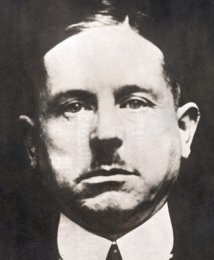
1931: Peter Kürten, the Vampire of Düsseldorf

On this date in 1931, the “Vampire of Düsseldorf” was beheaded for that city’s most infamous serial murder binge.

It was, perhaps, the logical end of a terrible journey.

A factory moulder and World War I deserter in his late forties, Peter Kürten commenced a series of uncommonly bestial rape-murders in early 1929 … the harvest of a lifetime’s twisted brutality.

He’d been the oldest of 11 children stuffed in a hellish one-room apartment with a violent drunk of a father who battered the children and openly raped their mother. Well, “if they hadn’t been married, it would have been rape,” in Peter’s words.

The future vampire took his refuge turning his own abuse on younger siblings and, with the help of a degenerate dogcatcher in the neighborhood, on obliging animals he could lay his hands on — which creatures he was soon learning to torture, and to rape, alongside more conventional human delinquencies like arson and burglary.

Kürten is known to have strangled at least one ten-year-old prior to World War I (he would also claim to have surreptitiously drowned a couple of school chums in his boyhood) but it was on the far side of the Great War — which he’d spent mostly in miserable prisons, nursing increasingly twisted fantasies of vengeance — that the beast truly emerged.

The spree that carried him to these pages began in Febuary 1929, when he slew an eight-year-old, attacked a middle-aged woman, stabbed a mechanic to death. Kürten’s crimes were irregular, but distinguished by a fiendish wrath: he abducted one young woman and hammered her to death in the woods outside town; he stabbed a five-year-old to death with scissors as he achieved his orgasm; he asked a teenager to run off and get him some cigarettes, so he could use her absence to slit her younger sister’s throat; he stabbed strangers randomly.

“I derived the sort of pleasure from these visions” of mayhem and cruelty, he said, “that other people would get from thinking about a naked woman.”

Düsseldorf endured a year of terror, finally aborted when Kürten’s own wife — whom he seems to have loved genuinely — turned him in, at Kürten’s own request, for the reward money.

At a packed trial, the accused’s accumulated hatred for the sadistic world poured out in words just as it had done in deeds over the months preceding.

I said to myself in my youthful way ‘You just wait, you pack of scoundrels!’ That was more or less the kind of retaliation or revenge idea. For example, I kill someone who is innocent and not responsible for the fact that I had been badly treated, but if there really is such a thing on this earth as compensating justice, then my tormentors must feel it, even if they do not know that I have done it …

Never have I felt any misgiving in my soul; never did I think to myself that what I did was bad, even though human society condemns it. My blood and the blood of my victims will be on the heads of my torturers. There must be a Higher Being who gave in the first place the first vital spark to life. That Higher Being would deem my actions good since I revenged injustice. The punishments I have suffered have destroyed all my feelings as a human being. That was why I had no pity for my victims.

-Kürten

Amateurs though we are, we incline to doubt the sufficiency of the tit-for-tat explanation. Kürten might well have believed that about himself, but the “vampire” moniker gets at an essential, organic sensuality about his crimes whose roots go quite a bit deeper than revenge.

“Tell me,” the doomed murderer is supposed to have asked a prison doctor shortly before facing the guillotine, “after my head has been chopped off will I still be able to hear; at least for a moment, the sound of my own blood gushing from the stump of my neck?”

The doctor indeed thought it possible the head might survive a few seconds.

“That,” mused the killer, “would be the pleasure to end all pleasures.”

Kürten is one of several predatory sex-slayers — also see the likes of Fritz Haarman and Carl Grossman — who prospered in interwar Germany, and helped to inspire Fritz Lang’s cinematic classic M. (Kürten is often thought the most direct model for that movie’s murderer, played by Peter Lorre. Lang denied that was the case, but in some countries’ releases it went out under the title not of M, but of The Vampire of Düsseldorf.)

Sources:

Murderpedia

TruTV

On this day..

1740: Artemy Volynsky

On this date in 1740, the Russian politician Artemy Volynsky was beheaded in St. Petersburg.

Volynsky, as famously corrupt as he was famously able, had worked himself up from Peter the Great’s dragoons into the circles of high statecraft but lost a power struggle in the notoriously cruel court of Empress Anna. He’d made it all the way to Anna’s cabinet, but there made himself the rival of powerful Baltic grand chamberlain Ernst Johann von Biron: in political terms, Biron and the fellow Balt who ran foreign policy had a west-facing, German orientation, while Volynsky looked east to Central Asia, India, and China; in personal terms, Biron was the lover of the queen, and Volynsky … was not.

After Volynsky beat up a poet, Biron had the excuse to have him investigated and was able to construct as treasonable some private correspondence about changing the way things are done in Russia, Biron thereby ridding himself of the rival.


Just a few months after Volynsky’s execution, Anna herself died, leaving an ill-starred one-year-old heir and an uncertain political situation.

In the event, Biron and his fellow Germanophiles were driven out of court by the Russian grandees, who then constructed the late Volynsky — by all indications as cutthroat and grasping as anyone else at court — as a patriotic martyr vis-a-vis the detested late ascendancy of the Baltic types.*

As a result, in 1741, a modest monument (later aggrandized) was set up to Volynsky et al at St. Sampson’s Cathedral.**

Further to that same end, the scaffold-bound 19th century Decembrist poet Ryleyev (Ryleev) paid his own tribute to Volynsky in verse. So far, I’ve only found Ryleyev’s “Volynsky” in Russian, but here’s a little taste [courtesy of blog friend Sonechka] of the gist:

He who resists the overweening
Expects no reward and asks for none
And forgetting even himself
Sacrifices all to the motherland.
Against the cruel tyrants
He will be free even in chains
At execution justly proud
And ever after exalted.


In that same vein, Ryleyev’s contemporary Ivan Lazhechnikov featured Volynsky as the protagonist of his historical novel The Ice Palace or The Ice House,† again whitewashing the man’s ample stock of disreputable qualities.

The book’s title alludes to a famous structure put up in the winter of 1739-1740 for the royal court’s amusement, a vast frozen edifice 20 meters tall and 50 meters wide, designed by the architect Pyotr Yeropkin … a Volynsky ally who ultimately shared Volynsky’s fate on June 27, 1740.

This sounds great, but the decadent amusement park soon became the scene for one of imperial Russia’s more infamous and bizarre horrors: Anna forced an ex-prince who had been demoted to court jester for marrying a Catholic to wed a homely Kalmyk serving-girl, with whom he would have to pass a “wedding night” naked in that icebox. (Somehow, they managed to survive.)


The yellow-clad Anna dances merrily while her terrified servants/prey brace to survive a winter night on the ice bed. Detail view; click for the full painting.

Volynsky’s machiavellian contribution to the ghastly scene had been to associate this spectacle with a celebration of Anna’s name day.

This bit of sucking up didn’t buy him quite enough time when it was all said and done, but it reminds of Volynsky’s highly mitigated claim on eternal exaltation.

* Remembered as the Bironovshchina. Compare to the Yezhovshchina, at the height of Stalin’s purges: why don’t these things ever get named for the actual chief executive?

** Saint Sampson the Hospitable has a June 27 feast date; the cathedral was dedicated in his honor because that was also the date, in 1709, of Russia’s watershed victory over Sweden at the Battle of Poltava.

† There’s more about this novel in the context of both 19th century literature and Volynsky’s own era in this pdf dissertation extract, pp. 7-22.

On this day..