1879: Phra Pricha

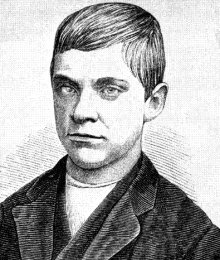
On this date in 1879, the British Consul General in Bangkok lost his son-in-law to the headsman.

Fanny Knox was the multiracial daughter of Consul Thomas Knox and a Siamese noblewoman named Prang Yen.

R.J. Minney (who also popularized Violetta Szabo in Carve Her Name With Pride) novelized her intriguing story for a popular audience in the 1960s, following up on the Victorian-ingenue-in-Indochina interest created by Anna and the King of Siam. His Fanny and the Regent of Siam didn’t quite enter the canon, but 50-year-old used copies can still be scared up for a few pennies.

Anna of Anna and the King and Fanny of Fanny and the Regent had a link besides the publishing industry: Anna Leonowens‘s son Louis actually paid court to Fanny Knox. He wound up settling for Fanny’s sister Caroline when Fanny went for the Siamese aristocrat Phra Pricha (or Preecha) Kon-la-Karn. (“Phra” is an honorific for Pricha’s rank. Fanny would later be known as the Baroness Pricha Kon-la-Karn.)

But just weeks after their marriage — and while Fanny was pregnant with their first (only!) child — the new groom was accused of peculation and treachery, leading to his shocking Nov. 24 beheading.

The New York Times marveled in a sketchy April 12, 1880 recap:

Nothing so startling has happened here in a quarter of a century. You can only understand its effect by imagining John Sherman, Secretary of the Treasury, to be suddenly arrested, carried off mysteriously to Richmond or Petersburg, Va., and as mysteriously hanged. You may say that you do not hang high officers in the United States. Neither do they behead high officers in Siam. The instance of Pra Preecah [another alternate spelling] can hardly be paralleled here, at least in this generation.

The unparalleled and opaque tragedy transpired in the first few years of the majority of Siam’s King Chulalongkorn (or Rama V) — one of the royal princes tutored by the aforementioned Anna Leonowens.

In time, Chulalongkorn would be known as Rama the Great, the brilliant modernizer in his country’s history … but at this time those aspirations were constrained by much more conservative Siamese elites, most especially personified in the man who had been Chulalongkorn’s regent during his minority, Si Suriyawongse. The Times article just quoted ungenerously judges the king “a weak, cruel, cowardly despot” who “cannot much longer retain his power.”

Prominent among the king’s “Young Siam” party was the Amatayakun family, and the most prominent among that clan was Phra Pricha. Pricha was the governor of Prachinburi.

The substance of the formal accusation was that our man abused his control of Prachinburi’s lucrative Kabin gold mine to embezzle revenues that rightly belonged to the crown while grotesquely oppressing, even outright murdering, laborers under his jurisdiction there. The baron even confessed to the charge, though it’s difficult to know what weight to put upon that.

The probable subtext is political enmity between the Amatayakun family and the Bunnag family of the “Old Siam” ex-regent. Indeed, it’s been speculated that it was precisely because Phra Pricha detected the imminent accusations against him that he married Fanny Knox — so that he could give the money to his wife to protect it.

The British consul, meanwhile, quite overreached himself to intervene on behalf of his new son-in-law.

In a personal visit to Chulalongkorn, he urged the king that Pricha’s political enemies had concocted the charges — and that British gunships would back the sovereign if he should use the occasion to reverse the power of the old guard who intended to prosecute the former governor. (Source)

Chulalongkorn declined to upset the apple cart. Phra Pricha was handled by his enemies, and his family fell from power with his execution

Was the king’s reticence timidity or sagacity? 1879-1880 proved to be the nadir of Chulalongkorn’s power. Within months after Phra Pricha’s execution, team Young Siam was wresting its influence back. As the 1880s unfolded, Old Siam was literally dying off, and loyalists of the young king began filling their ministries.

Chulalongkorn’s reluctance to invite foreign intervention would foreshadow perhaps his essential accomplishment: although entirely surrounded by British and French colonies and certainly subject to those empires’ pressures, Rama the Great maintained the independence of Siam/Thailand.

Consul General Thomas Knox, meanwhile, was recalled over his impolitic meddling. Millions of tourists to Thailand’s unofficial northern capital might be interested in this side note: Nigel Brailey suggests that “It could be said that Siam’s role in Chiengmai,” which was then a distinct tributary kingdom of Siam’s subject to the growing influence of the neighboring British, “was saved by the … Phra Pricha affair.” The ambassador swap caused a year-long gap in British-Siamese diplomatic negotiations thereto which had been intensifying in early 1879.

* “Chiengmai and the Inception of an Administrative Centralization Policy in Siam (II),” Southeast Asian Studies, March 1974. (pdf cached here)

On this day..

1875: Henry Brown, Skinker assassin

Cincinnati Daily Gazette, May 27, 1875.

ST. LOUIS, May 26. — Philip Pfarr, a German, living on what is known as the Skinker road, several miles from this city, was murdered about half-past 9 o’clock last night, by a negro, name unknown, and his wife, who was about to become a mother, ravished. It appears that a negro man, about twenty-five years old, called at Pfarr’s house, about 5 o’clock last evening, and asked for work.

Mrs. Pfarr told him they wanted no help.

He called again about 7 o’clock, after Mr. Pfarr had returned from his labor in the field, and was again told no help was wanted.

About half-past 9 at night Pfarr and his family were aroused by a noise in the yard, and by the barking of their dog.

Pfarr went out to see what was the matter, and was met by the negro who visited the house in the evening, and struck a violent blow on the head, apparently with some blunt instrument, and his skull fractured.

Mrs. Pfarr, who followed her husband to the door, was then savagely seized by the negro, forced to give up what money was in the house, and afterward brutally ravished.

After the negro had fled, Mrs. Pfarr dragged her insensible husband to the house and aroused her neighbors, and everything possible was done for him, but he remained unconscious until noon to-day, when he died.

Intense excitement prevails in the neighborhood, and twenty mounted policemen have been scouring the woods and fields all day, but at last accounts had found no trace of the fiendish murderer.


Cincinnati Daily Gazette, May 29, 1875.

ST. LOUIS, May 28. — Mrs. Pfarr, whose husband was murdered last Tuesday night at her home, a few miles from this city, was brought to town, to-day, by the police authorities, and promptly and fully identified the negro, Henry Brown, who was arrested last evening, as the man who killed her husband and violated her own person.

Aside from this identification, Capt. Fox, of the mounted police force, has worked the case up to such a point that there is no doubt whatever but that the man under arrest is the one who committed the atrocious deed.


Cincinnati Enquirer, Oct. 23, 1875.

ST. LOUIS, MO., October 22. — About 2,500 specators were present at the execution of Henry Brown, who was hanged to-day in the jail-yard of this country, for the murder of Philip Pfarr, and the rape and robbery of Mrs. Pfarr.

All the forenoon the doomed man was melancholy and uncommunicative. At 11 a.m. his two sisters called on him and bade him farewell.

At 1 p.m. he was led to the scaffold, which he mounted with a ready, fearless step, It was evident that he had been liberally plied with whisky.

He made a rambling speech, twenty minutes long, and was so tedious in its delivery that he had to be reminded that his time was up. His harangue was incoherent and disconnected, such as any drunken man would make. He persistently denied the rape of Mrs. Pfarr, and asserted that he only struck Pfarr in self-defense.

His death was almost instantaneous, the neck having been broken. Eight minutes after the drop fell he was pronounced dead. His body was lowered into a rude coffin and carted off to the bone-yard.

BROWN’S CRIME

Was of a peculiarly atrocious character, involving, as it did, murder, rape and robbery. The scene of this triple deed was a small farm in this county, three miles from the city limits, on which lived a well-known German farmer named Philip Pfarr and his wife. The place is somewhat secluded, no one living nearer than one-quarter of a mile.

According to Mrs. Pfarr’s statement, a negro man, who was subsequently identified as Henry Brown, came to the house on the afternoon of May 26th and asked for work. Mr. Pfarr informed him that he had no work to give him.

The negro continued to loiter around the gate, and Mrs. Pfarr was so suspicious of danger that she would not permit her husband to return to the field to work that afternoon.

About nine o’clock that night Mr. and Mrs. Pfarr were awakened by the loud barking of their dogs. Pfarr went outside to ascertain the cause, and Mrs. Pfarr got up and stood in the doorway.

She heard her husband ask, “What do you want?” and immediately thereafter she heard a heavy blow struck, and saw her husband stagger and fall.

Before she had time to get out of the doorway the assassin, who was none other than Brown, rushed upon her, and throwing her violently upon the floor ravished her before she recovered from the stunning shock of the fall.

To complete his brutality, he struck her a severe blow on the head and demanded what money she had in the house. She delivered her purse, which contained only seventy-fie cents. Taking this he disappeared in the darkness.

The unfortunate woman was at that time in the last stages of pregnancy, and her injuries were so serious that she could scarcely walk. But she managed to go to her husband, whom she found lying at the gate breathing heavily. He was still able to move, and with her assistance reached the door.

She laid him down upon the floor, placing a pillow under his head and covering him with a quilt.

He immediately became insensible, and did not speak again. His skull had been crushed in with a heavy piece of wagon timber, which was found at the gate.

After thus caring for her husband Mrs. Pfarr alarmed the neighbors, who gathered in crowds. When she told her pitiful story the excitement became intense.

Old man Pfarr died at midnight.

By daylight next morning numerous parties had been organized, and the country for miles around was scoured.

More than twenty negroes were arrested and carried into the presence of Mrs. Pfarr, but she failed to identify any of them as the criminal who assaulted her. The excited populace came near lynching two or three suspected individuals, in spite of the declaration of the outraged woman that the right man had not yet been caught.

THE FATAL BELT.

The detection of Brown was brought about by one little circumstance.

In retreating from the room, the ravisher dropped a leather belt from his waist. A police officer took this belt and showed it to a number of people, among whom was a colored woman living near by, who instantly recognized it as the property of her son, Henry Brown.

The entire police and detective force were put on the watch for Brown, who had suddenly and mysteriously disappeared.

The next day his arrest was effected and Mrs. Pfarr was brought to the jail for the purpose of

IDENTIFYING THE ACCUSED.

She had previously failed to identify at least twenty-five colored men, promptly exculpating each as they were produced, but as soon as Brown was brought into her presence she exclaimed, in broken English, that he was the man who had killed her husband, and ravished and robbed her.

In reply to her reproaches, the prisoner hung his head and confusedly said that he did not know what the woman was talking about.

Brown at first bitterly denied all connection with the crime, and alleged that he was not in the neighborhood on the fatal night. The next day, however,

HE CONFESSED

That he was walking past Pfarr’s place on the night in question when Praff came out and set his dog on him, at the same time throwing a heavy stick at him.

He caught the stick in his hands and threw it back, striking Pfarr and knocking him down. He persistently denied the assault upon Mrs. Pfarr.

He was tried September 15th, the jury, on the testimony of Mrs. Pfarr, promptly finding him guilty of murder in the first degree.

His attorneys were untiring in their efforts to save his neck. The Supreme Court refused a writ of supersedeas and the Governor declined to interfere. There was nothing left for the doomed African but the halter and the cap.

AN INTERVIEW WITH BROWN.

Your correspondent called upon the doomed man Wednesday afternoon.

At first he refused to talk, answering questions in profane and vituperative monosyllables.

After a brief time, however, he became more communicative. He bitterly denied the assault on Mrs. Pfarr and alleged that the blow he struck Pfarr was in self-defense.

He made a special request that his body should not be given to the dissectors, and asked his attorney to make a speech for him on the scaffold. His attorney promised him that both requests should be complied with.

Brown’s personal appearance was extremely brutal.

His forehead was low and narrow, his nose flat and his lips thick and projecting. His color was of that black and shiny hue so peculiar to the pale African. His look was diabolic. Nature seems to have stamped him as an assassin and cut-throat. His muscular development was something wonderful, and his strength must have been prodigious. Despite his protestations of justification and innocence, the community feels that his fate was just and well deserved.

(Line breaks have been added to all the above stories for readability relative to their solid-wall-of-text 19th century originals.)

On this day..

1876: Jesse Pomeroy’s sentence commuted

(Thanks to Meaghan Good of the Charley Project for the guest post. -ed.)

On this date in 1876, serial killer Jesse Pomeroy was reprieved by a 5-3 vote of the Governor’s Council of Massachusetts. Rather than hanging him, they elected to bury him alive instead.

With a “mere” two deaths to his name, at first glance Jesse Pomeroy may not seem like much of a serial killer. In fact, according to some definitions that require a higher body count, he wasn’t a serial killer at all. But give the kid some credit: he was only fourteen years old when he was caught. What’s more, his two murders were committed in a most brutal, sadistic manner.

Jesse was born in Massachusetts in 1860, the son of a violent and abusive father and a doting mother. He’d always been considered a “difficult” child and had tortured the family pets, but his known criminal career didn’t begin until he was twelve years old.

Over the course of nine months, he lured eight young boys between five and eight years old to remote areas and attacked them, beating them badly with a stick, a belt or his hands. In his later attacks he took to biting, and started using a knife as well. He tried to stick a needle into one child’s eyes, another boy, age six, was stabbed between the shoulders and had his penis nearly half cut off. Eventually Jesse would let his victims go, leaving them physically and mentally scarred for life.

Each attack was worse than the last, and each time the intervals between them got shorter. There were three months between the first assault and the second, and only five days between the seventh incident and the eighth (which was the last).

In his biography of Pomeroy, Fiend: The Shocking True Story of America’s Youngest Serial Killer, Harold Schechter described the assaults vividly:

The seventh attack occurred … on Wednesday, September 11. This time the “boy torturer” lured a seven-year-old named Joseph Kennedy to a vacant boathouse near the salt marshes of South Boston bay. Once inside the building, he slammed his victim’s head against the wall, stripped him naked, and administered a ferocious beating, breaking the little boy’s nose and knocking out several of his teeth. Then, pulling out his pocketknife, he forced the seven-year-old to kneel and ordered him to recite a profane travesty of the Lord’s Prayer, in which obscenities were substituted for Scripture.

When young Joseph refused to commit this blasphemy, his tormentor slashed him on his face, his back, his thighs. Then he dragged the bleeding child down to the marsh and — laughing delightedly at the little boy’s suffering — doused his wounds with salt water.

Most serial killers have a basically normal appearance, and some are downright handsome.

Jesse, however, actually did look pretty creepy. His head was too large for his body, he was blind in his right eye and the eyeball was covered by a whitish film that was deeply unsettling to look at. One of the boys he attacked said the eye looked like a “milkie,” a white marble. After that, the press often referred to the unknown assailant as “The Boy with the Marble Eye.”

On the day of his arrest on September 20, 1872, the police brought Joseph Kennedy, one of Pomeroy’s victims, around to various local schools to see if the child could find his attacker in the classrooms.

When little Joseph entered Jesse’s classroom, Jesse lifted his head when the teacher told him to but kept his gaze directed down at his desk. Joseph couldn’t see his deformed eye and didn’t recognize him. That afternoon, however, for some reason Jesse decided to pop in to the local police station on the way home from school. The boy was there and this time he recognized him.

Arrested and subjected to several hours of grilling, Jesse quickly confessed to his crimes, saying he “could not help himself” and wasn’t sure why he’d done such terrible things.

His victims identified him as the boy who had hurt them, and five of them testified against him in juvenile court. Jesse was sent off to the Lyman School for Boys, a juvenile reformatory.

The authorities were supposed to keep him locked up until he turned 18, but Pomeroy, who was no fool, read the fine print in his sentencing and discovered that if he “reformed,” he would be released early.

He immediately set about becoming an absolutely angelic inmate. He obeyed all the rules, did all the work assigned to him and didn’t talk back to the staff. When the other boys tried to bully him, he ignored them.

Before long, he was awarded the coveted position of dormitory monitor, with some responsibility over the other boys. On the outside, his devoted mom, who never believed in his guilt, kept up a letter-writing campaign, asking anyone with influence to help get her son released.

Jesse’s good behavior was rewarded and he was paroled to his mother’s custody in February 1874. He had been in custody for less than a year and a half. By then, his mother had left his father and was running a small store in South Boston.

On March 18 that year, six weeks after Jesse was released from the reformatory, ten-year-old Katie Curran disappeared. She was last seen when she went into the Pomeroy family’s store to buy a notebook for school. A neighbor boy saw her go into the store, where Jesse was manning the counter, but no one ever saw her come out.

Shockingly, in spite of his antecedents, the police at the time didn’t consider him a suspect in Katie’s disappearance, didn’t thoroughly search the store, and accepted his story that he hadn’t seen Katie at all that day.

This may have been because Jesse had never been known to attack little girls. In any case, over the ensuing six weeks the search instead concentrated on the Boston Wharf, on the theory that she’d accidentally fallen off a dock and drowned. Another theory was that she had been kidnapped.

The investigation went nowhere.

On April 22, Jesse accosted four-year-old Horace Millen while the child was on the way to the bakery with a few pennies to buy a sweet. Numerous witnesses saw them together, hand in hand, walking to the harbor; most of them assumed they were brothers out for an adventure.

What happened next is unprintable.

Suffice it to say that at 4:00 p.m., Horace’s body was found beyond a hill in a remote area near the shore. He’d been stabbed eighteen times in the chest, his throat was cut, and his face and genitals were mutilated. His fists were still clenched, the nails biting into his palms, indicating he’d been conscious during the attack and died in considerable pain.

As the police began their murder investigation, someone remarked that Horace’s injuries were remarkably similar to the attacks Jesse Pomeroy had committed before he was locked up two years ago.

As soon as the cops discovered Jesse was in fact on parole, they rushed to his house and took him into custody. His boots were caked with mud and grass was stuck to the soles, his face was scratched and his pocketknife was bloodstained.

At first, Jesse denied having done anything wrong. But when he was confronted with Horace Millen’s corpse, he cracked and started sobbing. “Please don’t tell my mother,” he pleaded. “Put me somewhere, so I can’t do such things.”

Unaccountably, more than a month passed from the time Jesse was arrested until Katie Curran’s body was found, and it was located by accident. Jesse’s mother and brother had to move out of their store in the wake of the murders. A new tenant moved in to the building and decided to refurbish the basement. Workers found Katie’s body. Her throat had been cut and her genitals mutilated.

When confronted with the news about Katie, Jesse denied any knowledge of her death and seemed indignant. “After all,” Harold Schechter noted, “aside from the fact that he was already in custody for child-murder and the little girl’s decomposed corpse had been found in the cellar of his family’s store, there was no reason in the world suspect him.”

Jesse ultimately confessed to killing the girl as well. He said he’d lured Katie down into the basement by saying there were some notebooks down there for her to look at. As soon as they reached the bottom of the steps, he took hold of her and cut her throat. He hadn’t even concealed her body very well, just tossing it in the ash heap.

The police search of the Pomeroys’ store must have been perfunctory indeed to have missed it.

(Jesse would later retract both confessions and claimed, to the end of his days, that he had never harmed a child in his life and was the victim of circumstances, coercive tactics by the police and a deliberate frame up.)

At his trial, his defense was one of insanity.

Three psychiatrists, or “alienists” as they were known in those days, examined him, one for the defense and two for the prosecution. Jesse told them he would get “a sudden feeling” that prompted his violence to small children and “I could not help doing it.”


Jesse Pomeroy, young and old.

The doctors noted his lack of remorse or any sympathy for his victims. They believed Jesse would always be dangerous to society. His attorney argued that he should be found not guilty by reason of insanity and then locked away in a mental institution for good.

In the end, the jury convicted him of first-degree murder, for which the mandatory penalty was hanging. However, they issued a recommendation of mercy on account of his youth.

Although juveniles had been executed in the United States before and would be again, the state of Massachusetts had never hanged a boy of fourteen. On the other hand, Jesse had committed no ordinary crimes. By any standard he was a monster. His case was extremely controversial and the governor, William Gaston, was besieged with petitions both for and against clemency.

Gaston didn’t want to hang Jesse Pomeroy and stalled on the issue for as long as he could. It may well have cost him re-election. But his successor, Alexander Rice, didn’t want to hang Jesse either, campaign promises to the contrary.

So in August 1876, two years after Jesse’s murder conviction, by which time the furor in the press had died down, Rice commuted the now-sixteen-year-old’s sentence to life in prison. But there was a catch: the sentence had to be served in solitary confinement.

He would spend 41 years in a tiny cell, isolated from the world. His mother visited him once a month until her death. The only other people he saw were the guards. He was allowed to exercise alone in the prison yard and was allowed to read books. He wrote some bad poetry. Most of his efforts, however, were concentrated on escape. Schechter records:

Nothing — no amount of time locked in a dungeon, no beatings administered with a brass-tipped cane, no efforts at reinforcing his cell — discouraged Jesse for long. When plates of boiler-iron were bolted to his walls to keep him from digging at the stones, he set to work prying loose the bolts. When the walls were painted with a white preparation that would make even a pin-scratch conspicuous, he turned his attention to the floor, cutting loose one of the heavy boards, then digging at the ground underneath … Over the course of fifty years, virtually everything that fell into his hands became a potential implement of escape … He managed, over the decades, to fashion an amazing assortment of tools: awls, chisels, saws, drills, files, pry bars.

He never even came close to breaching the prison walls and his escape attempts mainly just made him a pain in the prison’s collective ass. Then again, a man needs a hobby.

In 1887, his ninth year in the solitary cell, he caused an explosion that blasted a hole in the ceiling and temporarily blinded him but didn’t get him anywhere. Only in 1912 was he ever able to actually make it out of the cell, something that took three years of work to accomplish — and he was caught within minutes. By then he was fifty-two.

His sentence was relaxed in 1917 and he was allowed into the general population. By then, Jesse’s health was failing, and his crimes were passing out of local memory. New inmates to the prison no longer recognized his name, something that deeply upset him. In 1929, he was transferred to the prison farm at Bridgewater. He took a car to get there, his very first automobile ride, but didn’t he didn’t seem interested in his surroundings. One reporter described him as “a deadened creature gazing with lusterless eyes upon a world that means nothing to him.”

He died at the Bridgewater Prison Farm on September 29, 1932, having spent sixty of his seventy-two years behind bars.

On this day..

1874: Private Joseph Michaud, the first in Manitoba

The Canadian province of Manitoba logged its first judicial hanging on this date in 1874.

Private Joseph Michaud, an artillery gunner, earned the distinction with one of the classic criminal archetypes, the ill-advised bender. Having snuck out on the town — Winnipeg, in this case — a progressively more belligerent Michaud found himself by the wee hours slashing with his knife one of his fellow duty-derelicters.

That other soldier wasn’t the murder victim: it was, instead, a passerby who saw Michaud brandishing his weapon and attempted to intervene. The boozy artillerist chased that poor man down and left the Good Samaritan a bloodied corpse in the street, pocked with thirty or more knife wounds.

Once he sobered up, Michaud was as appalled as anyone. At his trial, his plea was “coupable dans mon coeur et je merite la morte.” (“Guilty in my heart and I deserve to die.”) In a similar vein, Canada’s temperance movement seized on the case of the remorseful young man driven to an act of madness by drink. “The miserable end of this young man Michaud ought to be a lesson to our young men to keep away form the temptation of strong drink.” (That quote and a longer summation of the trial are here.)

On this day..

1879: Kate Webster, of the Barnes Mystery

(Thanks to Richard Clark of Capital Punishment U.K. for the guest post, a reprint of an article originally published on that site. (I’ve added some links and done a bit of minor reformatting.) The images accompanying this post are also provided by Mr. Clark. -ed.)

Kate Webster was a rather incompetent career criminal who had served several prison terms for various thefts and offences of dishonesty, both in her native Ireland and in England. These included a period of 12 months in 1877 in London’s Wandsworth prison, where she would ultimately die.

She was born Catherine Lawler in 1849 in Killane, Co. Wexford in what is now the Irish Republic and started her criminal career at an early age. She claimed to have a married a sea captain called Webster by whom, according to her, she had had four children. Whether this is true is doubtful, however.

She moved to Liverpool (stealing money for the ferry fare) and continued stealing once she arrived there. This was to earn her a four-year prison sentence at the age of 18. On release, she went to London and took work as a cleaner — often “cleaning out” her employer’s possessions before moving on.

In 1873, she settled at Rose Gardens in London’s Hammersmith area. Her next door neighbours were Henry and Ann Porter whom she got on well with and were to feature later in her story. She moved to Notting Hill to a new job as a cook/housekeeper to Captain Woolbest and whilst in his employ, met a man named Strong with whom she went to live and became pregnant by. She duly gave birth to a son on the 19th of April 1874 and was promptly abandoned by Mr. Strong. Without any means of support (there was no Social Security then), Kate resorted to her usual dishonest practices and served several prison sentences as a result.

On release from Wandsworth in 1877, she again sought domestic work — firstly with the Mitchell family in Teddington, of whom she was to say that they didn’t have anything worth stealing. She was constantly on the move at this time and used several aliases including Webster and Lawler.

Sarah Crease, another domestic servant, became friends with Kate somewhere around this period, and it was Sarah who found herself looking after Kate’s son during his mother’s spells in prison.

The murder.

On the 13th of January 1879, Kate entered the service of Mrs Julia Martha Thomas at No. 2 Vine Cottages, Park Road, Richmond. To begin with, the two women got on well and Kate recorded that she felt she could be happy working for Mrs. Thomas, who was comfortably off, although a rather eccentric woman in her mid 50’s.

Soon, however, the poor quality of Kate’s work and her frequent visits to local pubs began to irritate Mrs. Thomas and after various reprimands, she gave Kate notice with Kate’s dismissal to take effect on Friday, the 28th of February. This period of notice was a fatal mistake on the part of Mrs. Thomas and she became increasingly frightened of her employee during its period, so much so that she asked friends from her church and relatives to stay in the house with her.

Friday the 28th arrived and as Kate had not managed to find a new job or any accommodation, she pleaded with Mrs. Thomas to be allowed to remain in her house over the weekend. Sadly, Mrs. Thomas agreed to this — a decision that was to cost both women their lives.

On the Sunday morning (the 2nd of March 1879), Mrs. Thomas went off to church as usual. Kate was allowed Sunday afternoons off work but had to be back in time for Mrs. Thomas to go to the evening service. This Sunday afternoon Kate went to visit her son, who was as usual in the care of Sarah Crease, and then went to a pub on the way back to Vine Cottages. Thus she got back late which inconvenienced Mrs. Thomas, who again reprimanded her before rushing off so as not be late for the service. Fellow members of the congregation noticed that she seemed agitated, whether this was because she suspected Kate’s dishonesty and feared her home was being robbed, is quite possible.

Whatever the reason, Mrs. Thomas left church before the end of the service and went home, sadly without asking anyone to accompany her. Precisely what happened next is unclear. In her confession prior to her execution, Kate described the events as follows:

We had an argument which ripened into a quarrel, and in the height of my anger and rage I threw her from the top of the stairs to the ground floor. She had a heavy fall. I felt that she was seriously injured and I became agitated at what had happened, lost all control of myself and to prevent her screaming or getting me into trouble, I caught her by the throat and in the struggle choked her.

At her trial, the prosecution painted a rather different picture. Mrs. Thomas’ next door neighbour, Mrs. Ives, heard the noise of the fall followed by silence and at the time thought no more of it. Little was she to suspect what was to happen next.

Kate, of course, had the problem of what to do with the body but instead of just leaving it and escaping, she decided to dismember it and then dispose of the parts in the river.

She set about this grim task with a will, firstly cutting off the dead woman’s head with a razor and meat saw and then hacking off her limbs. She par-boiled the limbs and torso in a copper on the stove and burned Mrs. Thomas’ organs and intestines.

Even Kate was revolted by all this and the enormous amount of blood everywhere. But she stuck to the job and systematically burnt or boiled all of the body parts and then packed the remains into a wooden box, except for the head and one foot for which she could not find room. It has been said that Kate even tried to sell the fatty remains from boiling the body as dripping.

Mrs. Ives was later to report a strange smell from next door (which was caused by the burning).

Kate disposed of the spare foot on a manure heap but was left with the problem of the head, which she decided to place into a black bag.

She continued to clean up the cottage on the Monday and Tuesday and then “borrowing” one of Mrs. Thomas’ silk dresses went to visit the Porter family on the Tuesday afternoon, taking the black bag containing the head with her.

She told the Porters that she had benefited under the will of an aunt who had left her a house in Richmond which she wanted to dispose of, together with its contents, as she had decided to return to Ireland. She asked Henry Porter if he knew a property broker (estate agent) who might be able to assist her.

Later in the evening Kate excused herself and went off, ostensibly to visit another friend, returning later without the black bag which was never found. Both Henry Porter and his son Robert had carried the bag for Kate at various stages of their walk to the railway station and two pubs along the way and both noticed how heavy it was.

This still left Kate with the rest of the human remains in the box to dispose of and she sought the services of young Robert Porter to help her in this, taking the lad back home with her for the purpose. She and Robert carried the box between them to Richmond Bridge, where Kate said she was meeting someone who was taking the box and told Robert to go on without her. Robert was to hear a splash of something heavy hitting the water below a few moments before Kate caught up with him again.

The box was discovered the next morning by a coal man who must have had a horrible shock when he opened it. He reported his discovery to Inspector Harber at Barnes police station and the police had the various body parts examined by a local doctor who declared that they were from a human female and noticed that the skin showed signs of having been boiled. Without the head, however, it was not possible to identify the body.

Kate meanwhile was calling herself Mrs. Thomas and wearing the dead woman’s clothes and jewellery. She kept up pressure on Henry Porter to help her dispose of the property and he introduced her to a Mr. John Church, who was a publican and general dealer, who she persuaded to buy the contents of the house. Kate and Church seemed to rapidly become friends and went drinking together several times. The real Mrs. Thomas had not been reported missing at this stage and the papers referred to the human remains in the box as “the Barnes Mystery,” a fact known to Kate as she could read, as could the Porter family. Robert told his father about the box he had helped Kate carry which was like the one described in the papers.

Kate agreed a price for the furniture and some of Mrs. Thomas’ clothes with John Church and he arranged for their removal. Unsurprisingly, this was to arouse the suspicion of Mrs. Ives next door who questioned Kate as to what was going on. Mrs. Church was later to find a purse and diary belonging to Mrs. Thomas in one of the dresses. There was also a letter from a Mr. Menhennick to whom Henry Porter and John Church paid a visit.

Menhennick knew the real Mrs. Thomas and it became clear from the discussion that it could well be her body in the box. The three men, together with Menhennick’s solicitor, went to the Richmond police station and reported their suspicions. The next day a search was made of No. 2 Vine Cottages and an axe, razor and some charred bones were recovered, together with the missing handle from the box found in the river. Thus on the 23rd of March, a full description of Kate Webster was circulated by the police in connection with the murder of Mrs. Thomas and the theft of her effects.

Kate had decided to flee to Ireland taking her son with her — which was to be the first place the police looked for her. She was arrested on the 28th of March and kept in custody awaiting collection by two detectives from Scotland Yard. She was brought back to England and taken to Richmond police station where she made a statement on March 30th and was formally charged with the murder.

The statement accused John Church of being responsible for Mrs. Thomas’ death and he was subsequently arrested and charged with the murder too. Fortunately, he had a strong alibi and had also assisted the police in discovering the crimes. At the committal hearing, the charges against him were dropped while Kate was remanded in custody. She was transferred to Newgate prison to save the journey by horse drawn prison van across London each day for her trial.

Trial.

Kate Webster’s trial opened on the 2nd of July 1879 before Mr. Justice Denman at the Central Criminal Court (the Old Bailey) next door to Newgate. In view of the seriousness of the crime, the Crown was led by the Solicitor General, Sir Hardinge Giffard, and Kate was defended by Mr. Warner Sleigh.

A hat maker named Mary Durden gave evidence for the prosecution telling the court that on the 25th of February, Kate had told her she was going to Birmingham to take control of the property, jewellery, etc. that had been left her by a recently deceased aunt. This, the prosecution claimed, was clear evidence of premeditation, as the conversation had occurred 6 days before the murder.

One of the problems of the prosecution case, however, was proving that the human remains the police had found were actually those of Mrs. Thomas. It was a weakness that her defence sought to capitalise on, especially as without the head there was no means of positively identifying them at that time. Medical evidence was given to show that all the body parts had belonged to the same person and that they were from a woman in her fifties.

The defence tried to suggest that Mrs. Thomas could have died of natural causes, in view of her agitated state, when she was last seen alive leaving church on the Sunday afternoon. Both Henry Porter and John Church gave evidence against Kate describing the events of which they had been involved, and her defence again tried to point the finger of suspicion at them. In his summing up, the judge, however, pointed to the actions and previously known good characters of both of them. Two of Kate’s friends, Sarah Crease and Lucy Loder, gave evidence of her good nature.

Late on the afternoon of Tuesday, the 8th of July, the jury retired to consider their verdict, returning just over an hour later to pronounce her guilty. Before she was sentenced, Kate yet again made a complete denial of the charge but cleared Church and Porter of any involvement in the crime. As was normal, she was asked if she had anything to say before she was sentenced and claimed to be pregnant. She was examined by a panel of matrons drawn from some of the women present in the court and this claim was dismissed as just another of her lies. She went back to Newgate and was transferred the next day to Wandsworth to await execution. It has been suggested that Wandsworth did not have a condemned cell at this time although it would seem unlikely. In any event, Kate was guarded round the clock by teams of female prison officers.

Kate was to make two further “confessions” in Wandsworth, the first implicating Strong, who was the father of her child. These allegations were also found to be baseless.

Kate was informed by her solicitor that no reprieve was to be granted to her, despite a small amount of public agitation for commutation. So on the eve of her hanging, Kate made another confession to the solicitor in the presence of the Catholic priest attending her, Father McEnrey, which seemed somewhat nearer the truth. She stated that she was resigned to her fate and that she would almost rather be executed than return to a life of misery and deception.

Execution.

The actual execution of the sentence of death had changed a great deal over the 11 years between the ending of public hangings and Kate’s death, even though the words of the sentence had not.

No longer was it a public spectacle with the prisoner being given a short drop and allowed to die in agony. William Marwood had made great improvements to the process and had introduced the “long drop” method, designed to break the person’s neck and cause instant unconsciousness.

The execution was, as usual, to take place three clear Sundays after sentence and was set for the morning of Tuesday, the 29th of July at Wandsworth prison. Wandsworth was originally the Surrey House of Correction and had been built in 1851. It took over the responsibility for housing Surrey’s condemned prisoners on the closure of Horsemonger Lane Gaol in 1878.

Kate was to be only the second person and the sole woman to be hanged there.

At 8.45 a.m., the prison bell started to toll and a few minutes before 9.00 a.m. the Under Sheriff, the prison governor, Captain Colville, the prison doctor, two male warders and Marwood formed up outside her cell.

Inside, Kate was being ministered to by Father McEnrey and attended by two female wardresses. She would have typically been offered a stiff tot of brandy before the execution commenced. The governor entered her cell and told her that it was time and she was led out between the two male warders, accompanied by Father McEnrey, across the yard to the purpose built execution shed which was nicknamed the “Cold Meat Shed.” (See photo)

Having the gallows in a separate building spared the other prisoners from the sound of the trap falling, and made it easier too for the staff to deal with the execution and removal of the body afterwards. As Kate entered the shed, she would have been able to see the large white painted gallows with the rope dangling in front of her with its simple noose laying on the trapdoors. The idea of coiling up the rope to bring the noose to chest level came later, as did the brass eyelet in the noose. Marwood stopped her on the chalk mark on the double trapdoors and placed a leather body belt round her waist to which he secured her wrists, while one of the warders strapped her ankles with a leather strap. She was not pinioned in her cell, as became the normal practice later.

She was supported on the trap by the two warders standing on planks, (one is just visible in the bottom left hand corner of the photo) set across it. This had been the normal practice for some years in case the prisoner fainted or struggled at the last moment. Marwood placed the white hood over her head and adjusted the noose, leaving the free rope running down her back. Her last words were, “Lord, have mercy upon me.”

He quickly stepped to the side and pulled the lever, Kate plummeting down some 8 feet into the brick-lined pit below. Marwood used significantly longer drops than later were found to be necessary. Kate’s body was left to hang for the usual hour before being taken down and prepared for burial. The whole process would have taken around two minutes in those days and was considered vastly more humane than Calcraft’s executions.

The black flag was hoisted on the flag pole above the main gate, where a small crowd of people had gathered for her execution. They would have seen and heard nothing and yet these rather pointless gatherings continued outside prisons during executions until abolition.

As the criminal was female no newspaper reporters were been allowed to attend the execution but the Illustrated Police News did one of their famous drawings of the scene as they imagined it, with Marwood putting the hood over a pinioned Kate’s head.*

The Sheriff’s Cravings show that William Marwood received £11 for hanging Kate, presumably £10 plus £1 expenses.

Later in the day, her body was buried in an unmarked grave in one of the exercise yards at Wandsworth.** She is listed in the handwritten prison records as Catherine Webster, interred 29/07/1879. Although she was the second person to be executed at Wandsworth, she was buried in grave no. 3 as the graves were numbered 1, 3, 5, etc. on one side of the path, while on the other side they were numbered 2, 4, 6, etc. and it was decided to use those on one side first.

In all, 134 men and Kate were to be hanged at Wandsworth up till the 8th of September, 1961, when Henryk Niemasz became the last to suffer for the murder of Mr. and Mrs. Buxton.

Comment.

If the events of that Sunday evening were exactly as Kate described them, it is strange that Mrs. Ives did not hear the quarrel or any other noises from next door. Again why were there bloodstains at the top of the stairs if Mrs. Thomas’ injuries had occurred at the bottom?

It is generally held that Kate lay in wait for Mrs. Thomas and hit her on the head with an axe causing her to fall down the stairs, where she then strangled her to prevent any further noise. This would, of course, make the crime one of premeditated murder and is much more in line with the forensic evidence.

Whether Kate decided to kill Mrs. Thomas in revenge for her earlier telling off or whether it was because she saw a great opportunity to steal from Vine Cottage, or both, is unclear. It is not unknown for previously non-violent criminals to turn to violent murder. John Martin Scripps became, to date, the last British man to be hanged for murder when he was executed in Singapore in April 1996. He too had convictions for dishonesty.

But what turned Kate to such appalling violence? Did she just snap or had she spent two hours or so thinking about it? We will never know the answer to these questions because there was no psychiatric assessment carried out on murderers back then.

Postscript.

It was reported in October 2010 that Julia Martha Thomas’s skull has finally been discovered in the grounds of Sir David Attenborough‘s property in Park Road, Richmond by workmen excavating for an extension. He had purchased a former pub called “The Hole in the Wall” which was adjacent to his property and has had demolished the rear of the pub. It is highly likely that Kate Webster frequented “The Hole in the Wall”.

The coroners report stated that the skull had fractures consistent with falling down stairs and also had depleted collagen which suggested it had been boiled.

* Interesting sidelight on the popular circulation of crime news here, using a comparison of this case and that of another noteworthy 1879 hanging, Charles Peace. -ed.

** After the 90th Wandsworth execution, the authorities started to re-use some graves of previously hanged male prisoners. Nobody else was ever buried in Kate’s grave, however.

On this day..

1872: John Presswood Jr., the last legal hanging in DeKalb County

On this date in 1872, a faltering John Presswood Jr., “nearly 18 years old,” was publicly hanged in Smithville, Tenn., for a still-infamous crime there. He’s the last person to suffer that fate in DeKalb County.


This image (click for a larger version) of the Presswood hanging — in which the gallows practically disappear into the scenery — comes from the Library of Congress.

It was all the way back in late 1870 that Presswood murdered 36-year-old Rachel Fowler Billings, a Civil War widow remarried to a man who unfortunately was away rafting the Caney Fork River. Presswood savagely axed the woman to death in her house, in the presence of her three children — and bashed 11-year-old Inez, the oldest of them, with the axe as well.

Inez survived, but hadn’t seen the attacker. Her three-year-old (!) half-sister provided the identification: “It was Bill Presswood.” While the assailant calmly cleaned himself up with the family water bucket, the traumatized kids comforted each other around the butchered corpse of their mother. (Later, other women of the community would shrink from the neighborly job of tidying up poor Rachel for burial — so horribly had she been mauled.) In the end, the badly injured Inez had to hoof it half a mile to the nearest neighbor to summon help.

An estimated 8,000 people crowded Smithville’s courthouse square for the execution. The sheriff charged with conducting it made sure to give them a pulse-pounding, excruciating (especially for Presswood!) show.

Immediately following the sermon and reading of the confession, Sheriff Henry Blackburn put a hood over Presswood’s head, attached the rope tightly and stood back.

With his hand on the trip bar, he intoned, “Presswood, you have five minutes to Live.”

The crowd surged forward, and then relaxed.

Again Sheriff Blackburn said, “Presswood, you have four minutes to live.”

Beside the lonely figure in the hood, Sheriff Blackburn stood out in sharp contrast. He was a handsome figure, tall, well proportioned and filled with the dignity of his office. He was “High Sheriff” of Dekalb County.

After seemingly hours Sheriff Blackburn announced, “Presswood, you have three minutes to live.”

Occasionally a sob as if a heart were being torn from a body was heard, but there was no outburst from the crowd. The stillness of the May morning was again broken by the commanding voice of Sheriff Blackburn, “Presswood, you have two minutes to live.”

By now several persons in the crowd, no doubt from a pang of conscience, were shifting from one foot to another. Neighbors look guilty at neighbors and the calmest man of all was Sheriff Blackburn as he announced, “Presswood, you have one minute to live.”

Brave members of the crowd gazed intently, wonderingly as the still form with the hood on his head stood torically on the scaffold just a few feet above their heads.

Suddenly Sheriff Blackburn shouted, “Presswood, you die” and sprung the trap. The body jerked at the end of the rope, quivered slightly, and was still.

On this day..

1876: Four for the Mutiny on the Lennie

As criminals go, the Lennie mutineers were neither organized nor gifted. Indeed, they likely did not fancy themselves mutineers when they perpetrated a triple-murder of the officer corps on board the vessel during high seas.

Matteo Cargalis, Pascalis Caludis, George Kaida, and Giovanni Carcaris were hanged on this date for that “atrocious conspiracy” in Newgate prison’s largest mass execution behind closed doors.

As they say, you get what you pay for, and Captain Stanley Hatfield apparently didn’t pay too well. His ragtag crew of multinationals — Turks, Greeks, Dutch, Belgians, and possibly others (Hatfield himself was a Canadian) — was in it for the money when the vessel left Antwerp bound for New Orleans on 24 October 1875.

The circumstances of the mutiny’s start are hazy, but what is clear is that the entire ship’s complement excluding first officer, cabin boy, and steward were on deck in heavy seas about 10 days out. What seems to have been a minor labor dispute resulted in Hatfield and Second Mate Richard Macdonald being summarily dispatched by stabbing; the first mate, Joseph Wortley, was sought out below and shot in his quarters.

Since the crew was all in now, the murderers and a small group of associates pressed the remainder of the deckhands into service. The two remaining persons belowdecks were now let out. The Belgian steward, Constant von Hoydonck (spelled in various ways, but Anglicized in what seems to be the most popular way), and the cabin boy, Henri Trousselot, were given the option to join the rest of the crew.

To the now-leaderless and ill-educated rebellious deck crew, Von Hoydonck’s literacy made him was the best hope of finding safe harbor, and Von Hoydonck hammed it up like Mark Hamill going on about Tosche Station.

Trousselot was worth little (though he was also literate), and he gamely followed Von Hoydonck’s lead and elected to join the mutineers.

The rest of the tale reads like a Hardy Boys story, with an implausible plot built around incompetent characters.

Apparently, one of the Greek crew members knew someone back home that he felt would be interested in the vessel, so the crew now had a “plan”. All they needed was a quick trip through the Strait of Gibraltar followed by a trip across the Mediterranean, and they were home free! Von Hoydonck volunteered to navigate the course to the Strait, but rather than head southeast, he led the ship straight back toward the French coast.

The details of the voyage, embellished and colorfully littered with age-appropriate judgments about Greeks, were handled by the newspaper “The Age” in 1958:

When France was sighted he brazenly told them it was Spain, and sailed along the coast.

When they asked why he hugged the shore, he told them it was to avoid the chief traffic routes and the consequent danger of being hailed by another ship…

By November 14 he had navigated the Lennie between the Isle of Rhe and the French mainland. In spite of rough seas he brought the ship almost within hailing distance of the short and then calmly ordered the anchor to be let go.

This was carried out promptly enough by the slow-thinking mutineers, but after some ten minutes what intelligence they had started to function, and they swarmed round remanding to know why they were at anchor.

[Von Hoydonck] surveyed them coldly and pointed out that that the coast of Spain (which, of course, was some 250 miles away) was rocky and dangerous, and as they could not risk standing out into the traffic lanes they must anchor here until the heavy sea subsided.

The mutineers were not satisfied with this explanation and angrily threatened to send him after the ship’s officers.

[Von Hoydonck], playing his part superbly, indignantly informed them that as they seemed to have so little faith in his handling of the ship they could sail her themselves. He then went below, slamming the companion door behind him as if in a temper.

Von Hoydonck then had Trousselot write up notices of the mutiny in French, English, and Dutch; these letters were placed in a dozen or more bottles and slipped out a port hole, hopefully to quickly reach shore. Meanwhile, the mutineers decided they really needed that navigationally competent steward and urgently repaired relations with him.

The storm subsided during the night and Von Hoydonck got some sleep. By morning, the mutineers had taken the initiative, and they rounded the Isle of Rhe and traced down the Isle of Oleron toward a lighthouse that — to the geographically confused crew — looked mighty like the Pillars of Hercules.

Unfortunately, it failed to meet the one critical test: the pinch of island and shore lacked the distinctive Rock of Gibraltar.


… and Gibraltar’s distinctive Barbary Apes.

Von Hoydonck offered the lame excuse that, instead of risking the Mediterranean, he had led them to a nearly uninhabited part of the French coast, where they could get off the boat without risk of being found out. Six of the more aggressive members of the mutineers took this bait, so they hopped a life boat and scuttled to shore.

Five mutineers now remained, and none of them was particularly big on the cause. So Von Hoydonck followed up his successful bluff by clambering up the rigging in the dead of night to raise the flag of distress. He then took to the deck with a pair of revolvers and waited for morning.

The bottles had done their job, and the French man-of-war Tirailleur was dispatched immediately when authorities heard of the trouble; her crew quickly spotted the Lennie.

The six who had gone ashore were almost as swiftly rounded up on the mainland.

In all, eight of the 11 on board were put on trial, and only the four implicated directly in the murders of the officers were found guilty* and sentenced to death.

At the time, the Lennie was quite well-known; the actions of Von Hoydonck were celebrated in the local press, and the crown awarded Von Hoydonck 50 pounds for his actions.**

Strangely, the ship’s story has slipped into obscurity,† perhaps because reality in this case sounds like a plot written for 8-year-olds.

* Though the vessel’s occupants had mutinied, the British had the crew extradited under charges of murder. Two of the defendants were released by the technicalities of the extradition treaty.

** Constant von Hoydonck went on to own a pub in Middlesex and was bankrupt by 1892. Henri Trousselot moved to New Zealand, where he and others are memorialized for attending to a double shipwreck in Timaru; he lived to 66.

† The Record of Yarmouth Shipping reports that the Lennie was refitted and carried on to New Orleans with a new crew.

On this day..

1872: Sher Ali Afridi, assassin of the viceroy

On this date in 1872, Sher Ali Afridi was hanged at Viper Island for knifing to death the British Viceroy of India 32 days before.

Richard Bourke, the 6th Earl of Mayo, had stopped off to visit the convict settlement at the Andaman Islands.

Little remembered today, Great Britain shipped tens of thousands of Indian convicts to that Bay of Bengal archipelago in the latter half of the 19th century (and continuing into the 1930s).

One of them was Sher Ali.

This former cavalryman in the UK’s Indian military forces had murdered a relative in a private feud, and was dispatched to the prison colony for his trouble. Evidently he nursed a terrible grudge at being judicially punished for what, in his opinion, was no crime at all. The standard story* is that he dreamed of wreaking revenge on the person of “some high British official.”

They don’t come much higher than the Viceroy to India.

So despite his sterling conduct record as a prisoner, Sher Ali was ready with an opportunistic blade when Lord Mayo took the wrong pause at the wrong spot.

Notwithstanding the enormity of the blow — the Viceroy of India was literally one of the most powerful figures in the British Empire — the incident was relatively downplayed, perhaps to avoid stoking any wider sectarian martyr-making or conveying the impression of colonies in turmoil. Arrested on the spot, Sher Ali was condemned quickly and hanged with little fanfare.

An Indian paper quoted by the April 15 London Times reported the assassin’s last hours thus:

I had a long interview with the prisoner the evening previous to his execution. He talked quite freely, and appeared to think he had done a fine thing. He had been told about an hour before I saw him that he was to be hanged next morning. We got up steam early next morning and went to Chatham, passing him with his police guard in a boat on the way. As soon as we were moored we got over to Viper Island, where the gaol is. There was no unusual preparation for the affair, and the convicts were at work as usual. Indeed, it was not generally known that it was to be. There were from 30 to 40 Europeans present, no natives except the police and sepoys, and no European soldiers. About a quarter to 8 the fellow was led out. He was smiling and quite collected. The police officer who came down to investigate the affair, as he ascended the steps leading up to the scaffold, asked him a question. He shook his head with a smile, as he said nahin sahib. As soon as he got up he asked the hangman to turn his face towards Mecca, and then began to pray very loudly and quickly. He said two prayers, and kept on repeating the Mussulman’s creed. The drop fell at seven minutes to 8 o’clock exactly. The knot slipped round to the back of his neck, and although he had nearly seven feet of a drop, his neck was not broken, so he died very hard. He was hanging about ten minutes before he ceased to struggle. As he was scantily clothed, and his legs and most of his body naked, his struggles were distinctly visible. We were quite close to the scaffold. After he was dead we adjourned, and returned to see him cut down at 9. His face was not distorted in the least, but wore an expression of pain. We afterwards went to see the post mortem examination. There were only eight persons present. The prisoner’s lungs, liver, heart, &c., were taken out and weighed. The top of his head was cut off, and his brain taken out: the latter weighed 47 ounces.

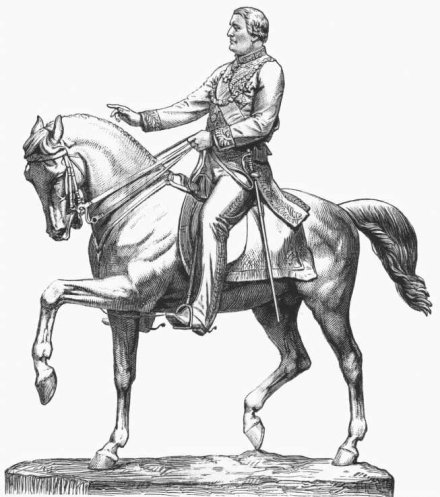
Despite not making a particularly big deal about Lord Mayo’s murder, the Empire did favor its Indian subjects with a Calcutta equestrian statue of the assassinated viceroy.


This monument and other former public memorials from the British imperial period now squirreled out of view in independent India can be found on a fun Flickr gallery, Forgotten Statuary of the British Raj. Brits can find the Earl of Mayo in marble closer to home in Cockermouth.

Mayo was also the namesake of the Mayo School of Arts in Lahore, present-day Pakistan (it’s now known as the National College of Arts). The school’s first principal was Lockwood Kipling, and this man was able to hook his 16-year-old son up with an assistant-editorship at a Lahore newspaper … from which young Rudyard Kipling launched his literary career.

* The “lone nut with a grudge” version has been latterly disputed with attempts to reconstruct Sher Ali as an Islamic revolutionary.

On this day..

1879: Benjamin Hunter, in the Hunter-Armstrong Tragedy

(Thanks for the guest post to Robert Wilhelm of the Murder By Gaslight historic crime blog, and author of the book Murder And Mayhem in Essex County. Executed Today readers are sure to enjoy Wilhelm’s detailed investigations into long-lost historic crime. This post, reprinted with permission, first appeared last February on Murder By Gaslight. -ed.)

John Armstrong

The night of January 23, 1878, a man was found on the ground with a serious head wound, not far from the home of Ford W. Davis in Camden, New Jersey. Near the wounded man, a hammer and a hatchet were found, each marked with the initials F. W. D. The man was identified as Philadelphia music publisher, John M. Armstrong and when it was learned that he owed Ford W. Davis a sizeable amount of money, Davis was arrested. But Armstrong also owed $12,000 to Benjamin F. Hunter who had insured Armstrong’s life for more than double that amount.

Date: January 23, 1878

Location: Camden, New Jersey

Victim: John M. Armstrong

Cause of Death: Blows from a hammer and an axe

Accused: Benjamin F. Hunter

Synopsis:

Benjamin Hunter

Armstrong was taken to his home in Philadelphia, across the Delaware River from Camden, to be treated for head wounds. As a friend of the Armstrongs, Benjamin Hunter was among the first sent for by the stricken family. In the guise of helping, Hunter suspiciously rearranged the bandages on Armstrong’s head, reopening the wound. But when Armstrong died, Ford Davis was charged with his murder.

Some days later a young man named Thomas Graham was drowning his sorrows in a Philadelphia saloon. Laden with guilt, Graham made statements about the Armstrong murder that were incriminating enough to have him arrested. In jail, Graham made a full confession. Graham was an employee at Benjamin Hunter’s hardware concern and Hunter had offered him $500 to kill John Armstrong. Graham was in need of money and readily agreed.

They made a plan and set a date for the murder and Hunter made arrangements to be in Virginia that day. But Hunter returned to find Armstrong still alive — Graham’s nerve had failed him. Undaunted, Hunter came up with a more detailed plan to murder Armstrong. He gave Graham a hammer which bore the initials F. W. D. then had Graham mail a postcard to Armstrong, purporting to be from Ford Davis, asking Armstrong to meet him in Camden. Graham was to kill Armstrong with the hammer then leave it behind to frame Davis. Graham lost his nerve again but this time lied and said Armstrong never showed up.

Thomas Graham

Hunter decided not to leave anything to chance and met Armstrong, face to face, and persuaded Armstrong to accompany him on the ferry from Philadelphia to Camden. Graham, armed with the hammer and a hatchet that Hunter had given him, also initialed F.W.D., followed after them, riding in a different section of the boat. In Camden they took a streetcar and Graham followed on foot. They got off the car on Vine Street and Hunter left Armstrong and went back to give Graham the signal.

Graham hit Armstrong once with the hammer, but lost heart before he was able to finish the job. He threw the hatchet away and ran back to the ferry. Hunter grabbed the hatchet and attacked Armstrong, striking him on the head. He left Armstrong severely wounded, with a fractured skull.

After Graham’s confession, Ford Davis was released and Benjamin Hunter was arrested for murder.

Trial: June 10, 1878

Benjamin Hunter pled not guilty to the murder of John Armstrong. The defense asserted that there was no evidence that Hunter was in Camden that night. They also provided numerous witnesses that testified to Hunter’s good character. And they challenged the indictment on the grounds that since Armstrong died in Philadelphia, the murder could not be prosecuted in New Jersey.

It came out in court that Hunter had loaned Armstrong a total of $12,000 and to insure his loan Hunter had persuaded Armstrong to agree to a life insurance policy with Hunter as beneficiary. The amount of the policy was $26,000.

Thomas Graham had turned state’s evidence and it was his eye-witness testimony which tightened the noose around Hunter’s neck. The trial lasted 23 days and at the end the jury, with almost no deliberation, found Hunter guilty.

Verdict: Guilty of first degree murder

Aftermath:

Hunter’s attorneys appealed the verdict on the grounds that since Armstrong died in Philadelphia, Hunter could not be convicted of murder in Camden, New Jersey. The appeal was denied and Hunter was sentenced to hang on January 10, 1879.

With all hope gone, Benjamin Hunter confessed. The amount of money he had loaned Armstrong had been so large that he had been losing sleep worrying about it. Armstrong appeared to be using the money to maintain a lavish lifestyle rather than improving his failing business. Hunter’s only hope of retrieving his money was Armstrong’s death.

A week before the execution, Hunter attempted suicide, trying to spare his family and himself the indignity of a hanging. He was not allowed a knife or fork when eating, but he was able to tear away the top of a tin cup and used sharp edge to cut into his leg. Under a blanket he was able to cut an artery without the knowledge of the jailers on his deathwatch, and he had lost a pint and a half of blood before passing out and alerting them. He was saved from death and the execution went on as scheduled.

It was reported that Hunter, due to weakness from the loss of blood, and fear of death had to be carried to the gallows; though some claimed he had been given brandy and was dead drunk when carried in.

The hanging was to be done using a method adopted by the state of New Jersey — used in the case of Antoine La Blanc, among others — in which, rather than falling through a trap, the condemned man is pulled upward when a counterweight is dropped. Hunter’s execution was horribly botched as this eye-witness account attests:

“There was no scaffold. He was hanged in the corridor of the Court House, with a rope reaching up into the Court House over a pulley and to a weight in the cellar below. He was hanged at a cross-like arrangement, made by two corridors populated by men from some of whom the Sheriff demanded ten dollars apiece, and Eli Morgan, Deputy Sheriff to Sheriff Daubman, was to cut a little rope that held a stronger rope that controlled a three-hundred pound weight that was intended to hoist up the murderer into the air. The narrator was within two feet of Hunter when he was hanged. The rope was so long that it failed of its purpose and stretched, and the man went up in the air for but a few feet then tumbled down like a bunch of wet rags. Then Eli Morgan grabbed the rope and hauled him up hand over hand and held him there until he was throttled to death.”

It took Hunter at least fourteen minutes to die of strangulation.

Benjamin Hunter’s brother tried to collect on the life insurance policy and agreed to give the money to the Armstrong family. The insurance company refused to pay and Armstrong’s wife and administratrix of his estate, sued the company. The court sided with the insurance company saying they did not need to pay. The case was appealed all the way to the U.S. Supreme Court who overturned the verdict and called for a new trial. If the insurance company could prove that the policy had been taken out by Hunter as part of the crime of murder, then policy need not be paid, if there was no fraud, then the money must be paid.

The false accusation and imprisonment of Ford Davis had completely prostrated him. Shortly afterwards, partly out of consideration for his innocent sufferings, Davis was appointed crier of the Camden Courts, and he held that position for many years.

Resources:
Books:

Hunter, Benjamin F., and Thomas Graham. Hunter-Armstrong tragedy the great trial : conviction of Benj. F. Hunter for the murder of John M. Armstrong. Philadelphia: Barclay, 1878.

Lawson, John Davison. American state trials: a collection of the important and interesting criminal trials which have taken place in the United States from the beginning of our government to the present day. St. Louis: Thomas Law Books, 1921.

Seen & heard by Megargee, Volume 4, Part 1. Philadelphia: Louis N. Megarcee, 1904.

The Medico-legal journal … New York: Medico legal journal, 1886.

On this day..

1871: Gaston Cremieux, Marseilles Commune leader

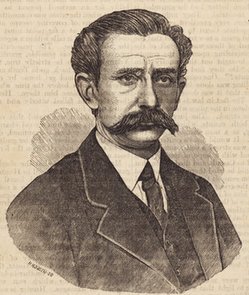
On this date in 1871, Gaston Cremieux was shot at Marseilles for his role in that city’s lately-destroyed Commune.

Cremieux (French Wikipedia page: most external links in this post are also in French) was a gifted young lawyer with a social conscience who was known for taking on indigent-defense cases and working-class causes.

Given his prominence in radical circles, Cremieux was naturally thrust into leadership when word of the Paris Commune brought Marseilles, too, into a popular rising.

Lissagaray called Cremieux “an elegant and effeminate speaker … a mild enthusiast, who beheld the revolution under rather a bucolic aspect.” His admirable principles were not those of bloody revolutionary will, and he was accordingly viewed (or disdained) as a moderate.

The Marseilles Commune lasted only a fortnight: neighboring towns did not rally to it, and elsewhere in the south Toulouse and Narbonne communards were crushed within days.

When troops of the bourgeois Versailles government — the city to which it had fled from Paris — took Marseilles, according to Lissagaray, they “arrested at random, and dragged their victims into the lamp-stores of the station. There an officer scrutinized the prisoners, made a sign to one or the other of them to step out, and blew out his brains. The following days there were rumours of summary executions in the barracks, the forts and the prisons. The number of dead the people lost is unknown, but it exceeded 150.”

Cremieux’s own conscience was pretty clean in all this — he’d even advocated against keeping hostages. (Unsuccessfully, but Marseilles did not kill its hostages, unlike Paris.) “Show me those whom Cremieux has shot,” his lawyer would later protest to the military tribunal called to try him.

Cremieux’s own shooting would have to suffice. He died crying “Vive la République!” as the firing squad emptied its barrels into his torso … as per Cremieux’s request to preserve his face lest his parents be too shaken by his corpse. Just call him a family man.

A posthumously-published French volume of Cremieux’s work contains verse, a play about Robespierre’s fall, and his “Impressions of a Condemned Man”.

On this day..