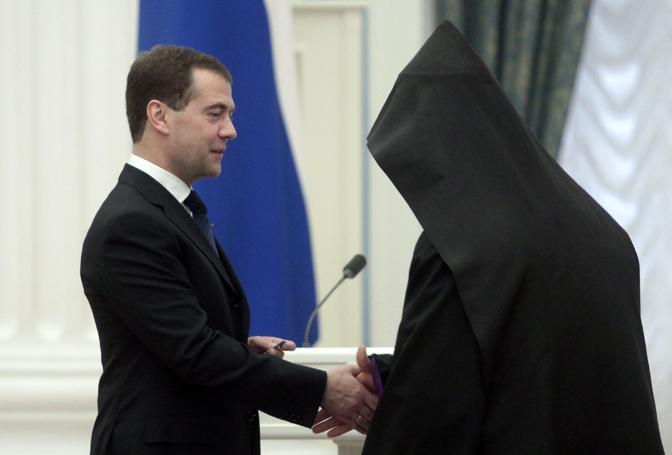
On this date in 1976, the real-life Soviet political officer whose naval mutiny inspired Tom Clancy’s Cold War thriller The Hunt for Red October was shot in Moscow for treason.
No, unlike his fictional counterpart Marko Ramius (Sean Connery, in the 1990 cinema adaptation excerpted above), Valery Sablin didn’t make it to the West.
But the real Valery Sablin wasn’t trying to make it.
Sablin was the political officer aboard the submarine-killer Storozhevoy. He was also a dedicated Leninist incensed at the notoriously corrupt gerontocracy of the Leonid Brezhnev era.
When he led his mutiny in Riga, his plan was to take the Storozhevoy to St. Petersburg and, Aurora-like, sound the tocsin for a Soviet Tea Party to restore the ideals of the Revolution.
Basically, Sablin had the exact opposite intent of his literary offspring.
This being the 1970s, when figuring out what the devil was happening in the black box of the USSR constituted its own academic discipline, the incident was misinterpreted in the western media — but understandably so.
The sea route from Riga to St. Petersburg begins in a westerly direction, towards Sweden, and the spectacle of Soviet fighters turning back a vessel steaming for Gotland (combined, of course, with the natural susceptibility of the western audience to the notion) suggested that the mutineers had aimed not at revolution, but at defection.
Under the headline “Newspaper Reports Soviet Ship Mutiny” sourced to Agence France-Presse and datelined Stockholm, Jan. 22, the Jan. 23, 1976 Washington Post reported:
Crewmen on board a Soviet coast guard vessel in the Baltic mutinied and tried to sail the ship into Swedish territorial waters in November, the evening newspaper Expressen said today.
Citing foreign visitors recently returned from Riga, the paper said the mutiny took place Nov. 7 after celebrations in Riga marking the Soviet revolution.
The paper said a Soviet submarine and a number of helicopters forced the ship to return to Riga.
This was the version of the story that aspiring spy novelist Tom Clancy encountered. In his reworking, it became the bold (and successful) defection of a state-of-the-art Soviet submarine and its deft commander … effected, of course, with a little help from the derring-do of the spooks at Langley.
Moscow was pleased to let this be the version that people heard, to the extent they heard anything at all of the incident. Though not exactly flattering, it was much less threatening than the potential storyline of “Soviet officers are so fed up with party corruption that they’re trying to revolt”.
It’s pretty safe to say that the Valery Sablin who died this day would not have had a lot of sympathy for Marko Ramius,* and still less for the Reaganite writer who turned Sablin’s deed inside-out and made it the cornerstone of his own personal mint.
Trust the fact that history will judge events honestly and you will never have to be embarrassed for what your father did. On no account ever be one of those people who criticise but do not follow through their actions. Such people are hypocrites — weak, worthless people who do not have the power to reconcile their beliefs with their actions. I wish you courage, my dear. Be strong in the belief that life is wonderful. Be positive and believe that the Revolution will always win.
-Sablin’s last letter to his son
Russian speakers may enjoy this documentary about the Sablin mutiny.
* Another inversion: in order to make his break for the Free World, the fictional (and, significantly, ethnically Lithuanian) Ramius murders the ethnically Russian political officer, Ivan Putin, assigned to his ship; the real Sablin was himself that zealous political officer, and imprisoned the ship’s captain in the course of the mutiny.
On this date in 1570, Russian tsar Ivan IV Grozny — Ivan the Terrible — carried out one of his most infamous and horrible atrocities with hundreds executed on Red Square.
Ivan the Terrible, by Viktor Vasnetsov. (Cropped image; click for the full painting.)
We find ourselves in 1570 almost a quarter-century into the reign of this complicated, frightening figure. It is the oprichnina, the bloodiest spell of Ivan’s authority: years of torture, purges, and political violence vividly symbolized by the tsar’s black-clad personal Gestapo, the oprichniki.
“Children of darkness,” the exiled noble Kurbsky called these dreadful Praetorians. “Hundreds and thousands of times worse than hangmen.”
A dangerous time to draw breath, but a particularly dangerous time for any boyar, men of the feudal nobility whom Ivan set his iron hand to mastering. This, after all, was the historical task of monarchs at this time, and it was everywhere accomplished with bloodshed.
Already stung by the defection — and subsequent nasty correspondence — of one such noble, Andrei Kurbsky, Ivan was downright paranoid about disloyalty during the long-running Livonian War against Muscovy’s western neighbors, Poland, Lithuania and Sweden.
Ivan became ever readier to equate dissent with treason and to ascribe his military reverses to conspiracies on the part of his aristocratic commanders, rather than to the shortcomings of his war-machine in general. A vicious circle thus emerged – of military failures; suspected treachery; the suspects’ fear of condemnation and liquidation, and flight abroad.*
The innocent have nothing to fear!
Taking it into his head that the ancient, rival city of Novgorod — one of the cradles of Russian civilization — was scheming to deliver itself to the newly-formed Polish-Lithuanian Commonwealth, Ivan led an army there that in early 1570 massacred thousands of Novgorodians.**
He wasn’t done yet.
Returning to Moscow with his blood up, Ivan subjected his numerous Novgorodian prisoners to a savage regimen meant to uncover the extent of their nefarious doings. And it wasn’t long before the locals (who were, after all, just as suspect in Ivan’s eyes) got swept up in it, too. Politically-motivated magistrates with torture-induced confessions and denunciations did the dreadful things they always do.
This date in 1570 turned out to be the affair’s crowning carnival of barbarism.
“The Russian capital had seen many horrors in its time,” wrote Soviet-era historian A.A. Zimin (cited in this biography of Ivan IV). “But what happened in Moscow on 25 July, in all its cruelty and sadistic refinement, outdid all that had gone before and can perhaps be explained only by the cruel temperament and the sick imagination of Ivan the Terrible.”
Ivan Viskovaty (English Wikipedia link | French) had been one of Russia’s leading men on foreign affairs for a generation, as well as a longstanding ally of the tsar.
Nevertheless, he would be the first and most prominent victim on Red Square this date. Viskovaty’s rival Andrei Shchelkalov, who succeeded Viskovaty as the foreign affairs minister, neatly stitched up the senior diplomat for being in on the Novgorod “plot” as well as more exotic schemes to hand over southern cities to Turkey and the Khanate.
On July 25, in the middle of the market-place, eighteen scaffolds were erected, a number of instruments of torture were fixed in position, a large stack of wood was lighted, and over it an enormous cauldron of water was placed. Seeing these terrible preparations, the people hurried away and hid themselves wherever they could, abandoning their opened shops, their goods and their money. Soon the place was void but for the band of opritchniks gathered round the gibbets, and the blazing fire. Then was heard the sound of drums: the Tsar appeared on horseback, accompanied by his dutiful son, the boyards, some princes, and quite a legion of hangmen. Behind these came some hundreds of the condemned, many like spectres; others torn, bleeding, and so feeble they scarce could walk. Ivan halted near the scaffolds and looked around, then at once commanded the opritchniks to find where the people were and drag them into the light of day. In his impatience he even himself ran about here and there, calling the Muscovites to come forward and see the spectacle he had prepared for them, promising all who came safety and pardon. The inhabitants, fearing to disobey, crept out of their hiding-place, and, trembling with fright, stood round the scaffold. Some having climbed on to the walls, and even showing themselves on the roofs, Ivan shouted: “People, ye are about to witness executions and a massacre, but these are traitors whom I thus punish. Answer me: Is this just?” And on all sides the people shouted approval. “Long live our glorious King! Down with traitors! Goiesi, Goida!”
Ivan separated 180 of the prisoners from the crowd and pardoned them. Then the first Clerk of the Council unrolled a scroll and called upon the condemned to answer. The first to be brought before him was Viskovati, and to him he read out: “Ivan Mikhailovich, formerly a Counsellor of State, thou hast been found faithless to his Imperial Highness. Thou has written to the King Sigismund offering him Novgorod; there thy first crime!” He paused to strike Viskovati on the head, then continued reading: “And this thy second crime, not less heinous than thy first, O ungrateful and perfidious one! Thou hast written to the Sultan of Turkey, that he may take Astrakhan and Kazan,” whereupon he struck the condemned wretch twice, and continued: “Also thou hast called upon the Khan of the Krim Tartars to enter and devastate Russia:† this thy third crime.” Viskovati called God to witness that he was innocent, that he had always served faithfully his Tsar and his country: “My earthly judges will not recognize the truth; but the Heavenly Judge knows my innocence! Thou also, O Prince, thou wilt recognise it before that tribunal on high!” Here the executioners interrupted, gagging him. He was then suspended, head downwards, his clothes torn off, and, Maluta Skutarov, the first to dismount from his horse and lead the attack, cut off an ear, then, little by little, his body was hacked to pieces.
The next victim was the treasurer, Funikov-Kartsef, a friend of Viskovati, accused with him of the same treason, and as unjustly. He in his turn said to Ivan, “I pray God will give thee in eternity a fitting reward for thy actions here!” He was drenched with boiling and cold water alternately, until he expired after enduring the most horrible torments. Then others were hanged, strangled, tortured, cut to pieces, killed slowly, quickly, by whatever means fancy suggested. Ivan himself took a part, stabbing and slaying without dismounting from his horse. In four hours two hundred and been put to death, and then, the carnage over, the hangmen, their clothes covered with blood, and their gory, steaming knives in their hands, surrounded the Tsar and shouted huzzah. “Goida! Goida! Long live the Tsar! Ivan for ever! Goida! Goida!” and so shouting they went round the market-place that Ivan might examine the mutilated remains, the piled-up corpses, the actual evidences of the slaughter. Enough of bloodshed for the one day? Not a bit of it. Ivan, satiated for the moment with the slaughter, would gloat over the grief of the survivors. Wishing to see the unhapy wives of Funikov-Kartsef and of Viskovati, he forced a way into their apartments and made merry over their grief! The wife of Funikov-Kartsef he put to the torture, that he might have from her whatever treasures she possessed. Equally he wished to torture her fifteen-year-old daughter, who was groaning and lamenting at their ill fortune, but contented himself with handing her over to the by no means tender mercies of the Tsarevich Ivan. Taken afterwards to a convent, these unhappy beings shortly died of grief — it is said.
Thanks to this sort of wholesale purging, Ivan the Terrible became in the 20th century something of an allegorical shorthand for Joseph Stalin, whose ownreignofterror was a touchier subject for direct commentary. By that same token, and capturing the multifaceted meaning of the word Grozny, (both awful and awe-inspiring) Soviet patriotic mythology co-opted Ivan and his allegedly farsighted cruelty as a state- and nation-builder.
Sergei Eisenstein’s Ivan the Terrible — a planned trilogy of films of which only two were completed, due to Stalin’s distaste for his greatest director’s interpretation — captures a view of Ivan IV Grozny from the shadow of wartime Stalinist Russia. (The two extant films can be seen in their entirety on YouTube, and are well worth the watching.)
The more conventional take is that, especially by his later years, the guy’s tyrannical paranoia had metastasized enough to send him plum off his rocker. In 1581, that favorite son who had accompanied Tsar Ivan to Novgorod, and to Red Square on this date, piqued his father’s rage during an argument — and in a fury, Ivan struck him dead.
Detail view (click for the full, gorgeous canvas) of Ilya Repin‘s emotional painting of Ivan the moment after he has mortally wounded his son. Incited to his own act of lunacy by the tsar’s riveting madman expression, iconographer and Old Believer Abram Balashov slashed these faces with a knife (image) in the Tretyakov Gallery in 1913.
The capable young heir’s senseless death effectively spelled the end for Russia’s Rurikid Dynasty descended from the half-mythical Norse founder of Rus’, Rurik. That argument from order and progress in favor of Ivan’s ferocity inconveniently runs up against the fact that what he actually bequeathed to the next generations of Russians was the rudderless, war-tornTime of Troubles, when rival claimants struggled for the throne.
Ivan IV is sure to remain a controversial, compelling figure for many a year to come. Released just a few months ago as of this writing, and in a time when Ivan comparisons are coming back into vogue for the ominous contemporary Russian state, Pavel Lungin’s Tsar (review) mounts a gory critique of its subject.
* Jonathan Shepard, book review in The Historical Journal, vol. 25, no. 2 (June 1982).
** Novgorod by 1570 was not as important as it had once been, but Ivan’s sack massively depopulated the city, essentially destroying its remaining strength as an independent commercial center.
† The allied Ottoman Turks and Crimean Khanate did in fact devastate Russia (and pillage Moscow) the very next year.
“With Major Lawrence, mercy is a passion. With me, it is merely good manners. You may judge which motive is the more reliable.”
-Alec Guinness as Prince Faisal in Lawrence of Arabia
This date in 1917 was the eve of the Battle of Aqaba, wherein a force of Arabs with famous British officer T.E. Lawrence emerged from the desert to surprise and capture the Ottoman Red Sea port today located in Jordan.*
And that makes this, in the cinematic masterpiece Lawrence of Arabia, the date on which the titular character kept the peace within his fragile coalition by personally executing a malefactor to prevent a tribal blood feud.
The victim, Gasim, is a real figure described in the real T.E. Lawrence’s memoirs —
a gap-toothed, grumbling fellow, skrimshank in all our marches, bad-tempered, suspicious, brutal, a man whose engagement I regretted, and of whom I had promised to rid myself as soon as we reached a discharging-place.
Gasim is most famous as the beneficiary of the movie scene in which Lawrence boldly turns back into the desert to rescue this worthless retainer when Gasim’s camel is found riderless in the caravan. This, too, is based on an actual incident in Lawrence’s memoir, albeit heavily dramatized on celluloid.
In the film, Lawrence’s godlike power to give Gasim life is soon mirrored by the godlike power to deprive it.
Effectively exploiting dramatic license, Lawrence of Arabia portrays the Englishman surveying the scene of the coming triumph when a disturbance breaks out in his camp. Hastening thither, he discovers clan lining up against clan over the destructive right of blood vengeance because of a murder in the camp — a murder committed by the man he has saved.
To forestall a “tribal bloodbath” on the very eve of victory, Lawrence himself volunteers to execute the culprit. Having once risked everything to save Gasim, Lawrence sacrifices him ruthlessly when the occasion demands.** This act underscores the chameleon-like other-ness of the character, one of the film’s principal leitmotifs: “I have no tribe, and no one is offended!”
Though the real Lawrence did no such thing to the real Gasim, this astonishing scene is also related in the memoirs — just at an earlier point, and with a different, less dramatically integral character.
My followers had been quarrelling all day; and while I was lying near the rocks a shot was fired. I paid no attention; for there were hares and birds in the valley; but a little later Suleiman roused me and made me follow him across the valley to an opposite bay in the rocks, where one of the Ageyl, a Boreida man, was lying stone dead with a bullet through his temples. The shot must have been fired from close by; because the skin was burnt about one wound. The remaining Ageyl were running frantically about; and when I asked what it was Ali, their head man, said that Hamed the Moor had done the murder. I suspected Suleiman, because of the feud between the Atban and Ageyl which had burned up in Yenbo and Wejh; but Ali assured me that Suleiman had been with him three hundred yards further up the valley gathering sticks when the shot was fired. I sent all out to search for Hamed, and crawled back to the baggage, feeling that it need not have happened this day of all days when I was in pain.
As I lay there I heard a rustle, and opened my eyes slowly upon Hamed’s back as he stooped over his saddle-bags, which lay just beyond my rock. I covered him with a pistol and then spoke. He had put down his rifle to lift the gear; and was at my mercy till the others came. We held a court at once; and after a while Hamed confessed that, he and Salem having had words, he had seen red and shot him suddenly. Our inquiry ended. The Ageyl, as relatives of the dead man, demanded blood for blood. The others supported them; and I tried vainly to talk the gentle Ali round. My head was aching with fever and I could not think; but hardly even in health, with all eloquence, could I have begged Hamed off; for Salem had been a friendly fellow and his sudden murder a wanton crime.
Then rose up the horror which would make civilized man shun justice like a plague if he had not the needy to serve him as hangmen for wages. There were other Moroccans in our army; and to let the Ageyl kill one in feud meant reprisals by which our unity would have been endangered. It must be a formal execution, and at last, desperately, I told Hamed that he must die for punishment, and laid the burden of his killing on myself. Perhaps they would count me not qualified for feud. At least no revenge could lie against my followers; for I was a stranger and kinless.
I made him enter a narrow gully of the spur, a dank twilight place overgrown with weeds. Its sandy bed had been pitted by trickles of water down the cliffs in the late rain. At the end it shrank to a crack a few inches wide. The walls were vertical. I stood in the entrance and gave him a few moments’ delay which he spent crying on the ground. Then I made him rise and shot him through the chest. He fell down on the weeds shrieking, with the blood coming out in spurts over his clothes, and jerked about till he rolled nearly to where I was. I fired again, but was shaking so that I only broke his wrist. He went on calling out, less loudly, now lying on his back with his feet towards me, and I leant forward and shot him for the last time in the thick of his neck under the jaw. His body shivered a little, and I called the Ageyl, who buried him in the gully where he was. Afterwards the wakeful night dragged over me, till, hours before dawn, I had the men up and made them load, in my longing to be set free of Wadi Kitan. They had to lift me into the saddle.
Peter O’Toole’s Lawrence almost palpably manifests the conflicting aspects of his character as he shoots Gasim to death — and he confirms the transformative effect of his first homicide in subsequent dialogue with Gen. Edmund Allenby.
Lawrence: I killed two people. One was … yesterday? He was just a boy and I led him into quicksand. The other was … well, before Aqaba. I had to execute him with my pistol, and there was something about it that I didn’t like. Allenby: That’s to be expected. Lawrence: No, something else. Allenby: Well, then let it be a lesson. Lawrence: No … something else. Allenby: What then? Lawrence: I enjoyed it.
* Actually, Aqaba is Jordan’s only port. This battle was not so epic as the film depicts.
** In a bit of complex foreshadowing, the cinematic Gasim has told Lawrence at the outset of the expedition that “Allah favors the compassionate.”
On that day, following four days of torture, he was led to an executioner’s scaffold in Red Square in the company of his younger brother, Frol. The list of Razin’s crimes and then his sentence were read out to him. The punishment was to be “an evil death befitting the wicked — by quartering.” According to eyewitness accounts, Razin then crossed himself and submitted to the executioner. Normally, death by quartering requires that the executioner first chop off the right arm of the convicted man at the elbow, then his left leg at the knee, then the left arm at the elbow, then the right leg at the knee, ending the whole gruesome process by decapitation. In the case of Razin, the executioner made only the first two cuts when, for some reason — perhaps for fear of Razin’s power over the assembled multitude — he was told to end it all and chop off the head. To complete the sentence, the executioner then went back and severed the remaining limbs of the already headless Razin. The limbs and the severed head were taken to Bolotnaia ploshchad’ across the Moscow River and displayed on spikes. The body was thrown to the dogs. Frol, who was supposed to be executed in a similar manner, began screaming his willingness to cooperate with the authorities midway through his brother’s execution. He was led back to prison, interrogated further, and executed on 26 May 1676.
Marshaling the underclasses (literally, the “naked ones”: the Cossacks had class issues) in the semi-lawless southern reaches of the realm, Razin segued smoothly from from a career of brigandage into suzerainty over a quasi-state around the Volga with the help of a sympathetic peasant uprising.
Razin’s revolt had scope and duration enough to trounce a Persian expedition against him. He bestrode the Volga — sailed the Caspian — raided foreign lands — established a Cossack republic.
It was an impressive run while it lasted. But like most peasant revolts, it was ultimately on the receiving end of the trouncing.
Captured and hailed to Moscow for his demonstrative end, Razin’s story lives strong in Russian culture and folklore even though his body ended up in bits and pieces.
Best-recognized and most universally beloved is the folk tune “Ponizovaya Volnitsa”, which celebrates Stenka and the mighty waterway that bore him to posterity, the Volga.
* June 6, 1671 per the Julian calendar. It was June 16 in those countries that had already adopted the Gregorian calendar.
… a Thracian of Nomadic stock, possessed not only of great courage and strength, but also in sagacity and culture superior to his fortune, and more Hellenic than Thracian. It is said that when he was first brought to Rome to be sold, a serpent was seen coiled about his face as he slept, and his wife, who was of the same tribe as Spartacus, a prophetess, and subject to visitations of the Dionysiac frenzy, declared it the sign of a great and formidable power which would attend him to a fortunate issue.
On an uncertain date roughly around this time in 71 B.C.E., some 6,000 survivors of the shattered rebel slave army of Spartacus in Rome’s Third Servile War were crucified along the Appian Way.
The specific chronology of this legendary warrior, leader of the last major slave revolt against Rome, is necessarily foggy, but in fine, he broke out of a gladiators’ camp in 73 B.C.E. and went on to lead a slave army some 100,000 strong up and down the Italian peninsula for two solid years, repeatedly stomping Roman forces sent to suppress him.
His motivations remain mysterious; if one likes, one can project back on him an anachronistic anti-slavery project, but it’s more likely he was just trying to get by day by day as the greatest empire* on the planet harried his every move and internal divisions tore at the rebel camp.
Nevertheless, Spartacus and army prospered, and plundered, in the very heart of that empire, and gave Senators reason to fret the security of their capital even as their legions carried Roman arms from Spain to Palestine.
The army (for the gladiators organized it with military discipline, realizing a mob would be easy prey for Rome) was trapped, at last, at the toe of the Italian boot by Roman plutocrat Crassus, later to become a patron of, and fellow triumvir with, Julius Caesar. Abandoned by pirates with whom the slave army attempted to negotiate passage, it was a desperate situation. Spartacus, writes Appian, “crucified a Roman prisoner in no-man’s land to demonstrate to his own troops the fate awaiting them if they were defeated.”
Duly inspired, Spartacus and his army broke out of the Roman circumvallation around February of 71 B.C.E. Hemmed in by a second Roman force, the slaves turned to fight their pursuer, Spartacus dramatically sticking a blade into his own warhorse before the fight as another one of those conquer-or-die pregame speeches.
In The Spartacus War, Barry Strauss estimates April of 71 B.C.E. for that decisive battle. The slaves lost it; Spartacus died in combat, and his ancient calumniators vied to sing his heroism on the field.
But 6,000 survivors did not go down fighting to the death. These, Crassus staked out along one of Rome’s principal highways, the carcasses left to disintegrate there for months or years.
He’s easy to admire now,** but slave revolts scare the bejeezus out of slave societies, and the Spartacus rising would keep generations — centuries — of Romans sweating about a potential repeat. (At least, elite Romans, the ones whose voices remain for us.)
Their pejorative take on Spartacus (aside from his personal valor and martial excellence, for which even hostile writers gave him credit) was long the received wisdom on this upsetter of divinely established social order. “From a small and contemptible band of robbers,” sniffed Saint Augustine of the gladiators, “they attained to a kingdom.” They “enjoyed whatever pleasures they wished, and did what their lust suggested.”
The present-day reader’s readiest association is likely the much more admiring — and famously homoerotic, which is now yet another connotation for the gladiator’s name — Stanley Kubrick classic Spartacus, which turns 50 this year and gave to the cinematic canon the stirring “I’m Spartacus!” scene as the captured slave army defiantly embraces death.
This episode is completely ahistorical, but so what? One of the wildest things about this sword-and-sandal production is how much of it isn’t made-up. Like the premise: in the lifetime of Julius Caesar, a few guys busting out of gladiator school using nothing but kitchen utensils threatened for two years to turn the Eternal City and its far-flung realms upside-down.
A number of sports clubs in the former Soviet bloc also carry the Spartacus name, including Russian football power Spartak Moscow as well as several clubs in Bulgaria, which currently governs most of the rebel slave’s ancestral homeland of Thrace.
On this date in 1938, former tsarist Gen. Evgeny Miller was executed in Moscow, having been brazenly kidnapped by the Soviet NKVD from exile in France.
Miller opposed the 1917 Russian Revolutions (both of them) and ended up on the wrong side of the ensuing civil war as Aleksandr Kolchak‘s man in Archangel.
There, Miller (he was half-German) was the beneficiary of the Entente powers’ anti-Soviet incursion of British, French, American and Canadian troops.
These powers soon found that their respective peoples, wearied by the late world war, had little appetite for spilling more blood in the service of enthroning a Romanov, and cut bait in 1920.
Miller wisely did likewise, and watched the great workers’ and peasants’ republic take shape from the safety of Paris — where, in the 1930s, he chaired the anti-communist Russian All-Military Union (ROVS).
Soviet intelligence had infiltrated this body, however, and hatched a bold plot* to shanghai Miller and smuggle him out of the country in order to cause ROVS leadership to pass to the Soviets’ own agent, Nikolai Skoblin. Although they got Miller, they didn’t quite pull off the putsch, since the wary general had left behind a note outlining his suspicions of Skoblin in the event foul play should befall him.
Imprisoned at Lubyanka, Miller was personally interrogated by NKVD boss Nikolai Yezhov, but according to Vladislav Goldin and John Long,
little or nothing of what Miller had to report about the recent activities of the ROVS was unknown to the NKVD … the leaders of the NKVD found themselves saddled with a prominent prisoner of no significant value to Soviet intelligence and from whose capture, at the same time, nothing useful could be derived by way of publicity or propaganda.
…
The fall of Ezhov sealed the doom of General Miller, whose abduction had from the outset been his inspiration. In these circumstances, given his continuing uselessness to the NKVD, Miller’s elimination became an inevitable element in Commissar Beria‘s liquidation of the so-called Ezhovshchina, an operation which lasted from late 1938 through at least 1940. Although part of this undertaking involved the release of up to 200,000 of Ezhov’s prisoners, no such option was available in the case of General Miller for whose disappearance the Soviet government had consistently denied any responsibility. Accordingly, on 11 May 1939, after more than nineteen months of agonizing solitary confinement, Commissar Beria, with no viable alternative, ordered the trial and execution of the long-suffering General Miller in a process, ironically, that was fully implemented in less than twenty-four hours.
…
[it was] an ill-conceived, poorly executed and totally unnecessary adventure that, in the end, failed to benefit any of its apparent perpetrators.**
Skoblin, for his part, fled, disappearing to a still-unknown fate. His wife, Nadezhda Plevitskaya, copped a 20-year sentence for helping arrange the kidnapping, and died in prison.
They may not have gotten ROVS, but at least they made celluloid. Skoblin’s shadowy activities in France in this period are the inspiration for the 2004 French film Triple Agent.
* Georgy Kosenko, who we’ve previously met in these pages, helped orchestrate the kidnapping. (Times being dangerous as they were, the wheel of Red Terror turned against Kosenko so quickly that Miller actually outlived him.)
** Goldin, Vladislav I. and Long, John W. “Resistance and Retribution: The Life and Fate of General E.K. Miller”, Revolutionary Russia, 12:2 (1999), pp. 19-40.
On this date in 2007, the Taliban beheaded hostage Ajmal Naqshbandi, an Afghan “fixer” who arranged local contacts for foreign journalists.
Naqshbandi had been pinched on March 6 with La Repubblica writer Daniele Mastrogiacomo while both were out on a story together, even though Naqshbandi himself had set up Taliban interviews before.*
Quiet negotiations over several weeks produced a swap that would free the scribes, but a last-minute breach by the authorities — who decided not to return one of the agreed-upon prisoners — caused the Taliban to hang onto the Fixer. (Mastrogiacomo was set free. The man who was driving these two had been beheaded at the outset to prove the captors meant business.)
The story wasn’t quiet any longer, and as it mushroomed into a worldwide cause celebre with a scramble to save Ajmal, the Taliban evidently perceived a political advantage in butchering its hostage.
Success! Afghan President Hamid Karzai looked like a total stooge, willing to ransom a foreigner but not an Afghan.
So, for that matter, did the Italian government, which got it from both sides for being abject enough to deal with terrorists in the first place, and then ignoble enough once it did so to bail out its own national while letting his local partner die.
Doug Henwood of Left Business Observer interviewed Christian Parenti in the second half of this August 2009 episode from his (highly recommended, though rarely death penalty-related) WBAI radio program/podcast Behind the News, with intriguing coverage of the political context and the role of Pakistani intelligence:
On this date in 1984, Elmo Patrick Sonnier was electrocuted in Louisiana’s Angola Prison for abducting and murdering two teens in St. Martin Parish.*
Elmo and his brother Eddie posed as police officers and handcuffed two high schoolers parked at a local makeout point. Then they raped the girl, and shot both of them dead.
Eddie managed, as he said, to “give it back” on the grounds that Patrick was the one who did the shooting.
Once Eddie was clear of the death penalty, he tried to cop to the shooting after all, in order to save his little brother.
The appellate life of this case involved unedifying revisions of the “who shot whom” story. Ultimately, Eddie’s later claim to have been the triggerman, though quite possibly true, is not likely to win very much sympathy for his brother. It didn’t help him in the courts, either.
Just the 17th person executed since reinstatement of the death penalty, Sonnier learned that his longshot bid for clemency had been denied straight from the man who denied it — colorful, corrupt Louisiana Gov. Edwin Edwards, who personally phoned Sonnier to give him the bad news.
Little did Sonnier know that he had equally famous company meeting him in his cell.
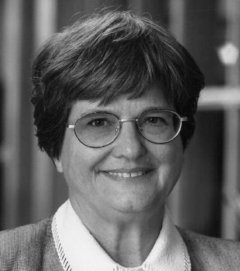
Sonnier was the first condemned inmate to receive the spiritual ministration of Sister Helen Prejean.
The then-obscure Louisiana nun would later write the bestseller Dead Man Walking about her experiences with Sonnier and a second death row prisoner, Robert Lee Willie. Prejean remains among the most well-known death penalty opponents in the world today.
While the book Dead Man Walking treats Sonnier and Willie in a nonfiction vein, the film adaptation (review) amalgamated those people into a single character, the fictional “Matthew Poncelet”. It’s apparent from the flashbacks in Dead Man Walking‘s execution scene, however, that Sonnier is the predominant influence on “Poncelet”.
Dead Man Walking is an interesting movie. Though its principals were all vocal death penalty opponents, the film itself is much better art than propaganda. Arguably, the doomed criminal attains a sort of personal redemption — finally admitting responsibility for a crime he had denied for much of the film; seeking the forgiveness of his victims’ surviving family — only because the death penalty awaits him.
Susan Sarandon won an Oscar for Best Actress for her turn as Sister Helen. Note that while Sonnier was in fact put to death in the electric chair (as was Robert Lee Willie), director Tim Robbins opted to portray a lethal injection because, as Helen Prejean herself put it,
we don’t want to give people the moral out whereby people could say ‘oh well, we used to do electrocution but that’s too barbaric so now we are humane and inject them’
* The murder that led to this date’s execution took place in the same area where Willie Francis survived a trip to the electric chair: the very chair that killed Patrick Sonnier.
Skirmishes in the frontierlands at length triggered a Texan reprisal-slash-plundering expedition.
The officially independent Somervell Expedition of volunteer Texan militiamen captured a couple of Mexican towns, then disbanded to go home. Those members of it optimistic about their chances for more raiding set off for Ciudad Mier* — the Mier Expedition.
The Mier Expedition was a flop, and the irate Mexican President Santa Anna ordered the entire band shot to make an example. Anglo diplomatic wrangling got him to go down to shooting one tenth of the band.
Well, you’ve gotta pick that tenth somehow.
The Black Bean Lottery
So on this day, 176 potentially condemned men were made to draw a bean from a pot containing 159 white ones and 17 fatal black ones.
For the lucky 159, there was no rush quite like winning your life from a legume, as this survivors’ account describes:
I knew then that I was safe, and the revulsion of feeling was so great and rapid that I can compare it to nothing except the sudden lifting of an immense weight from off one’s shoulders. I felt as light as a feather.
The 17 for whom the cosmos had ordained frijoles negros took a quick leave of their companions, and were shot in two batches. (Here is a thorough discussion of the entire affair.)
It was a typically dicey death by musketry, with lots of people requiring multiple volleys. One of the 17, one James Shepherd, even survived the execution altogether by playing dead. (He fled during the night, but was later recaptured and [successfully] re-shot.)
The most hated man (by the Mexicans), Ewen Cameron, pulled white, but Santa Anna thought better of letting him draw air and had him separately executed a month later. The rest of the lottery’s “winners” languished in prisons and work camps for more than a year of continued Texas-Mexico hostility, until they were amnestied and released in September 1844 — many destined to renew hostilities in the imminent Mexican-American War.
That survivor quoted above, William “Bigfoot” Wallace, was one of those re-enlistees. His colorful career with the Texas Rangers earned him a minor star in the firmament of Americana; he appears in Larry McMurty’s Lonesome Dove prequel Dead Man’s Walk … only in that version, he gets cinematically black-beaned at the big moment, as in this clip from the miniseries of the same title.
* The town is latterly famous as a key transit point for arms smuggling to Fidel Castro to supply the Cuban Revolution.
On this date in 1974, in the face of an international controversy, Spain executed anarchist Salvador Puig Antich — the very last execution by garrote.
Handsome young Salvador radicalized as a youth in the 1960s under the oppressive semi-fascist Franco dictatorship.
As was the style at the time, the Catalan nationalist’s philosophy soon migrated to anarchism, and he brought his army experience to the Movimiento Ibérico de Liberación (MIL), whose direction-action credo entailed bank robberies branded as “expropriation.”
Puig Antich was caught in a police ambush that also claimed the life of a police officer — at least some of the bullets seemingly delivered by police friendly fire.
But his defense that his own gun discharged only as he was beaten senseless by the gendarmes never had a chance, since between arrest and trial, another set of proscribed leftists assassinated Prime Minister Luis Carrero Blanco.
Blanco’s successor went by the handle “Butcher of Malaga” for his depredations as a nationalist prosecutor during the Spanish Civil War.
So there was no quarter forthcoming from the Spanish regime, notwithstanding domestic general strikes and worldwide gnashing of teeth.
Spain soon did away with the discomfiting garrote; its very last executions were carried out by firing squad.
Salvador Puig Antich was the subject of a 2006 film, Salvador. (Here is a hostile anarchist review.)
The junior partner in the day’s twin killing, Heinz Ches, was himself the subject of a documentary, Nobody’s Death: The Enigma of Heinz Ches, exploring the weird near-total obscurity of the man who shared the headlines with Salvador Puig Antich. (A clip can be viewed here.)

 No, unlike his fictional counterpart Marko Ramius (Sean Connery, in the 1990 cinema adaptation excerpted above), Valery Sablin didn’t make it to the West.


 This date in 1917 was the eve of the


 On an uncertain date roughly around this time in 71 B.C.E., some 6,000 survivors of the shattered rebel slave army of

 Naqshbandi had been pinched on March 6 with La Repubblica writer Daniele Mastrogiacomo while both were out on a story together, even though Naqshbandi himself had set up Taliban interviews before.*

 Handsome young