Unspecified Year: Bigger Thomas

The main character of Richard Wright’s Native Son was condemned to a March 3 electrocution by the state of Illinois.

In Number 666-983, indictment for murder, the sentence of the Court is that you, Bigger Thomas, shall die on or before midnight of Friday, March third,* in a manner prescribed by the laws of this state.

The Court finds your age to be twenty.

The Sheriff may retire with the prisoner.

Readers are not treated to the actual execution scene, but the hopelessness of Bigger Thomas’s situation is the book‘s whole context and theme. There is little room to entertain a reprieve.

“In the first draft I had Bigger going smack to the electric chair,” the author remarked. “But I felt that two murders were enough for one novel. I cut the final scene.”

The first Book of the Month club selection by an African American author was an instant best-seller, but hardly easy reading. Wright tackles the catastrophic “hatred, fear, and violence” suffusing negro life.

Inspired in part by a real-life Windy City murderer, Bigger Thomas grows up wretched and impoverished in Depression-era Chicago and eventually commits an accidental homicide, then rapes and murders his girlfriend. Wright took some heat for staging a character seemingly written to whites’ darkest fears of African-Americans, but it was his object to force the reader to relate to a violent man whose brutality is conditioned by the world he inhabits.

Bigger Thomas’s trial has his lawyer present an overt indictment of structural oppression as the true cause of Bigger’s crime.

“I didn’t want to kill,” Bigger shouted. “But what I killed for, I am! It must’ve been pretty deep in me to make me kill! I must have felt it awful hard to murder … What I killed for must’ve been good!” Bigger’s voice was full of frenzied anguish. “It must have been good! When a man kills, it’s for something … I didn’t know I was really alive in this world until I felt things hard enough to kill for ’em. It’s the truth …”

Whether Wright truly broke out of the existing literary genres may be a matter of debate.

James Baldwin considered Native Son to be of the Uncle Tom’s Cabin tradition, “self-righteous, virtuous sentimentality … the one uttering merciless exhortations, the other shouting curses.”

All of Bigger’s life is controlled, defined by his hatred and his fear … elow the surface of this novel there lies, as it seems to me, a continuation, a complement of that monstrous legend it was written to destroy … Bigger’s tragedy is not that he is cold or black or hungry, not even that he is American, black; but that he has accepted a theology that denies him life, that he admits the possibility of his being sub-human and feels constrained, therefore, to battle for his humanity according to those brutal criteria bequeathed him at his birth. But our humanity is our burden, our life; we need not battle for it; we need only to do what is infinitely more difficult — that is, accept it. The failure of the protest novel lies in its rejection of life, the human being, the denial of his beauty, dread, power, in its insistence that it is his categorization alone which is real and which cannot be transcended.

“Everybody’s Protest Novel” (pdf)

“Protest novel” or otherwise, Native Son‘s mainstream success extended to the stage, where Orson Welles — fresh from the debut of Citizen Kane — directed a Wright-written adaptation in 1941. Less successfully, Wright himself played the title role in a 1951 Argentinian film.

“Bigger Thomas” is also the name of a long-running ska band.

Though the novel is not yet public domain in the United States, it is in some countries — and can be perused free here.

* For the finicky chronologist: Native Son was published in 1940. At that point, the most recent occasions March 3 had fallen on a Friday were 1939 and 1933.

On this day..

1879: Takahashi Oden, dokufu and she-demon

On this date in 1879, Takahashi Oden was put to death for murder at Tokyo’s execution grounds — the last woman beheaded in Japanese history.

Oden confessed to slaying her lover, and was also suspected of poisoning off her husband.
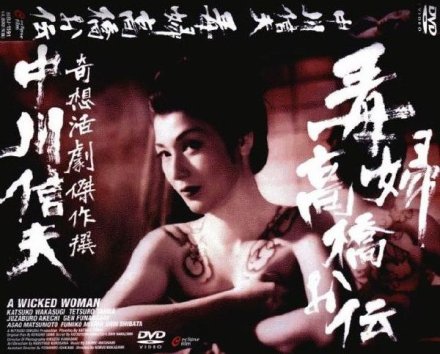
This made her perhaps the most infamous of Japan’s dokufu, poison-women — a perceived epidemic of the early Meiji period. Oden’s infamy thrust her into the crime genre’s characteristic harvest pulp literature, like Takahashi Oden yasha monogatari. (Takahashi Oden, the She-Demon’s Tale)

“Oden’s body became part of a scientific discourse that worked to produce ‘knowledge’ about feminine norms based on determinist biological differences,” Sharon Chalmers observes. “Deviancy was also characterised in terms of ‘masculine’ traits … [and] female transgression was read as sexual excess.”

And the feeding frenzy of the popular press around each new dokufu only exaggerated the effect: the sexual rapacity angle moved media.*

Since Japan was all about divining the secrets of the human form from the condemned, Oden was dissected after her death.

According to Murder Most Modern: Detective Fiction and Japanese Culture, the anatomizing team was especially keen on delineating that scientific discourse of feminine deviance. And, of course, the pamphleteers were keen on publicizing it. In this case, standing as we do today outside the surgeons’ intellectual framework, we can readily discern the corpse’s role for these men as grist for the ideological mill.

Immediately following her execution, her body was taken to the hospital affiliated with the Metropolitan Police Office (Keishicho) and dissected by an army surgeon and three regular doctors. Some accounts of this autopsy reveal that these doctors focused their attention on Oden’s genitalia during the procedure. Her bizarre autopsy is said to have been prompted by a newly emerging field of study called zokaki ron, roughly “the study of (re)productive organs.” A cross between sheer superstition and legitimate study of anatomy, zokaki ron was getting much scholarly as well as popular attention as one of the branches of science recently introduced from the West. After the autopsy, the primary operating surgeon, Osanai ken (1848-85), made the following report on Oden: “Abnormal thickness and swelling of the labia minor. Over-development of clitoris. Enlargement of vagina.” For Osanai — a skilled physician who is credited with having performed the first operation in Japan with chloroform and even makes an appearance in Shibue Chusai (1916), a novel by Mori Ogai (1862-1922) about a doctor of Chinese medicine in late Edo period Japan — such physical abnormalities explained Oden’s violent nature: after all, she ruthlessly slit her victim’s throat and left him in a pool of his own blood, and it took several blows for the authorities to execute her as she kicked and screamed in resistance.


Autopsy of Takahashi Oden, from Takahashi Oden yasha monogatari.

Though a lot of water has passed under the bridge since Oden’s day, she was the subject of a 1958 Nobuo Nakagawa film, Dokufu Takahashi Oden.


Katsuko Wakasugi as the title character in Dokufu Takahashi Oden.

* For more on the Oden story as crime literature, see Mark Silver’s “The Lies and Connivances of an Evil Woman: Early Meiji Realism and ‘The Tale of Takahashi Oden the She-Devil'” in Harvard Journal of Asiatic Studies, June 2003 — or, his book Purloined Letters: Cultural Borrowing and Japanese Crime Literature, 1868-1937.

On this day..

1611: Three accomplices of Elizabeth Báthory, the Countess of Blood

Four hundred years ago today, on Jan. 7 1611, three servants of the legendary “Countess of Blood” Elizabeth Bathory (Báthory Erzsébet, in the Hungarian) were tried, convicted, and immediately put to death for the noblewoman’s stupendous career of homicide.

This date’s entry is occasioned by the deaths of three subalterns — manservant Janos Ujvary, beheaded; and female attendants Ilona Jo and Dorottya Szentes, fingers ripped off and burned — but the headline attraction is their employer, who was never tried or condemned.

Not, at least, juridically. Posterity’s condemnation of this classic vampire inspiration has been little short of … voluptuous.


A 1971 film based on Elizabeth Bathory’s exploits. Horror star Ingrid Pitt later reprised her “role” with guest vocals on a Cradle of Filth concept album devoted to the Countess, Cruelty and the Beast.

Bathory was rarefied Hungarian nobility, the niece of the King of Poland, which is also the biography of countless aristocrats you’ve never heard of.

The world remembers Elizabeth Bathory because she exploited her rank to butcher hundreds of peasant girls, allegedly to bathe in their rejuvenating blood.

On one occasion, a lady’s-maid saw something wrong in [Elizabeth Bathory’s] head-dress, and as a recompence for observing it, received such a severe box on the ears that the blood gushed from her nose, and spirted on to her mistress’s face. When the blood drops were washed off her face, her skin appeared much more beautiful — whiter and more transparent on the spots where the blood had been.

Elizabeth formed the resolution to bathe her face and her whole body in human blood so as to enhance her beauty.


McFarlane Toys figurine of Erzsebet (Elizabeth) Bathory from its grotesque “Faces of Madness” series.

These scrub-ups are what the Countess of Blood is best remembered for, but however striking the visual, it’s an atrocity that actually doesn’t turn up in the trial records.

But she could hardly complain of the embroidery, having given her interlocutors so much material.

Elizabeth Bathory is supposed to be responsible for over six hundred deaths, starting while her husband was away on campaign, and then carrying on into a wholesale operation after he died. When she and her servants were finally busted at Csejte Castle the end of 1610, their captors found a dead girl, a dying girl, and several others imprisoned and awaiting that fate.


Elizabeth Bathory, a sexually charged 1893 painting by Hungarian impressionist Istvan Csok depicting one of the countess’s victims being drenched in icy water for death by exposure.

So although the confessions the servants made this date to seal their own fates were undoubtedly torture-adduced, the documentary record turns out to be amazingly strong for such a fantastical spree. Hungarian King Matthias II convened a tribunal that examined 200 to 300 witnesses.

One can postulate that the woman ran afoul of a patriarchal culture affronted by her exercise of power or that she became a parable for the “unnatural” lust of a middle-aged woman … but so far as we are left to understand, Erzsebet Bathory really did lure young girls to her castle, and then inflict (pdf) a Nazi doctors’ litany of sadism on them … like jabbing them with needles to drain out their blood. She even kept a log of the victims in her own hand.

So, locals disappearing into the creepy castle, never to be seen again, or possibly to turn up pallid and dead. (Disposing of all those corpses became a logistical problem for the creepy castle.) No surprise to find it associated with the vampire legend.*

And no surprise that the tale became magnified, twisted, and reconfigured by popular culture.

In 1817, as accounts of the testimonies about the alleged murders and sadistic tortures were published for the first time, national and international headlines sensationalized the already misconceived story. From that on [sic], the literary countess took on a life of her own: the Grimm brothers wrote a short story about her, the romantic German writer, Johann Ludwig Tieck (1774 – 1853), cast her as a Gothic femme fatale, Swanhilda, in his short story Wake Not the Dead. It is alleged that Sheridan le Fanu shaped his female vampire Carmilla on Elizabeth Bathory. If we can believe some etymological explanation the compound English word blood-bath is of mid-nineteenth century origin possibly connected to the bloody countess’ rising popularity in England.

-László Kürti, “The Symbolic Construction of the Monstrous — The Elizabeth Bathory Story,” Croatian Journal Of Ethnology and Folklore Research, Jan. 2009

A few books about Erzsebet Bathory

To say nothing of the death porn (link not safe for work).

The noblewoman never faced an executioner herself, owing to her rank; she was shut up in the castle.

* As it turns out, a Bathory ancestor actually fought with the “original Dracula” Vlad the Impaler in the 15th century.

On this day..

1942: Sasha Filippov, during the Battle of Stalingrad

(Thanks to Meaghan Good of the Charley Project for the guest post. -ed.)

On this day in 1942 in Stalingrad, Russia, seventeen-year-old shoemaker and spy Sasha Fillipov was executed by the German Army for espionage. The Battle of Stalingrad, which had been in progress since July, was bleeding the city white and would continue to do so until the following February. Young Sasha would be just one of over two million casualties.


One death, millions of deaths. Stalin had a quote about that.

Sasha, who had already become a master cobbler, simultaneously volunteered his shoemaking services for the invading German Army and his spying services for the Russian Army. He became a regular behind German lines, and as he made and repaired their shoes and boots he also stole documents, made note of whatever military activity he could see, eavesdropped on conversations and reported it all to the Russians.

Eventually he was discovered, and two days before Christmas he and two other teenagers were led barefoot through the snow and hung from acacia trees on Bryanskaya Street. His parents were there to witness the execution, but his father couldn’t bear to watch and ran away. He also left a ten-year-old brother.

In 1944 he was posthumously awarded the Order of the Red Banner for his services to Russia. The street where he died was renamed after him, as was a school on that street. Today, however, Sasha is most remembered for being a minor character in the wildly-inaccurate-but-still-a-thrill-to-watch film, Enemy at the Gates. Sasha in the movie is portrayed as a much younger boy, about twelve years old, and is played by Gabriel Thomson.

On this day..

1920: Bloody Sunday in Ireland

Sunday, Nov. 21 in 1920 was “Bloody Sunday” in Ireland, a date begun with the IRA execution of British agents in Dublin, and concluded with three IRA men killed in British custody.

Thirty-one people lost their lives on this 1920 Bloody Sunday, a signal event of the Irish War of Independence; the thirteen of them who were British intelligence officers or assets targeted for an en masse morning liquidation suffices to qualify the affair for these grim pages.

“Executions”, assassinations or otherwise, the killings were ordered by Irish revolutionary Michael Collins in the escalating dirty war between his Irish Republican Army and the Black and Tans dispatched by London to crush the IRA.

My one intention was the destruction of the undesirables who continued to make miserable the lives of ordinary decent citizens. I have proof enough to assure myself of the atrocities which this gang of spies and informers have committed. If I had a second motive it was no more than a feeling such as I would have for a dangerous reptile. By their destruction the very air is made sweeter. For myself, my conscience is clear. There is no crime in detecting in wartime the spy and the informer. They have destroyed without trial. I have paid them back in their own coin.

-Michael Collins, on the executions

There were a couple of hitches in the plan: most particularly, that out of an initial list of 50 targets, Collins had been forced by his own government to trim to 35 … and then his hit teams “only” actually managed to get about a third of them.

And, of course, it drew a British rampage that day, most famously at a football match at Croke Park* concluding when Dirk McKee, Peadar Clancy and Conor Clune were killed that evening in a British police station — “trying to escape.”

But in all, the day was a coup for the Republicans, who crippled British intelligence in Dublin and gave any future recruits grave reason to think twice about the engagement, while reaping a public relations bonanza both domestic and international from the indiscriminate English response against civilians.

Occurring as it did while the fight for Ireland everywhere intensified — and that fight culminating in Ireland’s independence** — 1920’s Bloody Sunday is a sacred day for Irish nationalism.

Just to be clear, however, this is not the Bloody Sunday of U2 “Sunday Bloody Sunday” fame, which was an altogether different bit of carnage in 1972. “Bloody Sunday” actually has a disturbingly populous Wikipedia disambiguation page, with at least four Ireland-related entries and others from Turkey, Canada, South Africa, and points beyond.

* An England-Ireland rugby match in that stadium in 2007 grabbed headlines for its associations this date; you can see the respective anthems played before a respectful Irish crowd here.

** Leading, of course, to further assassinations, including Michael Collins’s own, and the internecine Irish Civil War.

On this day..

1903: Tom Horn

On this date in 1903, Tom Horn hanged in Cheyenne — a frontier legend lost in the post-frontier world.

Tom Horn passed the months between trial and execution braiding rope. Legend obviously holds that he made the noose that hanged him.

Horn‘s forty-three colorful years traced the waning days of the Wild West: he was a cavalry scout who helped capture Apache warrior Geronimo, a Pinkerton agent, a hired gun in the murderous Wyoming cattle wars. (He made a side trip to Florida during the Spanish-American War to organize Teddy Roosevelt’s supply train before the Battle of San Juan Hill.)

He had hunted many rustlers to their deaths, though he may have swung for a killing he didn’t do; the verdict against him in the murder of 14-year-old Willie Nickell is still hotly disputed to this day. It turned on a dubious liquor-induced “confession” as recorded by the lawmen who wanted to arrest him.

Horn’s death, to the hymn of “Life’s Railway to Heaven”, is a milestone in the passing of the frontier West; too, it was a milestone in a weird experimental cul-de-sac for modern America’s fascination with technological innovation on the scaffold. A contraption called the “Julian gallows,” named for the man who designed it, used the prisoner’s weight on the trap to open a water valve that filled a barrel that knocked over a post supporting the trap, causing the prisoner to eventually drop without any hangman’s hand on a lever.

A steady,* solitary man, Horn took it all in with equanimity. Maybe it was written: not for this rugged plains gunslinger to lurk on as a relic into the age of flight, cubism, trench warfare. Already in his lifetime the frontier had disappeared into kitsch.

Tom Horn lives on in Wyoming lore, and the tale has no greater curator than Wyoming’s Chip Carlson. Carlson manages www.tom-horn.com and is the author of Tom Horn: Blood on the Moon; he was good enough to chat with Executed Today about our day’s subject.

First things first — did Tom Horn actually do the crime for which he hanged?

Tom Horn was convicted because of social pressure (the fact that he represented the cattle barons) and the political ambitions of the prosecutor and presiding judge.

So what was different in Wyoming after Horn’s execution?

The cattle barons and other big business entities (e.g., mining barons, railroad barons, etc.) had much less influence on public affairs.

He seems like an almost self-consciously inscrutable character. What drove him?

He was a faithful and reliable employee, but seemed to thrive on adrenaline.

Was he just, at the end, a man who couldn’t change as his world changed around him?

Yes, he was out of date and out of the times.

Did people of his own time also see him as a part of the frontier West that was no more?

Yes.

How did you become so interested in Tom Horn? As the go-to expert on his life, what do you find draws others to him, and what sorts of lessons do people draw from his story?

He is the number one Name in Wyoming history, because of the controversies about whether he killed 14-year-old Willie Nickell (tom-horn.com page) and how his trial was conducted. (tom-horn.com page)

I had read every book published about him up till the time I started researching him, and when contrasting the various testimonies in the inquest with the trial, puzzled, how the hell could they have ever convicted him? All this is laid out in my book, Tom Horn: Blood on the Moon.

Two films about Tom Horn — Mr. Horn, starring David Carradine, and Tom Horn, starring Steve McQueen — were released within months of each other in 1979-80.

* His reported last words were coolly directed at one of his executioners who showed anxiety — “Ain’t losing your nerve, are you, Joe?”

On this day..

1975: The Balibo Five, before the invasion of East Timor

On this date in 1975, five Australia-based journalists were slain in East Timor: executed (ahem, “allegedly”) by Indonesian security forces preparing to invade the former Portuguese colony.

The Balibo Five — Australians Greg Shackleton and Tony Stewart; Britons Brian Peters and Malcolm Rennie; and New Zealander Gary Cunningham — worked for two different Australian networks, but were together filing reports from the village of Balibo during the tense run-up to the December 1975 Indonesian invasion.

Just weeks before this date, the more Indonesian-friendly faction in the newly-independent statelet had been routed into Indonesian West Timor by the revolutionary Fretilin. Indonesian security forces were “covertly” probing into East Timor; to those on the ground, it was obvious that an attack was imminent.

Just three days after Greg Shackleton filed that broadcast, he was dead, along with all those colleagues who had been so moved by their Timorese hosts.

The Anglo journos had counted on their passports to protect them, and prominently advertised their Australian affiliations, believing that Indonesia’s western-backed dictatorship would not risk alienating its Cold War allies. By the official story — it’s still Indonesia’s official story — the Balibo Five nevertheless managed to all find their way into the crossfire when Indonesian troops overran Balibo on October 16.

But western sponsorship of this impending incursion went much deeper than the reporters imagined.

Much to the dismay of the men’s families, Canberra proved quite amenable to burying the matter rather than create a diplomatic incident. It even took a pass on the subsequent execution of another Australian who came to Timor Leste to investigate what happened to the Balibo Five — and was himself killed during Indonesia’s full-scale invasion.

Nevertheless, a considerable body of evidence has accumulated to the effect that the journalists’ death was the cold-blooded elimination of eyewitnesses who “could have testified that there was indeed an invasion by Indonesian troops.”

Australian filmmaker Robert Connolly last year fired new interest in the case by releasing Balibo, a dramatic feature film (shot on location in Balibo with Timorese extras) based on Jill Jolliffe’s book about the journalists.

Balibo is endorsed by East Timor’s president, and banned in Indonesia.

On this day..

1586: Anthony Babington and fellow plotters, Walsingham’d

The recently completed papal visit to England has summoned many a recollection of that country’s traumatic break from the Church. (As well as more recent embarrassments.)

While we know the schism from the comfort of retrospection, those present for its 16th century inception (and long afterward) had the task of sorting out winners and losers on blood-soaked scaffolds.

So we pause this date to note the extirpation September 20 and 21 of the Babington Plot, a half-baked scheme to re-establish the Old Faith that turned into one of history’s signature achievements of espionage.

Its namesake, young Sir Anthony Babington, was a secret Catholic with more money than sense; like many a Catholic of this time, he bristled under the rule of Elizabeth I, the daughter of the very woman who started all this English Reformation trouble.

Besotted with fellow-Catholic Mary Queen of Scots after having served as her page in his youth, Babington was easy prey for the fellow invariably described as Elizabeth’s “spymaster”Francis Walsingham.

Not one for scruples where his own security or his sovereign’s was concerned, Walsingham had long considered Mary Queen of Scots too dangerous to be left alive: every Catholic plot against Elizabeth intended to replace her on the throne with this Catholic cousin.

Trying to overcome Elizabeth’s reluctance to off fellow royalty — dangerous precedent, in these dangerous times — Walsingham entrapped Babington and a coterie of other Catholics into designing and documenting a scheme to assassinate Elizabeth and support a Spanish invasion.

And most importantly to Walsingham, they got Mary to sign off on it.

Though the design was grandiose, the real danger was pretty much nil — since Walsingham, a Renaissance reconnaissance man famous for his continent-spanning intelligence network, had penetrated the circle months before.* Walsingham let the conspiracy ripen long after he had the goods on the likes of Babington, intending to make it the instrument of Mary’s destruction. He succeeded.

Coded correspondence that Mary thought she was smuggling in and out of her cell was in fact being intercepted and decrypted.

When Babington wrote to her, alluding to his intent with “six noble gentlemen” to murder Queen Elizabeth, Mary doomed herself with a favorable reply:

The affair being thus prepared, and forces in readiness both within and without the realm, then shall it be time to set the six gentlemen to work; taking order upon the accomplishment of their design, I may be suddenly transported out of this place.

Within days, all — Mary, Babington, six gentlemen, and more — were in chains, and the commoners were being tortured into confessions and implications.**

The reckoning for Mary Queen of Scots would not arrive for some months yet.

But those of lesser breeding were dispatched with dispatch. Tried in two bunches, there were 14 in all condemned; on this date, Babington, was hanged, drawn and quartered for treason, along with accomplices John Ballard, Thomas Salisbury, Robert Barnewell, John Savage, Henry Donn and Chidiock Tichborne — the last of these leaving behind this doleful poetic adieu:

Elegy

My prime of youth is but a frost of cares,
My feast of joy is but a dish of pain,
My crop of corn is but a field of tares,
And all my good is but vain hope of gain;
The day is past, and yet I saw no sun,
And now I live, and now my life is done.
The spring is past, and yet it hath not sprung;
The fruit is dead, and yet the leaves be green,
My youth is gone and yet I am but young,
I saw the world and yet I was not seen;
My thread is cut and yet it is not spun,
And now I live, and now my life is done.
I sought my death and found it in my womb,
I looked for life and saw it was a shade,
I trod the earth and knew it was my tomb,
And now I die, and now I am but made;
My glass is full, and now my glass is run,
And now I live, and now my life is done.

-Chidiock Tichborne

(Hear this bummer of a verse read aloud here and here.)

The torture these first seven unfortunates endured as their entrails were ripped from their still-living bodies was so horrible that Elizabeth ordered the seven others awaiting execution the next day simply to be hanged to death before all the disemboweling business.†

A few books about spymaster Francis Walsingham

* Walsingham had plenty of plots to contend with, but did Elizabeth even greater service keeping tabs on the buildup of the Spanish Armada through a spy network in Italy — even using it to delay the invasion by a crucial extra year by drying up Spain’s credit line with Italian bankers. (Source, via (pdf))

Incidentally, and completely off topic: the subversive, forward-thinking philosopher Giordano Bruno — an Italian who was eventually executed by the Inquisition — has been alleged to be one in Walsingham’s employ.

** Luckily for Elizabeth, the treasonous Protestants who supported her back when she was at the mercy of her Catholic half-sister Mary Tudor were better able to hold their tongues under duress.

† One of those executed on September 21, Charles Tilney, has an oblique Shakespeare connection: he’s one possible author of the play Locrine, which Shakespeare might have revised and/or staged; Locrine is in the Shakespeare Apocrypha.

On this day..

1927: Sacco and Vanzetti (and Celestino Madeiros)

America Sacco & Vanzetti must not die

-Allen Ginsberg, “America” (mp3)

We have now reached a stage of the case the details of which shake one’s confidence in the whole course of the proceedings and reveal a situation which undermines the respect usually to be accorded to a jury’s verdict.

-Felix Frankfurter in The Atlantic

America our nation has been beaten by strangers who have turned our language inside out who have taken the clean words our fathers spoke and made them slimy and foul

their hired men sit on the judge`s bench they sit back with their feet on the tables under the dome of the State House they are ignorant of our beliefs they have the dollars the guns the armed forces the powerplants

they have built the electricchair and hired the executioner to throw the switch

all right we are two nations

. . .

but do they know the old words of the immigrants are being renewed in blood and agony tonight do they know the old American speech of the haters of oppression is new tonight in the mouth of an old woman from Pittsburgh of a husky boilermaker from Frisco who hopped freights clear from the Coast to come here …

the men in the deathhouse made the old words new before they died.

John Dos Passos, The Big Money (part of the U.S.A. trilogy)

Let us abandon then our gardens and go home
And sit in the sitting room.
Shall the larkspur blossom or the corn grow under this cloud?
Sour to the fruitful seed
Is the cold earth under this cloud,
Fostering quack and weed, we have marched upon but cannot conquer;
We have bent the blades of our hoes against the stalks of them.

Let us go home, and sit in the sitting room.
Not in our day
Shall the cloud go over and the sun rise as before,
Beneficent upon us
Out of the glittering bay,
And the warm winds be blown inward from the sea
Moving the blades of corn
With a peaceful sound.
Forlorn, forlorn,
Stands the blue hay-rack by the empty mow.
And the petals drop to the ground,
Leaving the tree unfruited.
The sun that warmed our stooping backs and withered the weed uprooted
We shall not feel it again.
We shall die in darkness, and be buried in the rain.

What from the splendid dead
We have inherited —
Furrows sweet to the grain, and the weed subdued —
See now the slug and the mildew plunder.
Evil does overwhelm
The larkspur and the corn;
We have seen them go under.

Let us sit here, sit still,
Here is the sitting-room until we die;
At the step of Death on the walk, rise and go;
Leaving to our children`s children this beautiful doorway,
And this elm,
And a blighted earth to till
With a broken hoe.

-Edna St. Vincent Millay, “Justice Denied in Massachusetts”

If it had not been for these things, I might have lived out my life talking at street corners to scorning men. I might have died, unmarked, unknown, a failure. Now we are not a failure. This is our career and our triumph. Never in our full life could we hope to do such work for tolerance, for justice, for man’s understanding of man as now we do by accident. Our words — our lives — our pains — nothing! The taking of our lives — lives of a good shoemaker and a poor fish-peddler — all! That last moment belongs to us — that agony is our triumph.

-Bartolomeo Vanzetti


Ben Shahn, The Passion of Sacco and Vanzetti

A recently discovered letter indicates that Upton Sinclair was convinced of his subjects’ guilt.

“Alone in a hotel room with Fred [Moore], I begged him to tell me the full truth … He then told me that the men were guilty, and he told me in every detail how he had framed a set of alibis for them … I faced the most difficult ethical problem of my life at that point … I had come to Boston with the announcement that I was going to write the truth about the case.”

But Sinclair had reasons beyond the “ethical” to tell what he saw as the larger truth. From a different letter:

“My wife is absolutely certain that if I tell what I believe, I will be called a traitor to the movement and may not live to finish the book … Of course, the next big case may be a frame-up, and my telling the truth about the Sacco-Vanzetti case will make things harder for the victims … It is much better copy as a naïve defense of Sacco and Vanzetti because this is what all my foreign readers expect, and they are 90% of my public.”

Well, the dying time came, the legal midnight hour,
The moment set by law for the Chair to be at work,
To substantiate the majesty of the State of Massachusetts
That hour was at hand, had arrived, was struck by the clocks,
The time for two men to be carried cool on a cooling board
Beyond the immeasurably thin walls between day and night,
Beyond the reach of airmail, telegrams, radiophones,
Beyond the brotherhoods of blood into the fraternities
Of mist and foggy dew, of stars and ice.
 The time was on for two men
 To march beyond blood into dust —
 A time that comes to all men,
 Some with a few loved ones at a bedside,
 Some alone in the wilderness or the wide sea,
 Some before a vast audience of all manking.

 Now Sacco saw the witnesses
 As the straps were fitted on
 Tying him down in the Chair —
 And seeing the witnesses were
Respectable men and responsible citizens
And even though there had been no introductions,
 Sacco said, “Good-evening, gentlemen.”
And before the last of the straps was fastened so to hold
Sacco murmured, “Farewell, mother.”

Then came Vanzetti.
He wished the vast audience of all mankind
To know something he carried in his breast.
This was the time to tell it.
He had to speak now or hold his peace forever.
The headgear was being clamped on.
The straps muffling his mouth were going on.
He shouted, “I wish to forgive some people
  for what they are now doing.”
 And so now
 the dead are dead????

-Carl Sandburg, “Legal Midnight Hour”


(The executions took place just after midnight Aug. 22-23)

THE names of the “good shoe-maker and poor fish-peddler” have ceased to represent merely two Italian workingmen. Throughout the civilised world Sacco and Vanzetti have become a symbol, the shibboleth of Justice crushed by Might. That is the great historic significance of this twentieth century crucifixion, and truly prophetic, were the words of Vanzetti when he declared, “The last moment belongs to us–that agony is our triumph.”

Vanzetti was right when he declared that his execution was his greatest triumph, for all through history it has been the martyrs of progress that have ultimately triumphed. Where are the Caesars and Torquemadas of yesterday? Who remembers the names of the judges who condemned Giordano Bruno and John Brown? The Parsons and the Ferrers, the Saccos and Vanzettis live eternal and their spirits still march on.

-Alexander Berkman and Emma Goldman, “Sacco and Vanzetti”

Starting points for the many Sacco and Vanzetti resources online: Famous American Trials | Wikipedia | Massachusetts Supreme Court virtual tour | American Writers and the Sacco-Vanzetti Case

On this day..

1938: Margarita Arsenieva, the explorer’s widow

On this date* in 1938, the widow of the Russian explorer and ethnographer Vladimir Arseniev was convicted in a drumhead trial of espionage and sabotage, and summarily shot at Vladivostok.

Vladimir Arseniev explored the distant Far East on foot with the help of local guides during the last years of the tsar.

Arseniev formed a lifelong friendship with one such guide, and gave the man’s name to the title of a widely-read book about his explorations — Dersu Uzala.

Japanese director Akira Kurosawa adapted Dersu Uzala to the silver screen in a 1975 joint Japanese-Soviet production that pocketed an Oscar as Best Foreign Language Film. (The entire film is available online through Veoh.)

Arseniev died in 1930 — not by the executioner’s offices — and was survived by his wife and scientific assistant Margarita.

As the subsequent, terrible decade unfolded, Margarita and other members of the Far Eastern Academy of Sciences came under official political scrutiny that would eventually lead to a purging.

Arrested once in 1934, and again in 1937, on the usual right-Trotskyist-conspirator stuff (Vladimir Arseniev — a suspect fellow in his later years for a potentially un-Soviet attitude to “the national question” — was the ringleader, dontcha know?), Arsenieva and a number of colleagues waited a year to get their 10-minute trial this date before assizes of the Military Collegium of the Supreme Court. Six in all, including Margarita Arsenieva, were held “subject to immediate execution.”

The Arseniev’s orphaned teenage daughter Natalia was subsequently consigned to the gulag.

Most of the sources about Margarita Arsenieva available online are in Russian, including:

* This German text gives Aug. 23 as the date of the trial and execution, and a couple of other online sources use that date instead.

On this day..