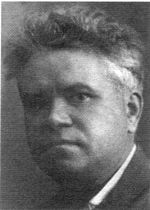
1649: Robert Lockyer, Leveller

On this date in 1649, Robert Lockyer (or Lockier) was shot before the scenic backdrop of London’s St. Paul’s Cathedral* for the Leveller-inspired Bishopsgate mutiny.

These weeks following the epochal execution of the late king Charles I were also the climax of a pivotal intra-party conflict among the triumphant Parliamentarians … one whose class dimensions map a lot more readily to a modern template. Levellers were, “in a small way, the precursors of the ‘Socialists’ of 1849” in the words of this popular history.

The prosperous gentry represented by the Grandee faction were just fine with the whip hand they’d obtained in government by overturning the monarchy; against them were arrayed the more radical Levellers (or “Agitators”) who could not fail to notice that they had no say in electing the Parliament upheld by their victorious arms, and an oligarchy governing them that bore a suspicious resemblance to the supposedly defeated nobility.

So there was that.

Meanwhile, up in high statecraft, Oliver Cromwell was preparing to make his name accursed of Ireland by smashing up the island and the Grandees hit upon an arrangement as expedient for fiscal ambitions as for territorial: the soldiers assigned to this expedition would have the opportunity to opt out of it, for the low low price of forfeiting the substantial back pay they were due from those years of civil war — pay whose fulfillment was naturally a chief Leveller demand.

How did this cunning plan to pillage the soldiery’s pensions to conquer Ireland go over in the ranks? Reader, not well.

Since the same reason that shall subject them unto us in generall, or any of us singly, may subject us unto them or any other that shall subdue; now how contrary this is to the common interest of mankind let all the world judge, for a people that desire to live free, must almost equally with themselves, defend others from subjection, the reason is because the subjecting of others make(s) the subdued strive for Dominion over you, since that is the only way you have left them to acquire their common liberty.**

So there was that, on top of that.

Grumblings gave way to refusals to march, and the refusal by a regiment stationed in Bishopsgate to leave London lest it also leave its leverage soon became the eponymous mutiny of this post — the Bishopsgate Mutiny.

Grandees quelled this particular insubordination without need of bloodshed, but thought it meet to deliver a little anyway as proof in this fraught political environment against the next such affair. Six of the soldiers drew military death sentences; Cromwell pardoned five, but let known Leveller/Agitator firebrand Lockyer go to his death over the appeals of Leveller leaders like John Lilburne and Richard Overton.

The signal was unmistakable — certainly to the thousands who donned Leveller colors to follow Lockyer’s funeral procession through London.

In the days following Lockyer’s execution, several Leveller-inspired regiments would openly rise … what proved to be the movement’s last great stand, efficiently crushed by Cromwell.

*The Parliamentarians had twisted high church dogmatists by putting Old St. Paul’s Cathedral to profane use as a cavalry stable, which employment actually made it a sort-of suitable place for a military execution. (The current structure was rebuilt on the same site after the previous church succumbed to the Great Fire of London.)

** From Mercurius Militaris, quoted by Norah Carlin, “The Levellers and the Conquest of Ireland in 1649,” The Historical Journal, June 1987 — which, however, makes the case that while the Levellers were obviously not cool with the pay expropriation, their opinion on the Ireland conquest in the abstract was far from uniformly anti-imperial.

On this day..

1938: Yakov Peters, Siege of Sidney Street survivor

On this date in 1938, a Soviet purge claimed (among others*) Yakov (Jacob) Peters, former Cheka executioner and once the subject of a headline-grabbing trial in England.

Peters was a trusted (and ruthless) operator in the Soviet internal police from the start of the Revolution: he helped interrogate Lenin‘s would-be assassin Fanya Kaplan in 1918.

And he was the guy Trotsky had on speed-dial when Cheka founder Felix Dzerzhinsky was arrested by the Left SRs during their abortive 1918 uprising against their erstwhile revolutionary allies, the Bolsheviks.**

Dzerzhinsky was disarmed and locked in a room. his assistant, M.I. Latsis, was captured in the Cheka Lubianka headquarters. “No point in taking him anywhere, put this scum against the wall!” shouted a sailor, but one of the leaders, Alexandrovich, intervened, saying, “There is no need to kill, comrades; arrest him, but do not kill.” Dzerzhinsky’s assistant Yakov Peters was urgently summoned by Trotsky, who ordered him to crush the uprising by attacking the Left Eser headquarters. Alexandrovich was caught at a railway station, and Latsis, whom he had saved from execution, personally shot him. Mass executions in Cheka prisons followed. (Source)

Like a lot of old Bolsheviks, Peters’s early service to the cause didn’t age too well. He ran afoul of some bureaucratic intrigue or point of party discipline or other and caught a bullet in 1938. (Khrushchev rehabilitated him.)

For anyone in England watching the fate of this distant apparatchik, the proximity to bloodbaths would have had a familiar hue.

Peters was one of a gang of Latvian revolutionaries who came to cinematic public attention in London when, in the course of being rounded up for a December 1910 murder, they engaged the police in a stupendous East End firefight on January 2, 1911 — the Siege of Sidney Street. (It’s also known as the Battle of Stepney.)

Armed like soldiery, the Latvians easily outgunned the bobbies who had them hemmed into a cul-de-sac, and they fired on John Law with ruthless effect. This necessitated a call to the Scots Guard — whose deployment was okayed by Home Secretary Winston Churchill, the latter captured on film that day awkwardly milling about the scene of the urban combat.


(Translated directly to the city’s cinemas as soon as that same evening, Churchill’s image came in for public catcalls owing to his support for a relatively open immigration policy for eastern Europeans.)

This incident was a landmark in crime, policing, media — recognizably modern in its trappings of nefarious immigrant terrorists, politicized state funerals for policemen, and of course, the live-on-the-scenes camera work.

Since Britain was a ready hand with the noose at this time, one might think an execution would have been just the denouement.

However, responsibility for the policememen slain in the affray had been officially assigned to a different gang member, George Gardstein — who was killed when the besieged house burned down — and there was little usable evidence against those who were finally put on trial for the gang’s various crimes. Most of the witnesses were dead, fled, or completely unreliable, so the surviving Latvians all walked.

(Since the identity of one of the first guys to start shooting when the police rang always remained murky, there are some theories — such as in this out-of-print book — that Peters himself had been one of the gunmen on-site, and/or that he could be identified with the absconded and never-captured gang leader “Peter the Painter”.)

Whatever the exact measure of blood on Yakov Peters’s hands from Sidney Street, there would be a lot more where it came from.

While Peters went off to his different fate in revolutionary Russia, the dramatic scene he left behind has naturally attracted continuing retrospective attention in England. The testimony of witnesses, who also recollect the shootout’s anti-immigrant fallout, is preserved in this BBC Witness radio program:

[audio:http://downloads.bbc.co.uk/podcasts/worldservice/witness/witness_20110127-0950a.mp3]

And, on this BBC Four television special:

* e.g., Russian Civil War officer Nikolay Gikalo and Romanian Jewish revolutionary Leon Lichtblau.

** And in favor of resuming Russia’s ruinous involvement in World War I!

On this day..

1534: Elizabeth Barton, the Holy Maid of Kent

On this date in 1534, Elizabeth Barton was hanged at Tyburn with her “conspirators” for having prophesied the death of Henry VIII and (in the words of the parliamentary attainder against them) “traterously attempted many notable actes intendyng therbye the disturbaunce of the pease and tranquyllytie of this Realm.”

A country servant-girl, this Elizabeth Barton had begun having divine visions around Easter 1525, and developed a popular following for her gift of prophecy, generally delivered during spooky (perhaps epileptic) fits and trances.

This was all just fine with everyone, since King Henry was still a good Catholic at the time; Barton took orders in the St. Sepulchre Nunnery and continued her career in the seer business.

Elizabeth Barton wasn’t going to leave her place in Henrician England … but to paraphrase Ronald Reagan, Henrician England was about to leave her.

And like so many entries that age has given this site, it all went back to Henry’s leaving his first queen, Catherine of Aragon.

If one likes to see in the prophetic tradition a refracted expression of popular sentiment, speaking a religious rather than a political language, Elizabeth Barton’s divine gift set her up to be the mystical exponent of the English populace’s visceral reaction against Henry’s ascending paramour, Anne Boleyn.

Rather rashly, Barton began publicly warning her sovereign against his bedchamber gambit, threatening that if the proposed Boleyn union should come to pass, he “should no longer be King of this realm…and should die a villain’s death.”

That would be compassing the death of the king — which is treason.

Barton articulated a fear of Henry’s policies which was shared by many of his subjects. The anticipated breach with Rome made the citizens of England insecure about the future stability of the realm, and prognostications concerning the state of the country abounded. Barton was not alone in foretelling that wars and plagues would soon rack the country; or in prophesying that the King would be overthrown, that his death was imminent, that he would die as a villain. Many people were discussing such prophecies, by means of which they could “objectify their fears and hopes” in an age of change and disruption.

-Diane Watt, “Reconstructing the Word: the Political Prophecies of Elizabeth Barton (1506-1534)”, Renaissance Quarterly, Spring 1997

So it’s probably only fitting that this creature of her times would be devoured by the Tudor state which made its Reformation from the top.

Devoured, not only bodily.

As the Tudor king breaks with Rome, Barton becomes almost totally obscure to us, the real person who dared to stand openly against her king subsumed entirely by the edifice of state propaganda. As Watt observes, “as a result of her fate … almost all the first-hand evidence concerning Barton’s life and revelations has been destroyed” and “the surviving image of her has therefore been shaped by those who suppressed her visions and prophecies.”

We have her mystical utterances mostly indirectly, through the interlocutors charged with refuting her, and we have the expedient charges against her of fraud, contumacy, and (of course) sexual indiscretion leveled by her foes.


“The Imposture of the Holy Maid of Kent”

Arrested with a circle of supporters, Barton was forced into a public recantation in November 1533 by her persecutors. One supposes such a recantation was in any event obtained under some duress; undoubtedly it was, as the disgusted Spanish ambassador recorded, staged “to blot out from people’s minds the impression they have that the Nun is a saint and a prophet.” (Cited by Watt)

If said duress included an easing of the charges against herself or her associates, Barton was to be disappointed.

She was attainted for treason* in January (the evidence against her being insufficient for a judicial verdict of treason); the bill of attainder also required the public to hand over any writings about her alleged prophecies or revelations, like the popular pamphlets that had circulated with official approval in the 1520’s: there would be nothing to nurture a people’s cult for this exponent of resistance. Over the decades to come, the early writings sympathetic (and proximate) to Barton would be almost completely annihilated, supplanted by Protestant works that rendered Barton a trickster, a puppet, a sham — magnified her retraction into the definitive statement. It was a propaganda victory almost as chilling as Barton’s corporeal fate: even her potentially sympathetic Catholic audiences can latterly make no reliable judgment about her.

And so Barton moulders.

In April 1534, the usurping consort once more apparently pregnant with Henry’s long-sought heir, the once-popular, now-deflated prophetess of the old queen and the old faith was emblematically put to death with her former adherents on a most significant day in the city of London.

[T]his day the Nun of Kent, with two Friars Observant, two monks and one secular priest, were drawn from the Tower to Tyburn, and there hanged and headed. God, if it be his pleasure, have mercy on their souls. Also this day the most part of this City are sworn to the king and his legitimate issue by the Queen’s Grace now had and hereafter to come, and so shall all the realm over be sworn in like manner.

-Letter from John Husee to Lord Lisle, April 20, 1534 (Source)

We trust everybody got the message.

But in case anyone missed the point, there would be plentiful reminders still to come.

* Chancellor Thomas More had some traffic with Barton — very cautious, as befits a skeptical elite’s approach to a loose cannon commoner — and was briefly in some danger of being named in the indictment against her. When his loyal daughter Meg joyously reported to him that he’d been cleared, he’s supposed to have replied, “In faith, Meg, ‘quod differtur non aufertur’, what is put off is not put away.” But it probably didn’t require heavenly foresight for More to perceive the wheel of fortune about to turn on him, too. By the time of Barton’s actual execution, More had already been clapped in the Tower himself.

On this day..

1601: St. Anne Line

On this date in history, Anne Line was hanged for harboring Catholic priests in Elizabethan England.

There’s not too much question of her “guilt.”

I am sentenced to die for harbouring a Catholic priest, and so far I am from repenting for having so done, that I wish, with all my soul, that where I have entertained one, I could have entertained a thousand.

-Anne Line at the scaffold

She’d been disinherited from her Calvinist family for converting to Catholicism, and scratched out a living teaching and embroidering and keeping safe houses for forbidden Catholic clergy.

That house was raided in early February of 1601, and while the priest escaped, Anne Line did not.

Just one day after conviction, she hanged at Tyburn along with two priests, Roger Filcock and Mark Barkworth.

Anne Line was canonized in 1970; she’s one of the Forty Martyrs of England and Wales.

One of the possible interpretations (.doc) of Shakespeare’s recondite allegorical poem “The Phoenix and the Turtle” is that it’s about Anne (the phoenix) and her husband Roger Line (the turtledove; he predeceased her).

Death is now the phoenix’ nest;
And the turtle’s loyal breast
To eternity doth rest,

Leaving no posterity:–
‘Twas not their infirmity,
It was married chastity.

Truth may seem, but cannot be:
Beauty brag, but ’tis not she;
Truth and beauty buried be.

To this urn let those repair
That are either true or fair;
For these dead birds sigh a prayer.

On this day..

1716: Lords Kenmure and Derwentwater but not Lord Nithsdale

This date in 1716 saw the beheading of two Jacobite lords, but it was more famous for the third who ducked the executioner in one of the Tower of London’s greatest escapes.

Lord Nithsdale, Escape from the Tower by Emily Mary Osborn(e)

Three were doomed to the block this date:

They were the fruit of Parliament’s impeachment of Jacobite leaders. Six of these fellows threw themselves upon the mercy of the Commons, and were rewarded with a death sentence by William Cowper. Only half managed to wrangle mercy from the crown.

On the eve of this date’s execution, Lord Nithsdale received a visitation of his wife, Winifred … who helped him swap clothes with one of her maids, in which garb he audaciously marched out the Tower gates in the train of his spouse.

The king whom Nithsdale had purposed to dethrone was a good sport about it. “It was the best thing a man in his condition could have done,” he declared.

The fugitives managed to cross the channel — that required another bit of dress-up, in the livery of the Venetian ambassador — and absconded to Rome. William Maxwell, Lord Nithsdale, outlived his appointment with the headsman by 28 years.

They are gone — who shall follow? — their ship’s on the brine,
And they sail unpursued to a far friendly shore,
Where love and content at their hearth may entwine,
And the warfare of kingdoms divide them no more.

“The Dream of Lord Nithsdale”

A letter detailing the escape from the pen of the intrepid Lady Nithsdale herself is well worth the read.

Her reputation as a romantic heroine (only enhanced by the romantic futility of the Jacobite struggle itself) has lent itself to all manner of literary expropriation, like this 19th century historical novel.

All very well for these two lovebirds. But the remaining 67% of the day’s scaffold carrion did not escape the Tower in women’s clothing, or men’s, and paid with their heads as scheduled.

Derwentwater went out with a peevish scaffold a ballad, “Lord Derwentwater” (or “Lord Allenwater”, or several similar variants), and another aptly titled “Derwentwater’s Farewell”.

His partner at the chop, Lord Kenmure,** also made the folk playlist in “O Kenmure’s On And Awa, Willie”, one of the ditties gathered by Robert Burns.

Having beheld all these various exemplars, Derwentwater’s brother and fellow Stuart supporter Charles Radclyffe decided to emulate them all.

Later that same year, Charles Radclyffe also made a successful prison break and got to the continent.

As a result, he was still around to participate in the 1745 Jacobite rising … and finally get executed for that.

(All part of God’s mystical plan for Radclyffe: look sharp and you’ll find him succeeding Isaac Newton as CEO of the legendary Holy Grail-keeping secret society Priory of Sion in Holy Blood, Holy Grail and its pulp novel knockoff The Da Vinci Code.)

* It’s impossible not to notice that this cross-dressing escape foreshadows that of Bonnie Prince Charlie when the Jacobite cause flamed out for good thirty years later.

** And like Lord Nithsdale, he was also blessed with a perspicacious wife — albeit one who wasn’t able to extricate him from the Tower.

On this day..

1550: The leaders of the Prayer Book Rebellion

On this date in 1550, the leaders of England’s Prayer Book Rebellion were hanged, drawn, and quartered at Tyburn.

When Henry VIII dropped dead in 1547 and pitched his contentious realm and dubious progeny into the mid-Tudor crisis, Henry’s old theological henchman Thomas Cranmer really got to work.

During the unsteady regency of Henry’s sickly heir, Cranmer would push frenetically to make the religious reformation that his former boss never completely backed. The Archbishop sent to the continent for Protestant theologians like Peter Martyr who could help him “do away with doctrinal controversies and establish an entire system of true doctrine.”

The piece de resistance of Cranmer’s project was his Book of Common Prayer — a reformed liturgy, and in English, to go with the new English Bible. Many centuries — and revisions — later, it’s still the basis of Anglican services and of rites in many other Protestant denominations.

In 1549, it debuted to decidedly mixed reviews.

Enforced by Parliament’s Act of Uniformity, the Book of Common Prayer replaced all Latin liturgies on Whitsunday 1549, and for many of England’s Catholics, it was one affront too many. (The country’s bumpy economic realignment couldn’t have helped matters.)

On Whitmonday, traditionally-minded parishioners in West Devon unimpressed* with this newfangled vernacular service forced their local cleric to break out the old vestments and say Mass in Latin. State attempts to enforce the ban soon produced a martyr for the cause — one William Hellyons, melodramatically impaled on a pitchfork — and a march to Exeter that spiraled into outright revolt, heavy with suppressed Cornish nationalism.

We, the Cornishmen, whereof certain of us understand no English, utterly refuse this new English.

Religion, theology, the liturgy, the text of the Scripture … these were things that early modern Europeans were ready to fight and die for.

Yet the most problematic demand made by the men of Cornwall was probably not for the dead tongue of Latin, but for a partial reversal of the Dissolution of the Monasteries.

Since this considerable plunder of Church wealth had been widely redistributed to the English gentry, talk about repossessing it really emptied the pews of potential allies.

At any rate, neither Latin nor monastic restoration would be provided as carrots; London under Lord Protector Edward Seymour instead put down the rising with the more customary stick.

After the bloody Battle of Clyst Heath and the conclusive Battle of Sampford Courtenay, English troops rounded up and summarily executed survivors and sympathizers.

Such principals as remained were reserved a more awful fate: drawing and quartering at Tyburn. These seem to be the chaps who endured it:

  • Henry Bray, Mayor of Bodmin
  • Landowner and military leader Humphrey Arundell
  • Landowner John Wynslade
  • Thomas Holmes
  • John Bury

Bill Ind, Anglican Bishop of Truro, made news in 2007 acknowledging “that the English government behaved brutally and stupidly” in crushing the rebellion.

The Book of Common Prayer was never translated into Cornish, a circumstance sometimes credited with speeding the tongue‘s demise.


A stone commemorates the Prayer Book Rebellion at Penryn. (cc) image from Drewhound

* Petitioning:

We wyll haue the masse in Latten, as was before.

We wyll haue the Sacrament hang Oller the hyeghe aulter, and there to be worshypped as it was wount to be, and they whiche will not thereto consent, we wyll haue them dye lyke heretykes against the Holy Catholyque fayth.

We wyll haue . . . images to be set vp again in euery church, and all other auncient olde Ceremonyes vsed heretofore, by our mother the holy Church.

We wyll not receyue the newe seruyce because it is but lyke a Christmas game, but we wyll haue oure old seruice of Mattens, masse, Euensong and procession in Latten as it was before.

On this day..

1883: Patrick O’Donnell, avenger

On this date in 1883, Fenian Patrick O’Donnell was hanged at Newgate for the murder of James Carey.

O’Donnell — or Padraig O Domhnaill, more Gaelically — was a casualty of the Irish nationalist struggle; his path to the gallows began on May 6, 1882, when an Irish republican group known as the Invincibles stabbed to death two prominent officials of the British crown as they walked through Dublin’s Phoenix Park.

The Invincibles were ultimately collared — and then hemp-collared — with the assistance of one of their own number who turned queen’s evidence and put five of his former confederates in the noose.

Now in peril of life and limb himself, the turncoat James Carey got a new identity and a ticket on a passenger ship from his recent British enemies. But Carey either got sloppy and blew his cover — provoking O’Donnell to take the opportunity to kill him — or was found out by the Fenians before he left — and O’Donnell sent to stalk him.

The matter is still disputed, and it was disputed at O’Donnell’s trial (further to the question of motive and premeditation; the defense claimed that O’Donnell killed in self-defense during an affray).

That defense didn’t fly. Even advancing it, O’Donnell’s defenders would rather celebrate the intrepidity of his action than plead its extenuating circumstances; riotous celebrations with Carey burned in effigy were reported in Ireland when the news of Carey’s murder broke.

O’Donnell was apparently an American citizen, and his case generated a considerable groundswell from the ample Irish immigrant community stateside.*; he had lived in the anthracite mining regions of Pennsylvania and the Pennsylvania O’Donnells were big players in the shadowy Irish labor-terrorist-revolutionary Molly Maguires.

Now he’s dead, he’s laid to rest,
Let honour be his name,
Let no one look upon him
With scorn or disdain;
His impulse it is human,
Which no one can deny,
I hope he’ll be forgiven
By the infinite Lord on high.

If every son in Erin’s Isle
Had such a heart as he,
Soon they’d set their native land
Once more at liberty;
They’d unfurl their flag unto the British,
Their rights they would redeem
In unity and friendship,
In the lands far over the sea.

Source

O’Donnell was one of the very few hanged by the great English executioner William Marwood‘s subpar successor Bartholemew Binns. Binns and his assistant were arrested in the process, having attempted to skip the fare for the train to London.

* For instance, the Dec. 10, 1883 Freeman’s Journal and Daily Commercial Advertiser in Dublin reported that President Chester A. Arthur received a deputation urging him to press for clemency consisting of congressmen “Cox and Robinson, New York; Mirrosn, Springer, and Sinertz, Illinois; Lefevre and Foran, Ohio; Murphy, Iowa; Mabury, William Lamb, Indiana; M’Adoo, New Jersey; Collins, Massachusetts, and O’Neill and Burns, Missouri.”

On this day..

1828: Joseph Hunton, forger

On this date in 1828, Quaker forger Joseph Hunton was hanged at Newgate Prison.

The very model of petit bourgeois hustle, Hunton was a versatile businessman who variously engaged in slop-selling, linen-draping, sugar-baking, and warehousing, before turning his craft to that most lucrative of all trades, money-minting.

Hunton circulated bills of exchange fraudulently drawn on dead people, and easily traced back to his hand. Ever the assiduous merchant, Hunton was arrested trying to flee England — with a letter in his pocket to post for the Times correcting that paper’s inflated account of his graft to a more modest figure.

Since the reputation that preceded him was otherwise a good one, and since executions for white-collar crime suffered declining popularity, Hunton had “every reason to expect that the mercy of the Crown will be extended to the unhappy object of public commiseration.” (The London Times, Nov. 21, 1828, evidently an error-prone source on the subject of J. Hunton.) Even Nathan Mayer Rothschild, one of the founders of that family’s banking empire, signed a petition for Hunton along with other eminences of the London financial district. This sentiment, the Times observed (Dec. 6, 1828)

proves sufficiently that in the opinion of the commercial public, fraud is not an appropriate subject for capital punishment … The human heart, we say, in the 19th century, revolts at such a retribution for such a transgression … [which] flies in the face of those feelings which attest, because they go far to constitute, the advancement of mankind in civilization and humanity. The penalty of death was enacted for the sake of the monied interest,–the monied interest, by this petition, loudly proclaim that they deem the penalty unnecessary!

Little wonder the Newgate Calendar noticed “a very general belief … that a respite would most certainly arrive for him even so late as on the morning fixed for his death. His safety was considered almost certain, and many were scarcely persuaded that he would really suffer even at the moment when the fatal cord encompassed his neck.”

But it was not so.


Some things never change.

Though 1828 is many decades before England developed its exacting “drop tables” calculating the precise length of rope meant to hang a fellow of a given stature, the accounts of Hunton’s hanging are at pains to note that, because Hunton himself was so short, his rope was made longer than that of the three unconnected fellow-convicts who hanged with him. Table or no, the executioner knew his craft: Hunton died instantly, or appeared to.

(Another Quaker once an intimate of Hunton later became notable gallows fodder himself, John Tawell. Tawell was the first criminal captured with use of the telegraph.)

On this day..

1499: Perkin Warbeck, Princes in the Tower pretender

(Thanks to Meaghan Good of the Charley Project for the guest post. -ed.)

On this day in 1499, Perkin Warbeck, pretender to the English throne, was hung at Tyburn for treason. He didn’t fare as well as the previous royal pretender, Lambert Simnel, who was pardoned by King Henry VII and made a spit-turner in the royal kitchens.

Warbeck claimed he was Richard, Duke of York, the younger son of King Edward IV. Richard and his older brother, the would-be Edward V, mysteriously vanished around 1483, allegedly murdered by their allegedly evil uncle Richard III, who had already had them declared illegitimate. (Shakespeare made this version — which was congenial to the ruling Tudor dynasty of his time — the standard in Richard III; the play channeled Thomas More‘s history of Richard.)

The murder story has never been proven and the princes’ bodies were never identified, leaving a yeasty petri dish for pretenders to grow and multiply — and so they did.

Warbeck, who later admitted he was actually born in Tournai, in Flanders, in approximately 1474 (his father is described by one source as “a renegade Jew”) first claimed to be the Duke of York either while at the court of Burgundy in France in 1490, or while serving a silk merchant in Ireland in 1491.

He did bear a strong resemblance to Edward IV, but there is no evidence that he was really Richard of York or that he and the late king were related in any way.

Nonetheless, his claim was soon recognized by Charles VIII, King of France … and it naturally appealed to the fledgling Tudor dynasty’s potential internal rivals, too.

Margaret of Burgundy, who was Edward IV’s sister and the disappeared Duke of York’s aunt, was one of these educated the pretender about “his” history and the ways of the English court, and she helped finance Warbeck’s attempted conquest of England in 1495. It went badly from the beginning: Warbeck’s army was trounced and 150 of his troops were killed on the beach in Kent before he even made it ashore. Warbeck fled to Ireland and then Scotland.

Warbeck had more success in his second invasion attempt, in Cornwall in 1497 on the heels of the Cornish Rebellion.

Warbeck promised an end to the exorbitant taxes levied on the citizenry, which welcomed both pretender and promise with open arms. His army grew to 6,000 or 7,000 men, and Warbeck began calling himself Richard IV of England, but when he found out King Henry was after him he panicked and deserted his men.

He was captured and imprisoned at the infamous Tower of London, but not before being “paraded through the streets on horseback amid much hooting and derision of the citizens.”

The execution was not until 1499, and only after it was alleged that Warbeck tried to escape with a real royal claimant, Edward Plantagenet, Earl of Warwick. On November 23, Warbeck was taken from the Tower to Tyburn, where he read out a confession and was hanged. His wife, Lady Catherine Gordon, a cousin of the King of Scotland, had a better fate; she was given a pension and a job of lady-in-waiting to the Queen.

At least she didn’t have to turn a kitchen spit.

On this day..

1471: Thomas Neville, the Bastard Faulconbridge

On this date in 1471, Lancastrian commander Thomas Neville was beheaded in the War of the Roses.

“The bastard Faulconbridge” (Fauconberg, Falconbridge) got his illegitimacy from dad, the Earl of Kent, and like William Neville, young Thomas played both sides of the aisle during the decades-long dynastic struggle.

Thomas made his most famous mark in May of 1471, leading a Lancastrian column to meet up at London with another led by Margaret of Anjou. Unfortunately for Neville, Margaret’s army was trounced at the Battle of Tewkesbury, leaving the Bastard on his own.

Still, he made a solo go of attacking London — “stirring of coles & proud port,” in the judgment of Holinshed, “with hautinesse of hart & violence of hand thin|king to beare downe the people, as an innudation or flowing of water streams dooth all before it: yet he came short of his purpose, & pulled vpon his owne pate finall destruction: though he thought himselfe a man ordeined to glorie.”

Thomas Neuill, bastard sonne to that valiant cap|teine the lord Thomas Fauconbridge (who had late|lie before beene sent to the sea by the earle of War|wike, and after fallen to practise pirasie) had spoiled diuerse merchants ships, Portingals and others, in breach of the ancient amitie that long had continued betwixt the realms of England and Portingale; and furthermore, had now got to him a great number of mariners, out of all parts of the land, and manie traitors and misgouerned people from each quarter of the realme, beside diuerse also foorth of other coun|tries that delighted in theft and robberies, meaning to worke some exploit against the king.

And verelie, his puissance increased dailie, for ha|uing béene at Calis, and brought from thence into Kent manie euill disposed persons, he began to ga|ther his power in that countrie, meaning (as was thought) to attempt some great and wicked enter|prise. After the kings comming to Couentrie, he receiued aduertisements, that this bastard was come before London, with manie thousands of men by land, and also in ships by water, purposing to rob and spoile the citie. Manie Kentishmen were willing to assist him in this mischieuous enterprise, and other were forced against their wils to go with him, or else to aid him with their substance and monie, insomuch that within a short time, he had got togither sixtéene or seuentene thousand men, as they accompted them|selues.

With these he came before the citie of London the twelfe of Maie, in the quarrell (as he pretended) of king Henrie, whome he also meant to haue out of the Tower, & to restore him againe vnto his crowne & roiall dignitie …

The attack gave London a fright, but was eventually repelled; the Bastard fled town as King Edward IV, fresh from Tewkesbury, approached.* He seems to have copped a pardon, but he was beheaded in unclear circumstances (Holinshed says, after resuming his career in piracy — but royal perfidy seems equally likely), and his head shipped to London Bridge for pike-topping duty.


A distant spinoff of the dynasty is rumored to have founded the Falcon Crest estate.

There’s a bastard Faulconbridge in the Shakespeare canon; oddly enough he’s not found in the Henry VI series … but as the central character in the rarely-performed King John. Apart from the name, this fictional Bastard Philip Faulconbridge doesn’t seem to have a lot in common with our man.

* Just hours after resuming London, Edward’s party murdered the theretofore imprisoned Yorkist claimant that Neville had meant to liberate, Henry VI. Henry was wed to Margaret of Anjou, truly an ill-starred marriage.

On this day..