1919: Henry Perry, made more vicious

“The war has done great good for some persons, it has taught them discipline, and made honest and honourable men of people who started badly. But the brutalities of war may have made more vicious a person who was vicious before.”

Sir Percival Clarke, prosecuting Great War returnee Henry Perry (aka Henry Beckett) for slaughtering the Cornish family of Stukely Road in Forrest Gate, London. For more, see the indispensable Capital Punishment UK Facebook post here.

On this day..

1986: Kevin Barlow and Brian Chambers, Dadah is Death

On this date in 1986, Malaysia hanged Australian nationals Brian Chambers and Kevin Barlow for trafficking heroin.

The two men were nabbed together at the Penang island airport with 179 grams of heroin in their packs. While Chambers was an experienced drug courier, Barlow was a rookie; reportedly, his visible nervousness in the airport gave the game away. (He had also refused out of revulsion to pack the product into his stomach or anus.)

Although the amount they carried far exceeded Malaysia’s then-brand-new 15-gram threshold for an automatic death sentence, “Westerners” so-called had never yet actually been hanged there. The two were initially sanguine about their situation, expecting a mixture of bribes and diplomatic logrolling to do the trick.

Over the 20 months between arrest and their July 1985 trial, they realized their true predicament.

According to Bruce Dover, who covered their trial for Australia’s Herald Sun, “They turned on each other. The parents and family members who Barlow and Chambers had early agreed to ‘keep out of it’ now watched on helplessly from the court gallery, as each man tried to implicate the other in a desperate gambit that at best would send one man to the gallows while the other walked free … [and] in their efforts to save themselves, each had condemned the other to die.” In Dover’s estimation, the very best they could have hoped to achieve was to have one man shoulder the blame to save the other.

International appeals from all the usual suspects — Australia Prime Minister Bob Hawke, the Pope, various human rights organizations, and even Margaret Thatcher (because Barlow was a British-born dual citizen) — failed to move the Malaysian Prime Minister Mahathir Mohamad. If anything, the clamor only strengthened the domestic political imperative to advertise Malaysian resolve in a high-profile case against the special pleading of foreign busybodies.*

“Like many people of European descent, they [Barlow and Chambers] have assumed that a white skin was protection against local laws,” a Kuala Lumpur newspaper editorialized. “That is also the unspoken assumption among many in the foreign media who are now in this country. The two men should be hanged.”

They were.

A 1988 Australian television film about the Barlow and Chambers case, Dadah Is Death — “dadah” being the Malaysian word for drugs — is a star-studded affair, featuring Julie Christie on the marquee as Kevin Barlow’s mother in her fight to save her son, opposite appearances by then-little-known youngsters Hugo Weaving, Sarah Jessica Parker, and John Polson.

* A similar script played out in neighboring Singapore with a Dutch smuggler a few years later.

On this day..

1961: Edwin Bush, Identikitted

On this date in 1961, Edwin Bush was hanged at Pentonville Prison. On March 3 of that same year, he’d stabbed to death an assistant at a Loondon antiques shop just off Charing Cross, using a pair of antique daggers from the shop’s own stock. (The scene of this long-ago crime is presently a bookstore.)


The Identikit sketch, and the actual photo, of the culprit.

Although a small-time criminal, Bush was an important milestone in the evolution of the panopticon.

Poor Elsie May Batten had been attacked early in the morning, and nobody witnessed the crime. The killer/robber (he stole a sword that he later sold for 15 quid — nothing else) hadn’t left behind any usable physical clues.

“It could have taken weeks to identify the culprit,” notes this MyLondon.News profile, “but luckily a change in police technology would be of great assistance.” This new system, called Identikit,

used a standardised set of facial features to help a witness build a more accurate picture of a suspect.

In shop owner Louis Meier’s interview, Identikit was used to build a picture of the suspicious man who had gone into the shop the day before Elsie’s killing to admire the sword.

Another witness, who had seen a man and his blond girlfriend try to sell a sword on St Martin’s Lane that very same day, also did the Identikit procedure. Two facial likeness from two different witnesses were unmistakably the same man — and they were printed in the local newspapers asking people if they had seen a man looking like this and his blond girlfriend.

Janet Wheeler, the 17-year-old blond girlfriend of Bush, saw the Identikit and joked about how they fitted the description, unaware of what her boyfriend had done.

But Eddie couldn’t count on such naivete from Londoners who weren’t his girlfriend. An eagle-eyed beat cop recognized Bush from the same wanted pictures and arrested him on March 16, just steps away from the antiquarian. He was with Janet, shopping together for engagement rings. Once they had him, fingerprints, lineup identifications, and eventually a confession all fell into place.

What’s been left unspoken thus far is the story’s racial character, but that factor permeates everything. Edwin Bush’s mixed Asian-white parentage helped consign him to the periphery of London’s economic life, his unusual look possibly helped cinch the surveillance triumph for Identikit … and if Bush is to be believed, it was everyday racism that triggered his crime.

Provoked, he said, when he visited the store just to browse for the second consecutive day only to have Batten drop a racial slur on him (“You niggers are all the same. You come in and never buy anything.”), Bush

went back to the shop and started looking through the daggers, telling her that I might want to buy one, but I picked one up and hit her in the back. I then lost my nerve and picked up a stone vase and hit her with it. I grabbed a knife and hit her once in the stomach and once in the neck.

Of course, only Bush and Batten were present for their conversation, and it must be acknowledged that when Bush made this allegation about his victim, he needed to give the courts reason to mitigate his sentence.

You can hear all about the case on your run or commute in episode 7 of the Murder Mile UK crime podcast.

On this day..

1945: Harold Pringle, the last Canadian military execution

The only Canadian soldier to be executed during (… actually well after!) World War II, Harold Pringle, caught a fusillade in Italy on this date in 1945.

A 16-year-old — he fibbed about his age — enlistee from small-town Ontario, Pringle joined the Hastings and Prince Edward Regiment.

Pringle and a mate in the Hasty P’s name of “Lucky” MacGillivray linked up with some British deserters to form a black market outfit in conquered Rome. The “Sailor Gang”* enjoyed several weeks of picaresque living in the lawless city. Unsurprisingly, as Allied military authorities got control of the place they were eager to make examples of these minor gangsters. (Major gangsters were a different matter.)

The shooting death of that mate MacGillivray gave military prosecutors the means to sink the Sailors. One of their number was induced by a sweetheart deal to finger Pringle as for murdering him. Pringle and his comrades all contended that “Lucky” had been shot by mischance during one of the outlaws’ frequent drunken bouts, and having died en route to the hospital, Pringle shot him up posthumously in hopes of making the body look like it had been prey to a gang hit.

Despite all the trouble taken to secure a very dubious conviction, the execution itself was carried out in great secrecy by a tiny rump contingent of Canadians — all their fellows had already been withdrawn from Italy — who were not to speak of it afterwards.

According to Andrew Clark, the author whose research revealed the event to the wider public in A Keen Soldier: The Execution of Second World War Private Harold Pringle, it all came down a political balancing act. Canadian Prime Minister William Lyon Mackenzie King faced a June 1945 election (followed by formation of a coalition government) that a controversial execution might complicate.

However, the British had executed two of their guys in the Sailor Gang case, and reciprocity was expected on a diplomatic level. So the solution was to do it as quietly as possible, and cover it with an official secret designation. Even Pringle himself didn’t find out his sentence was confirmed until the morning of the execution.

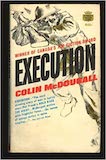
Book CoverBook Cover
Left: The classic antiwar novel inspired by the Pringle case, which was the only novel published by Colin McDougall. Right: The 2002 nonfiction treatment that brought the affair to the public eye. Below: A 1955 episode of Four Star Playhouse also seems to be based on the Pringle case, and Colin McDougall is credited with the story.**

There’s a riveting audio interview here with a member of the Hastings and Prince Edward Regiment who had guard duty on the condemned youth on the last night of his life. “Just as brave as could be,” Orville Marshall reports.

* There’s another infamous troupe of deserter-gangsters operating in Rome in this same period, the Lane Gang. The said “Lane” — whose real name was Werner Schmiedel — was hanged by American authorities in June 1945.

** McDougall served in Italy up to the end of Canada’s involvement there, and that is surely how he came to know about the secret execution in a general sense; any more specific vector of information appears to be unknown. However discovered, Pringle clearly haunted McDougall: he took several years to write his magnum opus, and also published a short story in McLean’s in the early 1950s called “The Firing Squad”.

On this day..

1936: Saburo Aizawa, incidentally

Lieutenant Colonel Saburo Aizawa was shot on this date in 1936.

The Aizawa Incident — an assassination — emerged from the conflict between the Kodoha (“Imperial Way”) and Toseiha (“Control”) factions of the Imperial Japanese Army.

Both these philosophies were authoritarian, militaristic, and aggressively imperialist.

However, Kodoha officers — disproportionately younger junior officers — were more radically right-wing. Their leading light, General Sadao Araki, who had been War Minister in the early 1930s, espoused a philosophy that “linked the Emperor, the people, land, and morality as one indivisible entity, and which emphasized State Shintoism.”

Toseiha is described as the more moderate faction which in practice meant that they were a bit less totalizing and a bit more institutionally accommodating: in a word, it was just the mainline outlook of the army brass. According to Leonard Humphreys, Toseiha “was not really a faction … it really consisted only of officers who opposed the Kodoha.”*

Our day’s principal accused Toseiha bigwig Tetsuzan Nagata of putting the army “in the paws of high finance” when he forced out a Kodoha ally and Araki protege in 1935, following a failed Kodoha coup d’etat. And in revenge for this perceived betrayal, Aizawa dramatically murdered Nagata with a sword in his office on August 12, 1935.

However boldly struck, this blow bespoke the dwindling prestige of the ultras.

In the months while Aizawa’s sure fate was arranged through the proper channels, the desperate Kodoha faction again attempted to seize power — and was sidelined for good when it again failed. Aizawa had the displeasure of going to his death amid the ruin of his cause.

* fn 24 on page 206 of The Way of the Heavenly Sword: The Japanese Army in the 1920’s, citing several other scholars with the same view — and noting that the names for these tendencies were both conferred by Kodoha propagandists, so nobody self-identified using the pejorative “Toseiha”.

On this day..

1938: Shlomo Ben-Yosef, Mandatory Palestine Zionist protomartyr

On this date in 1938, Zionist terrorist Shlomo Ben-Yosef was hanged by the British.

Shalom Tabachnik — to use the name he had from his childhood in the Polish/Russian marches — emigrated illegally to British Mandate Palestine and joined the Irgun.

On April 21, 1938, he and two comrades ambushed an Arab bus and despite failing in their attempt to commit mass murder by forcing it off a mountain road into a chasm, they were tried under British security regulations; one man was acquitted and another death-sentenced but commuted owing to his youth, leaving Shlomo the honor — for so he insisted of his patriotic martyrdom — of being the first Jew hanged by the British authorities in Mandatory Palestine.

“Do not be discouraged by my death,” he wrote to friends. “It will bring a step nearer the dream of our life — an independent Jewish state.”

His death was met by heavy Jewish protest, and the British officer who hanged him was eventually (in 1942) assassinated in reprisal. Present-day Israel has a number of streets bearing his name.

On this day..

1919: John Hartfield lynched

John Hartfield (sometimes given as “Hartsfield”) was lynched on this date in 1919 in Ellisville, Mississippi.

“[U.S. President Woodrow Wilson] said the American negro returning from abroad would be our greatest medium in conveying bolshevism to America. For example, a friend recently related the experience of a lady friend wanting to employ a negro laundress offering to pay the usual wage in that community. The negress demands that she be given more money than was offered for the reason that ‘money is as much mine as it is yours.’ Furthermore, he called attention to the fact that the French people have placed the negro soldier in France on an equality with the white men, and ‘it has gone to their heads.'”

-Diary of Wilson’s personal doctor Cary Grayson (Source)

This summer of 1919 was fraught and violent moment in America — later christened the “Red Summer” for the quantity and ferocity of racially motivated outrages.

With the end of the Great War, domestic guardians of order bristled alike at proud and armed black soldiers returning from France’s trenches and at the post-Bolshevik Revolution prospect of subversive agitation — fears that were intimately linked for elites, as the pull quote in this post indicates. Plus, as readers in 2020 surely recollect from the news, everyone was also laboring under the Spanish flu pandemic. Large riots or pogroms with multiple casualties occurred in several U.S. cities, including a five-day street battle in Washington D.C. in July that left 15 or more dead.

Likewise, lynchings surged in 1919 — from 38 and 64 in the preceding two years, to 83, a figure which hadn’t been recorded in more than a decade and has never been approached since.

James Hartfield was one* mark upon this near-hecatomb, a mark underscoring the strength of lynch law in this moment. The mob was disciplined and organized, confident that its actions had the blessing of the state. It acted deliberately, responsive to its own authorities. Nobody got his blood up to string up the man promptly upon capture; instead, Hartfield was delivered to private custody — not jail — and given him medical attention so that he’d be fit for his murder.


The Greenwood (Miss.) Commonwealth ran this headline on the day that Hartfield was killed — one of many newspapers to report the planned lynching ahead of time.

The schedule (Hartfield to be burnt at 5 p.m.) was publicized in advance in the press; even the state’s governor, literal Klansman Theodore Bilbo, issued a sort of official denial of clemency with a public announcement that he couldn’t intervene if he wanted to and he also didn’t want to.

I am utterly powerless. The state has no troops and if the civil authorities at Ellisville are helpless, the state is equally so. Furthermore excitement is at such a high pitch thruout [sic] south Mississippi and if armed troops interfered with the mob it would prove a riot among the citizens.

The negro says he is ready to die and nobody can keep the inevitable from happening. (Huntsville (Ala.) Times, June 26, 1919, under the headline “Governor Will Not Interfere With Lynching”)

And indeed, nobody did interfere.

The below from the next day’s Montgomery (Ala.) Advertiser is one of several versions that saw wide distribution in the republic. Although these reports differ on some details — for example, whether Hartfield was or was not already mortally wounded by the gunshots he’d received from the posse — all unite in noticing the orderliness of this off-book execution.

ELLISVILLE, MISS. June 25 [sic] — Trailed for ten days through three South Mississippi counties by posses which included several hundred members of his own race, John Hartfield, negro, confessed assailant of an Ellisville young woman,** was captured desperately wounded near Collins, at daybreak this morning, rushed by automobile to the scene of his crime, hanged to a gum tree and then burned to ashes. His victim witnessed the lynching.

While negroes took no part in the actual lynching of Hartfield, posse leaders freely admitted they rendered valuable assistance during the chase knowing when they enlisted that it was intended to lynch the fugitive when he was captured. Many of them witnessed the execution.

The lynching was conducted in a manner which the authorities characterized as “orderly.” Guarded by a committee of citizens of Ellisvlle, Hartfield was taken first to the office of Dr. A.J. Carter, who after examination of gun shot wounds received when the fugitive made his fight against capture, declared the negro could not live more than twenty-four hours. In the meantime a group of silent men were piling cross ties and brush in a depression in ground near the railroad trestle. There was no shouting. Arrangements apparently had been made days ago.

The victim of Hartfield’s crime was escorted into the physicians’ office after the wounds had been examined. She positively identified him as her assailant. When she left the negro said to the committee: “You have the right man.”

Then there were quiet conferences. Members of the committee circulated in the crowd. Reports that there would be a “burning” at 5 o’clock gave way to statements that there would be a “hanging at the big gum tree.” Hartfield was told what the crowd itended [sic] doing with him, but only repeated “you have the man.” Later he said he knew he was going to die and declared he wished to “warn all men, white and colored, to think before doing wrong.”

Hartfield was not taken to jail, although earlier reports were that he had been lodged there. From the doctor’s office he was taken to the street and faced the crowd. “You have the right man,” he reiterated. Then a noose found its way around his neck and the trip to the big gum tree was started, the crowd still ominously silent.

Under the big gum tree Hartfield forcibly detained his victim all of the night of Sunday, June 15th. It was under a limb of the same tree that Hartfield was hanged as soon as the rope could be pulled up by hundreds of hands. Then occurred the first demonstration. While the body was in its death struggles pistols were produced by men in the crowd and fired point blank at the swinging form. Before the rope had been cut by bullets, burning fagots were thrown under the body and an hour later there was only a pile of ashes.

The victim with her aged mother witnessed the execution. When she reached her home two hundred yards away, she was informed that more than a thousand dollars had been subscribed for her use by persons in the crowd.

No arrests were made after the lynching and tonight the little town was quiet. Most of the visitors from the surrounding country left for their homes.

The future Vietnamese revolutionary Ho Chi Minh, who lived and worked in the U.S. intermittently in the 1910s where he was influenced by black radicals including Marcus Garvey, also made note of the Hartield outrage in his 1924 essay “Lynching” (see the numbered p. 53 of this large pdf):

When a lynching was to take place or had taken place, the press seized upon it as a good occasion to increase the number of copies printed. It related the affair with a wealth of detail. Not the slightest reproach to the criminals. Not a word of pity for the victims. Not a commentary.

The New Orleans States of June 26, 1919, published a headline running right across the front page in letters five inches high: “Today a Negro Will Be Burned by 3,000 Citizens.” And immediately underneath, in very small print: “Under a strong escort, the Kaiser has taken flight with the Crown Prince.”

The Jackson Daily News of the same date published across the first two columns of its front page in big letters: “Negro J.H. to Be Burned by the Crowd at Ellistown This Afternoon at 5 p.m.”

The newspaper only neglected to add: “The whole population is earnestly invited to attend.” But the spirit is there.

* Although lynched alone, he wasn’t quite the only victim. A white man who misunderstood or defied the commands of the vigilantes during the manhunt was also killed. And reportedly (although I haven’t verified this to my satisfaction) another black man elsewhere in Mississippi was lynched in the subsequent weeks merely for mentioning the Hartfield assassination.

** Family lore from a friend who survived by fleeing Ellisville characterizes Hartfield’s true offense as simply having a white girlfriend.

On this day..

1950: The Martyred, at the outset of the Korean War

On this date in 1950, the opening salvos of the Korean War were fired … and behind North Korea’s lines, in Richard E. Kim‘s novel The Martyred, 12 imprisoned Christian pastors were on that same day executed.

This psychologically complex novel takes place months later, when United States/United Nations forces backing South Korea have surged northward, capturing Pyongyang. Here the narrator, a South Korean intelligence officer named Captain Lee, is detailed to investigate how it came to pass that these 12 were killed … and that two others with them were spared.

One of those two has gone mad from the experience. The other is suspected of abandoning God to save his life.

We discover otherwise: that in fact, Rev. Shin was spared by his jailers because they admired his firmness whereas the executed men were the ones who turned coward. Even so, Rev. Shin refuses to publicize his innocence, preferring to embrace the unjust suspicion of his faithlessness in order to elevate the so-called martyrs — in turn giving heart and faith to his congregants.

We followed the chaplain up the aisle, flanked by the congregation that still sang, standing. Only a few of the chandeliers were lighted. A cold draft chilled my bare head, though I felt the warmth of human bodies surrounding me. Halfway up the aisle, I looked up toward the altar, behind which stood the elders, Park and a few others, and Mr. Shin. Soon Colonel Chang and I were with them, facing the congregation. Mr. Shin stepped forward. The candles on the lectern flickered. The congregation sat, hushed.

“Dear brethren,” he began quietly. “You all know who I am, and I know you. I know you, yes, I know you so well that I do not hesitate to say that I belong to you and you belong to me. I am you, you are me, and we are one. And I stand here in the shadow of my inglorious past, and say to you, welcome to the house of our Lord. This house of our Lord is filled tonight, and I am out there with you and you are up here with me. We are here together as one to worship our God and praise Him. Amen.”

Scattered voices in the congregation said, “Amen.”

“I know you well, so well that I know you did not come tonight to this house of our Lord to worship Him. You came to hear me. And I shall speak to you and you shall hear me. I am you and you are me. But who am I?” He paused. “I am a sinner.”

He paused again for a long moment; then, suddenly, his powerful voice boomed. “You came to hear me, a sinner, and you shall hear me, a sinner! Open your eyes! Bare your hearts! And hear! It was I who betrayed our martyrs!” He stopped, his hands clutching the lectern, his body bent slightly forward. He had stressed “I” so strongly that the high-ceilinged interior of the church rang with a vibrating “I” in a tremulous echoing that pervaded the dim, cold air — “… I … I … ” Not a soul stirred.

He said quietly, “On the eighteenth day of June, as you all know, the Communists imprisoned fourteen ministers, and I was one of them. On the twenty-fifth day, twelve ministers were murdered. For seven days and nights, they tortured our martyrs. My dear brethren, I say to you that they tormented the flesh of your martyrs for seven days and nights. I say, ‘flesh of your martyrs,’ for they could not harm their spirits. But how did they torture your martyrs?”

To my surprise — and uneasiness — Mr. Shin, for the next twenty minutes or so, described to the congregation in the minutest detail how each ministers was tortured, one after another, all twelve of them. Mr. Hann, said Mr. Shin, collapsed after three ays and nights of torture and becme ill. At first it seemed that the silent congregation was spellbound by the blood-smeared description, but gradually it began to bestir itself, the rustling of clothes, coughing, and concentrated heavy breathing disturbed the cold air.

Suddenly a woman shrieked. Cries went up. The entire congregation stirred with agitation. Some of the elders rose to their feet. Chaplain Koh hurried over to Mr. Shin, who stood unmoved, rigidly facing the crowd.

A voice from the back shouted, “Away with you!” and another voice, “We don’t want to hear from you!”

Then a woman hissed, “You — a sinner! How dare you defile our martyrs!”

On this day..

1958: Raymond John Bailey, for the Sundown Murders

On this date in 1958, itinerant carpenter Raymond John Bailey was hanged for one of Australia’s most sensational crimes.

This case derives its gloomy appellation, the Sundown Murders, from the same crepuscular handle dignifying the abandoned South Australia station where the bodies of Sally (Thyra) Bowman (43), her daughter Wendy Bowman (14), and family friend Thomas Whelan (22) were discovered in their Vanguard. All three had been bludgeoned and shot, as had the Bowman’s two dogs — an utterly shocking outrage.

The Outback dirt retained sign of the killer’s own conveyance with its telltale trailer; reported sightings pursuing this clue led a gigantic manhunt to the Queensland hospital where Bailey had gone to work … having driven there with a caravan in tow on a northbound course suitable to cross paths with the victims. He owned an unlicensed rifle; the theory of the case, supported eventually by a confession which Bailey repudiated as given under duress,* was that Bailey set upon the vehicle to rob it and even took the trouble to siphon the petrol — which was “dear up in that neck of the woods and Bailey’s old car and caravan would not be doing more than 10 or 12 miles to the gallon.” (Crown prosecutor E.B. Scarfe)

In the 21st century, investigative journalist Stephen Bishop has notably pitched a case for Bailey’s outright innocence. Bishop’s The Most Dangerous Detective: The Outrageous Glen Patrick Hallahan contends that the titular lawman — he’s the leftmost fella on the picture above, taken at Bailey’s arrest — railroaded the suspect, forcing him into a confession that “does not tally with other evidence” and ignoring potentially exculpatory details like footprints at the murder scene too large to be Raymond Bailey’s.

Bishop’s appeals for an official exoneration have thus far gone nowhere.

* Not his own torture, but the threat — in fact the nearby sound — of his sobbing wife being interrogated.

On this day..

1939: Toribio Martinez Cabrera

Spanish officer Toribio Martinez Cabrera was executed on this date in 1939 by Franco’s Spain.

An army lifer who had cut his teeth fighting in Cuba against Spain’s imperial dispossession, Martinez Cabrera (English Wikipedia entry | Spanish was one of the few brigadier generals to remain loyal to the Spanish Republic when his brethren launched the Spanish Civil War.

Despite entrusting him with command responsibility, his upper brass demographic profiled as a probable rebel and the Republic remained wary of his act; he was interrogated as a possible double agent after the fascists took Malaga, and defeated an outright treason charge after Franco occupied Gijon in 1937. It seems like he was destined to be shot by someone.

Having the honor of returning to an official capacity in the collapsing remains of the Republic, he supported Segismundo Casado‘s March 1939 coup against the Communist-allied Juan Negrin. The latter could get no negotiated terms from the fascists and so resigned himself, as he later remembered from exile, “to fight on because there was no other choice, even if winning was not possible, then to salvage what we could — and at the very end our self respect … Why go on resisting? Quite simply because we knew what capitulation would mean.” Unfortunately for Martinez Cabrera, Casado’s short-lived junta also got a cold shoulder from Franco and submitted to unconditional surrender.

Although most of its members evacuated abroad as the fascists triumphed, Martinez Cabrera declined to flee. He was shot at Paterna on June 23, 1939.

On this day..