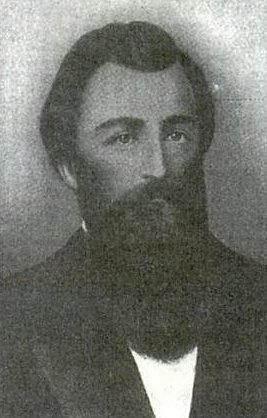
1405: Richard le Scrope and Thomas de Mowbray, without color of law

On this date in 1405, Henry IV had two rebellious peers beheaded on his authority at York.


The lower panels of this stained glass in St. Andrew’s Church, Bishopthorpe, depict the trial of Archbishop Scrope. Image (c) Roger Walton and used with permission.

Richard le Scrope, Archbishop of York, and Thomas de Mowbray, Earl of Norfolk, had both become estranged from Henry Bolingbroke, the noble who had wrested control of the English crown as Henry IV.

Since Henry’s legitimacy was dubious, he faced even more than a monarch’s usual ration of plots and rebellions — most famously that of young Sir Henry Percy, remembered as “Hotspur” in Shakespeare’s Henry IV part 1.

That particular enemy met his end in 1403, but old man Percy was soon back to fomenting from his expansive holdings in the north.

Mowbray, a disaffected teenager, and Scrope, a seasoned prelate who should have known better, were drawn into the next intrigue — by “the odor of French promises or rewards,” their enemies charged. A noble loyal to Henry intercepted their modest force and (so the story goes*) by representing to accept Scrope’s offer to parley induced the rebels to disband, whereupon the ringleaders were arrested.

Henry demanded their immediate condemnation; Chief Justice William Gascoigne insisted upon their right to be judged by other peers of the realm (and upon the inviolability of the archbishop**). The hot-blooded† Henry was inclined not to bother, and simply had their heads lopped off on his own authority.

Shakespeare treats this episode in Henry IV, part 2:

HASTINGS [another rebellious lord, who shared the same fate]

Our Army is dispers’d:
Like youthfull Steeres, unyoak’d, they tooke their course
East, West, North, South: or like a Schoole, broke up,
Each hurryes towards his home, and sporting place

WESTMORLAND

Good tidings (my Lord Hastings) for the which,
I doe arrest thee (Traytor) of high Treason:
And you Lord Arch-bishop, and you Lord Mowbray,
Of Capitall Treason, I attach you both

MOWBRAY

Is this proceeding just, and honorable?

WESTMORLAND

Is your Assembly so?

BISHOP SCROPE

Will you thus breake your faith?

JOHN

I pawn’d thee none:
I promis’d you redresse of these same Grievances
Whereof you did complaine; which, by mine Honor,
I will performe, with a most Christian care.
But for you (Rebels) looke to taste the due
Meet for Rebellion, and such Acts as yours.
Most shallowly did you these Armes commence,
Fondly brought here, and foolishly sent hence.
Strike up our Drummes, pursue the scatter’d stray,
Heaven, and not wee, have safely fought to day.
Some guard these Traitors to the Block of Death,
Treasons true Bed, and yeelder up of breath.

(See this scene played here.)

Scrope’s execution in particular played very badly as an arrogation of secular power over the ecclesiastical authorities. The pope was persuaded not to excommunicate Henry — that step would be reserved a later King Henry — but many contemporaries viewed the monarch’s subsequent (and ultimately fatal) bouts with disfiguring “leprosy” as a judgment from above St. Peter’s throne.

This Google books freebie has much more on the cast of characters at the center of this day’s action.

* This popular version has its opponents; the rebels may have simply surrendered when they recognized their hopeless military disadvantage.

** Interestingly, the very uncle of the noble who effected the arrest of Scrope and Mowbray had been implicated a traitor a generation before by the Merciless Parliament. Unlike many, Alexander Neville was spared a death sentence for his perceived proximity to Richard II … because he was, as Scrope would become, the Archbishop of York.

† Henry was making noises about destroying York altogether as punishment for its disloyalty as he rode there following the “Battle” of Shipton Moor. Residents of that northern city met him in poses of desperate submission — dressed in sackcloth, ropes about their necks, offering up their weapons.

On this day..

1862: William B. Mumford, flag desecrator

On this date in 1862, a 42-year-old gambler hanged at the New Orleans mint where, six weeks before, he had pulled down the Stars and Stripes of the arriving Union occupiers to the delight of a Confederate mob.

Moving to secure the Mississippi, Northern forces had the Big Easy encircled and about to surrender when, an advance team landed in the undefended city and pulled down the Stars and Bars over the mint on Esplanade Avenue.

William Bruce Mumford was among the Confederate loyalists who took exception to the Yankee flag, so he chopped it down and dragged it through the street (provoking a cannonade from a Union warship). The flag was little but tatters by the time he had through with it.

Although the city was not officially occupied at the time of this incident, the mint was a federal building. Army General Benjamin Butler resolved to make a salutary example out of the incident to quell any possible civil unrest.

I find the city under the dominion of a mob. They have insulted our flag — torn it down with indignity. This outrage will be punished in such a manner as in my judgment will caution both the perpetrators and abettors of the act, so that they will fear the stripes, if they do not reverence the stars of our banner.

Butler, it should be allowed, had some reason for this conclusion. The Picayune exulted the act as, well, a call to resistance.

The names of the party that distinguished themselves by gallantly tearing down the flag that had been surreptitiously hoisted, we learn, are W. B. Mumford, who cut it loose from the flag-staff amid the shower of grape. Lieutenant N. Holmes, Sergeant Burns and James Reed. They deserve great credit for their patriotic act. New Orleans, in this hour of adversity, by the calm dignity she displays in the presence of the enemy, by the proof she gives of her unflinching determination to sustain to the uttermost the righteous cause for which she has done so much and made such great sacrifices, by her serene endurance undismayed of the evil which afllicts her, and her abiding confidence in the not distant coming of better and brighter days — of speedy deliverance from the enemy’s toils — is showing a bright example to her sister cities, and proving herself, in all respects, worthy of the proud position she has achieved. We glory in being a citizen of this great metropolis.

This free book argues that Butler’s clemency a few days before to a group of condemned southern enlisted men made mercy politically impossible in the Mumford case, lest the citizenry interpret executive weakness as an invitation to lawlessness.

If that was Butler’s calculus, Confederate die-hards did not appreciate it.

Accordingly, when Mumford was “hung … from a flag-staff projecting from one of the windows under the front portico” of the mint, he won promotion into the pantheon of southern martyrs.

Confederate President Jefferson Davis issued an order condemning General Butler, and even his officers, to death, along with some outsized bluster about embargoing prisoner exchanges that the Confederacy had not the manpower to seriously intend:

William B. Mumford, a citizen of this Confederacy, was actually and publicly executed in cold blood by hanging alter the occupation of the city of New Orleans by the forces under the command of General Benjamin F. Butler when said Mumford was an unresisting and non-combatant captive, and for no offense even alleged to have been committed by him subsequent to the date of the capture of the said city …

the silence of the Government of the United States and its maintaining of said Butler in high office under its authority for many months after his commission of an act that can be viewed in no other light than as a deliberate murder, as well as of numerous other outrages and atrocities hereafter to be mentioned, afford evidence only too conclusive that the said Government sanctions the conduct of said Butler and is determined that he shall remain unpunished for his crimes:

Now therefore I, Jefferson Davis, President of the Confederate States of America, and in their name do pronounce and declare the said Benjamin F. Butler to be a felon deserving of capital punishment. I do order that he be no longer considered or treated simply as a public enemy of the Confederate States of America but as an outlaw and common enemy of mankind, and that in the event of his capture the officer in command of the capturing force do cause him to be immediately executed by hanging; and I do further order that no commissioned officer of the United States taken captive shall be released on parole before exchange until the said Butler shall have met with due punishment for his crimes.

And whereas the hostilities waged against this Confederacy by the forces of the United States under the command of said Benjamin F. Butler have borne no resemblance to such warfare as is alone permissible by the rules of international law or the usages of civilization but have been characterized by repeated atrocities and outrages

… (examples of atrocities omitted) …

I, Jefferson Davis, President of the Confederate States of America and acting by their authority, appealing to the Divine Judge in attestation that their conduct is not guided by the passion of revenge but that they reluctantly yield to the solemn duty of repressing by necessary severity crimes of which their citizens are the victims, do issue this my proclamation, and by virtue of my authority as Commander-in-Chief of the Armies of the Confederate States do order-

1. That all commissioned officers in the command of said Benjamin F. Butler be declared not entitled to be considered as soldiers engaged in honorable warfare but as robbers and criminals deserving death, and that they and each of them be whenever captured reserved for execution.

2. That the private soldiers and non-commissioned officers in the army of said Butler be considered as only the instruments used for the commission of the crimes perpetrated by his orders and not as free agents; that they therefore be treated when captured as prisoners of war with kindness and humanity and be sent home on the usual parole that they will in no manner aid or serve the United States in any capacity during the continuance of this war unless duly exchanged.

3. That all negro slaves captured in arms be at once delivered over to the executive authorities of the respective States to which they belong to be dealt with according to the laws of said States.

4. That the like orders be executed in all cases with respect to all commissioned officers of the United States when found serving in company with armed slaves in insurrection against the authorities of the different States of this Confederacy.

The Confederates never got a chance to enforce the order; he resumed his colorful political career and died in 1893 hailed as Massachusetts’ greatest citizen-soldier. Complain (pdf) as they might of his iron-heeled rule, the residents of New Orleans had good cause to appreciate the relatively early and orderly occupation of their city, which spared it the flames visited on more recalcitrant rebel strongholds.

For the South, the loss of its largest city and the gateway to the Mississippi was a severe blow. As the rebel position crumbled in the months to come, Jefferson Davis must have had a worry for his own neck.

Somehow, he and every other Southerner escaped execution for their treasonable design, which leaves William Bruce Mumford, the riverboat gambler who tore down Old Glory, as the only American since at least the War of 1812 to be put to death for treason against the United States.*

* Anti-slavery rebel John Brown was hanged for treason in 1859, but it was treason against the state of Virginia — not against the U.S. Julius and Ethel Rosenberg were electrocuted for espionage, not treason.

On this day..

1832: Not Javert, spared by Jean Valjean

On this, the second day of the abortive 1832 June Rebellion in Paris, police inspector Javert is faux-executed — and mercifully released — by his longtime quarry Jean Valjean in Victor Hugo’s classic Les Miserables.


Javert depicted in an theatrical poster, from the Les Miserables Gallery. The site identifies this as an 1899 poster, which may be mistaken since the actor billed for Javert died in January 1898.

Hugo’s monumental novel is structured by the implacable policeman’s pursuit of Jean Valjean, an absconded ex-con with a heart of gold.

Fate brings them together accidentally at the barricade of the (historical, but now forgotten) student uprising — Javert to spy on the student revolutionaries, who unmask him, and Jean Valjean to keep an eye on his adoptive daughter’s idealistic lover.

Jean Valjean’s timely contribution to the hopelessly outgunned revolutionaries gives him the pull to ask the favor of being the one to execute the spy.* Since Valjean has been hunted relentlessly by the lawman since breaking parole nearly two decades before, the hero has ample motivation to turn executioner.

Instead…

When Jean Valjean was left alone with Javert, he untied the rope which fastened the prisoner across the middle of the body, and the knot of which was under the table. After this he made him a sign to rise.

Javert obeyed with that indefinable smile in which the supremacy of enchained authority is condensed.

Jean Valjean took Javert by the martingale, as one would take a beast of burden by the breast-band, and, dragging the latter after him, emerged from the wine-shop slowly, because Javert, with his impeded limbs, could take only very short steps.

Jean Valjean had the pistol in his hand.

In this manner they crossed the inner trapezium of the barricade. The insurgents, all intent on the attack, which was imminent, had their backs turned to these two.

Marius alone, stationed on one side, at the extreme left of the barricade, saw them pass. This group of victim and executioner was illuminated by the sepulchral light which he bore in his own soul.

Jean Valjean with some difficulty, but without relaxing his hold for a single instant, made Javert, pinioned as he was, scale the little entrenchment in the Mondetour lane.

When they had crossed this barrier, they found themselves alone in the lane. No one saw them.

…

Jean Valjean thrust the pistol under his arm and fixed on Javert a look which it required no words to interpret: “Javert, it is I.”

Javert replied:

“Take your revenge.”

Jean Valjean drew from his pocket a knife, and opened it.

“A clasp-knife!” exclaimed Javert, “you are right. That suits you better.”

Jean Valjean cut the martingale which Javert had about his neck, then he cut the cords on his wrists, then, stooping down, he cut the cord on his feet; and, straightening himself up, he said to him:

“You are free.”

Javert was not easily astonished. Still, master of himself though he was, he could not repress a start. He remained open-mouthed and motionless.

Jean Valjean continued:

“I do not think that I shall escape from this place. But if, by chance, I do, I live, under the name of Fauchelevent, in the Rue de l’Homme Arme, No. 7.”

Javert snarled like a tiger, which made him half open one corner of his mouth, and he muttered between his teeth:

“Have a care.”

“Go,” said Jean Valjean.

Javert began again:

“Thou saidst Fauchelevent, Rue de l’Homme Arme?”

“Number 7.”

Javert repeated in a low voice: — “Number 7.”

He buttoned up his coat once more, resumed the military stiffness between his shoulders, made a half turn, folded his arms and, supporting his chin on one of his hands, he set out in the direction of the Halles. Jean Valjean followed him with his eyes:

A few minutes later, Javert turned round and shouted to Jean Valjean:

“You annoy me. Kill me, rather.”

Javert himself did not notice that he no longer addressed Jean Valjean as “thou.”

“Be off with you,” said Jean Valjean.

Javert retreated slowly. A moment later he turned the corner of the Rue des Precheurs.

When Javert had disappeared, Jean Valjean fired his pistol in the air.

Then he returned to the barricade and said:

“It is done.”

Or, has played in the modern hit musical adaptation:

In saving his own soul, Jean Valjean (conveniently!) manages to kill his pursuer just the same: the cognitive dissonance for such a hard, emotionless man being on the receiving end of this bit of redemptive mercy leads Javert to break character so far as to allow his man to escape. The inspector then commits suicide.

Les Miserables is available free several places online, including Gutenberg.org and The Literature Network.

* While the recent musical production of Les Miserables soft-pedals what was planned for Javert, Hugo leaves no room for doubt: as the students prepare for the fatal onslaught, their leader Enjolras decrees that “[t]he last man to leave this room will smash the skull of this spy.”

On this day..

1935: Pat Griffin and Elmer Brewer

On this date in 1935, the first double hanging* in the state of Iowa took place at Fort Madison.

Waterloo, Iowa, police heading out to query Elmer Brewer “in connection with alleged misconduct of Brewer with juvenile girls” alarmed Brewer and his friend Patrick Griffin, who assumed they were coming to arrest them for a robbery.

The two killed Deputy Sheriff William Fay Dilworth in a shootout.

Long forgotten, Griffin’s rodeo avocation, his friendship with the classmate who was to be his Catholic confessor, his offer to give all his earnings to the victim’s family were his sentence commuted to hard labor.

Just a lost file from the police blotter, moldering in a musty corner of a local archives. Although the glacial progress of the legal proceedings will look more familiar to modern eyes.

Thus closes a case which has been more or less in the courts since December 16, 1932. Attorney James Fay of Emmetsburg and Attorney John McCartney of Waterloo made valiant efforts to save the lives of the two men, but to no avail. Following their conviction of the murder in the district court in Waterloo on January 5, 1933, they were sentenced to be hanged on January 26, 1934. In May, 1933, an appeal was filed with the state supreme court, thus automatically staying the execution. The supreme court denied the appeal. On June 24, 1934, Attorneys Fay and McCartney petitioned the supreme court for a rehearing. This was denied January 10, 1935. A plea for commutation of the sentences to life imprisonment was denied by Governor Clyde Herring on February 1 and the chief executive set April 5, 1935, as the execution date. Continuing farther with their efforts the attorneys sought a writ of habeas corpus from District Judge John Craig of Fort Madison, but their request was denied. The refusal opened another loophole for the attorneys to ask a review of Judge Craig’s action. Again refused, the lawyers announced that they would go to the United States supreme court where they would ask the court for a writ of habeas corpus. In order to allow time for this step Governor Herring granted the convicted slayers a 60-day stay of execution but at the same time he announced that it was the last reprieve that could be expected from him. Illness of defense attorneys, it was said, prevented them from prosecuting their appeal to the supreme court. Monday Mr. Fay appealed to Federal District Court Judge Charles A. Dewey for a stay order and a writ of habeas corpus, but Judge Dewey refused to interfere. In Des Moines Tuesday a last minute effort to save the men was made in an appeal to Governor Herring, but the appeal for a commutation of sentence was denied.

A family member has compiled old clippings about this case — from which, both the excerpt above and the illustration — here.

* According to Iowans Against the Death Penalty. There had been a previous double execution when Iowa was a territory, and a triple execution in 1918.

On this day..

1814: Four of five deserters, in Buffalo

On this date* in 1814, an American army in Buffalo, N.Y., shaken by desertions lined up five absconding soldiers for execution.

The memoirs of one Jarvis Hanks, a drummer, recalled the singular scene that ensued.

In this alternative history of the war of 1812, the sergeant commanding the firing party and the soldier not executed make their way down the continent as an odd couple and fight in the Battle of New Orleans.

During the time we remained at Buffalo, five men were sentenced to be publicly shot for the offence of desertion. They were dressed in white robes with white caps upon their heads, and a red target fastened over the heart. The army was drawn up into a hollow square to witness the example that was about to be made of their comrades who had proved recreant to the regulations of the service. Five graves were dug in a row, five coffins placed near them, also in a line, with distance between coffins and graves to enable the criminals to kneel between them. About twelve men were assigned to the execution of each offender. Their guns were loaded by officers, and they were not permitted to examine them afterwards until they had fired.

All things being in readiness, the chaplain made a prayer, the caps were pulled down over the eyes of the poor culprits, and the word of command given: “Ready! Aim! Fire!” They all fell! Some into their graves, some over their coffins. One struggled faintly and the commanding officer ordered a sergeant to approach and end his misery. He obeyed by putting the muzzle of his piece within a yard of his head, and discharging it. This quieted him perfectly!

At this time one of the condemned slowly arose from his recumbent position to his knees and was assisted to his feet. His first remark was, “By God, I thought I was dead”. In consequence of his youth and the peculiar circumstances of his case, he had been reprieved, but the fact was not communicated to him until this moment. He had anticipated execution with his comrades, and when the report of the guns took place, he fell with them, though not a ball touched him. The platoon assigned to him had guns given to them which were not charged, or at least had nothing but powder in them.

Even Dostoyevsky didn’t get to the point where the mock executioners actually “fired”.

These executions took place during the Niagara campaign in the latter stages of the war — the Americans’ last push in their unsuccessful bid to conquer Canada.

* This execution, which obviously has a folklorish quality, has somewhat slippery particulars. The not-necessarily-dependable dating of the Espy file (pdf) places it on this date, as does The Rivers of War, which squares with the quoted soldier’s account of timing and the known troop movements. Hanks’ writings (and that of two other War of 1812 soldiers) is published in Soldiers of 1814: American Enlisted Men’s Memoirs of the Niagara Campaign. (Review.)

Espy names the executed soldiers as John Black, Mahlon Christie, George Orcote, and Isaac Kent.

On this day..

1098: Yaghi-Siyan, commander of Antioch

On this date in 1098, the Turkish commander of Antioch put to flight by the invading Crusader army was seized and beheaded as a trophy of the victory.

Yaghi Siyan, the Seljuk governor known to European chroniclers as Acxianus, Gratianus or Cassianus, found himself in a bad way when Christian forces of the First Crusade laid siege to Antioch late in 1097.

Although the Europeans were famished, they maintained the siege for the best part of a year, finally surging into Antioch on the night of June 2-3, 1098, with the help (as so often the case in siege warfare) of an inside man who agreed to open a gate.

Arab historian Ali ibn al-Athir described the city’s fall.

Yaghi Siyan showed unparalleled courage and wisdom, strength and judgment. If all the Franks who died had survived they would have overrun all the lands of Islam. He protected the families of the Christians in Antioch and would not allow a hair of their head to be touched.

After the siege had been going on for a long time the Franks made a deal with one of the men who were responsible for the towers. He was a cuirass-maker called Ruzbih [or Firuz, or Firouz] whom they bribed with a fortune in money and lands. He worked in the tower that stood over the river-bed, where the river flowed out of the city into the valley. The Franks sealed their pact with the cuirass-maker, God damn him! and made their way to the water-gate. They opened it and entered the city. Another gang of them climbed the tower with ropes. At dawn, when more than 500 of them were in the city and the defenders were worn out after the night watch, they sounded their trumpets … Panic seized Yaghi Siyan and he opened the city gates and fled in terror, with an escort of thirty pages.

Yaghi-Siyan fell from his horse in flight; his

companions tried to lift him back into the saddle, but they could not get him to sit up, and so left him for dead while they escaped. He was at his last gasp when an Armenian* shepherd came past, killed him, cut off his head and took it to the Franks at Antioch.**

A borderline “execution” at best, but close enough for our purposes; the Turkish garrison Yaghi-Siyan left behind to face the music was receiving similar treatment from the Crusaders, as were civilians, Muslim and Christian alike.

The month following Yaghi-Siyan’s death was a strange and pivotal one in the strange and pivotal history of the Crusades.

The city of Antioch was almost immediately invested again — by a relief force of Turks who had arrived too late. Facing seemingly long odds on the other end of the siege, and still near to starvation, the Crusaders discovered the “Holy Lance”† and managed to repel the Turks, enabling the upstart Christian army to march on to Jerusalem.

* Having had their homelands overrun by the Seljuks during the preceding decades, there was no small tension in the Armenian relationship with their Turkish rulers; the man who betrayed the city was himself said to be an Armenian who had been forced to convert to Islam. The account of the city’s capture by Raymond d’Aguiliers reports that our day’s victim “was captured and beheaded by some Armenian peasants, and his head was brought to us. This, I believe, was done by the ineffable disposition of God, that he who had caused many men of this same race to be beheaded should be deprived of his head by them.”

** Different accounts give slightly different versions of how Yaghi-Siyan came to his end — whether thrown from his horse or caught attempting to take refuge — and the station in life of the Armenian (everyone seems to agree on the nationality of the executioner) who decapitated him.

† The spear supposed to have pierced Christ on the cross, whose discovery was directed by Peter the Hermit at the direction, he said, of St. Andrew. Ibn al-Athir had a more skeptical take:

a holy man who had great influence over them, a man of low cunning … proclaimed that the Messiah had a lance buried in the Qusyan, a great building in Antioch … Before saying this he had buried a lance in a certain spot and concealed all trace of it. He exhorted them to fast and repent for three days, and on the fourth day he led them all to the spot with their soldiers and workmen, who dug everywhere and found the lance as he had told them.

On this day..

1453: Çandarli Halil Pasha, after the fall of Constantinople

On this date in 1453, Ottoman Grand Vizier Çandarli Halil Pasha (or Chandarly) was put to death, the first time anyone holding that office had suffered such a fate.

In Istanbul, Halil Pasha tower — part of the siegeworks used to take Constantinople — overlooks Fatih Sultan Mehmet Bridge, named for the man who ordered Halil Pasha’s death.

It was a stunning fall for the man who had presented himself in the sultan’s council just six days before to argue for discontinuing the seven-week-old Ottoman siege of Byzantine Constantinople.

This siege would succeed, on May 29, in conquering the second Rome, and it may have been Halil Pasha‘s longstanding opposition to this project so glorious for the rising Ottomans that cost him his life.

Or, something else; we are obliged to speculate. Other possible factors include:

  • Halil Pasha’s enormous personal wealth, which made his family both a potential rival and a source of confiscated revenues badly needed by the state.
  • Personal rivalry with the sultan now known as Mehmed the Conqueror, whom Halil Pasha had deposed in the former’s childhood in favor of his retired father when exigencies of state required a more experienced hand.
  • A generation gap with the sultan’s younger advisors. Both Ottoman and Christian sources recorded charges that he was in league with Byzantium’s defenders; even if not true in a literally treasonous sense, the veteran statesman had relationships with Christians through Constantinople and (as evidenced by his opposition to the siege) likely had more to lose than to gain from Mehmed’s aggressive foreign policy.

Especially in the last respect, Chandarly Halil Pasha’s death turned over a leaf in Europe’s complex relationship with the rising Turks. And among those inclined to view a clash of civilizations between the Christian and Muslim worlds, the May 29, 1453 Ottoman conquest of Constantinople rates as a day just as weighty for the fate of the world as for that of Halil Pasha himself.

A highly recommended digression: Lars Brownworth’s coverage in the 12 Byzantine Rulers podcast of that empire’s last ruler, Constantine XI — who died with his boots on the day Constantinople fell, “the empire as his winding-cloth.”

[audio:http://download.12byzantinerulers.com/16-Constantine-XI.mp3]

On this day..

1076: Waltheof II, Earl of Northumbria

On this day in 1076, William the Conqueror had Northumbrian Earl Waltheof II beheaded for treachery — the only major noble executed by the Norman king.

Waltheof in the comics! (Or see him trade up to battle-axe here.) According to Reality Fiction, Waltheof had a colorful afterlife as a literary character whose reputed exploits grew more prolific with age; he was a popular saint in the next generations. Some also consider Waltheof a possible ancestor of Robin Hood.

When the Norman Conquest brought William the Conqueror to power, the nobles didn’t know the Normans would be able to keep what they’d won … and being nobles, they started plotting.

Multiple revolts shook the northern marches where Waltheof had his domain, and the burly Northumbrian, according to skald Thorkill Skallason, was a Norman-killing machine.

Waltheof burned a hundred
Of William’s Norman warriors
As the fiery flames raged;
What a burning there was that night!

Our day’s principal made nice with the Conqueror and even got dynastically wedded to William’s niece, Judith.

But his fame as a warrior and strategically positioned estates soon had conspirators wooing him for another run at rebellion — the Revolt of the Earls, which would turn out to be the last serious resistance to the last successful invasion of Britain.

Waltheof either (accounts are radically at odds) signed on and then got cold feet, or got entrapped into it, or didn’t join but also didn’t report it when he found out, or got shopped for political reasons by his Norman bride. (Judith, suspiciously, got to keep his huge tracts of land after Waltheof lost his head for the property-confiscating offense of treason.)

Whatever the case, he was soon obliged to throw himself on the mercy of the king. He got a royal wife as his first prize for a brush with treason. His second prize was, he was decapitated.

Waltheof is supposed to have made such a delay at the scaffold with the Lord’s Prayer that the headsman got impatient and lopped off his dome after the words “Lead us not into temptation.” Devotional legend says that the severed head completed the prayer.

Thorkill Skallason remembered the last English earl still keeping it real under William’s rule.

William crossed the cold channel
and reddened the bright swords,
and now he has betrayed
noble Earl Waltheof.
It is true that killing in England
will be a long time ending;
A braver lord than Waltheof
Will never be seen on earth.

Another quarter-millennium elapsed before another English earl — Thomas Plantagenet, Earl of Lancaster — was put to death in the realm.

Waltheof’s story is told in detail in the context of The history of the Norman conquest of England, available free from Google books, and directly from the relevant primary documents here.

On this day..

2000: Fu Xinrong, involuntary organ donor

One Fu Xinrong was shot in the back of the head this day in China’s Jiangxi province. The previous fall, he had raped his girlfriend, murdered their newborn son, and turned himself in to police.

His death, just one no-account criminal among China’s thousands of practically anonymous execution victims, attracted no particular notice.

But quite against all odds, Fu Xinrong posthumously became the subject of a scandal: the hook for a story in the Chinese press piquantly titled, “Where Did My Brother’s Body Go?”

For the answer — that Fu Xinrong’s corpse had been driven to a Nanchang hospital and its kidneys transplanted to unidentified recipients — unveiled the shadowy post-execution operations even more unseemly than China’s industrial-scale death penalty.

According to a Washington Post report of July 31, 2001,

After Fu was shot in the back of the head, four attendants got out of the van and picked up his corpse … A government prosecutor attempted to stop them, but they explained that they were from Nanchang and that they had a deal with the court …

“We found the hospital’s director and confronted him with the evidence,” one reporter said. “In the beginning, he refused to say anything about it, but when he saw what we had, he had to admit it on the condition that we did not release the hospital’s name in our report.”

Further investigation indicated that a senior court official, whose surname is Yang, had sold the body to the hospital, the report said.

Fu’s father committed suicide. The family sued the court in 2001; I have not been able to establish whether or how that suit was resolved. However, according to a 2003 U.S. Congress report (pdf) the editor who green-lighted the story’s publication was sacked.*

Fu’s case, in any event, is far from unusual.

On the contrary, his kidneys entered a veritable souk** of transplanted organs that’s been openly pitched at westerners willing to part with five figures and their decency in exchange for a life-giving replacement part from a shot-to-order prisoner.

* This would have been around the same time that a similar fate befell journalists indiscreet enough to explore the unflattering-to-the-People’s-Republic social environment of an executed gangster.

** Finally officially acknowledged in 2005.

On this day..

1962: Gheorghe Arsenescu, Romanian partisan

On this date in 1962, partisan Gheorghe Arsenescu was put to death at Bucharest’s Jilava Prison.

Arsenescu was a leader and co-founder of one of Romania’s several bands of anti-communist resistance units. Arsenescu’s Haiducii Muscelului — the Muscel Outlaws — were a band of 30 to 40 in the Carpathian fooothills who scarcely posed a serious threat to the Romanian state, but who nevertheless managed to elude capture for nine solid years in the 1950’s.

(More about the Haiducii in this Romanian pdf.)

Arsenescu was finally nabbed in 1960, a few months after his former comrades Toma and Petre Arnautoiu had themselves been executed. According to Revolution and Resistance in Eastern Europe, Arsenescu’s wife and father were also given long prison sentences for aiding him.

This band was perhaps most especially notable for one of its members who not only survived capture, but outlived the Communist regime: Elisabeta Rizea.

Crippled by torture, Rizea became a potent symbol in post-Communist Romania of the resistance of Arsenescu and others.

On this day..