These sisters of Catholicism’s Visitandine or Visitation Order were the last remaining to watch over their convent, which had been mostly evacuated for fear of anti-clerical violence in the unfolding Spanish Civil War.
Indeed, even these seven felt it wiser to stay in a nearby apartment where they secreted the convent’s treasures and kept their holy orders as quiet as possible.
Their precautions were justified — but insufficient. On the night of November 17, weeks after the Spanish capital was besieged by the Francoists an anarchist militia tossed the place, interrogated them, and then returned the next day to have them summarily executed on the outskirts of town.
“I beg God that the marvelous example of these women who shed their blood for Christ, pardoning from their hearts their executioners,” Pope John Paul II said when beatifying these sisters in 1998, “may succeed in softening the hearts of those who today use terror and violence to impose their will upon others.”
* Technically, only Sisters Gabriela de Hinojosa, Teresa Cavestany, Josefa Barrera, Ines Zudaire, Engracia Lecuona, and Angela Olaizola were shot on the 18th. Sister Cecilia Cendoya escaped her captors but later turned herself in and obtained the crown of martyrdom a few days afterwards.
On this date in 1989, Sri Lankan Marxist revolutionary Rohana Wijeweera was — by at least some accounts, properly disputed by the authorities — summarily executed
Moscow-educated at Lumumba University, Wijeweera showed his leftist bona fides by forming a splinter party breaking with the Ceylon Communist Party.
An abortive 1971 rising landed Wijeweera a long prison sentence, but he was amnestied in time to run a distant third in Sri Lanka’s 1982 presidential election.
The JVP — which increasingly also verged towards Sinhalese nationalism — then proceeded to foment a second and much more vigorous rebellion that ran from 1987 to 1989 which was suppressed in the usual ways. There’d be no prison amnesty for Rohana Wijeweera this time.
Officially, Wijeweera’s death in captivity is attributed to crossfire during an ambush shootout with his partisans. Sure. Here’s what Sri Lankan General (and later M.P.) Sarath Munasinghe had to say about Wijeweera’s end:
The time was 11.30pm [on November 12, 1989]. We reached the premises of HQ ‘Operation Combine’. There were many officers of other services too. We were conducted to the conference table where Rohana Wijeweera was seated. I was given a chair just opposite Wijeweera across the table. I commenced having a conversation with him. Mr Ernie Wijesuriya, director, National Intelligence Bureau, his deputy and some others were present. I spoke to Rohana Wijeweera at length.
Whenever I questioned him in English, he answered in Sinhalese. In fact, he asked me whether I knew the Russian language. I replied in the negative. Rohana Wijeweera told me that his second language was Russian. He told me all about his personal life, initially at Bandarawela and later at Ulapane in Kandy. He was reluctant to talk about the activities of the JVP.
While this discussion was going on, the ‘Operation Combine’ commander was with his deputy in the adjoining room, which was his office. Just past midnight, the deputy Defense Minister General Ranjan Wijeratne walked in and sat at the head of the conference table. Gen Wijeratne asked few questions, but Rohana Wijeweera did not respond. Gen. Wijeratne joined the ‘Operation Combine’ commander in his office. We continued with our conversation. We had many cups of plain tea (dark tea), while talking. I made a request to Rohana Wijeweera to advise his membership to refrain from violence. He agreed after persuasion. So we managed to record his words and also his picture in still camera.
After some time, a well-known Superintendent of Police arrived at the HQ Operation Combine. As the police officer walked in, he held Rohana Wijeweera’s hair from the rear and gave two taps on Wijeweera’s cheek. Wijeweera looked back, and having identified the officer said, ‘I knew it had to be a person like you’. The police officer joined the Minister and Operation Combined Commander. We continued with our conversation. Wijeweera related a few interesting stories. One day, a group of JVP activists had visited the residence of Nimal Kirthisri Attanayake [Rohana Wijeweera] at Ulapane. They demanded money for their movement. Wijeweera responded quickly by giving Rs 100. The youngsters did not have a clue about their leader. Wijeweera was full of smiles when he divulged this story.
The time was around 3.45am on 13 November 1989. I was informed to conclude the questioning and to take Rohana Wijeweera downstairs. Together we walked downstairs and were close to each other. Wijeweera held my hand and said, ‘I am very happy I met you even at the last moment. I may not live any longer. Please convey my message to my wife’. Rohana Wijeweera’s message contained five important points. They were all very personal matters concerning his family.
Moments later, Wijeweera was blindfolded and helped into the rear seat of a green Pajero. Two people sat on either side of Wijeweera. There were others at the rear of the vehicle. Just then a senior police officer arrived near the vehicle. I politely rejected his invitation to join them. The Pajero took off. I joined Col Lionel Balagalle standing near the main entrance of the Operation Combine HQ building. We were having a brief chat when a senior officer came downstairs to get into his car. We greeted him. He was in a very good mood. But the atmosphere changed all of a sudden. A military police officer appeared in front of us. The senior officer blasted him for not accompanying Wijeweera and party. The military officer dashed towards his vehicle and sped away. The senior officer departed. We also went home thinking of a good sleep.
Late in the morning I was busy getting Wijeweera’s photograph printed. No one would recognise Wijeweera without his beard. So I had to seek help and add the beard to Wijeweera’s photograph. It was done very well. Late in the afternoon there was a press conference at the Joint Operation Command. Minister Ranjan Wijeratne briefed the press. ‘Wijeweera and HB Herath [another JVP leader] had been taken to a house just outside Colombo, where the JVP had hidden part of their treasure. While the search was in progress, Herath pulled out a pistol and shot Wijeweera dead’. The minister went on to give more details. Subsequent to the killing of Wijeweera, violence by the JVP ceased gradually and there was peace in the country, except in the north and east. [i.e., the zone of the entirely separate Tamil Tigers insurgency -ed.]
The U.S. Army hanged five German civilians as war criminals at Bruchsal Prison on this date in 1945. Their crime: lynching the crew of a downed American bomber, the day after Allied bombing raids devastated the manufacturing town of Rüsselsheim.
The lynching is known as the Rüsselsheim Massacre, and it claimed the lives of six of the nine flyers of a B-24 Liberator cheekily christened Wham! Bam! Thank You, Ma’m!. One of their number survived thanks to his shrapnel wounds, which saw him safely to hospital while his comrades were being transported.
The other two were simply lucky to survive the beatings administered by a mob of enraged civilians who caught sight of the Americans under the escort of only two German soldiers. On the night of August 25-26, Britain’s Royal Air Force had dumped more than 1,600 tons of explosives on Rüsselsheim to destroy the Opel factory and rail lines there. It was only the latest, and ultimately the largest, of several raids on the town dating back to July. A later U.S. study reckoned 315 Opel workers killed and 277 injured during the July-August raids, to say nothing of the devastation on other townspeople and on Opel’s slave labor.* A POW, Frenchman Pierre Cuillier, recorded of the August 25-26 attack that “a bomb fell on the dug-out for Russian women. We hear of 119 victims, a number that in reality is surely much higher.”
Under the circumstances, the good folk of Rüsselsheim were not pleased on the morning of the 26th to see Allied airmen in their town being marched to a train transfer … even if, and surely the distinction must fail to impress amid the smoldering rubble of one’s own hometown, this particular American crew had not been part of this particular British bombing. (The Americans had been shot down two days earlier en route to do a similar thing to Hanover.)
“There are the terror flyers. Tear them to pieces! Beat them to death! They have destroyed our houses!” cried Margarete Witzler and Käthe Reinhardt. As the Americans protested, the crowd overpowered the guards and took its rough revenge with whatever bludgeons were ready to hand.
At last, Joseph Hartgen, an air raid warden, finished them off with his pistol … or at least, finished off six before his chamber went empty.
Spoiler alert: it will not go well for Herr Hartgen.
Somehow the two un-shot men, Sgt. William M. Adams, and Sgt. Sidney E. Brown, still drew enough breath by the end of the ordeal to sneak away when they were being dumped into a mass grave. Captured again a few days later, they survived the war in a POW camp.**
Eleven Rüsselsheimers stood trial in Darmstadt for these Lynchmorde by July, when war was still raging in the Pacific: it was the very first war crimes proceeding under U.S. occupation.
The defendants tried out a pre-Nuremberg version of the “only following orders” defense, blaming Nazi propaganda against bomber crews for inciting the murders. The U.S. prosecutor† scoffed: “They were all grown men and women. If they are called on to commit the murder and they do, they are just as responsible as any other murderers.”
Harten and six others of the 11 caught death sentences, but the two women — Witzler and Reinhardt — both had their sentences reduced.
Warning: Although not graphic, this is a video of actual hangings.
** Brown lived long enough to return to Rüsselsheim at official invitation in 2001 for a formal apology. However, at the time of the trial, it was still mysterious how there came to be only six exhumed bodies from eight lynched airmen: Adams and Brown only emerged out of the mass of returning POWs after convictions had already been secured.
† The army prosecutor at the proceeding was one Lt. Col. Leon Jaworski, but he’s better known for hunting larger game later in his career as the special prosecutor during the Watergate investigations. (Jaworski is the guy embattled President Richard Nixon appointed after firing Archibald Cox in the Saturday Night Massacre.) Jaworski’s eventual legal victory over the White House in United States v. Nixon obtained the incriminating Watergate tapes in late July of 1974, forcing Nixon’s resignation just days afterwards, on August 9, 1974.
On this date in 1938, Kyrgyz intellectual and statesman Kasym Tynystanov was executed during Stalin’s Great Purge.
Kasym Tynystanov, on modern Kyrgyzstan’s 10-som bill.
Born in tsarist Russia’s mountainous frontier with Qing China, Tynystanov (English Wikipedia entry | Russian | Kyrgyz) was blessed by the exertions of his father and a local mullah with literacy — a gift shared by only about one in 40 of his countrymen.
He graduated from the Kazakh-Kyrgyz Institute of Education in Tashkent in 1924 and went on to a career in letters — literal letters, as he’s credited with being the first to regularize the Kyrgyz tongue in Latin characters. He would publish several works on the Kyrgyz language; he also compiled the oral folklore of his people, and wrote verse of his own.
Tynystanov served as People’s Commissariat of Education and chaired the language and literature organ of the Kyrgyz Research Institute of Culture.
In 1938 he received Stalinism’s customary reward for the conscientious public servant and was accused as a counterrevolutionary nationalist and shot. The Soviet Union officially rehabilitated him in the post-Stalin era.
On this date in 1913, Spanish Captain Manuel Sanchez Lopez was shot for a scandalous affair of incest and murder.
You’ll need Spanish for most sources on this tawdry tale. Our principal was a vicious lowlife of long repute, having driven his wife away by dint of his ungovernable affection for cheap brothels, gambling dens, and drunken brawls.
His oldest daughter, María Luisa Sanchez Noguerol, would be his semi-willing accomplice in the crime that ended Captain Sanchez’s life, but she had for many years before that been his victim: not only of the blows the father meted out to all his children, but also to his sexual attentions.
Captain Sanchez forced this daughter into prostitution to support his own degeneracy but he had a larger score in mind when he encouraged her to accept an assignation with a wealthy widower, Rodrigo Garcia Jalon. At this rendezvous, the father — who probably would have been better advised to content himself with the rents of blackmail or robbery — sprang from concealment and fatally bludgeoned the gentleman with a hammer.
Father and daughter desperately dismembered the body in hopes of concealing the crime but another of Manuel Sanchez’s oft-thrashed children denounced them to the police, to the very great delight of scandal-mongering newspapers throughout Europe. Everything was rumored: that the father had once or twice impregnated his own progeny, that they had pulled the seduction/murder trick several times before.
The discovery of the victim’s remains.
The father had the privilege of shooting instead of a garrote, thanks to his military rank. The daughter received a long prison sentence.
On this date in 1907,* revolutionary sailor Afanasi Mat(y)ushenko was executed for his part in tsarist Russia’s Potemkin mutiny.
The son of a liberated serf, the Ukrainian Matushenko (English Wikipedia entry | the more detailed Russian) absconded in his childhood to enter imperial Russia’s industrial economy. After spending the late 1890s — his mid teens to early twenties — on the railroads and the docks he was conscripted into the navy.
The revolutionary year of 1905 finds Matushenko a quartermaster aboard the soon-to-be-famous battleship Potemkin stationed at Sevastopol, already politically radicalized enough to have participated in a revolutionary barracks riot the previous November.
Eisenstein is mandatory where the Potemkin is concerned but the fact is that the mutiny was not spontaneously generated: it had been planned, and Matushenko was a part of the planning.
On the day of the rising, it was he who led brother-sailors in a protest against worm-ridden rations, and he who eventually crossed the rubicon into mutiny by calling them to arms. He personally killed several of the ship’s officers, and with the mutiny’s success he was elected the chair of the ship’s executive committee.
The Potemkin sailed for Odessa where her aspirations to catalyze a wider rebellion ran (metaphorically) aground, and eventually sailed for Romania. Matushenko lived abroad for two years as a political refugee, crossing paths with kindred souls but indistinct in his political outlook, nearly terroristic. The leftist writer Vladimir Posse met Matushenko in Geneva and found him
Matyushenko … did not go into theory. And his practice was to destroy — precisely the destruction, not the elimination, of all the chiefs, all the masters, and above all the officers. For him, the people were divided into masters and subordinates … the lower ranks can free themselves only when the officers are “simply” destroyed. He himself killed two or three of his superiors during a riot on the Potemkin. And it seemed to him that the essence of the revolution lay in such murders. In this spirit, he wrote bloodthirsty proclamations to sailors and soldiers, urging them to kill officers. He thought that with such a program it was easy to attract all the sailors and most of the soldiers to the side of the revolution …
He considered himself to be doomed to die in battle or on the scaffold … He considered living in an emigrant position to be dishonorable, something of a betrayal. In his view, a true revolutionary is one who not only kills, but also dies himself.
In June 1907 he acted on the latter beliefs and returned to Russia — where he was promptly arrested and condemned by a military court to fulfill his prophesied destiny.
Several cities in the Soviet Union, including Sevastopol itself, had streets named for Sailor Matyushenko, and a Black Sea minesweeper received that name in 1969.
* November 2, 1907 per the Gregorian calendar. Tsarist Russia was still hanging on to the Julian calendar at this time.
We have several times guest-reblogged a few of the many feature articles to appear on this site; its copious archives are also a regular research stop for the Headsman and anyone else interested in death penalty history.
They’ve upped their Facebook game recently with daily anniversary-of posts frequently about individual cases from their annals.
In the summer of 1946 King George II of Greece had rented a house at 45 Chester Square, Belgravia. He required a house keeper and Elizabeth was appointed. She gave references which were found to have been written by Boyce. Although the property was being renovated, she lived in, alone. She invited Boyce to move in and he did so on the 1st of June, 1946.
Someone winds up on the gallows by November 1 of that same year. Read on to find out, and give the page a follow if you routinely thumb the book of faces.
Halloween of 1926 was a festival of triumph for the Italian fascists … and they crowned it in a festival of blood.
The occasion marked (not exactly to the day) the fourth anniversary of Benito Mussolini‘s bloodless coup via the October 1922 March on Rome. And as a gift for himself and his populace, Benito Mussolini on that date inaugurated Bologna’s Stadio Littoriale by riding a charger into the arena and delivering a harangue.
Fascist-built and still in service, it’s now known as the Stadio Renato Dall’Ara and it’s home to Bologna F.C. 1909. (cc) image by Udb.
After another address to a medical conference later that afternoon, Mussolini was motorcading down via Rizzoli in an Alfa Romeo when a gunshot whizzed through his collar.*
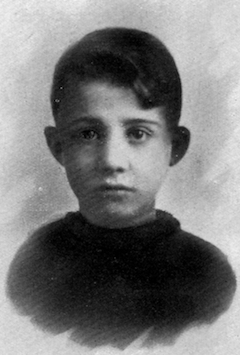
It had been fired by a 15-year-old anarchist named Anteo Zamboni, vainly and sacrificially hoping to turn history’s tide with a well-placed bullet.
Instead, his act would offer Il Duce a Reichstag Fire-like pretext — there was always bound to be one, sooner or later — for a raft of repressive legislation including the creation of a nasty secret police, the dissolution of political opposition, and (of interest to this here site) reintroduction of the death penalty.**
But Anteo Zamboni would see his penalty delivered summarily after the crowd seized him.†
Zamboni was done to death with blows and blades by Mussolini’s fascist admirers right on the spot. In a turn of heart, Bologna — by tradition a leftist stronghold — now has a street named for the young would-be assassin. (Here is the source for the ghastly Mature Content images below of Zamboni’s brutalized corpse.)
** Just days afterwards during the post-Zamboni repressive pall, the great Marxist intellectual Antonio Gramsci was tossed into prison, never to emerge. Gramsci’s Prison Notebooks issued out of his dungeon, before his health succumbed in 1937 to the intentional neglect of his captors.
† It’s reportedly cavalry officer Carlo Alberto Pasolini who first detained the youth: the father of postwar film director Pier Paolo Pasolini.
“Island of Ease” the name means in Malay — but inmates at the experimental prison colony established there in 1960 found it anything but. Singapore’s 1959 elections, its first under self-rule within the British Empire, brought in the People’s Action Party. The PAP still rules Singapore to this day, famously tough on crime.
Ever thus. One of PAP’s objectives in 1959 was to root out a plague of gangsterism in the city, and to that end it instituted the Pulau Senang settlement on the virtually uninhabited 81-hectare coral island. It had a classic penitential vision: hard-core underworld gangsters sweating away their appetite for crime, learning hard work and practical trade skills, emerging reformed — “every violent lawless man could find their own way back to decent society given a proper chance and hard work,” in the words of its superintendent, Irishman Daniel Stanley Dutton.
And it had its moment in the sun: during the colony’s short life, several hundred of its inmates were found sufficiently rehabilitated for release.
But obviously not every resident was a success story, for on July 12, 1963, a confrontation over laboring conditions on the Isle of Ease spiraled into a mutiny that saw the inmates hack Dutton himself to death with the tools he’d given them to save their own souls. Two of Dutton’s assistants were also slain in the rising, and before gendarmes arrived to restore order the inmates had torched and sacked most of the colony infrastructure that they and their predecessors had painstakingly constructed over the preceding three years.
The ensuing mass trials saw a shocking 18 men capitally convicted and eventually hanged on a single date: October 29, 1965. (Twenty-nine others received lesser prison sentences for mere rioting convictions.)
Dutton’s untimely end also meant the end of his project, which was retired from the Singapore penal system in 1964. Today, it’s a military testing grounds and live-fire range.
He was decorated for his service on the Axis’s Eastern Front during World War II, but this same credential got him expelled from the army in the postwar Red takeover.
Nothing daunted, Dabija and some like-minded comrades** formed an armed anti-communist militia a few dozen strong in Transylvania’s Apuseni Mountains named the National Defense Front, Haiducian Corps — a nod to the Balkans’ historical outlaws/rebels. The Securitate reduced them over the course of 1948-1949 months, culminating in a March 3-4, 1949 forest battle that brought Dabija et al into custody.
* Ioan Scridon, Traian Mihaltan, Titus Onea, Augustin Ratiu, Gheorghe Oprita, Silvestru Bolfea. (Source)


 Moscow-educated at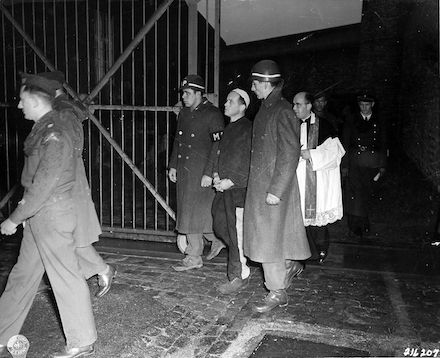

 You’ll need Spanish for most sources on this
 The son of a
 It had been fired by a 15-year-old anarchist named


 Although cousin to Romania’s pre-