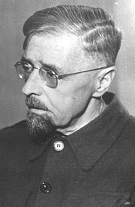
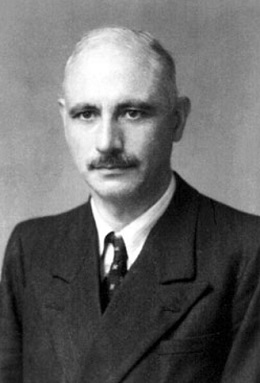
1990: Charles Coleman, the first lethal injection in Oklahoma

Despite our occasional predilection for the odd “literally executed today” post, this macabre chronicle has never really aspired to focus on our subject matter’s breaking-news beat.

Nonetheless, the landscape of the death penalty has evolved noticeably in the years since we launched on Halloween 2007. Executions are down in China, but up in Saudi Arabia and Iran; India has ended a long death penalty hiatus; Pakistan began, sustained, and dramatically repudiated a death penalty moratorium.

And in the United States, the prevailing execution method, lethal injection, has fallen under a barrage of legal and political challenges.

Like the guillotine, the electric chair, the gas chamber, and weirder contraptions, the prick of the needle had once been sold as a Solomonic compromise between the executioner and his critics: you still get to kill a guy, but now he doesn’t feel a thing. This time we really mean it!

Lethal injection got some run in the Nazi T-4 euthanasia program but was first approved for regular judicial executions by Oklahoma in 1977, and first used by Texas in 1982. Where gas and electricity transferred industrial technology to the death chamber, with great metal chairs and huge switches like Dr. Frankenstein’s lab, injection analogized medicine: silent and light, and so sterile that the technicians would hygienically swab the skin before they pushed in the death-dealing needle.

Most of all it was sterile for the viewers, who had occasionally been subjected under the other processes to nauseating botches: men who were supposed to be dying instantly instead thrashing wildly away, catching fire, gushing blood, or requiring jolt after jolt to finish off. The electric chair surely owes its iconic cultural position in part to its reputation for spectacular failures.

When capital punishment got its 1970s reboot, it only seemed natural to think about cleaning up the how along with the why. Nearly everyone now had the experience of anaesthetic; it was natural to think that you could just put a man down like the family dog and not have any mess to clean up afterwards.

“Being a former farmer and horse raiser, I know what it’s like to try to eliminate an injured horse by shooting him,” future president Ronald Reagan had said in proposing the technology while he was still governor of California in 1973. “Now you call the veterinarian and the vet gives it a shot and the horse goes to sleep. That’s it.”

As executions surged in the 1990s, lethal injection was thoroughly displacing America’s previous humane technologies to become the overwhelmingly predominant method.
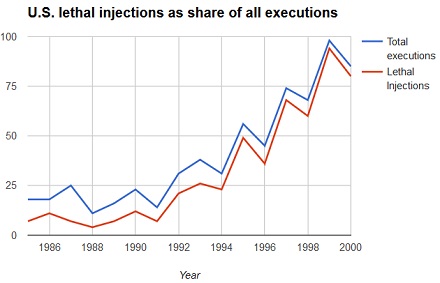

Data via the Death Penalty Information Center’s executions database.

And the state of Oklahoma, which had been first with a lethal injection law back in ’77, finally started rolling out gurneys — when it put murder Charles Troy Coleman to death with the needle on September 10, 1990. It was Oklahoma’s first execution in 24 years.*

It was Oklahoma’s medical examiner Jay Chapman who had formulated the three-drug cocktail that for a long time comprised the definitive lethal injection protocol: the short-acting barbiturate sodium thiopental, followed by the paralytic drug pancuronium bromide, capped with potassium chloride to stop the heart. Why three drugs, Human Rights Watch later asked him? “Why not?” Chapman was not a pharmacologist and had little expertise with the drugs in question.

Nevertheless, his process “could not be construed as cruel and unusual punishment since it is merely the extreme of procedures done daily around the world for surgical procedures,” Chapman insisted when he proposed it. “It’s simply an extreme form of anesthesia.”

Extreme anaesthesia. Was it really?

Even at Coleman’s death, observers saw it differently.

“I saw him choke and gasp and struggle for air,” said Joe Ward, an investigator in the public defender’s office. “It looked like he was choking to death. He looked over … and mouthed the words, ‘I love you.’ Then he looked straight back up and started choking.” Reporter Art Cox, by contrast, viewed it as “a very easy death … a very cold death, very antiseptic.”

Oklahoma has executed well over 100 people since Charles Coleman but if anything the uncertainty about that “easy” and “antiseptic” death has only grown — in the Sooner state and elsewhere.

And the question has become quite urgent during the lifetime of this blog as political pressure on manufacturers has dried up the supply of sodium thiopental, forcing the many states using lethal injection to scramble for a variety of new drug sequences that are basically being invented on the fly and sussed out with live experimentation on the next death row prisoner in the queue.

Oklahoma’s version was to switch from sodium thiopental to pentobarbital; in January 2014, a man being executed with pentobarbital exclaimed, “I feel my whole body burning.”. Months later, the manufacturer of that drug also cut off the supply, unwilling to be party to the executions it facilitated.

So Oklahoma switched to a third anaesthetic, midazolam, a drug whose execution debut took place in Florida in 2013. The state has also tried to shield its suppliers from anti-death penalty campaigners with a secrecy law.

Proceeding on a mad catch-as-can basis, Oklahoma proceeded to horribly botch its midazolam executions, throwing its new procedure right back to the courts. Just this past June, a divided U.S. Supreme Court narrowly approved the continued use of its midazolam cocktail, which a dissenting justice savaged as “the chemical equivalent of being burned alive.”

It’s a story still being written before our eyes — a long quarter-century after Charles Coleman premiered Oklahoma’s modern era of executions on this date in 1990.

* The last previous execution in Oklahoma was that of James French in 1966.

On this day..

1902: John C. Best

From the Boston Morning Journal, Sept. 9, 1902.

BEST COOL TO THE END

Bailey’s Murderer Executed Just After Midnight.


Assisted the Guards and Uttered Never a Word.


Dreadful Current Did Work Swiftly and Surely.

John C. Best was put to death by electricity this morning at Charlestown State Prison at 12.22 o’clock, paying the supreme penalty of the law for the murder of George E. Bailey of Saugus on Oct. 8, 1900. He maintained the air of coolness, and even indifference, which has marked his conduct since his arrest, to the the [sic] last. He walked to the chair unassisted and without even being held by the guards in attendance; sat down composedly, as one would waiting for a train at a station; assisted the guards even in the operations of confining his hands and legs, and awaited the shock of the current in perfect composure.

He had no word to say at the end, uttered no groan, and was pronounced dead by the attending physicians at 12.27. The witnesses were Dr. Joseph F. McLaughlin, prison physician; Dr. Robert A. Blood, Surgeon General of the State; Dr. George Stedman, Associate Medical Examiner of the District; Deputy Sheriff William Cronin, the presence of whom is prescribed by the Statutes; Rev. I. Murray Mellish of Salem, attending to the spiritual wants of the prisoner, and a representative of the press.

The Crime of Best.

The crime for which Best was executed was the murder of George E. Bailey, the caretaker of Breakheart Farm, Saugus. The murder took place in October, 1900, and Best was condemned by the Superior Court sitting at Salem June 14, 1901.

In the early part of October, 1900, Bailey was missed. Best was employed on the farm, and his replies as to the whereabouts of Bailey gave the impression that the missing man had gone to Maine. Inquiry failed to locate him, and until the morning of Oct. 17 nothing definite was known of his whereabouts.

On that morning the dismembered body of a man was found in Floating Bridge Pond, the mutilated torso encased in a sack. Later the arms, legs and head were found and the body was identified as that of George E. Bailey.

Suspicion pointed toward Best, and he was arrested Oct. 18, the day after the gruesome find at the pond. He appeared in the Lynn Police Court Oct. 20, and was remanded to Salem Jail, pending the hearing, which was held Nov. 8.

Judge Berry of the Lynn Police Court after a prolonged hearing, found “probable cause,” and Best was sent to jail to await the action of the Grand Jury which, on Jan. 25 following, indicted him for murder.

In Superior Court.

Best was arraigned in the Superior Court Jan. 30, and entered a plea of not guilty. The trial began March 18, and continued until March 29, when a verdict of murder in the first degree was rendered. The prosecution was conducted by Attorney General Knowlton, District Attorney Peters and his assistant, Roland H. Sherman. Best was represented by James H. Sisk and N. D. A. Clark of Lynn.

The day after the verdict was returned, counsel for Best filed exceptions and offered a motion for a new trial. Oct. 18 counsel conferred with Presiding Justices Sherman and Fox, and on Nov. 23 the exceptions were approved and allowed to go to the Supreme Court.

A hearing was given in the Supreme Court Jan. 6, 1902, and on Feb. 27, a rescript overruling the exceptions was filed. March 29 other exceptions were taken to a denial of amotion for a new trial, and the Supreme Court heard the arguments on May 19.

On June 3, in a rescript, the Court said:

After the exceptions in this case were disposed of a motion for a new trial was made upon the ground that one of the jurors was deaf. Evidence was put in on the subject before the Judges who had taken part in the trial, a portion of the evidence being an examination of the juror himself. The motion was denied, the Judges stating that they were satisfied that the juror heard substantially all the evidence. The argument addressed to us is a pure argument of fact as to what the proper finding would have been, a question with which we have nothing to do, and upon which the Judges considered not merely the testimony reported but what they saw at the time, as it was proper that they should. Assuming every proposition of law that could be urged in favor of the defendant, there is no ground for an exception.

After the first motion had been overruled another motion was made that the hearing be reopened and the defendant be allowed to introduce further evidence, cumulative in character, being the testimony of a doctor who had been consulted by the juror a little more than three months before the trial. The Judges refused this motion on the ground that the doctor’s statement did not change their opinion. The defendant’s counsel again attempted to save an exception. Apart from what else might be said, the same answer may be made to this as to the other exception. It is perfectly plain that the defendant had no ground for bringing his case here a second time. Exceptions overruled.

Counsel’s Great Fight.

All that could be done by devoted counsel to save Best from death sentence has been done, save an appeal to the Governor for a commutation of the final decree of the Court this forenoon, and it is understood that this will be made.

Of late Best has had frequent conferences with his spiritual adviser, Rev. Isaac M. Mellish of Salem. He steadfastly maintained his innocence of the crime.*

* In a last letter to his parents that later hit the presses, Best maintained his innocence: “One thing I would like to impress on the mind of you, my father and mother, is that it is not God’s will that I lose this life that he has given me, but through the vengeance and ignorance of men … I am not afraid to die, but I would like to live. I don’t compare myself to Christ, our Savior, but my condemnation is on the same line as His, and I will meet death as calmly as he did. If these lines, my dear father and mother, will give you any comfort, I am well paid for writing them.”

This excerpt is from The Evening Times (Pawtucket, R.I.), Sept. 20, 1902 — which also reported that Best felt out the prison physicians as to the prospect of their attempting a post-electric chair reanimation experiment. (The doctors turned him down.)

On this day..

1943: Michal Kruk, Przemysl Pole who aided the Jews

In the German-occupied city of Przemysl, Poland on September 6, 1943, Michal Kruk and several other non-Jewish Poles were publicly executed for their roles sheltering Jews being rounded up for the local ghetto — bound, naurally, for worse fates thereafter.

Przemysl’s Jewish community was almost completely annihilated during the Holocaust.

On this day..

1946: Leon Rupnik, Erwin Rosener, and Lovro Hacin, for the occupation of Slovenia

On this date in 1946, the postwar state of Yugoslavia executed a trio of World War II occupation figures.


Left to right: Leon Rupnik, Erwin Rosener, and Lovro Hacin.

An Austro-Hungarian subject by birth, Leon Rupnik followed his native Slovenian soil into (proto-)Yugoslavia after the empire collapsed in World War I, and climbed the military ranks in the interwar era.

General Rupnik, as he could then be called, was the man tasked with engineering fortifications along the Italian and Austrian borders to ward off a fascist invasion. Modeled on the Maginot Line and every bit as effective, the Rupnik Line was little more than a speed bump when the Germans and Italians swept in during April of 1941.

But Gen. Rupnik was an open Nazi sympathizer, so sentimentality for his failed bunkers scarcely deterred him from joining the new occupation government as an enthusiastic collaborator, and he served or a time as the president of the German puppet province and the mayor of its capital, Ljubljana.

Erwin Rosener was a onetime brownshirt who became an SS General and was tasked by Heinrich Himmler with suppressing partisan resistance in Slovenia. He did the usual dirty things such a job entails, ordering torture and executions of hostages; Gen. Rosener also helped Gen. Rupnik organize the right-wing paramilitary Home Guard (Domobranci).

Lovro Hacin, the third member of the doomed party, was the police chief of Ljubljana.

Rupnik was shot. Rosener and Hacin were executed by hanging.


Rupnik (leftmost on the platform) reviews fascist Dombranci militia with Bishop Rozman and (rightmost) Gen. Rosener, January 30 1945.

Three others escaped execution at the same trials. Vilko Vizjak and Mha Krek both drew prison terms; Bishop Gregorij Rozman did as well, but his trial occurred in absentia and Rozman lived out his in exile.

On this day..

1914: Eugene Odent, the mayor of Senlis

On the second of September in 1914, the mayor of Senlis, France, was shot by the occupying Germans in the opening weeks of World War I.


Detail view (click for the full image) of a map of the British Expeditionary Force’s retreat in northern France during the first days of World War I.

The beautiful ancient town, where the Carolingian dynasty met its end (King Louis V was killed in a hunting accident there in 987, enabling Hugh Capet to take the throne), unhappily found right in the path of the German army smashing its way towards Paris as France and her allies gave way.

German troops reached Senlis by the first of September, and overwhelmed the city in a minor battle.

On guard from the experience of being picked off by franc-tireur snipers during the Franco-Prussian War many years before, the Germans entered this urban skirmish with far more concern for the safety of their troops than for that of noncombatants. A number of civilians were seized for use as human shields by the Germans as they moved through the streets, and some others reportedly executed summarily. Numerous buildings were torched.

In doing all this, the occupying army considered itself entitled not to suffer the resistance of its new (if ever so temporary) subjects — indeed it insisted upon the point with lead. On September 2, the German firing squads shot several French civilians accused of firing at German soldiers. The French Wikipedia page on the affair gives these names:

  • Romuald-Emile Aubert, 52
  • Jean-Stanislas Barber, 66
  • Cottereau Arthur-Lucien, 17
  • Pierre Dewert, 45
  • Mégret Gabriel, 52
  • Jean-Baptiste Pommier, 67
  • Rigault Arthur, 61
  • Louis Simon, 36

Hours later, the town’s mayor Eugène Odent heroically shared their fate. He had been accused by the Germans of orchestrating “terrorist” civilian resistance — shuttering buildings for the convenience of snipers, failing to demand orderly submission from his neighbors, and generally inconveniencing the new boss. (Most of Senlis’s 7,000 residents had fled town ahead of the approaching attack, presumably shuttering up in the process.)

The stunning German attack seemed on the brink of capturing Paris at this point, but just days later the disordered French “miraculously” — it’s literally known as the Miracle of the Marne — threw the invaders back at the Battle of the Marne.

This battle crushed Berlin’s dream of a knockout victory and allowed the combatants to settle in for four bloody years of miserable trench warfare. It also enabled the French to recapture Senlis, whose horrors — Eugene Odent and all — were collected for early entry into the war’s annals of barbaric-Hun propaganda.

On this day..

1944: Jacques Stosskopf

For most prisoners at the Netzweiler-Struthof concentration camp in Alsace, the fall of 1944 marked a time of disbursement to other detention sites — a clear sign that Allied forces were close at hand.

But both the disbursement order (in mid-September) and the Allied arrival at Struthof (in November) were just a little too late for Jacques Stosskopf, who was executed by the Nazis on Sept. 1 that year, even as the Germans were beginning preparations to disband the camp. How he was executed is unclear; stories from witnesses differ about whether prisoners at the camp were hanged, shot or gassed.

But it isn’t Stosskopf’s end that catches attention; rather, it is how he spent the war years, and his involvement, as a Frenchman, in the German U-boat war.

A native of Paris (born Nov. 27, 1898, in the City of Light), Stosskopf was of Alsatian heritage and spoke fluent German. He joined the French artillery in 1917 and received the French Croix de Guerre for his actions in World War I.

After the war, he entered the Ecole Polytechnique and earned a degree in marine engineering. As World War II approached, Stosskopf was appointed to lead the naval construction unit at Lorient, on the French coast. He eventually was promoted to the rank of Chief Engineer, 1st Class.

In June 1940, the German army took control of Lorient and began using the naval facility there to repair and resupply their U-boats. When they realized that the U-boats were vulnerable to attack by Allied air forces, the Germans set about fortifying the base as a refuge for their submarines.

Stosskopf worked with the Germans to design the new U-boat station, creating one of the most famous and impenetrable naval bases of the war: the double roof over the bunkers allowed them to withstand even a direct bomb hit, so even though the city of Lorient itself was almost 90% destroyed by Allied bomb raids, the bunkers continued to stand.

Between 1940 and 1944, the Germans built three such bunkers, capable of sheltering more than 25 submarines; from these fastnesses, German U-boats carried out relentless attacks against both military and civilian targets.

Because of his involvement with the naval station, Stosskopf was considered a collaborator by the local French citizenry. So when he disappeared in February 1944, they assumed that he had been promoted by his German compatriots and had been called to work in Germany.

In fact, all the while he was working on the U-boat port, Stosskopf had been collaborating not with the Germans but with the Alliance Reseau, a French resistance group headed by Marie-Madeleine Fourcade. Each week, he met with his resistance contact, providing information about boats going out to sea, the names of their captains, and the location of the missions. Because of these reports, many U-boats were intercepted at sea and their captains killed in Allied attacks.

In the end, Stosskopf was given up by a captured member of the Resistance, and he was caught up in the German Nacht und Nebel (Night and Fog) program. This roundup of suspected resistors of the Reich was undertaken by the Germans as a last-ditch attempt to regain some control over a war they could see slipping away; Nacht und Nebel abductees were spirited away at night and disappeared “into the fog” — never to be heard from again.

Stosskopf’s ultimate fate lay at Natzweiler-Struthof, a small concentration camp in the Vosges Mountains, in the Alsace region. Struthof, as it was called, was the only camp built on French territory, and it was the primary holding place for captured members of the French Resistance.

It was also the first camp liberated by the Allies (on Nov. 23, 1944), but by that time, most of the detainees had been evacuated. (For more detailed information on this camp and its prisoners, go to www.scrapbookpages.com/Natzweiler. Or, for a different perspective, read Night and Fog, by Arne Brun Lie, a prisoner’s account of life at Struthof, or the novel Necropolis, by Boris Pahor, a story based on his own experiences at the camp.)

At war’s end, the citizens of Lorient were amazed to learn the truth of Stosskopf’s activities, which were made public when he posthumously received the French Legion of Honour (1945). In 1946, the submarine base at Lorient was renamed in his honor. Today, visitors can tour the base at Lorient and see how it was operated.


Submarine Base Chief Engineer Stosskopf
Arrested and deported by the Gestapo Feb 21, 1944, for his activity in the resistance.
Disappeared.

To get a personal look at Jacques Stosskopf, read Jacques Camille Louis Stosskopf 1898-1944, a book of documents and testimony about his life compiled by his children, Francois Stosskopf and Elizabeth Meysembourg-Stosskopf.

On this day..

1925: The Egyptian assassins of British Gen. Lee Stack

On this date in 1925, “seven men were led from their cells and executed at intervals of 40 minutes,” reported the Evening Independent — all for the assassination the of the British proconsul governing Egypt and Sudan.

Egypt had theoretical sovereignty at this point, but under British occupation — a tense situation that had frequently spawned deadly riots. It’s hardly surprising in such an atmosphere that the British high military commander Sir Lee Stack was gunned down along with his driver and an aide motoring through Cairo.


This photo captures only a staged reconstruction of Stack’s murder, not the actual shooting.

The British did not take kindly to this anti-colonial propaganda of the deed. In a furious diplomatic note handed by Lawrence of Arabia supporting character Edmund Allenby to the pro-independence Prime Minister Saad Zaghloul* they accused Egypt’s native leaders of “a campaign of hostility to British rights and British subjects in Egypt and Sudan, founded upon a heedless ingratitude for benefits conferred by Great Britain, not discouraged by Your Excellency’s Government.”

Indeed, His Excellency’s Government would only outlive the murdered sirdad by five days, for Zaghloul resigned (but urging calm) in the face of London’s demands to “vigorously suppress all popular political demonstrations,” a £500,000 fine levied on Egypt, and the seizure of customs houses.

Meanwhile, there was the most immediate reprisal of all: the search for Stack’s assassins. Sydney Smith, a self-educated New Zealander and pioneer of forensic science, had a star turn in the investigation by positively connecting the firearms and the bullets** to some of the suspects.

Smith published an analysis of this affair that became one of the foundational texts of the emerging firearm forensics field — and not incidentally helped to propel Smith’s own fame to household-name levels.

* Zaghloul had formerly been imprisoned by the British for his nationalist agitation.

** The bullet points had been hand-flattened by the shooters in an attempt to make them into dumdum (expanding) projectiles.

On this day..

1946: Vojtech Tuka, Slovakian Prime Minister

Slovak fascist politician Vojtech Tuka was hanged on this date in 1946 by the postwar Czechoslovakian government.

A lawyer, academic, and journalist, Tuka spent the decade leading up to World War II in prison for inciting Czechoslovakia’s Slovakian half to break with the Czechs.

These calls found their footing in 1938-39 when the Third Reich’s expansion crippled Czechoslovakia; a newly autonomous Slovak region under Prime Minister Jozef Tiso soon began pushing for outright independence.

In fact, one of the last actions of the pre-war Czechoslovakian state was to deploy troops to occupy Slovakia under martial law and (momentarily) depose Tiso on March 9, 1939. This desperate attempt to preserve Czechoslovakia was the action triggering Germany’s outright takeover of Czech territory. Tiso was in full support, and in reward he got restored as leader of the now “independent” Slovakia … in reality a German client state.

Tuka was right there for the ride.

In October 1939, Tiso became President of Slovakia, and appointed our man Vojtech the Prime Minister. Tuka would hold that office for the bulk of the coming war years, until ousted by the Slovak National Uprising late in 1944, and distinguish himself early for his enthusiasm in deporting Jews to German camps — and implementing comprehensive domestic anti-Semitic laws.*

But that decade in prison had not done Tuka’s health any favors. He suffered a stroke late in the war, and emigrated, wheelchair-bound, to Austria. He was arrested there and returned to Slovakia; by the time of his trial, he had suffered multiple strokes and was partially paralyzed.

Nevertheless, he was condemned as a war criminal for throwing Slovakia into war against the Soviet Union and for the defeated Slovak Republic’s anti-Jewish measures.

* Dieter Wisliceny, an Eichmann assistant, was a key German liaison to the Slovaks.

On this day..

1901: Three Boer rebels against the Cape Colony

On this date in 1901, Petrus Jacobus Fourie, Jan van Rensburg, and Lodewyk Francois Stephanus Pfeiffer were shot by the British at Graaff-Reinet.

They were among the numerous subjects of the British Cape Colony whose sympathy with the independent Boer republics which Britain was in the process of conquering extended so far as aiding their Dutch brethren’s resistance. In this case, the young men joined the famed Boer guerrilla Gideon Scheepers — and whatever one might say about the fuzziness of ethnic and national identity in a frontier region, this rated in London’s eyes as rebellion.

On July 6, 1901, Scheepers executed a raid on the town of Murraysburg — “Scheepersburg”, he called it — and put loyalist houses to the torch.

The British Gen. John French sent columns of men into the rugged Camdeboo Mountains in an effort to trap the irksome commando. Scheepers and most of his troop of about 240 men escaped, but about 27 or 28 Cape Colony rebels were captured (along with a few free staters, who could not be charged as rebels).

A particularly revolting incident happened in the execution of the three who were shot. This was, that the firing parties were a body of ten men, five with ball, and five with blank cartridges. After the word “present,” which brings the rifle to the shoulder, one of them “‘pulled off” before the command “fire” was given, and the bullet blew off the top of one man’s head.

-British guard Wilfrid H. Harrison in his Memoirs of a Socialist in South Africa

Eight of these people were executed as rebels over the ensuing weeks, with the aid of Jan Momberg, one of their erstwhile mates who turned Crown’s evidence against them to save his own life.

After Fourie, van Rensburg and Pfeiffer were shot on Aug. 19, Ignatius Nel and Daniel Olwagen — both teenagers — died at Graaff-Reinet on August 26; and, Hendrik van Vuuren, Fredrick Toy and Hendrik Veenstra were shot at Colesberg on September 4.

Though the British made an effort to obscure the final resting-places of these potential martyr figures, their graves were located. Fourie, van Rensburg and Pfeiffer, along with Ignatius Nel and Daniel Olwagen, are among the men subsequently exhumed and placed in a collective grave. A monument in Graaff-Reinet honors these and three other guerrillas executed there … one of whom is Gideon Scheepers himself, who was captured in October of 1901 and executed the following January.

There’s a good deal more about Scheeper’s rebels, and these men in particular, in a two-part article by a descendant of van Rensburg here: part 1 | part 2.

On this day..

1915: Leo Frank lynched

One hundred years ago today, Leo M. Frank was lynched to an oak tree at Marietta — one of the most notorious mob murders in American history.

Methodically extracted hours before from the Midgeville State Penitentiary by an Ocean’s Eleven-style team of coordinated professionals, Frank’s murder was as shocking in 1915 as it reads in retrospect.

The well-heeled Jewish Yankee was factory superintendent at the National Pencil Company in Atlanta when a 13-year-old girl in his employ was discovered in the factory’s basement — throttled and apparently raped. That was in 1913; for the ensuing two years, the prosecution of Mary Phagan’s boss as her murderer would play out in sensational press coverage.
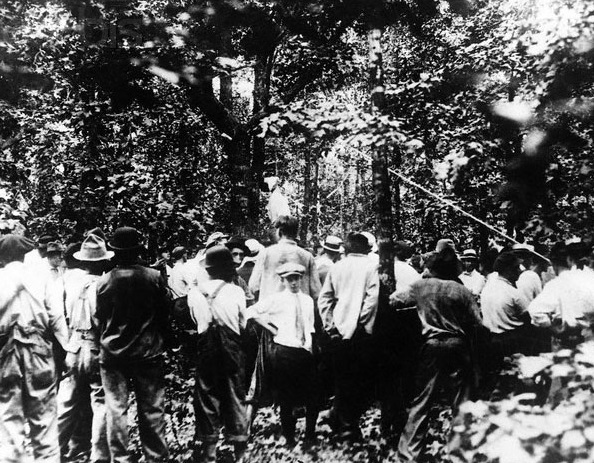
Frank is today widely thought innocent of the crime, although the Georgia Board of Pardons and Paroles has balked at issuing an unconditional pardon since so little of the original evidence survives. (A 1986 pardon came down “without attempting to address the question of guilt or innocence” in recognition of the slanted trial and the failure to protect Frank from lynchers.) But this was much more than a courtroom drama; the Frank affair crackles with the social tensions of early 20th century America. Industry and labor; integration; sexual violation; sectional politics; race and class and power.

Populist Party politician Thomas E. Watson, whose magazines made a dishonorable intervention by openly agitating for (and then celebrating) Frank’s lynching, captures the Zeitgeist for us as he fulminates against the nationwide campaign to grant the convicted murderer a new trial: “Frank belongs to the Jewish aristocracy, and it was determined by the rich Jews that no aristocrat of their race should die for the death of a working-class Gentile.” Frank came to enjoy (if that’s the right word) the editorial support of most of the country’s major papers, but the meddling of northern publishers, and of fellow Jews in solidarity,* arguably led Georgians to circle wagons in response. Present-day Muslims called upon to disavow every bad act by every other Muslim would surely recognize this no-win position.

But then we must also add that Watson himself, a lawyer, had been approached by Frank’s defense team hoping to enlist his bombast to defend their man at trial. The white supremacist demagogue would have been perfect for the job, for the legal battle pitted the credibility of a black janitor named Jim Conley against that of Frank.

Here amid the nadir of American race relations Frank’s team made its own ugly and unsuccessful pitch for racial solidarity with his neighbors. When formulaically asked by the court that had convicted him for any statement to mitigate the impending sentence, Frank replied that

my execution will make the advent of a new era in Georgia, where a good name and stainless honor count for naught against the word of a vile criminal; where the testimony of Southern white women of unimpeachable character is branded as false by the prosecution, disregarded by the jury and the perjured vaporings of a black brute alone accepted as the whole truth.

This violent collision of two vulnerable minorities each with the keen sense that one or the other of them was being outfitted for WASP America’s nooses makes for riveting and sometimes bizarre reading. Newspapers could hardly fail to note that the all-white jury (Leo Frank’s defense team struck all the blacks) had, as Frank complained, privileged the account of just the sort of “black brute” that Southern courts were accustomed to scorn, or railroad. Thus we have the NAACP organ The Crisis taking umbrage that “Atlanta tried to lynch a Negro for the alleged murder of a young white girl” but “a white degenerate has now been indicted for the crime.” It was likewise reasoned by some that since Conley was a young black man with a criminal record who was a potential suspect in the Deep South in the murderous sexual assault of a little white girl, “the mere fact that Conley did not long ago make his exit from this terrestrial sphere, via a chariot of fire is convincing proof that he, at least, is not the man who committed the deed.”** (New York Age, Oct. 29, 1914.)

In the end it was a zero-sum game between Jim Conley and Leo Frank: one of them was the murderer; each accused the other. Their respective desperate interests permeated to their respective communities. After Frank’s lynching, hundreds of Jews left Georgia; many who remained took pains to downplay their Jewishness.

By whatever circumstance police zeroed on Frank and the white community’s passion followed — tunnel vision that would eventually manifest itself in a circus courtroom atmosphere where the prosecuting attorney was cheered and defense witnesses hooted at and the ultimate outcome more demanded than anticipated. The judge feared that an acquittal would result in the summary lynching of not only Frank but his defenders.


Mary Phagan was killed on Confederate Memorial Day, the “holiday” this ballad alludes to.

Unusually for the time, appeals on the case reached the U.S. Supreme Court which declined to intervene — although two justices filed a dissent citing the egregious trial atmosphere.

Mob law does not become due process of law by securing the assent of a terrorized jury …

This is not a matter for polite presumptions; we must look facts in the face. Any judge who has sat with juries knows that in spite of forms they are extremely likely to be impregnated by the environing atmosphere … we think the presumption overwhelming that the jury responded to the passions of the mob …

lynch law [is] as little valid when practiced by a regularly drawn jury as when administered by one elected by a mob intent on death.

But that mob would still have its say. On the eve of Frank’s scheduled June 22, 1915 hanging, outgoing governor John Slaton commuted the sentence.

“Feeling as I do about this case, I would be a murderer if I allowed this man to hang,” the governor said. “It may mean that I must live in obscurity the rest of my days, but I would rather be plowing in a field than feel for the rest of my days that I had this man’s blood on my hands.”†

Frank was spirited away to the penitentiary under cover of darkness; it was hoped that the remote and reinforced edifice would deter any reprisal. It turned out that the furies who hunted Franks could not be dissuaded by mere inconvenience: a committee calling itself the Knights of Mary Phagan formed with the open object of organizing the intended mob vengeance — and indeed it was almost superseded in July of that year by a fellow-prisoner who slashed Frank’s throat as he slept.

Frank survived that murder attempt only to await the next one. Who knows what fancies frequented him in those weeks when he ducked from the shadow of the gallows to that of the lynching-tree, object of pity or hatred. He had time on the last day to savor his impending fate when the Knights methodically cut their way into the penitentiary — snipping the phone wires and disabling the vehicles — and marched their man out with nary a shot fired. Then, a convoy of automobiles “sped” (at 18 miles per hour) all the way back to a prepared execution-site at Marietta. The drive took seven or eight hours over unpaved country lanes, and for every moment of it Frank surely knew how it would end.

* Frank was a chapter president of the Jewish fraternal organization B’nai B’rith; the Anti-Defamation League of B’nai B’rith was founded in 1913 as a direct outgrowth of the Frank campaign.

As a contrasting response, the American Jewish Committee declined to participate in the Frank campaign for fear of lending counterproductive credence to charges such as those voiced by the New York Sun (Oct. 12, 1913):

The anti-Semitic feeling was the natural result of the belief that the Jews had banded to free Frank, innocent or guilty. The supposed solidarity of the Jews for Frank, even if he was guilty, caused a Gentile solidarity against him.

** Maurianne Davis’s Strangers and Neighbors: Relations between Blacks and Jews in the United States has a trove of interesting editorial comment from Frank’s contemporaries in the black press, and the Jewish press. Conley was actually the confessed accessory, and served a year in prison for it: he said that he complied with Frank’s order to hide the body for fear that his “white” boss could easily get Conley lynched for the crime. Conley also wrote (under Frank’s directive, he said) the preposterous “murder notes” found with the body that purported to be Mary Phagan’s dying indictment of Newt Lee, the African-American night watchman.

† The allusion to political suicide suggests Slaton’s mind was on the precedent of Illinois Gov. John Altgeld, whose career was destroyed by pardoning some of the Haymarket anarchists. If so, Slaton was quite correct; he actually had to flee Georgia altogether and could not return to the state for more than a decade.

On this day..