On this date* in 1826, five leaders of the Decembrist revolt were hanged at St. Petersburg’s Peter and Paul fortress for their abortive eponymous uprising eight months before.
In Russia’s complex interaction with the West — its ideas, its political institutions, its ways of life — these were the westernizers, who saw constitutionalism as the way of the future.
Upon the mysteriously sudden death of Tsar Alexander I, an irregular succession to the second-oldest surviving brother, Nicholas I, gave our day’s doomed and gallant youth cause to occupy St. Petersburg’s Senatskaya Square to uphold the rights of the first brother — and more to the point, to uphold the constitution to the extent of constraining the monarchy.
Decembrists at Senate Square, as depicted by Karl Kolman.
Uh … Now What?
This badly organized affair failed in its aim to attract the mass of soldiery and, constitutionalists as its organizers were, did not even aim at mobilizing the general populace.
After the initial heady rush of marching into the square in the name of liberty, the Decembrists were left in a standoff against a much larger force of loyalists. When the latter started shooting, that was that.
“Mere” hanging was deemed sufficient for the purpose. That would be about the maximum embrace of liberalism by the Russian autocracy, whose lesson from the uprising was to crack down against any hint of forward-thinking politics — ultimately an unsuccessfulstrategy for the Romanov dynasty.
St. Petersburg’s Senate Square — renamed Decembrist Square by the Soviet government — where the action happened. The iconic equestrian statue of Peter the Great, commissioned by Catherine the Great and unveiled in 1782, witnessed it all; the statue acquired its enduring moniker, “The Bronze Horseman”, from a poem of the same title penned in 1833 by Alexander Pushkin, a friend of several Decembrists.
One of the greatest works of Russian literature, Pushkin’s “Bronze Horseman” weaves an ambiguous Decembrist-tinged critique of cruel imperial power and overreach into a complex narrative of St. Petersburg whose upshot is still up for lively literary debate. “The Bronze Horseman’s crag rose up before the poet on an empty square,” wrote one historian, “washed with the blood of those who rebelled on December 14, 1825”
Appalling there
He sat, begirt with mist and air.
What thoughts engrave His brow! what hidden
Power and authority He claims!
What fire in yonder charger flames!
Proud charger, whither art thou ridden,
Where leapest thou? and where, on whom,
Wilt plant thy hoof?
“They don’t even know how to hang you …”
When the hangings were carried out, Kakhovsky, Muravyov-Apostol and Ryleyev all had their ropes break; while some in the crowd anticipated the old prerogative of mercy for any prisoner who survives an execution, they just got re-hung instead. “Unhappy country,” quipped Ryleyev as the fresh nooses were fixed up, “where they don’t even know how to hang you.”**
Other Decembrists not condemned to the unreliable craftmanship of the Russian gallows were shipped to Siberia, where they invigorated the cultural life of the Lake Baikal city of Irkutsk — many of them famously followed by their “Decembrists’ wives,” an iconic type that continues to denote heroically sacrificial loyalty since the women had to renounce their own right to return to European Russia.
These, at least, had a place to call their own, however distant. But the class of Russian elites to which they belonged would be thrust into a trackless wilderness by their failure (in the Decembrist rising and otherwise) to carve out some distinct place for themselves. Russia’s long reckoning with modernity still had many years to run.
A worn postcard of a 19th century Russian painting depicting (perhaps) a political prisoner in the Peter and Paul Fortress.
A poet himself and a romantic to the point of fanaticism, Ryleyev wrote odes extolling executed national heroes like Artemy Volynsky and Severyn Nalyvaiko, seemingly alluding (as in this excerpt from the latter work) to his anticipation of joining them.
I know full well the dire fate
Which must upon the patriot wait
Who first dare rise against the foe
And at the tyrant aim the blow.
This is my destined fate
On this date in 1977, a 19-year-old royal adulteress and her paramour were executed in a Jeddah parking lot by the order of the girl’s powerful grandfather.
Princess Misha’al‘s fate has been obscured by secrecy and the Rashomon-like interpretations imposed upon it by observers.
In its outline (and the first stock interpretation we’re imposing) it’s that timeless human tragedy, the love story, in which headstrong royal daughter and suffocating traditional family square off over the seditious power of the feminine libido.
The princess, in a youthful arranged marriage by most accounts, took up with a Saudi boy while both were studying abroad in cosmopolitan Beirut, and dangerously attempted to maintain the affair back in the royal kingdom to the point of a quixotic (and obviously foiled) escape attempt. Whether under color of a judicial proceeding — the story says Misha’al refused to walk away by simply renouncing her lover and defiantly brought down the death sentence by confessing adultery — or simply on his own authority, the girl’s staunchly conservative* grandfather exercised his right as tribal patriarch to inflict an honor killing for the disgrace they had brought on the family.
The execution in Jeddah — she by gunshot,** he by a very clumsy beheading — that is supposed to have occurred on this date was public, but quiet; news of it got abroad only slowly and incompletely. Small wonder that, once it did, the blended motifs of Romeo and Juliet, harem titillation and oil politics made dynamite material for high-, middle- or lowbrow exploitation.
In 1980, the affair became the subject of one of the most notorious television programs ever aired, the docudrama Death of a Princess. This film’s airing in Britain in 1980 led Riyadh to expel the British ambassador, and cost £200 million of lost revenue for the UK from canceled orders and product boycotts by the Saudis.†
It was aired on in the United States on PBS in 1980 to similar controversy, as oil companies rushed to distance themselves from it.
Rebroadcast in 2005, Death of a Princess is available online for your judgment (as is this partial script): is this a muckraking expose of a shameful crime? orientalist heavy petting? “a sensitive and thoughtful exploration of the Arab dilemma,” as per its own advance publicity? and what did the official apologies (and in only a few countries, censorship) say about the political weight of the petroleum industry?
These, meanwhile, are the western reactions, already removed from events by a further layer of mediation, a forest of axes seeking grinding. If the writer who composed this piece is to be believed, the executed girl has posthumously achieved a sort of universal symbolic gravity in the Arab world, standing for the plight of any hopeless cause of justice dashed against authoritarian power.
* For the House of Saud, it must be recalled, the personal was political in the problematic confrontation between tradition and modernity athwart the desert kingdom’s sea of oil.
** “Princess Misha’al” was executed fully veiled, which permits the rumor that the slain woman was actually a surrogate and the onetime royal favorite lives on incognito somewhere.
On this date in 1725, John Gow and seven comrade raiders hanged for piracy.
Having mutinied to commandeer a merchant vessel in November 1724, Gow managed merely a three-month career of seaboard outlawry* in European waters before an ill-fated landward raid in his native Scotland saw the ship run aground.
Captured, Gow and confederates were hailed to London to stand trial, the captain delaying matters by refusing to plead before the threat of being pressed forced his hand. The inevitable sentence came off a little … unevenly. During the hanging,
[Gow’s] friends, anxious to put him out of his pain, pulled his legs so forcibly that the rope broke and he dropped down; on which he was again taken up to the gibbet, and when he was dead was hanged in chains on the banks of the Thames.
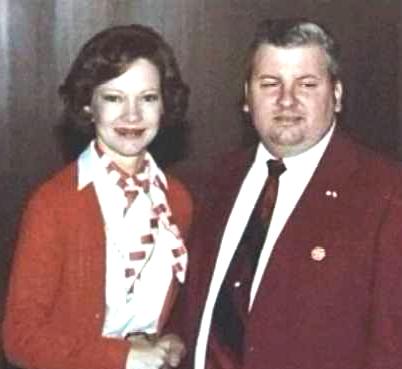
Gacy was a notable “serial killer artist” in the years he spent awaiting lethal injection.* In that capacity, the clown motif continued to inspire him.
* The lethal injection was botched with a clogged IV tube. It took 18 minutes.
It’s not clear today how old she was — nineteen, maybe, or twenty-six, or twenty-seven — the reports all differ. It’s not even clear what her true name was: Paula Angel by most accounts, but she was also called Pablita Martin. But the most pressing questions, still unanswered nearly 150 years after her execution, are why she was hanged in the first place and how the sheriff managed to bungle the job so badly.
Paula Angel was the first and last woman ever executed in New Mexico (while it was yet a territory). Her crime: she stabbed her married lover, Juan Miguel Martin, to death when he tried to end their affair. Her execution was on April 26, 1861, in San Miguel, now Las Vegas.
Anyone familiar with historical crimes and trials, particularly those involving women, will marvel at such an outcome. A capital conviction for stabbing a lover, a crime passionel? That’s certainly not the outcome one would expect for that era (or this era, for that matter; today we’d label it second-degree murder at worst).
One explanation for Miss Angel’s hanging is that the newspapermen never got the story. Decades later, the wire services circulated very brief accounts of her trial and execution under headlines such as “The Story The Newspapers Missed.” So she may well have lacked the greatest champion anyone facing a murder charge can have: public opinion — the verdict of the greater jury. Throughout the nineteenth century, there was a universal revulsion for the execution of women, no matter what their crime, and judges and juries were anxious to find a reason to acquit a woman.
But the authorities in New Mexico Territory were eager to see her hanged. The accounts that survive today report that the jailer taunted her every day leading up to her execution — “I’m going to hang you until you’re dead, dead, dead,”* is the quote attributed to the sheriff.
What was her social status? Was she a prostitute? Was she a violent menace to the community? Had she committed other terrible acts? Was she unrepentant? Did she sullenly testify at her trial and put in a poor appearance on her own behalf? Most importantly, was she ugly? The accounts available today don’t say.
When it came time to launch Angel into eternity, the sheriff did not build a gallows. He selected a sturdy cottonwood tree outside of town. Paula Angel was driven there on a wagon, forced to ride on her own coffin to the site of her execution, which was witnessed by ranchers and townsmen. The sheriff fixed the rope to the tree, garlanded her with hemp, and then resumed his seat on the wagon and hawed the horses. But he’d made an error. He forgot to tie her hands behind her.
Paula Angel managed to get her fingers underneath the rope in a last pitiful effort to save her own neck, and she struggled on the end of the rope. It must have been an awful sight to see. The crowds surely voiced loud complaints. The sheriff was forced to put the wagon beneath her a second time, to cut her down, retie the rope amid the jeers and catcalls, properly secure her hands and feet, and to repeat the process. She did not survive her second hanging.
And there hasn’t been one woman executed in New Mexico since. Rarely has any woman from that state even faced the possibility, though a few years ago Linda Henning nearly became the second woman executed there — and she certainly deserved it. Fans of Court TV will recognize the name, since Court TV has rebroadcasted Henning’s bizarre trial more than once. She was tried for the cooly planned and bloody murder of Girly Chew Hossencofft, the estranged wife of her boyfriend, in one of the weirdest trials of the century. But the jury rejected the death penalty. The reason Henning agreed to involve herself in the murder of a woman she had not even met: Henning was convinced that Girly Chew was a reptilian alien queen from another galaxy.
You read that right: an alien queen from another galaxy. You can’t make this stuff up.
***
Recommended reading: Death on the Gallows : The Story of Legal Hangings in New Mexico, 1847-1923 by West Gilbreath (High Lonesome Books, 2002).
For the stories of the men executed in New Mexico see the excellent compilation by Mark Allan of the Angelo State University Library. [Note: link updated from Laura’s original post. -ed.]
For more on the Hossencofft case see the website of author Mark Horner.
* [Shades of Billy the Kid. Maybe it was something lawmen said to lend it that Wild West atmosphere. -ed.]
[Former New Mexico state historian Robert Torrez unpacks the Paula Angel story and reprints a corrido (folk ballad), “La Homicida Pablita” written by her cousin in Myth of the Hanging Tree. -ed.]
On this date in 1992, longtime heroin user Billy Wayne White waited 47 minutes while his executioners probed for a vein suitable to inject the lethal cocktail he incurred for a 1976 robbery-murder in Houston.
On this date* in 1881, five members of the Russian terrorist organization Narodnaya Volya were publicly hanged in St. Petersburg, where they had slain the tsar Alexander II a few weeks before.
“The People’s Will” etched in blood its place in the dangerous late 19th century ferment of Russian revolutionaries. In time they would read as the politically immature forerunners of the Bolsheviks, whose turn into terrorism was a political dead end.
But as of this date, they were at the top of their arc.
Every St. Petersburg tourist sees the place Alexander II died: the spot received a picturesque church that is now one of the city’s principal attractions.
On March 13, 1881, Narodnaya Volyaassassinated the former tsar with a suicide bombing on the streets of St. Petersburg. With the death of the monarch who had emancipated the serfs, and was on the very day of his murder tinkering with plans to introduce an Assembly, liberalism arguably lost its weak purchase on Russia’s future.
Their dramatic gesture failed to ignite a social revolution or topple the autocracy, and they would find in Alexander III an implacable foe.
But while this spelled the end for the old man’s five assassins,‡ and even the end of Narodnaya Volya as an effective organization as the 1880’s unfolded, Alexander III’s efficacious repression was a Pyrrhic victory for the Romanov dynasty.
Refusal of Confession (Before Execution), by Ilya Repin, 1879-1885. (Via)
Alexander II’s death in the context of the times and its effect for Russia’s fate receive diverting treatment in a BBC In Our Times broadcast
* April 15 was the date on the Gregorian calendar; per the Julian calendar still in use in Russia at the time, the date was April 3.
** A quick summary of the strains of Russian revolutionary thought of the time here.
† Despite their dramatic tyrannicide, the Nihilists’ letter was angled for the consumption of mainstream post-Enlightenment Europeans. Karl Marx noted its “cunning moderation,” and its call for freedom and civil rights commonplace in more developed countries drew considerable support in the west. The Nihilists even took care to underscore their reasonableness a couple months later by condemning the senseless assassination of American President James Garfield. (See Inside Terrorist Organizations.)
The electric chair has gotten a bad rap in recent years, and nowhere is this more evident than in the 1997 Florida execution of Cuban refugee Pedro Medina.
The improper application of an electricity-conducting sponge caused a “crown of foot-high flames” to shoot from Medina’s head, in a botched execution that caused Florida to reexamine its use of the electric chair and accelerated the trend towards lethal injection as the preferred method of execution — modern, sanitary and humane. But electrocution was once preferred for just those very reasons — well, that, and politics.
The thought of designing an apparatus to stimulate death by electrocution first came to dentist Dr. Albert Southwick in 1881, who watched an drunk man touch the terminal of an electricity generator in Buffalo, New York. Impressed at how quickly and painlessly the man died, he mentioned the incident to his friend, a state senator, who promptly brought the matter to the attention of the governor. The state legislature was then asked to consider how modern day electricity might emerge as an alternative to the often grisly process of hanging, in which incompetent executioners often inadvertently subjected prisoners to slow deaths by strangulation or decapitation.
Several years later, an inventor by the name of Harold Brown, an employee of the famous Thomas Edison, designed the first electric chair, deliberately adopting the Alternating Current (AC) form of electricity because Edison did not want his Direct Current (DC) form associated with the gruesome business of death — a sordid chapter in the history of public relations. The first execution was carried out in New York State in 1890, but the novel method was far from foolproof: it took two attempts, and the inmate was reported to have gone down in the same sort of smoke, flames, and smell of Medina’s over a hundred years later.
Still, the method caught on, and over the course of the 20th century, the electric chair became an indelible symbol of the death penalty in the nation’s consciousness.
“The chair” didn’t begin to decline until the mid-1980s, when newspaper accounts about botched executions, together with the emerging technology of lethal injection, again prompted some states to reexamine their death penalty statues.
It was around this time that Pedro Medina first came to the US from Cuba, part of the Mariel boat lift of 1980, in which Fidel Castro “permitted” some 125,000 Cuban prisoners and mentally ill to depart from the Mariel harbor for the fertile shores of America. (Medina himself had been released from a psychiatric hospital in Cuba and diagnosed with illnesses including paranoid schizophrenia and major depressive disorder with psychosis.) The boatlift polarized public sentiment in the United States.
These factors combined to lend Medina, a black man, a low status indeed in the eyes of prosecutors and jurors when, two years after his arrival on American shores, he was convicted of murdering his neighbor, Dorothy James.
Medina was executed in Albert Southwick’s brainchild 15 years later, despite pleas from James’ daughter, Lindi James, who said that she did not believe Medina had killed her mother and that her mother would not have wanted him executed regardless, and from Pope John Paul II, who also made a public call for mercy on Medina’s behalf. Medina’s lawyers also filed a petition claiming he was insane and thus incompetent to be executed, but the Florida Supreme Court ruled that, while he had mental problems, he could still be executed.
Early in the morning on March 25, 1997, Medina went out in flames.
A crown of foot-high flames shot from the headpiece during the execution, filling the execution chamber with a stench of thick smoke and gagging the two dozen official witnesses. An official then threw a switch to manually cut off the power and prematurely end the two-minute cycle of 2,000 volts. Medina’s chest continued to heave until the flames stopped and death came. (From the Death Penalty Information Center’s botched executions page.)
The source of the malfunction was not immediately apparent; prison officials claimed the fire had been caused by a corroded copper screen in the electric chair’s headpiece, but later investigation revealed that it was due to improper application of an electricity-conducting sponge to Medina’s head. Attorney General Bob Butterworth hailed the deterrent value of malfunctions: “People who wish to commit murder, they better not do it in the state of Florida, because we may have a problem with our electric chair.”
The debacle of Medina’s execution caused a media sensation and led to a case by another Florida death row inmate, Thomas Provenzano, claiming that lethal injection constituted cruel and unusual punishment prohibited under the Eighth Amendment.
Provenzano lost his case, but with the release of bloody photographs of the 1999 execution of Allen Lee Davis, more states began moving against the use of the electric chair. Of the six states that today retain it (Virginia, South Carolina, Kentucky, Tennessee, Alabama and, yes, Florida), none currently use it as their only method of execution.
Rather, lethal injection has become the norm.
But for how long? There may be no AC/DC marketing gambit in the new, modern business of death, and no crown of flames. But maybe all we’ve really done by moving to the needle is render invisible ongoing Medina-like botches.
On this date in 1877, Mormon leader John D. Lee was shot at the site of (and for the crime of instigating) the Mountain Meadows Massacre 20 years before.
As the only person ever prosecuted for this dreadful affair, which saw 120 California-bound settlers slaughtered by a Mormon militia, Lee “was allowed … to carry to his grave Mormondom’s guilt for this horrible and barbaric act.” (Jan Shipps)
On this anniversary of Lee’s death, Executed Today interviews author Judith Freeman, whose historical novel Red Water tells Lee’s story through the eyes of three of his 19 wives.
You grew up Mormon — what brought you to this story? I gather that it wasn’t exactly daily discourse in your youth.
Growing up in northern Utah, I’d only heard vague, shadowy references to the massacre. It was the dirty little secret buried in the Mormon past — except for those people in Southern Utah who lived with that story as part of every generation’s experience and shame. I felt I had to write a novel about it, in part to try and understand this question: How do you get basically good people, like those Mormon settlers, to commit such evil?
You paint a picture of John Lee through the eyes of three of his wives. What kind of man was he — and how representative of the Mormon hierarchy would that be?
I think Lee was first and foremost a brilliant pioneer and survivalist and also a big blowhard, the kind of guy who would talk your head off — affable and a bit boring when it came to promoting his own virtues and experiences. He was self-aggrandizing, he’d do anything to make a buck, he had problems with the truth. He was a suck-up to Brigham Young who became his substitute father and then betrayed him.
He wasn’t entirely trustworthy because he put his own interests before all else. He could also be incredibly generous and kind, helpful to others. He wanted people to like him though they often didn’t, and he had an ingratiating quality. He was an orphan, with an orphan’s life-long neediness. In many ways I think he was good to his wives and cared deeply about his family — all sixty something kids and 19 wives. He was an amazingly talented man, skilled at many trades and businesses.
Was he representative of the Mormon Hierarchy? I don’t know. In some ways yes but I sense he was more sycophantic than some, and had a more amusing character than others, but what they all had in common was an absolute deference to church authority. I think I might have enjoyed meeting John D. Lee, he might have been more lively and fun than Brigham Young who strikes me as a misogynist and a brittle, cold man.
What about the women — three very different characters. What’s the sense you got of life for these women as pioneers, living in a polygamous family? How did they relate to one another, and how did the massacre and the execution of John Lee change their situation?
The women were also amazingly inventive as pioneers, strong, tough, formidable women though how can you generalize about 19 different personalities? Some liked each other and some couldn’t stand each other and the good thing was that Lee was a small industry and many of his wives had their own farms so they weren’t required to live on top of each other. He understood the “kitchen thing” when it comes to women, and said he wanted every one of his wives to have her own stove. The Lee family/families were devastated by his execution. His families were left penniless and destroyed, treated very cruelly, the women dispersed and shunned, the children shamed, and this shame was carried for generations.
To what extent is polygamy in the back story of the Mountain Meadows Massacre? What, for that matter, was the massacre really “about” in your judgment?
Polygamy had a small role to play in the massacre. The practice of polygamy, outlawed by the United States, was a part of what disturbed Washington and caused the federal government to send troops to Utah, which scared the Mormon populace into committing violent acts. One must remember that they had been the victims of violence and massacre, and fear turned in their minds.
What the massacre was really about, in my judgment, was the struggle for power in Utah. Would Brigham Young and the Mormon hierarchy control the territory and be masters of their own destiny, or would the federal government impose control of the “fiefdom”? The massacre came out of the idea the Indians could be made to carry out an attack and then the government would be forced to realize that if the Mormons were not allowed to control the territory and “their” natives, terrible things could happen. But the whole thing got out of control and took on a terrible life of its own.
A large party of Mormons, painted and tricked out as Indians, overtook the train of emigrant wagons some three hundred miles south of Salt Lake City, and made an attack. But the emigrants threw up earthworks, made fortresses of their wagons and defended themselves gallantly and successfully for five days! Your Missouri or Arkansas gentleman is not much afraid of the sort of scurvy apologies for “Indians” which the southern part of Utah affords. He would stand up and fight five hundred of them.
At the end of the five days the Mormons tried military strategy. They retired to the upper end of the “Meadows,” resumed civilized apparel, washed off their paint, and then, heavily armed, drove down in wagons to the beleaguered emigrants, bearing a flag of truce! When the emigrants saw white men coming they threw down their guns and welcomed them with cheer after cheer! And, all unconscious of the poetry of it, no doubt, they lifted a little child aloft, dressed in white, in answer to the flag of truce!
The leaders of the timely white “deliverers” were President Haight and Bishop John D. Lee, of the Mormon Church. Mr. Cradlebaugh, who served a term as a Federal Judge in Utah and afterward was sent to Congress from Nevada, tells in a speech delivered in Congress how these leaders next proceeded:
They professed to be on good terms with the Indians, and represented them as being very mad. They also proposed to intercede and settle the matter with the Indians. After several hours parley they, having (apparently) visited the Indians, gave the ultimatum of the savages; which was, that the emigrants should march out of their camp, leaving everything behind them, even their guns. It was promised by the Mormon bishops that they would bring a force and guard the emigrants back to the settlements. The terms were agreed to, the emigrants being desirous of saving the lives of their families. The Mormons retired, and subsequently appeared with thirty or forty armed men. The emigrants were marched out, the women and children in front and the men behind, the Mormon guard being in the rear. When they had marched in this way about a mile, at a given signal the slaughter commenced. The men were almost all shot down at the first fire from the guard. Two only escaped, who fled to the desert, and were followed one hundred and fifty miles before they were overtaken and slaughtered. The women and children ran on, two or three hundred yards further, when they were overtaken and with the aid of the Indians they were slaughtered. Seventeen individuals only, of all the emigrant party, were spared, and they were little children, the eldest of them being only seven years old. Thus, on the 10th day of September, 1857, was consummated one of the most cruel, cowardly and bloody murders known in our history.
John Lee: murderer, scapegoat, or both? How did he come to be prosecuted at all, and how to be the only one prosecuted?
John D. Lee was both murderer and scapegoat. He was bold and careless enough to hang around the area after the massacre, and to prosper from his various businesses and appear almost indifferent to what had happened — perhaps he thought he had the protection of the church authorities who continued to insist the Indians had committed this atrocity. A lot of others who’d participated in the massacre left the area, driven out by fear and shame. But Lee hung on.
John D. Lee, seated beside his coffin just before his execution.
How he was thrown to the wolves by the church authorities is a long story, as is the story of his two trials. He was the easiest person to scapegoat. He took the bullet for his church, and I think the authorities felt that they could put the affair behind them once he was dead, and they did for a very long time, until brave little Juanita Brooks wrote her book in the 1950s and was the first to tell the truth: the Mormons did it.
Does the Mormon church have some unfinished reckoning here? If so — why, after all these years?
Who cares what I think? But in my opinion, of course they do. They need to stop saying it was a “local” affair, carried out by some “local” renegade fanatics in southern Utah. The whole situation that led to the massacre was put into motion by people high up in the church, but I doubt very much they’ll ever go there and admit that. Too many lawyers, too much money, too impossible to admit culpability of prophets, seers, revelators.
Finally, I just want to say that after writing Red Water and thinking about this massacre for the five years it took to research and write the book, this is what I came to believe about how you get good people to do bad things.
You need to get three things going: First, you have to make people afraid and use that fear to manipulate them (think of 9/11). Second, you need get people to obey some greater force or consciousness other than their own — the Mormons had a principle of Perfect Obedience where you were required to subject yourself to the authority of the priesthood and church elders, but this idea could as well be inculcated in the concept of patriotism, or military duty. The point is, you subdue your own conscience in favor of deferment to an outside force. Third, you make people think their system is better than the other guy’s, that you’re doing God’s will, that your sense of right is greater than theirs. If you can make people think they are doing God’s will, you can get them to do anything. Get these three things going, and you can get good people to commit great evil.
On this date in 1870, a troublesome Anglophone was shot in Fort Garry by the rebellious Metis provisional government.
The Red River “Rebellion” pitted the Métis people — Francophone mixed-race descendants of Europeans and natives, constantly referred to as “half-breeds” in the period’s literature — of the inland plains against the Canadian government that had just bought the rights to their land from the Hudson’s Bay Company.
Needless to say, this sale was not effected with reference to the consent of said land’s inhabitants, which makes the term “rebellion” something of a misnomer — rightful authority was not clearly constituted, and in this period it would be negotiated on the fly.
Distrustful of the Ontario government and the Red River Settlement’s own minority of Anglo settlers, Louis Riel led a headquarters in Upper Fort Garry.* Riel’s negotiations with Canadian authorities set the parameters for the future province of Manitoba.
Parallel to the diplomatic overtures, however, were skirmish-level military hostilities.
Scott, an Irish-born Orangeman of fiercely anti-Catholic disposition, was captured with a few dozen Anglos attempting to mount an assault on Metis holdings and imprisoned in Fort Garry. He escaped with some of the other prisoners, but was re-arrested making a return trip to attack the fort again and liberate the remaining captives.
Scott’s execution this day helped inflame anti-Metis sentiment and contributed to the Riel government’s collapse a few months later.** But the guy makes a bit of a problematic martyr because — and we want to be fair here — he seems to have been an unmitigated prick.
The leader of Scott’s fatal expedition, Charles Boulton, was likewise condemned by the Metis, but Riel pardoned Boulton and even offered to bring him into Riel’s own government. Scott, by contrast, let no one be mistaken about his contempt for the half-breeds and abused his captors; his particular sentence was procured on the grounds of having defied the provisional government’s authority and threatened Riel.
Since Riel was looking for someone to make an example of, he was the guy.
As so often with firing squads, the execution was a botch … and upon that botch was laid, according to the testimony of a Metis opponent of Riel quoted by Boulton, a downright sadistic final chapter. (It must be noted that both the original source and the man citing it have an interest in maximizing the alleged brutality of Riel.)
Six soldiers had been chosen to shoot Scott. I have here again to write the name of a man whose behaviour in that circumstance reflects on him the greatest honour. Augustin Parisien, one of the six soldiers, declared openly that he would not shoot at Scott; in fact, he took off the cap from his gun before the word of command ‘present’ was given. Of the five balls remaining, only two hit the poor victim, one on the left shoulder, and the other in the upper part of the chest above the heart. Had the other soldiers missed the mark undesignedly, or had they intentionally aimed away from Riel’s victim, it is not known. However that may be, as the two wounds were not sufficient to cause death, at least sudden death, a man, named Guillemette stepped forward and discharged the contents of a pistol close to Scott’s head while he was lying on the ground. This ball, however, took a wrong direction. It penetrated the upper part of the left cheek and came out somewhere about the cartilage of the nose. Scott was still not dead, but that did not prevent his butchers from placing him alive and still speaking, in a kind of coffin made of four rough boards. It was nailed and plated in the south-eastern bastion, and an armed soldier was placed at the door. This would seem like a story made at one’s ease, if there were not several credible witnesses who, between the hours of five and six in the evening, heard the unfortunate Scott speaking from under the lid of his coffin, and it was known that he had been shot at half-past twelve. What a long and horrible agony, and what ferocious cruelty was this on the part of his butchers. The words heard and understood by the French Metis were only these ‘My God, My God!’ Some English Metis, and those understanding English, heard distinctly these words: ‘For God’s sake take me out of here or kill me.’ Towards 11 o’clock — that is, after ten and a half hours of frightful agony — a person, whose name I shalt withhold for the present, went into the bastion, and, according to some, gave him the finishing stroke with a butcher’s knife, with a pistol, according to others. After having inflicted the last blow on poor Scott, that person said, as he was coming back from the bastion: ‘He is dead this time!’ The corpse was left for a few days in the south-eastern bastion, being guarded by the soldiers, relieving each other in turn.
* The site — most of the fort is demolished — is now in downtown Winnipeg.


 It was around this time that Pedro Medina first came to the US from Cuba, part of the
  As the only person ever prosecuted for