1524: The rulers of the K’iche’ kingdom

This Tyrant at his first entrance here acted and commanded prodigious Slaughters to be perpetrated: Notwithstanding which, the Chief Lord in his Chair or Sedan attended by many Nobles of the City of Ultlatana, the Emporium of the whole Kingdom, together with Trumpets, Drums and great Exultation, went out to meet him, and brought with them all sorts of Food in great abundance, with such things as he stood in most need of. That Night the Spaniards spent without the City, for they did not judge themselves secure in such a well-fortified place. The next day he commanded the said Lord with many of his Peers to come before him, from whom they imperiously challenged a certain quantity of Gold; to whom the Indians return’d this modest Answer, that they could not satisfie his Demands, and indeed this Region yielded no Golden Mines; but they all, by his command, without any other Crime laid to their Charge, or any Legal Form of Proceeding were burnt alive. The rest of the Nobles belonging to other Provinces, when they found their Chief Lords, who had the Supreme Power were expos’d to the Merciless Element of Fire kindled by a more merciless Enemy; for this Reason only, because they bestow’d not what they could not upon them, viz. Gold, they fled to the Mountains, (their usual Refuge) for shelter, commanding their Subjects to obey the Spaniards, as Lords …

Bartolome de las Casas, A Brief Account of the Destruction of the Indies (under the heading “Of the Kingdom and Province of GUATIMALA”)

On this date in 1524 the conquistador Pedro de Alvarado cinched the destruction of the indigenous K’iche’ (or Quiche*) kingdom of present-day Guatemala by burning its hostage chiefs before its demoralized capital city.

Alvarado was already a seasoned hand of the ongoing Spanish usurpation of the New World — a veteran of Cortes’s conquests in Mexico. With that realm brought to heel, Alvarado was tasked with leading a Spanish invasion of (mostly Mayan) Mesoamerican kingdoms.

In the first weeks of 1524, Alvarado pressed across the Samala River into the K’iche’ kingdom to devastating effect. “The Spaniards, O wonderful! went to the Towns and Villages, and destroy’d with their Lances these poor Men, their Wives and Children, intent upon their Labour, and as they thought themselves, secure and free from danger. Another large Village they made desolate in the space of two hours, sparing neither Age, nor Sex, putting all to the Sword, without Mercy,” de las Casas laments.

In a decisive February 20 battle, Alvarado’s forces felled the half-legendary native hero Tecun Uman — a mortal blow to the empire in the memory of the Annals of the Cakchiquels, a document from later in the 16th century, which bluntly records that “the Quiches were destroyed by the Spaniards … all the Quiches who had gone out to meet the Spaniards were exterminated.”

Indians now fleeing before him, the conquistador marched onward towards the capital city of Q’umarkaj (various other transliterations are available, such as Gumarkaaj and Cumarcaaj; it’s also known from Nahuatl as Utatlan, giving us de las Casas’s reference at the head of this post). To assist blunt force, he had recourse to strategem — as Alvarado himself recorded in his account of Guatemala. Declining an invitation of hospitality from the authorities there for fear of being trapped in a hostile city, he instead convinced those guys to pay him a diplomatic visit to his camp outside the city … then seized them as hostages, who were executed speedily when their capture did not quell all resistance.

by the cunning with which I approached them, and through presents which I gave them, the better to carry out my plan, I took them captive and held them prisoners in my camp. But, nevertheless, their people did not cease fighting against me in the neighborhood and killed and wounded many Indians who had gone out to gather grass. And one Spaniard who was gathering grass, a gunshot from camp, was slain by a stone rolled down the hill …

And seeing that by fire and sword I might bring these people to the service of His Majesty, I determined to burn the chiefs who, at the time that I wanted to burn them, told me, as it will appear in their confessions, that they were the ones who had ordered the war against me … And as I knew them to have such a bad disposition towards the service of His Majesty, and to insure the good and peace of this land, I burnt them, and sent to burn the town and to destroy it, for it is a very strong and dangerous place.

The equivalent account from the Annals of the Cakchiquels is mournfully terse — paragraph 147, here quoted by Victoria Reifler Bricker in The Indian Christ, the Indian King: The Historical Substrate of Maya Myth and Ritual.

Then [the Spaniards] went forth to the city of Gumarcaah, where they were received by the kings, the Ahpop and the Ahpop Qamahay,** and the Quiches paid them tribute. Soon the kings were tortured by Tunatiuh [Alvarado].

On the day 4 Qat [March 7, 1524] the kings Ahpop and Ahpop Qamahay were burned by Tunatiuh. The heart of Tunatiuh was without compassion for the people during the war.

As Alvarado pledged to make it, this former empire’s former capital is today an utter ruin.


The Baile de la Conquista commemorates the Spanish conquest, personified in Alvarado’s confrontation with Tecun Uman.

* No etymological relationship of these “Quiche” to the egg-and-cream brunch staple. The K’iche’ people remain a major ethnic minority comprising about 11% of the present-day Guatemalan population with a widely-spoken language; Nobel laureate indigenous activist Rigoberta Menchu belongs to this group.

** From a footnote to this version of the Popol Vuh — “The Book of the People”, another important K’iche’ text — come these explanations of the ranks in question:

Ahpop is the Maya word which has passed without variation to the languages of the interior of Guatemala; its literal meaning is “the mat.” The mat, pop, was the symbol of royalty, and the chief or lord is represented as seated upon it on the most ancient monuments of the Maya Old Empire which had its origin in the Peten, Guatemala. The Ahpop was the Quiche king and chief of the House of Cavec; the Ahpop Camha, also of the House of Cavec, was the second reigning prince; the Ahau Galel was the chief or king of the House of Nihaib, and the Ahtzic Vinac Ahau the chief of the House of Ahau Quiche

On this day..

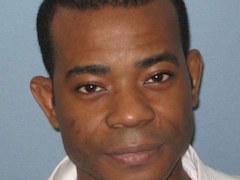
2020: Nathaniel Woods, #SaveNate

Nathaniel Woods was controversially executed by lethal injection at William C. Holman Correctional Facility in Atmore, Alabama, tonight at 9:01 p.m. U.S. Central Time.

Woods and Kerry Spencer — a co-defendant who is awaits execution for the same affair — were in a Birmingham trap house when officers Charles Bennett, Harley Chisholm III, Carlos Owen and Michael Collins arrived to serve a warrant. Of the four, only Collins would outlive the deadliest day in Birmingham police history.

While the facts of the case are contested, one that is universally agreed is that Kerry Spencer, not Nathaniel Woods, killed all three officers. Woods met them but as the police were in the process of taking him into custody, Spencer — just waking up from the commotion, he claimed — burst onto the scene firing an SKS.

“When I looked to the side, there was two police officers trying to train their guns on me so I opened fire with the fucking rifle. I wasn’t trying to get shot, period. I got a rifle in my hand. They’re going to shoot me,” Spencer told CNN. “You point a gun at me, bitch, I’m fixing to shoot.”

Woods said he simply fled from an unexpected crossfire, and Spencer agrees. “Nate is absolutely innocent,” he said. “That man didn’t know I was going to shoot anybody just like I didn’t know I was going to shoot anybody that day, period.” Alabama prosecutors characterized Woods as conspiring with Spencer to lure the cops into an ambush.

Woods and Spencer not only deny this, but developed an explosive appellate argument — never probed by any court — that the slain policemen were hassling the place as part of a routine police shakedown racket, to which the apartment’s owner had fallen behind on payments, and intimidated that owner out of providing exculpatory evidence.

But at a minimum, Woods’s execution presented the disturbing spectacle of a non-triggerman being punished for actions to which he might have been little other than a bystander. The #SaveNate campaign garnered a wide and fruitless call for clemency compassing civil rights leaders …

… celebrities …

… and at least one relative of a victim.

On this day..

1590: Christopher Bales, Nicholas Horner, and Alexander Blake

(Thanks to Charles George Herbermann for the guest post. Herbermann emigrated from Prussia to the United States in childhood and became a prominent scholar of Catholicism at the institution now known as New York University. Herbermann was the chief editor of the gigantic originally published in a volume of Catholic Encyclopedia in the early 20th century, where this text originally appeared; many other contributors were involved, and it’s impossible to tell . -ed.)

Christopher Bales. Priest and martyr, b. at Coniscliffe near Darlington, County Durham, England, about 1564; executed 4 March, 1590. He entered the English College at Rome, 1 October, 1583, but owing to ill-health was sent to the College at Reims, where he was ordained 28 March, 1587. Sent to England 2 November, 1588, he was soon arrested, racked, and tortured by Topcliffe, and hung up by the hands for twenty-four hours at a time; he bore all most patiently. At length he was tried and condemned for high treason, on the charge of having been ordained beyond seas and coming to England to exercise his office. He asked Judge Anderson whether St. Augustine, Apostle of the English, was also a traitor. The judge said no, but that the act had since been made treason by law. He suffered 4 March, 1590, “about Easter”, in Fleet Street opposite Fetter Lane. On the gibbet was set a placard: “For treason and favouring foreign invasion”. He spoke to the people from the ladder, showing them that his only “treason” was his priesthood. On the same day Venerable Nicholas Horner suffered in Smithfield for having made Bales a jerkin, and Venerable Alexander Blake in Gray’s Inn Lane for lodging him in his house.

On this day..

1944: Osmund Brønnum

Osmund Brønnum — boxer, Communist, and anti-Nazi Resistance martyr — was executed in Quisling Norway on this date in 1944.

Brønnum (English Wikipedia entry | Norwegian) practice the sweet science for still-extant Oslo club Vika IF and later progressed into a municipal sports administrator.

A committed Popular Front advocate who had also studied in Moscow, Brønnum greeted the German occupation of his native soil with a turn to printing underground propaganda for the Norwegian Resistance — until, sensing danger, he attempted to escape to Sweden only to be arrested at the border.

He was shot with six other men (notably ichthyologist Iacob Dybwad Sømme) at the Trandumskogen forest execution site (and, a natural enough double role, mass grave). A granite marker unveiled there in 1954 pays tribute to “173 Norwegians, 15 Soviet subjects, and 6 Britons” executed in the forest over the course of the war.

On this day..

1921: George Bailey, the first Englishman hanged by female jurors

On this date in 1921, George Bailey was hanged at Oxford Gaol for murder.

The milkman was grooming a young woman named Lillian Marks as a potential mistress which all came horribly to public light when Marks reported to police Bailey’s attempt to rape her. The ensuing investigation revealed that the creeper had gone so far as to poison to death his 22-year-old wife to disencumber himself in anticipation of trading up to his prospective paramour. When arrested at a train station he had more doses of prussic acid as well as a suicide letter/confession.

This open-and-shut homicide tried at Aylesbury in January 1921 was distinguished as the first capital trial with women in the jury pool. Maud Stevenson, Annie White and Matilda Tack were the subject of intense — often cringe — attention by Fleet Street for their novelty: only on July 28, 1920 did the UK swear in its first female juror. In Bailey’s case, there was at least one instance of a barrister attempting to bowdlerize some sordid detail on account of the tender sentiments of the lady-jurors, only to be reprimanded by the judge. When free to speak after the case, the women made a point of insisting that nothing about the ordeal of the jurybox taxed the capacities of women, even in a death case.

This march into the courtrooms was part of a broad social advance by women in the train of the Great War, highlighted by suffrage (1918) and opening professional jobs regardless of gender and marital status (1919).

Other advances in the courtroom would follow, albeit glacially. According to friend of the site (and guest blogger) Robert Walsh,

Not until 1950 did a woman appear as lead counsel. That was Rose Heilbron whose client George Kelly was executed in 1950 only to be exonerated decades later. It wasn’t until 1962 that the first female judge appeared, Elizabeth Lane joining the County Court. It took until 1972 for a female judge to preside at the Old Bailey in London, Rose Heilbron again blazing the trail. Bailey and his case are scarcely remembered today, but are legal landmarks nonetheless.

On this day..

1916: Benjamin Argumedo

On this date in 1916, Mexican Revolution commander Benjamin Argumedo was shot at Durango.

Every revolution has its opportunists and this cavalryman swerved wildly between the infighting factions — deserting the general and president overthrown by the revolution, Porfirio Diaz, in favor of Francisco Madero (president from 1911 to 1913), then switching to rebel Pascual Orozco, and then to El Usurpador Victoriano Huerta (president from 1913 to 1914 via a coup), and last a swing to the left-wing revolutionary Emiliano Zapata.

This man waged a running guerrilla battle against the government until his own death in 1919 … by which time Argumedo was long done for, having been run to ground by Constitutionalist general Francisco Murguia. (Murguia extended him the courtesy of a drumhead tribunal the day before execution.)

Argumedo was reportedly refused a plea to be shot in the public plaza for maximum spectacle, and died with a wish upon his lips that posterity forego noxious flourishes of rank because “we are all equal material for the grave.” (Executed Today endorses this sentiment.)


The corrido “Las Mananitas de Benjamin Argumedo” — “So much fighting and fighting, / so much fighting and fighting, / with my Mauser in my hands. I came to be shot, / I came to be shot / in the cemetery of Durango.” (Full lyrics and even sheet music to be found in Hispano Folk Music of the Rio Grande Del Norte.

On this day..

2016: Mumtaz Qadri, assassin of Salman Taseer

On Leap Day in 2016, the bodyguard-turned-assassin of Punjab governor Salman Taseer was hanged for murder.

A longtime activist of the center-left Pakistan Peoples Party, Taseer was a prominent public figure for thirty-plus years and wrote a biography of hanged PPP Prime Minister Zulfikar Ali Bhutto in 1980.

A millionaire through financial services businesses and a minister in the federal government from 2007, Taseer became governor of the Punjab region in 2010. But as a secular- and liberal-minded elite, he was already becoming an artifact from a different Pakistan, and indeed his party was routed at the 2013 election.

The specific grievance nursed by our date’s principal Mumtaz Qadri, a former police commando recruited in 2010 to the personal security detail of the businessman/politician, was Taseer’s support for reversing the high-profile death sentence for blasphemy against a Pakistani Christian woman.* On January 4, 2011, Qadri opened up on his protective charge in an Islamabad marketplace, shooting him 28 times.

As a legal matter, this was all open and shut — but Qadri’s strike on behalf of Islamic militancy earned him wide admiration that reminded some observers of the Raj-era Punjabi assassin Ilm Deen. Hundreds of lawyers clamored to represent him pro bono while “cheering supporters clapped Qadri as he was bundled into court. ‘Death is acceptable for Muhammad’s slave,’ they chanted.” (Guardian)

Death is what he got, of course, although thousands subsequently marched in mourning and staged a parliament sit-in to demand sharia law. On the same day as that march, a suicide bomber attacked a Christian Easter gathering in a Lahore public park, killing 75 or more.

* After a yearslong legal odyssey, Asia Bibi’s conviction was vacated by the Pakistani Supreme Court only in 2018. She was allowed to emigrate to Canada in 2019. (Here’s a short interview with her Incidentally, a second politician, Federal Minister for Minorities Affairs Shahbaz Bhatti, was also assassinated in 2011 for advocating her position.

On this day..

1930: Dr. James Snook, Ohio State University professor

Ohio State University professor Dr. James Howard Snook was electrocuted on this date in 1930.

The eggheaded veterinary lecturer, Snook was an Olympic gold medalist in pistol shooting.* On a site like Executed Today one would presume that sidearms appear with a Chekhovian purpose, but it will transpire that different instruments cause his downfall.

Beginning, as so often occurs, with the instrument the good Lord gave him, which in 1926 was diverted from his wife in favor of comely undergraduate Theora Hix.

Dr. Snook soon installed his paramour in an apartment from which they carried on a torrid three-year love affair whilst Hix progressed to medical school. “We didn’t love each other,” Snook testified. “We satisfied each other’s needs.”

Hix’s needs, by Snook’s interested account, grew shockingly ravenous: she used cocaine, liked to hit and threaten him, and took on other lovers — including another university professor, agronomist Marion T. Meyers. The doctor’s explication of their relationship scandalized the university and the nation for the sordid particulars of their stormy affair. “Almost every letter trailed off into obsceneities [sic],” notes one report (Louisville Courier-Journal, Aug. 9, 1929.) “For the most part their content is unpublishable.” His own counsel was seen to chortle as some were read out to a stunned court, before rising in a vain attempt to claim they proved his client’s insanity.


Fort Lauderdale (Fla.) Daily News, July 1, 1929.

According to Snook’s testimony, matters fell apart on a motor outing on June 13, 1929, when he attempted to decline a weekend’s canoodle citing his domestic obligations: “She replied, ‘Damn Mrs. Snook. I am going to kill her and get her out of the way.'” And as Hix began raining blows on Dr. Snook, he grabbed a ball-peen hammer from the car toolkit and struck her … and then kept striking.

“I was sure she was going to shoot me,” Snook said through tears, claiming that he feared she carried a weapon in her purse. “My only thought was to stop her. I sprang after her and struck her again.” (Quotes per the Pittsburgh Post-Gaztte, Aug. 9, 1929.)

After bashing her about four times, she was a crumpled but still-breathing heap outside his vehicle. According to a confession that Snook attempted to repudiate, he then clinically finished her off with a pocket knife to her jugular, as a mercy.

* In the 30-meter team military pistol and 50-meter team military pistol competitions at the 1920 Antwerp games. This also happened to be the last year these disciplines were contested at the Olympics.

On this day..

1926: Six members of the Babbar Akali movement

(Thanks to India revolutionary Bhagat Singh — himself soon to become an Executed Today client — for the guest post. It was originally published under the title “Blood Sprinkled on the Day of Holi Babbar Akalis on the Crucifix”. -ed.)

ON THE DAY OF HOLI, FEBRUARY 27, 1926, WHEN WE were getting high on our enjoyment, a terrible thing was happening in a corner of this great province. When you will hear it, you will shudder! You will tremble! On that day, six brave Babbar Akalis were hanged in the Lahore Central Jail. Shri kishan Singhji Gadagajja, Shri Santa Singhji, Shri Dilip Sinhghji, Shri Nand Singhji, Shri Karam Singhji and Shri Dharam Singhji, had been showing a great indifference to the trial for the last two years, which speaks of their fond waiting for this day. After months, the judge gave his verdict. Five to be hanged, many for life imprisonment or exile, and sentences of very long imprisonments. The accused heroes thundered. Even the skies echoed with their triumphant slogans. Then an appeal was prefered [sic]. Instead of five, now six were sent to the noose. The same day the news came that a mercy petition was sent. The Punjab Secretary declared that the hanging would be put off. We were waiting but, all of a sudden, on the very day of Holi, we saw a small contingent of mourners carrying the dead bodies of the heroes towards the cremation site. Then last rites were completed quietly.

The city was still celebrating. Colour was still being thrown on the passers-by. What a terrible indifference. If they were misguided, if they were frenzied, let them be so. They were fearless patriots, in any case. Whatever they did, they did it for this wretched country. They could not bear injustice. They could not countenance the fallen nation. The oppression on the poor people became insufferable for them. They could not tolerate exploitation of the masses, they challenged and jumped into action. They were full of life. Oh! the terrible toll of their dedicated deeds! You are blessed! After the death, friends and foes are all alike-this is the ideal of men. Even if they might have done something hateful, their lives at the altar of our nation, is something to the opposite side, could highly and uninhibitedly appreciate the courage, patriotism and commitment of the brave revolutionary of Bengal, Jatin Mukherjee, while mourning his death. But we the cowards and human wretches lack the courage of even sighing and putting off our celebrations even for a moment. What a disheartening deed! The poor! they were given the “adequate” punishment even by the standard of the brutal bureaucrats. An act of a terrible tragedy thus ended, but the curtain is not down as yet. The drama will have some more terrible scenes. The story is quite lengthy, we have to turn back a little to know about it.

The Non-Cooperation Movement was at its peak. The Punjab did not lag behind. The Sikhs also rose from their deep slumber and it was quite an awakening. The Akali Movement was started. Sacrifices were made in abundance. Master Mota Singh, ex-teacher of Khalsa Middle School, Mahalpur (district Hoshiarpur), delivered a speech. A warrant was issued against him, but the idea of availing of the hospitality of the crown did not find his favour. He was against offering arrest to fill the jails. His speeches still continued. In Kot-Phatuhi village, a big ‘Deevan’ was called. Police cordoned the area off from all sides; even then Master Mota Singh delivered his speech. The whole audience stood up and dispersed on the orders of the persident of the meeting. The Master escaped mysteriously. This hide-and-seek continued for long. The government was in a frenzy. At last, a friend turned traitor, and Master Saheb was arrested after a year and a half. This was the first scene of that horrible drama.

The “Guru ka bagh” movement was started. The hired hoodlums were there to attack the unarmed heroes and to beat them half-dead. Could anyone who looked at or listened to this, help being move[d]? It was a case of arrests and arrests everywhere. A warrant was also issued against Sardar Kishan Singhji Gadagajja, but he also belonged to the same category and did not offer arrest. The police strained all its nerves but he always escaped. He had an organisation of his own. He could not bear the violence against unarmed agitators. He felt the need of using arms along with this peaceful movement.

On the one hand, the dogs, the hunting dogs of the government, were searching for the clues, to get his scent; on the other, it was decided to “reform” the sycophants (Jholi Chukkas). Sardar Kishan Singhji used to say that we must keep ourselves armed for our own security, but we should not take any precipitate action for the time being. The majority was against this. At last, it was decided that three of them should give their names, take all the blame on themselves and start reforming these sycophants. Sardar Karam Singhji, Sardar Dhanna Singhji and Sardar Uday Singhji stepped forward. Just keep aside the question of its propriety for a moment and imagine the scene when they took the oath:

We will sacrifice our all in the service of the country. We swear to die fighting but not to go to the prison.

What a beautiful, sanctified scene it must have been, when these people who had given up all of their family affections, were taking such an oath! Where is the end of sacrifice? Where is the limit to courage and fearlessness? Where does the extremity of idealism reside?

Near a station on Shyam Churasi-Hoshiarpur railway branch line, a Subedar became the first victim. After that, all these three declared their names. The government tried its best to arrest them, but failed. Sardar Kishan Singh Gadagajja was once almost trapped by the police near Roorki Kalan. A young man who accompanied him, fell down after getting injured, and was captured. But even there, Kishan Singhji escaped with the help of his arms. He met a Sadhu on the way who told him about a herb in his possession which could materialise all his plans and work miracles. Sardarji believed him and visited this Sadhu unarmed. The Sadhu gave him some herbs to prepare and brought the police in the meanwhile. Sardar Saheb was arrested. That Sadhu was an inspector of the CID department. The Babbar Akalis stepped up their activities. Many pro-government men were killed. The doab land lying in between Beas and Sutlej, that is, the districts of Jullundur and Hoshiarpur, had been there on the political map of the country, even before this. The majority of martyrs of 1915 belonged to these districts. Now again, there was the upheaval. The police department used all its power at its command, which proved quite useless. There is a small river near Jullundur; “Chaunta Sahib” Gurudwara is located there in a village on the banks of the river. There Shri Karam Singhji, Shri Dhanna Singhji, Shri Uday Singhji and Shri Anoop Singhji were sitting with a few others, preparing tea. All of a sudden, Shri Dhanna Singhji said: “Baba Karam Singhji! We should at once leave this place. I sense something very inauspicious happening.” The 75-year-old Sardar Karam Singh showed total indifference, but Shri Dhanna Singhji left the place, along with his 18-year-old follower Dilip Singh. Quite suddenly Baba Karam Singh stared at Anoop Singh and said: “Anoop Singh, you are not a good person”, but after this, he himself became unmindful of his own premonition. They were still talking when police made a declaration: Send out the rebels, otherwise the village will be burnt down. But the villagers did not yield.

Seeing all this, they themselves came out. Anoop Singh ran with all the bombs and surrendered. The remaining four people were standing, surrounded from all sides. The British police captain said: “Karam Singh! drop the weapons and you will be pardoned.” The hero responded challengingly: “We will die a martyr’s death while fighting, as a real revolutionary, for the sake of our motherland, but we shall not surrender our weapons.” He inspiringly called his comrades. They also roared like lions. A fight ensued. Bullets flew in all directions. After their ammunition exhausted, these brave people jumped into the river and bravely died after hours of ceaseless fighting.

Sardar Karam Singh was 75 years old. He had been in Canada. His character was pure and behaviour ideal. The government concluded that the Babbar Akalis were finished, but actually they grew in strength. The 18-year old Dilip Singh was a very handsome and strong, well-built, though illiterate, young man. He had joined some dacoit gang. His association with Shri Dhanna Singhji turned him from a dacoit into a real revolutionary. Many notorious dacoits like Banta Singh and Variyam Singh, too, gave up dacoity and joined them.

There were not afraid of death. They were eager to wash their old sins. They were increasing in number day-by-day. One day when Dhanna Singh was sitting in a village named. Mauhana, the police was called. Dhanna Singh was down with drinks and caught without resistance. His revolver was snatched, he was handcuffed and brought out. Twelve policemen and two British officers had surrounded him. Exactly at that moment there was a thunderous noise of explosion. It was the bomb exploded by Dhanna Singhji. He died on the spot along with one British officer and ten policemen. All the rest were badly wounded.

In the same fashion, Banta Singh, Jwala Singh and some others were surrounded in a village named Munder. They all were gathered on the roof of a house. Short were fired, a cross-fire ensued for some time, but then the police sprinkled kerosene oil by a pump and put the house on fire. Banta Singh was killed there, but Variyam Singh escaped even from there.

It will not be improper here to describe a few more similar incidents. Banta Singh was a very courageous man. Once he snatched a horse and a rifle from the guard of the armoury in the Jullundur Cantonment. Those days several police squads were desperately looking for him; one such squad confronted him somewhere in the forest. Sardar Saheb challenged them immediately: “If you have courage, come and confront me.” On that side, there were slaves of money; on this side, the willing sacrifice of life. There was no comparison of motives. The police squad beat a retreat.

This was the condition of the special police squads deputed to arrest them. Anyway, arrests had become a routine. Police checkposts were erected in almost every village. Gradually, the Babbar Akalis were weakened. Till now it had seemed as if they were the virtual rulers. Wherever they happened to be visiting, they were warmly hosted, by some with fear and terror. The supporters of the regime were defeatist. They lacked the courage to move out of their residences between the sunset and the sunrise. They were the ‘heroes’ of the time. They were brave and their worship was believed to be a kind of hero-worship, but gradually they lost their strength. Hundreds among them were imprisoned, and cases were instituted against them.

Variyam Singh was the lone survivor. He was moving towards Layallpur, as the pressure of police had increased in Jullundur and Hoshiarpur. One day he was hopelessly surrounded there, but he came out fighting valiantly. He was very much exhausted. He was alone. It was a strange situation. One day he visited his maternal uncle in the village named Dhesian. Arms were kept outside. After taking his meals, he was moving towards his weaponry when the police arrived. He was surrounded. The British officer caught him from the backside. He wounded him badly with his kirpan (sword), and he fell down. All the efforts to handcuff him failed. After two years of suppression, the Akali Jatha came to an end. Then the cases started, one of which has been discussed above. Quite recently too, they had wished to be hanged soon. Their wish has been fulfilled; they are now quiet.

On this day..

1947: Jonas Noreika, “General Storm”

On this date in 1947, Lithuanian anti-Soviet partisan Jonas Noreika was executed in Moscow.

Memorial plaque honoring Jonas Noreika in Vilnius; it was destroyed in 2019 by an anti-fascist politician. (cc) image from Alma Pater.

Long held as a hero of Lithuanian patriots, “General Storm”* has been headline news in recent years having his legacy complicated.

It all started when author Silvia Foti, Noreika’s granddaughter, took up her late mother’s unfinished project to write a biography of their famous kinsman. At the time, she accepted the received lore that Jonas Noreika had been an anti-Nazi resister during the Second World War, prior to being an anti-Communist resister afterwards — a story facilitated by Noreika’s 1943 arrest and detention in the Stutthof concentration camp among dozens of other high-profile Lithuanians taken as hostages.

But Foti’s understanding of events evolved painfully, as she described in a wrenching 2018 Salon article with the spoiler-alert title “My grandfather wasn’t a Nazi-fighting war hero — he was a brutal collaborator”.

According to Foti’s research in conjunction with the (since-deceased) director of Vilnius’s Sugihara House and Holocaust researcher Grant Gochin, Noreika was a principal of the anti-Soviet June Uprising sparked by the Nazi invasion of the USSR, but preceding the Wehrmacht’s actual arrival; in those days, Lithuanian militia seized control of towns, often massacring Jews (or, which was tantamount to the same thing, preventing their escape to the Soviet Union). Foti believes that Noreika did exactly this in his town of Plungė in the Samogitia region where he was later appointed as a county administrator during the German occupation.

[Sugihara House director Simon] Dovidavičius; was the first to suggest that my grandfather conducted the initial akcija (action) during World War II before the Germans arrived. It coincided with Operation Barbarossa on June 22, 1941, when Hitler invaded Russia, the same day Lithuania began its uprising with the Germans against the Soviets, marking the start of a Holocaust there, where 95 percent of its 200,000 Jews were murdered, the highest percentage of any country in Europe. (About 3,000 Jews remain in Lithuania today.)

Within three weeks, 2,000 Jew had been killed in Plungė, half the town’s population, and where my grandfather led the uprising. This preceded the January 1942 Wannsee Conference, when Nazi Germany decided to make mass-murder its state policy. Put in more chilling terms, Dovidavičius claimed that my grandfather, as captain, taught his Lithuanian soldiers how to exterminate Jews efficiently: how to sequester them, march them into the woods, force them to dig their own graves and shove them into pits after shooting them. My grandfather was a master educator …

By the end of the trip [to Lithuania] I came to believe that my grandfather must have sanctioned the murders of 2,000 Jews in Plungė, 5,500 Jews in Šiauliai and 7,000 in Telšiai.

Foti’s revelations have been roughly received in a country where the Holocaust complicity of anti-Soviet national heroes remains a very sore subject; there are still monuments to and streets named after her grandfather in Lithuania, and apparently a military academy there even published a prewar antisemitic essay by Noreika in 2016 in a wholly uncritical light.

* Not to be confused with a Philadelphia property repair contractor.

On this day..