1831: John Bishop and Thomas Head, the London Burkers

On this date in 1831, two of the “London Burkers” hanged for murdering a child to sell his body to anatomy schools for dissection.

It was one of the city’s most infamous crimes, touching explosive resentments among Londoners for the vampiric trade in human cadavers ultimately demanded by medical students. Thirty thousand packed the streets around Newgate Prison to send this date’s hated offenders on to the hereafter.

As the gang’s nickname indicates, it closely followed the similar affair of Burke and Hare in Edinburgh. (“Burking” had immediately come to mean “killing someone for their marketable cadaver”, a shadowy underworld phenomenon that was in need of a catchy name.) But although William Burke made the OED, it was the London Burkers who most directly triggered the legislation to reform the anatomy business.

Historian Sarah Wise wrote the acclaimed book about this case, The Italian Boy. Executed Today is thrilled to interview her on this 180th anniversary of the London Burkers’ deaths.

The Italian Boy purchase links for Anglophones

Book CoverET: Let’s begin with the title of your book, The Italian Boy — an allusion to the victim in the case. Who was this youth, how did he come to be in London, and what did the city look like to a penniless foreign child in 1830?

SW: Well the book is less a ‘whodunnit’ and more of a ‘who-was-it-done-to’. The identity of that particular victim was never fully established. But, as still happens today in murder cases, some types of victim seem to have more appeal than others, and rumour that a little Italian beggar boy was missing from his usual pitches snowballed into a situation where even the courts, police and newspapers were accepting it as fact that it was his body that had been delivered to an anatomist. The final chapter of my book goes into why this might not have been so.

The ‘Italian Boy trade’ was a racket, whereby traffickers paid poor peasant parents, worried about what future they could offer their children, and took charge of the child, walked them north to the wealthy cities of northern Europe, and got them exhibiting small animals or plaster images around the streets, in the hope of being thrown a penny or two. Huge sums could be obtained in this way, but needless to say, the children themselves saw little of this. [There’s an 1872 New York Times article describing the trade into North America here. -ed]

I was fascinated by the warmth shown to these kids in what was otherwise a pretty mean city. This really is the London of Oliver Twist — dark, filthy, with all sorts of Fagin types (and much worse) around. Child vagrancy (as with adult vagrancy) was all too common and yet there were practically no public or civic bodies to offer any help; the idea of hordes of kids sleeping rough is just extraordinary, but that’s how London was right up until the end of the 19th-century.

But Londoners loved these attractive, exotic-looking little Italian waifs, and would also defend other types of beggars if anyone appeared to be hassling them. Ordinary city-dwellers seemed to me, in reading the primary source material, to be a lot less withdrawn and in their own little world than we city-dwellers are today, and seemed to show more class, or social, solidarity.

And how about the killers? What’s their own background, and how do they get into the business of killing people to sell the bodies?

One of the killers, John Bishop, came from a good, solid, small-business background, having been bequeathed a successful carting company. He drank away the family firm, and then turned to the related trade of bodysnatching — there was often a close connection between those involved in city transport and those who needed to move their very questionable goods around surreptitiously. Both trades had the pubs in the street called Old Bailey as their headquarters.

The other killer, Thomas Head, aka Williams, was younger and harder to find out about. He was said to have come from a very poor but honest home, and his parents were devastated when he began to go off the rails in his adolescence, firstly petty-thieving, and then moving on to the less petty-thieving of grave robbery.

I’ve touched a bit elsewhere on the site on the underlying dynamic at work: more demand for medical cadavers than was being met by the gallows. Do we have a sense at this time, after the Burke execution, what proportion of those extra cadavers were being provided by resurrectionists? And how many might have been provided by outright homicide?

Numerical estimates vary hugely for every aspect of this subject. In terms of the sheer volume of bodies medical students were getting through, the 1828 Select Committee on Anatomy canvassed many opinions, and came up with the hugely divergent total of between 500 and 1,000 in a year — the ideal being three bodies per student, with each student completing a 16-month surgical and dissection training. The Select Committee suggested that on average, the Resurrection Men were supplying around 500 to 550 corpses a year — by one means or another. But all these stats should be used with caution.

As for grave robbery: it was all highly surreptitious, as you would expect — there is no great documentary source to turn to, and so we have only scraps of rumour and hearsay. John Bishop, one of the Italian Boy murderers, is said to have ‘lifted’ between 500 and 1,000 corpses in his career, which lasted from 1818 to 1831. That is a huge differential and there is no way of checking whether the lower or higher number is the more likely. Someone shouted at Bishop, in the Old Bailey cells, ‘You’re a bloody murdering bastard, and you should have been topped [hanged] years ago!’, which suggests that the Italian Boy killing was not his first.


Image of a burking, from a broadside on the London Burkers among a book full of street literature here.

As we know, only around twelve people a year were executed for murder in England in these years — people executed for other crimes were not sent to the anatomists. My guess is that many folks who died in public hospitals or workhouses were anatomised, but that this was a highly secret matter and went on illegally. The other main sources of corpses, to make up the shortfall, will have been corrupt undertakers, church sextons and gravediggers. I suspect many coffins in London graveyards were filled with nothing more than brick or earth. As the 1820s wore on, actual exhumations are likely to have declined in favour of more simple ‘sneak-thieving’, with insiders giving the tip-off about where a recently deceased body was likely to be found.

One more ‘statistic’ for you: in a plea bargain attempt during the Italian Boy case, the police placed in front of one prolific bodysnatcher a list of all the resurrection men they had ever known or come across and asked the witness if he would mark with a cross any of the 50 whom he thought capable of murder for dissection. When he handed it back, he had marked six names.

Huge irony: when anatomised, John Bishop was found to be one of the very best specimens the Royal College of Surgeons had ever dissected — great, strong muscles, extremely fit and hearty, from his horrible career in body-handling.

How overtly implicated were aspiring or actual doctors with this sort of thing (even “mere” resurrection as against murder) as a “necessary” part of their education that they chose to turn a blind eye towards? And was there any engagement with the problem as an ethical question?

The public cared hugely about the ethics; the legislature very little. That’s why Dr. Knox, in the Burke and Hare case, was so unusual — no one protected him when the case came to trial, and he was vilified and more or less chased out of Edinburgh. But in the Italian Boy murders, no doctor got anywhere near the witness box. Society and the legislature really rallied around them, to make sure the public did not take their feelings out on them.

But popular resentment that the doctors might have encouraged, or turned a blind eye to, grave-robbery (not murder) remained very common.

By around 1800, doctors and students had wholly outsourced exhumations for dissection material — gangs of specialised labouring men did it for them, and part of the deal was that (in return for a good wage) the bodysnatchers themselves, if caught, would keep silent, do their stretch in gaol, and they and their families would be looked after financially by the surgeons who commissioned them.

One surgeon, Joshua Brookes, fell foul of the bodysnatchers (refusing to put up their wages) and in revenge, they placed half-dissected corpses close to his Soho premises. These were tripped over in the dark by pedestrians, which caused a huge rumpus and the police had to come to protect Brookes from the mobs who wanted to stone his house. Such events were the exception, rather than the rule.

There’s something just sublimely Swiftian about a disposable person being literally, bodily consumed by the city and its professional class. Was it surprising that a doctor would bust these men when they came to sell the body, and/or that it would trigger an aggressive police response? Had they probably pulled this trick with a wink and a nod many times before?

The Italian Boy case was highly unusual in that it was a surgeon, Richard Partridge, who blew the whistle — not only on the killers but essentially on the whole trade. He was the anatomy teacher at the brand-new King’s College, which was very religious-based, though funnily enough, I don’t think Partridge himself was devout. In getting the men arrested, he really blew wide open this secretive, terrifying world of the trafficking of (poor people’s) corpses.

It is the Italian Boy case — not Burke and Hare — which brought about swift legal change, which ensured the demise of surreptitious grave-robbery for anatomical teaching.

Other than hanging the perps, what was the fallout from this case at the level of policy or social evolution? Was there conflict between the privileged and the poor over how to understand this sort of crime and how to go about addressing it?

The ‘resolution’, the ‘evolution’, was the 1832 Anatomy Act, which essentially legalised what had been going on all along. It permitted anatomists to claim as legitimate teaching material the corpse of anyone who died in a workhouse or public hospital whose body went unclaimed by friends or family for private burial. In practice, it seems that even when apparently friendless beggars died, and associates did come forward, the doctors had already earmarked the body for their own purposes.

This type of thing caused decades and decades of bitter class resentment in this country, and fear of doctors and hospitals was even discernible in my late parents’ generation. These worries still occasionally resurrect themselves. The UK’s Human Tissue Act of 2004 was passed following disclosure of the mass storage of children’s organs, without any permission or consent having been sought from the parents. I think consent remains a huge issue in medical matters, in most cultures, and those who are deemed powerless in some way — by class, race, caste, gender and so on — are by far the more likely to have their bodies commandeered in the name of science.

Sarah Wise has been a Londoner since the age of 14. She has a BA in English Literature and a Masters degree in Victorian Studies, from Birkbeck College, University of London. The Italian Boy: Murder and Grave Robbery in 1830s London won the Crime Writers’ Association Gold Dagger for Non-Fiction in 2005 and was shortlisted for the 2005 Samuel Johnson Prize for Non-Fiction.

Sarah was a major contributor to Iain Sinclair’s compendium London, City of Disappearances, published by Hamish Hamilton in 2006.

Her forthcoming book, Inconvenient People, investigates the phenomenon of sane people being put into lunatic asylums in Victorian England, and will be published in the summer of 2012.

On this day..

1330: Roger Mortimer, usurper

The prince I rule, the queen do I command,
And with a lowly congé to the ground
The proudest lords salute me as I pass;
I seal, I cancel, I do what I will.
Fear’d am I more than lov’d;—let me be fear’d,
And, when I frown, make all the court look pale.

-Roger Mortimer in Christopher Marlowe’s Edward II

On this date in 1330, Roger Mortimer’s three-year run as de facto ruler of England ended with a rope at Tyburn.

Mortimer was a key figure in the Despenser War — a revolt of nobles against King Edward II and the king’s hated-by-nobles right hand Hugh Despenser.

That war failed and landed Mortimer in the Tower. Then, things really got interesting.

Mortimer escaped his cell in 1323 and fled to France. There he took up with King Edward’s own wife, Queen Isabella, when the latter came to court on some state business.

This was, needless to say, quite a scandalous arrangement — but hey, Isabella had seen royal cuckolding right in her own family before.

So the adulterous lovebirds settled in to canoodle and set about planning some serious homewrecking.

Both Isabella and Mortimer are by every appearance among the most outstanding personalities of their day, and they had ambition to match their considerable personal gifts.

In the autumn of 1326, they invaded England and won a swift victory as those disaffected nobles from the recent wars declared for the usurpers. This time, Hugh Despenser was put to death.

Edward didn’t fare that much better. By the next January, he had been forced to abdicate in favor of his 14-year-old son, which in reality meant ceding power to his ex and her lover. And you thought your divorce settlement was bad.

In the long tradition of rival heads of state being disposed of, Edward II was, well, disposed of: strangled in captivity later that same year (allegedly! there is some doubt as to whether he really died in 1327), and given a state funeral that put Roger Mortimer into a bogus public display of mourning

(Mortimer’s kinsman and historical-fiction-biographer Ian Mortimer thinks Edward actually survived, which is neither here nor there as pertains the fate of Mortimer.)

Once he got to the top of the heap, Mortimer too had rocky aristocratic relationships. He irked the lords of the realm with his tendency to behead them. He lost the First War of Scottish Independence. Oh, and he was a regicide. All this frayed his popularity. (This just in: governance is hard.)

More than that, since he and Isabella ruled in the minority of the titular king, Edward III, they were rearing a wolf to their own destruction — a wolf with a built-in personal grudge about his father’s overthrow and murder. All young Edward needed was a plan to disencumber his fangs.

As is so often the case, the most direct solution proved to be the best. In one of the more dramatic family moments in the English royal annals, Edward joined his close friend and a small band of trusted armed men, and burst in on Mortimer at Nottingham Castle, arresting him while his mother plaintively implored Edward to “have pity on gentle Mortimer.”

But Mortimer got as much mercy as he’d given the late Edward II. A mere six weeks removed from mastery of England, Mortimer was presented bound and gagged for the formality of a condemnation by Parliament on grounds of assuming royal authority. Then he was hustled off to Tyburn dressed pointedly in the same black tunic he had once worn to mourn Edward II. It was the first documented case of a nobleman being hanged at that grim destination.

First Lord. My lord, here is the head of Mortimer.
K. Edw. Third. Go fetch my father’s hearse, where it shall lie;
And bring my funeral robes.
Accursed head,
Could I have rul’d thee then, as I do now,
Thou hadst not hatch’d this monstrous treachery!

-Marlowe’s Edward II

The French could say the same thing of Edward.

We’ve previously recommended Lady Despenser’s Scribery for its coverage of this period; true to form, it has a detailed series on Roger Mortimer: 1, 2, 3, 4

On this day..

1988: Adrian Lim and his two wives

On this date in 1988, a trio that had once formed an abusive family were all hanged in Singapore for their shocking ritual murders.


Top to bottom: Lim, Tan Mui Choo, and Hoe Kah Hong.

The Toa Payoh murders stunned Singapore in early 1981, when the brutalized bodies of a nine-year-old girl and a ten-year-old boy turned up in that district of the city-state.

A literal trail of blood led police from the second victim to a nearby seventh-floor flat cohabitated by a self-proclaimed spirit medium named Adrian Lim and his “holy wives” Tan Mui Choo and Hoe Kah Hong. In the apartment was a bevy skin-crawling incriminating evidence, like papers with the victims’ names written down, hairs later matched to the kids, and spatters of blood.

So this wasn’t a case so much for crime scene investigators as for psychologists.

Eschewing the forgettable life of a mere cable TV bill collector, a thirtysomething Adrian Lim had cultivated a side business in quack spiritualism in the early Seventies. He soon found this rewarding scam, in which troubled bar hostesses seeking personal guidance could be induced to pay him for a holistic regimen of eggs, needles, prayer to miscellaneous deities, and (often as not) sex with their “healer”, sufficient to support his lifestyle without further remuneration from the broadcast industry, so he went full time. And then he went right around the bend.

Even as a 9-to-5 desk jockey, Lim had already reeled in one depressed young woman as his live-in lover and business partner and willing enabler of Lim’s carnal con artistry. Lim did not scruple to pimp her out as a prostitute. This was Tan Mui Choo. (Click here for an interesting profile of a nun who counseled Tan Mui Choo, and later many other condemned prisoners, on death row.)

Hoe Kah Hong fell into Lim’s clutches a few years later, and although it was that young woman’s own mother who brought her in for Lim’s hocus-pocus, the charismatic witch doctor soon turned her against her family and moved her into the place, too. He eliminated Hoe’s husband by conning him into an electroshock treatment that Lim used to shock him dead.

This twisted family’s run of good luck and absurdly gullible customers came to an end late in 1980, when a cosmetics salesgirl whom Lim had drugged and raped (sometimes the spirits need a chemical assist with these things) started blackmailing him — and shopped him when he didn’t pay enough.

Under a pending sex-assault investigation, Lim conceived some bizarre plan to draw police attention away (or induce the goddess Kali to help him out of the pickle) by … murdering children. Makes sense, right?

It made enough sense to his holy wives to get them to help drug little Agnes Ng Siew Hock on January 24, 1981, help Adrian Lim rape her, help smother her with pillows, and help smear her blood on the apartment’s little sacrificial shrine. Two weeks later, they did much the same (less the rape) to Ghazali bin Marzuki. They were taken into custody the very next day.

While there’s little doubt about whether, the little matter of why was the topic on all Singapore’s lips.

In an eight-week trial that kept the public riveted with the ghastly and/or ludicrous particulars of the medium’s operation, dueling psychiatrists went front and center and measured out competing takes on the prisoners’ respective culpability. In he end, the draught was half-full for all three.

The trial’s “gruesome accounts of sexual perversion, the drinking of human blood, spirit possession, exorcism and indiscriminate cruelty” (Singapore Straits Times) made Lim a Bundy-esque object of public hatred; even others condemned to death refused to associate with him. He was the subject of the first feature-length domestic Singaporean film in English, 1992’s The Medium.

On this day..

1663: Corfitz Ulfeldt, in effigy

On this date in 1663, Danish noble Corfitz Ulfeldt — then a fugitive abroad — was executed in effigy.

Ulfeldt (English Wikipedia page | Danish) is notorious as his country’s greatest traitor.

To commit great betrayals, one needs to begin with great trust. Ulfeldt was the son of a chancellor and was married off to Leonora Christina, the daughter of King Christian IV.

When Christian died, Ulfeldt was the de facto ruler of the realm or a few months in 1648 while the elective monarchy sorted out where to pass the crown next.

The choice ultimately fell to the late king’s son Frederick III, but this saturnine prince was distrusted by the Danish nobility, who forced on him as the price for his power a Haandfaestning — a sort of temporary Magna Carta circumscribing a monarch’s power for the period of his individual reign. It set a less than comradely tone for the two men’s relationship.

In 1651, an accusation surfaced that Ulfeldt was in on a plot to poison the king — an accusation that cost Ulfeldt’s lover her own head. Deciding that he didn’t need to be around when the next specious regicide allegation made the rounds, Ulfeldt pre-emptively fled the country.

From there, Ulfeldt’s lust for power and personal enmity for Frederick would light his path to infamy.

He signed up with Sweden’s King Charles X — Denmark’s greatest foreign rival — and mounted an invasion of his native country, possibly even financed by stolen Danish treasure. Rewarded with a Swedish noble title, he promptly began double-dealing against them, until his disgusted new sovereign dispossessed him, leading Ulfeldt to return hat in hand to Copenhagen.

Imprisoned there for that whole leading-an-enemy-invasion incident, Ulfeldt again managed to wriggle out and immediately tried to raise a German army against Denmark. Really — enough, dude.

Frederick certainly thought he’d seen enough too. Not having the compulsive traitor available to execute bodily, he resorted to the weird ritual of punishing a mannequin, and ordered the prison governor:

Know that you have to command the executioner in our name, that to-day, November 13, he is to take the effigy of Corfitz, formerly called Count of Ulfeldt, from the Blue Tower where it is now, and bring it on a car to the ordinary place in the square in front of the castle; and when he has come to the place of justice, strike off the right hand and the head, whereafter he is to divide the body into four parts on the spot, and carry them away with him, whilst the head is to be placed on a spike on the Blue Tower for remembrance and execration.

A few months after, the hunted Ulfeldt was reported to have died in Switzerland, a report considered highly suspicious in his native land. Nevertheless, he was never captured or heard from again, so whenever or however he died, it seems he managed to cheat the executioner of his flesh. As to the judgment of posterity: that, he had long since squandered.

The royal and loyal widow Leonora Christina enjoys a reputation quite a bit more favorable than her husband. She swallowed every draught of his exile, and more — remaining imprisoned under harsh conditions long after Corfitz’s death, only released in 1685 with the passing of King Frederick’s wife, her vengeful personal enemy. In that time, and in between fending off in her dungeon the local vermin, lecherous jailers, and the poison of personal bitterness, she wrote voluminous and well-regarded memoirs.

On this day..

1880: Ned Kelly

On this date in 1880, legendary bushranger Ned Kelly hanged at Melbourne Gaol.

The Dick Turpin of Australian outlawry — in the sense that he’s the first name on the marquee — Kelly was the son of an Irishman shipped to Van Damien’s Land on the British convict transportation plan.

Setting down in Greta, Victoria the Kelly family cultivated a keen reputation for criminality (e.g., see this 1880 newspaper article; also, here).

When Ned was all of 11, pa died doing a six-month prison stint at hard labor for stealing a neighbor’s cow, and it wasn’t much longer before young master Edward was making the acquaintance of the law himself: arrested for assault in 1869 at age 14; arrested once again the following year as an accomplice to the bushranger with the pornstar name, Harry Powers; imprisoned later in 1870 for three years for receiving stolen goods … and then he got into the family horse-rustling racket upon his release. Crime and gaol were just part of Ned’s world.

So was police antagonism.

The man’s famous last years started with what reads as a trumped-up run-in with a cop who turned up at a station complaining that the Kellys had shot him. (The Kelly story is that he got fresh with Ned’s sister and got whacked by a shovel.) Whatever the facts of the matter, it sent Ned and his brother Dan into the bush as fugitives.

At Stringybark Creek, the “Kelly gang” got the drop on the police posse sent to arrest them, and three officers died in the firefight. Now there was real trouble.

An 1878 “Felons Apprehension Act” immediately proscribed the men, making it “lawful for any of Her Majesty’s subjects whether a constable or not and without being accountable for the using of any deadly weapon in aid of such apprehension whether its use be preceded by a demand of surrender or not to apprehend or take such outlaw alive or dead.”

The ensuing two-year saga was a captivating cycle of dramatic robberies, escalating government bounties, state hostage-taking in the form of imprisoned family and friends, and Kelly’s own Joycean self-vindication.

he would be a king to a policeman who for a lazy loafing cowardly bilit left the ash corner deserted the shamrock, the emblem of true wit and beauty to serve under a flag and nation that has destroyed massacreed and murdered their fore-fathers by the greatest of torture as rolling them down hill in spiked barrels pulling their toe and finger nails and on the wheel. and every torture imaginable more was transported to Van Diemand’s Land to pine their young lives away in starvation and misery among tyrants worse than the promised hell itself all of true blood bone and beauty, that was not murdered on their own soil, or had fled to America or other countries to bloom again another day, were doomed to Port Mcquarie Toweringabbie norfolk island and Emu plains and in those places of tyrany and condemnation many a blooming Irishman rather than subdue to the Saxon yoke Were flogged to death and bravely died in servile chains but true to the shamrock and a credit to Paddys land.*

The hunt culminated in a cinematic shootout at the Glenrowan Inn, Kelly an accomplices entering the fray clad in bulky but effective homemade body armor they’d literally hammered out of ploughshares. (It’s thanks to the armor’s protection of his head and trunk that Ned Kelly survived the Glenrowan siege so he could be hanged instead.) Now on display at the State Library of Victoria, it’s the most queer and recognizable artifact of an era that was already then slipping into the past.

Ned Kelly in his armor (left), and the logo of the Victoria Bushrangers cricket club patterned after it (right).

I do not pretend that I have led a blameless life or that one fault justifies another; but the public, judging a case like mine, should remember that the darkest life may have a bright side, and after the worst has been said against a man, he may, if he is heard, tell a story in his own rough way that will lead them to soften the harshness of their thoughts against him and find as many excuses for him as he would plead for himself.

-Ned Kelly, during his trial

This cut no ice with the men who judged him guilty of murder, but the brawler, cop-killer, bank-robber Kelly seems to have found a way to tell that story to posterity and its thoughts have softened very much indeed.

Everything from his hardscrabble upbringing to his romantic man-against-the-world criminal career to his iconic robot-suit armor to his existentially heroic last words “such is life” equips his image for posthumous appropriation. He seems one-half charming anachronism, one-half hirsute postmodern avatar, especially when you go sculpt a mailbox out of him.

131 years dead today, Ned Kelly remains very much alive in memory. To this day, descendants and supporters lay flowers at the Melbourne Gaol where he hanged, and the recent decision to release his remains for reburial (as Kelly himself requested) made national headlines.

As to Kelly in the wider culture … well, you can’t escape him.

* All this Celtic stuff because the cop whose allegation started the trouble was named Fitzpatrick.

On this day..

1440: Gilles de Rais, unholy

On this date in 1440, the wealthiest man in France, a noble who had once fought under Joan of Arc‘s banner, was hanged for an outlandishly demonic crime spree.


This dashing Gilles opposite Milla Jovovich in The Messenger; you’d never think he would sodomize hundreds of children.

Rivaling Hungarian blood-bather Erzsebet Bathory for the reputation of most bewitchingly depraved aristocratic sex-killer of early modern Europe, Gilles de Rais (or de Retz) hanged for abducting numberless legions of anonymous young commoners (boys, mostly) for rape and murder.

It’s a rap sheet trebly astounding given that a decade before, de Rais’s reputation for posterity would have figured to be his role as Saint Joan’s chief lieutenant when she raised the siege of Orleans, culminating with elevation to the rank of Marshall of France on the very day Charles VII was crowned in Reims. Talk about a fall from grace.

A 1440 investigation triggered by de Rais’s attack on a priest during an intra-aristocracy dispute turned up a Gacy‘s floorboards’ worth of Nantes-area kids allegedly disappeared into the Marechal’s creepy castle. Remarkably detailed trial records preserve a heartbreaking cavalcade of parents who entrusted their children to de Rais’s service or just sent them out one morning never to be heard from again. “It is notorious,” one added, “that infants are murdered in the said chateau.” (Many of these depositions and other original trial records can be read here.)

His servants and co-deviants Henriet and Pouitou admitted the most shocking stuff —

that de Rais then raped [the typical captive] as he was hanged from a hook by the neck. Before the child died, Gilles took him down, comforted him, repeated the act and either killed him himself or had him slain.

Poitou testified that the child victims were murdered sometimes by decapitating them, sometimes by cutting their throats, sometimes by dismembering them, sometimes by breaking their necks with a stick …

Gilles de Rais rarely left a child alive for more than one evening’s pleasure, Poitou claimed.

Now, it needs to be said that the servants were induced to these confessions by the threat of physical harm — and that when de Rais reversed his own denials he had likewise been menaced with torture. Nobody had been tortured, mind. But they had been given to understand that they would be corroborating the witnesses with self-incriminating statments, and we can do this the easy way or the hard way. In a world without dispositive forensics, confessions were the evidentiary gold standard … and torturing to obtain them was standard operating procedure.

It’s for that reason that there has also long persisted a revisionist thesis that de Rais was actually innocent, framed up by elite rivals who cannibalized the man’s estates. A 1992 “rehabilitation tribunal” re-tried the affair, and returned an acquittal.

Arguably, the populace — font of all those damning accusations — did likewise on the day de Rais hanged with his two servants. A crowd one might expect to be frenzied with rage actually sympathized with the doomed noble, even rescuing his hanged body from the fire. A monument his daughter put up became an unsanctioned popular pilgrimage site until it was destroyed during the French Revolution.

Whether as fact or fable, there’s something gorgeously baroque about de Rais’s dungeon mastering — especially when considered vis-a-vis his historical casting call opposite the abstemious Maid.

As a text for our latter-day edification, de Rais appears a carnivore devoured by his own appetites (and not only sexual: he also blew through the gargantuan family fortune). Reduced from hero to beast, he’s almost a literal werewolf or vampire; he’s often cast as such in video games and the like.

And he transfixes us because he personifies this uncanny bridge from the atomized digital age with its iconic serial killers, alone and psychologically deconstructed, back into the medieval — feudal, irrational, communal, violent and physical but also suffused with an omnipresent alien-to-us paranormal spirit world. It is enough to glance to experience the pull of the abyss gazing back.

Sabine Baring-Gould anticipated the modern afterlife of Gilles de Rais in the mid-19th century Book of Were-Wolves — which incorporated an extended account of de Rais’s trial into a wider narrative of folklore shapeshifting.

De Rais himself shapeshifts even within the brief arc of his dramatic trial: from indignant defendant into contrite supplicant, every drop sincere so far as one can perceive. His very prosecutors, indeed his very victims, wept for the fallen Marechal, and the “monster” reversed with this display his excommunication. (This may have been the part of the punishment de Rais feared most: again, we encounter the alien cosmology.)

“Nothing seems to me to be more beautiful –- and farthest away from our mentality of today — than the crowd of parents of the victims praying for this soul’s salvation,” one modern observed. “That is spiritual nobility.”

Agonizing ecstacist Georges Bataille wrote a whole book about de Rais, characteristically taken by the intersection of repugnance and transcendence. For Bataille, Christianity even reconciles our prisoner’s stupendous villainy with his unfeigned anticipation of spiritual salvation that “ultimately summarize the Christian situation.”

“Perhaps,” Bataille mused, “Christianity is even fundamentally the pressing demand for crime, the demand for the horror that in a sense it needs in order to forgive.”

A Few Books About Gilles de Rais

There are also several free public-domain books, such as Bluebeard: an account of Comorre the cursed and Gilles de Rais, with summaries of various tales and traditions and (already alluded to, the one with the original trial documents) Blue-beard, a contribution to history and folk-lore. Gilles de Rais is popularly, though I think not very persuasively, believed to have helped inspire the “Bluebeard” legend of the murderous aristocrat.

On this day..

1999: Chen Chin-hsing, Taiwan’s most notorious criminal

On this date in 1999, Taiwan put to death a man who, as the Reuters story about his case led it, “shook public confidence in law and government with the kidnap-murder of a TV celebrity’s daughter and a string of subsequent gun battles, killings, rapes and a hostage drama.”

Dramatic enough for you?

This operatic crime spree was the work of three men, Chen Chin-hsing, Lin Chun-sheng, and Kao Tien-min.

They punched their ticket to popular infamy when they snatched 16-year-old schoolgirl Pai Hsiao-yen in New Taipei City on April 14, 1997.

Her family received terrifying photos of the girl stripped naked and bound, a severed pinkie finger, and a demand for $5 million U.S. And they were in a position to get it, because Pai’s mother was celebrity singer and TV personality Pai Ping-ping. (Alternatively: Bai Bing-bing.)

However, despite multiple attempts to drop the ransom, the kidnappers kept not showing up, and the captive, who’d been brutalized and raped during her captivity, was eventually murdered and dumped in a drainage ditch.

Pai Hsiao-yen’s murder not only captivated media but crystallized public backlash against politicians and police who showed as ineffective in the midst of a massive crime wave. It helped cave in the government of Taiwan’s first democratically elected president.

The criminals themselves magnified the case by drawing out the initial public horror into a seven-month drama as they eluded police manhunts. At one point, they forced a plastic surgeon at gunpoint to alter their appearances, then murdered him after he was finished.

Chen Chin-hsing was finally captured (after the other two had judiciously committed suicide when about to be apprehended) after a televised standoff wherein Chen gave self-valorizing media interviews while holding a South African ambassador’s family hostage.

All this made Chen a dead man, and few in the Republic of China much pitied the serial rapist and spree killer’s fate of taking a magazine of automatic rifle ammunition in the chest. (Several others in this dreadful affair also got non-capital sentences for various forms of aiding and abetting.)

It also made Pai Ping-ping into a tough-on-crime social activist. Taiwan’s death penalty has been in the news recently with the government’s admission that it executed an innocent man in an unrelated case. Pai vehemently opposes the resulting abolition efforts that other case has helped along; in 2010, she helped to break a 52-month death penalty moratorium and force a resumption in executions when she threatened to commit suicide if Taiwan went through with abolition. That would be operatic indeed.

On this day..

1915: George Joseph Smith, Brides in the Bath murderer

(Thanks to Meaghan Good of the Charley Project for the guest post. -ed.)

On this day in 1915, serial uxoricide George Joseph Smith was hung by the capable John Ellis at Maidstone Prison in the UK.
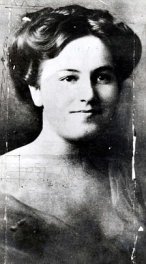
Smith had committed three murders and various forms of larceny as well; he’d earned his noose several times over.

Two things tend to trip people up when they’ve seemingly committed the perfect crime: either they brag about it to impress others, or they repeat the crime using the same methodology as before, since it worked so well the first time. Either of those actions greatly increases the risk of the criminal’s getting caught.

Smith made the latter mistake. He was in a sense a victim of his own success.

Smith was born on January 11, 1872. His criminal record began when he was sent to a reformatory at nine and served a seven-year sentence. In young adulthood he was in and out of prison on theft- and fraud-related convictions.

His complicated marital career began when he married Caroline Beatrice Thornhill, a domestic servant, in 1898. Smith persuaded her to steal from her employers. Caroline served time in prison as a result, and implicated her husband, who got two years for his role in the thefts.

After George Smith’s release, Caroline thought it wise to put a few thousand miles between herself and her estranged husband, and so she left the UK for Canada. She never filed for divorce, however.

Smith remained legally married to her for the rest of his life, so none of his numerous other marriages were legal.

Unlawfully Wedded …

The guy wasn’t good-looking, but he could charm like any good con artist. A year after his marriage to Caroline, Smith bigamously married another woman. He cleaned out her saving account and then deserted her.

Between 1908 and 1914, he married no fewer than seven additional women, usually under an alias, and deserted most of them after a short time, sometimes only a matter of days — but not before he helped himself to their possessions and bank accounts.

As true crime writer Harold Schechter tells it in his book The Serial Killer Files: The Who, What, Where, How, and Why of the World’s Most Terrifying Murderers:

Smith initially limited himself to scamming gullible spinsters out of their life savings by luring them into bigamous marriages … The moment Smith had his hands on his new bride’s money, he would disappear. Usually telling her he was going out on an errand — to pick up a newspaper or buy a pack of cigarettes — he would never return. On one occasion, he brought his newlywed wife to the National Gallery of Art and, after viewing some paintings, excused himself to go to the bathroom. She never saw him — or her life savings — again.

That particular bride was named Sarah Faulkner. Smith had already plundered £350 in cash from her and her jewelry as well, and while she was waiting for him to return from the loo he was back at their hotel, swiping her clothing and the rest of her money.

The only wife that didn’t fit this pattern was Edith Pegler.

Smith was away from her side for months at a time on “business trips” and when he returned it was always to ask for money, but he never left her for good and they remained together for seven years. As to whether he actually harbored some form of affection for her or whether he just didn’t want to kill his cash cow while it was still milkable, we can only speculate.

Yet all these women were, in a sense, lucky.

Smith may have broken their hearts and taken their cash, but he left them their lives.

… ‘Til Death Do Us Part

The first unlucky wife was Bessie Mundy, whom Smith murdered on July 13, 1912.

They’d married in August 1910, but he left her after persuading her to give him £150 in cash. On the way out the door, he accused her of giving him a venereal disease.

Eighteen months later, Bessie ran into Smith on the street. Somehow, the charmer got his ex to forgive him and resume their relationship.

In fact, Smith wanted to get his hands on Bessie’s £2,500 inheritance, but it was in trust and he couldn’t touch it.

After their reunion, the couple drew up mutual wills, naming each other as beneficiaries. Bessie willed her husband £2,579. Less than a week later, she was mysteriously dead.

Smith rented a house for them in Herne Bay and had a new cast-iron bathtub installed. Tragically, Bessie drowned in the bath. Her husband said he’d been out buying dinner and returned to discover the body.

Since Smith claimed his bride suffered from epilepsy and that she’d had a seizure the day before she died, it was easy to believe she’d simply had an unfortunate accident.

In spite of his newfound wealth, Smith had Bessie consigned to a pauper’s grave and even returned the slightly-used bathtub to the ironmonger for a £1 17s. refund.

This, perhaps, is where Smith might have counted himself lucky and checked out of the homicide business — or at least thought about a different m.o. Instead, hubris and habit got him hanged.

The Brides of Bath murder victims: from left to right, Bessie Mundy, Alice Burnham, and Margaret Lofty.

Next to go was Alice Burnham, who was making a goodly living as a nurse. Smith married on November 4, 1913, and became her widower on December 13.

Alice and her new husband were honeymooning at a seaside boardinghouse in Blackpool when she drowned in the bathtub while he was supposedly out getting eggs.

Smith, who claimed she had a weak heart, had insured her life for £500. She too was buried on the cheap.

Margaret Elizabeth Lofty died in her London home a little over a year later, on December 18, 1914. Newspapers reported she had drowned in the bathtub while her husband — identified as Robert Lloyd — was out buying tomatoes. He and the landlady found the body. Lofty and “Lloyd” had married only the day before and, appropriately enough, the ceremony was performed in the city of Bath.

Although it was initially classified as death by misadventure, Margaret’s murder ultimately lead to Smith’s downfall.

Rotten luck, it was: Alice Burnham’s father read an account of her death in the newspaper and, even though the husband had a different name, he couldn’t help but notice that Margaret’s death was suspiciously similar to his daughter’s.

Joseph Crossley, who was the couple’s landlord at the time of Alice’s death, noticed the same thing. Since both the Burnhams and Crossleys had taken a dislike to Smith from the get-go, they both wrote the police, asking them to open an investigation.

Authorities quickly determined that George Joseph Smith and Robert Lloyd were the same man. They sure had the same playbook.

Margaret had made out a will just hours before she died, naming her husband the sole heir to her estate. She had also withdrawn her life savings from the bank the same day, and three days before she had taken out a £700 life insurance policy on herself, with her husband as the beneficiary. Ka-ching.

When the grieving widower showed up at the insurance office to collect on Margaret’s policy, he was arrested. Lloyd/Smith was initially charged with putting a false name on a marriage certificate, but bigamy and murder charges would follow fast.

When news of the arrest was published, a police chief from Kent read the story and told the London police about Bessie Mundy’s death, which was strikingly similar to the other two.

Forever Hold Your Peace

But how could he could have drowned the women in the tub, without leaving marks of violence on their body?

Margaret had only a small bruise on her elbow. For answers, the police turned to renowned pathologist Bernard Spilsbury. The first thing he did was exhume the bodies to determine whether the women had, in fact, drowned. They had.

After experimenting with the very same bathtub Margaret Lofty died in, he determined how it might have happened. John Brophy, a crime writer, describes it chillingly:

With honeymoon playfulness he would enter the room where his bride was already in the bath, admire her naked beauty, bend over her fondly, and, still murmuring endearments, hold her feet. Suddenly, he would tug her feet upward, jerking her head at the end of the bath, below the water, so that in a few moments she would be drowned with no bruises on the body or other signs of assault or resistance.

Effective. Actually, you can see why he stuck to his system.

When Smith went to trial, it was only for the murder of Bessie; British law didn’t permit him to be tried for multiple murders in one go. However, the prosecution wanted to bring evidence in the Lofty and Burham deaths into the trial, arguing that they indicated a criminal “system.”

The judge allowed it, setting a precedent that would be used in later criminal cases.

In pretrial investigations later described in court, Spilsbury demonstrated his murder theory using Bessie’s bathtub and a female police officer in a bathing suit. It worked all too well: she lost consciousness immediately and they had to drag her out of the tub and perform artificial respiration to revive her.

No wonder the jury was only out for twenty-two minutes before it delivered a guilty verdict.

Caroline Thornhill, Smith’s legal wife, returned to Britain for his trial. She married a Canadian soldier the day after his execution.

The “Brides in the Bath” case has remained vividly alive in British memory.

The historian Harold Nicholson compared Smith’s behavior to Adolf Hitler’s in his 1939 book, Why Britain is at War; Smith was mentioned in novels by Evelyn Waugh, Agatha Christie and Dorothy Sayers, and in 1952 the case was made into an episode for the true-crime radio show The Black Museum.

[audio:http://www.archive.org/download/OTRR_Black_Museum_Singles/BlackMuseum-03-TheBathTub.mp3]

More recently, in 2003 the murders were featured into made-for-TV movie called The Brides in the Bath.

Warning: Video contains NSFW naked ladyparts. Oh, and homicide.

At least two plays, Tryst and The Drowning Girls, are based on the story. In 2010, the author Jane Robins published a book about the case, called The Magnificent Spilsbury and the Case of the Brides in the Bath.

Part of the Themed Set: Branded.

On this day..

1828: William Corder, for the Red Barn Murder


This nostalgic emblem of bygone pastoral idylls doubles as a great place to dump a body. (cc) image from boodie131.

This date in 1828, throngs of thousands at Bury St. Edmunds saw the climax of the Red Barn Murder case in the form of the public hanging of William Corder.

This broadside blockbuster got its start in a Suffolk village, where a local ladies’ man and his paramour plotted a rendezvous at the titular shed for the purpose of elopement — she having become pregnant by the young man’s offices.

When the meeting was over, Corder had vanished from town … and Maria Marten had just plain vanished.

Almost a year later, Maria Marten’s stepmother began reporting dreams that the poor girl had been murdered and stashed in the barn. And sure enough, when they searched it, there lay Maria — with William Corder’s handkerchief around her neck. Corder was found in London living with his new wife.

(About the stepmom: she was just a year older than her “daughter”, and considering her essential role in divining the body’s location, has to be considered suspect herself. It’s not too hard to picture her as Maria’s rival for the tomcatting Corder. She never faced any charges, though.)

In a standing-room-only trial that commenced a mere four days before the hanging — papers reported shortages of post-horses owing to the influx of rubberneckers — Corder failed to persuade anyone that he merited the least bit of mercy with his cockamamie story that Marten done shot herself through the eye.* He was doomed by the jury with 35 minutes’ deliberation.

The Red Barn murder is one of dozens in Judith Flanders’ The Invention of Murder (Review)

The London Times (Aug. 11, 1828) waxed unctuously pleased with this circumstance.

We congratulate the country on a manifest improvement in the condition of its moral feeling, since the sickly sensibility of the press, and of the multitude to whose foul taste it ministered, was wont to declare itself on the side of ruthless and treacherous murder, and to stifle at once every movement of honest compassion for the victim, and all reverence for the principles by which justice is vindicated and human society held together.

Another base ruffian has now equalled or exceeded Thurtell in guilt, and is about to follow him in the experience of lawful retribution. To the honour of the people, we have not yet heard one ejaculation of unnatural pity for the miscreant who deliberately butchered the mother of his infant on pretence of accompanying her to the altar. Corder has united in this one deed of horror — if it be his only one — whatever the heart revolts at most in the conduct of man to woman. He seduced — then betrayed — then massacred the wretched creature, in cold blood; and providential were the means of his detection, as his crime was hateful to God and man.

Why will not unhappy females bethink themselves before it be too late, that he who is depraved enough to corrupt their innocence, has already made no small advance in that course which ends too often in his exacting from them the only remaining sacrifice?

Corder left the scaffold just as he had reached it, corrupting females all the way down.

Seated on a wall, which gave a commanding view of the whole scene, were several ladies, dressed in the first style of fashion. I mention this fact because it shows the intense curiosity prevalent in this county respecting every action of Corder: for nothing else could have brought respectables females to behold a catastrophe so uncongenial with the usual kindness and benevolence of the female character.

London Times, Aug. 12, 1828

An account of the trial is long since in the public domain and available free from Google books; especially recommended is the collection of dozens of Victorian-Craigslist notes Corder received when he advertised for a wife upon reaching London.

Also of interest: this journal article comparing popular ballads around the case, and even linking to a recorded performance.

As befits such a magnetic public spectacle, Corder’s body was slated for a long afterlife as a macabre totem of the principles by which justice is vindicated.

His corpse was publicly displayed — some 5,000 people are reported to have filed past it — and the hanging rope sold off in increments. Gruesome relics from the case — Corder’s scalp, his death mask, a book bound in his skin — were harvested for exhibition. (Tourists also poured into Corder’s village of Polstead, stripping souvenirs from the red barn and chipping Maria Marten’s gravestone down to the nub.)

The murderer’s skull was one of these trophies, but its owner became convinced it was cursed and had it buried. The rest of Corder was anatomized, as was the style at the time, and its skeleton remained on public display until just a few years ago with that of 18th century crime lord Jonathan Wild.

While the traditional ballads are to be expected …

this venial crime among commoners has sustained popular memory of sufficient longevity to put the Red Barn Murder onto such unanticipated media as the silver screen

… and Tom Waits’ somber blues/rock.

* Corder confessed before his execution.

Part of the Themed Set: Branded.

On this day..

1946: Andrei Vlasov, turncoat Soviet general

On this date in 1946, Soviet Gen. Andrei Vlasov and 11 fellow members of the Russian Liberation Army were condemned to death in Moscow for German collaboration, and immediately hanged.*

Vlasov was at the peak of his career at the outset of World War II, and earned a decoration for his part in defending Moscow against the Nazi invasion.

So far fortunate, the Red Army ran him out at the head of an army mounting an ill-fated attempt to lift the withering Siege of Leningrad.

Vlasov was encircled and captured.

And then, as a German prisoner, he switched sides.

The conversion of a top Soviet general, who now professed anti-bolshevism, was a stupefying propaganda coup for Germany, and the recent hero of Moscow was quickly employed authoring anti-Soviet leaflets and persuading POWs of the virtues of working for Berlin.

Somewhat more guarded were the Germans when it came to forming up the military unit our defector was supposed to be head of, the Russian Liberation Army, a phantom force of patriotic anti-communist Russians fighting for their country’s self-determination free of Uncle Joe.


By hanging other Russians from trees.

In reality, this “army” didn’t exist beyond the patches slapped onto the various anti-Soviet Russians who signed up to fight against the motherland. And it’s not too hard to reckon why.

Though Russian nationalism might be an expedient club to beat the Red Army with, it was just as liable to boomerang on a Reich itself bent on eastward expansion. A German interrogator of Vlasov in 1942 writing of the captive officer’s notions of national renewal concluded his report editorially (Russian link), “Russia for hundreds of years has constantly threatened Germany, regardless of whether it was the tsarist or the Bolshevik regime. Germany is not interested in reviving the Russian state.”

Besides, given the Nazis’ racial ideology, could these Slavs be trusted in a pinch? Enough to hand them their own command structure? The thousands of eastern front POWs who volunteered to serve Berlin could be suspected of having made the devil’s choice due less to principled anti-Stalinism than the fearful privations of a German camp. (Vlasov himself is often accused of changing teams for some venal reason of cowardice or greed.)

Only late in 1944, when the prospective long-term problems of Russian nationalism had been rendered academic to Berlin by the progress of the war, did the scattered collaborator units get organized into an actual army under Vlasov’s command.

The ineffectual ROA only got into one real scrap with the Red Army, and confirmed German suspicions about Slavic reliability in the last days of the war by turning its German guns against the SS in support of the Czechs’ Prague Uprising.

But surely nobody counted on returning to Stalin’s good graces with this last-second conversion.

From that successful engagement, Vlasov’s men fled out of Prague towards the American occupation zone, desperate not to be taken by the Red Army.

They made it. But after just a few days in American hands, Vlasov was turned over at a Russian checkpoint.

Though structured by the Allied powers’ Yalta accords, which stipulated repatriation into Stalin’s hands of any Soviet citizens held in the West, Vlasov’s handover might at the moment have been part of what must have been innumerable quid pro quo arrangements to sort out command and control in the disaster area late dignified as the Third Reich.

Historian Patricia Wadley has hypothesized that Vlasov’s detention by the Soviets conditioned the landing just an hour later of an airlift to evacuate the airman’s POW camp Stalag Luft I from behind Soviet lines.

However they got their hands on him, the Soviets made no mistake once they had him. Most of Vlasov’s junior officers were executed, and his rank and file dispatched to Siberia. The brass got a three-day trial — in camera, not a show trial; they were still defiant — from July 30 to August 1, with the inescapable result.

Vlasov’s legacy after the fact remains debatable. In the official Soviet story, of course, he’s a Nazi collaborator and that’s that. Aleksandr Solzhenitsyn attempted to vindicate Vlasov in The Gulag Archipelago, and one can find pro-Vlasov posts and tributes — but post-Communist Russia has shown no interest in overturning the verdicts against the ROA.

One might allow him sincerity in his convictions, but only at the cost of allowing that his movement had no independent force in the war save what Germany breathed into it for Germany’s own reasons. Something like that holds true for nearly every human being caught up in the eastern front in those terrible years.

Some have characterized Vlasov a vile collaborator; others have seen him as a Russian national hero. Neither description quite fits. Andrei Andreevich Vlasov, given to drink and fits of fatalism and inertia in captivity, lacked the sterling character deemed essential for a martyr. On the other hand, the ROA chief was anything but a Nazi — he caused his German supporters discomfort with his strong Russian nationalism and his personal refusal to lend his voice to the prevailing, official anti-semitism. He possessed neither a Quisling‘s moral blindness to questions of patriotism nor a Joan of Arc‘s penchant for self-immolation. He came closer to the mean of most humans, aptly personifying the nightmarish predicament which confronted millions of the Eastern Front’s victims. Vlasov, like multitudes of other helpless Soviet citizens, was cruelly pulverized between the enormous and unfeeling millstones of Nazism and Communism. Shuffled about Europe’s wargame board, first by Stalin, then by Hitler, Vlasov was a pawn in the epic struggle just like the lowliest POW or forced laborer. He fantasized a Russia minus Marx, and though his failure was complete, he still came closer than any other Russian since the Civil War to fulfilling that dream.

-Mark Elliott, “Andrei Vlasov: Red Army General in Hitler’s Service,” Military Affairs, Apr. 1982

* Vlasov’s execution was announced in Pravda on Aug. 2, but with no reference to the precise time. (The sentence was certainly issued in the very early morning of Aug. 1.) Though some sources continue to list Aug. 2 as Vlasov’s execution date, Aug. 1 seems much better attested.

On this day..