2007: Five young men

Last year on this date, according to a Deutsche Presse-Agentur report of the Syrian news service, five youths were publicly hanged in Aleppo, Syria.

Syria executed five youths by hanging in a public square on Thursday after they were convicted of murder and robbery, the Syrian news agency reported.

The hanging was carried out in Bab al-Faraj, a public square in the centre of the city of Aleppo, 350 kilometres north of Damascus, in the early hours on Thursday, according to the agency.


Bab al-Faraj square.

A military court had convicted the men, aged between 18 and 23, of premeditated murder for the purpose of committing robbery, according to the online news service, Syriano.

Syrian human rights groups have called for the abolition of military courts, which were installed under emergency law in 1963.

On this day..

1911: Several revolutionaries on Double Ten Day

On the tenth day of the tenth month — Double Ten Day, as it has since been remembered in China and the Chinese diaspora — the quick execution of a few revolutionaries signaled the surprising end of China’s 2,000-year-old imperial government.

Actually, the collapse of imperial rule wasn’t such a surprise: China’s last dynasty had foundered in the face of the 19th century challenges of European colonialism; driven by multitudinous grievances, popular revolts and reform movements had buffeted China in recent years, most seriously the turn-of-the-century Boxer Rebellion.

The Qing Dynasty was a tinderbox. But one never knows what spark will set the flame.

On October 9, 1911, revolutionaries in the central China town of Wuchang — today merged with neighboring towns into the city of Wuhan — lit the fuse literally when a bomb they were building for a planned insurrection accidentally went off.

In the ensuing scramble, police raided the joint and found incriminating lists of thousands of revolutionary recruits. Arrests followed fast, and several (three*) of the arrested were summarily put to death on the morning of the tenth.

But the plot’s apparent misfortune actually turned out to be its spur to victory.
Realizing that their identities were exposed to the authorities, and that they were in danger of immediate execution, the revolutionaries … revolted.

Their military forces mounted a successful municipal coup d’etat.

While the central government dilated, insurrectionary Wuchang appealed to the provinces for solidarity, and within weeks the Wuchang Uprising had blossomed into full-fledged revolution: the Xinhai Revolution, to be exact. By the following February, China’s last child-emperor had been forced to abdicate.

For the first time in millennia, the fallen dynasty was not succeeded by another dynasty. Though the new state was itself heir to the myriad contradictions and weaknesses that dogged the Qing, it was a definitive turning point: China became Asia’s first democratic republic, the polity that today is Taiwan.

* The names Peng Chufan, Liu Yaocheng and Yang Hongsheng are proposed in this history.

Update: This excellent History Today article for the Double Ten centennial also specifies three executions, and even includes this outstanding public domain image from the Francis Stafford collection.

On this day..

1943: 98 American civilian contractors on Wake Island

On this date in 1943, after Japanese-occupied Wake Island was subjected to a withering bombardment from the United States Navy, garrison commander Shigematsu Sakaibara ordered the summary execution of 98 American prisoners of war.

Wake Island came under Japanese attack immediately after the bombing of Pearl Harbor raised the curtain on the Pacific theater — and was overrun in two weeks.

It was strategically situated halfway between Hawaii and the Philippines. That’s why the Japanese wanted it — and that’s why the Americans wanted it back.

Caught in the middle were 1,600-plus Americans captured when Wake fell in December 1941, 1,100 of them civilian contractors of construction conglomerate Morrison Knudsen there to build a naval base. Most of these, and all military personnel, were shipped to POW camps in China early in 1941; only 700 contractors would survive their four-year sojourn in Japanese captivity.

By September 1942, only 98 Americans remained* on Wake Island — all contractors, the last remnants of the prison labor force who had been forced to lattice the island with defensive fortifications against the expected American invasion.

U.S. forces bombed Wake Island repeatedly during World War II — rare respites from the monotony of forced labor — but the most intense attack was an orchestrated naval bombardment and aerial attack beginning Oct. 5. Shigematsu Sakaibara feared it was the prelude to a long-anticipated landing attempt. And he wasn’t the only one: reporting the attack, the New York Times tried to read the tea leaves of the official pronouncements:

The fact that Wake was attacked yesterday by surface bombardment as well as aeriel bombing probably indicates that a major reduction of Wake is now intended. The atoll, which is the closest Japanese base to Pearl Harbor with the exception of a few islands in the Marshalls group, is a key stepping stone on Japan’s fastest aeriel route to her other central Pacific possessions in the Marshalls and Gilberts southwest of Hawaii.

Still,

[o]ccupation by United States forces of Wake Island, which is 1,033 miles from Midway, has been predicted for some time, but there is no indication that such an operation is probable immediately.

Sakaibara, unfortunately, didn’t have a Times subscription.

Expecting a landing, and fearing the prisoners would rise up as a “fifth column” against their captors when it came, Sakaibara had the 98 prisoners machine-gunned en masse on the beach. One of them managed to survive and escape the slaughter, but was recaptured shortly after, and is supposed to have been personally beheaded by the admiral. It’s said that unidentified man carved a (misdated) testimony to the crime on a nearby coral rock known as “98 Rock”: “98 US PW 5-10-43”.

As it turned out, the landing never did come. The U.S. Navy bypassed Wake Island, allowing it to languish under a blockade as it advanced elsewhere in the Pacific, and received Sakaibara’s peaceful surrender after the bombings of Hiroshima and Nagasaki.

Although the Japanese had hastily exhumed the murdered POWs and reburied them in a cemetery as the end of the war approached, the cover story on the “Wake Island Massacre” soon cracked. For this day’s affair, Sakaibara was convicted of war crimes by an American tribunal, and hanged in Guam on June 18, 1947.

* The identities of the 98 are known, and are listed online here as well as on a plaque at the site.

On this day..

2007: A factory manager in a packed stadium

Last year on this day, six people were reportedly trampled to death when a massive crowd stampeded after watching the execution of a 75-year-old factory manager in North Korea.

The man, who is not named in English-language sources I’ve perused, had fabricated his father’s past as a good Communist when in fact dad worked to suppress the reds. That con kept the family among North Korea’s privileged elite for years.

According to the South Korean nonprofit Good Friends, he faced a snap tribunal and immediate execution in Suncheon this day, in a stadium with 150,000-plus* onlookers, part of a campaign of stepped-up public executions that Good Friends says (.doc) has been driven by the insular country’s decade-long famine. (See another one — illicitly filmed graphic video included — here.)

And he wasn’t the only one to depart the premises in a body bag. The stampede is said to have occurred after the proceedings as spectators were leaving; the cause, if there was one, is sketchily described, although some news reports call it a “melee.” Thirty-four others were reportedly injuried in the crush.

* The figure 170,000 is also cited.

On this day..

1402: False Olaf

On this date in 1402, a Prussian commoner was put to death on the road between Falsterbo and Skanor in Sweden for masquerading as the long-dead King Olaf IV.

The real Oluf IV Haakonsson — or Olav, or Olaf — had inherited the crowns of Denmark and Norway and a claim to that of Sweden’s but died at the age of 17 in 1387. His mother, Margaret I (or Margrethe I), the real power behind the teenager, ruled outright upon her son’s death.

She proved an able hand and far-sighted ruler, cautiously welding Denmark, Sweden and Norway into the Kalmar Union that would hold until the 16th century. They called her “the Semiramis of the North,” centuries before Catherine the Great nicked the nickname.

But her son’s youthful demise had set persistent rumors abroad — that he was poisoned, for instance, and more to the point for our purposes, that he wasn’t dead at all.

So when his spitting image was recognized, and hailed as the prince of the realm … well, back in the day, equally audacious identity theft was attempted for much smaller stakes than a throne.

Anyway, “Olaf” got some robes befitting Olaf’s station and banged out some letters to Margaret demanding his kingdom back, and Margaret said, come on down.

That goes to show how far looks will take you in life.

Unfortunately for Olaf, his regal jawline wasn’t capable of enunciating Danish speech … so the jig was up as soon as he got to Margaret. One hopes he got a good ride out of his brief masquerade, because he was burned to ashes — possibly after being broken on the wheel — along with those presumptuous letters.

The date of False Olaf’s death comes from Horace Marryat’s 19th century Scandinavian travelogues, One Year in Sweden; including a visit to the isle of Gotland and A Residence in Jutland, the Danish Isles, and Copenhagen (both free reads at Google Books). In both volumes, Marryat identifies the date as the morning before Michaelmas.

The traditional last day of the harvest season celebrated on September 29, Michaelmas was once a four-star holiday on the medieval calendar.

There’s a fair amount of commentary online saying that an “Old Michaelmas” used to be celebrated on October 10 or 11. But that looks to this writer like an interesting inversion stemming ultimately from the celebration’s fall into obscurity as the entity once known as Christendom has become more secular and less agrarian — although it’s admittedly nothing to do with the fate of False Olaf, or Semiramis for that matter.

In 1752, when England finally switched to the Gregorian Calendar, the switch took place in early September.*

For logistical pragmatism (the harvest wasn’t going to come in 11 days earlier just because the calendar changed), the then-imminent Michaelmas got pushed back 11 days to October 10. October 10 then became known as “Old Michaelmas,” no longer Michaelmas by the church calendar but the 365-day interval from when it used to be celebrated, and more importantly, the real end of the harvest season.**

In the next century, the difference between Julian and Gregorian calendars would have advanced to 12 days, placing Old Michaelmas on the 11th; by this present day, it’d be 13 days in principle, but the original meaning of the holiday and the host of cultural traditions associated with it have fallen away … so “Old Michaelmas” is a footnote still pinned to October 10th or 11th, and moderns rediscovering it suppose from the name that it’s the former date of the feast.

* People inclined to think of their death dates as foreordained in heaven’s celestial notebook protested the switch: “give us back our 11 days!” This reform, incidentally, also moved the official beginning of the New Year to January 1 from Michaelmas’ springtime “Quarter Day” counterpart, March 25; winter dates from years prior are often written with both years, e.g. 1738/9. “Old Lady Day“, April 6, is still the beginning of the fiscal year in England, and Thomas Hardy uses its traditional contractual character in Tess of the D’Urbervilles (Aside: Tess’s hanged real-life inspiration) when the title character takes a farm job running through that date:

Tess was so wrapt up in this fanciful dream that she seemed not to know how the season was advancing; that the days had lengthened, that Lady-Day was at hand, and would soon be followed by Old Lady-Day, the end of her term …

At length it was the eve of Old Lady-Day, and the agricultural world was in a fever of mobility such as only occurs at that particular date of the year. It is a day of fulfilment; agreements for outdoor service during the ensuing year, entered into at Candlemas, are to be now carried out. The labourers — or “work-folk”, as they used to call themselves immemorially till the other word was introduced from without — who wish to remain no longer in old places are removing to the new farms.

… With the younger families it was a pleasant excitement which might possibly be an advantage. The Egypt of one family was the Land of Promise to the family who saw it from a distance, till by residence there it became it turn their Egypt also; and so they changed and changed.

** Residents of the former Soviet Republics who switched to the Gregorian calendar in the 20th century still celebrate both the familiar January 1 New Year’s and “Old New Year’s” 13 days later, and the same trick with the (lesser, there) holiday of Christmas too … packing four party occasions into a three-week span.

Part of the Themed Set: Semiramis.

On this day..

1396: Thousands of knights of the Last Crusade

On this date in 1396, Ottoman Sultan Bayezid I put thousands of Christian Crusaders to the sword — and with them, Christians’ zest for holy war against the Turk.

The day after crushing a European Crusading expedition at the Battle of Nicopolis — where Christ’s multinational divisions might have crippled themselves by opting for political reasons to go with gloryhounding French knights’ demand for a heavy cavalry charge as opposed to sneakier tactics — Bayezid was mighty sore to find that the invaders had executed en masse Muslim prisoners from their last engagement.

Barbara Tuchman’s A Distant Mirror relates the result:

The defeat was followed by a frightful sequel. As Bajazet toured the battlefield … he was “torn by grief” at the sight of his losses, which outnumbered the Christian. He swore he would not leave their blood unavenged, and the discovery of the massacre of the prisoners of Rachowa augmented his rage. He ordered all prisoners to be brought before him next morning. … [T]he leading nobles … were … spared [for ransom], as well as all those judged to be under twenty for forced service with the Turks.

The rest, an uncertain figure of several thousand, were marched naked before the Sultan, bound together in groups of three or four, with hands tied and ropes around their necks. Bajazet looked at them briefly, then signed to the executioners to set to work. They decapitated the captives group by group, in some cases cut their throats or severed their limbs until corpses and killers alike were awash in blood. [The Christian nobles being spared] were forced to stand by the Sultan and watch the heads of their companions fall under the scimitars and the blood spurt from their headless trunks…. The killing continued from early morning to late afternoon until Bajazet, himself sickened at the sight or, as some say, persuaded by his ministers that too much rage in Christendom would be raised against him, called off the executioners.

In truth, the era of the Crusade as most readily conceived — a bid to conquer the Holy Land — was long past by this time. But it had been under that tattered old banner that Christendom summoned its vassals to check the rising Ottoman Empire, which by this time had reduced Byzantium to a rump state around Constantinople.

The battle that precipitated this day’s* feast of carrion occurred in Bulgaria, where the Turks’ growing European footprint (and this affair essentially pinched out the Bulgarian Empire of the day) exercised the European courts in figurative as well as literal ways. Though other ventures would hoist the crusading pennant, there would be no major offensive incursions against the Turks until “crusades” had fallen well out of fashion.

None of this gory affair is to be confused with Indiana Jones and the Last Crusade, where a leap of faith proved more felicitous.

* Most sources place the Battle of Nicopolis at September 25, although some say September 28 — the latter date would obviously place this massacre on September 29.

On this day..

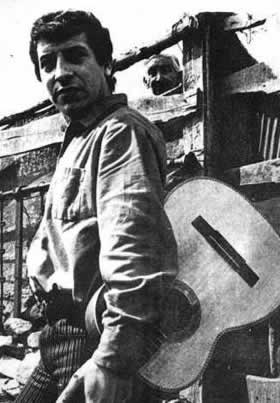
1973: Victor Jara, among thousands in Chile’s September 11

At an unknown time on this evening in 1973, or else the early hours of the following day, Chilean putschists ushering in the Pinochet dictatorship machine-gunned folk singer Victor Jara near the Santiago stadium that today bears his name.

“I don’t see why we need to stand idly by and let a country go communist due to the irresponsibility of its own people,” said Henry Kissinger of Allende’s election. Victor Jara had another idea.

Four days before, Chile’s September 11 had seen General Augusto Pinochet topple the elected leftist government of Salvador Allende, murdering the president in his palace. (Or, go some accounts, Allende committed suicide — “pausing only twice to reload.”)

A long pall of evil settled over the country, with all the accustomed chilling familiars: “disappeared” people, mirrored shades, Jeane Kirkpatrick.

The day after the CIA-backed coup, popular folk singer and activist Victor Jara, a pioneer of the Nueva Cancion (“New Song” movement) then teaching at Santiago’s Technical University, was among thousands of undesirables rounded up and packed off to a makeshift prison camp at the city’s Chile Stadium — a stadium Jara had performed at.*

Left there to the tender mercies of a thuggish Chilean officer, Jara was beaten and tortured over the intervening days — evocative but possibly undependable tradition holds that the guitarist’s hands were cut off, shattered or otherwise destroyed. According to the U.S.-based United States Institute of Peace,

[t]he the last day Víctor Jara was seen alive was September 15. During the afternoon he was taken out of a line of prisoners who were being transferred to the National Stadium. In the early morning of the next day, September 16, shantytown dwellers found his body, along with five others, including that of Littré Quiroga Carvajal, near the Metropolitan Cemetery. As the autopsy report states, Víctor Jara died as a result of multiple bullet wounds (44 entry wounds and 32 exit wounds).

The Commission came to the conviction that he was executed without due process of law by government agents, and hence in violation of his fundamental human rights.

To say the least.

And as the text implies, Jara was only the most recognizable name among unknown hundreds killed as the military cemented its control of the country.

Jara remains larger-than-life martyr figure in Latin America and liberation movements worldwide, but he’s almost unknown north of the Rio Grande. Pinochet was our bastard; in the weird way history writes its own geography, Jara became a political emblem behind the Iron Curtain for the perfidy of the capitalist powers: obscure in Peoria, but a household name in Potsdam, as the credit roll from this 1978 East German film suggests.**

That’s Jara himself on the soundtrack, of course. The pat conclusion for such a figure is that his art is his legacy, and that Jara’s body of work as against Pinochet’s will be a walkover in posterity. Is that enough? Pinochet died in his bed at age 91; earlier this year, the Jara case was closed in underwhelming fashion. Thirty-five years down the road, most authors of Pinochet’s human rights depredations are dead or lost or decrepit. Justice delayed is justice denied.

Victor’s widow, Joan Jara — today director of the Fundacion Victor Jara (it’s a Spanish-only site); you can hear her interviewed on Democracy Now! for the 25th anniversary of her husband’s death in 1998 — managed to leave the country with some of his works.

Her publication of a poem he wrote while imprisoned, an untitled, unfinished work generally known as “Estadio Chile,” made it a signature cry of hope amid desperation. Here it is in the Spanish rough-hewn under the shadow of death; there’s an English translation here.

Somos cinco mil
en esta pequena parte de la ciudad.
Somos cinco mil
¿Cuantos seremos en total
en las ciudades de todo el pais?
Solo aqui, diez mil manos que sembran
y hacen andar las fabricas.

¡Cuanta humanidad
con hambre, frio, panico, dolor
presion moral, terror y locura!

…¡Y Mexico, Cuba y el mundo?
¡Que gritan esta ignomonia!

Somos diez mil manos menos
que no producen.
¿Cuanto somos en toda la Patria?
La sangre del companero Presidente
golpea mas fuerte que bombas y metrallas.
Asi golpeara nuestro puno nuevamente.

¡Canto que mal me sales
cuando tengo que cantar espanto!
Espanto como el que vivo
como el que muero, espanto.

De verme entre tanto y tantos
momentos de infinito
en que el silencio y el grito
son las metas de este canto.
Lo que veo nunca vi,
lo que he sentido y lo que siento
hara brotar el momento…

Whether or not it’s enough, his work is his legacy after all.

* Some 7,000 people were held at Chile Stadium in the days after the coup, most later moved in with other detainees at the larger Estadio Nacional. The USIP excerpt alludes to Jara being pulled out for execution during such a move.

** In a similar vein, Stanford has a small online exhibit of Jara-themed East German propaganda art. Not to be outdone, there’s a Soviet rock opera about Jara, and an asteroid discovered by a Soviet astronomer was named in Jara’s honor within a week of his execution.

On this day..

1963: 21 Iraqi Communists

On this date in 1963, Iraq’s infant Ba’ath government executed at least 21 soldiers — all Shi’a — who had participated in a Communist coup attempt on July 3.

The Ba’ath were newly in the saddle after overthrowing Qasim earlier that year, and would be ousted again a few months hence before their definitive seizure of power several years later.

For the moment, they were a fledgling government trying to tilt away from the Soviet bloc and towards the west while navigating a minefield of domestic politics. If the coup really occurred as described, it was the fruit of an Iraqi Communist Party with daggers drawn for the regime after the Ba’athists had massacred their membership with CIA help in the course of offing Qasim. (The name is also transliterated Qassim or Kassem.) If it was bogus, it was probably an official cover story to keep massacring Shi’a Communists.

The affair, in either guise, amounted to a minor hazard in the jagged path of the Ba’ath — but of course, we come by that judgment with benefit of hindsight. Far more interesting to follow, courtesy of this site‘s library of historic cables, the perceived unfolding of the situation through the anxious American diplomatic pouch:

On this day..

1794: The last cart of the Terror, not including the Marquis de Sade

July 27th, 1794 — the 9th of Thermidor, year II — is inscribed in history as the day Robespierre fell, when a parliamentary coup d’etat between the right and the remnants of the parties he had destroyed shouted him down as he readied the National Convention for his next purge.

This scene from the multinational bicentennial epic La Revolution Francaise conflates the events of 8 Thermidor — when Robespierre delivered a menacing two-hour address but provoked outcries by failing to name the deputies he implicated in “conspiracy” — and 9 Thermidor, when Robespierre’s lieutenant Saint-Just was shouted down from the podium and Robespierre ended up staggering through the benches appealing against the imprecations of his colleagues as his arrest is decreed.

Even as the month of Thermidor’s eponymous epochal event was unfolding, the daily gears of Revolutionary justice were turning: the usual haul of unfortunates condemned, including seven women from the previous day’s batch of Saint Lazare prison conspirators who had pled their bellies to buy a day.

That day was one day too little.

Stanley Loomis is overtly hostile to the Revolution, but his middlebrow sensibilities are well-tuned for the pathos of the scene:

Indifferent to the storms that were raging in the Convention, the Revolutionary Tribunal continued to go about its implacable business with cold efficiency. The arrest of its President [the Robespierrist Rene-Francois Dumas (the link is French), who was taken in the courtroom] startled no one. Since its inception that court had been witness to too many dramas to be astonished any further. Dumas quietly departed; the trials continued. Forty-two prisoners were sentenced to death. By four o’clock their hair had been cut and they were ready to be sent on their way. But Samson, aware of disturbances in the St. Antoine quarter of the city, suggested to [prosecutor] Fouquier[-Tinville] that the executions be deferred until the morrow.*

“Justice must take its course,” snapped the Public Prosecutor. “Do your work.”

And so the last “batch” lumbered off in the direction of the Faubourg St. Antoine and the Place de la Nation. With the exception of the Princesse de Monaco, they were nearly all obscure and humble members of the petite bourgeoisie. Hanriot, waving his sabre, conducted the procession to the place of execution. By seven o’clock that evening, as the minutes of the military escort poignantly show, the unfortunate victims, who had been so close to deliverance, had all been executed.

Henriot proceeded directly from his escort service to the Convention to liberate Robespierre for the night’s brief pitched battle against the Convention, and here we take our leave of them, for now. We shall meet both of them on the scaffold tomorrow.

Not on the wagon** with the Princess of Monaco was a man whom Loomis would have pitied rather less.

The bloated, penniless 54-year-old fruit of an ancient noble house, Donatien Alphonse François de Sade, Marquis de Sade had, in the most recent chapter of his astounding career, navigated the Revolution in the improbable guise of a proletarian section head and revolutionary tribunal judge, until his own arrest late the previous year.

This day, de Sade’s name was on a list of prisoners to be seized from Madelonnettes Prison — “Sade, former count, captain of Capet’s guards in 1792, has corresponded with enemies of the republic,” it said — which he had occupied until a recent transfer to Picpus, a monastery converted into a prison adjacent to the guillotine’s place at the Place de la Nation. Whether the result of another of the many bureaucratic snafus we’ve witnessed this week or a well-placed bribe from his friend and/or mistress Marie-Constance Quesnet, the guards were in the wrong place, didn’t find him, and didn’t care to dig any further.

Three months later, he was — for the last time in his life — a free man.

One could hardly say that the Revolution made the author of Justine the man he so (in)famously was — but having lived within sight of the blade that might any day be called upon to chop off his own head, and the entire tableau of the years preceding, left their impression. Hundreds of bodies from the Terror were stuffed in the unpropitious clay of the makeshift jail’s yards under de Sade’s cell. “Those few months in the shadow of the guillotine did me more harm than all the years of my incarceration under the King,” he wrote a friend.

According to Writing the Orgy: Power and Parody in Sade, Revolutionary France would inexorably influence his subsequent work,

strangely mixing real memories with very Sadean embellishments … Plots, betrayals, denunciations, beheadings: these fictional motifs and Sadean phantasies are linked with the reality and the imaginary of the Revolution.

Good for what ails you.

* Sanson’s diaries — a memoir of the family business constructed by the famous executioner’s grandson — leave off before the events of Thermidor and suggest that the hecatombs of the Terror were taking their toll on the aging headsman. Other accounts of this day have the tumbrils stopped in the streets by clemency-inclined onlookers, only to be forcibly extricated by Henriot.

** Also not (really) on the cart: the fictional occultist Zanoni, who is beheaded in this batch in the novel of the same title by legendary awful writer Edward George “it was a dark and stormy night” Bulwer-Lytton.

Part of the Themed Set: Thermidor.

On this day..

1794: Loizerolles and others for the Conspiracy of the Prisons

On this date in 1794, the Jacobin government struck what would prove to be its last blow against the “Conspiracy of the Prisons.”

The “conspiracy” was really a cover story for Robespierre‘s boys to wield their purifying torch against prisons and (of course) tighten the grip of authority by wild reference to treasonable plots abroad.

Supposedly, the prisons had birthed a scheme to effect a mass escape further to some sort of counterrevolutionary insurrection, or assassination of Robespierre. Marvelously, these conspiracies simultaneously spanned most all of Paris’ prisons, and their “authors” formed a dominant demographic among the Terror’s last tumbrils as the authorities purged each prison in turn.

While we have tarried to profile select victims individually this week, we have in fact repeatedly met so-called prison conspirators.

Luxembourg Prison — whose warders had concocted the earlier “conspiracy” involving Camille Desmoulins’ wife — had been purged repeatedly earlier in the month; its last spasm swept up the Noailles women.

An efficient detour to the Carmelite Monastery converted by revolutionary Paris into another gaol netted Alexandre de Beauharnais.

And the first batch of St. Lazare Prison felled Andre Chenier, where, as elsewhere, dozens were punished for some impressively villainous designs.

Being convicted of having declared themselves the enemies of the republic, by keeping up communications with the enemies of the state; by furnishing them with assistance; by participating in the plots, conspiracies, and assassinations of the tyrant and his wife, against the people; by conspiring in the maison d’arret (lock-up house), called Lazare, to escape, and to dissolve, by the assassination and murder of the representatives of the people, and more especially of the members of the committees of public safety and general security, the republican government, and to re-establish royality; — in fine, by wishing to destroy the unity and indivisibility of the republic.

(The march of the penal inquisitors through the plots is covered in a French Wikipedia page.)

Charles-Louis Muller’s 19th century painting of the Saint Lazare Prison “conspirators” being summoned to their doom. Seated in the center is Andre Chenier.

Each of these famous figures is a noticeable face among dozens of hapless wretches, largely drawn from the Third Estate and often laughably implausible escape artists and assassins — such as, among this day’s victims, an 80-year-old priest. The most poignant fate among the many forgotten threads threads of life clipped short is undoubtedly one Jean Simon Loizerolles, who was imprisoned with his son.

On the 7th Thermidor, about four o’clock, p.m., the bailiff of the tribunal presented himself at the prison with the mortuary list, or, in other words, the death-warrant.

Loizerolles was called for: it was Loizerolles, junior, whom death surrounded. Loizerolles, the father, did not hesitate to present himself; and, comparing his sixty-one years to the twenty-two years of his son, he determined to give him life a second time: the father went down, and was conducted to the Conciergerie.

He there received the bill of accusation, drawn up by order of the Committee of Public Safety, and headed Prison Conspiracy.

This bill bore the name of Loizerolles, junior.

The next day the father appeared for examination, with his twenty-five companions of misfortune.

The bill of accusation, which was joined to the depositions, stated that it was Francois Simon Loizerolles, junior, aged twenty-two.

The declaration of the sentence, prepared in anticipation upon the bill, bore the same designations. The recorder contented himself with effacing the name of Francois, and putting above it Jean.

Finally, the questions submitted, for the sake of form, to the jury, and drawn up in anticipation upon the same bill of accusation, contained the names and the designation mentioned in the accusation. But, at the time of the trial, when the charge was made to the jury, Coffinhal took care to efface the name of Francois, to substitute that of Jean, and to erase te word son, which was replaced by the word father. He rudely altered the two figures from twenty-two to sixty-one, and added the former profession of the father, which the accusation did not state.

And Jean Simon Loizerolles, against whom there was no accusation, was put to death on the 8th Thermidor.

Loizerolles is renowned for nothing in life save the touching valor of his death, but his name was a watchword for paternal devotion in France in the 19th century; Jadin wrote a short opera to his honor, and Victor Hugo references Loizerolles (bizarrely side by side with Robespierre’s younger brother) in Les Miserables as the sort of paragon of loyalty disdained by a gauche skeptic. But the gambit worked: Loizerolles junior survived the last days of the Terror, and was later pensioned by Charles X.

For every triumph, there were countless tragedies. The prisoners had wind of the enterprise to decimate their number days before; an anonymous account printed here (also the source of the Loizerolles story) describes a ramping-up of abuses great and petty in an effort to provoke a rising that would license a bloodbath, and the fear and desperation of the prisoners as death circled them.

Our melancholy and dejected hearts prepared themselves for death. The prison appeared surrounded by a funeral veil, and the death-like silence which pervaded it produced a dreadful feeling of misery in its inmates. Games and amusements were banished from the grounds, and our cadaverous countenances afforded an index of our afflicted souls; the refectory, which was wont to inspire a sentiment of cheerfulness, became a meeting of moving spectres, who quitted each other without exchanging a word.

The prisoners at St. Lazare could no longer indulge in illusions on the fate that awaited them … old age and infancy had ceased to be respected; all were alike condemned as guilty of the project of escape; and the man who was the most harmless and the most devoted to his country was no longer exempt from accusation.

But there was a small favor: a third repetition of the scene was postponed two days, which turned out to be all the difference between life and death.

[T]he Robespierrists, delighted in perpetuating our terrors, announced that the tragic scene would be renewed on the 10th.

The two days which we passed in anticipation of our destiny were two days of unmitigated agony: a general mourning reigned through our asylum; our eyes, in fancy, beheld on all sides the palpitating and struggling bodies of the victims of Robespierre, and of the villainy of his agents; tranquility quite abandoned us; death was hovering over our heads; and the prison appeared, to our diseased fancies, like a sea of blood, on which we had suffered shipwreck …

In this deplorable situation we saw no end to our sorrows but in death; and, however terrifying the grim visitant may naturally be, yet we deemed his arrival too long delayed, and invoked his coming, while we regretted that we had not been of the number of the first victims. When, about ten o’clock, p.m., of the 9th Thermidor, it was reported in the prison, that Robespierre was formally accused, the news, which had been brought by three new prisoners from without, inspired distrust, and savoured too much of the miraculous to be easily believed.

The following morning … the information was confirmed … in such a positive and circumstantial manner that we could no longer entertain a doubt of its truth.

It may easily be conceived how sudden was the change which was effected in the prison of St. Lazare: the prisoners began, for the irst time, since the 5th, to breathe more freely; their hearts, which had been so long cast down, received a fresh inspiration; their countenances cleared up; the full use of their suspended faculties was restored; and the images of death, which had affrighted them, were dissipated; and if they could have forgotten the assassination of their companions, they might have entirely lost the recollection of their misfortunes.

The death of Robespierre, and the close of his dark crimes, were the subject of an epigram, which an individual wrote upon the wall; it describes the monster too accurately, not to find a place here:

Il s’abreuva du sang d’un million de victimes, —
Il parla de vertus, et commit tous les crimes.

A thousand victims slaked his thirst for blood,–
He spoke of virtues while he swam in crimes.

Part of the Themed Set: Thermidor.

On this day..