1779: Robert Young

This date in 1779 saw the execution in Worcester, Mass., of one Robert Young, a schoolteacher who favored the occasion with the following verse from his very own quill.

The man’s offense one may derive from his confessional, but apart from rapist who was this doomed poet? We refer the reader to the biography at friend and sometime guest-poster Anthony Vaver over at Early American Crime. (Vaver’s book Bound With An Iron Chain: The Untold Story of How the British Transported 50,000 Convicts to Colonial America comes recommended for those interested in the period.)

ATTEND, ye youth! if ye would fain be old,
Take solemn warning when my tale is told;
In blooming life my soul I must resign,
In my full strength, just aged twenty-nine.

But a short time ago, I little thought
That to this shameful end I should be brought;
But the foul fiend, excepting God controuls,
Dresses sin lovely when he baits for souls.

Could you the monster in true colours see,
His subject nor his servant would you be;
His gilded baits would ne’er allure your minds,
For he who serves him bitter anguish finds.

Had I as oft unto my Bible went,
As on vain pleasures I was eager bent,
These lines had never been composed by me,
Nor my vile body hung upon the tree.

Those guilty pleasures that I did pursue,
No more delight — they’re painful to my view;
That monster, Sin, that dwells within my breast,
Tortures my soul and robs me of my rest.

That fatal time I very well remember,
For it was on the third day of September,
I went to Western, thoughtless of my God,
Though worlds do tremble at his awful nod:

With pot-companions did I pass the day,
And then direct to Brookfield bent my way,
The grand-deceiver thought it was his time,
And led me to commit a horrid crime.

When it was dark I met the little fair,
(Great God forgive, and hear my humble pray’r)
And, O! dear Jane, wilt thou forgive me too,
For I most cruelly have used you.

I took advantage of the dark’ning hour,
(For beasts always by night their prey devour)
This little child, eleven years of age,
Then fell a victim to my brutal rage;

Nor could the groans of innocence prevail;
O pity, reader, though I tell the tale;
Drunk with my lust, on cursed purpose bent,
Severely us’d th’unhappy innocent.

Her sister dear was to have been my wife,
But I’ve abus’d her and must lose my life;
Was I but innocent, my heart would bleed
To hear a wretch, like me, had done the deed.

Reader, whoe’er thou art, a warning take,
Be good and just, and all your sins forsake;
May the Almighty God direct your way
To the bright regions of eternal day.

A dying man to you makes this request,
For sure he wishes that you may be blest;
And shortly, reader, thou must follow me,
And drop into a vast eternity!

The paths of lewdness, and these base profane,
Produce keen anguish, sorrow, fear and shame;
Forsake them then, I’ve trod the dreary road,
My crimes are great, I groan beneath the load.

For a long time on sin should you be bent,
You’ll find it hard, like me for to repent;
The more a dangerous wound doth mortify,
The more the surgeon his best skill must try.

These lines I write within a gloomy cell,
I soon shall leave them with a long farewell;
Again I caution all who read the same
And beg they would their wicked lives reclaim.

O THOU, Almight GOD, who gave me breath,
Save me from suffering a second death,
Through faith in thy dear SON may I be free,
And my poor soul ascend to dwell with Thee.

On this day..

1773: Eva Faschaunerin, the last tortured in Austria

On this date in 1773, Eva Faschaunerin was beheaded for the arsenic murder of her husband Jakob Kary, mere weeks after their 1770 marriage.

Faschaunerin (English Wikipedia entry | German), who was interrogated on the rack, is distinguished as the last victim in the Austrian empire of official judicial torture: the practice was abolished in 1776 by Maria Theresa.

She’s still well-known in her locale, the Alpine Lieser-Maltatal region and even further afield than that; the town of Gmünd has an Eva Faschaunerin museum in its former jail.

On this day..

1721: Catharaina Margaratha Linck, lesbian

On this date in 1721, a woman named Catharina Margaretha Linck was beheaded with a sword in the Halberstadt fishmarket for homosexuality.

One projects modern sexualities into the past at peril but as Rictor Norton concludes, “there seems no reason why we should not agree with the lawyers at the trial, who defined her as a fricatrice, a ‘rubbing woman’ — in other words, a lesbian.”

Linck (English Wikipedia entry | German) busted out of the anonymous drudgery due an orphan seamstress and into historical monographs by joining an itinerant Quaker movement called the “Inspirants”.

Under those circumstances her habit of going about in men’s clothing might really have been an expedient to elude the male gaze just like Joan of Arc.

It was also a door into the male world: the gender-bending “Anastasius Rosenstengel”, as she called herself, proceeded to enlist herself by turns in the Hanoverian, Prussian, and Polish armies and fight in the War of Spanish Succession.

By 1717 a demobilized Linck was in Halberstadt, several years gone from the martial life but again passing as “Anastasius” in masculine attire … which was also the case when she married 18-year-old Catharina Margaretha Mühlhahn in St. Paul’s church. Who knows how quickly or slowly the young wife grasped the true situation: Anastasius used a homemade leather strapon dildo in the marital bed to such effect that “whenever she [Linck] was at the height of her passion, she felt tingling in her veins, arms, and legs.” (Source)

According to surviving court records, “Anastasius” during soldiering days had delighted in the habit of seducing or hiring women for the same usage. But seemingly the younger Catharina experienced enough physical discomfort from the object that she mentioned it to her mother, who blew the whistle on the whole arrangement after a dramatic domestic confrontation wherein she ripped off her “son”-in-law’s clothes to reveal the artificial cock.

There needs to be a movie made about Catharina Linck. In the meantime, German speakers have access to a 2004 biography, In Männerkleidern. Das verwegene Leben der Catharina Margaretha Linck alias Anastasius Rosenstengel, hingerichtet 1721 or the 2015 historical novel Rosenstengel (review).

On this day..

1707: Bartellemy Pichon dit La Roze, the first executed in Fort Detroit

The execution hook for today’s post does not arrive until the end of the excerpt below. Its subject is Antoine de la Mothe Cadillac* … the French explorer who founded Fort Pontchartrain** du Detroit, the germ of the present-day U.S. Motor City.

How did Monsieur Cadillac administer criminal justice in his frontier fortress? Read on …

Cadillac’s Autocratic Rule

The next step, and a step that was very early taken, was the enforced obedience to the will of the first commandant, Cadillac. The troubles he had with the Company of the Colony of Canada forced him to be arbitrary with the servants of that company, and he was arrested and sent to Montreal for putting one of these disobedient servants in prison. This was an attack on the government itself, and could not be overlooked by the governor-general. Cadillac kept away from Detroit for a long time, but eventually returned with his powers confirmed by the king. During his absence his little village came near being sacked and destroyed by turbulent Indians, and it was partly on this account that the home government looked with favor upon his attempt at arbitrary rule.

In 1711 Cadillac left Detroit for good and his successor got into trouble with the village priest and with many of the foremost citizens without unnecessary delay. Although the commandant was always very powerful, there were some matters that appeared to be beyond his authority to try. He could not try any cases in which he was personally interested. He could not try any capital cases or cases in which the life or liberty of the defendant was involved. He could not try these cases, but yet we find that Cadillac asserted that his authority reached to the taking of the life of any person who refused to submit to his orders. Cadillac himself was defendant in a civil suit in 1694, which was protracted until 1703, arising out of the seizure of the goods of a trader of Michilimackinac, when Cadillac was commandant there.

The goods were seized for infraction of the laws which prohibited the sale of brandy to the Indians. The suit was for the recovery of the value of these goods, which were destroyed. The trial was held at Montreal and was decided in favor of Cadillac.

INCENDIARISM

In 1703 some one set fire to the buildings in the village of Detroit and the church was burned, as well as a large warehouse filled with furs, and several other buildings. Cadillac himself was severely burned in attempting to stem the conflagration. There was much speculation as to who set the fire. Cadillac accused the Jesuits of instigating the work. There were no Jesuits in Detroit, but he accused them of sending an Indian from Mackinac to do the work for them. There were some very bitter letters written on the subject between Cadillac and the Jesuit priests at Mackinac and Montreal, but the matter, with them, ended with the letter writing. This did not disclose the incendiary and others were suspected or accused of setting the fire. Shortly after this, in 1706, Jacques Campau accused Pierre Roquant dit la Ville of the crime. Canadian or French justice was administered in the manner that appears odd at this distance. In this case La Ville was arrested and taken to Quebec and lodged in prison. Campau was also summoned to attend the investigation as the complaining witness and most important person. The trial, or investigation, was held at Quebec December 2, 1706 before le conseil extraordinairment and resulted in an apparently extraordinary verdict, for not only was the defendant acquitted, but the complaining witness, Campau, was compelled to pay five hundred livres for the trouble and expense he had caused.

CRIMINAL ASSAULT

In 1705 Pierre Berge (or Boucher) dit La Tulipe, a drummer (tambour) in the company of Cadillac, committed a criminal assault upon Susanne Capelle, a little girl twelve years of age. He was convicted before the conseil superieur of Quebec and was sentenced to make a public confession of his crime and on his knees in the church he was compelled to ask pardon for his sins — he was then to be executed. It was almost impossible to carry out the last part of the sentence, for no one appeared willing to act as executioner. In the jail at Quebec was a man named Jacques Elie, who had been condemned to death for some offense committed at the siege of Port Royal in Acadia. Elie was promised a pardon for his crime if he would act as executioner of Tulipe and the latter was thus duly hanged on November 26, 1705. These were some of the cases the commandants were unable to deal with at home and sent to the higher courts at Montreal and Quebec for trial and disposition.

MILITARY LAWS

Another class of cases, those involving the military laws — disobedience to military orders, desertions and that class of cases [–] were attended to by the soldiers themselves and came before the commandant in his capacity of military officer and not as a civilian.

There is a record of one of these early trials by court-martial. During the absence of Cadillac from the village in 1705, Bourgmont had charge of the post for a time. He misbehaved himself in various ways to such an extent that the citizens nearly rose in rebellion and the public indignation was so great that Bourgmont sought safety in flight. After Cadillac’s return, he set about investigating the matter and in 1707 sent an officer named Desane, with fifteen men, to hunt up and capture Bourgmont, Jolicoeur, and Bartellemy Pichon dit La Roze, all of whom were deserters, and who were then leading an abandoned life on the shores of Lake Erie. They were also commanded to bring with them a woman named Tichenet, who was then living a scandalous life with Bourgmont and who was, in part, the cause of Bourgmont’s desertion.

Apparently La Roze was the only deserter who was captured and he was tried by a court consisting of Antoine de la Mothe Cadillac, Francois LeGautier, Sieur de la Vallee Derasie, Pierre D’Argenteuil, Guignolet Lafleudor and Francouer Brindamour. The defendant was found guilty and sentenced “a avoir la teste cassee jusque a se que mort sensuive,” meaning that he should have his neck stretched until he was dead. The word “teste” in old French, for modern “tete,” meaning the head, was applied in this case to the neck. This sentence was duly carried out in the garrison of the Fort Pontchartrain du Detroit November 7, 1707. No appeal was taken, nor was it possible that any could be. This was the first capital case in Detroit, but not the last one, for there were several others in later years.

* Cadillac’s adoptive title is of course the inspiration for the automobile manufacturer of that name. The name sources to a town in the Gironde, and has now gone international.

** U.S. readers might better recognize Lake Pontchartrain, the enormous, flood-prone estuary jutting into present-day New Orleans. Post-Detroit, our man Cadillac became the governor of French Louisiana, and between the two tributes left him in the New World it is no surprise to find that the comte de Pontchartrain was Cadillac’s patron.

On this day..

1807: Henry Niles

From the Greenfield (Massachusetts) Gazette, November 30, 1807:

NEW LONDON, (Con.) Nov. 11.

On Wednesday last, Henry Niles, an Indian, was executed in this city, for the murder of his wife, pursuant to the sentence of the Supreme Court.

The day before his execution the prisoner attempted to anticipate his sentence, and with a piece of the blade of a knife opened a vein in his thigh, from which a large quantity of blood issued before his purpose was prevented.

On the day of execution, he was taken from prison by the Sheriff and his Deputies, (the Independent Company acting as guards) and carried to the Presbyterian meeting house, where a sermon was preached by the Rev. Mr. [Abel] M’Ewen.

At the place of execution the prisoner made a short speech to the spectators, and was then launched into eternity.

It is 21 years since the execution of a criminal in this city, and the spectacle of the public death of a human being, though “a poor Indian,” drew together a large concourse of people; the number has, by many observers, been computed at 6, 8, and 10 thousand. The prisoner behaved with much calmness, and when passing from prison thro’ the crowd, his countenance bespoke the magnanimity of the American savage.

The death of his wife was occasioned by a quarrel produced by intoxication, the effects of which are known to be peculiarly mischievous among the aborigines of America.

On this day..

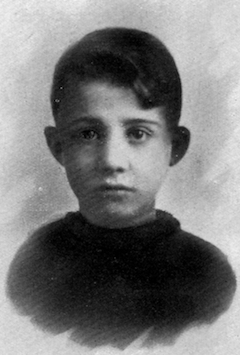
1926: Anteo Zamboni, Mussolini near-assassin, lynched

Halloween of 1926 was a festival of triumph for the Italian fascists … and they crowned it in a festival of blood.

The occasion marked (not exactly to the day) the fourth anniversary of Benito Mussolini‘s bloodless coup via the October 1922 March on Rome. And as a gift for himself and his populace, Benito Mussolini on that date inaugurated Bologna’s Stadio Littoriale by riding a charger into the arena and delivering a harangue.


Fascist-built and still in service, it’s now known as the Stadio Renato Dall’Ara and it’s home to Bologna F.C. 1909. (cc) image by Udb.

After another address to a medical conference later that afternoon, Mussolini was motorcading down via Rizzoli in an Alfa Romeo when a gunshot whizzed through his collar.*

It had been fired by a 15-year-old anarchist named Anteo Zamboni, vainly and sacrificially hoping to turn history’s tide with a well-placed bullet.

Instead, his act would offer Il Duce a Reichstag Fire-like pretext — there was always bound to be one, sooner or later — for a raft of repressive legislation including the creation of a nasty secret police, the dissolution of political opposition, and (of interest to this here site) reintroduction of the death penalty.**

But Anteo Zamboni would see his penalty delivered summarily after the crowd seized him.†

Zamboni was done to death with blows and blades by Mussolini’s fascist admirers right on the spot. In a turn of heart, Bologna — by tradition a leftist stronghold — now has a street named for the young would-be assassin. (Here is the source for the ghastly Mature Content images below of Zamboni’s brutalized corpse.)

The incident is the subject of the 1978 film Gli Ultimi Tre Giorni.

* Zamboni’s was only one of three assassination attempts on Mussolini in 1926 alone.

** Just days afterwards during the post-Zamboni repressive pall, the great Marxist intellectual Antonio Gramsci was tossed into prison, never to emerge. Gramsci’s Prison Notebooks issued out of his dungeon, before his health succumbed in 1937 to the intentional neglect of his captors.

† It’s reportedly cavalry officer Carlo Alberto Pasolini who first detained the youth: the father of postwar film director Pier Paolo Pasolini.

On this day..

1799: Sarah Clark, a melancholy instance of human depravity

The ensuing poem, titled “Melancholy Instance of Human Depravity” and published in an 1805 collection, laments a serving-girl’s murder by arsenic of the master and mistress of her house. It was a crime of unrequited love: the intended victim of the poisoned bread was not this couple but their daughter, whom Sarah Clark fancied a rival for the affections of a young man in her former household. Sarah Clark hanged for the murders on October 30, 1799, in Carlisle, Pennsylvania, but Miss Isabella Oliver was never punished for her verse.

UPON the bank of a slow-winding flood
The good Alphonso’s modest mansion stood;
A man he was throughout the country known,
Of sterling sense, to social converse prone:
He walk’d the plains with such majestic grace,
When time had drawn its furrows on his face,
‘Twas easy to infer his youthful charms,
When first the fair Maria bless’d his arms:
Maria—Oh! what mix’d emotions rise,
Grief, pity, indignation; and surprise,
At thought of thee! —

Thy sweetness might have mov’d the harshest mind;
Thy kindness taught th’ ungentlest to be kind;
And yet a fiend enshrin’d in female mould
Could thy heart-rending agonies behold;
When by her cruel wiles thy wedded heart
Was basely sever’d from its dearest part.
The lov’d Alphonso’s breathless corpse she view’d,
And yet her harden’d heart was unsubdu’d.
Perhaps, she saw thee sink beside his bed,
Or lean in speechless sorrow o’er the dead;
Or heard thee faintly cry — The knot’s unti’d
Come, gentle death, thou cans’tnomore divide:
But spare our children, our lov’d offspring spare;
They still are young, and life is worth their care.
To me the charm that sweeten’d life is gone;
Weep not, my friends, I cannot die too soon.
Fast through her reins the subtle poison spread,
And join’d with grief, to bow her aged head.
Her children strive her drooping head to stay;
The monster works to rend those props away;
But triumphs not: a greater power sustains
And bears them through excruciating pains.
Oft did Maria, in serener days,
With tender transport on her offspring gaze;
Maternal love was pictur’d in her face,
The happy parent of a blooming race;
Now the fond mother feels at every pore;
Worse than her own, the pangs her children bore.
Yet still herself, sweet, affable, and mild,
The patient sufferer on her murd’rer smil’d;
Who by her bed officiously attends,
Concern and kind solicitude pretends,
Yet still pursues her own infernal ends.

Hence aid medicinal is render’d vain,
By frequent potions of the deadly bane;
While cruel torture rack Maria’s frame,
And by degrees puts out the vital flame.
Now pause, my muse, and seriously enquire,
What could this hellish cruelty inspire!
Why strike at those who no offence had given?
It seems like stabbing at the face of heaven!
In her dark mind what ugly passions breed!
Like gnawing worms, they on her vitals feed.
Without an object, what could malice do?
Alvina’s near, she’s often in her view;
In her polluted soul foul envy’s rais’d;
Because perhaps she hears Alvina prais’d;
A groundless jealousy her breast inflames;
‘Gainst thee, Alvina, she the mischief aims.
The wicked miscreant working in the dark,
Spreads ruin round, but cannot hit the mark:
A power divine restrains the falling blow
Thus far thou may’st, but shalt no farther go.
What deadly venom rankled in that breast!
What worse than poison must the soul infest,
Which still its fatal purpose could pursue,
Tho’ general destruction might ensue!
Oh! sin, prolific source of human woe!
To thee mankind their various sorrows owe;
Thro’ thee our world a gloomy aspect wears,
Ajd is too justly stil’d a vale of tears.
Man was first form’d upon a social plan;
And tie unnumber’d fasten man to man:
None are, howe’er debas’d, in form or mind,
Cut off from all communion with their kind.
Witness the wretched subject of these lines.
Alas! how many suffer’d by her crimes!
Who more detach’d, of less import, than she?
Yet mark her influence on society.
But there are crimes of a less shocking kind,
That find an easy pass from mind to mind:
As fire spreads from one building to another,
The vicious man contaminates his brother;
Why wonder, then, that Adam could deface
His maker’s image in an unborn race?
When his own hand the sacred stamp had torn,
Could he transmit it whole to sons unborn?
In him the foul contagion first began;
From sire to son the deadly venom ran;
Thus poisoning all the mighty mass of man.

The sad effect is dreadful to endure;
But human wisdom could not find a cure:
Thus, Scripture, reason, and experience, tend
To prove, the power that made alone can mend.
Oh! Christ, thou sum and source of every good,
Thou that for sinners shed’st thy precious blood,
In thee our various wants are all suppli’d;
Thy death our ransom, and thy life our guide.
In thee thy followers second life attain;
And man reflects his maker’s face again.
Is sin progressive, spreading every hour?
Has heaven-born virtue no diffusive power?
Our blessed Saviour is a living head;
The streams that issue from him can’t be dead,
But scatter life and fragrance, as they spread.

On this day..

1855: Jeremiah Craine

(Thanks to Robert Elder of Last Words of the Executed — the blog, and the book — for the guest post. This post originally appeared on the Last Words blog. Fans of this here site are highly likely to enjoy following Elder’s own pithy, almanac-style collection of last words on the scaffold. -ed.)

Susan, receive me; I will soon be with you.

-Jeremiah V. Craine, convicted of murder, hanging, California.
Executed October 26, 1855

Though married with four children in Kentucky, Craine had an affair with eighteen-year-old Susan Newnham. Craine, who believed in spiritualism, said his relationship with Susan was “sanctioned by heaven.” This did not stop Craine from shooting Susan several times, claiming that she pleaded that they make a suicide pact to escape gossip and her family’s anger about their relationship. Craine was stopped from committing suicide the next day. At his execution, Craine read an address to the assembled crowd, calling Susan his “wife.” He was allowed to sing a song he wrote to the tune of “The Indian Hunter’s Lament,” in which he described his wish to die.

On this day..

2009: Two Somali spies

MOGADISHU, Oct. 25 (Xinhua) — Somalia’s Al Shabaab Islamist movement on Sunday executed two young men for alleged spying for the Somali government in the southern town of Marka.

The radical group has been waging insurgency for two years against the Somali government and the African Union peacekeeping forces in the capital Mogadishu.

After the execution was carried out in central Marka town, an official from the group told crowds of local people who gathered to watch the punishment that the men were convicted of spying for the Somali government after “they confessed to the crime.”

“The men were executed because of apostasy and for spying for the apostate government. After three months of investigation and their confession to the crime they were executed in accordance with the Islamic law,” said Sheikh Sultan, an Al Shabaab official in Marka.

Residents said that the young men were executed by firing squad of Al Shabaab fighters as crowds, mainly women and children, looked on the capital punishment.

The hardline Islamist group of Al Shabaab controls much of southern and central Somalia and usually carries out amputations, executions, and floggings of criminals and opposition individuals in areas under their control, including parts of the Somali capital. The Islamist group, which is considered by the Somali government and the United States as a terrorist organization, declares a fight to establish an Islamic State in Somalia.

The Reuters report on this same incident adds a witness describing that “One of the boys did not die easily, so about eight masked al Shabaab men went close and opened fire on him. Soon his body looked like chopped-up meat because of the many gunshots.”

On this day..

1685: Elizabeth Gaunt, for refuge

(Thanks to Thomas Babington Macaulay for the guest post on “the blackest [case] which disgraced the sessions” prosecuting the Rye House Plot to kidnap and murder King Charles II and his Catholic brother soon-to-be-heir James. It originally appeared in Macaulay’s History of England. -ed.)

Among the persons concerned in the Rye House plot was a man named James Burton. By his own confession he had been present when the design of assassination was discussed by his accomplices.

When the conspiracy was detected, a reward was offered for his apprehension. He was saved from death by an ancient matron of the Baptist persuasion, named Elizabeth Gaunt.

This woman, with the peculiar manners and phraseology which then distinguished her sect, had a large charity. Her life was passed in relieving the unhappy of all religious denominations, and she was well known as a constant visitor of the gaols.

Her political and theological opinions, as well as her compassionate disposition, led her to do everything in her power for Burton. She procured a boat which took him to Gravesend, where he got on board of a ship bound for Amsterdam. At the moment of parting she put into his hand a sum of money which, for her means, was very large.

Burton, after living some time in exile, returned to England with Monmouth, fought at Sedgemoor, fled to London, and took refuge in the house of John Fernley, a barber in Whitechapel.

Fernley was very poor. He was besieged by creditors. He knew that a reward of a hundred pounds had been offered by the government for the apprehension of Burton. But the honest man was incapable of betraying one who, in extreme peril, had come under the shadow of his roof.

Unhappily it was soon noised abroad that the anger of James was more strongly excited against those who harboured rebels than against the rebels themselves. He had publicly declared that of all forms of treason the hiding of traitors from his vengeance was the most unpardonable. Burton knew this. He delivered himself up to the government; and he gave information against Fernley and Elizabeth Gaunt.

They were brought to trial. The villain whose life they had preserved had the heart and the forehead to appear as the principal witness against them.

They were convicted. Fernley was sentenced to the gallows, Elizabeth Gaunt to the stake. Even after all the horrors of that year, many thought it impossible that these judgments should be carried into execution. But the King was without pity. Fernley was hanged. Elizabeth Gaunt was burned alive at Tyburn on the same day on which Cornish suffered death in Cheapside.

She left a paper written, indeed, in no graceful style, yet such as was read by many thousands with compassion and horror. “My fault,” she said, “was one which a prince might well have forgiven. I did but relieve a poor family; and lo! I must die for it.”

She complained of the insolence of the judges, of the ferocity of the gaoler, and of the tyranny of him, the great one of all, to whose pleasure she and so many other victims had been sacrificed. In so far as they had injured herself, she forgave them: but, in that they were implacable enemies of that good cause which would yet revive and flourish, she left them to the judgment of the King of Kings.

To the last she preserved a tranquil courage, which reminded the spectators of the most heroic deaths of which they had read in Fox. William Penn, for whom exhibitions which humane men generally avoid seem to have had a strong attraction, hastened from Cheapside, where he had seen Cornish hanged, to Tyburn, in order to see Elizabeth Gaunt burned. He afterwards related that, when she calmly disposed the straw about her in such a manner as to shorten her sufferings, all the bystanders burst into tears.

It was much noticed that, while the foulest judicial murder which had disgraced even those times was perpetrating, a tempest burst forth, such as had not been known since that great hurricane which had raged round the deathbed of Oliver. The oppressed Puritans reckoned up, not without a gloomy satisfaction the houses which had been blown down, and the ships which had been cast away, and derived some consolation from thinking that heaven was bearing awful testimony against the iniquity which afflicted the earth. Since that terrible day no woman has suffered death in England for any political offence.


Newgate, 22d of Octob. 1685.

Mrs. Gaunt’s Speech, written the Day before her Sufferings.

Not knowing whether I should be suffered or able, because of Weaknesses that are upon me through my hard and close Imprisonment, to speak at the Place of Execution; I writ these few Lines to signifie, That I am well reconciled to the Way of my God towards me, though it be in Ways I looked not for; and by Terrible Things, yet in Righteousness; having given me Life, he ought to have the disposing of it, when and how he pleases to call for it; and I desire to offer up my AH to him, it being but my reasonable Service; and also the first Terms that Jesus Christ offers, that he that will be his Disciple, must forsake all, and follow all; and therefore let none think hard, or be discouraged at what hath happened at me; for he doth nothing without Cause, in all he hath done to us, he being holy in all his Ways, and righteous in all his Works; and ’tis but my Lot in common with poor desolate Sion at this Day.

Neither do I find in my Heart the least Regret for what I have done in the Service of my Lord and Master Jesus Christ, in succouring and securing any of his poor Sufferers, that have shewed Favour to his righteous Cause: Which Cause, though now it be fallen and trampled upon, as if it had not been anointed, yet it shall revive, and God will plead it at another Rate than ever he hath done yet, and reckon with all its Opposers and malicious Haters; and therefore let all that love and fear him, not omit the least Duty that comes to Hand, or lyes before them, knowing that now it hath need of them, and expects they shall serve him.

And I desire to bless his holy Name, that he hath made me useful in my Generation to the Comfort and Relief of many Desolate Ones, and the Blessing of those that are ready to perish has come upon me, and being helpt to make the Heart of the Widow to sing. And I bless his holy Name, that in all this, together with what I was charged with, I can approve my Heart to him, that I have done His Will; tho’ it does cross Man’s Will, and the Scriptures that satisfie me are. Isaiah 16. 4, Hide the Outcasts, betray not him that wandereth. And Obad. 13 14, Thou shouldst not have.given up those of his that did escape in the Day of his Distress.

But man says, You shall give them up, or you shall die for it. Now who to obey, judge ye.

So that I have Cause to rejoyce and be exceeding glad, in that I suffer for Righteousness Sake, and that I am accounted worthy to suffer for Well-doing, and that God has accepted any Service from me, which has been done in Sincerity, tho’ mixed with manifold Infirmities, which he hath been pleased for Christ’s Sake to cover and forgive.

And now as concerning my Fact, as it is called, alas it was but a little one, and might well become a Prince to forgive; but he that shews no Mercy, shall find none: And I may say of it in the Language of Jonathan, I did but taste a little Honey, and lo I must die for it. I did but relieve an unworthy, poor, distressed Family, and lo I must die for it.

Well, I desire in the Lamb-like Gospel Spirit to forgive all that are concerned, and to say, Lord, lay it not to their Charge; but I fear he will not: Nay, I believe when he comes to make Inquisition for Blood, it will be found at the Door of the furious Judge; who, because I could not remember Things through my Dauntedness at Burton’s Wife’s and Daughter’s Vileness, and my Ignorance, took Advantage thereat, and would not hear me, when I had called to Mind that which I am sure would have invalidated their Evidence; tho’ he granted something of the same Nature to another, yet denied it to me.

My Blood will also be found at the Door of the unrighteous Jury, who found me Guilty upon the single Oath of an Out-lawed Man; for there was none but his Oath about the Money, who is no legal Witness, though he be pardoned, his Out-lawry not being’ recalled; and also the Law requires two Witnesses in Point of Life: And then about my going with him to the Place mentioned, ’twas by his own Words, before he was Out-lawed, for ’twas two Months after his absconding; and tho’ in a Proclamation, yet not High Treason, as I have heard; so that I am clearly murdered by you.

And also Bloody Mr. A. who has so insatiably hunted after my Life; and though it is no Profit to him, through the ill Will he bore me, left no Stone unturned, as I have Ground to believe, till he brought it to this; and shewed Favour to Burton, who ought to have died for his own Fault, and not bought his own Life with mine; and Capt. R. who is cruel and severe to all under my Circumstances, and did at that Time, without all mercy or Pity, hasten my Sentence, and held up my Hand, that it might be given; all which, together with the Great One of all, by whose Power all these, and a Multitude more of Cruelties are done, I do heartily and freely forgive, as against me; but as it is done in an implacable Mind against the Lord Christ, and his righteous Cause and Followers, I leave it to him who is the Avenger of all such Wrongs, who will tread upon Princes as upon Mortar, and be terrible to the Kings of the Earth: And know this also, that though ye are seemingly fixt, and because of the Power in your Hand, are writing out your Violence, and dealing with a despiteful Hand, because of the old and new Hatred; by impoverishing and every Way distressing of those you have got under you; yet unless you can secure Jesus Christ, and all his Holy Angels, you shall never do your Business, nor your Hands accomplish your Enterprizes; for he will be upon you ere you are aware; and therefore, O that you would be wise, instructed and learn, is the Desire of her that finds no Mercy from you,

Elizabeth Gaunt.

On this day..