1591: Brian O’Rourke, Irish lord

On this date in 1591, Brian na Múrtha Ó Ruairc — Brian O’Rourke to the English who killed him — was drawn and quartered as a rebel at Tyburn.

O’Rourke was a chieftain in a disappearing world, the Gaelic Ireland that the English had been engaged in reducing ever since King Henry VIII realized that he was King of Ireland back in 1542.

O’Rourke’s patrimony in this Tudor conquest was the kingdom of West Breifne, with a lineage going right back to its 12th century founder. As far as the Tudors were concerned he was just one more truculent local lord to subdue — even if the very “proudest man this day living on the earth.” (per Nicholas Maltby)

O’Rourke’s pride put him into opposition against the English satrap and even led him to succor sailors taking refuge from the shattered Spanish Armada in 1588. But the scope of his autonomy was narrowed and narrowed as expanding English occupation crept upon his environs.

In the end it was his brother-Celts in Scotland who finished him: when O’Rourke turned up there in 1591 seeking license to recruit sword-arms from King James VI (James was not yet James I of England at this point), Queen Elizabeth successfully prevailed upon her Scottish counterpart to arrest and extradite the man — an incident that triggered a riot in Glasgow.

Tried on the highly dubious grounds of treason against England committed in Ireland — plus a lese-majeste incident of having the queen’s image dragged in the mud tossed into the indictment for good measure* — O’Rourke scornfully refused to plead, or to defend himself unless Elizabeth herself would deign to sit in judgment — sovereign to sovereign. The court required only O’Rourke’s body, not his assent, to proceed.

O’Rourke had a sharp enough tongue when minded to deploy it, however. On the scaffold, he witheringly abused the notoriously avaricious bishop Miler Magrath who had been sent to minister to him. Then …

Upon Wednesdaie the 3 of November, Bren O’Royrke was drawne to Tyborne, and there hanged, his members and bowels burned in the fire, his heart taken out, and holden up by the hangman, naming it to be the archtraytors heart, and then did he cast the same into the fire, then was the head stricken off, and his bodie quartered

-John Stowe, The Annales of England (1605) (via)

O’Rourke’s son Brian oge O’Rourke inherited his position, and his struggle, until younger brother Tadgh O’Rourke deposed him with English support. Tadgh died young in 1605 — and with him, West Breifne expired too.

* Enjoy an itemized list of the naughty O’Rourke’s many offenses against English sensibilities from page 144 of this public domain volume.

On this day..

1803: Ludovicus Baekelandt, Vrijbos bandit

On this date in 1803, Flemish outlaw Ludovicus Baekelandt was guillotined at Bruges with about 20 of his gang.

Deserting the army of the conquering French, Baekelandt set up as a bandit preying the deep spruce forests of the Vrijbos, eventually attaining leadership of a gang more than 30 strong.

Baekelandt is one of those whom popular memory and national sentiment (resentful here of the French occupation) has elevated into huggable social banditry. But the evidence remaining us testifies to little but a garden-variety brigand whose offenses were in no way confined to property crimes.

The gang was rounded up in 1802 and the Bruges court heard testimony from more than 100 witnesses, eventually dooming 21 men and three women to death for a litany of murders and robberies.

Almost all the information about Baekelandt available online is in Dutch; if that tongue is in your toolkit, gentle reader, this public-domain book is sure to level you up on Ludovicus Baekelandt and friends.

On this day..

1802: Sanite Belair, tigress

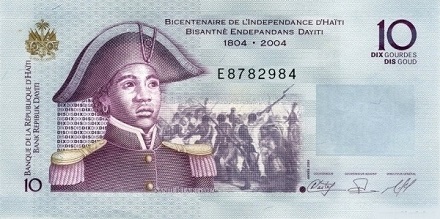
On October 5, 1802, Haitian soldier Suzanne Bélair, called Sanité Bélair, was shot with her husband by the French.

This “tigress” is the most famous of the Haitian Revolution’s numerous female protagonists. A free black woman, she married Charles Belair, the nephew and aide of the man who in the 1790s established pre-eminence on Saint-Domingue — Toussaint L’Ouverture.

L’Ouverture tragically vacillated when the French made their move in 1802 to reverse the revolution’s gains and re-establish slavery, but the tigress rallied General Belair to take the field in resistance — and not only rallied him, but fought alongside him as a regular in his army, attaining the rank of Lieutenant.

It’s said that at her capture, when threatened with beheading, she successfuly asserted the right to an honorable soldier’s death by musketry, and standing before their muzzles cried “Viv libète! Anba esclavaj!” (“Long live freedom! Down with slavery!”)

On this day..

1946: Takashi Sakai

On this date in 1946, Japan Gen. Takashi Sakai was shot by the World War II Allies at Nanking for war crimes.

Fifty-eight years old at his death, Sakai had built his career in the 1920s and 1930s manning various commands in the occupation of China.

Hours after Japan struck the U.S. at Pearl Harbor, Sakai commenced an attack on Hong Kong, then under British control but defended with only a token force that had no odds against the Japanese.

Sakai’s forces committed numerous summary executions and other cruelties on troops captured from the overwhelmed garrison before Hong Kong finally surrendered on Christmas Day.

The whole operation was much more protracted and difficult than Japan had anticipated and perhaps as a result Sakai was relieved of responsibility for the (similarly brutal) occupation of Hong Kong, and eased into retirement back on the mainland.

His next visit to China would occur under very different circumstances — where he would find himself obliged to dissociate himself from the atrocities that his men had authored in the capture of the city. His war crimes tribunal was not impressed.

The Tribunal dismissed the accused’s plea that he could not be held responsible for the above violations because they were perpetrated by his subordinates and he had no knowledge of them. The Tribunal’s findings were as follows:

That a field Commander must hold himself responsible for the discipline of his subordinates, is an accepted principle. It is inconceivable that he should not have been aware of the acts of atrocities committed by his subordinates … All the evidence goes to show that the defendant knew of the atrocities committed by his subordinates and deliberately let loose savagery upon civilians and prisoners of war.

The principle that a commander is responsible for the discipline of his subordinates, and that consequently he may be held responsible for their criminal acts if he neglects to undertake appropriate measures or knowingly tolerates the perpetration of offences on their part, is a rule generally accepted by nations and their courts of law in the sphere of the laws and customs of war.

(Conversely, Sakai’s attempt to cite superior orders as defense against charges for his part in initiating the war also got short shrift. So in terms of the chain of command, he got it coming and going.)

On this day..

1719: Frans Anneessens, Brussels guildmaster

On this date in 1719, Dutch guild chief Frans Anneessens was beheaded on Brussels’ Grand Place.

The southern Low Countries — today’s Belgium — had remained in Spanish hands when the northern part — present-day Netherlands — broke free back in the 16th century.

That meant it was one of the lots on the table when Europe bargained the Spanish patrimony by arms in the early 18th century. For geopolitical reasons (basically, as a bulwark against France, who had lost the war), this proto-Belgium was handed over to Austria.

Neither the empire nor its ward greeted this absentee-landlord arrangement with enthusiasm.

The city of Brussels at this point* was governed by the “nine nations”, nine craft guild consortiums wielding privileges dating to the medieval economy who together dominated the city. Defending these privileges against absolutist states intent on rolling them back was a major bone of contention in Brussels, even years before the Austrian handover.

Monument in Brussels to Frans Anneessens. (cc) image from EmDee

Frans Anneessens (English Wikipedia entry | Dutch | French) who was dean of the “Saint Christopher” nation (comprising dyers, cloth shearers, lacemakers and chairmakers), had a prominent part advancing the (losing) argument for maximal guild privileges.

Just what the ancient rights of the guilds embraced had long been contested with the Spanish crown, and apparently the Brussels town council kept the charters enumerating a very expansive grant of them locked up — until they were accidentally revealed thanks to a bombing in the Nine Years’ War, then published widely.

So did the guilds get these rights or no?

Anneessens in 1698-99 argued the nations’ case before the equally ancient Council of Brabant, and lost: Spanish Austria was suffered to curtail the Brussels guilds, and although the guilds provocatively refused to swear their customary oath to the new arrangement the Spanish were able to squelch the ensuing disturbances by 1700.

The tensions rested, unresolved, through the war years but come 1717 they resurfaced when the Austrian-import governor the Marquis of Prie demanded fresh oaths upon the hamstrung guild privileges, and new taxes to boot. Again the guilds refused — not only in Brussels but Ghent, Antwerp and Mechlin.

Prie only quelled this half-revolt in 1719 but when he did,

he took drastic measures. Five leaders, including Anneessens, were arrested. They were all locked inside the Stone Gate, and a scandalous trial followed, during which Prie did everything he could to get Anneessens, whom he viewed as the brains behind the resistance, convicted. Anneessens received a death sentence, which he proudly refused to sign, and was beheaded on 18 September 1719 [sic**]. After the execution the people of Brussels mourned and collected his blood as relics, and priests in some of the churches held requiems in spite of strenuous attempts by Prie, supported by the higher clergy (the Archbishop of Mechlin) to prevent this. Prie had wanted to “make an example” with this execution and in fact succeeded, despite the sympathy of the people of Brussels for their martyr. (Hetty Wertheim-Gijse Weenink, “Early 18th Century Uprisings in the Low Countries: Prelude to the Democratic Revolution,” History Workshop, spring 1983)

* The guild-nation governance system would persist until Belgium was occupied by France after the French Revolution.

** Literally every other source I found, including the inscription on the Anneessens monument, prefers September 19 for the man’s execution.

On this day..

9: The Battle of Teutoburg Forest


Zum Kampf! Zum Kampf! from Max Bruch‘s 1877 oratorio about Teutoburg Forest victor Arminius. Also be sure to check out the Handel opera.

September 11 in the year 9 AD marked the bloody conclusion of the Battle of Teutoburg Forest — the engagement that permanently scared the Romans off Germany.

One of history’s true turning-point battles, Teutoberg Forest abruptly stanched decades of expansion that had seen Roman arms ascendant from Britain to the Levant. Indeed, the Roman commander who had the dishonor of falling on his sword at this legendary defeat, Publius Quinctilius Varus, was an experienced imperial patrician as well-traveled as the Roman standards who has been seen in these very pages collaborating with the Judean King Herod to execute Herod’s former heir.

But it was in the shadows and bogs of Germany’s primeval forests that Varus made his legacy to the world, which was to have his name famously bemoaned by facepalming Emperor Augustus once news of the disaster made its way back to the Eternal City.

Prior to this cataclysm, the empire had been working a years-long plan to annex fringe chunks of the vast Magna Germania beyond the Rhine and Danube rivers with its customary view towards eventually bossing the whole place. “Upper Germania” and “Lower Germania” to the west of Magna Germania already answered to Rome, testament to recent campaigns launched from neighboring Gaul;* the vast frontier beyond peopled by fractious warring barbarian tribes, with whom Rome cut strategic divide-and-conquer alliances, appeared to promise a future march of Roman glories all the way to the Baltic Sea.

This imperial hubris was shattered at a blow by the Cheruscan chief Arminius, who thereby made his name immortal to Germany.**

He had the element of surprise on his side, because his family had been such loyal Roman allies that Arminius had been trained up in the Roman army as a youth, and even held Roman citizenship. Whatever it was he experienced seems to have nurtured an implacable desire him to keep it away form his homeland. When the time came his familiarity with Roman military orders would be a high card in his hand, too.

Back in Germania, Arminius maintained his overt affiliation with Rome but started sending out feelers to assemble a confederation against the legions. He played this double game so adroitly that Varus still trusted his “ally” implicitly when Arminius reported a Germanic uprising that wanted Roman chastisement. Blind to his danger, Varus duly (and with casual discipline that would read very culpably in retrospect) marched his 17th, 18th, and 19th legions out through the unfamiliar glooms of the Teutoburg Forest.

It was a right massacre.

Their column broken up by rough terrain and pounding autumn rains, the Romans were ripe pickings for German sorties beginning on September 9. Harried by the Germans over two days’ panicked marching, the Romans were pressed into a dead end where palisades trapped the desperate legions at the edge of a slough and put them to slaughter. A bare handful escaped to tell the tale, and no future legion would bear the numerals of those annihilated on this day.


Varusschlacht, by Otto Albert Koch (1909).

The scale of the defeat, by rude tribesmen the empire always counted on being able to bully, beggared the Roman imagination.

“An army unexcelled in bravery, the first of Roman armies in discipline, in energy, and in experience in the field, through the negligence of its general, the perfidy of the enemy, and the unkindness of fortune was surrounded,” Paterculus lamented. “Hemmed in by forests and marshes and ambuscades, it was exterminated almost to a man by the very enemy whom it had always slaughtered like cattle, whose life or death had depended solely upon the wrath or the pity of the Romans.”

To judge by Roman reports — and what gives this event a purchase on the annals of Executed Today — the battlefield rout transitioned directly to the ceremonial butchery of captives. (As well as the posthumous beheading of the suicide Varus.) While some suffered torture and execution, others were offered as ritual sacrifices to the Germanic gods who had so magnificently delivered the day.

Several years later, a Roman force out to re-capture the lost standards of the Teutoburg legions reached the site of the empire’s humiliation. Tacitus describes the scene as a horror.

In the center of the field were the whitening bones of men, as they had fled, or stood their ground, strewn everywhere or piled in heaps. Near lay fragments of weapons and limbs of horses, and also human heads, prominently nailed to trunks of trees. In the adjacent groves were the barbarous altars, on which they had immolated tribunes and first-rank centurions.

Some survivors of the disaster who had escaped from the battle or from captivity, described how this was the spot where the officers fell, how yonder the eagles were captured, where Varus was pierced by his first wound, where too by the stroke of his own ill-starred hand he found for himself death. They pointed out too the raised ground from which Arminius had harangued his army, the number of gibbets for the captives, the pits for the living, and how in his exultation he insulted the standards and eagles.

And so the Roman army now on the spot, six years after the disaster, in grief and anger, began to bury the bones of the three legions, not a soldier knowing whether he was interring the relics of a relative or a stranger, but looking on all as kinsfolk and of their own blood, while their wrath rose higher than ever against the foe.

Despite the devastation, Teutoburg Forest was no extinction-level event for the Roman Empire. The Rhine and Danube frontiers remained an ongoing source of action for the many centuries to come, but despite raids and incursions here or there Rome never more seriously aspired to Magna Germania.

A few books about the Battle of Teutoburg Forest

* The future emperor Tiberius campaigned heavily in Germania, the last of which was post-Varus operations from 10 to 12 AD sufficient to permit the Romans to declare an honorably victorious conclusion to the project. (Tiberius celebrated a Triumph afterwards.)

** Arminius — whose name has been held equivalent with “Hermann” — has been the subject of many literary celebratins in a nationalist vein, great business especially in the 19th century.


The Hermannsdenkmal nomument in the Teutoburg Forest, the life’s labor of sculptor Ernst von Bandel who was able to finish it thanks to a mood of national exultation after the triumph of the Franco-Prussian War. For some reason it has a sister in Minnesota. ((cc) image by Hubert Berberich.)

On this day..

1778: Samuel Lyons and Samuel Ford, Fort Mifflin deserters

In Philadelphia this date in 1778, “Lyons, Ford and Wilson, late Lieutenants, and John Lawrence, late gunner, in the navy of this State, were taken from the gaol to one of the gallies lying off Market Street wharf, where the two former were shot agreeable to their sentence, but the two latter reprieved.” (Pennsylvania Evening Post, September 2, 1778)

Samuel Lyons, Samuel Ford, John Wilson and John Lawrence all served on various of the American “row galley” fleet that gave the American revolutionaries at least some seaborne presence in their fight against the world’s preeminent naval power.

The four, executed and pardoned alike, had deserted the American garrison when that preeminent power put Fort Mifflin in the Delaware River under siege the previous autumn. (There’s a very detailed account of this operation here; the British eventually captured the fort from its badly outnumbered defenders.)

While desertion between the antagonists was a common phenomenon in the American Revolution, this made for an especially bad look a year later once the British abandoned Philadelphia to the aggressively triumphalist Patriots.

Even so, the last-minute clemencies alongside the actual shootings were also very much a part of the Continental Army’s delicate enforcement of discipline, in an environment where it feared that being either too lenient or too harsh could fatally undermine the tenuous morale of the rank and file. Every enforcement was considered in the light of its public impression.

“The number of spectators was very great,” our short report in the Evening Post concluded. “And it is hoped the melancholy scene will have a proper effect upon the profligate and thoughtless, who do not seriously consider that the crime of desertion is attended with the dreadful consequences of wilful perjury.”

On this day..

2016: 36 for ISIS’s Camp Speicher massacre

This morning, Iraq hanged 36 men in Nasiriyah prison for a 2014 sectarian massacre perpetrated by the emerging Islamic State (ISIS or ISIL).

After months’ gestation in the Syrian civil war, the Sunni ISIS in June 2014 burst out of its enclaves and in the course of a few jeep-racing weeks gobbled upper Mesopotamia. It publicly declared its border-straddling conquests the Caliphate on June 29, 2014.

Iraq’s army mostly melted away ahead of the onrushing threat that summer, abandoning weapons and fleeing while ISIS overran Mosul on June 10, then advanced another 200 km to snatch Saddam Hussein‘s birthplace of Tikrit the very next day.

On June 12, ISIS fighters proceeded out of Tikrit to the adjacent air academy Camp Speicher.* There they abducted only the Shia cadets, including about 400 from southern Iraq’s Shia Dhiqar province, and mass-executed an estimated 1,600 — atrocities they took pains to document in a nauseating propaganda video showing dazed and pleading youths trucked to a forlorn ditch where they are laid flat and fusilladed by the dozen, while others are shot from a gore-soaked pier into the Tigris. (The video is available here.)

Of all ISIS’s many bloodbaths, Camp Speicher might be the very bloodiest.

“The executions of 36 convicted over the Speicher crime were carried out this morning in Nasiriyah prison. The governor of Dhiqar, Yahya al-Nasseri, and the justice minister, Haidar al-Zamili, were present to oversee the executions,” according to an Iraqi spokesman a few hours ago.

* The Iraqi Al Sahra air base was renamed by U.S. occupation forces in honor of the first American combat casualty of the 1991 Gulf War.

On this day..

1944: Fusilles de la Cascade du Bois de Boulogne

August 16 is a day of reverence in France for the execution on that date in 1944 — just days ahead of the allied liberation of Paris — of 35 young Francs Tireurs partisans.

In a dastardly operation, a French collaborator known as “Jacques” — actually Guy Glebe d’Eu, who was himself executed after the war — who had insinuated himself into resistance networks lured the youths, all aged about 18 to 22, to a purported weapons-smuggling operation. They were unarmed when they arrived, but the Gestapo was not.

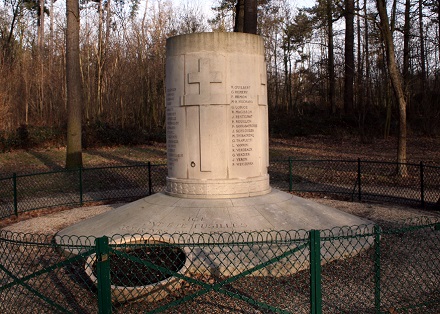
By nightfall the victims were being lined up at in the Bois de Boulogne and shot. The site today is marked by a stately monument that hosts public memorials every August 16.


(cc) image by Remi Jouan.


“Pass this oak with respect: it bears the scars of the balls that slew our martyrs.” (cc) image by Mickael Denet.

On this day..

1741: Juan de la Silva, Spanish Negro

This date in 1741 saw the hanging of Juan de la Silva for the slave plot to torch New York.

This second-last execution in that bloody affair takes us to a side plot we have not yet explored in our running series: the “Spanish Negroes”.

New York in 1741 was a distant outpost of the British empire, which itself had seized the colony from the Dutch not eighty years before. The ongoing Atlantic war that Britain was then fighting against Spain and France, winsomely christened the War of Jenkins’ Ear, was serious and frightening business out on the fringe of the wilderness.

The prospect of slave rebels doubling as a fifth column surely helped to stoke the coals under the stakes in 1741. When the Irish soldier William Kane was forced by the threat of execution into giving obviously specious testimony about the plot, he reported that the conspirators’ “design was to wait for the French and Spaniards, whom they expected; and if they did not come in six Weeks, then they were to try what they could do for themselves.” In fact, Spain had even published an offer of “Freedom to all Negroes, and other slaves, that shall Desert from the English Colonies.”

And it just so happened that there were men in New York at that very moment whose own persons straddled the threats within and without.

The previous year, a New York privateer named John Lush had gone adventuring in the Caribbean and returned home with two Spanish prize ships, the Nuestra Senora de la Vittoria and the Solidad … along with about 100 Spanish prisoners.

Among them were 19 dark-skinned men whom Lush described as Negroes or mulattoes and auctioned accordingly. The slaves or “slaves” protested in vain that they were free Spanish subjects, but having no evidence they could produce to that effect they were sold off to various households around the city, and obviously nonplussed about it.

On April 6, 1741, no fewer than four New York homes caught fire, and one of them was the next-door neighbor to one of those Spanish Negroes — to our man, in fact, Juan de la Silva. Someone put two and two together and by evening a cry “Take up the Spanish Negroes!” echoed around Manhattan. A mob descended on de la Silva and hauled him to jail, along with a number of other Lush imports.

Accusations against these Spanish Negroes have more than the usual ration of absurdity, and not only because of the language gap with the witnesses who “overheard” them. At one point, nine of them were brought in turn before two of the major crown witnesses, the slaves Sarah and Sandy, who variously described each as present or not present at the committee meetings; in only three instances did Sarah and Sandy produce the same answer about a Spaniard. They’d have done better flipping pieces of eight.

Investigation of the “Spanish Plot” angle would ultimately zero in on six of these prisoners-made-slaves.

One luckless fellow, named Francis, was tried among an early batch of (non-Spanish) slaves and wound up burned at the stake on June 12, an undercard attraction that day to the hanging of the supposed arch-villains John and Sarah Hughson. Francis spoke little English but this did not inhibit the Hughsons’ monolingual serving-girl Mary Burton from impeaching him: in Daniel Horsmanden‘s account, she tells the court that “She saw [Francis] often at the Meetings at Hughson’s when they were talking of burning the Town and killing the People; and he seemed to be consenting; he spoke a little English, and some other Language she did not understand.”

The very next day after Francis burned, the main body of “Spanish Negroes, lately imported into this City as Prize Slaves, were put to the Bar; and arraigned upon an Indictment for the Conspiracy.”

Though strangers in an enemy kingdom, Juan de la Silva, Pablo Ventura Angel, Augustine Gutierrez, Antonio de la Cruz and Antonio de St. Bendito would fight their corner as ably as any who came before New York’s courts in that terrible year, and four of the five apparently lived to tell the tale.

Brought to trial on June 15, they ferociously renewed their protest against their enslavement. Horsmanden, who was both junior judge and senior investigator in this matter, noticed what a savvy approach this was. The bulk of evidence was slave testimony, and by the court’s rules slaves could only testify against other slaves. Getting themselves ruled free would be the colonial equivalent of having the DNA evidence suppressed.

They complained (as ’tis supposed, they were advised) that they had great Injustice done them by being sold here as Slaves; for that, as they pretended, they were Freemen in their own Country, and gave in their several Sir-names.

The Indictment was grounded upon an Act of Assembly which enumerated several Offences; and Conspiracies amongst the rest; and made one Slave Evidence against another; so that this Fetch might probably be calculated to take off the Negro Evidence: The Prisoners all protested they could not speak English; and as Mary Burton was the only white Evidence against them, and should it be credited that they could speak only in a Tongue which she did not understand, how could she tell what passed between them in Conversation at Hughson’s? Thus their Advisers might think they would stand the best Chance for the Jury to acquit them.

This was indeed an awkward argument. New York’s Supreme Court took a two-day adjournment to mull how to counter the gambit.

Its solution was quite bizarre. In a single trial, with a single jury, it would try the five men on two different indictments for the same crime: one indictment charged them as slaves; the other, as free men. Even their names varied with their station: from “Juan, Sarly’s” the slave locution indicating Juan’s owner, into the more dignified “Juan de la Sylva”.

This did allow the jurors to hear all the Negro evidence, from the several slaves who (like the Irishman Kane) were made to name whatever names the prosecutors demanded as the price of escaping a gallows of their own — plus, of course, Mary Burton, that ubiquitous accuser who said her late master had informed her that the Spanish Negroes “would burn Lush’s House, and tie Lush to a Beam, and roast him like a Piece of Beef.”

Still, the Spaniards mounted a resourceful defense.

They summoned no fewer than twelve witnesses, all white men and women; each also had his New York owner speak in defense. Four of those owners positively insisted that after a brutal winter their man had been confined at home with an ailment of some kind at the time he was alleged to be out making revolution. The fifth, Juan de la Silva’s master Jacob Sarly, could not posit an ailment but noted that Juan was not permitted out of the house at night and that Juan himself had discovered one of the fires and faithfully called the alarm to Sarly’s wife. Sarly even acknowledged “that he heard that his Negro was free.”

Through an interpreter, each man also spoke in his own defense, generally insisting that they were not slaves and had not kept slaves’ company in New York.

The jury convicted them all just the same — “in about half an Hour,” as Horsmanden recalls it.

And then … something happened.

The Spanish Negroes all but disappear from the record for two months, months when New York conducted numerous additional executions but seemingly did not lay a hand on these condemned foreigners. What was afoot?

Two weeks after their conviction — during which time an offer of executive amnesty came and went — we catch sight of them again when they are brought out of the city dungeon for sentencing. The court’s translator was instructed to advise them to this effect:

1st. THAT they were taken with some Spaniards by an English Privateer; were brought into this Port, and condemned as lawful Prize, being suppos’d to be Slaves belonging to the Subjects of the King of Spain; and Nothing appear’d to the Court of Admiralty (which is the Court, to which Jurisdiction concerning Things of this Nature does properly belong) to shew that they were Freemen; and they having made no Pretence or Claim in that Court to be such, they were therefore adjudg’d to be Slaves.

2dly. That the Court of Admiralty having so adjudg’d them to be Slaves, they had been severally sold and disposed of; by which means they were discharged from Confinement in Prison; and thereby have had the Opportunity of caballing with other wicked, mischievous and evil disposed Persons, as well White-Men as Slaves, and have confederated themselves with them, in a most diabolical Conspiracy, to lay this City in Ashes, and to murder and destroy all the Inhabitants; whereas had they appear’d to have been Freemen, they would have been prevented this Opportunity of venting and gratifying the Rancour of their Hearts, by being closely confined as Prisoners of War.

3dly, If notwithstanding they were Free-men, they ought in all Reason to have waited the Event of the War, and suffer’d patiently under their Misfortune; and when Peace should have been concluded, they might have made the Truth of their Pretensions appear, and then Justice would have been done them.

But now, as they are found Guilty of this most horrid and villainous Conspiracy, by the Laws of our Land, Nothing remains but to pronounce Sentence of Death against them.

Accordingly they were Sentenced to be hanged.

Had they been offered the amnesty, but refused it — whether pridefully or tactically? How comes it that these are the very last words, in Horsmanden or anywhere else, that we have of Pablo Ventura Angel, Augustine Gutierrez, Antonio de la Cruz and Antonio de St. Bendito? One infers that these four must have been pardoned and transported out of New York like scores of other condemned slaves in that period, though these pardons are themselves extensively recorded by Horsmanden. Perhaps they were quietly handled another way — able to buy their freedom or return to Spanish hands in some prisoner swap. Maybe their anonymous helper was able to orchestrate something.

Only Juan de la Silva makes it from sentence to execution, and he with unnervingly little comment. Six more unwritten weeks after his condemnation, he was brought back to court for a pro forma hearing to order his hanging, his comrades now nowhere to be found.

He was supposed to join John Ury on the gallows; our series will meet this man in its next post. But Ury was respited, leaving “Wan” to a strange, lonely death far from his kith and kin — and one single sentence from Horsmanden to dispatch the strangest sub-plot of a sordid story.

Juan, alias Wan de Sylva; the Spanish Negro, condemned for the Conspiracy, was this Day executed according to Sentence: He was neatly dressed in a white Shirt, Jacket, Drawers and Stockings, behaved decently, prayed in Spanish, kiss’d a Crucifix, insisting on his Innocence to the last.

* In New York Burning: Liberty, Slavery, and Conspiracy in Eighteenth-Century Manhattan, Jill Lepore speculates that the attorney James Alexander might have given the Spanish Negroes advice. Although he would have been seated at the prosecutors’ bar in this trial — defending any of the accused terrorists was politically impossible for any of the city’s lawyers — Horsmanden never records Alexander speaking or taking any other active part in the prosecution, and Lepore thinks that might indicate that he was becoming silently disenchanted with events.

Alexander did have the dissident chops to play this part: it was he who “anonymously” penned the scathing attacks on the previous governor that led to the arrest of the man who printed them, Peter Zenger, and thence to Zenger’s acquittal in a landmark freedom of the press case.

On this day..