(Thanks to medieval scribbler Jean Froissart for the guest post, an episode narrated in his famous chronicle. -ed.)
During the time of the assembling of this body of men-at-arms in France, for an expedition to extend the Christian faith, and gain renown, there were other men-at-arms wholly given up to plunder in Limousin, Auvergne, and Rouergue, who, in spite of the truce [pausing the Hundred Years’ War], were continually doing mischief to the countries which thought themselves in security.
The King of France had caused the truce to be publicly notified to the captains of the freebooters, particularly to Perrot le Béarnois, governor of Chaluçet, Amerigot Marcel, and others, who were publicly named in the act, and were assured that if the truce were in the smallest degree infringed, those guilty of it should be corporally punished, without hope of mercy. Some of the captains, fearful of a disgraceful death, or of incurring the king’s indignation, kept the peace very well; others did not, for which they paid severely, as you will hear in the continuation of this history. You have before heard it related in these chronicles, indited and arranged by me, Sir John Froissart, treasurer and canon of Chimay, how peace had been agreed upon with many of the captains of castles in Auvergne and other places, by the mediation of John, Count d’Armagnac, and the Dauphin of Auvergne, to whom they had surrendered their castles for different sums of money; and that they had undertaken to accompany the count to Lombardy, or whithersoever he might lead them.
Count d’Armagnac and the dauphin had laboured hard to gain over these captains, and the country had submitted to be heavily taxed in order to get rid of them: however, Amerigot Marcel and his garrison still continued to do much mischief, and could not be induced to join the count.
Fond of plundering, he resolved to continue it, and having a desire to gain possession of a strong fort called La Roche de Vendais, he and his companions set out thither, and when they had gained the place fortified it, and made it as strong as they could. This done, they began to overrun the neighbouring country — to make prisoners and ransom them. They laid in stores of flesh, meal, wax, wine, salt, iron, steel, and other necessaries; for nothing came amiss to them that was not too hot or too heavy. The inhabitants of the country were much astonished at this, for they thought themselves in perfect security on account of the truce; but these robbers seized whatever they pleased in their houses, or in the fields, calling themselves the Adventurers. Amerigot and his men became the terror of the whole neighbourhood. The countries of Auvergne and Limousin were in a continual state of alarm because of him, and the knights and squires, with the townsmen of Clermont Montferrant, and Riom, and the towns on the Allier, resolved to send notice of their situation to the King of France.
When it was known to those companies who had been disbanded, and were now out of pay, that Amerigot Marcel was continuing the war, many of them came to offer him their services, and he had very soon more than he wished; none of them asked for pay, but solely to be retained by him, for they well knew that those under him would gain a sufficiency from the overplus of the plunder which he gave up to his men. Sometimes he made excursions in the upper parts of the district, and sometimes in an opposite direction; nothing was talked of in Auvergne and Limousin but the robbers of La Roche de Vendais, and greatly was the country frightened by them.
The garrison of Chaluçet, under command of Perrot le Béarnois, steadily adhered to the truce, and were much angered when they learnt that Amerigot was thus harassing the country. The King of France and his council, on hearing the harm that Amerigot and his companions were doing, immediately turned their attention to the matter, and sent the Viscount de Meaux with a large body of men to oppose them. Amerigot was preparing to ravage the country between Clermont and Montferrant, when it was told him that the viscount was advancing, and this intelligence made him defer his intended excursion, for he foresaw that his fortress would be attacked.
Tolerably near to La Roche de Vendais was another fort, called St. Soupery, under the government of Amerigot, where his wife resided, and whither he had sent the greater part of his wealth; he gave orders for the servants and horses to be received into the fort until better times. La Roche de Vendais was naturally strong, and the present garrison had fortified it by every means in their power; it was separated from the high mountains that surround it, and seated on an insulated rock, one side of which the garrison had so strongly fortified that it could only be approached in front, and attacked by skirmishes. The force under command of the Viscount de Meaux advanced and laid siege to the place; it was about the middle of August, the weather was warm and pleasant, and all the knights were comfortably lodged under huts made of green boughs.
The siege of La Roche de Vendais lasted nine weeks, and during it there were constant skirmishes between the two parties, in which many were wounded. The garrison had much the advantage of the besiegers, and I will tell you how; they could sally out whenever they pleased, for it would have required at least 6,coo men to have completely surrounded this castle. When the siege first took place Amerigot felt that he was acting wrong; but to turn the matter as much to his advantage as he could, and if possible to preserve La Roche de Vendais, he determined to send one of his men to England with credential letters to the king and the Duke of Lancaster. Accordingly, with the advice of his uncle, Guyot du Sel, who was with him in the fort, he instructed a well-educated varlet, and sent him off with three letters, one to the king, another to the Duke of Lancaster, and the third to the king’s council. The man performed his journey satisfactorily, and was fortunate enough to find the king, his two uncles of Lancaster and York, with the council, at the palace of Westminster, considering the affairs of Northumberland, and what force they should send thither, for the Scots no way observed the truce.
The messenger of Amerigot soon obtained a hearing, and having been well tutored, and not afraid of speaking, after delivering the letters, he explained so eloquently the reason of his coming, and the wishes of his master, that he was attentively listened to, and was at length told that the king would write to the Viscount de Meaux, and the Duke of Berry, in the manner Amerigot had desired. The Duke of Lancaster promised to do the same, and that the letter should be delivered by an English squire attached to him; that Derby the herald should cross the sea, and accompany them when they gave their letters, in order to aid their success, for he was well known to many lords in Auvergne, particularly to the Duke of Berry. Amerigot was delighted on his messenger’s return, and told him that he had done justice to his commission, for which he would reward him handsomely. The English Squire and Derby set out at once for La Roche de Vendais, and, when arrived at the place where the besiegers lay, inquired for the quarters of the Viscount de Meaux, to whom they presented their letters. The viscount, after examining the seals, read the contents of the letters several times over, and then said to the squire and the herald, “My fair sirs, the intelligence you have brought demands full consideration; I will advise upon it, and you shall soon have my answer.”
The Squire and herald then withdrew, and a council was moved, before which the viscount laid the letters he had received; the knights were much surprised how intelligence of the siege could have been carried to England for such letters to come from them, as the siege had not lasted one month. “I will tell you what I imagine,” said the viscount: “this Amerigot is a cunning fellow, and the moment he perceived we intended to besiege him, he sent a person to England to request such letters might be written as these now before you, which I shall obey or not as I please.” Upon this the messengers were introduced again, and the viscount told them to take back word that he was a subject of the King of France, and had been ordered thither by him: “In consequence, my fair sirs,” he continued, “I shall strictly obey the commands I have received, and loyally acquit myself of my duty; of course, then, I shall not move hence until I have possession of the fort and garrison, which now holds out against me and my companions.”
The squire and herald then took their leave, by no means contented with the message they had received. “We have had ill-success,” said the squire, “we must wait on the Duke of Berry.” “Yes, he is lord of the whole country,” said Derby, “and if he will order the viscount to decamp he must do so, for he dare not disobey him.” They went accordingly to the duke, who when he received the letters read them twice over, and then gave such courteous answers that both were satisfied; for he said, from his affection to his cousins, he would do all in his power to comply with their request; he therefore exerted himself to have the siege of La Roche de Vendais raised, and wrote to the viscount to this effect, engaging that if Amerigot Marcel were left in quiet possession of his fort, he should not hereafter molest the country, and that he should make reparation to the King of France for having offended him.
The viscount, on receiving this intimation, said to his companions, “Gentlemen, we shill never have peace, since the Duke of Berry supports Amerigot; the duke commands me to raise the siege the instant I have read his letter; but, by my faith, I will do no such thing.”
I must now relate what happened to Amerigot, and to his fort. Amerigot had a quick imagination, and concluding from the continuance of the siege that the letters from the King of England and the Duke of Lancaster had failed, he thought of another expedient, which was to leave his castle, and ride night and day to the garrisons in Perigord, and other places, to seek succour from other pillagers, and entice them by fair speeches to enter Auvergne for the sake of plunder, and then to advance some morning or evening to La Roche de Vendais, and capture the knights and Squires before it, which would bring them more than 1oo,ooo francs for their ransoms, without counting smaller articles of pillage. He explained his whole plan to his uncle, Guyot du Sel, and asked his opinion. Guyot replied that he very much approved of it. “Well, uncle,” said Amerigot, “since you approve I will undertake it, only I must beg that during my absence you never sally out of the castle, nor open the barriers.” “It shall be so,” answered Guyot: “we will remain shut up here until we hear from you.”
Within three days after Amerigot left the castle attended only by a page, and without the besiegers being aware of his absence. The castle continued to be assaulted as usual, and on one occasion Guyot du Sel, forgetful of his promise to Amerigot, was induced to sally forth, when he was surprised by an ambuscade, and obliged to surrender the place. News of the loss of La Roche de Vendais was carried to Amerigot Marcel as he was raising troops to break up the siege, and on learning that it was occasioned by an imprudent sally of Guyot du Sel, he exclaimed, “Ah, the old traitor by St. Marcel, if I had him here I would slay him; he has disgraced me and all my companions; this misfortune can never be recovered.”
Amerigot Marcel was indeed sadly cast down; he knew not from whom to ask advice, nor whether to return to Auvergne or to go to Bordeaux, send for his wife, and have his fortune brought thither by little at a time. If he had followed this plan, he would have done well; but he acted otherwise, and, as the event will show, suffered for it. It is thus Fortune treats her favourites; when she has raised them to the highest pitch of her wheel, she suddenly plunges them in the dirt — witness Amerigot Marcel.
The foolish fellow was worth, as was believed in Auvergne, more than 100,000 francs in money, which he lost in one day, together with his life. I therefore say that Dame Fortune played him one of her tricks, which she has played to several before, and she will do the same to many after him. In his tribulation, Amerigot bethought himself of a cousin he had in Auvergne, a squire, by name Tournemine, to whom he resolved to apply and ask for advice. This he did, and attended only by one page entered the castle of his cousin, with whom he thought to meet with a good reception, but he was disappointed; for his cousin immediately arrested him, and shortly after he was conveyed to Paris, where his head was cut off, and his four quarters affixed over four different gates. Such was the sad end of Amerigot Marcel; I know not what became of his wife, or of his wealth. I have dwelt very long on his actions, that I might illustrate his life and death; for, in such a history as this, both good and bad actions must be spoken of, that they may serve as an excitement or warning in times to come. Had Amerigot turned his mind to virtue he would have done much good, for he was an able man-at-arms, and of great courage; but having acted in a different manner, he came to a disgraceful death.
On this day..


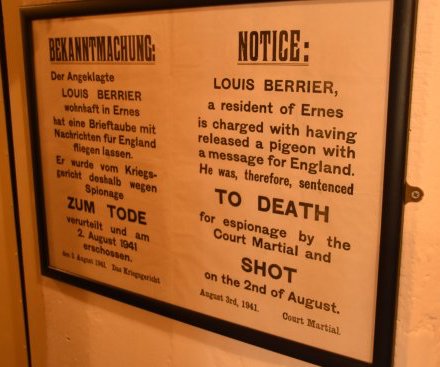

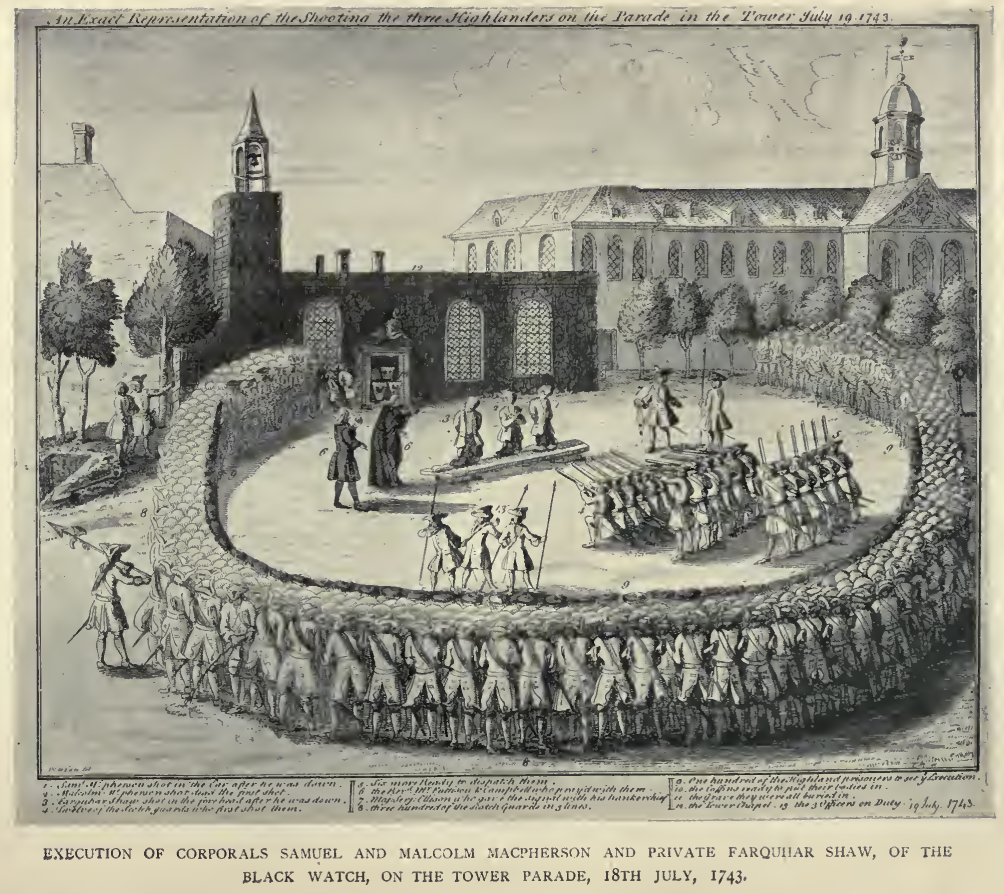


 On this date in 1941, the fascist artist Alexandru Bassarab was killed in World War II — generally believed to be among captured Romanian prisoners of war summarily executed by Soviet troops.
