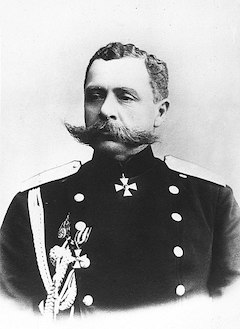
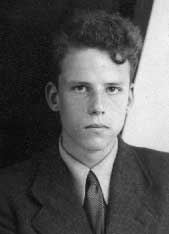
1974: Marc Filloux and Manivanh, journalists

On or about this date in 1974, French journalist Marc Filloux was killed in Khmer Rouge captivity along with his Laotian translator and girlfriend Manivanh.

The Agence France-Presse Southeast Asia correspondent, Filloux (English Wikipedia entry | this is where it’ll be when French Wikipedia adds it) was a sort of retirony case in that he’d been hired back to the Paris bureau.

Before resuming native soil, Filloux took a trip to Cambodia seeking interviews with the leadership of the Khmer Rouge — at this point still a Maoist guerrilla insurgency, although a growing one that now stood within a year of seizing power.

A Khmer Rouge patrol seized Filloux and Manivanh almost immediately upon their entry into Cambodia, apparently taking them as spies. They would never emerge from custody.

Italian correspondent Tiziano Terzani reported hearing rumors that the Khmer Rouge had executed them as spies, but specifics on their fate have never been confirmed.

Cambodia in 2013 unveiled a monument in Phnom Penh to the journalists killed and disappeared during the Cambodian Civil War. Both Marc Filloux and Manivanh are on it.


(cc) image by Writer128.

On this day..

1821: Patriarch Gregory V, in his vestments

The Ottoman Empire besmirched this date in 1821* by launching the Constantinople Massacre of Orthodox Greeks, prominently including the summary hanging of Patriarch Gregory V in his full clerical vestments — on Easter Sunday.


Gregory V approaching martyrdom, by Nikiforos Lytras.

On edge from the outbreak just days earlier of the rebellion that would become the Greek War of Independence, Ottoman Sultan Mahmud II came down on the Greeks within his empire like a ton of bricks. He demanded a religious fatwa licensing a general massacre, a demand that the Sheikh ul-Islam courageously refused. (It cost him his own life to do so.)

Trapped frightfully in the middle of this was the Patriarch, 75 years old and no revolutionary but with a delicate job to safeguard his flock. Fatwa or no — and Gregory’s own private mission to his Muslim counterpart had helped to block that dreadful order — his people stood at Mahmud’s mercy. With news of rebel advances reaching the Porte during Holy Week, Mahmud had the prelate seized during Easter liturgy, escorted outside, and hanged at the gate of the Patriarchate.


St. Peter’s Gate where Gregory suffered has never since been opened. (cc) image from Alessandro57.

On the same day, dozens of other Greek priests, merchants, and officials were summarily executed around Constantinople; one report described of that day that “[a]ll the Archbishops and Bishops who were in the Church on account of the celebration of Easter, were either executed or thrown into prison. The congregation fled out of the Church to the neighbouring houses of the priest, but many were murdered by the enraged populace.” This assault signaled the start of months of terrors ranging from official persecutions, harassment by Janissaries, pogroms, and frequent public executions of prominent Greek Christians that continued into the summer.

* It was April 10 by the Julian (O.S.) date that was still in use in the Orthodox world; by the Gregorian (N.S.) calendar, it’s April 22. We think the reasons to override our general preference for Gregorian dates in this era of history are self-explanatory, especially since the Patriarch has been canonized with a feast date of April 10.

On this day..

1799: Francesco Antonio Lucifero, mayor of Crotone

On this date in 1799, the Jacobin mayor of the Calabrian city of Crotone was shot by counterrevolutionists with three comrades.

Francesco Antonio Lucifero hailed from a devilishly powerful family that had produced several prior mayors who weren’t left-wing radicals. Our Lucifero cleaved to the Parthenopean Republic, the Neapolitan revolutionary state that from the first days of 1799 displaced the Kingdom of Naples.

The Republic was short-lived, and so was Lucifero.

Southerly Crotone was one of the first targets of the Catholic and monarchist Sanfedismo militia led by Calabrian Cardinal Fabrizio Ruffo, which counterattacked the Republic with fury and alacrity. Ruffo overcame that city in March; Lucifero was condemned to death along with three other leading nobleman-revolutionaries Bartolo Villaroja and Giuseppe Suriano, and a Captain Giuseppe Ducarne — the leaders of the holdout republican resistance whom Ruffo besieged in Crotone’s fortress.

On this day..

1918: Paul von Rennenkampf, tsarist general

On this date in 1918, General Paul von Rennenkampf dug his own grave by the side of the railway tracks near Taganrog, then was shot by the Bolsheviks for declining a promotion.

The Baltic German with the glorious Hungarian had spent a career in the tsarist officer corps; he took part in the multinational suppression of China’s Boxer Rebellion, and then the entirely domestic suppression of the abortive 1905 revolution.

Less well did the motherland fare against the Japanese in 1904 (where Rennenkampf’s shin and Russia’s infantry were both shattered) or against history in the Great War (which saw Rennenkampf sacked for command failures in the Battle of Lodz).

Although it seems that the latter result was the consequence of political infighting moreso than verifiable incompetence, the man was still cooling his heels in forced retirement when the revolutions of 1917 arrived. Both the February and the October revolutionaries detained him for a time and then released him, finding insufficient interest in those weighty days in a cashiered sexagenarian no matter how backwards his political priors.

But the Bolsheviks found him interesting when they took over Taganrog, where Rennenkampf was parked. This was his wife’s home town, near the southern industrial center Rostov-on-Don — a place that would be intensely contested in the unfolding civil war between communist Red and tsarist White armies. Such moments entail a choice of sides, so when the Bolsheviks offered this veteran senior commander a role in the Red Army, it was understood to be an offer he couldn’t refuse. He refused it, with bold words that were patriotic but not prophetic.

I’m old. I have not much left to live, for the salvation of my life, I will not become a traitor and will not go against my own. Give me a well-armed army, and I will go against the Germans, but you have no army; to lead this army would mean leading people to slaughter, I will not take this responsibility on myself.

On this day..

1915: Pandit Kanshi Ram, Ghadar plotter

On this date in 1915, Indian revolutionary Pandit Kanshi Ram was hanged by the British.

Present on the U.S. west coast for the founding of the heavily Sikh revolutionary Ghadar Party, Ram repatriated to participate in that clique’s eponymous Ghadar Mutiny.

This attempt to incite rebellion in the Raj was heavily surveilled, and crushed at the outset. The result was a series of trials bringing 20+ executions in 1915 known as the Lahore Conspiracy trials. (It’s not to be confused with the Delhi-Lahore Conspiracy.) “The British as a nation, all white men as a race and the English Government in particular, are all maligned in a spirit born of a depraved nature,” fumed the first court, the one that condemned Pandit Kanshi Ram. “Facts are not only distorted but most maliciously perverted to appeal to the lowest passions of Indian subjects. In the most open, defiant and unmasked manner mutiny is preached. “

On this day..

1865: Robert Cobb Kennedy, Confederate terrorist

Robert Cobb Kennedy, the last Confederate executed by the Union during the U.S. Civil War, was hanged on this date in 1865 as an arsonist.


Harper’s magazine illustration of an arsonist.

Kennedy, a West Point washout from a Louisiana plantation, was part of an ensemble of Confederate agents who attempted to torch New York City on November 25, 1864 — a mission designed to revenge Sherman’s march.

On that Friday evening, the night after Thanksgiving, the eight conspirators fired 13 Gotham hotels as well as theaters, public buildings, and the ludicrous museum of showman P.T. Barnum.* Nineteen fires were started overall, the plotters hoping that their simultaneous flaring would overwhelm the city’s capacity to respond and turn into a general conflagration. Through a combination of good luck, bad arson, and timely informants the various blazes were caught before they could do any real damage.

That couldn’t quite be said of the arsonists, who were all — even Kennedy — able to slip away safely to Canada before they could be caught. Kennedy risked a return trip through Detroit hoping to reach Confederate soil. He didn’t make it.

“Mr. Kennedy is a man of apparently 30 years of age, with an exceedingly unprepossessing countenance,” by the description of the New York Times (Feb. 28, 1865) as he stood trial before a military tribunal.

His head is well shaped, but his brow is lowering, his eyes deep sunken and his look unsteady. Evidently a keen-witted, desperate man, he combines the cunning and the enthusiasm of a fanatic, with the lack of moral principle characteristic of many Southern Hotspurs, whose former college experiences, and most recent hotel-burning plots are somewhat familiar to our readers. Kennedy is well connected at the South, is a relative, a nephew we believe, of Howell Cobb, and was educated at the expense of the United States, at West Point, where he remained two years, leaving at that partial period of study in consequence of mental or physical inability. While there he made the acquaintance of Ex. Brig. Gen. E.W. Stoughton, who courteously proffered his services as counsel for his ancient friend in his present needy hour. During Kennedy’s confinement here, while awaiting trial, he made sundry foolish admissions, wrote several letters which have told against him, and in general did, either intentionally or indiscreetly, many things, which seem to have rendered his conviction almost a matter of entire certainty.

He was hanged at Fort Lafayette, having admitted to setting the fire at Barnum’s museum (“simply a reckless joke … There was no fiendishness about it. The Museum was set on fire by merest accident, after I had been drinking, and just for the fun of a scare”). His was the only life claimed by the Confederate incendiaries.

* This facility was born under a bad star: although it survived the ministrations of Kennedy and friends, it burned to the ground the following July. Barnum put up a successor museum which also burned down, in 1868 — leading the man to pivot into the circus industry where he fixed his name in the firmament.

On this day..

1985: The Dujail Massacre

On this date in 1985, 96 Iraqis were executed for an assassination attempt on Saddam Hussein. Though not the only or the largest atrocity of that dictator, it was the crime that would do to hang him under the U.S. occupation.

Two years deep into the horrific Iran-Iraq War, Hussein paid a ceremonial visit to theShi’ite town of Dujail north of Baghdad and was greeted by an armed ambuscade — up to a dozen gunmen springing from the cover of date palms to fire at the president’s motorcade. They missed.*

The ensuing vengeance was visited so widely as to earn the sobriquet Dujail Massacre: something like 1% of the 75,000-strong town wound up in the hands of the torturers, with 148 death sentences handed down and approved by the president — and they were none too exacting about direct complicity in the assassination, freely sweeping up regime opponents and sympathizers with the outlawed Dawa Party.

A document of March 23, 1985, certifies their mass execution although the Iraqi Special Tribunal‘s investigation found this to be a a bit of an overstatement; some had already been executed previously or died of maltreatment in custody, while a few of those still alive were not present in Abu Ghraib on that day. All told, it appears that 96 of the 148 people condemned to death for the attempt on Saddam Hussein’s life were put to death on March 23, 1985. To multiply the injury, the families of the alleged perpetrators also suffered confiscation of their homes and destruction of their orchards.

The detailed documentary trail, and specifically Hussein’s personal approval of the death sentences, recommended this case to the U.S. occupation of the early 2000s as the rope by which to hang the now-deposed dictator and his closest associates. Accordingly, the Dujail Massacre executions formed one of the central charges in the 2005-2006 trial that resulted in Saddam Hussein’s own execution.

* There were a couple of presidential bodyguards killed.

On this day..

1871: Generals Lecomte and Thomas, at the birth of the Paris Commune

On this date in 1871, the Paris Commune was born, with the execution of Generals Lecomte and Thomas.

Paris had come to the brink of revolution by dint of the country’s humiliating defeat in the Franco-Prussian War. After a monthslong Prussian siege of the capital, Paris had become thoroughly radicalized and stood at tense loggerheads with the newly elected conservative national government of Adolphe Thiers. A militant National Guard swelled by the city’s large proletariat had defended Paris during its late privations, only to see a government of national humiliation accept punishing peace terms from Bismarck and submit to a Prussian victory parade on the Champs d’Elysees.

Now, it blanched at the national government’s intention to reassert its own long-absent authority in Paris.

These sovereigns’ rivalries chanced to focus in the critical moment upon 400 bronze cannon in Paris, which the National Guard had used in the city’s defense and deployed to working-class neighborhoods with the intention of keeping them out of the government’s hands.

On March 18, upon an order by Thiers which some of his ministers opposed, the army moved upon these guns, intending to seize weapons and authority together. General Claude Lecomte (English Wikipedia entry | French), a rock-ribbed career officer of 63, had charge of this operation so offensive to the Parisian populace.

Lecomte was able to deploy his men at Montmarte where a great portion of the guns would come into his possession, but well did the master observe that “The line between disorder and order lies in logistics” — for a delay in the arrival of the horses and tumbrils by which the artillery would be hauled away gave time for word to spread in the city and an angry crowd assemble to oppose this outrage. Thiers had overruled objections that his soldiery was itself sympathetic to the radicals and would not be reliable in the breach; now, those warnings were vindicated as the soldiery declined to fire on Parisians and instead fraternized as the people took back Montmarte.

Although Lecomte was “merely” seized for the Central Committee of the National Guard, Paris’s blood was up; “the mob wanted to tear their victims to pieces, and it is my opinion they are the culpable judges,” writes John Leighton in Paris Under the Commune.

The first to lay hands on General Lecomte were linesmen and Mobiles, one of the latter observing, as he made a gesture, “Formerly you punished me with thirty days in prison, now I will be the first to fire at you.” Whilst this was going on a new movement was observed in the crowd. It was the arrival of another prisoner, a venerable gentleman, with a white beard, in plain clothes. It was General Clement Thomas, who had been arrested in the Place Pigalle by the National Guards. The General had been advised to run away, but he would remain, saying, “I will walk, it is my right.” This brought about a mob, who conducted him to the Rue des Rosiers, making it still worse for the prisoner Lecomte, for it was well known that Clement Thomas had been pretty severe at the Hotel de Ville and elsewhere, on the battalions of Montmartre and Belleville.

Once in the Rue des Rosiers, General Thomas felt he was lost, but as he would not die without knowing the cause, he mounted some steps and in a loud voice demanded, “What do you reproach me with?” “To death!” replied the crowd. “You are too great cowards to shoot me,” said the General. With these words he was driven into the garden, whilst General Lecomte in the scuffle attempted to escape by the back door, though unfortunately without success. Once in the garden, the old vine-covered walls and chestnut trees became crowded with miserable spectators ready to see the horrible deed perpetrated by a peloton of soldiers of the line and two francs-tireurs. In falling, poor General Lecomte exclaimed, “Oh my poor children! my —-” As he sunk mortally wounded, a villain of the group stepped forward and slapped him in the face. Clement Thomas was shot by National Guards. At first only wounded, he afterwards fell pierced in fourteen places. A National Guard pulled him over by the beard, that his face might be seen, and for two hours afterwards the bodies afforded a ghastly spectacle that was enjoyed by an ignoble procession of spectators.

Outside the garden, with the city in an uproar, the proletarian organs that had grown over the long siege took Paris firmly in hand while national government officials fled as they could — or were rounded up as hostages if they could not. The Commune would be master of Paris for ten tense weeks, until Thiers’s republic drowned it in blood.

For Leighton, no friend of the Commune, all the woe in its suppression could be traced to the ham-handed cannon debacle of March 18, 1871:

One thing appears certain — that General Lecomte did not take prompt measures and proper precautions, and that the Government, which sent him to remove 171 guns, without teams, and so small a force, acted inconsiderately, and must be held morally responsible for the disasters which ensued — disasters that, terrible as they are, might have been worse and have led to the total ruin of France.

On this day..

1968: My Lai Massacre

On this date in 1968, the U.S. Army meted out the signature single atrocity of the Vietnam War, the My Lai Massacre — wanton slaughter of 400 to 500 Vietnamese civilians over the span of four evil hours that would emerge as practically metonymous for twenty evil years in Indochina.


Combat photographer Ronald Haeberle shot a number of pictures on that day, although by his own admission he also failed to intervene against the slaughter and he destroyed some of the most incriminating shots. Nevertheless, his iconic photo of bodies heaped on a path became the iconic antiwar poster “And babies”.

The hero on that day was an American helicopter pilot who, seeing the slaughter unfolding, set his warship down in front of his wilding countrymen and trained guns upon them to still their rampage, then escorted several Vietnamese people next in line for murder to his choppers and whisked them to safety. The late Hugh Thompson revisited the site of the massacre for 30th anniversary commemorations and told a U.S. reporter,

“One of the ladies that we had helped out that day came up to me and asked, ‘Why didn’t the people who committed these acts come back with you?’ And I was just devastated. And then she finished her sentence: she said, ‘So we could forgive them.’ I’m not man enough to do that. I’m sorry. I wish I was, but I won’t lie to anybody. I’m not that much of a man.” (Source)

On this day..

1945: Theo van Gogh, famous name

Theo van Gogh, a Dutch resistance fighter of portentous lineage, was executed by the German occupation on this date in 1945.

This man was the grandson of the famous Theo van Gogh, art dealer and brother to troubled, brilliant painter Vincent van Gogh.

Our Theo was a 23-year-old university student in Amsterdam pulled into anti-Nazi resistance by the imposition of a hated loyalty oath on university personnel and was arrested several times, repeatedly tolling his father for bribes to extract him.

The arrest he couldn’t buy his way out of was a home raid on March 1, 1945 — the very last weeks of the war, while these Germans were in the process of being stranded in the Low Countries. Evidently the collapse of the Reich didn’t dampen their enthusiasm for the cause, because on March 8 the Germans imposed a collective punishment of 100+ executions in revenge for the Dutch resistance’s attempt to assassinate a prominent SS officer.* Theo van Gogh was one of them.

Besides his name-brand ancestry, Theo the World War II resistance figure is also the uncle (quite posthumously — this man wasn’t born until 1957) of film director Theo van Gogh, who’s a far-right martyr in his own right thanks to the vociferous anti-Islamic work that resulted in his 2004 assassination.


Prisoners’ Round (after Gustave Doré) (1890), by Vincent van Gogh.

* That officer, Hanns Albin Rauter, was executed for war crimes in 1949.

On this day..