That identification, stretching all the way back to the club’s formative early-20th century years (“History of FC Barcelona” enjoys its own voluminous Wikipedia page) put the Barca president at the end of fascist guns on this date in 1936.
Josep Sunyol was born into the Catalan elite, and had a varied career in the public eye: left activist, parliamentary deputy, newspaper founder, and, come 1935, president of FC Barcelona. He’d been serving on the Barca board of directors since 1928. There’s a lengthy Sunyol biography here.
At the center of the rail, Sunyol (left) chats with Catalan president Lluis Companys. (Source)
It was in his political, rather than his footballing, capacity that in August 1936 — just days into the Spanish Civil War — Sunyol traveled from Barcelona to Madrid to meet with fellow Republicans.
On the return trip from Madrid, Sunyol’s chauffeured car flying the Catalan senyera was stopped by pro-Franco Falangist forces in the Sierra de Guadarrama north of Madrid. It may have been only inadvertently that Sunyol crossed this checkpoint of nationalists, who were already gathering for an attack on Madrid that would eventually inspire For Whom The Bell Tolls. (Indeed, this novel is set in the Sierra de Guadarrama.)
Whatever Sunyol’s intention, he was quickly recognized and detained by his foes on the evening of August 6. Shortly thereafter, they decided to shoot him out of hand.
The civil war and the era of Franco are still sensitive topic in Spain, but FC Barcelona’s politically engaged supporters have pushed the present-day club (with partial success) to more overtly embrace its anti-fascist “martyr president”.
On this date in history, the French spy Francois Henri de la Motte was hanged at Tyburn — and, only after hanging, his head was cut off and his heart carved out. Old Blighty was going a bit soft: it didn’t do actual drawings and quarterings at this late enlightened date. (Well, just one.)
Those old enemies Britain and France had renewed hostilities over the American Revolution, which France backed to twist the neighboring lion’s tail.
De la Motte was a French expat living in England, in which capacity he supported the statecraft of his native realm by coyly picking up British army and naval dispositions and sending word home of who was going where, when. His intelligence allegedly enabled the French navy to turn an unusually aggressive gambit against the British in an engagement in the East Indies, with the loss of 207 souls.
“In the whole history of mankind, an instance was not to be produced of a more ingenious, able, and industrious spy than Mr. De La Motte,” his prosecutors charged. (There’s an account of the trial here.)
Perhaps this was flattery, since the operation was not defeated by counterintelligence except de la Motte’s own counter-intelligence. The guy dropped a bunch of incriminating notes he had taken on naval movements in a staircase, and they were there snatched up by King George’s true subjects and forthwith sent their owner to Newgate. His English accomplice quickly turned Crown’s evidence
Days after the spy’s ignominious end, General Cornwallis’s army in the American south arrived from Charleston at Yorktown, Va., a deep-water port from which he meant to command the Chesapeake. There, Cornwallis was surrounded by an overwhelming force of both American rebels and their French armies. The British defeat at Yorktown that October clinched independence for the colonies.
De la Motte’s trial — accused perfidious Frenchman in danger of barbaric old-timey punishment — appears to be the model for the London trial against Charles Darnay depicted at the start of A Tale of Two Cities. See if this sketch by noted death penalty skeptic (but also death penalty obsessive) Charles Dickens doesn’t essentially depict Francois de la Motte’s situation:
“What’s coming on?”
“The Treason case.”
“The quartering one, eh?”
“Ah!” returned the man, with a relish; “he’ll be drawn on a hurdle to be half hanged, and then he’ll be taken down and sliced before his own face, and then his inside will be taken out and burnt while he looks on, and then his head will be chopped off, and he’ll be cut into quarters. That’s the sentence.”
“If he’s found Guilty, you mean to say?” Jerry added, by way of proviso.
“Oh! they’ll find him guilty,” said the other.
…
Charles Darnay had yesterday pleaded Not Guilty to an indictment denouncing him (with infinite jingle and jangle) for that he was a false traitor to our serene, illustrious, excellent, and so forth, prince, our Lord the King, by reason of his having, on divers occasions, and by divers means and ways, assisted Lewis, the French King, in his wars against our said serene, illustrious, excellent, and so forth; that was to say, by coming and going, between the dominions of our said serene, illustrious, excellent, and so forth, and those of the said French Lewis, and wickedly, falsely, traitorously, and otherwise evil-adverbiously, revealing to the said French Lewis what forces our said serene, illustrious, excellent, and so forth, had in preparation to send to Canada and North America.
Darnay is acquitted, obviously, as Dickens was only three chapters in and being paid for a novel-length serial.
On this date in 1635,* the German aristocrat and general Hans Ulrich [von] Schaffgotsch lost his head in Regensburg.
Schaffgotsch (German Wikipedia entry: most information about him online is in German) would have appeared to have won the birthright lottery. Sure, he was no king, but being born to a hereditary Silesian baron of distinguished blue-blood lineage, and being dynastically married to a princess, put him squarely within the 1 percent’s 1 percent.**
Schaffgotsch caught one very bad break: he was born to come of age during the Thirty Years’ War.
The Schaffgotsch family had different branches going, but Hans Ulrich’s was Protestant — and this was also the predominant faith in early 17th century Silesia. (It adhered to the unsuccessfulBohemian Revolt.)
Doctrinal differences aside, Schaffgotsch had favorable terms from the Catholic emperor. He also made himself good friends with a fantastically wealthy duke named Albrecht von Wallenstein. Wallenstein was a little shaky on the religion question himself; he’d been raised Protestant and converted to Catholicism for unknown reasons.
When the Thirty Years’ War came calling again late in the 1620s, Wallenstein used his capacious wealth to field a large army in service of Ferdinand, and Schaffgotsch went right along as the generalissimo’s able adjutant. But Ferdinand, who was short on both cash and troops to call his own, soon came to fear this capable general upon whom he overmuch depended. When the opportunity arose, the sovereign abruptly relieved Wallenstein of command in 1630 — only to have to reinstate him in 1632† when his replacement got killed.
It turns out Ferdinand did have good cause for suspicion. Wallenstein was dissatisfied with the emperor’s treatment as well, and covertly treated with the Protestant league to switch sides or overthrow the emperor and rule in Bohemia. The detection of these plans in Vienna led Ferdinand to have Wallenstein judged by a secret court, then assassinated in 1634.‡
As his aide, Schaffgotsch too was soon dealt with. Unlike the dangerous Wallenstein, Schaffgotsch was a small enough target to arrest and prosecute in the conventional way — which happened in 1635. Schaffgotsch obstinately refused under torture to admit any involvement in treason, but he was condemned to death all the same.
The Silesian aristocrat might have felt hard done by, but he relieved some annoyance with an old-fashioned shopping spree. Schaffgotsch went out in style (German link) by plumping for black drapings for the scaffold, ordering a custom coffin, doing up all his servants in black mourning garb, and bribing the executioner of Regensburg to behead him seated in a chair. (The lord rooted himself so firmly in his seat that his head flew off at the sword’s stroke without his body toppling over.)
Afterwards, Schaffgotsch’s body was laid out for last respects for two days in Regensburg Blauen Krebs inn, which still exists to this day. (And has the story on its website.)
* Gregorian date. With Catholic and Protestant powers both going at it, dating gets confusing in this period; it would have been July 13 per the Julian calendar still in use by most Protestants, and this date is also sometimes attributed.
** Click here for some appealing views of Kynast (Chojnik), one of Schaffgotsch’s castles.
† Wallenstein commanded Habsburg forces at the Battle of Lutzen in November 1632, where Sweden’s King Gustavus Adolphus was killed.
‡ Wallenstein’s treachery and death are the topic of Schiller’s play Wallenstein.
The Corsican had fallen back following the debacle of occupying Moscow, but the attempts of Napoleon-allied forces to recoup dwindling numbers by conscription provoked fierce resistance in Solingen — where the draft board was driven out and recruiting materials destroyed.
This little flare-up goes by the excellent title of the “Russian Truncheon Insurgency,” but it soon ran into the bayonets of Napoleon’s German partners. On January 30, 1813, a week after draft riots first erupted, troops began suppressing it. Devaranne, a 29-year-old father of five, was seen as a leader in the resistance and a price put out on his head … a price his own maid collected when the fugitive innkeeper was reckless enough to sleep at home one night.
He was tried and shot at Dusseldorf months later, during a lull in the year’s bloody campaign season.
For the 120th anniversary of Devaranne’s execution — which was also six months into Adolf Hitler’s Chancellorship — Solingen dedicated a memorial plaque to Devaranne, claiming his nationalist martyrdom as its own.
“It is no accident that precisely the Third Reich celebrates the memory of this hero. The same spirit which animated Devaranne, animates our SA as well,” said the city’s Lord Mayor. (There was an SA honor guard on hand for the occasion.) “Then as now, we revolt against repression, then against the Corsican, today the SA’s revolution against the Marxists. We need the memory of our heroes to redirect us to their spirit in dark hours.”
The plaque went missing after the war, but Devaranne still has a street named after him in Solingen.
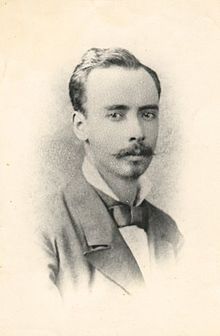
Prado’s father, Manuel Ignacio Prado, was twice the president of Peru (1865-1868,* 1876-1879).
As a military man (Prado’s first presidency was as outright dictator), the old man naturally had his son on a soldierly track as well. Leoncio was all of 12 years old when he took part in the Battle of Callao in 1866, defending that city against a Spanish bombardment during the Chincha Islands War.
That war saw Peru and Chile cooperating against Spain, after the latter seized a lucrative cluster of guano islands.
But different resource rivalries put the two former allies at loggerheads in 1879. When Peru nationalized saltpeter mining in the border province of Tarapaca — dispossessing Chilean interests — and Bolivia took similar measures, the countries fought the three-way War of the Pacific, also known as the Saltpeter War.
Chile would win the war decisively, dramatically reshaping Latin America in the process. Peru lost most of Tarapaca to Chile, devastating Peru’s saltpeter industry and provoking a generation of instability and social crisis. Bolivia fared even worse, losing its only littoral province to Chile: Bolivia remains landlocked to this day.
So it’s safe to say that there was something at stake worth fighting for as hostilities commenced.
As the Saltpeter War got underway, Prado returned from the United States where he was preparing an expedition to help Philippines separatists, and formed a guerrilla force. Though this corps had its highlight moments, it was overwhelmed in a scrap with Chilean regulars in July 1880 and Prado taken prisoner.
Considering his lineage and his exploits, he was an honored captive for the Chileans who repeatedly offered to release him on his honor not to take up arms again.
Prado refused these offers for some time, but he finally accepted his parole at the start of 1882 — a low ebb for Peruvian fortunes, for his father had been deposed by a coup and 1881-82 saw leadership of the country violently contested. Prado’s only thought, notwithstanding his pledge to Chile, was for the defense of his country and he rallied another party of guerrillas to his banner. “The enemy’s bullets do not kill,” he cried. “For to die for the fatherland is to live in immortal glory!”
That has proved to be the case for Prado, who certainly stood out from the politicians of his time for his patriotic heroism.
Captured during the decisive Chilean victory at the Battle of Huamachuco where a grenade shattered his thigh, the crippled Prado was regretfully executed in his bed for having broken his previous parole by resuming arms in the fight.
“We were all crying — all but Pradito,” recalled the Chilean captain tasked with overseeing the nasty business.
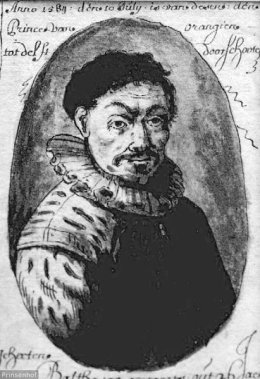
After 4 days of torture, on this date in 1584, Balthasar Gérard (Geeraerts) finally met his end by beheading on the wheel.
Gérard managed to be both historically important and wholly forgettable: an assassin working for Spain against the Netherlands, his regicide was met with a predictably stiff punishment. Then, no fault of his own, the subsequent course of history** pushed the assassin into obscurity while elevating his prey.
A lawyer by trade, Gérard was a fervent Catholic and supporter of the Spanish crown, which controlled the territory up the coast through the present-day Netherlands. At the peak of its power, Spain’s monarchy — led by King Philip II — had significant cause for concern at the rise in Protestantism.
The Spanish were Europe’s paladins of staunch Catholicism, and the sight of her troops did little to endear Spain to her colonized neighbors to the North.
For both religious reasons and political ones, the Dutch were looking for a way out from under the Spanish thumb, and a former noble named William, Duke of Orange, was a major instigator in the struggle. In his collected letters and addresses from the period, An apology or defence of William the First of Nassau, William states that, starting in 1559, he became increasingly concerned with plans against Protestants by the Spanish monarchy.
That also happens to be the year William was bestowed with stadtholdership of Holland, Zeeland, and Utrecht; in effect, he controlled the Dutch coast.
Though he was known as William the Silent, the Duke was endowed with both financial resources and widespread popularity, and he didn’t keep his mouth shut when it came to Inquisition courts in his realms.†
When the head enforcer of that policy, Cardinal Antoine Perrenot de Granvelle, left town, William got even noisier — declaring before the Council of State that Spanish policies were squelching religious freedom.
In 1566, the nobleman signed onto the Compromise of Nobles and began funding insurgencies across the northern provinces. As religious unrest grew, Calvinists and Protestants in the French and Germanic portions of Spain’s holdings quickly formed up behind William. An early attempt in 1568 to invade the Netherlands using German mercenaries and French Huguenots failed, but the resultant executions of Egmont and Hoorn put Spain on a long and winding road toward defeat.
The Dutch War was afoot, with William leading the way.
It would take and dozens of small-scale military victories over the next 15 years (during which William declared himself a Calvinist and fully broke his Spanish ties) for the Dutch to move to independence. The 1580 Union of Utrecht and 1581 Act of Abjuration officially ousted King Phillip II from the Netherlands and installed a new government.
Needless to say, Phillip reciprocated William’s love.
In 1580, Spain’s top man put a price on William’s head. Juan de Jáuregui tried to collect two years later by shooting the stadtholder, but the man holding the new title of Prince William I of Nassau recovered, while de Jáuregui was killed on the spot.
With 25,000 crowns at stake, there were bound to be other takers.
Our man Balthasar Gérard started looking for a close encounter with William the Target. At first, he joined the army in Luxembourg, which didn’t get him very far. It was time to gin up a real plot, which Gérard shopped to the Duke of Parma, Alessandro Farnese, in April 1584. Though the Duke offered no funding for the operation — Gérard ponied up the startup money he needed for the trip — and held out little hope that the lawyer would be successful, he gave Gérard assurances that his family would be taken care of in case of disaster.
Gérard first presented himself to William in June as the son of a martyred Calvinist from France. On 8 July, he returned and, badly in need of new clothes, managed to beg 50 crowns for a new set.
Instead, he bought a pair of pistols and, on 10 July, made history with a point-blank shot to William’s chest.
Detail view (click for the full image) of William the Silent’s 1585 assassination at the hands of Balthasar Gerard.
This assassination attempt didn’t fail. William became the second head of state to be killed by an assassin’s bullet,† — and his shooter the first such man to be juridically punished for the deed.
And, oh, how he was punished.
The regicide was beaten immediately after his capture, then subjected to a variety of cruelties, from wet leather boots which, when heated, both crushed and burned the feet, to daily floggings while hanging on a post outside the jail.
But on this day, his time of torture was up, and Gérard was finally put to death. You know, the usual:
It was decreed the right hand of Gerard should be burned off with a red-hot iron, that his flesh should be torn from his bones with pincers in six different places, that he should be quartered and disembowelled alive, that his heart should be torn from his bosom and flung in his face, and that, finally, his head should be taken off.
Gerard’s execution.
For all that he suffered as a regicide, Gérard left his family an impressive inheritance. Making good Parma’s assurances, King Phillip II gave them William’s former lands in three French provinces and took his siblings and their issue into his peerage.
Gérard’s cause carried on for another 60 years, until it was finally extinguished by the signing of the Peace of Münster by the Republic of the Seven United Netherlands and Spain.
* Foucault mistakenly identifies the torture as lasting 18 days, and the additional details he lays down for Gérard’s time on death row may be less-than-believable. However, all sources indicate that the tortures Gérard endured were quite spectacular, even by the standards of the day.
** See Dissident identities in the early modern Low Countries for a complete treatment of this period in The Netherlands and Belgium.
† For example, the city of Antwerp (Belgium), then under possession of the Spanish crown and considered the mercantile center of Europe for its vast sugar trade, featured over 100 executions for heresy from 1557-1562, twice as many as in all of Spain during that time.
‡ The first was James Stewart, 1st Earl of Moray, then Regent of Scotland. Stewart’s shooter, James Hamilton, escaped into exile, though others of the Hamilton clan answered for the murder.
On this day in 1943, Willem Arondeus and eleven other Dutch resistance members were executed for sabotage and treason in connection with their anti-Nazi activities in the Dutch Underground.
Arondeus, an artist, novelist and biographer, was rather old for a resistance fighter; he was 48 at the time of his death.
He was the son of theater costume designers and one of six children, but became estranged from his family after he came out as gay at the age of seventeen. At a time when homosexuality was still illegal and deeply taboo, Arondeus spoke openly about it.
For seven years in the 1930s he lived with his lover and struggled to make a living. In 1940, after the Nazis invaded the Netherlands, he joined the resistance.
Arondeus utilized his artistic skills by forging identity papers for Dutch Jews. (Being himself part of a persecuted minority, perhaps he felt a special kinship with them.) He urged other artists to stand up against the Nazi invaders.
On March 17, 1943, he and other members of his resistance unit set the Amsterdam General Registry Office on fire, trying to destroy all the original records so the false identity papers couldn’t be checked. They successfully destroyed about ten thousand records, but five days later the entire unit was arrested. Their conviction was a foregone conclusion.
Arondeus said he hoped that by his life and death, he could prove that “homosexuals are not cowards.” Yad Vashem has honored him as Righteous Among the Nations. (pdf)
June 29, 1944, saw several noteworthy mass executions around Axis western Europe.
France: Seven Jewish hostages for the assassination of Philippe Henriot
Poet and journalist Philippe Henriot (English Wikipedia entry | French), the “French Goebbels”, was the Vichy government’s able chief propagandist.
On June 28, 1944, Henriot was assassinated by Maquis operatives disguised as milice paramlitaries.
Incensed, the real milice this morning gathered seven Jews already held in prison as hostages at Rillieux, drove them to the cemetery, and shot them one by one.
(Paul Touvier, who orchestrated this retaliatory execution, managed to stay underground until 1989. At his 1994 war crimes trial, he claimed that the Germans wanted 30 hostages killed, and therefore what he actually did was “save 23 human lives.” Touvier was convicted on the charge of crimes against humanity.)
Italy: Massacres in San Pancrazio, Cornia, and Civitella
As dawn broke this date, German soldiers retreating from liberated Rome fell upon several Tuscan villages.
German columns had been beset by partisans on the way, and standard operating procedure was to retaliate against partisans indirectly, by killing civilians — as in the notorious massacre in the Ardeatine caves. This vengeance was visited on the three towns: over 200 civilians were summarily executed on June 29, 1944.
“My mother later said she went to speak to my father,” remembered one San Pancrazio man. “A soldier turned her back and told her they were taking him to be tortured. She and my father both cried.” The father and those taken with him were shot in the basement of a farmhouse.
Caution: Graphic video.
The towns themselves have kept this date in remembrance, but the massacres were swept under the rug in the postwar settlement as Italy, Germany, and their former western enemies realigned for the Cold War. Only in the 21st century have they come to wider attention, when the discovery of secret archives documenting the atrocities enabled an Italian court to convict an aged German soldier in absentia.
There’s a CNN documentary on these events focusing particularly on San Pancrazio. Called “Terror in Tuscany”, it may be viewable here or here, depending on your location.
“A most infernal plot has lately been discovered here, which, had it been put into execution, would have made America tremble, and been as fatal a stroke to us, this Country, as Gun Powder Treason would to England, had it succeeded.”
On this date in 1776, Continental Army soldier Thomas Hickey was hanged before “a vast concourse of people” for a plot that might have strangled the American Revolution in its crib.
That revolution was a highly uncertain venture at this moment, and in a different timeline Thomas Hickey might have been a British hero for squelching it. “These are the times that try men’s souls,” revolutionary firebrand Thomas Painewrote late in 1776. Hickey had to face his trial in the flesh.
George Washington had holed up in New York City in the spring to fortify it against an expected British invasion — an invasion that did indeed arrive and eventually drove the Continental Army all the way to Philadelphia.* As Paine beheld, the wrong turn of events here could have been decisive. The Continental Army was badly outnumbered and afflicted by desertion. The Continental Congress itself had to abandon Philadelphia not long after boldly declaring independence on July 4.
Whatever one might say of the great-man historiographical mood, you’d have to think that knocking out the rebel army’s top general at this juncture would have been a coup for the British.
In June of 1776, New York was tense ahead of the fighting. A British ship of the line sat forebodingly in the harbor, and even as she awaited the coming British force, her crew members rowed freely ashore for provisions. Plots went abroad among the mixed population of “Patriot” and “Loyalist” citizens. Nathan Hale would soon earn his martyr’s laurels in New York, trying to reconnoiter behind enemy lines as Washington staged a series of losing battles and a gradual retreat.
Somewhat below this plane of world-shaping combat and statecraft, a guy named Isaac Ketcham (or Ketchum) found himself clapped in gaol for counterfeiting the easily-counterfeited colonial paper currency. There, Ketcham caught jailhouse scuttlebutt of Loyalist plots afoot in New York. Realizing this could be his ticket out of prison, Ketcham wrote New York’s Provincial Congress informing on the schemes.
Sadly, Ketcham’s full memorandum has been lost, and as the ensuing trial records are circumspect the “plot” or “plots” in question are a bit of a historical muddle. Roughly, there are two discernible thrusts:
A fifth-column plot against the patriot position in New York, with Loyalist-inclined soldiers set to desert back to the arriving British army.
A plot against the person of George Washington himself.
Ketcham was eagerly interrogated by the Provincial Congress on these matters, and returned to his dungeon in the capacity of an informant. There, he made the acquaintance of the Irish-born Thomas Hickey, a member of George Washington‘s personal guards who had on June 15th been committed for doing his own bit of private currency-printing.
Representing himself as a Tory loyalist, Ketcham apparently induced Hickey to boast about something quite a bit more serious than counterfeiting.
“In different conversations he informed me that the Army was become damnably corrupted,” Ketcham told the court-martial that tried Hickey. “That the fleet was soon expected; and that he and a number of others were in a band to turn against the American Army when the King’s troops should arrive.”
The whole scheme went under the pay of Loyalist New York mayor David Mathews, who was also arrested by patriot troops — although Mathews, whose execution might have turned the British very nasty in the various diplomatic conferences ongoing during the New York campaign, was never even tried.** He escaped to British protection shortly after capture.
No kid gloves were available to the treacherous Irishman Hickey, however. Word of the conspiracy against the patriots had also been obtained from a businessman, William Leary, who reported the attempt of his former employee to recruit him into it. The sheer quantity of highly indiscreet men blabbing about it in taverns and jails and the like makes the whole thing seem crazy in retrospect, but if it had succeeded in, say, destroying Kingsbridge, it might have trapped the Continental Army on Manhattan where they would have been easy pickings for the vastly superior British. Someone surely had to pay for this.
Several of Hickey’s accomplices provided evidence against him, and the speedy conclusion of the military commission that tried him was that Hickey should hang in order to, as Washington wrote the Continental Congress, “produce many salutary consequences, and deter others from entering into like traitorous practices.” So far as is known, however, Hickey was the only person to suffer this extremity.
The unhappy fate of Thomas Hickey, executed this day for mutiny, sedition, and treachery, the General hopes will be a warning to every soldier in the Army to avoid those crimes, and all others, so disgraceful to the character of a soldier, and pernicious to his country, whose pay he receives and bread he eats. And in order to avoid those crimes, the most certain method is to keep out of the temptation of them, and particularly to avoid lewd women, who, by the dying confession of this poor criminal, first led him into practices which ended in an untimely and ignominious death.
Physician William Eustis (eventually the U.S. Secretary of War), who was among the 20,000 to see Hickey hanged, wrote a friend that afternoon of the execution.
Their design was, upon the first engagement which took place, to have murdered (with trembling I say it) the best man on earth: Genl Washington was to have been the first subject of their unheard of Sacricide: our magazines which, as you know, are very capacious, were to have been blown up: every General Officer and every other who was active in serving his country in the field was to have been assassinated: our cannon were to be spiked up: and in short every the most accursed scheme was laid to give us into the hands of the enemy, and to ruin us. (Source)
The scarcity of original documentation makes it very difficult to say with confidence just how impressive this accursed scheme really was. One can see from Eustis’s letter that it was understood immediately to have compassed the murder of George Washington. This prospective “Sacricide” of America’s founding father par excellence has been worth a good bit of embellishment; one bit of utterly insupportable folklore congenial to vegetable-hating schoolchildren is that Hickey arranged to have General Washington’s peas poisoned with arsenic, but the faithful housekeeper exposed the scheme in the nick of time.
Only a bit more fantastical is the video game Assassins Creed III, whose representation of the death of Thomas Hickey — this version of Hickey is a Templar agent — uses a wacky sequence that begins with the public execution of the game player’s own assassin character, complete with first-person, inside-the-hood perspective.
It might well be that Hickey had been engaged in a plot not to murder but to kidnap the rebel general. David Mathews, the New York mayor, would later tell a royal commission in London autopsying Britain’s Revolutionary War defeat, “I formed a plan for the taking of Mr. Washington and his Guard prisoners but which was not effected.” It’s been speculated that the Continental Army itself chose to play up the “murder” angle for public consumption in preference to “kidnap” — perhaps because the notion that the Tories had the strength to contemplate the more complex objective of snatching Washington away from his own army, and were in a position to use his very own guards to accomplish it, implied a weakness in the revolutionary cause far too grave to acknowledge openly.
* It’s from this position that Washington would [re-]cross the Delaware amid December ice floes to conduct a morale-salvaging raid on Hessian troops in New Jersey after many long months of reversals. The British, for their part, held New York for the balance of the war, and this helped make adjacent New Jersey a battleground between pro-British and pro-American militias.
** Mathews administered New York until 1783, when the British ceded it to the victorious colonists.
On this date in 1944, Jakob Edelstein, his wife Miriam, their twelve-year-son Arieh and his mother-in-law Mrs. Olliner were shot to death at the Auschwitz Concentration Camp in Poland. They had been inmates in Auschwitz since the previous December; Jakob had been in an isolation cell the whole time while the others stayed in the so-called “Family Camp.”
For two years prior they’d lived in Theresienstadt (also known by its Czech name, Terezin), a the former Czech fortress town that had been turned into a city just for Jews. Jakob Edelstein was named Eldest of the Jews and was nominally in charge of the place, but in practice he had no choice but to cater to the whims of the Nazis. He was assisted by a deputy and a council of twelve.
Edelstein, a Czech Jew born in 1903, had been a leader within the Jewish community in Prague and had had papers for himself and his family to emigrate to Palestine. But when the Nazis took over Czechoslovakia, Edelstein and the other Zionist leaders decided it was their duty to stay and do what they could for the community during this time of crisis.
He became a liaison between the Germans the Jewish community and tried to facilitate immigration to Palestine. From 1939 to 1941 he made several trips back and forth between Czechoslovakia and Palestine, with permission from the Germans, trying to find ways for more Jews to emigrate.
Theresienstadt was a strange place: neither concentration camp nor ghetto but something in-between, it was billed as a “paradise” and a “gift” from Hitler to the Jewish people.
Elderly Jews were sent there, as well as Jews who were “prominent” for some reason or had Aryan connections (such as Jews who had a non-Jewish spouse). It was advertised as a luxurious resort community where they could live out the rest of their lives in ease and plenty.
Residents were allowed to receive food packages from the outside, and send postcards (one per month, limited to 30 words, and censored).
Many people believed the propaganda and were persuaded to go there voluntarily, signing all their possessions and assets to the German government in exchange for what they thought would be a comfortable and peaceful retirement.
The 500-ish Danish Jews who weren’t evacuated to Sweden by the Danish Underground right after the Nazi invasion of Denmark were ultimately sent to Theresienstadt. Many talented artists, actors, musicians and scholars lived there. The Nazis would ultimately make a propaganda film about how wonderful life was in Theresienstadt, and a Red Cross delegation toured the place and came away satisfied.
As you might have guessed, living conditions within the fortress city didn’t exactly live up to what it said in the brochures.
It’s true that it was possible to survive in Theresienstadt for an extended time period, even for the duration of the war. There were no gas chambers and relatively few executions. Certainly it was worlds apart from, say, Auschwitz or Treblinka. But that was as close to “paradise” as it got.
Yes, there were stores, more than a dozen of them, but their stock consisted of “goods the Nazis had originally confiscated from the residents and later found they didn’t need or want.”
Theresienstadt, like the Lodz Ghetto, had a bank and its own money, but there was nothing to spend it on. “The ghetto crowns,” Berkley says, “were used mostly like Monopoly money in playing cards and other games. Still, the bank staff kept themselves busy balancing their books, and auditors arrived regularly from Berlin to ensure the accuracy of the bank’s essentially fictitious accounts.”
Theresienstadt’s population, at its peak, was 58,497, in a town which before the war had a population of less than 10,000. Nearly everyone had lice, toilets and taps were scarce, and disease was rampant.
Families were separated, with husbands, wives and children each residing in different barracks.
“Horrendous as Theresienstadt housing conditions may have been,” Berkley says, “they were not the residents’ chief source of daily suffering. Food, or rather, the lack of it, weighed on them much more heavily.” The menu, he explains,
consisted chiefly of bread, potatoes, and a watery soup. Some margarine and sugar — about two ounces a week of the former and less than one and one-half ounces of the latter — were sometimes included. The residents were also to receive up to four ounces of meat, mostly horseflesh, and up to eight ounces of skim milk a week, though many a week would see less or none of those foodstuffs available. No fruits were ever officially distributed, and turnips were the only vegetable to show up with any regularity.
Estimates of total per capita calories provided daily ranged from 1300 or less, to 1800, with the lower figure being more frequently mentioned. This should be compared with the “Special Regime” given the worst offenders in the Soviet labor camps which provided about 2,000 calories.
According to modern nutritional guidelines, to maintain a healthy weight, the average adult with an average level of physical activity needs 2,000 to 2,500 calories a day. At Theresienstadt all inmates between age 14 and 70 had to work long hours, many of them at strenuous jobs. In addition to being calorie-deficient, the Theresienstadt rations lacked essential vitamins and minerals. It’s no wonder that one survivor later recalled, “After three months in Theresienstadt, there was only one feeling left in my body: hunger.”
Six months after his arrival, Edelstein and the Council of Elders made a difficult decision about the food problem, as Berkley records:
It became apparent that an even distribution of the food supply would not allow the ghetto to survive. Those doing heavy work needed more than those doing normal work, and the latter needed more than nonworkers. In addition, children required extra rations, for they represented the Jewish future…
Thus, heavy workers … began to receive a little over 2,000 calories of food a day. Children were to get 1,800 and regular workers a little over 1,500. But the daily intake for nonworkers, which included most of the elderly, fell to less than 1,000 calories.
This terrible choice, however necessary to the population’s long-term survival, consigned thousands of people to death.
But even though starvation and disease took many lives, the most deadly aspect of life in Theresienstadt was deportation.
Contrary to what the propaganda messages said about people living out their lives in Theresienstadt, it was largely a transit camp. Most people who arrived would be sent on “to the east” sooner or later; some of them lasted only a few days in the fortress city before being deported.
Although certain classes of people, such as decorated World War I veterans, “prominent” people and those over 65, were in theory exempted from deportation, in practice anyone could be sent away and just about everyone ultimately was.
Approximately 145,000 denizens passed through Theresienstadt during the course of its existence, most of them from Czechoslovakia, Germany, and Austria. About a quarter of these inmates died within Theresienstadt itself. Another 88,000 were deported to Auschwitz and other camps in the East, almost all of them dying there. Out of about 15,000 children who passed through Theresienstadt, less than 2,000 survived, and some estimates put the number in the low hundreds.
When the camp was liberated, it had a population of about 17,000, and most of those had arrived in the during the final months of the war.
Jakob Edelstein didn’t know about the gas chambers when he became Eldest of the Jews at Theresienstadt in December 1941, but he knew that conditions in the East were very bad and realized that, in order for the community to sustain itself, as many people as possible had to remain within Czechoslovakia.
As a committed Zionist, he hoped that the young people in the camp would survive and go on to colonize Israel. Like most otherleaders of Jewish communities throughout Nazi-occupied Europe, he made the decision to cooperate with the occupiers in hopes of saving lives.
And as far as that goes, he failed, as the numbers quoted above indicate. But if he failed, so did everyone else.
Unlike many Jewish officials in the Nazi ghettos, he wasn’t corrupt and he wasn’t a toady to the Germans. It’s worth noting that he had many opportunities to flee the country with his family, even after the war started: all he had to do was not come back to Europe after one of his trips overseas.
But he stayed, because he felt he had a responsibility to his beleaguered people.
Edelstein did the best he could with what he had to work with, which is all you can say for anybody. He worked tirelessly, making himself available at all hours, and under his leadership the camp developed a welfare system as well as many cultural and sports activities.
His job as Eldest of the Jews in Theresienstadt, trying to play the balancing act between advocating for his people and not pissing off the Germans, was always extremely stressful, difficult and dangerous.
But things really started to go downhill for him after the city’s first commandant, Siegfried Siedl, got reassigned to Bergen-Belsen in July 1943.
Siedl’s replacement, Anton Burger, hated Czechs and took an immediate dislike to Edelstein as a result. He replaced Edelstein with Paul Eppstein [German language link, as is the next], a German, and demoted Edelstein to first deputy to Eppstein. Benjamin Murmelstein, an Austrian, became second deputy.
This wasn’t enough for Burger, however, as George Berkley records:
As leader of the Czech Jews, [Edelstein] naturally bore the brunt of Burger’s hatred for them. The new commandant had not only deported many of his countrymen and his chief aide … but had also moved Germans and Austrians into key positions formerly held by Czechs. Burger had apparently also stirred up his own superiors against him for during the fall some bakery workers, looking out the window, saw and heard Eichmann sharply dressing down Edelstein and even threatening to have him shot.
The incident alarmed Edelstein’s many loyal followers and the next day the leaders of Hechalutz, the largest Zionist organization in the camp, met with him to urge him to flee. They said they could help him escape … But though he suspected a Nazi scheme to get rid of him, Edelstein refused to run away.
In the end, the Nazis didn’t need to trump up any charges of insubordination or sabotage against their former Eldest of the Jews: they found some real “crimes.” It seems that Edelstein had been saving people from deportation by allowing them to remain in Theresienstadt, off the books, and adding the names of dead people to the transport lists to make the numbers match up.
He was immediately arrested. It was November 9, 1943, the fifth anniversary of Kristallnacht.
Edelstein was kept in custody in Theresienstadt until December 18, when he and his mother-in-law, his wife, and his young son were sent to Auschwitz with a transport of 2,500 others. The transport became part of the Auschwitz “Family Camp”, joining 5,000 Czech Jews who’d arrived there from Theresienstadt in September.
Edelstein’s family was allowed to join the Family Camp. Edelstein himself was put in the punishment block and subjected to interrogation although not, apparently, tortured. He gave nothing away.
In March 1944, the residents of the Family Camp who’d arrived in September were gassed. The December group was allowed to stay alive for the time being.
On June 20, an SS officer went to Edelstein’s cell and told him he’d been sentenced to death. While the condemned man (who’d become quite popular in jail) was taking leave of his fellow inmates, the SS officer got impatient and snapped, “quickly, quickly.”
Edelstein replied, “I am the master of my last movements.”
He was driven to the execution site and then the car went away to fetch Miriam, Ariah and Mrs. Olliner. Miriam had measles and had to be brought on a stretcher. The Nazis forced Jakob Edelstein to watch as his wife, child and mother-in-law were shot to death. He was the last of them to die.
The remaining residents of the family camp were gassed in early July 1944.
Paul Eppstein was executed in Theresienstadt in September. Murmelstein became Eldest of the Jews in his place and actually managed to survive the war. Because he had lived, he spent the rest of his life under a cloud of distrust and suspicion as a possible collaborator.
Siegfried Siedl was hanged for war crimes in 1947. Anton Burger escaped Allied custody (twice) after the war, assumed a new identity and died of natural causes in Essen in 1991. His true identity wasn’t discovered for years after his death.
After the war, the city of Theresienstadt reverted to its former name of Terezin, and the fortress became an internment camp for ethnic Germans, who found themselves quite unpopular in the newly liberated Czechoslovakia and were expelled from the country in droves. The internment camp closed in 1948.
The modern town of Terezin has a population of 3,500 and is noted for its manufacture of knitwork and furniture. Tourists from all over the world come to learn about its important role in one of the most tragic events in modern history.


 Those old enemies Britain and France had renewed hostilities over the American Revolution, which France backed to twist the neighboring lion’s tail.
 The Corsican had fallen back following the
  Prado’s father,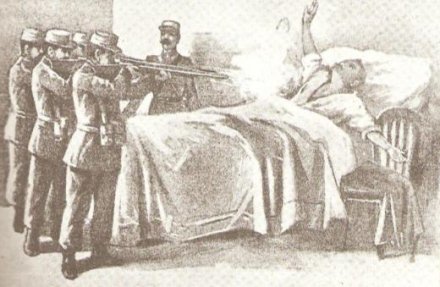
 Gérard managed to be both historically important and wholly forgettable: an assassin working for Spain against the Netherlands, his regicide was met with a predictably stiff punishment. Then, no fault of his own, the subsequent course of history** pushed the assassin into obscurity while elevating his prey.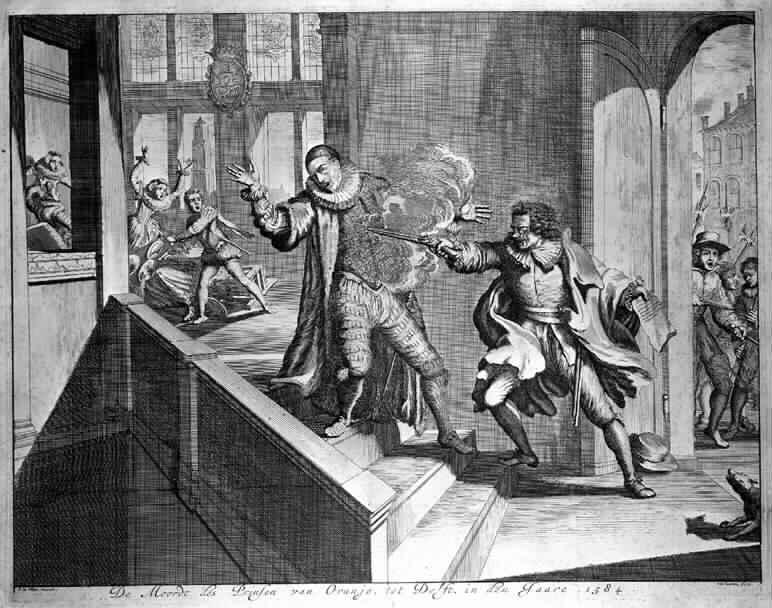


 For two years prior they’d lived in
