On this date in 1996, Ellis Wayne Felker was elecrocuted for a rape-murder that — despite his classic middle name — he always maintained he did not commit.
Felker was fresh off his release from prison for aggravated sodomy in 1981 when he opened a leather shop at which a Macon Junior College student named Evelyn Joy Ludlam solicited work. Felker had none to give her — the business was failing — but he still invited her to interview.
Sometime after Ludlam interviewed at Felker’s shop on Novemer 24, 1981, her car ended up parked in the lot of the Trust Company Bank with Joy nowhere to be found. She remained missing until December 8, when a passerby found her body in Scuffle Creek outside of Macon. She had been raped, sodomized, and throttled.
Evidence incriminating Felker was circumstantial but suggestive: Felker was the last person who could be shown to have seen Joy Ludlam alive, and that under duplicitous circumstances; he had shifted his account of his contact with Ludlam during the crucial hours as evidence came in; he had gone out for an unexplained drive late the night of her disappearance; some bruises on the victim’s body suggested bondage sex and Wayne, a BDSM aficionado, had suspiciously disposed of some leather restraints shortly after Joy vanished. Plus, of course, there was that previous sexual assault conviction.
On the other hand, the initial autopsy and some expert testimony concerning the body’s condition suggested that Joy had died just a few days before she was pulled out of the creek — a timeline which would have ruled Felker out as a suspect since he was under police surveillance from the evening of November 25. (The revision of the autopsy’s initial, Felker-exonerating timeline, and the subsequent expert dispute over the expected state of a body submerged in water after X number of days forms a sizable part of the record. We at Executed Today have no ranks in this coroner’s science, but would note that she was found wearing the clothes she donned for her November 24 visit to Felker’s leather shop.) And years after the trial, boxes of evidence that the state had illegally failed to disclose to Felker’s defense team were discovered. They contained interviews with other witnesses, a highly dubious signed confession by a mentally disabled man, and human tissue.
The last really sticks in craw: courts in 1996, when DNA was still only emerging as a forensic force, refused to allow the sample to be tested on the Kafkaesque procedural grounds that the request had not been made earlier in the process — you know, before the defense knew there was such a sample to test, and/or before DNA testing was a thing. Partial credit for the frustration of Felker’s appeal routes goes to that relic of 1990s death penalty mania, the Antiterrorism and Effective Death Penalty Act. This law, which limited (and still limits) capital defendants’ access to federal habeas corpus relief was actually upheld by the U.S. Supreme Court in June 1996 via Felker’s own case: the key ruling is Felker v. Turpin.
He wasn’t through making history after he died, either.
In what was thought to be a first in 2000, a consortium of media organizations footed the bill for posthumous DNA testing of those recovered hair and fingernail samples, with the potential to deliver an embarrassing four-years-too-late exoneration.
Minutes after midnight on this date in 1996, Georgia electrocuted Larry Lonchar
Ten grand in the red on gambling debts, Lonchar in 1986 raided the home of the bookie he owed and gunned down that bookie, his female partner, and his two sons. (One of the sons survived by playing dead.)
A DeKalb county 911 call recorded the horrifying last moments of Margaret Sweat:
911: DeKalb Emergency 911.
Caller: Police.
911: What address?
Caller: [redacted]
911: What’s the problem?
Caller: Everybody’s been shot.
911: Who’s been shot?
Caller: Me — and —
911: With a gun?
Caller: Yes.
911: Who did it?
Caller: I don’t know.
911: Is that a house or an apartment?
Caller: It’s a condominium. . . .
911: Okay. Now you say everybody’s been shot, I already got you help on the way, but when you say everybody’s been shot, how many?
Caller: Uh, me.
911: Where are you shot at?
Caller: In the living room — I’ve crawled to the phone.
911: I mean what part of your body, Ma’am.
Caller: I think my stomach — they’re coming back in — please-(inaudible)
911: Who did it? Give me a description of them!
Caller: Why are you doing this. Please — (inaudible). Please, please, I don’t even know your name. Please — please Larry. I don’t even know your n –.
Lonchar had little stomach to fight a death sentence he acknowledged deserving — an execution date in 1993 had been averted only at the last moment when his brother’s suicide threat induced Lonchar to reluctantly pick up his appeals — and by the end he was holding out strangely for only a late delay. It seems that he wanted to donate his kidneys, but the wrack of the electrical chair promised to damage the tissue past using. That situation had even led Georgia lawmaker Doug Teper to introduce legislation to conduct executions by guillotine: say what you will about the iconic French razor, it’s easy on the organs.
The spectacle of legal beheadings was spared America, then and since — though who knows what may someday come of the ongoing breakdown of the lethal injection process.
Lonchar’s execution was witnessed by British human rights attorney Clive Stafford Smith, who had come to represent him: Smith wrote about the experience for the Guardianhere.
One hundred years ago today, Leo M. Frank was lynched to an oak tree at Marietta — one of the most notorious mob murders in American history.
Methodically extracted hours before from the Midgeville State Penitentiary by an Ocean’s Eleven-style team of coordinated professionals, Frank’s murder was as shocking in 1915 as it reads in retrospect.
The well-heeled Jewish Yankee was factory superintendent at the National Pencil Company in Atlanta when a 13-year-old girl in his employ was discovered in the factory’s basement — throttled and apparently raped. That was in 1913; for the ensuing two years, the prosecution of Mary Phagan’s boss as her murderer would play out in sensational press coverage.
Frank is today widely thought innocent of the crime, although the Georgia Board of Pardons and Paroles has balked at issuing an unconditional pardon since so little of the original evidence survives. (A 1986 pardon came down “without attempting to address the question of guilt or innocence” in recognition of the slanted trial and the failure to protect Frank from lynchers.) But this was much more than a courtroom drama; the Frank affair crackles with the social tensions of early 20th century America. Industry and labor; integration; sexual violation; sectional politics; race and class and power.
Populist Party politician Thomas E. Watson, whose magazines made a dishonorable intervention by openly agitating for (and then celebrating) Frank’s lynching, captures the Zeitgeist for us as he fulminates against the nationwide campaign to grant the convicted murderer a new trial: “Frank belongs to the Jewish aristocracy, and it was determined by the rich Jews that no aristocrat of their race should die for the death of a working-class Gentile.” Frank came to enjoy (if that’s the right word) the editorial support of most of the country’s major papers, but the meddling of northern publishers, and of fellow Jews in solidarity,* arguably led Georgians to circle wagons in response. Present-day Muslims called upon to disavow every bad act by every other Muslim would surely recognize this no-win position.
But then we must also add that Watson himself, a lawyer, had been approached by Frank’s defense team hoping to enlist his bombast to defend their man at trial. The white supremacist demagogue would have been perfect for the job, for the legal battle pitted the credibility of a black janitor named Jim Conley against that of Frank.
Here amid the nadir of American race relations Frank’s team made its own ugly and unsuccessful pitch for racial solidarity with his neighbors. When formulaically asked by the court that had convicted him for any statement to mitigate the impending sentence, Frank replied that
my execution will make the advent of a new era in Georgia, where a good name and stainless honor count for naught against the word of a vile criminal; where the testimony of Southern white women of unimpeachable character is branded as false by the prosecution, disregarded by the jury and the perjured vaporings of a black brute alone accepted as the whole truth.
This violent collision of two vulnerable minorities each with the keen sense that one or the other of them was being outfitted for WASP America’s nooses makes for riveting and sometimes bizarre reading. Newspapers could hardly fail to note that the all-white jury (Leo Frank’s defense team struck all the blacks) had, as Frank complained, privileged the account of just the sort of “black brute” that Southern courts were accustomed to scorn, or railroad. Thus we have the NAACP organ The Crisis taking umbrage that “Atlanta tried to lynch a Negro for the alleged murder of a young white girl” but “a white degenerate has now been indicted for the crime.” It was likewise reasoned by some that since Conley was a young black man with a criminal record who was a potential suspect in the Deep South in the murderous sexual assault of a little white girl, “the mere fact that Conley did not long ago make his exit from this terrestrial sphere, via a chariot of fire is convincing proof that he, at least, is not the man who committed the deed.”** (New York Age, Oct. 29, 1914.)
In the end it was a zero-sum game between Jim Conley and Leo Frank: one of them was the murderer; each accused the other. Their respective desperate interests permeated to their respective communities. After Frank’s lynching, hundreds of Jews left Georgia; many who remained took pains to downplay their Jewishness.
By whatever circumstance police zeroed on Frank and the white community’s passion followed — tunnel vision that would eventually manifest itself in a circus courtroom atmosphere where the prosecuting attorney was cheered and defense witnesses hooted at and the ultimate outcome more demanded than anticipated. The judge feared that an acquittal would result in the summary lynching of not only Frank but his defenders.
Unusually for the time, appeals on the case reached the U.S. Supreme Court which declined to intervene — although two justices filed a dissent citing the egregious trial atmosphere.
Mob law does not become due process of law by securing the assent of a terrorized jury …
This is not a matter for polite presumptions; we must look facts in the face. Any judge who has sat with juries knows that in spite of forms they are extremely likely to be impregnated by the environing atmosphere … we think the presumption overwhelming that the jury responded to the passions of the mob …
lynch law [is] as little valid when practiced by a regularly drawn jury as when administered by one elected by a mob intent on death.
But that mob would still have its say. On the eve of Frank’s scheduled June 22, 1915 hanging, outgoing governor John Slatoncommuted the sentence.
“Feeling as I do about this case, I would be a murderer if I allowed this man to hang,” the governor said. “It may mean that I must live in obscurity the rest of my days, but I would rather be plowing in a field than feel for the rest of my days that I had this man’s blood on my hands.”†
Frank was spirited away to the penitentiary under cover of darkness; it was hoped that the remote and reinforced edifice would deter any reprisal. It turned out that the furies who hunted Franks could not be dissuaded by mere inconvenience: a committee calling itself the Knights of Mary Phagan formed with the open object of organizing the intended mob vengeance — and indeed it was almost superseded in July of that year by a fellow-prisoner who slashed Frank’s throat as he slept.
Frank survived that murder attempt only to await the next one. Who knows what fancies frequented him in those weeks when he ducked from the shadow of the gallows to that of the lynching-tree, object of pity or hatred. He had time on the last day to savor his impending fate when the Knights methodically cut their way into the penitentiary — snipping the phone wires and disabling the vehicles — and marched their man out with nary a shot fired. Then, a convoy of automobiles “sped” (at 18 miles per hour) all the way back to a prepared execution-site at Marietta. The drive took seven or eight hours over unpaved country lanes, and for every moment of it Frank surely knew how it would end.
As a contrasting response, the American Jewish Committee declined to participate in the Frank campaign for fear of lending counterproductive credence to charges such as those voiced by the New York Sun (Oct. 12, 1913):
The anti-Semitic feeling was the natural result of the belief that the Jews had banded to free Frank, innocent or guilty. The supposed solidarity of the Jews for Frank, even if he was guilty, caused a Gentile solidarity against him.
** Maurianne Davis’s Strangers and Neighbors: Relations between Blacks and Jews in the United States has a trove of interesting editorial comment from Frank’s contemporaries in the black press, and the Jewish press. Conley was actually the confessed accessory, and served a year in prison for it: he said that he complied with Frank’s order to hide the body for fear that his “white” boss could easily get Conley lynched for the crime. Conley also wrote (under Frank’s directive, he said) the preposterous “murder notes” found with the body that purported to be Mary Phagan’s dying indictment of Newt Lee, the African-American night watchman.
† The allusion to political suicide suggests Slaton’s mind was on the precedent of Illinois Gov. John Altgeld, whose career was destroyed by pardoning some of the Haymarket anarchists. If so, Slaton was quite correct; he actually had to flee Georgia altogether and could not return to the state for more than a decade.
On this date in 1862, seven federal raiders were hanged in Atlanta for the daring heist of a Confederate train two months prior. Among them were some of the very first Congressional Medal of Honor awardees.
In terms of its impact on the Civil War, the “Great Locomotive Chase” was a bust. But as pure Americana, you’ll have a hard job to top this caper.
The chase began a year to the day after the first shots had been fired between North and South. Despite the anniversary, the occasion promised nothing but the routine northbound passenger run for the locomotive General from Atlanta to Chattanooga, Tenn.
This line was a spur of the Confederate rail network, and we have already noted in these pages the interest that network held for pro-Union saboteurs. Chattanooga was its great hub: telegraph and rail lines from every quarter of the Confederacy converged there like the center of a spiderweb.
For this reason, Union Gen. Ormsby Mitchel, who had just occupied Huntsville, Ala., aspired to swing his army north to strike this vital city. His bold commandos nonchalantly boarding the northbound train this day were part of Mitchel’s larger operation: cut the rail line from Atlanta to prevent timely reinforcement of Chattanooga, then quickly conquer the strategic city.* Gen. Mitchel was 28 miles from Chattanooga on April 12, 1862, and if his special agents could turn their trick then the whole course of the war might change.
Not long after 5 a.m. on that April 12, the General pulled into a depot at Big Shanty (today, Kennesaw, Ga.). It had a short layover there for breakfast at the adacent Lacey Hotel.
But more important to the raiders’ leader James J. Andrews was what Big Shanty did not have: a telegraph.
While the train’s passengers and crew were settling in for the most important meal of the day, Andrews’s raiders efficiently decoupled the locomotive, its coal tender, and three box cars from the passenger cars. Most of the raiders loaded into the boxcars to be ready as muscle for the crazy flight ahead. But the day was to be a match of speed and ingenuity between the Union daredevil Andrews, and the Confederate train conductor William Fuller — who for the start could only watch in astonishment over his coffee as his General unexpectedly pulled away.
With no telegraph in the vicinity, Fuller had no way to send word up the line to stop the General. But umbrage either patriotic or professional carried him from that first moment in a Javert-like pursuit of his commandeered locomotive.
Fuller dashed out of Big Shanty and up the train tracks on foot with his team. It’s not as crazy as it sounds: negotiating hilly terrain, the General would be making only 15 or 20 miles per hour at speed — and she stopped regularly, to foul the rails behind her, and to cut the telegraph wire. Throughout the chase, or at least until its very last stretch, the Union men managed to keep the next station ahead ignorant of the General‘s treasonable mission by snipping telegraph wire, so on the occasions when they had to stop and answer to a Western & Atlantic Railroad official they were able to bluff their way onward with a story about driving a “powder train” requisitioned by General Beauregard himself.
But those stops took time, and Fuller’s dogged pursuit did not leave Andrews’s raiders much of that to spare.
A couple of miles up the line, Fuller et al found an old handcar, and were able to take to the rails themselves. Near 20 miles into the chase, they were able to commandeer a short-line locomotive, which took them to Kingston where they switched to a mail train. Neither of these vehicles could match the General‘s horsepower; however, Andrews had to keep stopping to cut more telegraph wires or to pry up a rail, and he really got pegged back when the General had to defer to other rail traffic on the single-line route. For instance, the Union commandos spent a frustrating hour on the siding at Kingston waiting out southbound trains.
Andrews’s party did not know for sure at this point that there was a pursuer making good use of this hour. But even so, they had a challenge to spend the scarce resource of time with their hijacked locomotive to best effect.
The objective of the raid was to wreck the Atlanta-Chattanooga rail line, in a way that would put it out of commission for many days and give Gen. Mitchel leave to overwhelm Chattanooga — something like firing a bridge or collapsing a tunnel. The stops they made as they passed various stations to cut the telegraphs or laboriously crowbar up a bit of the rail were essential to give them the ability to cover the next few miles, and bluff past the next station. But thanks to Fuller’s pursuit, there was not after these time-consuming little acts of sabotage a sufficient opportunity to accomplish the tactical purpose of the hijacking.
An extensive collection of links and images relating to the entire route of the chase is here.
In the coolest final stage, the segment most properly called the “Great Locomotive Chase”, Fuller’s gang grabbed a southbound locomotive, the Texas, and without bothering to turn it around they slammed it into reverse in hot pursuit of the northbound General.
The federals in the General tried dropping timbers, and even cutting loose boxcars behind them as railbound battering rams aimed at their inexorable hunter. The Texas kept coming.
By the time the Union boys reached a wooden covered bridge over the Oostanaula, it was apparent that the locomotive would soon exhaust her fuel. Still, the churning plumes of the backward Texas loomed just a few minutes behind. In his last chance to do what he had set out for, Andrews torched his final remaining box car and released it into the wooden bridge, hoping to set the entire structure ablaze and collapse it into the river. Unhappily for the General‘s illicit crew, looking backwards with desperate hope as their ride chugged off, boards sodden by a week’s worth of springtime rain showers stubbornly refused to kindle … and then the Texas arrived to clear away the incendiary.
As its fuel dwindled and its adversary closed, the Generalcame to the end of her legendary run about 18 miles from Chattanooga. Andrews and party abandoned their engine to history and scattered into the woods — but none escaped the immediate Confederate manhunt.
The twenty raiders, plus two others who were supposed to be part of the operation but missed their rendezvous, were all court-martialed as spies: “lurking in and around Confederate camps as spies, for the purpose of obtaining information,” a description bearing very scant resemblance to their actual activities. Eight would hang on this basis.
The intrepid ringleader James Andrews, who was a civilian, was executed in Atlanta on June 7, all alone. His mates only learned of his fate while sitting at their trial in Chattanooga — an experience described in a memoir by one of their number, William Pittenger.
As the trial of different ones proceeded, we had still greater encouragement from the court itself. Members called on us, and told us to keep in good heart, as there was no evidence before them to convict any one. This cheered us somewhat, but there was still one thing which I did not like, and which looked as if something was wrong. The court would not let our boys be present to hear the pleading of counsel on either side, though they urgently requested it. They could neither hear what our lawyers had to say for them, nor what the Judge Advocate urged against them.
…
The trials proceeded rapidly. One man was taken out each day, and in about an hour returned. The table in the court room was covered with bottles, newspapers, and novels, and the court passed its time during trial in discussing these. This was very well if the trial was, as they said, a mere matter of formality; but if it was a trial in earnest, on which depended issues of life or death, it was most heartless conduct.
At last the number of seven was reached, and they would probably have proceeded in trying others, had not General Mitchel, who was continually troubling them, now advanced, and shelled Chattanooga from the opposite side of the Tennessee river. This at once broke up the court-martial, and sent the officers in hot haste to their regiments to resist his progress. Soon after, General Morgan advanced through Cumberland Gap, and threatened Knoxville, which also rendered it necessary to remove us.
Evacuated to Atlanta, they there “remained for a week in quietness and hope, thinking the worst of our trials were past,” Pettinger wrote. “Little did we foresee how fearful a storm was soon to burst over us.”
For its topicality to our site, we here excerpt Pettinger’s chapter 11 at some length:
One day while we were very merry, amusing ourselves with games and stories, we saw a squadron of cavalry approaching. This did not at first excite any attention, for it was a common thing to see bodies of horsemen in the streets; but soon we observed them halt at our gate, and surround the prison. What could this mean?
A moment after, the clink of the officers’ swords was heard as they ascended the stairway, and we knew that something unusual was about to take place. They paused at our door, threw it open, called the names of our seven companions, and took them out to the room opposite, putting the Tennesseeans in with us. One of our boys, named Robinson, was sick of a fever, and had to be raised to his feet, and supported out of the room.
With throbbing hearts we asked one another the meaning of these strange proceedings. Some supposed they were to receive their acquittal; others, still more sanguine, believed they were taken out of the room to be paroled, preparatory to an exchange.
I was sick, too, but rose to my feet, oppressed with a nameless fear. A half crazy Kentuckian, who was with the Tennesseeans, came to me and wanted to play a game of cards. I struck the greasy pack out of his hands, and bade him leave me.
A moment after, the door opened, and George D. Wilson entered, his step firm and his form erect, but his countenance pale as death. Some one asked a solution of the dreadful mystery, in a whisper, for his face silenced every one.
The raiders hanged June 18, 1862
William Hunter Campbell, a civilian
Pvt. Samuel Robertson
Sgt. Major Marion Ross
Sgt. John Scott
Pvt. Charles Shadrack
Pvt. Samuel Slavens
Pvt. George Davenport Wilson
“We are to be executed immediately,” was the awful reply, whispered with thrilling distinctness. The others came in all tied, ready for the scaffold. Then came the farewells — farewells with no hope of meeting again in this world! It was a moment that seemed an age of measureless sorrow.
Our comrades were brave; they were soldiers, and had often looked death in the face on the battle-field. They were ready, if need be, to die for their country; but to die on the scaffold — to die as murderers die — seemed almost too hard for human nature to bear.
Then, too, the prospect of a future world, into which they were thus to be hurled without a moment’s preparation, was black and appalling. Most of them had been careless, and had no hope beyond the grave. Wilson was a professed infidel, and many a time had argued the truth of the Christian religion with me for a half day at a time; but in this awful hour he said to me:
“Pittenger, I believe you are right, now! Oh! try to be better prepared when you come to die than I am.” Then, laying his hand on my head with a muttered “God bless you,” we parted.
Shadrack was profane and reckless, but good-hearted and merry. Now, turning to us with a voice, the forced calmness of which was more affecting than a wail of agony, he said:
“Boys, I am not prepared to meet Jesus.”
When asked by some of us in tears to think of heaven, he answered, still in tones of thrilling calmness, “I’ll try! I’ll try! But I know I am not prepared.”
Slavens, who was a man of immense strength and iron resolution, turned to his friend Buffum, and could only articulate, “Wife — children — tell” — when utterance failed.
Scott was married only three days before he came to the army, and the thought of his young and sorrowing wife nearly drove him to despair. He could only clasp his hands in silent agony.
Ross was the firmest of all. His eyes beamed with unnatural light, and there was not a tremor in his voice as he said, “Tell them at home, if any of you escape, that I died for my country, and did not regret it.”
All this transpired in a moment, and even then the Marshal and other officers standing by him in the door, exclaimed:
“Hurry up there! come on! we can’t wait!”
In this manner my poor comrades were hurried off. Robinson, who was too sick to walk, was dragged away with them. They asked leave to bid farewell to our other boys, who were confined in the adjoining room, but it was sternly refused!
Thus we parted. We saw the death cart containing our comrades drive off, surrounded by cavalry. In about an hour it came back empty. The tragedy was complete!
Later in the evening, the Provost-Marshal came to the prison, and, in reply to our questions, informed us that our friends “Had met their fate as brave men should die everywhere.”
The next day we obtained from the guards, who were always willing to talk with us in the absence of the officers, full particulars of the seven-fold murder.
When our companions were mounted on the scaffold, Wilson asked permission to say a few words, which was granted — probably in the hope of hearing some confession which would justify them in the murder they were about to commit. But this was not his intention. It was a strange stand — a dying speech to a desperate audience, and under the most terrible circumstances.
But he was equal to the occasion. Unterrified by the near approach of death, he spoke his mind freely. He told them that “they were all in the wrong; that he had no hard feelings toward the Southern people for what they were about to do, because they had been duped by their leaders, and induced by them to engage in the work of rebellion. He also said, that though he was condemned as a spy, yet he was none, and they well knew it. He was only a soldier in the performance of the duty he had been detailed to do; that he did not regret to die for his country, but only regretted the manner of his death. He concluded by saying that they would yet live to regret the part they had taken in this rebellion, and would see the time when the old Union would be restored, and the flag of our country wave over the very ground occupied by his scaffold.”
This made a deep impression on the minds of those who listened, and I often afterward heard it spoken of in terms of the highest admiration. When he ceased, the signal was given, and the traps fell!
Five only remained dangling in the air; for two of the seven, Campbell and Slavens, being very heavy men, broke the ropes, and fell to the ground insensible. In a short time they recovered, and asked for a drink of water, which was given them. Then they requested an hour to pray before entering the future world which lay so near and dark before them. This last petition was indignantly refused, and as soon as the ropes could be adjusted, they were compelled to re-ascend the scaffold, and were again turned off!
The whole proceeding, from beginning to end, was marked by the most revolting haste. They seemed to wish, by thus affording no time to prepare for death, to murder soul and body both. Even the worst criminals in our country are allowed some weeks to ask for God’s mercy, before they are thrust into his presence; but our poor boys, whose only crime was loving and trying to serve their country, were not allowed one moment! Could the barbarity of fiends go further?
That afternoon was one of deepest gloom for those who remained. We knew not how soon we might be compelled to follow in the same path, and drink the same bitter cup our comrades drank. Once during the trial we had offered to accept the award of the court in one of the cases as the sentence of all, since we could not see the slightest reason for leaving some and taking others. At that time, however, we believed that all would be acquitted. Now every hope had vanished.
But even without the addition of fear for ourselves, the parting from our loved friends, whose voices were still ringing in our ears, while they themselves had passed beyond the gates of death into the unknown land of shadows, was enough to rend the stoutest heart. There were tears then from eyes that shrank before no danger.
But I could not shed a tear. A cloud of burning heat rushed to my head that seemed to scorch through every vein. For hours I scarcely knew where I was, or the loss I had sustained. Every glance around the room, which revealed the vacant places of our friends, would bring our sorrow freshly on us again. Thus the afternoon passed away in grief too deep for words. Slowly and silently the moments wore on, and no one ventured to whisper of hope.
Fearing they could suffer snap execution at any moment, the remaining raiders made their own hope.
Weeks later, a jail breakout freed eight; all eight covered the hundreds of miles to Union lines safely.
The last six, Pettinger included, were captured in the attempt and remained as war prisoners until the following March, when they were swapped back to the Union in a prisoner exchange.
Strange to say, the United States at the outset of the Civil War did not have a standing military decoration. One of the fruits of this fratricidal conflict was the creation of the Congressional Medal of Honor, which remains to this day the highest honor bestowed within the U.S. armed forces. Abraham Lincoln signed the enabling legislation in July of 1862; they were minted beginning at the end of that year and formally became available as decorations on March 3, 1864.
Our last six survivors — the six exchanged for Confederate POWs — presented themselves to Secretary of War Edwin Stanton on March 25, 1863. In the course of the visit, Stanton presented them with the first six Medals of Honor ever awarded; ultimately, 19 of Andrews’s Raiders received the award — whether living or dead. (Andrews himself was not eligible for it, as a civilian.)
We have included here several clips of the 1956 Disney film The Great Locomotive Chase. This escapade was also the subject of a 1926 Buster Keaton silent comedy, The General, which can be enjoyed in full online:
For a look at the real General in action in 1962 for the Great Chase’s centennial, take a gander at this video. The Texas is on public display at Atlanta’s Southern Museum‘s exhibit on the Great Locomotive Chase.
* In the event Union forces would probe Chattanooga in 1862, but that city was only besieged in earnest and captured at the end of 1863: it was from Chattanooga that Gen. William T. Sherman launched his famous march to the sea.
Dispatches to the New York Herald from 1873 give us today’s post: a little portrait of public hangings in Reconstruction Dixie.
Isham Belton O’Neill, 32 at his death, hanged in Atlanta on this date in 1873; the Herald reported it in the next day’s edition.
O’Neill grew up on a farm outside Atlanta but was taken to the city by service in the Confederate army.
Postwar, he started a short-lived painting business with a fellow veteran, John Little: short-lived, because within a few months the courts were sorting out the partnership’s dissolution. Little, evidently, felt hard done by their rulings and “met O’Neill on the street several times after the snit, and even visited him at his shop, always urging him to let him have a sash, which he claimed to be his own property.”
On September 5th, 1871, they bumped into each other again by accident and after a few pleasantriles, Little started in on the sash again. “You got it be swearing a damned lie,” he insisted.
The testimony is that O’Neill then struck him in the face, and [Little] seized O’Neill first by the collar and then by his hands, which he endeavored to hold firmly; but O’Neill, by turning and exerting himself, wrenched his right hand from Little’s grasp, put it behind him and drew from under his coat a large Bowie Knife and quickly stabbed Little in the abdomen, the knife penetrating six inches deep, making a surface cut of two inches long, the sides of which were jagged, as if the sharp, two-edged knife, after having been plunged in, had been twisted round and drawn out.
Enough about the sash, okay?
O’Neill was a respectable fellow in the community (apart from the unpleasantness), and he stuck to a shaky “self-defense” story long enough that he might have started to believe it himself. So even though Little gurgled his last that night with five feet of bowel hanging out of the jagged fissure O’Neill had carved, the killer felt inordinately confident of an executive reprieve.
O’Neill even eschewed the opportunity to escape during a general jailbreak in February 1872, obediently remaining in his spot even with the cell door popped wide open in front of him. Several fellow prisoners successfully absconded on this occasion and avoided recapture.
O’Neill only received word of the governor’s final rejection of his petition at 1 in the morning on the date of his hanging, when “he was awakened out of a sound sleep to receive it.”
Up to that moment he had been confident in the belief that his life would be spared by the Governor, and had refused to listen to the advice of his counsel and spiritual advisers to prepare for death. When he was told that the last hope was gone he felt very bad and was convinced. For the first time he seemed to realize the awful situation, broke down and gave way to piercing cries and lamentations — “Oh! is it all over with me? My God! it is terrible. Does the Governor refuse even a respite? O merciful God, is there no other chance!” and he ended with long heartrending, choking sobs.
We turn now to the Herald‘s June 17 report of a public execution from Lebanon, Virginia.
A steady, sharp stroke of a hatchet, a rope is cut, the crash of a falling drop follows, another rope is stretched to its utmost tension, there is a rebound and the body of Archie Johnson, a negro, is swinging in the air, a solemn warning to an immense multitude of spectators that “he that sheddeth man’s blood by man shall his blood be shed.”
Archie Johnson, “a copper-colored negro, about twenty-eight years of age” with a countenance “regular and well cut for a negro” was the former slave of a local Russell County gentleman.
Upon liberation, the correspondent charges, he “began a career of dissipation and vice,” driving away a wife with his wantonness before he “totally abandoned himself to all that was degraded, vicious and criminal.” At last, he murdered a man named Hunt.
This story is particularly intriguing for the writer’s detailed — often editorializing — reportage of the hanging details.
Not only all Russell county were on the grounds, but from Washington, Scott and other surrounding counties many thousands came to behold the death struggles of a condemned felon. The number of females in the vast throng was somewhat astonishing, and their complexions were as varied as the costumes they wore. Some were as black as a traditional ace of spaces, others as fair as the whitest lily, while the intermediate embraced every imaginable shade between the two. A large number of these came on horseback, their long, dark riding skirts forming a happy contrast with the innumerable bright and gaudy colors worn by the pedestrians. As to horses, all the available racks, trees and fences in town were thickly lined with them, and then it seemed that the surrounding woods were densely picketed with them. The prevailing costumes of the men were blue and gray jeans. The valleys, the knobs, the peaks and plains, the huts and houses, seemed to have poured themselves out to-day, all actuated by the same common, morbid curiosity, and it can safely be said that scarcely a score of them were solemnly impressed by the terrible scene they witnessed. The number present was estimated at six thousand people.
Turning from sociology to engineering, our observer sketches the construction of the lethal apparatus:
THE SCAFFOLD
was a very ordinary, rude affair, consisting of the usual two main uprights, a narrow platform in the rear, in front of which was the drop, supported by a rope. This ran through the crossbeam near the centre, and was secured to a peg driven in one of the uprights, about four feet from the ground. It allowed of a fall of six feet, and was in all respects as thorough and effective as a majority of the clumsy, murderous machines* generally used in such instances in the South. The structure was situated in the old field to the north of the town and about half a mile distant from the jail.
As for Johnson himself, he signed off on a written confession blaming for his downfall those usual suspects: liquor, cards, loose women. Then he puffed a nonchalant cigar as he rode on his coffin to the gallows, “neatly and tastefully attired in a suit of entire black cloth, black cap, with gloves and gaiters”; he sat on a chair beside his noose for two different sermons (Methodist and Baptist), then a hymn which Johnson “joined with great spirit and religious zeal,” asked one last cigar which he puffed happily for ten minutes in which “his coolness just at this time excited the wonder of many and the admiration of more,” and finally at 2:24 p.m. — 48 minutes after he arrived at the gallows — submitted to his fate.
There was a third U.S. hanging on June 13, 1873: Joseph Duncan, in a public execution at Paris, Ky., for murder. All I have been able to learn in particular of Duncan’s hanging was that his first rope broke, necessitating the ol’ do-over.
* Presumably the Yankee’s judgment of the gallows here is informed by New York’s having “progressed” to upward-jerking hangings.
On May 30, 1806, Polly Barclay of Wilkes County, Georgia was “taken by a proper officer to a gallows previously to be erected in or near the town of Washington, and then and there on the day aforesaid, between the hours of ten o’clock in the forenoon and two o’clock in the afternoon … hung by the neck until you are dead.”
And may God have mercy on her soul.
The purported triggerman, Polly’s brother, had been acquitted of murdering Polly’s husband; then, said assassin turned right around and testified against his sister — who was duly condemned for hiring him. (They do say that Justice is blind.)
Three murderers’ coincidental hanging dates on November 4, 1881, were reported by the next day’s issue of the New York Herald. We reproduce all three bulletins below, verbatim save added line breaks to aid readability.
Whiteville, N.C., Nov. 4, 1881
Henry Lovett, colored, to-day suffered the extreme penalty of the law for the murder of Archelaus P. Williams, who was also colored.
The doomed man slept quietly last night and ate a hearty breakfast this morning. The Rev. H. Gore, colored, of the Missionary Baptist Church, who had attended the malefactor on several occasions and officiated with him to the last moment, states that Lovett professed himself as willing to die. His demeanor this morning was calm and collected and he bade goodby to the sheriff, jailer and others in attendance with perfect composure.
At half-past eleven o’clock this forenoon he was taken from the jail to the gallows, which was erected in the jail yard. He mounted the scaffold with a firm step, attended by the jailer, sheriff and clergyman.
PRAYING ON THE SCAFFOLD.
The execution being public, the yard and surrounding grounds were packed with an eager populace anxious to witness a spectacle seldom seen in the county of Columbus.
Religious services were held upon the scaffold, in which Lovett joined with fervor.
At the conclusion of the devotions the Sheriff adjusted the rope, and at ten minutes past twelve the drop fell. At the expiration of fifteen minutes the physicians in attendance pronounced Lovett dead. He died with scarcely a struggle, the neck being dislocated by the fall. After remaining suspended for twenty minutes the body was cut down and taken to the public burial ground for interment.
STORY OF THE CRIME.
The murder of Williams by Lovett was committed at a place known at Williamson’s Cross Roads, in Tatums township, in this county, on the 19th of July, 1880.
The parties had always been on friendly terms, but upon the day of the murder, both men being intoxicated, some misunderstanding had arisen between them, during which Williams picked up a rock to throw it at Lovett, who had drawn a pocket knife. High words and threats passed between them, but finally apparent peace was restored and Williams threw down the rock in token of amity.
Lovett then approached him, and putting his arm around Williams’ neck said, “There is no trouble, Ned (a name by which the latter was usually known), between us,” and they walked off together in seeming good friendship, when a blow was heard and Williams exclaimed, “I’m a dead man without a cause!”
At the same instant Lovett was seen by one of the bystanders to draw a knife from the neck of his victim.
Some of those present immediately secured Lovett, while others hastened to the assistance of the wounded man. The former made no effort to escape, nor did he attempt to resist arrest.
Medical attendance was very promptly on hand, and it was found that the jugular vein was partially severed and the throat and windpipe badly cut. Williams, however, lived twenty-four hours after receiving the fatal wound.
He was about fifty-five years of age, and left a wife and several children. He was generally a peacable man, but at times, especially when partially intoxicated, was inclined to be quarrelsome.
TRIAL AND CONVICTION.
At the fall term of the Superior Court of Columbus county last year the Grand Jury found a true bill against Lovett, and he was duly arraigned for trial.
As the prisoner was entirely without means the Court assigned counsel to defend him. Upon affidavit being made that the prisoner was not prepared for trial the case was continued until the spring term of 1881, at which the prisoner’s counsel asked for a further continuance to enable them to secure important witnesses, and upon affidavit made to that effect the request was granted.
At the fall term, which convened at Whiteville, September 19, 1881, Judge Jesse F. Graves, presiding, Lovett was brought to trial, and after a fair and impartial hearing, an able defence by his counsel and an exhaustive charge by the court, the jury rendered a verdict of “guilty of murder in the first degree.”
A motion was made for a new trial upon the ground that no malice had been shown upon the part of the defendant, but it was overruled. The court then pronounced sentence of death upon the prisoner.
INDIFFERENCE TO HIS FATE.
Lovett received the sentence with stolid indifference, apparently without remorse for the fearful crime he had committed or solicitude for the awful fate which awaited him.
This utter disregard of the past or future he has as a rule maintained ever since. Spiritual consolation has been offered him through the ministrations of a Baptist (white) clergyman and also by two colored ministers of the same denomination, but he paid little attention to any of them, although his conduct has been quiet, peacable and orderly during his long confinement.
He claimed to be but twenty-one years of age, although his appearance would indicate that he was at least four years old. He also claimed to have had no recollection of the events of that fatal day.
Lovett was a full black, about five feet and five inches in height, and his status as a colored man was considerably below the average of intelligence among those people. He was unmarried.
Plattsburg, N.Y., Nov. 4, 1881
Henry King was executed here to-day for the murder of Michael Hamilton at the State Prison, at Clinton, on July 13, in which both men were convicts.
Both were New York burglars, who had been drafted from Sing Sing Prison. King was serving a life term for killing Police Sergeant McGiven, of New York. He had been very quiet and penitent in the jail and attended strictly to the religious advice given him by Father Walsh.
The arrangements for the execution were carefully made by Sheriff Mooney, the gallows being placed in the rear yard of the jail.
At thirty-six minutes after eleven o’clock the Sheriff and deputies, two medical men and representatives of the press took their places.
The warrant had been previously read in the cell. The condemned man walked unpinioned, with a determined air to his fate, behind Fathers Walsh and Carroll, who were reciting the offices of the Church. King spoke briefly, thanking the Sheriff and his deputies for their kindness, and saying that he had hopes of God’s forgiveness.
DEATH BY STRANGULATION.
The rope and cap having been adjusted by Sheriff Mooney, that official stepped behind a screen, and at seventeen minutes to twelve the body of King sprang upward and was dangling in the air four feet from the ground.
The knot having slipped to the front the neck was not broke and death ensued by strangulation.
After a lapse of three minutes no pulse could be felt at the wrist, but it was still eighty at the heart. At twelve o’clock it was gone and he was declared dead by the doctors. Seven minutes later the body was lowered, placed in a coffin and given to his mother and brother, who had come up from New York last Tuesday for that purpose.
The remains were taken to St. John’s Church, where a funeral mass was recited, and at two o’clock they were buried in the village cemetery.
DETAILS OF THE TRAGEDY.
On the 10th of August, 1876, Henry King was sentenced to serve a life term in Dannemora Prion for murdering Sergeant James McGiven, of New York.
A short time after the shooting of President Garfield, King and another convict named Hamilton, got into a quarrel regarding the character of Vice President Arthur and his fitness to administer the affairs of the nation in the event of President Garfield’s death and Arthur’s succession to the Presidency.
Hamilton made some remark which was not complimentary to Arthur, whereupon King struck his brother convict two blows on the head with an axe, killing him instantly.
King was tried on the charge of murder, at the Circuit Court in session at Plattsburgh, on September 14, Judge Landon presiding.
Three witneses were sworn for the prosecution — the prison physician, a cook and one of the keepers. No evidence was introduced on behalf of the prisoner. The taking of testimony occupied about one hour and a half, when the jury retired. After an absence of about two hours it returned and requested the Judge to explain the legal difference between murder in the first and second degrees.
EXTRAORDINARY SCENE IN COURT.
Judge Landon was about to reply, when the prisoner arose to his feet and said: — “Your Honor and gentlemen of the jury, this was not a murder in the second degree. It was a deliberate and premeditated murder. I know that I have done wrong, that I ought to confess the truth and that I ought to be hanged.”
Here the prisoner’ counsel tried in vain to silence him.
“No,” continued King.
I have done wrong. It is my duty to confess it, and I cannot help doing so. I cannot keep still. I plead guilty to murder in the first degree. It was fifteen minutes from the time I struck the first blow with the axe until I struck him the second time, and all this time I kept thinking, ‘I will finish this man.’ If this is not premeditated murder what is it? I have already killed two men. What is my life to me? The life of either of these two men whom I have killed is worth a dozen of mine.
THE DEATH SENTENCE.
The prisoner then sat down, whereupon the Judge informed the jury that in view of the prisoner’s admission that the murder was premeditated there was no necessity for any further explanation of the law upon his part.
The jury thereupon retired and very soon came back with a verdict of guilty. In reply to the question as to whether he had anything to say why the sentence of death should not be passed upon him King replied: — “Nothing, sir; the sentence is a just one. I ought to be hanged.”
KING’S RECORD IN NEW YORK.
Policeman Patrick Kennedy, of the City Hall police, said yesterday: —
I arrested King immediately after his stabbing poor McGiven. King had a watch and chain in one hand and an open knife in the other.
As soon as McGiven was wounded he released his hold of the thief, who had thus become a murderer, and cried out ‘I am stabbed!’ Just as this occurred I arrived at the scene and seized the murderer.
McGiven said, ‘Look out for him; he has a knife.’ With some difficulty I succeeded in disarming King, not, however, before he informed me that if he had his pistol with him he would ‘fix’ me.
I subsequently learned that King was one of the worst characters in a locality notorious for crime — viz., from Twelfth to Forty-Second Street, east of First Avenue. He was always ready, for anything in the way of crime, being what is known as a ‘general thief,’ having no particular specialty, but adopting sneak thieving, burglary or highway robbery as occasion offered.
He lived with his mother and brother in Nineteenth street, between First Avenue and Avenue A, and was well known to the police as one of the most desperate characters in the Eighteenth Ward.
He had the most violent temper that ever man was cursed with. He would stop at nothing to injure any one who interfered with or thwarted him.
Since he has been in prison I have ascertained that he wrote letters to this city, in which he expressed the intention, if ever he got out, to put an end to my life. Some idea of the man may be formed from his statement only a day or two ago that he does not want to live, as if he were to obtain his liberty he might commit other murders.
Jonesborough, Ga., Nov. 4, 1881
Tom Betts, colored, was hanged here to-day for the murder of Judge H. Moore, last fall.
Betts was taken from jail at 12 o’clock by the Sheriff under a guard of seventy men and carried to the gallows, which was erected a mile from the town.
The condemned man made a speech confessing his crime and expressing the belief that he would be saved. The drop fell at 1:01 o’clock and death resulted in seven minutes from strangulation.
Eighty-five years ago today, the state of Georgia executed a gentleman whose most remarkable characteristic to his contemporaries was that he was the onetime Chief of Police of Cleveland, Tenn. — and most remarkable characteristic to posterity is that his name was Homer Simpson.
Despite the inevitable cartoonish riffs in this here post, the Homer Simpson case was a shocking and controversial one. When Simpson was returned to his native Cleveland four days after he died in Georgia’s electric chair, a reported 10,000 souls crowded the funeral, predominantly sharing the sentiment that Simpson’s own father expressed in a subsequent book, The Life and Fate Of Homer C. Simpson: The Man Who Was Electrocuted for a Crime He Did Not Commit.
That father, Jake Simpson, had been a Tennessee legislator who had the opportunity during his single term to cast the decisive vote* cementing not only Tennessee’s ratification, but also nationwide constitutional adoption, of women’s suffrage.
Homer’s vision was not as sharp as his dad’s.
Adrift after a Republican electoral wave swept him out of the sheriff’s office, Homer accepted the invitation of a World War I buddy to hop a train to Jacksonville, Fla. for a dubious “job” just over the Georgia border.
The “job” for Homer was to pose as a wealthy land-buyer in order to lure a local banker off to a lonely property where he could be trussed up while the conspirators emptied his vaults. It was supposed to be a bloodless robbery, but the victim, Carl Arp Perry, energetically fought back when they pulled a gun on him and that army buddy Malcolm Morrow shot him three times.
The bleeding Perry was loaded back into the “buyer’s” car to raid the bank to the tune of $4,600. This was supposed to be the easy part — nobody had a plan B for a mortally wounded man bleeding out in the back. Panicking, they fled back to their safehouse in Jacksonville with Perry still in tow but wrecked one of the two getaway cars. Homer — and again, this man is a former police chief — pulled Perry out and deposited him in the brush near the accident, bustling with his two confederates past a Good Samaritan who had pulled over to find out what was wrong.
The three fled the scene. The Samaritan brought the expiring Carl Perry to a hospital and summoned the police. Perry was a goner but he held on long enough to give John Law a detailed description of that night’s events and of his assailants.
We can see already that former Rep. Jake Simpson’s book implies a far surer claim on innocence than the bare facts might permit for a disinterested observer.
The core argument Simpson pere et fils advanced by way of mitigation was that Homer had no intention of hurting anyone, did not shoot Carl Perry himself, and indeed pled with Morrow at the critical moment to stop firing at their prisoner.
This point does not lack moral weight; in its time, it helped to support a push for a new trial or executive clemency.
As a legal matter, however, Simpson’s fate was determined by the felony murder rule which made all parties to the bank robbery scheme jointly culpable for the homicide that arose out of it. This standard has made a fair few non-triggerman accomplices with even lesser participation than our man here eligible for execution in the U.S. right down to the present day.
And there’s an anti-Simpson case to make as well, beginning with the part where he comes from several states away (bringing guns along with him) and continuing to the part where however sincerely he desired Perry not be shot, he utterly failed to aid Perry once the shooting had occurred. For the state, the acme was dumping the injured man out of the wrecked automobile, presumably to die. (Simpson’s angle was that they were removing him from a dangerous spot and with other drivers stopping Perry was sure to receive aid. So actually, see, they helped him.)
Days before they were to die, Malcolm Morrow unexpectedly confessed to being the sole triggerman in a vain attempt to save his old friend. “I shot Perry and I am willing to take the blame. If Simpson dies for the crime for which I, alone, am responsible, he will be getting a tough break at the hands of the law.” And the governor even took a personal meeting with both men’s mothers hours before the execution.
But there was no relief for either prisoner.
On the day that both Morrow and Simpson were electrocuted, Simpson’s hometown paper The Banner published a last goodbye.
To my dear friends at dear old Cleveland who have been faithful in your efforts to help me: I want to thank each one of you for your kindness in all that has been done both in your petitions and letters, and your faithful prayers. But dear ones it looks like that all is in vain and there seems to be no mercy for me.
After the good jury signed the petition for me and also wrote personal letters in my behalf, and the Chief Justice and his associate justice wrote letters and also went in person to the governor, and said I did not have a fair trial, and also said that according to the laws of the state of Georgia that I did not deserve the death penalty, after all this was done, with the good petitions and letters, and good prayers, I felt encouraged. But after all it looks like I will have to say goodbye to you dear ones.
Now dear kind friends I love you all and appreciate your kindness, but it seems that the time has come when you can do no more for me, and now my last request of you is that please do what you can to comfort and cheer my dear kind old Dad, and my precious darling mother, my sweet sisters and dear brothers, who have been so faithful and done everything that they can do.
Homer Simpson’s case has enjoyed a bit of present-day rediscovery. There’s an online book dedicated it; titled The Grave: Murder in the Deep South, it traces Carl Perry’s story and that of his family. A Simpson descendant was also recently reported to be working on a book titled Homer Simpson Must Die.
* Tennessee was the 36th and final state necessary to ratify the 19th Amendment, and the measure carried in Tennessee by one vote: every vote was by definition decisive. The decisivest, though, was that of Mr. (Harry) Burns, who switched his vote at the 11th hour under pressure from his mother.
(Thanks to Robert Elder of Last Words of the Executed — the blog, and the book — for the guest post. This post originally appeared on the Last Words blog. Fans of this here site are highly likely to enjoy following Elder’s own pithy, almanac-style collection of last words on the scaffold. -ed.)
Bad women are the cause of my being in this position…with all due respect to women, I must say they have brought me to ruin … I implore you all to abstain from evil habits. Especially beware of bad women.”
— Lovett Brookins, convicted of murder, hanging, Georgia.
Executed April 16, 1897
Brookins, a teacher, met the gallows smoking cigarettes. Before the drop, he prayed and sang. The high-ranking Freemason received the death penalty for murdering his mistress, Leila McCrary, and a man named Sanders Oliphant.
November 25, 1881, was the day after Thanksgiving. And that date was a true “Black Friday” on the American gallows: four distinct murderers, all African-American men, were hanged in four different cities on this date in 1881.
We’re cadging entirely from the New York Herald of Nov. 26, and all quotes (as well as the pictured headline) source to that journal.
Richard James (South Carolina)
Richard James hanged in Marion, South Carolina for the previous year’s murder of a local shopkeep, David M. Harrell.
James insisted on his innocence, and even “turned upon the preacher with indignation” at in his cell on his last day when importuned to unburden himself of his sin. He “swore by all that was holy that he knew nothing of the crime, and was ready to face his Maker with this oath on his lips.”
James, “a light colored negro about thirty two years old” who “looked capable of committing any crime” and had a bad reputation in town, had been tried with his two brothers, Benjamin and Lewis for having waylaid the Harrell on his way home from closing the store.
A mixed-race jury (nine whites, three blacks) convicted the first two but acquitted Lewis. Benjamin had already been executed some weeks previously.
Henry Johnson (South Carolina)
Shortly afternoon that same day, Henry Johnson hanged in the jail in Sumter while “the housetops and fences near the jailyard were crowded with negroes, who heightened the scene by melancholy exclamations.”
Johnson, who converted to Catholicism the week before his death, occupied his last morning writing to a sweetheart in Port Royal, S.C. (He sent her some wooden buttons to remember him by, and demanded that she never marry.)
While he went mildly, his crime was “one of the most cold-blooded and unparalleled murders ever known in South Carolina.” (Of course, newspapers say this about every crime.)
John Davis, a good and hard working colored man was going through Hope Swamp on his way to the forest, where he was employed to cut cross ties for the railroad [but] he was followed by one Henry Johnson, also colored, who shrouded himself from view by the thick undergrowth. Thus, Indian like, he thirsted for his victim’s blood, and followed David step for step with the greed of a hungry panther until they arrived at a point where the depth and loneliness of the swamp was best suited for the tragedy that was enacted. The desired spot having been reached, Johnson, without uttering a word, raised his gun and fired, shooting John Davis in the middle of the back. Davis dropped dead in his tracks instantly. Johnson then caught him by his heels and dragged him to a hollow log, in which he placed Davis and then covered the log all over with … straw and leaves.
And then Johnson went to Davis’s house, where he knew he would get a good reception since Davis’s wife fancied him.
Explaining that Davis had had to go into town on business and would not be back for a day or three, Johnson made himself “not only lord of Davis’ house, but his much beloved wife.” He tried to lay the blame on a local fellow named Orange Isaacs whom Johnson by all appearances sincerely believed to be a sorcerer.
Joseph Harris (Tennesee)
In Rogersville, Tenn., Joseph Harris hanged for slaying two men in November 1880 in a crime that aroused so much local hatred that he was stashed away in Nashville until two days prior to the execution to prevent the appearance of lynch law.
Unlike the South Carolina condemned, Harris’s hanging was fully public, and a fair concourse of onlookers braved freezing temperatures to satisfy themselves with the course of justice.
Harris had targeted the outgoing proprietor of a country farm called Marble Hall. John Brown, having sold the estate, had sent his family on to their next lodgings in Bristol while he remained at Marble Hall with a 17-year-old stable hand named Heck to sell off the remaining livestock and close up affairs.
Those affairs were closed for good on November 23, when the room that Brown and Heck occupied was discovered on fire, its inhabitants having had their brains bashed in. $500 Brown had recently pocketed from the sale of his hogs was missing.
Sang Armor (Georgia)
Sang Armor not only had the most unusual name of November 25’s grim harvest, but was distinguished as the first-ever public execution (or execution of any kind) in Taliaferro county, Georgia. Taliaferro is currently (circa 2010 census) the least populous county east of the Mississippi with a population of just 1,717.
Armor was egged on by the crowd at his gallows to give up the names of accomplices whom he had previously implied had aided him in the murder of an elderly white man, but he remained “sullenly silent on the subject and talked only on religious matters.” The scaffold was erected in Ellington meadow, on the land of his victim, Amos Ellington.
“The feeling against Armor was very strong,” concludes the report, “especially among the colored men, several of whom he tried to implicate in the crime.”
Not Squire Clark (South Carolina)
It wasn’t all doom and gloom. Squire Clark, who was supposed to hang in Lexington, S.C., was respited until December 23.
Clark, sentenced to be die in a strange case where a body was found on a railroad tracks, mutilated by passing trains, had been convicted circumstantially for having killed the fellow before dumping his remains on the tracks. Convicted, overturned on appeal, convicted again, and ultimately commuted to a penal sentence, Clark never made it into the executioners annals.
The estate of his victim later sued the railroad for negligence in having run over the remains of W.S. Hook no fewer than three times.

 Ten grand in the red on gambling debts, Lonchar in 1986 raided the home of the bookie he owed and gunned down that bookie, his female partner, and his two sons. (One of the sons survived by playing dead.)
 The well-heeled Jewish Yankee was factory superintendent at the National Pencil Company in Atlanta when a 13-year-old girl in his employ was discovered in the factory’s basement — throttled and apparently raped. That was in 1913; for the ensuing two years, the prosecution of Mary Phagan’s boss as her murderer would play out in sensational press coverage.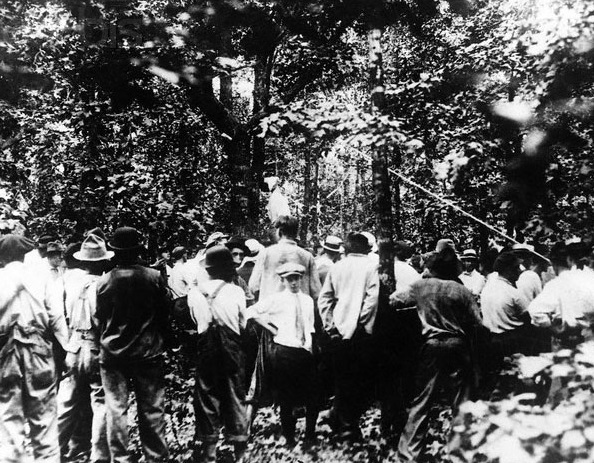


 Richard James hanged in Marion, South Carolina for the previous year’s murder of a local shopkeep, David M. Harrell.