On this date in 1940, Isaak Babel, “the greatest prose writer of Russian Jewry,” was shot in Moscow.
The Odessa-born 45-year-old had managed the difficult trick of maintaining a high-profile writing career in the 1930s Soviet Union without abandoning his artistic integrity. (This meant he published a lot less in that decade, which fact was held against him in his trial: “deliberate sabotage and a refusal to write.”)
Babel remains beloved today for that very reason; his Odessa Tales collection of short stories about Jewish gangsters still charms Russians and foreigners alike.
But Gorky died in 1936, and without that elder statesman’s protection, Babel’s insufficiently lockstep scribbling laid him increasingly liable to public denunciation for, e.g., “aestheticism.”
And as sickle follows hammer, miscalibrated revolutionary ardor in Stalin’s Russia led in 1939 to that dread knock on the door, that stay in Lubyanka Prison, that inevitable “confession” of Trotskyism, and that bullet to the head after a perfunctory trial.
Babel’s work is recent enough that it’s mostly not freely available in English. A couple in English and several in Russian are linked here; literary criticisms with plentiful excerpts of Babel’s work are available here, here, and here, among many other places.
Babel was officially rehabilitated during the Khrushchev era.
(Thanks to Jonathan Shipley of A Writer’s Desk for the guest post. -ed.)
Solomon Molcho, a Portuguese mystic, burned at the stake on this date in 1532 for apostasy.
Solomon Molcho’s Shel Silverstein-esque stylized signature. You can see his robe in Prague, or here.
He was in Regensberg, Germany with Jewish messianic adventurer David Reubeni meeting with Emperor Charles V hoping to persuade the ruler of the Holy Roman Empire to arm Marranos (Sephardic Jews forced to adopt Christianity) against the Turkish onslaught.
Charles imprisoned them both, turning them over to the Inquisition in Mantau, Italy. Reubeni died in prison, possibly poisoned. Molcho, who chose at the stake not to return to Christianity, burned.
Molcho’s life ended in flame but started in the warm bosom of the high echelons of Portuguese society. Born Christian to Marrano parents around 1500, Molcho held the post of royal secretary in the high court of Portuguese justice.
That is, until Reubeni visited Portugal on a political mission.
Enamored with Reubeni, who claimed to be a prince descended from the tribe of Reuben, and who had gained favor with Pope Clement VII, Molcho wanted to join Reubeni in the adventurer’s travels. Reubeni refused. Molcho circumcised himself in hopes of gaining Reubeni’s favor. It was all for naught, and so Reubeni emigrated to Turkey.
Soon Molcho was wandering through the Land of Israel, a preacher who predicted the Messianic Kingdom would come in 1540. He, too, gained favor with Pope Clement VII and, after studying the Kabbalah, predicted natural disasters like a flood in Rome in 1530 and an earthquake in Portugal in 1531. After those predictions, and dabbling in strange experiments, Molcho claimed himself to be a precursor to the coming Messiah, if not the Messiah himself.
This troubled many. Now traveling with Reubeni — one a Kabbalist mystical messianic preacher, the other a peripatetic Jewish dwarf — they sermonized, and allied themselves, where they could.
But not with the emperor.
Molcho, in the provincial capital of Mantua, south of Lake Garda in the Po plain, was given one last opportunity to convert back to Catholicism. Asking instead for a martyr’s death, Molcho got it.
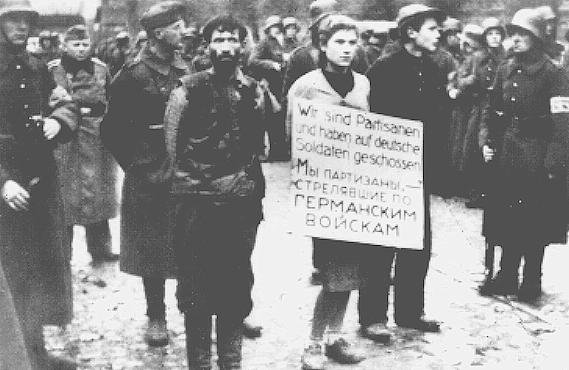
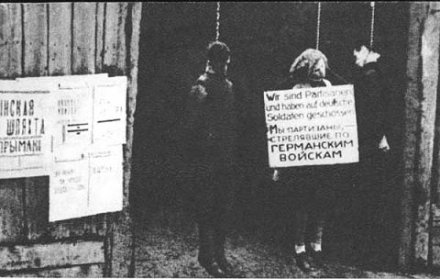
On this date in 1941, the German occupiers of Minsk conducted an infamous public hanging of partisans — perhaps the first such salutary public execution of resistance members of the war.
Jewish* 17-year-old Maria (Masha) Bruskina was the central figure of the grim tableau, and wore the placard announcing “We are partisans and have shot at German soldiers.” Evidently, she also attracted the most attention** from the onlookers to whom the scene was addressed.
Before noon, I saw the armed German and Lithuanian soldiers appear on the street. From over the bridge they escorted three people with their arms tied behind their backs. In the middle there was a girl with a sign-board on her chest. They were led up to the yeast factory gate. I noticed how calmly these people walked. The girl did not look around … The first one led to the gallows was the girl.
She was hanged with bewhiskered World War I vet Kiril Trus and the 16-year-old Volodia Shcherbatsevich. The men were members of a partisan cell organizing anti-fascist resistance; Masha Bruskina was a nurse who had been caught aiding the partisans by providing civilian clothes and papers for wounded Red Army soldiers under her care to smuggle them back to the resistance.
The scene of their deaths was captured in a series of powerful photographs taken by one of the Lithuanian Wehrmacht collaborators.
* Phototextualities: Intersections of Photography and Narrative claims that Bruskina lightened her hair and changed her name to prevent her Jewishness affecting her resistance work; even though she was a Minsk native, her initial identification didn’t happen until 1968. The men who suffered with her were named almost immediately after the war.
** Despite the eye-catching place of the girl, she was officially unidentified for decades even after the name Masha Bruskina surfaced. In “A Historical Injustice: The Case of Masha Bruskina,” (Holocaust Genocide Studies 1997, 11:3) Nechama Tec and Daniel Weiss argued that Soviet authorities, and later Belarusian ones, found her Jewishness problematic and resisted identifying her because of it — while an ethnically Russian female partisan like Zoya Kosmodemyanskaya could be more conveniently accepted as a heroine. Maybe, but bureaucratic inertia and simple precedence (since Zoya Kosmodemyanskaya was known immediately while Masha Bruskina was not) are also plausible contributing factors.
A plaque unveiled at the Minsk yeast factory in 2009 finally called her Maria Bruskina.
On this date in 1918, a 28-year-old Jewish revolutionary was shot in Moscow for attempting to murder Vladimir Lenin.
Fanya (“Fanny”) Kaplan had actually drawn a life sentence for trying the same trick on a tsarist official 12 years before, so you couldn’t say she was a reactionary element.
No, she was a member of the peasant-based Socialist Revolutionary Party, the SRs — the Bolsheviks’ onetime coalition partners who had splintered into left and right factions, the latter being shut out of power when the Constituent Assembly was closed.
A peasant herself, Kaplan was incensed at the Bolshevik power grab and shot Lenin twice at close range as he left a factory on August 30.
Taken immediately, Kaplan clammed up in interrogation.
My name is Fanya Kaplan. Today I shot at Lenin. I did it on my own. I will not say whom I obtained my revolver. I will give no details. I had resolved to kill Lenin long ago. I consider him a traitor to the Revolution. I was exiled to Akatoi for participating in an assassination attempt against a Tsarist official in Kiev. I spent eleven years at hard labour. After the Revolution I was freed. I favoured the Constituent Assembly and am still for it.
Realizing there was no information to be had from her, the Cheka had her executed four days after her crime — an affair organized by Yakov Sverdlov, the same guy who had recently disposed of the tsar.
On the same day Kaplan took her shots at Lenin, Bolshevik Moisei Uritsky was (successfully) assassinated. The two murders helped justify the Red Terror officially initiated on September 2 — which saw thousands of politically-motivated arrests and executions as the Bolsheviks consolidated their hold on power.
YouTube hosts a great many dreadful student dramatizations of historical events, but this one of Fanya Kaplan by Georgia Tech students is remarkably watchable.
As night fell this evening in Moscow, 13 prominent Soviet Jews were shot in Lubyanka Prison on trumped-up charges of treason and espionage.
“The Night of the Murdered Poets”, as it’s come to be remembered, wasn’t so much about the poetry; “only” five of the victims fit that description.
But as Joshua Rubenstein put it, “only the martyred Yiddish writers are mentioned at August 12 commemorations; the other defendants who lost their lives, as well as the sole survivor Lina Shtern, are rarely if ever remembered, perhaps because their careers as loyal Soviet citizens do not fit comfortably into an easy category for Westerners to honor … Stalin repaid their loyalty by destroying them.”
Falling victim to Stalin was such a particularly tragic fate because they were, in the main, good Communists:* good enough to have been part of the Jewish Anti-Fascist Committee, a World War II organ dedicated to rallying support for the Soviet Union against Nazi Germany.
Such national particularism — any port in a storm! — was all well and good when Moscow had the Wehrmacht at its gates and a short supply of friends, but it increasingly ran dangerously afoul Soviet officialdom as the 1940’s progressed. It was a bastion of sectarian identity rather than socialist universalism; its celebration of the Jewish soldier and of Jewish wartime travails cut against the narrative of Soviet sacrifice and heroism; its overseas links to the United States (where it toured in wartime) and the new state of Israel made it suspect, or at least vulnerable.
Thin excuse for mass execution, to be sure, but in a structure of generalized antisemitism run by a trigger-happy dictator …
In 1948-49, fifteen JAC members were arrested. One would die in prison; the aforementioned Lina Stern, a scientist, would receive a term of exile and return to Moscow when this purge’s victims were rehabilitated after Stalin’s death.
The thirteen others were tortured and condemned by a rigged (but secret, since many of the accused wouldn’t cop to public self-denunciations) trial
Years before his arrest, Markish would write words to make a eulogy for many a disillusioned Soviet citizen … and literally so in his case, since the verse was cited at his trial as evidence of his “pessimism”:
Now, when my vision turns in on itself,
My shocked eyes open, all their members see
My heart has fallen like a mirror on
A stone and shatters, ringing, into splinters.
…
Piece by piece I’ll try to gather them
To make them whole with stabbed and bleeding fingers.
And yet, however skillfully they’re glued,
My crippled, broken image will be seen.
On this date in 1944, the Gestapo shot French historian Marc Bloch among a batch of Resistance members.
When war broke out between France and Germany in 1939, the 52-year-old professor spurned advice to get out of the country. Driven by his love of France, he resigned his post at the Sorbonne to join the reserves.
I was born in France, I have drunk the waters of her culture. I have made her past my own. I breathe freely only in her climate, and I have done my best, with others, to defend her interests.
(Bloch had won the Legion of Honor for his brilliance and bravery in World War I, “always ready to March and give example.”)
High-profile intellectuals of Resistance proclivities and Jewish extraction, needless to say, had a problem in those terrible years.
The remarkable Bloch almost made it through the whole of the war in the French Resistance, but was arrested a few weeks before the Allied landing at Normandy, tortured, and shot. Comrades in arms remembered his death as an unusually sobering loss.
We couldn’t, no we couldn’t bear that image: Marc Bloch, our “Narbonne” of clandestine life, turned over to the Nazi beasts; this perfect exemplar of French dignity, of exquisite and profound humanism, this spirit become a prey of flesh in the vilest hands. We were there, a few of us, in Lyons, his friends, his comrades in the clandestine struggle, when we learned of the arrest, when we were immediately told that, “They tortured him.” A detainee had seen him in the offices of the Gestapo, bleeding from the mouth (that bloody trail in the place of the last malicious smile he had left me with on a street corner before being caught up in the horror). I remember: at those words, “He was bleeding,” we broke out in tears of rage. The most hardened lowered their heads despondently, as we do when things are just too unfair.
For months we waited, hoped. Deported? Still in Montluc? Transferred to another city? We didn’t know anything until the recent day when we were told, “There’s no more hope. He was executed at Trévoux on June 16, 1944. His clothes and papers were recognized.” They killed him, alongside a few others who he inspired with his courage.
For we know how he died. A kid of sixteen trembled not far from him. “This is going to hurt.” Marc Bloch affectionately took his hand and simply said, “No, my boy, it doesn’t hurt,” and fell first, crying out: “Vive La France!”
Marc Bloch, commemorated at this French site, bequeathed 20th century scholarship one of its great intellectual legacies. His The Historian’s Craft,* a composition halted short of completion by the Nazi firing squad, was posthumously published and remains one of the classic texts of historiography; the journal he co-founded in 1929 gave its name to a whole school of thought in the field. (Bloch’s own name also adorned a school in a more literal sense, the Marc Bloch University, now subsumed by the University of Strasbourg.)
Works By and About Marc Bloch
* The blog To The Roots is in the midst of a series of posts exploring The Historian’s Craft.
On this date in 1937 — probably — one of the numberless obscurities consumed by Stalin’s purges was convicted and presumably shot for “preparing to commit a terrorist act against [NKVD head] Yezhov.”
Alexander Yulevich Tivel, a Jewish bureaucrat who had the misfortune to have been in a party organ too close to Zinoviev, was disappeared by the NKVD one day in 1936.
We do not know whether he was physically tortured by his interrogators, but there is ample evidence that countless others were. Even high-ranking officials under arrest were beaten or, as Molotov would put it, “worked over.” Ten years later, a high-ranking police official described interrogation procedures in a letter to Stalin. First, prisoners were offered better conditions — better food, mail, and so on — in return for a confession. If that failed, appeals to the prisoner’s conscience and concern for his family followed. The next step was a solitary-confinement cell without exercise, a bed, tobacco, or sleep for up to twenty days … Finally, the use of “physical pressure” was authorized …
Tivel was probably executed on the same day [of his conviction]. Unlike many others who were badgered and tortured by the NKVD, he had not confessed.
His wife and mother-in-law to internal exile. His son would suffer the stigma of being the child of an executed traitor.
The widow Eva Tivel, reports Getty, grappled for years with the unresponsive bureaucracy until she finally cleared Sasha Tivel’s name.
On 23 May 1957, twenty years after Tivel’s execution and after Eva’s many letters and appeals, Tivel’s sentence and party expulsion were overturned … [as] “based on contradictory and dubious materials.”
On this date in 1944, Hannah Szenes was shot by the Nazis in her native city of Budapest — a city she had left five years before, and to which she had returned as a British special operative.
But with the onset of war, she signed up with the British Special Operations Executive and was parachuted behind German lines in March 1944.
Her brief: to save both Jews and downed Allied pilots. It is often described as the only military expedition to relieve European Jewry during World War II.
Hannah was nabbed crossing into Hungary on a mission that her colleagues (rightly, it seems) deemed too perilous to attempt, and withstood months of torture without divulging her codes.
By the time she went in the dock for treason, Nazi control of Hungary was collapsing and judicial administration itself was breaking down to the timpani of falling shells. Her sentencing November 4 was postponed; on November 7, an officer peremptorily informed her that she had been condemned to death. It’s believed that she was actually never formally sentenced, merely mopped up ahead of the unstoppable Red Army, which on this very day first entered Budapest’s suburbs.
A writer as well as a fighter, Szenes’ poetry survived as her monument to life — like the present-day Israeli standard “Blessed is the Match”, also the title of the documentary excerpted above; and, her “Halikha LeKesariya” (“A Walk to Caesarea”), also known as “Eli, Eli” (“My God, My God”). Here it is sung by Regina Spektor.
These lines were reportedly her last-known verses from prison:
One – two – three … eight feet long
Two strides across, the rest is dark …
Life is a fleeting question mark
One – two – three … maybe another week.
Or the next month may still find me here,
But death, I feel is very near.
I could have been 23 next July
I gambled on what mattered most, the dice were cast. I lost.
On this date in 1953, Julius and Ethel Rosenberg were put to death in Sing Sing’s electric chair as Soviet spies.
Divisive since it was handed down — or more precisely, since a famous article in London’s Guardian challenged the verdict and helped elevate it into a latter-day Dreyfus case — the Rosenbergs‘ sentence has inspired so much acrimony over several generations that merely to observe the date is to invite a debate capable of eminently more heat than light.
Where to begin with a case so towering in the recent cultural milieu?
A textbook might say that Julius and Ethel were convicted of passing atomic secrets to the Russians, that they maintained their innocence and their defenders carried that flame years after their deaths, and that intelligence files opened after the Cold War — notably the Venona project — apparently confirmed that Julius was a spy after all, though Ethel seems to have been little more than an approving bystander and Julius, come to think of it, never had anything so worthwhile as atomic secrets to share with Moscow. This information (which does have its own skeptics, albeit a small minority) undermines the maximal “absolute innocence” position that this day’s victims always asserted, but it’s a curious leap to take it as vindicating the legal outcome.
“My husband and I must be vindicated by history; we are the first victims of American fascism.”
Half a century on, juridical guilt or innocence seems distinctly secondary in the lasting importance of the Rosenberg trial, the two-year battle to save them, and their potent symbolic afterlives.
The Rosenbergs are the only stateside judicial executions for espionage since the Civil War.* That is a remarkable distinction, after all; so, how comes it that it is held by — to state the case against them in its strongest imaginable terms — two enthusiastic but bush-league players, and not by the likes of Aldrich Ames? How was it that a judge with a largely center-liberal career on the bench would read them a sentence of death hysterically accusing these Lower East Siders of causing the Korean War?
[Y]our conduct in putting into the hands of the Russians the A-bomb years before our best scientists predicted Russia would perfect the bomb has already caused, in my opinion, the Communist aggression in Korea, with the resultant casualties exceeding 50,000 and who knows but that millions more of innocent people may pay the price of your treason.
…
I feel that I must pass such sentence upon the principals in this diabolical conspiracy to destroy a God-fearing nation, which will demonstrate with finality that this nation’s security must remain inviolate; that traffic in military secrets, whether promoted by slavish devotion to a foreign ideology or by a desire for monetary gains must cease.
It is here in the age of McCarthyism, in the shadow of the USSR’s balance-altering A-bomb test in 1949, that the Rosenbergs stand in sharpest relief — not because of “guilt” or “innocence”, but as the ne plus ultra of that era’s range of social discipline.
A few years before, the United States and the Soviet Union had made common cause against Hitler in World War II, the United States pumping war materiel to Russians bearing the brunt of the fighting.
No longer operative.
The Communist Party USA enjoyed membership rolls pushing six figures; other socialist parties and movements had found niches in American life in the interwar years.
As the Great War gave way to the Cold War, the great powers remained nominal allies (that’s the reason the Rosenbergs weren’t tried for treason), but shifted rapidly into conflict. The American polity organized to expel the red menace by rendering it foreign and criminal — ideological rigging for the forty years’ imperial contest ahead. Loyalty oaths, blacklists, the House Un-American Activities Committee … in the whole of the self-conscious construction of communism as “contagion”, the power and willingness of the state to kill Julius and Ethel Rosenberg formed the tip of the spear, and an ugly contrast to that same state’s solicitous handling of Nazi scientists then developing the vehicles to deliver atomic technology to Moscow in mushroom cloud form.
Though different in many particulars, the thrust will be familiar to any sentient denizen of post-9/11 America: the extreme penalty enforces a wall between the suspect and abject (but tolerated) loyal liberal and the enemy left. Depend upon Ann Coulter for the most brutal articulation:
We need to execute people like John Walker [the American-born soldier captured fighting for the Taliban in 2001] in order to physically intimidate liberals, by making them realize that they can be killed, too. Otherwise, they will turn out to be outright traitors.
Like most symbols, the Rosenbergs came by their exaltation by accident; at the strictly personal level, their deaths are nearly operatic performances of human stubbornness and bureaucratic inertia. Investigators rolling up a spy ring** were looking for confessions and names to keep the indictments coming.
Julius refused to provide either, so his wife was arrested for leverage against him on the reasoning that he would confess to protect her. The gambit failed: both prisoner and hostage remained obstinate. The government’s bluff had been called, and it ruthlessly executed its threat.
Had the two really been responsible for starting a war, execution would hardly begin to cover the bill — yet to the very foot of the chair, the condemned, and Julius especially for the sake of his wife, were pressed with offers of mercy for confessing and “naming names”.
Abjure or expire: show trial logic.
[audio:Julius_and_Ethel_Rosenberg.mp3]
An Execution in the Family
Given names to name, the personal mystery of their silence — the ultimate heroism or folly or tragedy or transcendence — only deepens the resonance of their fate both for contemporaries and posterity, the poignance of their orphaned children’s subsequent path, the contrast with Ethel’s brother David Greenglass who has since admitted to perjuring testimony against Ethel in order to shield his own wife. (Greenglass says the Rosenbergs died from the “stupidity” of not copping a deal of their own.)
Even before Julius and Ethel went to the chair this date,† they had become the emblem of a paranoid age. In the days following, Sartre savaged the United States for trying “to stop scientific progress by a human sacrifice”:
Your country is sick with fear. You’re afraid of everything: the Russians, the Chinese, the Europeans. You’re afraid of each other. You’re afraid of the shadow of your own bomb.
Decades later, the shadows haven’t faded altogether. In playwright Tony Kushner’s imagination, the spirit of Ethel stalks her real-life prosecutor, closeted McCarthy henchman Roy Cohn, as he succumbs to AIDS in the 1980’s.‡
Rosenberg resources — and vitriol — are in plentiful supply online and off. A good starting point on the case is this page at the University of Missouri – Kansas City. Be sure to check the tale of a last-ditch legal maneuver that almost succeeded.
* There is one partial exception in the unusual case of six German saboteurs electrocuted in Washington, D.C., during World War II on a charge sheet that included espionage. The hearing was held by a military commission and only one of the six was an American citizen, so it was far from the regular judicial process — if one can call it that — the Rosenbergs faced.
** Originating in the investigation of Klaus Fuchs, the man who actually did what Julius and Ethel Rosenberg were accused of doing — passing atomic secrets to Moscow — although with debatable ultimate effect for the Soviets’ research. Fuchs served nine-plus years in a British prison and was released to East Germany; more than a few were galled at the difference between his sentence and the Rosenbergs’.
Stateside, George Koval was another spy far more valuable to Moscow in the nuclear race than were the Rosenbergs. Koval got away clean and died in Moscow in 2006.
† Julius first, then Ethel. Her execution was botched; repeated shocks were required to kill her.
‡ Cohn’s posthumous autobiography did acknowledge illegally rigging the Rosenberg trial, as his Kushner character does.
On this date in 1594, a 70-year-old Portuguese physician was torn apart at Tyburn before a jeering London mob for attempting to poison Queen Elizabeth I.
Born around 1525 to a family of conversos — Jewish converts forcibly converted to Christianity — Rodrigo Lopez (alternatively, Lopes) went abroad because the Spanish Inquisition menacingly suspected him of secretly maintaining the faith of Abraham.*
For us, the man’s true doctrines might be a matter for his god. In the 16th century, Lopez never could outrun his Jewishness.
Establishing himself in London in 1559, nearly the precise midpoint of his life, Lopez built a thriving medical practice, eventually rising in 1586 to the attendance of Her Majesty herself. England in those days was scrapping with the mighty Spanish empire, one front of which was endlessly byzantine diplomatic intrigue. It happened that Elizabeth gave harbor to a Portuguese pretender (Lopez had attended him, too), whose circles the Spanish were naturally endeavoring to infiltrate.
Some nefarious machinations in this ambit that came to light in 1593 opened an investigation characteristically heavy on the torture, and Lopez’s name came up. Allegedly, the doctor was negotiating to take Spanish gold for slipping the Queen a mickey.
Lopez doesn’t seem to be any less capable of greed or intrigue than anyone else at court, but poison? It was doubted at the time, the prosecution itself a product of the courtly rivalry between Essex and Cecil.** Despite a confession (extracted by torture, like the accusations), even Elizabeth never seems to have really bought the charge: she held Lopez more than three months after his sentence before finally permitting the punishment to go forward, and pensioned his family when the treason conviction entitled her to confiscate their property.
The London mob entertained no such nuance. When Lopez was hauled to the scaffold this day for his public butchery — still protesting that he “loved the Queen as he loved Jesus Christ,” derisively taken as a backhanded confession by spectators who didn’t doubt the practicing Protestant was really a Jew — it elevated popular anti-Semitism to fever pitch.
Hath not a Jew eyes?
Lopez, or at least the popular mood of Jew-baiting current after his trial, is thought to have helped inspire William Shakespeare’s use of the Shylock character in The Merchant of Venice — one of the most controversial and captivating of all the Bard’s creations, a villain far more compelling (and sympathetic) than the play’s lightweight good guys and one whose place in the Shakespeare canon and the fabric of Elizabethan England is still vigorously debated.
Is Shylock a vicious caricature? A sublimely three-dimensional human? Both? Wherever the “real” William Shakespeare stood on the matter of religious equality, he put one of literature’s great apologias for it in Shylock’s mouth:
* Insincerely converted Muslims and Jews were a choice target of the Inquisition in the 16th century; many thousands were driven to emigrate. For the fate of some other crypto-Jews who fled to Spain’s possessions in the New World, see here.
** Lopez’s Javert, the Earl of Essex, lost the power struggle a few years later … and with it, his own head.

 The Odessa-born 45-year-old had managed the difficult trick of maintaining a high-profile writing career in the 1930s Soviet Union without abandoning his artistic integrity. (This meant he published a lot less in that decade, which fact was held against him in his trial: “deliberate sabotage and a refusal to write.”)




 When war broke out between France and Germany in 1939,