1915: 20 Hunchakian gallows

On this date in 1915, twenty activists of the Armenian Hunchakian political party were publicly hanged in Istanbul’s Beyazit Square.


A couple of other very grainy (newspaper?) images are here.

These unfortunates had participated in a 1913 convention that resolved — secretly, so they thought — upon treating to a programme of political assassinations of the nationalist Young Turks then driving belligerent policy against Armenians.

Unfortunately for them, the Sublime Porte had sublime ears.* It pounced on the prospective terrorists at the first opportunity, and gave them a couple of years in a dungeon before a wartime show trial days just days after Armenian genocide had commenced.

Paramaz, who’s probably the most individually famous of the twenty, has a recently-erected monument in Meghri. He’s also credited with a movingly humane exchange with an Ottoman judge, each reflecting on their respective impasse vis-a-vis nationhood and self-determination.

“The attributes of history in our reality are arranged in such a way that what constitutes ‘patriotism’ for one is viewed as destructive treason by the other,” quoth the judge (!!!) to the defendants.

And thus the mutual relations between nations living together amount to the negation of international law and social concepts. Today is the last session of these trials … There was something unusual and unqualifiable in these trials. Unqualifiable because neither you nor us had enough wisdom to penetrate each other’s [worlds].

You cannot imagine, effendis, that it is with such grief that I will pronounce the depth of my conviction regarding the patriotism accumulated in you. What can be more heartbreaking tht warm blooded beings like you full of life have sacrificed logic to sentiments … What great deeds vigorous individuals like you could have accomplished, if the ideal of a common welfare had been pursued under one banner … What benefits could have been borne from a mutual understanding that eluded [us], the other end of which is sad and dark. You languished with the idea that you are struggling against injustice; while have felt, every minute, that the rules of the world are abasing higher tendencies under the weight of cruel necessities.

This reflection led Paramaz, who today is an Armenian national hero for his martyrdom at the Turks’ hands, to reciprocate:

I, who has never cried in my life … I am not ashamed to say that I was deeply moved by the sincerity of [the judge] Khurshid Bey’s speech … and I cried, I, Paramaz, because Khurshid Bey put his finger on the wound when he stated, ‘What good deed could have been accomplished …’ I cried because in those words I found the brilliance of truth.

[Yet] we would be asking the same question, and add, What was left that we did not do for the welfare of this country. We accepted such sacrifices, we spilled so much blood and spent so much energy to bring about the brotherhood of Armenians and Turks; we lived through such suffering to elevate each other through trust. And what did we see? Not only did you condemn our gigantic efforts to sterility but also consciously pursued our annihilation …

Gentlemen, judge people by their work, by their traditions, within the realm of their ideas. I am not a separatist from this country. On the contrary it is [this country] that is separating itself from me, being incapable of coming to terms with the ideas that inspire me.

(Both quotes are as cited by Gerald Libaridian’s chapter exploring the Hunchak party’s history and doctrine, from A Question of Genocide: Armenians and Turks at the End of the Ottoman Empire.)

Mutual empathy notwithstanding, the end for these twenty was indeed sad and dark.

* An Armenian informant named Arshavir Sahagian attended the conference and finked out its design. He was killed for his troubles on December 25, 1919, according to Raymond Kevorkian.

On this day..

2001: Jay Scott, trend-setter

Not Ohio’s first execution in the “modern” era — that distinction belongs to Wilford Berry, who voluntarily waived his appeals to hasten a 1999 execution — Jay Scott, who was put to death by lethal injection on this date in 2001, stands at the headwaters of Ohio’s 21st century death penalty binge.

Prior to Scott’s death, Ohio had carried out only that one execution, Berry’s, in all the previous 48 years.

But it’s made up for lost time with another 45 executions in the eleven years since Scott died.

A paranoid schizophrenic and career criminal, Scott entered an East Cleveland deli in May 1983, ordered bologna and crackers, and then shot the 74-year-old proprietess at point-blank range after she served him. Then he went for the restaurant brace by gunning down a security guard at another restaurant. (That death sentence was eventually reversed; technically, Scott died for the first murder only.)
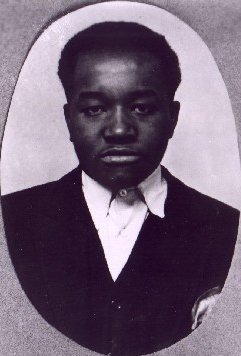
By the time he paid for the crimes, Scott had gotten to know the fledgling Ohio execution process pretty well.

Scheduled death dates on April 17 and May 15 had both been stayed at the last moment over legal appeals around his mental competency — on that latter date, he was three minutes from execution with the shunts that would carry the lethal chemicals already stuck in his arms.

Laborious as it was to finally consummate, Scott’s was the only Ohio execution in 2001.

But the state conducted three the next year — and it’s never carried out fewer than two in any year since then.

Part of the Themed Set: Ohio.

On this day..

1930: Lee Akers, after the Ohio Penitentiary Fire

On this date in 1930, Lee Akers was electrocuted in Ohio for murdering a Cleveland man at a gas station stickup.

Akers had been held at the death house at the Ohio Penitentiary bound in the end for a May 2, 1930 execution.

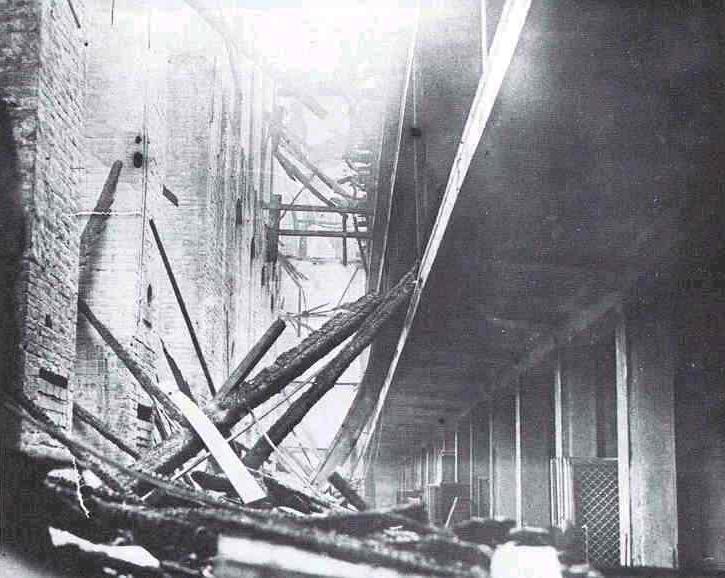
The “lucky” break that bought him six extra weeks of life was just the deadliest prison fire in history. (n.b. — Recently surpassed in Honduras)

Already a century old and packed to triple its 1,500-soul capacity, the penitentiary had a fire break out* shortly after supper on April 21 in Section “I”. This fire

licked along dry timber into Section “H”, from Section “H” to Section “G”, and thence upward to where 300 prisoners, trapped like caged animals, tore futily [sic] at steel bars that became their pyre.

It was a twilight of indescribable horror.

Some 320 perished from burns, suffocation, and smoke inhalation. Most of the casualties were those who never got out of their locked prison cells, and couldn’t move a meter as death enveloped them.


20th century literary great Chester Himes also happened to be serving a sentence for armed robbery at this prison:** indeed, it was during that sentence that he began to write at all, setting him on a path towards his life’s work.


1991 cinematic adaptation of Himes’s A Rage in Harlem.

Himes’s novel from his time in the Ohio penitentiary was only published well after his death, in 1998 … the same year the disused Ohio Penitentiary was finally torn down.

One of Himes’s first published works was a short story in Esquire in 1934, written while Himes was still incaracerated. Titled “To What Red Hell” (an allusion to Oscar Wilde’s meditation on prison and death row, The Ballad of Reading Gaol: “For none can tell to what red Hell / His sightless soul may stray.”), this story follows the experience of the Ohio prison inferno through the fictional inmate “Blackie”, who beholds tormented prisoners like “condemned souls jumping flame pots in the ante room of Hell” … but also notices the ironic safety of death row, where the literal condemned souls remained un-burned.

From where he stood he could see the death house, a low, red brick building at the end of the cell block. Just above it was a wall parapet. A guard stood on the cat-walk with a sub-machine gun cradled in his arm. Two searchlights shone in opposite directions down the sides of the gray, stone wall. The green door of the death house looked black in the vague light.

The end of the parade! The last mile! What a joke! The death house was on the other side of the yard tonight, he was thinking. It was quiet over here in the shadows with the scared ghosts of the executed men.

In fact, someone had managed to spring the death house doors, momentarily “liberating” the doomed men. As militia arrived on the scene, they attempted to forestall any general uprising or wholesale prison break by setting up machine gun emplacements on prison towers, with orders to shoot to kill.

When the death row prisoners were collared — they hadn’t actually gone anywhere or tried anything** — they were offered transportation to the city jail for their own safety against these potentially itchy trigger fingers. While three of them took the refuge, the others (Akers included) refused, on the sensible grounds that they could hardly be much worse off being shot dead than being electrocuted.


The inmates — reported to have labored heroically alongside guards, firefighters, civilian nurses, virtually without incident — were understandably incensed at the disaster, charging that guards had allowed most of the victims to die out of needless reticence over releasing anybody as the fire began to spread — and that the refusal to turn the keys went straight to the top. William Wade, “a big Negro prisoner” who had sledgehammered a cell open to save 25 men, was quoted in the next day’s New York Times saying simply, “They could have saved these men. They let human beings burn to death.”

Warden Preston Thomas, who comes off in the story as an unmitigated shit,† was the focus of the prisoners’ ire … and when he showed himself, the focus of their raucous jeers (Thomas tried to dump the blame on lower-level guards, who in turn claimed that they’d been directed by their superiors not to open cells). The Ohio governor’s refusal to dismiss Warden Thomas soon triggered a riot in the prison and the arrival of the National Guard for several tense days of teargas-punctuated negotiations.

This mutiny was only just being settled when Akers’s original May 2 execution date came up. The charred prison clearly had some other priorities at that moment than orchestrating an execution, so Akers and another man, John Richardson, both got a gubernatorial reprieve until things were peaceful enough for orderly killing.

The inferno, meanwhile, opened space for some humanitarian reforms: since overcrowding (which had been fretted in internal reports in the years preceding the fire, and had also contributed to several other prison disturbances) was widely understood to be part of the disaster, a parole board was formed in 1931 that released 2,300 prisoners. “Mandatory minimum” sentences that stuffed minor offenders into these dungeons were widely rolled back.


According to the Justice Policy Institute (pdf), the total United States prison population in 1930 was a mere 180,889.

Although we may have made some provisions to avoid spectacular catastrophes like the Ohio Penitentiary fire in our present-day overcrowded prisons, the routine catastrophe of imprisonment itself — “the moral scandal of American life” — has grown more than twelvefold since 1930.

* The mysterious fire was eventually found to have been started by some (non-death row) prisoners in an abortive breakout bid: two of them later hanged themselves in remorse. However, and rather amazingly, there were no reported escape attempts during the nighttime chaos.

** Himes wasn’t the Ohio penitentiary’s only noteworthy litterateur. The facility’s prison yard was named in honor of the pseudonym that a previous scribbling inmate had concocted there in order to get published while doing his time: O. Henry.

† e.g., a committee formed by the legislature to investigate the fire took testimony from convicts that Warden Thomas was a tyrannous martinet even apart from the disaster, even as Thomas was publicly threatening the angry inmates who were demanding his ouster: “If these prisoners don’t quiet down pretty quick, I’ll use forceful methods against them if it takes a soldier to every man.”

Part of the Themed Set: Ohio.

On this day..

2008: Curtis Osborne, poorly represented

Nach Golde drängt,
Am Golde hängt
Doch alles.

Goethe, Faust

On this date in 2008, Curtis Osborne suffered lethal injection in Georgia for a double murder.

In the words of the Atlanta Journal-Constitution report, “Osborne was executed for shooting Arthur Jones and Linda Lisa Seaborne on Aug. 7, 1990. Osborne allegedly killed Jones because Osborne didn’t want to give him the $400 he got for selling Jones’ motorcycle. Seaborne was killed because she was there.”

Pretty awful.

It’s very difficult to capture in individual cases the structural dimensions of the death penalty system, simply because individual cases are, well, individual. The many plausible actual innocence cases are one thing. Here what you’ve got is a guy who unquestionably shot dead two humans so that he could feed his cocaine habit: making some procedural argument for Curtis Osborne is going to sound like a lot of special pleading.

But those procedural arguments are the very guts of the animal. The U.S. death penalty proposes, as an institution, to attempt not the question, does Curtis Osborne deserve to die?, but the question, among hundreds of Curtis Osbornes, do we have the apparatus to justly distinguish the ones that deserve to die?

As an impoverished drug addict, Osborne was represented at trial by a since-deceased public defender named Johnny Mostiler.

If you search this case, the thing you’ll find immediately is that another defendant being represented at the same time by Mostiler would later swear that Mostiler told him, speaking of Osborne, “that little nigger deserves the chair.” And the context of the conversation was about how Mostiler had just received a plea offer that Mostiler didn’t plan even to relay to Osborne, for the aforementioned reason.

Pretty awful.

This sort of thing is hard to substantiate: the allegation comes from a man serving a murder sentence of his own, and Mostiler isn’t around to defend himself. But on its own, it’s a shocking claim and a reminder of how profoundly the trial attorney’s performance shapes the entire legal experience. As Time magazine put it, what if your lawyer wants you executed?

Whether Mostiler really dropped an N-bomb on Osborne’s case, we really don’t know. But it’s been said that capital punishment means those without capital get the punishment, and the fact of the matter is that not many of any race who have recourse to indigent defense are served at the bar by Atticus Finch.

Leave aside even that shocking racism allegation, one that no court saw fit to adjudicate. (Prosecutors called the racism claim “outlandish”; appellate court ruled it procedurally out of bounds.) Just reckon the structural situation.

The American Prospect profiled the blinged-out, fast-living Mostiler after his death — breathing not a word about Osborne’s case, which was nowhere on anybody’s radar — and described, essentially, the neoliberal project in action for public defenders.

Mostiler represented not only Osborne, but virtually every poor defendant in Spalding County, Georgia … because, in 1990, he’d pitched the county on a fixed annual contract. Mostiler argued that the county was

wasting money paying as many as 20 court-appointed attorneys $50 an hour to handle indigent cases without knowing exactly how many hours those attorneys would bill during any given year. Mostiler proposed instead that the commissioners pay him a flat fee to handle all of the county’s indigent cases, regardless of the number. That way the county would have to deal with only one lawyer, and it would know its final bill at the start of the fiscal year rather than at the end.

Let justice be done though the heavens fallwithin the confines of fiscal probity. This grift was going to be worth a good deal more than $400 … and come with its own body count, too.

Mostiler bragged about saving the county a good million bucks over the course of the nineties. That’s a new definition of the adversarial judicial process, fresh-minted for the race-to-the-bottom era: every exertion by a defense attorney on his client’s behalf costs him part of his own paycheck.

Small wonder that Mostiler hardly ever tried cases — no more than seven a year, he said, out of as many as 900 felonies. Most were dispatched within minutes in shotgun plea deals and no small number of those momentary clients remain on the inside of a Georgia penitentiary as we speak. Did we mention that Mostiler did all this “lawyering” in only 60% of his lawyer time? He kept up a lively private civil practice, too, one where he probably averaged more than 100 minutes per case.

Death sentences, of course, don’t result from plea bargains — but at Mostiler’s zero-sum rates he also wasn’t going to prep this like the Dream Team. Slate reported that

Mostiler never hired a psychiatrist to examine evidence that Osborne was a victim of childhood abuse, and was borderline retarded, despite a court-ordered sanity evaluation that had found “indications of depression, paranoia, and suicidal ideation.” He never examined the history of mental illness in Osborne’s family because, he said, he didn’t know how to conduct that kind of investigation. Mostiler called no expert witnesses to testify for his client and didn’t bother to interview the state’s experts before they appeared at trial. And he rejected appointment of a second attorney to help with Osborne’s defense, which the American Bar Association and all serious death penalty litigators say is essential if a capital murder defendant is to receive a fair trial.

Pretty damn awful.

Once Osborne’s conviction was in the books at the trial level, no appellate court could intervene without clearing a very high bar: would the evidence un-investigated and the argument un-made likely have made a difference? Could anyone prove that Mostiler described his client with a racial slur? Nobody could really say so. End of story.

It was 18 years between the time Osborne laid those two souls in the ground and the time he laid himself down on the gurney. The irony is that all that time, all those exhaustive appeals, left the most salient and troubling questions in his case un-examined. There were substantive questions here, but Georgia prevailed in a procedural argument that those questions remain closed.

All this unsalved death and sorrow, and all for what? So Curtis Osborne could have another hit. So Spalding County, Georgia wouldn’t have to trouble the property levies with billable hours. For nothing but a little bit of money.

On this day..

1967: Luis Monge, America’s last pre-Furman execution

Forty-five years ago today, Luis Monge was gassed in Colorado for murder — the last execution in the United States before a decade-long lull in capital punishment in the U.S.

Monge, an insurance salesman with no prior history of violence, had a hearty brood of 10 children, but when his wife found out he was having an incestuous relationship with one of them, Monge bludgeoned the wife to death, and killed three of the young children just for good measure.

Monge pleaded insanity, and then when doctors found him sane enough to stand trial, just pleaded guilty — eventually dropping all appeals and asking to be hanged in public at the Denver City and County Building.

Despite the culprit’s preferences, his execution was stayed for all of 1966 while Colorado voters weighed a referendum on continuing the death penalty. They ultimately voted 3-1 in favor. (See this detailed history of the death penalty in the Columbine State.)

Even though Monge himself embraced execution willingly, his seven remaining children (also the children of, and siblings of, his victims: surely a difficult position) still fought for clemency, and shared Monge’s last meal with him.

Had Monge maintained his appeals, he — like four other Colorado inmates whose death dates were also on hold in 1966 — would likely have made it into the nationwide unofficial moratorium on executions that settled in while courts sorted out death penalty standards in the late 1960s and early-to-mid 1970s.* That period led into 1972’s landmark Supreme Court decision Furman v. Georgia, invalidating all existing death sentences in the country and sparing men much more nefarious than Luis Monge.

Instead, this date’s principal went to his death clutching a black rosary (and allegedly, and one must suspect apocryphally, asking if the gas would trouble his asthma)** and became a nigh-forgotten denouement from a closed chapter of death penalty jurisprudence, and the last man put to death in America until Gary Gilmore almost ten years later.

Apart from his milestone status vis-a-vis capital punishment nationwide, Monge is also the last person to die in the Colorado gas chamber.


The gas chamber that killed Luis Monge, now retired to Colorado’s Museum of Prisons. (cc) image from Cowtools, who also has a photo of Monge’s bullet-riddled grave marker.

In fact, Monge is currently still the second-last put to death in Colorado, period. It would be fully 30 years before Colorado executed again — in 1997, by lethal injection. As of this writing, it hasn’t done so again since.

* If Monge had avoided execution, the “last pre-Furman execution” milestone would be held instead by California’s Aaron Mitchell, the only man executed on the authority of California governor (and future U.S. president) Ronald Reagan.

** The man who pulled the lever for Monge’s execution, Canon City penitentiary warden Wayne Patterson, was not enthusiastic about the job. He describes his experience here, saying that “Monge was a guilt-ridden man who was nearly suicidal before he was executed. Those were the [kind of] guys who were executed — not the people I thought belonged in the chamber.”

On this day..

1416: Jerome of Prague, the first Hussite martyr

On this date in 1416, the Council of Constance had Jerome of Prague burned at the stake in the town square.

This eloquent, injudicious theologian studied at Prague, Oxford, Paris, Cologne, Heidelberg … accumulating Master’s degrees along the way like a career graduate student, but repeatedly finding himself run off the premises on suspicion of heresy.

Jerome’s “heresy” was an excessively combative hostility to ecclesiastical corruption. And although Jerome was known for his rapier tongue, he didn’t always find the pen mightier than the sword: he got into a few physical scraps with his foes.

While in England, he copied out a manuscript of preacher John Wycliffe — whose radical piety (or pious radicalism) inspired the rebellious Lollard movement.

Back on the continent, Jerome fell in with Jan Hus. Ten years Jerome’s senior, Hus was and remains the first name in Bohemian religious reform, and the “Hussite” church he founded still retains his name.

After Hus unwisely accepted a guarantee of safe conduct to dispute at the Council of Constance, the more ornery Jerome slipped into town to propagandize on his mentor’s behalf. After placarding his way to trouble, he slipped back out and must have thought he’d had his cake and eaten it too … until he was caught in the Black Forest.

Jerome spent nearly a full year in a dungeon — the Council met for four years; it had a massive schism to sort out — and at one point the privations of imprisonment led him recant. He later bitterly regretted that concession to “pusillanimity of mind and fear of death,” but on a strictly doctrinal level Jerome of Prague wasn’t anti-Catholic: he just wanted the church to be less of a bunch of corrupt, overweening racketeers.

By the time he was ready to answer for himself, and his soul, he was well past any spirit of capitulation. A witness to the procedure wrote of Jerome on trial for his life:

I have never seen any one, who, in pleading, especially in a capital offence, approached nearer the eloquence of the ancients, whom we so greatly admire. It was so amazing to see with what fluency of language, what force of expression, what arguments, what looks and tones of voice, with what eloquence, he answered his adversaries and finally closed his defence. It was impossible not to feel grieved, that so noble, so transcendent a genius had turned aside to heretical studies, if indeed the charges brought against him are true.

When that part of his indictment was read in which he is accused of being “a defamer of the papal dignity, an opposer of the Roman pontiff, an enemy of the cardinals, a persecutor of the prelates and clergy, and a despiser of the Christian religion,” he arose, and with outstretched hands and with lamenting tones, exclaimed: “Whither now, conscript Fathers, shall I turn myself? Whose aid can I implore? Whom supplicate, whom entreat for help? Shall I turn to you? Your minds have been fatally alienated from me by my persecutors, when they pronounced me an enemy of all mankind, even of those by whom I am to be judged. They supposed, should the accusations which they had conjured up against me, seem trivial, — you would, by your decisions, not fail to crush the common enemy and opposer of all, — such as I had been held up to view, in their false representations. If, therefore, you rely upon their words there is no longer any ground for me to hope.”

Some of them he wrung hard by the sallies of his wit; while others he overwhelmed with biting sarcasms; and from many, even in the midst of sadness, he forced frequent smiles, by the ridicule which he heaped upon their accusations.

At length, launching out in praise of John Huss who had been condemned to the fire, he pronounced him a good, just, and holy man, altogether unworthy of such a death, — adding that he was also prepared to undergo, with fortitude and constancy, any punishment whatsoever, yielding himself up to his enemies and the impudent lying witnesses, “who would, at length, have to give an account of all they had uttered, before God, whom they could not possibly deceive.” Great was the grief of all that stood around him. Thee was a universal desire among them to save so noble a personage, could his own consent be obtained. Persevering, however, in his opinions, he seemed voluntarily toseek death; and continuing his praise of John Huss, he declared that man had never conceived any hostility to the church of God; but that it was to the abuses of the clergy, and the pride, pageantry and insolence of her prelates alone he felt opposed; for, since the patrimony of the church was due, in the first place, to her poor; then to her guests; and finally to her on workshops; it seemed to that good man, a shameful thing, to have it expended upon courtezans and in banquets; for the sustenance of horses and dogs, the adornment of garments and other things unworthy of the religion of Christ.

Most exalted was the genius of which he showed himself possessed! Often was he interrupted in his discourse by various noises; and greatly vexed by those who carped at his opinions; yet he left none of them untouched, but equally avenging himself upon all, he either covered them with confusion, or else compelled them to hold their peace. A murmur arising against him, he paused for a moment; and then, having admonished the crowd, proceeded with his defence, — praying and beseeching them to suffer one to speak whom they would soon hear no more. At none of the noise and commotion around him did he tremble, or lose, for a single instant, the firmness and the intrepidity of his mind.

“You will condemn me iniquitously and unjustly,” he prophesied to his judges, “and when I am dead, I shall leave remorse in your consciences and a dagger in your hearts; and soon, within a hundred years, — you will all have to answer me, in the presence of a Judge most high and perfectly just.”

Reports differ as to the subsequent standing of all these men’s souls. But for the church as a going earthly concern, Jerome nailed it almost exactly: 101 years after he followed Jan Hus to the stake,* that long-suppressed spirit of reform irrevocably splintered papal authority.

* In the very same spot where Hus himself was burnt.

On this day..

1985: Marvin Francois, back to Africa

On this date in 1985, Florida electrocuted Marvin Francois (to the disappointment of this unknown anti-death penalty protester).

Francois’s last statement, via Last Words of the Executed:

“I am as a grain of sand on the beach of the black race. The black race has lost its pride and dignity and is slowly dying from within and without. My death ends my tears, and the fortune of watching my race slowly die. If there is such a thing as an Antichrist, it ain’t one man, but the whole white race.”

Francois had donned a mask and, with a couple of confederates, stuck up a drug house in 1977.

The mask slipped, exposing Francois’s face — and the home invaders decided to murder the eight prisoners to keep them from making the ID. All were shot in the head execution-style.

Somehow, two survived to identify Marvin Francois. It was an easy conviction. (A confederate, Beauford White, was executed for the same crime in 1987.)

Once the death sentence was on the books, appellate attorneys developed a genuinely sympathetic profile of Francois’s background, if not his crime. A federal appeals court on the day before Marvin Francois died could not help but agree that

[t]he proffered evidence shows that Francois was the product of a sordid and impoverished childhood environment. His parents were not married. His father was a habitual heroin addict who never worked, who brought other addicts into the home for the ingestion of heroin in front of Francois when a child, and who beat Francois because he would not fight with other children when he was a boy. Francois’ mother often worked as a prostitute and was of little benefit to Francois during his childhood. She married but Francois’ step-father abused him. Francois grew up as a child of the street. At the same time he was smart, and although not finishing school, he obtained his G.E.D.

The behavioral scientists in their affidavits posit that “… some offenders, like Marvin Francois, are themselves victims of circumstances that shape their lives in ways beyond their deliberate control.” They suggest that given Francois’ chaotic antisocial upbringing, “clear mitigation of punishment compellingly surfaces.”

Nevertheless, the panel concluded that, given the extent of the crime (and his existing history of violence), all this sob-story stuff “would not have affected the sentencing outcome in this case had it been submitted to the jury.”

That was that.

It was a touching parting for at least one good friend on death row with him. “We wanted to send him out on a high,” a fellow-prisoner later remembered of sharing a last cigarette with Francois while imagining it a joint. “It took a little out of me when they killed him. I’d grown real attached to him.”

According to David von Drehle’s Among the Lowest of the Dead, that disattachment was rather unusually distant: Marvin Francois’s final resting place is … the sea off Dakar, Senegal.

Francois had asked that his ashes be scattered in Africa. Susan Cary, the longtime activist … was determined that this last wish would be honored. But it was one thing to find bus fare for a condemned man’s family, and quite another to raise the money for a trip to Africa. Cary collected the cremated remains of Marvin Francois and put them in a shoebox in her closet, where they sat for two years while she tried to figure out how to get them across the ocean.

In 1987, Michael Radelet, Cary’s frend and fellow activist, announced that he was going to Senegal to visit a relative. Take Marvin, Cary suggested. Radelet was game, but there were rules — human remains can’t just be toted from country to country. Uncertain as to the relevant legalities, Radelet contacted John Conyers, a prominent black congressman from Detroit; Conyers strongly opposed the death penalty, he was well known in Africa, and he had offered more than once to help Florida’s anti-death penalty crusaders any way he could. The congressman pulled the right strings, and shortly before his trip Radelete received an official letter announcing that the Senegalese government would be happy to welcome “Brother Marvin” home.

… Radelet had a darkly comic view of the world. Traipsing around Senegal, shoebox in hand, he would place the box on the opposite chair at restauants and say things like “Marvin, would you like some water?” On sightseeing jaunts, he would take snapshots of the shoebox in front of important buildings and picturesque vistas. Finally, Radelet carried the box to a bluff outside Dakar, a lovely spot with the city in the distance and the Atlantic spread out below. He took one more snapshot – “Marvin at the seashore” — then opened the box and sprinkled the ashes on the sun glittered waves. As he gazed into the oceanic expanse, it occurred to him that this very water might have rocked and sloshed all the way from Florida; now, the waves lapped the shores of Africa, bearing the remains of Marvin Francois to his dreamland.

The aforementioned Michael Radelet — now at Colorado University, not Florida — holding forth on more up-to-date death penalty trends:

On this day..

1881: Po’olua, “darkened in my mind”

This date in 1881 saw the hanging of a native Hawaiian named Po’olua for a homicide of domestic jealousy tinged by almost tragic remorse.

This case is described in the 1991 essay “A Short History of Hawaiian Executions, 1826-1947” by Joseph Theroux.

In 1881, the Hawaiian [Po’olua] grew enraged when his when his common-law wife, according to the papers, “paraded her infidelity” before him and slaughtered her with a “big butcher knife.” Then, in a fit of remorse, he draped his house in mourning with black crepe paper.

… The experts of the day — family doctors and preachers — were conducted in to interview the bewildered man. They questioned him and concluded that he was not insane. Po’olua himsel agreed that he was sane but “darkened in my mind.” … the Reverend H.H. Parker explained the man’s actions this way: “A Hawaiian would do many things which a white man would not.”

When it as found that Po’olua had a heart abnormality and that he would likely die soon anyway, letters of clemency were circulated on his behalf. But he was hanged on May 20, 1881. Permission was sought for a post mortem to investigate the state of his heart, but officials denied the request. The Advertiser remarked that it “should have been done. Being attended to, might have laid him quiet in his grave; but being forbidden, his spirit will rise up Banquo-like for many a day to come.”

On this day..

1917: Emil Rebreanu, Forest of the Hanged inspiration

On this date in 1917, Romanian Lieutenant Emil Rebreanu was hanged for attempted desertion by the Austro-Hungarian army.

Here’s Rebreanu’s entry at the Enciclopedia Romaniei, which says in brief that he was one of 14 (!) brothers born in the part of present-day Romania that was then attached to the Kingdom of Hungary.

Upon the outbreak of World War I, Rebreanu was drafted into the Austro-Hungarian forces and fought on several fronts. But his removal to the lines to fight against the independent Romanian state was a front too far: he attempted to cross the lines to the Romanians on the night of May 10-11, but was captured, court-martialed, and sentenced to hang.

However, tragedy for the sizable Rebreanu family was a boon to world literature.

One of Emil’s many brothers was author Liviu Rebreanu, one of the greats of Romanian letters.

The latter’s 1922 novel Forest of the Hanged clearly draws upon his brother’s fate: in Forest, a Romanian officer uneasily serving in the Habsburg army first condemns a Czech deserter to death as part of a tribunal, then attempts himself to desert to Romania.

For his trouble, the character suffers the exact same fate as Emil Rebreanu.

A 1965 Romanian film, also called Forest of the Hanged, adapts this novel for the silver screen.

On this day..

1738: Katherine Garret, Pequot infanticide

On this date in 1738, before “a Vast Circle of people, more Numerous, perhaps, than Ever was gathered together before, On any Occasion” in Connecticut, Pequot servant Katherine “Indian Kate” Garret was hanged for murdering her newborn child.

As an unmarried young woman, Garret didn’t want a child to begin with, but she managed to pass off the pregnancy in her master’s house as just putting on a few extra pounds. Finally, one day, she slipped out to the household barn and delivered. The mistress of the house said they later found the dead infant, clubbed to death with a handy wood block.

It took an unusually protracted six-odd months to bring Garret’s case so far as the actual scaffold, giving the ministrations of a local pastor plenty of time to move the once-truculent lass to such devoutness that “with her hands lifted up, as she cou’d, she past out of life, in the posture of one praying.” We have her pious purported dying statement:

The Confession & Dying Warning of Katherine Garret.

I Katherine Garret, being Condemned to Die for the Crying Sin of Murder, Do Own the Justice of GOD in suffering me to die this Violent Death; and also Acknowledge the Justice of the Court who has Sentenced me to die this Death; and I thank them who have Lengthned the Time to me, whereby I have had great Opportunity to prepare for my Death: I thank those also who have taken pains with me for my Soul; so that since I have been in Prison, I have had opportunity to seek after Baptism & the Supper of the Lord & have obtained both. I Confess my self to have been a great Sinner; a sinner by Nature, also guilty of many Actual Transgressions, Particularly of Pride and Lying, as well as of the Sin of destroying the Fruit of my own Body, for which latter, I am now to Die. I thank God that I was learn’d to Read in my Childhood, which has been much my Exercise since I have been in Prison, and especially since my Condemnation. The Bible has been a precious Book to me. There I read, That JESUS CHRIST came into the world to Save Sinners, Even the Chief of Sinners: And that all manner of Sins shall be forgiven, One only Excepted; For His Blood Cleanseth from all Sin. And other good Books I have been favoured with, by peoples giving and lending them to me, which has been blessed to me.

I would Warn all Young People against Sinning against their own Consciences; For there is a GOD that Knows all things. Oh! Beware of all Sin, Especially of Fornication; for that has led me to Murder. Remember the Sabbath day to keep it Holy. Be Sober and wise. Redeem your Time, and Improve it well.

Little Children I would Warn you to take heed of Sinning against God. Be Dutiful to your Parents; For the Eye that Mocks at his Father and despiseth to Obey his Mother, the Ravens of the Valley shall pick it out, and the Young Eagles shall eat it. Little Children, Learn to Pray to God, Sit still on the Lord’s Day, and Love your Books.

I would also Warn Servants, Either Whites or Blacks, to be Obedient to your Masters & Mistresses. Be Faithful in your places and diligent: Above all Fear God; fear to Sin against Him: He is our Great Master.

I would also Intreat Parents and Masters to set a good Example before their Children and Servants, for You also must give an Account to God how you carry it to them.

I desire the Prayers of all God’s People for me, Private Christians, as well as Ministers of the Gospel, that I may while I have Life Improve it aright; May have all my Sins Pardoned and may be Accepted through CHRIST JESUS. Amen.

New London, May 3. 1738.
Katherine Garret.

The spiritual counselor who achieved this transformation, Eliphalet Adams, preached a lengthy sermon on the occasion.

The sound of the sermon — especially considered next to the protracted delay for Garret’s hanging — hints at a communal controversy over employing the death penalty in this case. Adams spends most of it fulminating against acquittals, jury nullification, and the insidious operation of sentimentality such as one might imagine might have attended an unmarried girl having rid of her unwanted infant: “What moving Expressions do sometimes come out of the mouths of poor people on such Occasions! … Judges are melted into tears, Yet they must not be so mollified thereby as to neglect Justice; With tears in their Eyes they must pronounce the righteous Sentence and commend them to the mercy of God, who have forfeited all Claim to be suffered any longer among men; Oh, piteous case, when the[y] cry for Mercy, Mercy must no longer be regarded! They must have Judgment without mercy, who have shewed no mercy.”

Stern stuff, ultimately straight from the dialogue around crime and punishment (capital and otherwise) down to the present day. Most of it, anyway. Some parts have changed:

Tho’ they may be great & Considerable persons who are guilty and they, whose blood they have done Violence unto, may be but Comparatively mean. This should not be so considered as to stop a prosecution, or stifle a testimony, or favour or forward an Escape, A Barbarian is of the meanest Nation, a Servant is of the lowest rank, an Infant is of the most imperfect age, Yet even their blood is required by God and the Laws, when it hath been unjustly shed; Rich and great people are most Honoured, Masters over Servants and Parents over Children, may seem to have most power and authority (I say nothing now of Princes over Subjects, that being a curious Argument and which may need very Cautious handling) Yet even these may not be protected by their greatness, authority or priviledge, if they have done Violence to blood, If they have defaced the Image of God in which every man is made and destroyed his workmanship, they also must flee to the pit and none may stay them.

It’s supposed to be the first hanging in New London. Original documents about Katherine Garret’s sad story are linked from the pamphlet about her case hosted here.

On this day..