On Oct. 27, 1972, North Vietnamese communists seized the town of Ban Kengkok, near Savannakhet.
Though several other western missionaries escaped, and were evacuated by helicopter, Anderson and Kosin were captured and tied up in a hut.
A mission to extricate them was scratched — allegedly from on high because the ongoing secret negotiations between the U.S. and North Vietnam on ending the war had just reached a turning point. Someone evidently felt this a skirmish across the border concerning (and possibly killing) good Christian heartland girls might prove politically inflammatory at this delicate moment.*
So it didn’t happen, and that October 1972 diplomatic breakthrough eventually formed the basis of the Paris Peace Accords, publicly unveiled in January 1973, that set the framework for American withdrawal and gave Henry Kissinger his controversial Nobel Peace Prize.
This was all very nice — but also very far from Anderson and Kosin, who were left to swallow to the dregs their sacrificial draught.
A coded message sent early on Nov. 2, 1972 (American radio operators intercepted it) ordered their immediate execution, and the directive was accomplished without delicacy: the hut they were held in was simply torched, with them still inside.
On this date in 1440, the wealthiest man in France, a noble who had once fought under Joan of Arc‘s banner, was hanged for an outlandishly demonic crime spree.
This dashing Gilles opposite Milla Jovovich in The Messenger; you’d never think he would sodomize hundreds of children.
Rivaling Hungarian blood-bather Erzsebet Bathory for the reputation of most bewitchingly depraved aristocratic sex-killer of early modern Europe, Gilles de Rais (or de Retz) hanged for abducting numberless legions of anonymous young commoners (boys, mostly) for rape and murder.
It’s a rap sheet trebly astounding given that a decade before, de Rais’s reputation for posterity would have figured to be his role as Saint Joan’s chief lieutenant when she raised the siege of Orleans, culminating with elevation to the rank of Marshall of France on the very day Charles VII was crowned in Reims. Talk about a fall from grace.
A 1440 investigation triggered by de Rais’s attack on a priest during an intra-aristocracy dispute turned up a Gacy‘s floorboards’ worth of Nantes-area kids allegedly disappeared into the Marechal’s creepy castle. Remarkably detailed trial records preserve a heartbreaking cavalcade of parents who entrusted their children to de Rais’s service or just sent them out one morning never to be heard from again. “It is notorious,” one added, “that infants are murdered in the said chateau.” (Many of these depositions and other original trial records can be read here.)
that de Rais then raped [the typical captive] as he was hanged from a hook by the neck. Before the child died, Gilles took him down, comforted him, repeated the act and either killed him himself or had him slain.
Poitou testified that the child victims were murdered sometimes by decapitating them, sometimes by cutting their throats, sometimes by dismembering them, sometimes by breaking their necks with a stick …
Gilles de Rais rarely left a child alive for more than one evening’s pleasure, Poitou claimed.
Now, it needs to be said that the servants were induced to these confessions by the threat of physical harm — and that when de Rais reversed his own denials he had likewise been menaced with torture. Nobody had been tortured, mind. But they had been given to understand that they would be corroborating the witnesses with self-incriminating statments, and we can do this the easy way or the hard way. In a world without dispositive forensics, confessions were the evidentiary gold standard … and torturing to obtain them was standard operating procedure.
It’s for that reason that there has also long persisted a revisionist thesis that de Rais was actually innocent, framed up by elite rivals who cannibalized the man’s estates. A 1992 “rehabilitation tribunal” re-tried the affair, and returned an acquittal.
Arguably, the populace — font of all those damning accusations — did likewise on the day de Rais hanged with his two servants. A crowd one might expect to be frenzied with rage actually sympathized with the doomed noble, even rescuing his hanged body from the fire. A monument his daughter put up became an unsanctioned popular pilgrimage site until it was destroyed during the French Revolution.
Whether as fact or fable, there’s something gorgeously baroque about de Rais’s dungeon mastering — especially when considered vis-a-vis his historical casting call opposite the abstemious Maid.
As a text for our latter-day edification, de Rais appears a carnivore devoured by his own appetites (and not only sexual: he also blew through the gargantuan family fortune). Reduced from hero to beast, he’s almost a literal werewolf or vampire; he’s often cast as such in video games and the like.
And he transfixes us because he personifies this uncanny bridge from the atomized digital age with its iconic serial killers, alone and psychologically deconstructed, back into the medieval — feudal, irrational, communal, violent and physical but also suffused with an omnipresent alien-to-us paranormal spirit world. It is enough to glance to experience the pull of the abyss gazing back.
Sabine Baring-Gould anticipated the modern afterlife of Gilles de Rais in the mid-19th century Book of Were-Wolves — which incorporated an extended account of de Rais’s trial into a wider narrative of folklore shapeshifting.
De Rais himself shapeshifts even within the brief arc of his dramatic trial: from indignant defendant into contrite supplicant, every drop sincere so far as one can perceive. His very prosecutors, indeed his very victims, wept for the fallen Marechal, and the “monster” reversed with this display his excommunication. (This may have been the part of the punishment de Rais feared most: again, we encounter the alien cosmology.)
“Nothing seems to me to be more beautiful –- and farthest away from our mentality of today — than the crowd of parents of the victims praying for this soul’s salvation,” one modern observed. “That is spiritual nobility.”
Agonizing ecstacist Georges Bataille wrote a whole book about de Rais, characteristically taken by the intersection of repugnance and transcendence. For Bataille, Christianity even reconciles our prisoner’s stupendous villainy with his unfeigned anticipation of spiritual salvation that “ultimately summarize the Christian situation.”
“Perhaps,” Bataille mused, “Christianity is even fundamentally the pressing demand for crime, the demand for the horror that in a sense it needs in order to forgive.”
(There’s a BBC page preserving a good deal of the original coverage here.)
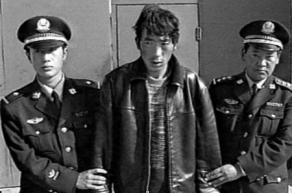
Loyak, one of those executed Oct. 20, 2009.
The two most prominent prisoners — in fact, the only two confirmed in some of the first media reports — were Lhasa residents Lobsang Gyaltsen and Loyak. A court spokesperson said both had been “given death penalties had committed extremely serious crimes and have to be executed to assuage the people’s anger.”
Specifically, both had been convicted of torching shops during the Lhasa riots, which arsons both led to deaths.
The other two executed, a woman named Penki (also for arson) and an unnamed man, received less comment, although they might have been executed despite having been condemned only to a “suspended” death sentence, which for China is generally no death sentence at all.
Executions in Tibet turn out to be relatively rare; these were the first known Tibetan executions since early 2003. Widely condemned abroad, this date’s events were barely or not at all reported internally by Chinese state media.
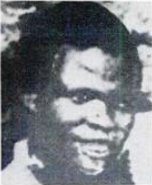
On this date in 1985, poet Benjamin Moloise was hanged in Pretoria for murdering a (black) policeman in apartheid South Africa.
Moloise’s controversial execution occurred in the context of violent resistance to apartheid in South Africa’s black townships and an ultimately fatal crisis for the apartheid state.
The black majority, long treated as second-class citizens by the white powers-that-be, turned to increasingly confrontational tactics aiming to break official power at the township level. Attacks on black officials and police officers who administered state authority at that level were part and parcel.
Moloise was convicted in a plot to kill such an officer in 1983. (The African National Congress claimed responsibility for the killing, and said that Moloise wasn’t involved.)
His hanging approached as the township rising grew into a mass movement that the hardline government of P.W. Botha answered mostly with force* — so, little surprise that Botha spurned both American and Soviet entreaties not to hang Moloise and little surprise that the execution further escalated racial violence.
Furious black protesters rioted in downtown Johannesburg itself, which (like much of white South Africa) had theretofore remained mostly immune to the violence gripping the townships. Here’s a French news report on Moloise’s execution and its aftermath.
All of which dovetailed with a dramatic fall in South Africa’s international position, vividly symbolized by the months-long collapse of the rand — which bled about three-quarters of its value in 1985. International outrage at the blood shed to enforce South Africa’s color line subjected it to a cascade of diplomatic and economic sanctions in the mid-1980s.
Apartheid went out with the Cold War at the end of the decade — vindicating Moloise’s poetic final message, subsequently a staple message at anti-apartheid rallies.
I am proud to be what I am …
The storm of oppression will be followed
By the rain of my blood
I am proud to give my life
My one solitary life.
* It had implemented a state of emergency that very summer. At the same time, Botha pursued tweaks around the edges of apartheid to preserve it: weeding out “petty apartheid” provocations like whites-only/coloreds-only facilities, and implementing a new constitution with a tricameral, race-based parliament.
When this missionary bishop to Paris got the Roman chop* for his conversions sometime after 250, he scooped up his own severed noggin and carried it to his preferred burial spot.
(Denis is also sort of the namesake for the Parisian hill Montmarte where he’s supposed to have been put to death: “mountain of Mars” in heathen times, it Christianized to mons martyrium, “Martyrs’ Mountain”.)
While many Christian martyrs carry the instruments of their martyrdom in iconography, and a few others roll with the bits of severed flesh exacted by those martyrdoms, Denis is only the most notable of an entire designated sub-class who carry their own heads: cephalophores.
This subject, seemingly tailor-made for a They Might Be Giants song, finally got one in 2011: “You Probably Get That A Lot”.
A most profane footnote was appended to our holy man’s legend during the French Revolution.
Journalist Camille Desmoulins once recklessly sneered of Robespierre‘s vain lieutenant Saint-Just, “He carries his head like a sacred host.”
Saint-Just is supposed to have retorted upon hearing the slight, “I’ll make him carry his like Saint Denis.” He did it, too.
* Two companions, Rusticus and Eleutherius, were doing the same conversions and suffered the same execution. Nobody named cathedrals after them.
It was on this date 1873 that the Modoc leader Kintpuash, known as Captain Jack, was hanged with three comrades by United States forces after the Modoc War.
Reading from a familiar script, the encroaching whites had squeezed Modocs off their ancestral land and onto a reservation — in fact, the reservation of another, rival tribe. Jack led his people off that uncomfortable lodgings, bidding to return home in 1865 — only to be rounded up and re-confined.
A second attempt to break out would result in his execution.
When an actual fight broke out at the inevitable surrender negotiation, outright skirmishing ensued as everyone reached for their guns.
Jack’s forces broke away, now with the U.S. Army in earnest pursuit. They fell back to the rough volcanic terrain at present-day Lava Beds National Monument in northern California — and specifically to a defensible natural fortification that now bears Captain Jack’s name.
Modoc firing position within Captain Jack’s Stronghold. (cc) image courtesy of Eric Hodel.
From Captain Jack’s Stronghold, the Modoc held off a larger army assault.
Dee Brown relates the tragedy of the fruitless monthslong aftermath, of “peace” negotiations under a gathering siege, in the classic Bury My Heart at Wounded Knee
“Who will try them?” Jack asked. “White men or Indians?”
“White men, of course,” Meacham admitted.
“Then will you give up the men who killed the Indian women and children on Lost River, to be tried by the Modocs?”
Meacham shook his head. “The Modoc law is dead; the white man’s law rules the country now; only one law lives at a time.”
“Will you try the men who fired on my people?” Jack continued. “By your own law?”
Meacham knew and Captain Jack knew that this could not be done. “The white man’s law rules the country,” the commissioner replied. “The Indian law is dead.”
You gotta look forward, not back.
In the Modoc camp, militants like Hooker Jim were gaining sway, and by disputing his leadership and even his manhood eventually persuaded/forced Captain Jack to ambush the U.S. general in charge during one of their interminable parleys.
Far from striking a decisive blow at the head of the enemy, this anathematized Captain Jack and triggered a massive, and this time successful, army incursion. Jack persisted on the run for a few months, but he was finally captured wih the help of Modoc turncoats — including that former radical Hooker Jim, who induced him to kill the general in the first place.
“You intend to buy your liberty and freedom by running me to earth and delivering me to the soldiers. You realize that life is sweet, but you did not think so when you forced me to promise that I would kill that man, [General] Canby … I thought we would stand side by side if we did fight, and die fighting. I see now I am the only one to forfeit … Oh, you bird-hearted men, you turned against me.”
-Jack to Hooker Jim
Captain Jack was hanged at Fort Klamath, Oregon after a perfunctory trial all in English, with no lawyer to plead the case. (The gallows was put up outside the courtroom during the trial.) The executed Modocs’ corpses were shipped back to the Smithsonian in Washington, D.C. (rumor had it that they appeared for a time as circus attractions), and only returned to the Modoc in 1984.
We’ve already met Mary’s father in these pages. The old man would outlive his child, which no parent ought to do, but he made it up to her by the way he checked out.
The two cases are closely related. The father killed one John Jacobs, a half-breed, because he had been the chief witness against his daughter. The daughter allegedly killed a “female” who had “alienated her husband’s affection.” Despite public sympathy being associated with the Indian Abram, the law was obliged to take its course. (Source)
On this date in 1915, a quintet of African Americans died in South Carolina’s electric chair during a 70-minute span.
Joe Malloy was put to death for killing two white men four years before; the other four executed on this date were convicted together of murdering 73-year-old Confederate veteran John Q. Lewis. They were John Crosby, Nelse Brice, and — our principal concern today — Thomas and Meeks Griffin.
In this case, and even though public opinion was predictably inflamed at the aged veteran, the Griffins weren’t lynched: indeed, prominent white people in the community, such as the mayor and the sheriff, rose to the Griffins’ defense to the extent of signing a petition for executive clemency. They didn’t believe then that the thief whose accusation condemned the brothers was credible.
More than likely they suspected Lewis’s 22-year-old black mistress, Anna Davis, and/or her husband — and undoubtedly, they would have known exactly why this scandalous angle was not pursued in court.
Still, South Carolina’s governor reckoned that they’d had their day in court, the victims deserved closure, and whatever other equivalents of the familiar modern-day rationales one might care to name.
Almost surely, this distant injustice would be lost to time were it not for the Griffins’ famous great-nephew, the radio host Tom Joyner.
Joyner only recently discovered (via Henry Louis Gates Jr.‘s research for a PBS documentary*) his kinship with these executed men; his grandmother had moved away to Florida to bury the family tragedy.
But the broadcaster exhumed it with gusto, and, two years ago, was able to secure a posthumous pardon from South Carolina based on the weakness of the original case. It’s thought to be the first official posthumous pardon the state has granted to any executed persons.
But we do want to extend the Palmetto State the credit due to all its sons whose signatures graced the disregarded clemency petition way back when. More than that: The State editorialized, confusedly but forcefully, against the manifest racial discrepancies in capital sentencing on the occasion of this quintuple-execution. (Oct. 1, 1915) These questions, ever present, are more sincerely grappled with in this column than we can manage today.
* You can watch the big reveal when a flabbergasted Joyner first hears about his ancestors: it’s quite a moment.
This date in 1832 was the Republic’s only execution of a female in Tyler County, West Virginia (then part of Virginia): a slave named Lucy who murdered the daughter of a neighboring family.
Detail on this case comes salvaged from the now-defunct (we think) death penalty history site Before the Needles:
Just across Middle Island from the Wells home lived a family which had a daughter named Mary Ann Fletcher.
Communication between the two homes was by canoe or johnboat and quite frequently Lucy was sent to the creek bank to set Miss Fletcher across the stream for a visit to the Wells home when they heard a halloo from the opposite shore. For some reason Lucy became intensely jealous of the attention which her master’s family lavished on the young Fletcher girl and determined to slay her.
One day after visiting the Wells home Lucy was sent with Miss Fletcher to set her across the creek and after a little longer delay than usual Lucy returned to “Stonehurst” her usual calm self, but later in the evening Mr. Fletcher came to the creek bank and hallooed across to “Stonehurst” and asked if they would send Mary Ann home immediately, as it was growing late.
Squire Wells and his family wondered what had happened, but did not think of anything wrong untill Mr. Fletcher called to them a second time. Lights were secured by both families who went to the crossing and in a short time the body of Mary Ann, drowned, was discovered.
An examination of the body disclosed the she had evidently died from foul play, because the fingers of both hands had been badly crushed and she also had bruises on her head and face. Lucy was immediately suspected and shortly confessed that she had pushed Miss Fletcher out of the boat, and when she did not readily drown, and had caught the sides of the canoe with her hands, she (Lucy) had pounded Miss Fletchers hands with the paddle, struck her over the head several times and pushed her under the surface of the stream.
Twenty years ago today, Warren McCleskey died in Georgia’s electric chair for the murder of a police officer.
Yet the “question reverberates: Did Warren McCleskey deserve the chair? For the question to outlive him is a damning commentary on capital punishment in the United States.”
The most reverberating commentary on this case was the 1987 Supreme Court decision McCleskey v. Kemp — a landmark 5-4 ruling that still shapes the way judges handle purported racial discrimination in the criminal justice system.
McCleskey (the decision, not the man) “marked the end of an era in death penalty jurisprudence … reject[ing] the last major challenge to the death penalty in America” from the generation of legal tinkering reaching back to the 1960s.
McCleskey v. Kemp was decided on April 22, 1987, at which time just 70 humans had been executed since the “modern” era of capital punishment began in the 1970s. (Today, the count is well beyond 1,200.)
The victims attributed to those 70 were 83% white (77 of 93),* even though blacks and whites are murder victims in roughly equal numbers — suggesting on its face that white victims are treated as disproportionately “valuable” by prosecutors, juries, and/or judges. This was, prospectively, the case with Warren McCleskey himself, an African American who in the course of an armed robbery had gunned down (or maybe not: see below) a white off-duty policeman.
McCleskey’s appellate team marshaled a statistical study by Iowa Prof. David Baldus indicating that black murderers (to a small extent) and killers of white victims (to a greater extent) were indeed more likely to receive a death sentence in Georgia, even when controlling for dozens of other variables. “According to this model,” wrote Justice Lewis Powell for the majority, “black defendants, such as McCleskey, who kill white victims have the greatest likelihood of receiving the death penalty.”
Though it accepted evidence of a discriminatory pattern,** the high court nevertheless ruled that McCleskey was not entitled to appellate relief unless he could demonstrate that that it was at work in his specific case.
And with some reason: the import of granting constitutional relief to a claim of “endemic racism in the system” would open a Pandora’s box of appeals from America’s burgeoning carceral state.
McCleskey’s claim, taken to its logical conclusion, throws into serious question the principles that underlie our entire criminal justice system … if we accepted McCleskey’s claim that racial bias has impermissibly tainted the capital sentencing decision, we could soon be faced with similar claims as to other types of penalty.
This reasoning too backtracked from equal protection concerns that had helped lead a similarly bare 5-4 majority to strike down then-existing capital statutes 15 years before in an appeal originating from the same state — Furman v. Georgia. That old regime had then been replaced with a death penalty system supposedly capable of minimizing arbitrariness. McCleskey served notice that justices wouldn’t be going out of their way to hunt arbitrariness any time soon.
The Court’s remaining liberal lions — it still had such a thing in 1987 — dissented furiously from McCleskey. William Brennan replied to the majority:
Warren McCleskey’s evidence confronts us with the subtle and persistent influence of the past. His message is a disturbing one to a society that has formally repudiated racism, and a frustrating one to a Nation accustomed to regarding its destiny as the product of its own will. Nonetheless, we ignore him at our peril, for we remain imprisoned by the past as long as we deny its influence in the present.
He also found “fear that recognition of McCleskey’s claim would open the door to widespread challenges … seems to suggest a fear of too much justice.”
Brennan was on the losing side of this judgment in a larger historical sense as well — at least, the brief span of history to unfold since Warren McCleskey sat in the electric chair.
McCleskey author Lewis Powell retired a few weeks after issuing it, and not long thereafter expressed regret for the McCleskey decision.‡ Relentless death penalty foes Brennan and Thurgood Marshall would hang up the spurs within a few years. (The circus Senate hearing to place Clarence Thomas in Thurgood Marshall’s seat was ongoing when Warren McCleskey finally died.)
But the deciding vote in McCleskey was cast by freshman Reagan-appointed justice Antonin Scalia, and he’s still going strong.
Scalia was then the Court’s emerging conservative paladin, though he was so new to the Court that McCleskey’s litigators hoped he might be amenable to their suit as a swing vote. Far from it: after Thurgood Marshall’s death in the early 1990s, his donated papers were found to contain a Scalia memo that rubbished the McCleskey majority’s mere consideration of the Baldus study.
I disagree with the argument that the inferences that can be drawn from the Baldus study are weakened by the fact that each jury and each trial is unique, or by the large number of variables at issue. And I do not share the view, implicit in [Powell’s draft opinion], that an effect of racial factors upon sentencing, if it could be shown by sufficiently strong statistical evidence, would require reversal.
Since it is my view that the unconscious operation of irrational sympathies and antipathies, including racial, upon jury decisions and (hence) prosecutorial [ones], is real, acknowledged by the [cases] of this court and ineradicable, I cannot honestly say that all I need is more proof.
Shorter Scalia: racism happens, so what?§ (Ultimately, Scalia opted not to file a separate opinion explicitly making this case; he just signed on to the majority opinion.)
As one might imagine, death penalty jurisprudence at One First Street NE in these latter days has become correspondingly rougher — and the problems raised by McCleskey have scarcely abated.
Although the McCleskey case is what our day’s principal is best known for, he was also caught up in one of the more everyday — but not the less disreputable — toils of the system: the phony jailhouse informant. Very late in the appeals process, McCleskey’s lawyers were finally able to show that the fellow-prisoner who testified that McCleskey admitted the shooting to him was in fact a police plant operating on a quid pro quo to reduce his own sentence. (It’s amazing how often defendants spontaneously confess to these guys; the Troy Davis case which climaxed last week also featured a jailhouse snitch.) Somehow, prosecutors forgot all along to mention that arrangement even when directly asked.
The Supremes ruled, Kafkaesquely, that this issue was procedurally out of order because McCleskey hadn’t raised it earlier, neatly ignoring that the reason he hadn’t raised it was that prosecutors were actively concealing the fact. That’s the subject of the other SCOTUS case under our man’s name, McCleskey v. Zant.
(At issue was whether McCleskey was himself the triggerman. Since he was part of the robbery gang, he was legally on the hook for capital murder whether or not he personally fired the shot; but, his death sentence turned in reality on the jury’s belief that McCleskey was the individual killer — a detail supplied by the suspect police informant. None of McCleskey’s confederates faced execution.)
The final drama this date was a “chaotic” mess of last-minute legal maneuverings, with McCleskey strapped into the chair at one point, then interrupted from his last statement to be returned to his cell, then finally hauled back to the lethal device after an early-morning telephone poll of Supreme Court justices.
* Execution demographic counts via the Death Penalty Information Center’s executions database.
** While the McCleskey court accepted Prof. Baldus’s statistical interpretations even while rejecting their constitutional import, a vigorous pro-death penalty case is made here against the reading that the modern American death penalty is racially discriminatory to any great extent.
† This Latin phrase — fiat justitia ruat caelum — is actually engraved above the sitting justices at the Georgia Supreme Court.
‡ The regret was about more than Warren McCleskey; Powell’s biographer described a complete change of heart in the June 23, 1994 New York Times:
when the retired Justice Powell said he had changed his mind about the McCleskey case, I thought he meant that he would now accept the [Baldus] statistical argument.
“No,” he replied, “I would vote the other way in any capital case … I have come to think that capital punishment should be abolished.” …
Justice Powell’s experience taught him that the death penalty cannot be decently administered. As actually enforced, capital punishment brings the law itself into disrepute.
§ See Dennis Dorin, “Far Right of the Mainstream: Racism, Rights, and Remedies from the Perspective of Justice Antonin Scalia’s McCleskey Memorandum,” Mercer Law Review, 1994.


 Rivaling Hungarian blood-bather
 Moloise’s controversial execution occurred in the context of


