On this date in 1992, longtime heroin user Billy Wayne White waited 47 minutes while his executioners probed for a vein suitable to inject the lethal cocktail he incurred for a 1976 robbery-murder in Houston.
On this date in 1868, the first Australian known to have attempted a political assassination received the short drop and sudden stop that often constitutes the wages of that distinguished profession.
Someone was smiling down on Alfred that day, because the shot was deflected by a metal buckle and inflicted only a flesh wound. Onlookers tackled the assailant before he could finish the job.
O’Farrell claimed affiliation with the Irish nationalist Fenian brotherhood, which inflamed anti-Irish passions (some cynically whipped up by New South Wales Prime Minister Henry Parkes). Paranoia redoubled when a Fenian assassin killed a Canadian politician a few weeks later.*
Under the circumstances, it was a hopeless struggle for O’Farrell’s attorney, who strove to demonstrate (probably accurately) that his charge was not so much a terrorist as a madman. Even the Duke of Edinburgh’s own intercession for clemency did not secure it, eager as the populace was to make an offering of its loyalty.**
* Irish convicts transported to Australia, especially after the 1798 uprising, formed a significant demographic among early New South Wales settlers. (Source)
When the Rwandan genocide erupted following the April 6, 1994 assassination of President Juvenal Habyarimana, the southern province of Butare went initially unscathed. Its large and powerful Tutsi population had limited the foothold of violent Hutu paramilitaries.
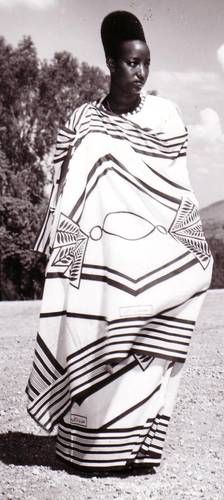
That calm lasted a mere fortnight, however, and was shattered this date in 1994 when the aged widow of Rwanda’s last monarch was hauled to Butare city’s national museum and shot along with several of her caregivers.
Taken in marriage in 1942 (French link) by King Mutara III, Rosalie Gicanda had stayed out of politics after he died mysteriously and Rwanda became a republic.
Being an emblematic Tutsi in April 1994, however, was all the political involvement needed to doom her. According to Human Rights Watch.
At 11 a.m. … a detachment of soldiers commanded by Lt. (jg) Pierre Bizimana, acting under the orders of Capt. Nizeyimana, invaded the modest home of Rosalie Gicanda … About eighty years old, she lived a quiet life as a devout Catholic, sharing her home with her bed-ridden mother and several women and girls who cared for them both. Because she eschewed any involvement in politics and behaved with discreet dignity, even the most anti-Tutsi politicians had left her largely undisturbed throughout the thirty years of Hutu rule…. The soldiers passed through the wooded enclosure that protected the house from the main street and entered the little house with its air of faded respectability. They seized the former queen and six others, leaving her bed-ridden mother and one girl to care for her. The soldiers passed by the ESO and then took Gicanda and the others to a place behind the national museum where they shot them. One teenaged girl, left for dead, survived to recount the murders. The soldiers returned to pillage Gicanda’s home in the afternoon and, two days later, they killed her mother. …
The news that this gracious lady and others from her household had been taken away by soldiers in the back of a pickup truck spread rapidly and alarmed Tutsi and all others who opposed the genocide. They concluded that if soldiers dared to seize even this revered person, then no one was safe.
That conclusion, of course, was well-founded. Over 200,000 Butare Tutsis are thought to have suffered Gicanda’s fate (or worse) in the ensuing months, making it the Rwandan genocide’s bloodiest province.
Pierre Bizimana was sentenced to death for Gicanda’s killing in 1998; I have been unable to document whether that sentence was ever carried out. His commanding officer, Idelphonse Nizeyimana, was arrested in October 2009.
As of this date, it’s been 48 years since the United States military last carried out an execution — the Fort Leavenworth hanging* of John Arthur Bennett for rape.
An epileptic black soldier with a family history of mental illness, Bennett had enlisted to find a way up out of sharecropping. Instead, on Christmas Eve 1954, he drunkenly raped a 12-year-old girl near his base in Austria.
He spent six years awaiting execution — “six years,” observed the Los Angeles Times, “in which six other black soldiers were hanged while all four of the white men — many of them multiple murderers — were saved.”
Bennett dodged two execution dates, once receiving his stay during his last meal, but a seemingly compelling plea for clemency — the victim herself, and her parents, asked for mercy — availed Bennett nothing. His last frantic plea to the new president, John F. Kennedy, was dispatched with only hours yet to live.
I beg in the name of God … Will you please in the name of God and mercy spare my life?”
Coincidentally, but poignantly for this case, the Kirk Douglas vehicle A Town Without Pity opened a month before Bennett’s execution. In that film (trailer here), four American servicemen face capital trial for the rape of a German girl — and Douglas, as their lawyer, struggles to talk pity into someone so he won’t be obliged to humiliate the victim in court in order to save his clients from the noose.
The victim’s father in that movie is so blinded by his lust for vengeance that he forces Douglas to destroy his own daughter: striking contrast with the real-life father of Bennett’s flesh-and-blood victim, who wrote in support of clemency for his daughter’s assailant, “I know how hard it is for the parents when their own child is so close to the verge of death.”
Bennett’s milestone, however, is hardly assured of lasting much beyond this 49th year.
In 2008, President George W. Bush affirmed the death sentence of condemned Army cook Ronald Gray, the first such action by any U.S. president since Bennett’s day. According to the NAACP Legal Defense Fund’s Death Row USA most current as of this writing,** Gray is one of nine prisoners currently on the U.S. military’s death row.
* Curious to know about the procedure? The Library of Congress has that period’s Procedure for Military Executions — complete with exact diagrams — online in pdf form.
An alarming rumour, meanwhile, … spread throughout the Colonies; a rumour which, whatever of truth or fact, little or none, might be at the foundation, gathering, as it went, size and gloom, and dust of slander, was calculated to make them all feel very unhappy. The report was that a slave insurrection had been discovered, having its centre on the Berbice West Coast, but extending right and left so as to include all the shore from the Corentyne Coast to Mahaica, about eighty miles; that the negroes had chosen a governor and other officers; that it was their intention to murder all the white men, and take possession of all the rest; that some of the Demerara East Coast negroes were leaders in the rebellion, especially Philip, a member of the church on Le Resouvenir; and that instruction of the negroes was to blame.
…
the account which the negroes gave of the matter was, that there had been formed a society in imitation of the Freemasons, they wishing to have, as well as their buckras or masters, a society of that nature; and that the money collected was to support the poor and defray the expense of their dances, &c.; just as it had been formerly very common for them to assume the names of their masters, or of the Governor or Fiscal, and send invitations to friends to supper or a dance, and appoint a captain of their own as president of the feast; sometimes to put feathers in their hats at holiday time and parade the streets. “No one,” as far as Mr. Wray could learn, “had been injured by them, neither was any property destroyed,” yet on 12th April six of the unhappy people apprehended on the West Coast were executed in New Amsterdam as ringleaders, their heads cut off and fixed upon poles on the different estates to which they belonged; one of them white with age, whose master, Mr. Rader, told Mr. Wray that he denied to the last having any bad intentions. Several others were flogged under the gallows, and some were transported.
A proclamation was subsequently issued to the effect that as “the privilege allowed the slaves of the Colony, of publicly or privately dancing on estates and other places at stated periods, had been perverted by them to purposes of the most dangerous nature, all dancing was forbidden until next year, 1815, or the further pleasure of the Court;” … This was followed, late in the year, by another calling upon the colonists to pay their quota of the expenses incurred in crushing the plot and indemnifying the proprietors of the slaves capitally punished … Better still, the law concerning Sunday labour was amended in favour of the slave, forbidding field-work on that day, except in sudden emergencies; and further enactments were issued limiting and regulating the excessive use of the whip, and forbidding the burial of any slave dying suddenly or by suicide, or in consequence of punishment or hurt, without previously acquainting the authorities …
The electric chair has gotten a bad rap in recent years, and nowhere is this more evident than in the 1997 Florida execution of Cuban refugee Pedro Medina.
The improper application of an electricity-conducting sponge caused a “crown of foot-high flames” to shoot from Medina’s head, in a botched execution that caused Florida to reexamine its use of the electric chair and accelerated the trend towards lethal injection as the preferred method of execution — modern, sanitary and humane. But electrocution was once preferred for just those very reasons — well, that, and politics.
The thought of designing an apparatus to stimulate death by electrocution first came to dentist Dr. Albert Southwick in 1881, who watched an drunk man touch the terminal of an electricity generator in Buffalo, New York. Impressed at how quickly and painlessly the man died, he mentioned the incident to his friend, a state senator, who promptly brought the matter to the attention of the governor. The state legislature was then asked to consider how modern day electricity might emerge as an alternative to the often grisly process of hanging, in which incompetent executioners often inadvertently subjected prisoners to slow deaths by strangulation or decapitation.
Several years later, an inventor by the name of Harold Brown, an employee of the famous Thomas Edison, designed the first electric chair, deliberately adopting the Alternating Current (AC) form of electricity because Edison did not want his Direct Current (DC) form associated with the gruesome business of death — a sordid chapter in the history of public relations. The first execution was carried out in New York State in 1890, but the novel method was far from foolproof: it took two attempts, and the inmate was reported to have gone down in the same sort of smoke, flames, and smell of Medina’s over a hundred years later.
Still, the method caught on, and over the course of the 20th century, the electric chair became an indelible symbol of the death penalty in the nation’s consciousness.
“The chair” didn’t begin to decline until the mid-1980s, when newspaper accounts about botched executions, together with the emerging technology of lethal injection, again prompted some states to reexamine their death penalty statues.
It was around this time that Pedro Medina first came to the US from Cuba, part of the Mariel boat lift of 1980, in which Fidel Castro “permitted” some 125,000 Cuban prisoners and mentally ill to depart from the Mariel harbor for the fertile shores of America. (Medina himself had been released from a psychiatric hospital in Cuba and diagnosed with illnesses including paranoid schizophrenia and major depressive disorder with psychosis.) The boatlift polarized public sentiment in the United States.
These factors combined to lend Medina, a black man, a low status indeed in the eyes of prosecutors and jurors when, two years after his arrival on American shores, he was convicted of murdering his neighbor, Dorothy James.
Medina was executed in Albert Southwick’s brainchild 15 years later, despite pleas from James’ daughter, Lindi James, who said that she did not believe Medina had killed her mother and that her mother would not have wanted him executed regardless, and from Pope John Paul II, who also made a public call for mercy on Medina’s behalf. Medina’s lawyers also filed a petition claiming he was insane and thus incompetent to be executed, but the Florida Supreme Court ruled that, while he had mental problems, he could still be executed.
Early in the morning on March 25, 1997, Medina went out in flames.
A crown of foot-high flames shot from the headpiece during the execution, filling the execution chamber with a stench of thick smoke and gagging the two dozen official witnesses. An official then threw a switch to manually cut off the power and prematurely end the two-minute cycle of 2,000 volts. Medina’s chest continued to heave until the flames stopped and death came. (From the Death Penalty Information Center’s botched executions page.)
The source of the malfunction was not immediately apparent; prison officials claimed the fire had been caused by a corroded copper screen in the electric chair’s headpiece, but later investigation revealed that it was due to improper application of an electricity-conducting sponge to Medina’s head. Attorney General Bob Butterworth hailed the deterrent value of malfunctions: “People who wish to commit murder, they better not do it in the state of Florida, because we may have a problem with our electric chair.”
The debacle of Medina’s execution caused a media sensation and led to a case by another Florida death row inmate, Thomas Provenzano, claiming that lethal injection constituted cruel and unusual punishment prohibited under the Eighth Amendment.
Provenzano lost his case, but with the release of bloody photographs of the 1999 execution of Allen Lee Davis, more states began moving against the use of the electric chair. Of the six states that today retain it (Virginia, South Carolina, Kentucky, Tennessee, Alabama and, yes, Florida), none currently use it as their only method of execution.
Rather, lethal injection has become the norm.
But for how long? There may be no AC/DC marketing gambit in the new, modern business of death, and no crown of flames. But maybe all we’ve really done by moving to the needle is render invisible ongoing Medina-like botches.
On this date in 1836, Mexican forces commanded by President Antonio Lopez de Santa Anna overran the Alamo — and executed those few of its defenders who survived the day’s battle.
That Alamo of blood and legend, and the countervailing interpretations it eclipses, are much beyond our scope here, but we are attracted to notice the reputed summary execution of five to seven defenders who had surrendered or otherwise been captured during the fight. (A few dozen mostly civilian noncombatants in the former mission also survived, and were not executed.)
“foreigners landing on the coast of the Republic or invading its territory by land, armed, and with the intent of attacking our country, will be deemed pirates.”
Who counted, at this moment, as “foreigners” among the Anglo settlers trying to break away from Mexico and their supporters among from the United States to which Texas would eventually attach poses a historiographical riddle. But then, Santa Anna wasn’t there to write a dissertation, but to win a war — and he was said to be sorely annoyed at the defenders having tied him down for a week and a half.
King of the Wild Frontier
Covered by most any definition of “foreigner” would have been the Alamo’s most famous defender, Tennessee frontiersman and former U.S. Congressman Davy Crockett. He had arrived in Texas just a few months before, on a rendezvous with destiny.*
It’s a matter of dispute whether Crockett was among those last few executed; in an event this emotionally remembered, every version of the Crockett death scene — from “found dead of injuries amid a heap of Mexican casualties” to “cravenly bargained for his life” — gores someone’s ox.
Even if the account of Crockett’s presence among the executed derives from a disputed source — well, this blog has not scrupled to highlight the fictional and the mythological, those executions whose resonance transcends factual accuracy.
And even if Davy Crockett was not among those anonymous souls put to death this day, it is by his name that they have their tribute, as in the 2004 film** The Alamo:
** This Disney film diddles with the Crockett legend that Disney helped to inflate in the 1950’s — to the annoyance, of course, of traditional-minded Alamo partisans.
On this date in 1942, poet Olena Teliha and her husband Mykhailo were shot by the Nazis at Babi Yar for their Ukrainian nationalist activism.
Olena Teliha (top) and her husband, Mykhailo Teliha.
Having lived in Czechoslovakia (where they met and married) and then Poland during the interwar period, the Telihas weren’t present for the worst of Soviet depredations in Ukraine. Mykhailo, a bandurist, might have been in an especially bad way, since his musical genre of choice harkened to subversive themes of Cossack insurrection, and was therefore heavily persecuted.
Instead, they moved to Kiev as the German invasion opened the prospect of returning to their ancestral homeland. There they found their affiliation with the Organization of Ukrainian Nationalists quite unwelcome to the new occupiers.
Olena kept writing for a prohibited nationalist paper, and Mykhailo gamely stuck by her.
Without a Name
Neither love, nor caprice nor adventure–
Not everything must be named.
As not always in abysmal waters
Can one find a motionless floor.
And when Your reawakened soul
Again rushes to a luminous path,
Do not question whose inspired oars
Were able to cast aside the dark shore.
Neither love, nor tenderness, nor passion,
Only heart — tumultuous eagle!
Drink then splashes, fresh, effervescent,
Of nameless, joyful sources.
(Executed Today friend Sonechka’s original translation from the Ukrainian text, found among this collection of Olena Teliha’s work)
Their execution this date is not to be confused with the mass execution of thirty thousand-plus Jews in September 1941, the atrocity with which Babi Yar is most frequently associated. This ravine continued to be used for Nazi executioners throughout the occupation of Kiev, including for more than 600 Ukrainian nationalists — who are today honored at the site with this monument:
On this date in 1858, Chief Leschi of the Nisqually tribe was controversially hanged at Fort Steilacoom (present-day Lakewood) in the Washington Territory.
Yankee officer Isaac Stevens only spent four years in the Washington Territory as Franklin Pierce’s appointed governor, but he left his stamp on the state.
And no project defined the tenure of this authoritarian executive like putting the screws to the native peoples. Growing white settlement in the Pacific Northwest was creating conflict with the Indians who already inhabited it. In time, that conflict would claim Leschi.
Late in 1854, Stevens summoned the chiefs of several tribes in the newly-minted Washington Territory for an offer they couldn’t refuse: pack up and move to reservations of a few square miles’ undesirable territory, ceding 2.5 million acres to white settlers.
Chief Leschi — and it was Stevens’ men who had designated him a “chief”, the operation upon an alien culture of a bureaucracy that required official spokesmen — allegedly refused to sign the Treaty of Medicine Creek, although the evidence is unclear. Whatever the truth of that matter, sufficient signatures were cajoled for the government to ratify an agreement for massive dispossession, and Leschi became a prominent voice in the growing Indian dissatisfaction once the extent of the hustle became clear.
An attempt to arrest Leschi, who increasingly feared white assassination, touched off the Puget Sound War in 1855, and with an analogous conflict brewing on the other side of the Cascade Mountains, all Washington was soon a conflict zone.
That story’s end is predictable enough, but Leschi’s fate was protested by both native and white contemporaries. Leschi was condemned for “murdering” a militiaman during hostilities, a charge whose logic flowed from the rights asserted by American authorities but whose fundamental injustice (even leaving aside the very doubtful factual evidence) seems manifest, as it did to the defendant.
I have supposed that the killing of armed men in wartime was not murder; if it was, the soldiers who killed Indians are guilty of murder too.
George W. Bush would’ve called him an illegal combatant. That was hardly common sentiment.
So much good will did Leschi enjoy among whites — with whom he had years of amicable relations prior to Gov. Stevens’ arrival — that a scheduled January 22 hanging was deviously put off by the sheriff charged with the task: he arranged to have himself arrested on a liquor charge while in possession of the death warrant shortly before Leschi was to have been hung, and the two-hour window allotted for the execution of the sentence elapsed before matters could be put right.
They carried the sentence out four weeks later — “I felt then I was hanging an innocent man,” executioner Charles Grainger would say, “and I believe it yet” — but that hardly put an end to Chief Leschi’s story. The Nisqually have pushed hard for Leschi’s official exoneration, and won a Washington Senate resolution to that effect and an “acquittal” (of no legal force) from a panel of state jurists. But even though it attached to a convicted murderer, Leschi’s was never a black name in the state; it adorns a Seattle neighborhood and a number of schools and other public places. (“Stevens” is similarly prominent.)
On February 15, 1573, the brief but scintillating career of insurrectionary Matija Gubec came to a brutal end when he was publicly tortured to death in Zagreb.
You know what they say about the size of a man’s feet: Matija Gubec about to be crowned with a red-hot iron ringlet and quartered.
Although put down inside of two weeks, this revolt and its personification in Gubec have endured as potent national symbols in Croatia.
In the revolutionary 20th century, both left and right claimed Gubec’s standard as their own: a multiethnic company of Yugoslav volunteers fought under his name in the Spanish Civil War, as did multiple partisan units during World War II who took inspiration in his peasant class uprising. By contrast, the Ustasha conceived Gubec as
one man, who was not the exponent of any class, but … a reflection of an entire nation’s beliefs.*
Fascist and communist alike can jam to the rock opera Gubec Beg.**
* See Pavlakovic, Vjeran (2004) ‘Matija Gubec Goes to Spain: Symbols and Ideology in Croatia, 1936-1939’, The Journal of Slavic Military Studies, 17:4, 727 — 755.
** According to Pavlakovic, Gubec’s real given name is unknown and birth records suggest it might have been “Ambroz”. He was known as “Gubec called Beg,” using the Turkish term for a lord.

 It was March 12 — less than six weeks before — that
  That calm lasted a mere fortnight, however, and was shattered this date in 1994 when the aged widow of Rwanda’s last monarch was hauled to Butare city’s national museum and shot along with several of her caregivers.
 It was around this time that Pedro Medina first came to the US from Cuba, part of the


 Yankee officer