1938: Yakov Peters, Siege of Sidney Street survivor

On this date in 1938, a Soviet purge claimed (among others*) Yakov (Jacob) Peters, former Cheka executioner and once the subject of a headline-grabbing trial in England.
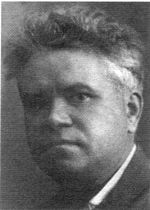
Peters was a trusted (and ruthless) operator in the Soviet internal police from the start of the Revolution: he helped interrogate Lenin‘s would-be assassin Fanya Kaplan in 1918.

And he was the guy Trotsky had on speed-dial when Cheka founder Felix Dzerzhinsky was arrested by the Left SRs during their abortive 1918 uprising against their erstwhile revolutionary allies, the Bolsheviks.**

Dzerzhinsky was disarmed and locked in a room. his assistant, M.I. Latsis, was captured in the Cheka Lubianka headquarters. “No point in taking him anywhere, put this scum against the wall!” shouted a sailor, but one of the leaders, Alexandrovich, intervened, saying, “There is no need to kill, comrades; arrest him, but do not kill.” Dzerzhinsky’s assistant Yakov Peters was urgently summoned by Trotsky, who ordered him to crush the uprising by attacking the Left Eser headquarters. Alexandrovich was caught at a railway station, and Latsis, whom he had saved from execution, personally shot him. Mass executions in Cheka prisons followed. (Source)

Like a lot of old Bolsheviks, Peters’s early service to the cause didn’t age too well. He ran afoul of some bureaucratic intrigue or point of party discipline or other and caught a bullet in 1938. (Khrushchev rehabilitated him.)

For anyone in England watching the fate of this distant apparatchik, the proximity to bloodbaths would have had a familiar hue.

Peters was one of a gang of Latvian revolutionaries who came to cinematic public attention in London when, in the course of being rounded up for a December 1910 murder, they engaged the police in a stupendous East End firefight on January 2, 1911 — the Siege of Sidney Street. (It’s also known as the Battle of Stepney.)

Armed like soldiery, the Latvians easily outgunned the bobbies who had them hemmed into a cul-de-sac, and they fired on John Law with ruthless effect. This necessitated a call to the Scots Guard — whose deployment was okayed by Home Secretary Winston Churchill, the latter captured on film that day awkwardly milling about the scene of the urban combat.


(Translated directly to the city’s cinemas as soon as that same evening, Churchill’s image came in for public catcalls owing to his support for a relatively open immigration policy for eastern Europeans.)

This incident was a landmark in crime, policing, media — recognizably modern in its trappings of nefarious immigrant terrorists, politicized state funerals for policemen, and of course, the live-on-the-scenes camera work.

Since Britain was a ready hand with the noose at this time, one might think an execution would have been just the denouement.

However, responsibility for the policememen slain in the affray had been officially assigned to a different gang member, George Gardstein — who was killed when the besieged house burned down — and there was little usable evidence against those who were finally put on trial for the gang’s various crimes. Most of the witnesses were dead, fled, or completely unreliable, so the surviving Latvians all walked.

(Since the identity of one of the first guys to start shooting when the police rang always remained murky, there are some theories — such as in this out-of-print book — that Peters himself had been one of the gunmen on-site, and/or that he could be identified with the absconded and never-captured gang leader “Peter the Painter”.)

Whatever the exact measure of blood on Yakov Peters’s hands from Sidney Street, there would be a lot more where it came from.

While Peters went off to his different fate in revolutionary Russia, the dramatic scene he left behind has naturally attracted continuing retrospective attention in England. The testimony of witnesses, who also recollect the shootout’s anti-immigrant fallout, is preserved in this BBC Witness radio program:

[audio:http://downloads.bbc.co.uk/podcasts/worldservice/witness/witness_20110127-0950a.mp3]

And, on this BBC Four television special:

* e.g., Russian Civil War officer Nikolay Gikalo and Romanian Jewish revolutionary Leon Lichtblau.

** And in favor of resuming Russia’s ruinous involvement in World War I!

On this day..

1457: The Wallachian boyars

This date was Easter Sunday in 1457, which would make it the date associated with one of the more memorable displays of theatrical brutality by Wallachian proto-vampire Vlad Tepes, aka Vlad Dracula or Vlad the Impaler.

Having only just ascended the less-than-secure throne of Wallachia, a frontier principality pinched between the Hungarian and Ottoman Empires, the 25-ish prince and onetime Ottoman hostage had a bone-chilling inauguration plan to shore up his security both internal and external.

He threw a big party in Targoviste for the nobles of the realm … and had a little surprise waiting for them. It wasn’t an Easter egg hunt.

He asked the assembled noblemen:
“How many princes have you known?”
The latter answered
Each as much as he knew best.
One believed that there had been thirty,
Another twenty.
Even the youngest thought there had been seven.
After having answered this question
As I have just sung it,
Dracula said: “Tell me,
How do you explain the fact
That you have had so many princes
In your land?
The guilt is entirely due to your shameful intrigues.”

With ample proof of the boyars’ deceit and treacherous intents, Dracula decided it was timely to inflict upon them an exemplary punishment … mass impalement …

The oldest Romanian historical chronicle records the event two centuries later. It had taken place in the spring of 1457, during the Easter celebrations that the boyars were attending at the palace … “when Eastern Day came, while all the citizens were feasting and the young ones were dancing he [Dracula] surrounded them [the boyars] … led them together with their wives and children, just as they were dressed up for Easter, to Poenari, where they were put to work until their clothes were torn and they were left naked.” In actual fact, this episode, which is also recalled by the Greek historian Chalcondyles and firmly anchored in popular folklore, involved some two hundred boyars and their wives, as well as leading citizens of Tirgoviste … They were seized by Dracula’s men as they were finishing their meal in the main banqueting hall of the palace, following the elaborate Easter ritual at the Paraclete Chapel. In Dracula’s ingenious mind, one aspect of the punishment had a utilitarian purpose: the reconstruction of the famous castle high up on the Arges … On the way out of the chapel the old boyars and their wives were apprehended by Dracula’s henchmen and impaled beyond the city walls. The young and able-bodied were manacled and chained to each other and then marched northward under the vigilant eye of Dracula’s men.

This was revenge a decade in the making for the boyar class having toppled Vlad’s father and murdered Vlad’s elder brother in 1447.

But personal score-settling aside, Vlad’s sanguinary housekeeping had a statecraft dimension as well. It enabled him to centralize power in his own person, and had the happy side effect of speeding creation of a secure mountain fastness — Poenari Castle, which is one of several structures answering to the lucrative name of Castle Dracula.

While Vlad is (in)famous for his iron fist (and well-oiled spikes), it’s perhaps harder to say with confidence how much good this slaughter did him. Wallachia’s security situation was fundamentally defined by its neighbors no matter how cruel Vlad Tepes might be.

Vlad got some more impaling under his belt defending his country from Ottoman invaders (you’ll be shocked to learn that many boyars were more than happy to help the sultan get rid of this tyrant), but he was clapped in prison by the Hungarian ruler Matthias Hunyadi in 1462, lived most of the rest of his life in exile, and then died in battle attempting a Wallachian comeback in 1476. So basically, he got a few good years in … plus that whole latter-day afterlife he enjoys as tourist magnet, alleged literary inspiration, and nationalist icon.

And that’s more than one can say for most of the 15th century rulers who weren’t impaling their boyars.

On this day..

1536: Pargali Ibrahim Pasha, Suleiman the Magnificent’s friend and grand vizier

On this date in 1536,* the Ottoman Empire’s mightiest Grand Vizier was strangled at the order of the Sultan Suleiman the Magnificent.

Say what you will about the Grand Vizier, the man knew how to enjoy the fruits of his transitory power. This, his Istanbul palace, is today the Museum of Islamic and Turkish Arts. (cc) image from docman

An Albanian [update: and/or Greek] Christian, Ibrahim Pasha — not to be confused with several other historical figures of that name, notably an Egyptian general — found his way into the Ottoman slave quarters and became a boyhood friend of the young Suleiman.

Thereafter the two would rise together: as Sultan, Suleiman rapidly promoted his trusted friend, and even married a sister to him.

So absolute was Ibrahim’s power that Italian diplomats** called him “Ibrahim the Magnificent”. At the Ottomans’ acme, his word was law as surely as his distinguished master’s. Ibrahim’s achievements in war, diplomacy, and as a patron of the arts attested his worthiness of the honors.

Unfortunately, he may have taken those honorifics a little too much to heart.

We do not know the precise cause of Ibrahim Pasha’s fall: only that it was precipitous. Two months after returning from a campaign against the Safavids that reconquered Baghdad, he was put to death, reputedly spurning an opportunity to flee and loyally submitting himself to the Sultan’s punishment. Much as this smacks of poetic amplification, Ibrahim’s last meal was said to be taken dining alone with Suleiman.

It’s impossible that in 13 years as Grand Vizier, this Islamic convert and upstart slave had not won himself powerful enemies — but he lived in Suleiman’s favor, and was destroyed when that favor reversed. One theory of Ibrahim’s fall has it that his self-awarded titles started getting a little bit, er, “magnificent” and Suleiman jealously snuffed out any potential for actual political rivalry. Another looks towards the Ukrainian slave girl who was taking over Suleiman’s harem — Roxelana, who would ruthlessly destroy all the political obstacles to her son’s eventual succession.

Between those two, or other palace machinations, or factors yet un-guessed, Suleiman was induced to destroy his boyhood companion and right-hand man. And in the thirty years the sultan had to outlive his vizier, who knows what pangs conscience held in store.

Dear Lord! Shower me with your grace
Whether there is any remedy other than You I do not know.
Help me, forgive my sins,
Please, help me, forgive my sins.

poetry by Suleiman the Magnificent, writing as “Muhibbi”

* There are some other March 1536 dates out there, but the Ides seems like the strongest.

** Very tight with the Ottomans.

On this day..

1799: Heshen forced to commit suicide

It was on this date that notoriously corrupt Chinese minister of state Heshen or Ho-Shen was forced to commit suicide in lieu of execution.

The able child of a Manchu military officer, Heshen came of age in the long reign of the emperor Qianlong.

That Heshen rose above his modest station with this monarch’s favor was the source of no small resentment. Rumors circulated that the attractive young former bodyguard reminded the emperor of a lost, beloved concubine — with all that implies.

“Elegant in looks, sprucely handsome in a dandified way that suggested a lack of virtue,” a Korean diplomat described Heshen.

Whatever there might have been to the homosexuality angle, Heshen exploited the imperial protection to gorge himself on the state’s revenues; he’s reported to have filled the bureaucracy with clients who saw to it that Heshen got a yuan out of every tael that passed through state business in the last quarter of the 18th century. He even dynastically married his own son to one of Qianlong’s daughters.

It was the peak of the Qing dynasty’s glory, and the dawn of its imperial stagnation. Heshen — resplendent, omnipotent, and sunk in vice* — remains to this day its persona par excellence.

As long as the emperor lived, Heshen had a virtual free hand.

But as soon as the emperor died — on February 7, 1799, at the age of 87 — the successor** Jiaqing destroyed him.

Citing Heshen’s inability to suppress the nettlesome White Lotus and Miao rebellions, Jiaqing arrested and tortured the former retainer into copping to all manner of offenses both mortal and venial.

My thoughts dwell ever on the Confucian precept: ‘For three years after a parent’s death none of his former surroundings should be changed.’ …

But as regards Ho Shen, his crimes are too grave to admit of possible pardon … Ho Shen is a deep-dyed traitor, lost to all moral sense, who has betrayed his Sovereign and jeopardised the State. As self-constituted dictator he has usurped supreme authority.

Seeing the man’s abrupt change of fortunes, Heshen’s people in the bureaucracy fell over each other to denounce him.

He was condemned to the horrific expiation of “slow slicing”; however, given “the undesirability of executing the chief Minister of State like a common felon in the public square,” Jiaqing “allowed him the privilege of committing suicide, as a mark of high favour and out of regard to the dignity of the nation.”

A principal accomplice was made to witness Heshen ceremonially hanging himself; then the accomplice was reprieved of his own death sentence and sent into exile.

The new sovereign found his nation’s dignity sufficiently upheld by the doomed man’s melancholy inventory of loot destined (of course) for the re-appropriation of the Qing … and sufficiently outraged that, upon discovering weeks after the some artifact Heshen had failed to enumerate,

Had these facts come to Our knowledge before the 18th day of the 1st Moon [i.e., February 22], we should assuredly have decreed Ho Shen’s decapitation, even if We had spared him the lingering death and dismemberment.

However, he has already been permitted to commit suicide, and thus luckily escaped the extreme penalty of public execution. We do not, therefore, insist on his corpse being hacked to pieces.

Jiaqing had better to worry about his own now-declining state, which was about to be hacked to pieces by encroaching European powers.

Having made an example of Heshen and a handful of his most visible allies, he was still saddled with the endemic structural corruption Heshen had fostered in the institutions of Qing governance.

“Historians have tended to see Jiaqing’s failure of nerve in purging the bureaucracy of all tainted officials as something of an original sin whose commission predetermined the dynasty’s steady decline,” writes William T. Rowe of this turning point. “But given the need for at least some continuity in routine administration, it is not at all clear that he could have acted otherwise.”

(Hey, at least he did make the few examples. Not everyone even does that much.)

And so Jiaqing struggled in vain to maintain China’s fading prestige; his reign would witness economic erosion and a burgeoning opium trade that eventually led it to war with the British and humiliating western domination.

Since a sclerotic bureaucracy at once crushing in its expanse, helpless in its effect, and riven with self-dealers, is a timeless theme (especially in China), Heshen persists as a lively emblem of corruption.

Heshen’s luxurious mansion — which was also among Jiaqing’s indictments — still stands; today, it’s a museum.

* It bears remembering that it is principally by the testimony of Heshen’s enemies that we know him.

** Technically, Jiaqing had been ruling since Qianlong symbolically “abdicated” in 1796; in reality, Qianlong continued to run the realm until his death.

On this day..

2004: Former vice-governor Wang Huaizhong

On this date in 2004, the former deputy governor of China’s Anhui province was executed for official corruption.

It was just weeks after Wang’s conviction for grifting some 100 million yuan in real estate transactions dating back to the mid 1990’s.

We suppose Wang did his appeals no favors by steadfastly denying guilt — although he might have reckoned that the national “determination … to fight corruption” thwarted any such plan.

Instead of confessing to his crimes, Wang had stood against the public prosecutors and even continued to seek bribes during the investigation from some private business owners, said Wang Huanhai, head of the investigation team.

According to the prosecutor, Wang attempted to use the bribe to buy over more relations, hoping the Central Commission for Discipline Inspection of the Chinese Communist Party would spare him from being inquisited.

During the first trial on Dec. 29, 2003, Wang denied all the allegations, but in the latest trial confessed to most of the crimes and argued for a light penalty on the grounds that the bribes he had taken were not big enough to justify a death penalty.

His request was turned down, given the amount involved in the case as well as his resistance to investigation.

Wang’s prosecutors said he was an orphan and had climbed up the social ladder with an inferiority complex. “That’s why he was dictatorial and could not stand anyone questioning him,” said Wang Huanhai, “Nor did he ever confess to his wrongdoing in public.”

On this day..

1940: Robert Indrikovich Eikhe, “believing in the truth of Party policy as I have believed in it during my whole life”

On this date in 1940, the former Soviet People’s Commissar for Agriculture was shot for treason.

The 1930’s were a scary time in the USSR, but the agricultural posts — forced collectivizations, production quotas, and screw-ups that starved thousands — were particularly fraught.

R.I. Eikhe inherited the job from a fellow purged in the trial of the 21. And, unsurprisingly, he went the same way.

It was another former agricultural commissar (of Ukraine), Nikita Khrushchev, who managed to succeed Stalin.

When, in 1956, Khrushchev made his “secret speech” denouncing the savagery of his predecessor, the fate of his old comrade Eikhe was lamented in detail.

Excerpted below is the relevant portion of Khrushchev’s report, as cited here.


The great modesty of the genius of the revolution, Vladimir Ilyich Lenin, is known. Lenin had always stressed the role of the people as the creator of history, the directing and organizational role of the party as a living and creative organism, and also the role of the central committee.

Lenin never imposed by force his views upon his coworkers. He tried to convince; he patiently explained his opinions to others. Lenin always diligently observed that the norms of party life were realized, that the party statute was enforced, that the party congresses and the plenary sessions of the central committee took place at the proper intervals.

In addition to the great accomplishments of V. I. Lenin for the victory of the working class and of the working peasants, for the victory of our party and for the application of the ideas of scientific communism to life, his acute mind expressed itself also in this that lie detected in Stalin in time those negative characteristics which resulted later in grave consequences. Fearing the future fate of the party and of the Soviet nation, V.I. Lenin made a completely correct characterization of Stalin, pointing out that it was necessary to consider the question of transferring Stalin from the position of Secretary General because of the fact that Stalin is excessively rude, that he does not have a proper attitude toward his comrades, that lie is capricious, and abuses his power. . . .

Vladimir Ilyich said:

“Stalin is excessively rude, and this defect, which can be freely tolerated in our midst and in contacts among us Communists, becomes a defect which cannot be tolerated in one holding the position of the Secretary General. Because of this, I propose that the comrades consider the method by which Stalin would be removed from this position and by which another man would be selected for it, a man, who above all , would differ from Stalin in only one quality, namely, greater tolerance, greater loyalty, greater kindness, and more considerate attitude toward the comrades, a less capricious temper, etc.”

As later events have proven, Lenin’s anxiety was justified …

Stalin originated the concept enemy of the people. This term automatically rendered it unnecessary that the ideological errors of a man or men engaged in a controversy be proven; this term made possible the usage of the most cruel repression, violating all norms of revolutionary legality, against anyone who in any way disagreed with Stalin, against those who were only suspected of hostile intent, against those who had bad reputations. This concept, enemy of the people, actually eliminated the possibility of any kind of ideological fight or the making of one’s views known on this or that issue, even those of a practical character. In the main, and in actuality, the only proof of guilt used, against all norms of current legal science, was the confession of the accused himself, and, as subsequent probing proved, confessions were acquired through physical pressures against the accused. . . .

Lenin used severe methods only in the most necessary cases, when the exploiting classes were still in existence and were vigorously opposing the revolution, when the struggle for survival was decidedly assuming the sharpest forms, even including a civil war.

Stalin, on the other hand, used extreme methods and mass repressions at a time when the revolution was already victorious, when the Soviet state was strengthened, when the exploiting classes were already liquidated, and Socialist relations were rooted solidly in all phases of national economy, when our party was politically consolidated and had strengthened itself both numerically and ideologically. It is clear that here Stalin showed in a whole series of cases his intolerance, his brutality, and his abuse of power.

Stalin’s willfulness vis-a-vis the party and its central committee became fully evident after the 17th party congress, which took place in 1934. . . .

It was determined that of the 139 members and candidates of the party’s Central Committee who were elected at the 17th congress, 98 persons, that is, 70 percent, were arrested and shot (mostly in 1937-38). [Indignation in the hall.] . . .

The majority of the Central Committee members and candidates elected at the 17th congress and arrested in 1937-38 were expelled from the party illegally through the brutal abuse of the party statute, because the question of their expulsion was never studied at the Central Committee plenum.

Now when the cases of some of these so-called spies and saboteurs were examined it was found that all their cases were fabricated. Confessions of guilt of many- arrested and charged with enemy activity were gained with the help of cruel and inhuman tortures. . . .

An example of vile provocation of odious falsification and of criminal violation of revolutionary legality is the case of the former candidate for the central committee political bureau, one of the most eminent workers of the party and of the Soviet Government, Comrade Eikhe, who was a party member since 1905. [Commotion in the hall.]

Comrade Eikhe was arrested on April 29, 1938, on the basis of slanderous materials, without the sanction of the prosecutor of the USSR, which was finally received 15 months after the arrest.

Investigation of Eikhe’s case was made in a manner which most brutally violated Soviet legality and was accompanied by willfulness and falsification.

Eikhe was forced under torture to sign ahead of time a protocol of his confession prepared by the investigative judges, in which he and several other eminent party workers were accused of anti-Soviet activity.

On October 1, 1939, Eikhe sent his declaration to Stalin in which be categorically denied his guilt and asked for an examination of his case. In the declaration he wrote:

“There is no more bitter misery than to sit In the jail of a government for which I have always fought.”

On February 2, 1940, Eikhe was brought before the court. Here he did not confess any guilt and said as follows:

“In all the so-called confessions of mine there is not one letter written by me with the exception of my signatures under the protocols which were forced from me. I have made my confession under pressure from the investigative judge who from the time of my arrest tormented me. After that I began to write all this nonsense. The most important thing for me is to tell the court, the party and Stalin that I am not guilty. I have never been guilty of any conspiracy. I will die believing in the truth of party policy as I have believed in it during my whole life.”

On February 4 Eikhe was shot. [Indignation in the hall.] It has been definitely established now that Eikhe’s case was fabricated; he has been posthumously rehabilitated.

On this day..

1945: Carl Goerdeler, as penance for the German people

On this date in 1945, Carl Friedrich Goerdeler, godfather of the anti-Hitler resistance that had bid unsuccessfully for his assassination, was hanged at Plotzensee Prison. With him went fellow regime foes, Johannes Popitz and Father Alfred Delp.

The monarchist pol Goerdeler enjoys pride of place as one of the first German elites to opposite Hitler, though that opposition was not quite so early as the very beginning. Goerdeler was a creature of the pre-Nazi establishment, and shared many of perspectives that prepared that world to accommodate national socialism: Goerdeler bitterly opposed the Versailles Treaty, wanted to take a bite out of Polish territory, and had the customary strictly-within-legal-bounds anti-Semitism of his class. Even lying under sentence of death late in 1944, having denounced the Holocaust to his Gestapo interrogators, his “Thoughts of a Condemned Man” reflected,

We should not attempt to minimize what has been happening, but we should also emphasize the great guilt of the Jews, who had invaded our public life in ways that lacked all customary restraint.

A German patriot, then, committed to a “a purified Germany with a government of decent people”; a humanist Liberal from a bygone age, who had no weapons to fight a terror state.

As Mayor of Leipzig, he openly opposed the Third Reich’s excesses and pushed to moderate its policy.* In 1937 he copped a principled resignation and started cultivating contacts abroad, warning of Hitler’s aggression — also managing to impress his foreign interlocutors with his incapacity to affect events himself. His many memoranda urging Hitler to moderate this or that outrage went for naught.

The resistance circle around Goerdeler, which drew in his fellow-sufferer Popitz,** would be marked throughout the war years by that incapacity — a monument to high-minded failure, eternally short of the last ounce of will or that one key resource.

Goerdeler’s name adorned the ministry of many a fanciful post-Hitler government, but he himself, according to his friend and fellow-conspirator Gerhard Ritter, “preferred to begin with a debate rather than a power stroke”.

To be sure, the man looked in vain for some decisive form of aid: within the Reich, the sympathetic Wehrmacht brass couldn’t quite see their way to something as radical as breaking their loyalty oaths; without, he got no terms short of unconditional surrender from the Allies.

But even come the summer of 1944 when all was well past lost, Goerdeler entertained delusions of persuading Hitler to give up power voluntarily, and opposed Stauffenberg‘s assassination gambit.

Indecision would be no defense when he was hailed before bloodthirsty judge Roland Freisler for treason.

Goerdeler and Popitz, both viewed as influential with Germany’s Western enemies, were kept alive for months after the judicial purges commenced: Himmler‘s hope for a back channel deal. Our man had many hours in this Gethsemane for that essential contemplation of the 20th century.

In sleepless nights I have asked myself whether a God exists who shares in the personal fate of men. It is becoming hard to believe it. For this God must for years now have allowed rivers of blood and suffering, mountains of horror and despair for mankind … He must have let millions of decent men die and suffer without moving a finger.

-Carl Goerdeler (Source)

We do not know what account Goerdeler gave of himself to the afterlife; even the account he left of himself for our terrestrial posterity is disputable.

“I ask the world to accept our martyrdom as penance for the German people,” he wrote in prison. Is it enough to accept for Goerdeler himself? His actions, intrepid by the standards of most countrymen, were fatally unequal to the heroism demanded of his circumstance. By any measure, his is a very human tragedy.

Carl Goerdeler’s brother Fritz shared the same fate a few weeks later. Other family members were imprisoned at Dachau; Carl’s son, Reinhard Goerdeler, became an accountant after the war and is the “G” in the big four firm KPMG.

* Including Berlin’s heretically expansionary economic policy. Goerdeler hated Keynes; his prescription for the capitalist crisis of the 1930s was falling wages, low deficits, a mighty Reichsmark, and free trade. (The April 1938 Foreign Affairs published a Goerdeler essay entitled “Do Government Price Controls Work?” Answer: no.)

It would be too much to say that Berlin’s profligacy outraged him as much as the fact that it was being squandered on dishonorable war, but said profligacy was definitely on the bill of attainder.

** Father Delp, the other man hanged this date, was involved in the resistance but even Freisler’s court decided he wasn’t in on the July 20 plot.

On this day..

1550: The leaders of the Prayer Book Rebellion

On this date in 1550, the leaders of England’s Prayer Book Rebellion were hanged, drawn, and quartered at Tyburn.

When Henry VIII dropped dead in 1547 and pitched his contentious realm and dubious progeny into the mid-Tudor crisis, Henry’s old theological henchman Thomas Cranmer really got to work.

During the unsteady regency of Henry’s sickly heir, Cranmer would push frenetically to make the religious reformation that his former boss never completely backed. The Archbishop sent to the continent for Protestant theologians like Peter Martyr who could help him “do away with doctrinal controversies and establish an entire system of true doctrine.”

The piece de resistance of Cranmer’s project was his Book of Common Prayer — a reformed liturgy, and in English, to go with the new English Bible. Many centuries — and revisions — later, it’s still the basis of Anglican services and of rites in many other Protestant denominations.

In 1549, it debuted to decidedly mixed reviews.

Enforced by Parliament’s Act of Uniformity, the Book of Common Prayer replaced all Latin liturgies on Whitsunday 1549, and for many of England’s Catholics, it was one affront too many. (The country’s bumpy economic realignment couldn’t have helped matters.)

On Whitmonday, traditionally-minded parishioners in West Devon unimpressed* with this newfangled vernacular service forced their local cleric to break out the old vestments and say Mass in Latin. State attempts to enforce the ban soon produced a martyr for the cause — one William Hellyons, melodramatically impaled on a pitchfork — and a march to Exeter that spiraled into outright revolt, heavy with suppressed Cornish nationalism.

We, the Cornishmen, whereof certain of us understand no English, utterly refuse this new English.

Religion, theology, the liturgy, the text of the Scripture … these were things that early modern Europeans were ready to fight and die for.

Yet the most problematic demand made by the men of Cornwall was probably not for the dead tongue of Latin, but for a partial reversal of the Dissolution of the Monasteries.

Since this considerable plunder of Church wealth had been widely redistributed to the English gentry, talk about repossessing it really emptied the pews of potential allies.

At any rate, neither Latin nor monastic restoration would be provided as carrots; London under Lord Protector Edward Seymour instead put down the rising with the more customary stick.

After the bloody Battle of Clyst Heath and the conclusive Battle of Sampford Courtenay, English troops rounded up and summarily executed survivors and sympathizers.

Such principals as remained were reserved a more awful fate: drawing and quartering at Tyburn. These seem to be the chaps who endured it:

  • Henry Bray, Mayor of Bodmin
  • Landowner and military leader Humphrey Arundell
  • Landowner John Wynslade
  • Thomas Holmes
  • John Bury

Bill Ind, Anglican Bishop of Truro, made news in 2007 acknowledging “that the English government behaved brutally and stupidly” in crushing the rebellion.

The Book of Common Prayer was never translated into Cornish, a circumstance sometimes credited with speeding the tongue‘s demise.


A stone commemorates the Prayer Book Rebellion at Penryn. (cc) image from Drewhound

* Petitioning:

We wyll haue the masse in Latten, as was before.

We wyll haue the Sacrament hang Oller the hyeghe aulter, and there to be worshypped as it was wount to be, and they whiche will not thereto consent, we wyll haue them dye lyke heretykes against the Holy Catholyque fayth.

We wyll haue . . . images to be set vp again in euery church, and all other auncient olde Ceremonyes vsed heretofore, by our mother the holy Church.

We wyll not receyue the newe seruyce because it is but lyke a Christmas game, but we wyll haue oure old seruice of Mattens, masse, Euensong and procession in Latten as it was before.

On this day..

1870: Kumoi Tatsuo

On this date in 1870, Japanese samurai Kumoi Tatuo was beheaded for attempting to topple the Meiji government.

Briefly a bureaucrat under the restored emperor, Tatsuo like many samurai grew disillusioned with the new state and its eclipse of the old ways.

Suspected of plotting an attack on senior government officials, he was arrested and beheaded with eleven others.

At death, I fear no dying;
In life embrace not living;
The brilliance of the sun
Is rivaled by integrity.
Execution has no terror,
Though it be a boiling cauldron;
But how insignificant my poor person,
Against the Great Wall!

-Kumoi Tatsuo

Tatsuo’s verse would later inspire the developing People’s Rights movement against the Meiji government’s authoritarianism, as well as nascent pan-Asianism.

Still, where art’s concerned, everyone is a critic. Japanese intellectual Shiga Shigetaka, addressing another young poet around the turn of the century, implored him to rise above Tatsuo.

You are only twenty-seven or -eight of age and your future is greatly promising. Above all, you must aim to be a great man in maturity and, without becoming content with temporary honor, work hard from this moment, striving to leave a name imperishable for a thousand years in the history of English literature. Tatsuo … has left nothing for the history of Japan, let alone for the history of the world. It is merely that because his poems are inept (they are, yes, inept when viewed in Chinese literature), because they meet the taste of those without a discerning eye as readers, a handful of students, who just want to feel good, recite them. You must draw your own conclusion from Tatsuo’s example.

On this day..

1965: Joseph Bamina, former Burundi Premier

On this date in 1965, 24 Burundians were shot following mass trials in the stormy aftermath of an attempted coup.

Burundi met post-colonial independence deprived by an assassin’s bullet of the popular, unifying figure who might have kept ethnic conflict under control, and many years of living dangerously ensued as Hutu and Tutsi grappled for power.

On October 18, 1965, a group of Hutu officers attempted a coup d’etat against Burundi’s monarchy — and failed.

the events of October 1965 carried momentous consequences. The mutineers took a huge gamble and lost … power became the exclusive monopoly of Tutsi elements.

… In the capital, virtually every Hutu leader was apprehended.

-Rene Lamarchand, Burundi: Ethnic Conflict and Genocide

While the putschists were unsurprisingly executed, the Tutsi-authored backlash cast a much wider net, ultimately claiming up to 5,000 lives. (It was only a dress rehearsal for a similar scenario — Hutu rebellion triggering massive Tutsi crackdown — that resulted in a full-on genocide in 1972.)

Various executions peppered the weeks after the intended coup; this date’s was one of the last of the particularly noteworthy. The New York Times (Dec. 21, 1965) described those “executed in the Central African kingdom Wednesday after mass trials” as “Joseph Bamina,* a former Burundi Premier … [and] 23 others included two prominent political leaders.”

Burundi did not live happily ever after.

* Lamarchand calls Bamina one of the “hard-core Hutu opposition.”

On this day..