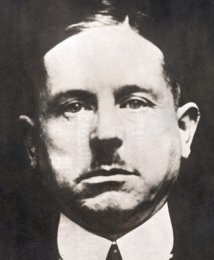
1933: Morris Cohen, medicine-taker

(Thanks to Robert Elder of Last Words of the Executed — the blog, and the book — for the guest post. This post originally appeared on the Last Words blog. Fans of this here site are highly likely to enjoy following Elder’s own pithy, almanac-style collection of last words on the scaffold. -ed.)

“It looks pretty dark, but if I have to, I guess I can take my medicine.”

-Morris Cohen, convicted of murder, Illinois. Executed October 13, 1933

A thirty-eight-year-old barber, Cohen got the electric chair for the murder of Officer Joseph Hastings during a robbery attempt at Chicago’s Navy Pier. A secondary headline in the Chicago Daily Tribune read “Record for Speedy Justice Is Set.” He had been executed less than two months after the crime.

On this day..

1939: Pete Catalina and Angelo Agnes, Colorado murderers

CANON CITY, Col. Sept. 30 (AP) — Two convicted murderers died in the lethal gas chamber and a cardiogram, a record of heart action, showed that one of them died without fear.

Pete Catalina, 41, a Salida (Col.) pool hall operator convicted of shooting a man in an argument over a 50-cent stack of poker chips, agreed to meet death wearing equipment recording his last heart beats.

Angelo Agnes, 31,* a Denver Negro convicted of slaying his estranged wife, declined to wear the device. Like Catalina, however, he did not fight the lethal fumes and both men were pronounced dead at 8:02 P.M., exactly two minutes after Warden Roy Best released gas into acid containers beneath their chairs.

I.D. Price, an electrical expert who operated the heart recording instruments, said that Catalina’s heart beat appeared strong and even for one minute and 10 seconds, then stopped abruptly when he inhaled the poison fumes. Agnes inhaled the gas 55 seconds after its generation began.

The “quickest and most humane execution we ever had” was later alleged to have experienced a gas leak that caused witnesses to flee their seats.

* Agnes was friendly with Joe Arridy, who had been executed in the same gas chamber earlier that same year.

On this day..

1937: Andrei Stepanovich Arzhilovsky, counterrevolutionary kulak

(Thanks to Meaghan Good of the Charley Project for the guest post. -ed.)

On this date in 1937, a 51-year-old Russian peasant by the name of Andrei Stepanovich Arzhilovsky was executed by firing squad, having been convicted of membership in a “counterrevolutionary kulak sabotage organization.”

Arzhilovsky, who had five young children by the time of his death, was evidently a nefarious thought-criminal with a record. He had sufficient literacy to join the regional administration in the nineteen-teens, which led to his arrest in 1919 in the wake of the October Revolution of two years previously.

He denied having ever persecuted Communist sympathizers, but a revolutionary tribunal sentenced him to eight years in prison.

Released after an amnesty in 1923, Arzhilovsky returned home, took up farming again, joined the peasant cooperative and took up a number of other minor civic posts. He owned 8.1 hectares of cultivated land, a house and outbuildings, two horses, two cows and other livestock. He was classified as a farmer of average means — that is, not a kulak or class enemy — but in 1929 he was convicted of “counterrevolutionary agitation” and sentenced to a decade in a labor camp.

In 1936, Arzhilovsky was released from detention early for health reasons. They expected him to go home and die, but instead he took an accounting job at a factory.

Perhaps frustrated by Arzhilovsky’s refusal to expire, the NKVD “uncovered” the “conspiracy” that lead to his death sentence. Under interrogation, he had to admit his opinions weren’t purely Soviet. Perhaps that alone was enough.

Arzhilovsky was a simple farmer, just one of the millions who died during Stalin’s Great Terror from 1936-1938. He probably would have been forgotten entirely today were it not for the forty-page diary he kept during the year prior to his death.

It was confiscated by NKVD agents when they searched his home. The diary was translated and published in 1995 in an anthology of several others from that period, under the title Intimacy and Terror: Soviet Diaries of the 1930s.

On this day..

1932: Richard Johnson, great-grandfather of Craig Watkins

On this date in 1932, two African-American men were electrocuted in Huntsville, Texas.

Richard Johnson was a career criminal already serving a 35-year sentence for various burglaries when he busted out of prison in 1931. He teamed up with 20-year-old Richard Brown to rob a white couple in a parked car.

When the man, Ted Nodruft, tried to drive away, they shot him (he died the next day), and then proceeded to rape his fiancee and steal her jewelry. When caught, each man tried to throw the lion’s share of blame on the other.

These two on their own hardly stand out to posterity, and certainly not in the context of notoriously execution-friendly Texas, whose “List of individuals executed in Texas” Wikipedia entry (most states have such a page) is actually paginated by decade. Here’s the doings for the rest of the 1930s in the still-newish Texas electric chair.

We pause to note them here on this site because they made unexpected headlines earlier this year when Dallas County District Attorney Craig Watkins — the first elected black D.A. in Texas history — publicly revealed that Richard Johnson was his great-grandfather.

Long before that revelation, Watkins had already earned nationwide plaudits for doing what every district attorney should be doing as a matter of course: publicly emphasizing justice rather than conviction counts as his office’s guiding principle, greeting the rising tide of exonerations with a proactive program to search out potential miscarriages of justice rather than doubling down on them … hell, even apologizing to people whose lives have been ripped apart by wrongful convictions.

Watkins knew about the “dark secret of our family” for many years before he mentioned it in the run-up to witnessing his first execution (it was topical because Watkins used the trip to also visit his great-grandfather’s grave in the prison cemetery). How exactly that blood tie has helped to shape Craig Watkins’s outlook is hard to say, but not for any reticence on the DA’s part: he’s been disarmingly public about speaking to the real ambiguities and human costs of the criminal justice system that prosecutors are usually not supposed to acknowledge.

The broader issue is, look, I have walked 25 men out of prison for crimes they didn’t commit. We have gotten this case in Williamson County, where the DA withheld evidence, or it’s alleged that he withheld evidence. Because of that, a guy spent 25 years on death row. The Supreme Court of Texas has instituted a court of inquiry to look into the actions of this individual. At the time he was DA; now he is a judge. You have got the Todd Willingham case. We have had all of these folks who have been exonerated that were on death row throughout our nation.

And so my concern, basically, is, look, we are seeking the ultimate punishment against someone, and we need to have all the safeguards in place to make sure that we don’t wrongly execute someone. And I think with all the evidence that we have seen, I think anyone that does not come to the conclusion that a person has been executed in this country for a crime they didn’t commit is being irresponsible. So that’s my position. Like I said, I can argue from my moralistic standpoint all day, but that’s not where the argument should be had. It should be one of logistics. Are we making mistakes? Do we need to reevaluate the process to make sure we are not making mistakes?

Watkins personally opposes the death penalty on moral grounds, but seeks it routinely in his capacity as district attorney. Here’s the man expanding on some of those themes in a 30-minute interview with the Dallas-Fort Worth NBC affiliate:

Watkins (or someone in his office) blogs infrequently here, and tweets @craigmwatkins.

On this day..

1934: Anna Antonio, enough for a million men

(Thanks to Meaghan Good of the Charley Project for the guest post. -ed.)

On this date in Sing Sing Prison in New York, Italian-American Anna Antonio was electrocuted for murder.

She’d been convicted of hiring two hit men, Sam Ferraci and Vincent Saetta, to kill her husband Salvatore for his $5,000 in life insurance. The dirty deed was done at Easter in 1933: Salvatore’s body turned up beside a country road, full of holes. He’d been shot five times and stabbed fifteen times.

When Saetta and Ferraci were picked up, they implicated Anna. All three conspirators were convicted and sentenced to death. They spent sixteen months on death row, where Anna was the sole female inmate, attended by three matrons.

As chronicled in Geoffrey Abbott’s book Amazing Stories of Female Executions, Anna had been originally scheduled to die with Ferraci and Saetta at 11:00 p.m. on June 28. The executioner, Robert G. Elliott, arrived, set everything up and waited … and waited … and waited …

No one appeared.

It wasn’t until 1:15 a.m. that he was told to just go home: no one would die tonight.

Just ten minutes before eleven on that night, Saetta had had a talk with the prison warden, unburdened himself and signed an affidavit. He admitted he and Ferraci had killed Salvatore, but he said the motive was a $75 drug debt. He swore Anna had had no part in the crime.

In an earlier conversation with a prison clerk, Saetta had said he and his partner in crime had only said Anna was involved because they thought this would save their own lives: “They’ll never send me to the hot seat. Not while there’s a dame in the case. In New York they don’t like to send a woman to the chair and they can’t send me and not her.”

The governor, Herbert Henry Lehman, thought it prudent to issue a 24-hour stay for all three of the condemned in order to investigate this new evidence. Anna Antonio fainted with relief at hearing the news.

Twenty-four hours later, she was again facing the chair. Again, Executioner Elliott showed up at Sing Sing, and again he was turned away: the stay had been extended by a week.

At the end of the week, a further stay was granted; the state was still mulling over what to do.

Meanwhile, the suspense was, pun intended, killing Mrs. Antonio. Abbott records:

At that stage the state of the condemned women can hardly be imagined; suffice it to say that her wardresses reported their prisoner’s condition alternated between bouts of hysteria and collapsing into a semi-coma. Eventually the decision was issued that all executions would take place on 9 August and all hopes were dashed.

She had weighed 100 pounds on June 28, but in the interim she stopped eating and dropped fifteen pounds in six weeks: she was probably among the smallest people to ever sit in the electric chair.* At one point she cried in anguish, “I have already died enough for a million men!” The Crime Library provides a detailed account of her execution.

On the last day of her life (which, horribly enough, was also her daughter’s birthday), Anna told the prison warden she was innocent. She reminded the warden that her late husband had been a drug dealer and said if she had wanted him dead, she could have just killed him with one of the guns that were lying around the house.

She did, however, admit that prior to the murder, Ferraci and Saetta had told her they intended to kill Salvatore. She said she had chosen not to try to prevent it because she was afraid for herself and her three children. Anna didn’t particularly care much for Salvatore anyway; he was violent and abusive.

Anna spent the day of August 9 playing with her children. She may have been expecting yet another reprieve; when she was told the execution was definitely on this time, she seemed stunned.

When asked about a last meal, she said simply, “I want nothing.”

She walked calmly into the death chamber at 11:12 p.m. and was pronounced dead four minutes later. Ferraci came after her, and Saetta was last.

* Even 14-year-old George Stinney, who was too small for the electrocution mask, weighed in at 90 pounds.

On this day..

1936: Virgilio Leret, the first shot in the Spanish Civil War

On this date in 1936, Spanish aviator Virgilio Leret Ruiz was shot for resisting the fascists’ opening gambit in what would become the Spanish Civil War.


The first vignette of this recent film supporting justice for victims of the civil war is voiced by film director Pedro Almodovar, who says “My name is Virgilio Leret Ruiz … I’m a pilot, head of the air force in the eastern part of Morocco. I refuse to support the uprising, and at dawn on 18 July 1936, my comrades turned me into the first military officer assassinated for fulfilling his duty.”

Leret (Spanish link, as are all the ensuing links in this post), who has the incidental distinction of having patented an early jet engine design, was, circa 1936, stationed at the Atalayon Seaplane Base on the outskirts of Spain’s Moroccan exclave of Melilla.

This would put him in the front row for the very first action of the terrible civil war — the July 17 military uprising (Spanish link) that secured Spanish Morocco for the putschists within hours.

North Africa, correctly rated as easy pickings, was to be the first target of Franco’s rising, with the main event on the Iberian peninsula following the very next day. From their standpoint, it pretty much went off without a hitch.


This pro-Franco plaque in Melilla celebrates the city’s distinction as the place where his “glorious national movement” was launched. Image (c) Joshua Benton and used with permission.

Leret’s wife Carlota, spent 4+ years locked up and wrote this book about her fellow prisoners. She later moved to Venezuela, where Leret progeny still remain.

Despite the absence of any effective resistance elsewhere in Melilla, Captain Leret scrambled from a relaxing day swimming with his family and commanded his base to hold out for the Republican government.

While it was no real threat to the rebelling officers, the gesture required a slight detour by Franco’s forces, and even a couple of casualties before the Seaplane base surrendered that night to obviously overwhelming opposition.

The next day at dawn, “half-naked and with a broken arm,” Virgilio Leret Ruiz became — along with two ensigns under his command, Armando Corral Gonzalez and Luis Calvo Calavia — the first people executed in the Spanish Civil War.

Needless to say, a great many others would follow them.

A 2011 documentary, Virgilio Leret, the Blue Knight, retrieves the reputation of this “exceptional man”, and the experience of 20th century Spain through the fate of his family.

On this day..

1936: Mary Frances Creighton and Everett Applegate

(Thanks to Meaghan Good of the Charley Project for the guest post. -ed.)

On this date in 1936, onetime lovers Everett C. Applegate (referred to in some accounts as “Edward” or “Earl”) and Mary Frances Creighton, who went by her middle name, were electrocuted in Sing Sing Prison for the murder of Ada Applegate, Everett’s wife.


Mary Frances Creighton (top) and Everett Applegate.

Newspapers of the time referred to Frances as the Long Island Borgia. The murder came about as a result of, depending on your point of view, a Jerry Springer-type sensation or horrific child sexual abuse or both: In 1934, Frances and her husband and their two children were living with the Applegates and their daughter in Nassau County, New York.

By January 1935, Everett Applegate was having an affair with Frances. He was also interested in the Creightons’ blooming teenage daughter, Ruth. By June of that year the thirty-something man was sleeping with her also, with the knowledge of — and in at least one case, in sight of — Ada, whose obesity kept her mostly confined to bed.

Ruth was delighted with her new boyfriend, who drove her anyplace she wanted to go, gave her money and and bought her clothes and other gifts. But when Frances found out about the relationship in July, she was furious and humiliated.

Not only was Everett in the arms of another, but he was making her, Frances, look like a bad mother. Ruth was going to school dressed like a harlot, even wearing lipstick. Suppose she became pregnant? This would bring terrible shame upon the family.

In mid-September, Ada Applegate became violently sick, with diarrhea and bilious vomit. She spent a few days in the hospital and was discharged, without a diagnosis but feeling much better.

Immediately after she got home, however, her symptoms returned, and she died two days later, on September 27. The cause of death was listed as “coronary occlusion” — in other words, a heart attack.

Frances was a bit of a hard case and no stranger to murder. She and her husband John were living with his parents, as well as her teenage brother, Raymond Avery, in New Jersey in 1920 when Anna and Walter Creighton suddenly sickened and died, one after the other.

In 1923, Raymond too became ill with the same symptoms and rapidly expired, and his sister and brother-in-law collected his $1,000 life insurance policy. Frances and John were charged with his murder after the autopsy, held in spite of their objections, found arsenic in young Raymond’s body.

After the autopsy, deeply suspicious investigators exhumed the elder Creightons’ bodies while their son and daughter-in-law were in jail. No arsenic could be found in Walter’s system, but Anna’s contained a lethal dose, and Frances (but not John this time) was charged with murder even before she came to trial for her brother’s death. She’d never gotten along with her in-laws or they with her, and just before Anna became ill, Frances had made ominous statements that the old woman would shortly “destroy herself.”

The Creightons’ four-day trial for Raymond’s murder resulted in acquittal for both defendants. John went home and Frances remained in custody for another two weeks until she faced her next trial, for the death of Anna Creighton. The prosecution was unable to prove she had personally purchased any poison, and the 24-year-old defendant, an attractive nursing mother who was keeping her infant son in her cell with her, presented a sympathetic picture. Once again, she heard a jury announce a murder acquittal.

But she didn’t take warning from her two near escapes.

Twelve years later, Ada Applegate became the third person close to Frances Creighton who died of arsenic poisoning. Goodness knows how many more she might have ventured.

The police knew about Frances’s relatives’ proclivities for mysterious deaths, and were deeply suspicious. An autopsy revealed three times the lethal dose of arsenic in Ada’s corpse, and it didn’t take long for Frances to crack under questioning.

She admitted to poisoning Ada, but also implicated Everett, saying he’d known about the crime all along and had helped her. She also claimed he used his knowledge of her past to blackmail her into having sex with him.

Frances killed Ada, Frances said, so Everett would have a chance to make an honest woman out of Ruth, and because Ada had been gossiping in the neighborhood about her husband’s affair with the girl.

Frances Creighton and Everett Applegate found themselves arrested. Only then did a bewildered John find out about the sexual improprieties that had been going on for months right under his nose. Remarkably, he stood by Frances and said he believed her to be innocent of murder.

He was the only one.

A look into Frances’s past revealed some very additional suspicious incidents apart from the deaths in her family. Relatives of a neighbor she quarreled with got extremely ill after having tea with Frances, and although they pulled through, later on, the neighbor’s house burned down.

The fire was arson and Frances had been the prime suspect, but there was insufficient evidence to arrest her.

As for Everett Applegate, the case against him was far less persuasive.

Frances made three statements: in the first, as told above, she implicated her erstwhile lover. In the second, she said she’d done the murder all on her own and Everett was not involved. The third time she went back to blaming him: he had mixed the poison, and she had given it to his wife.

To this shaky accusation add the ill feeling engendered by Everett’s caddish mores, and it was enough for an indictment. (Everett was also charged with criminally assaulting Ruth. At his arraignment he attempted to plead guilty to this, saying, “I want to marry this girl.” The judge refused to accept the plea.)

By the time of the trial, Frances had gone all-in on blaming Everett. She claimed the lothario had “made” her poison Ada. Her defense portrayed her as a weak woman who had been lead astray by an evil, domineering male. But Everett’s lawyer made sure the jury heard about the deaths of her brother and parents-in-law in New Jersey, and her conviction was a foregone conclusion.

The main evidence against Everett was Frances’s testimony, the fact that he was known to have purchased the rat poison that wound up in Ada’s eggnog, and his despoiling the teenage daughter of his paramour. Everett’s defense attorney agreed their client was a scumbag and a pervert, but denied that he was a murderer.

In his concluding arguments, the attorney asked the jury to acquit Everett of killing his wife and convict him instead of the rape of Ruth. It didn’t work: the jury convicted him on both counts.

While the two condemned awaited their fate, Ruth, who had been sent to a girls’ reform school, would later write a letter to the authorities. She said her mother was innocent and she had heard Everett say he wanted to do away with Ada so he could marry her. No one believed her story.

On the day of their executions, Frances was given the first slot in hopes that she might make a final statement exonerating Everett. Alas, she was in no condition to give any statement at all; suffering from hysterical paralysis, she had to be taken to the chamber on a wheelchair, and some reports state that she was completely unconscious when they strapped her into it. She was the first executee at Sing Sing in 45 years who was unable to walk on their own to their death.

Everett, still protesting his innocence, followed her ten minutes later.

On this day..

1931: Peter Kürten, the Vampire of Düsseldorf

On this date in 1931, the “Vampire of Düsseldorf” was beheaded for that city’s most infamous serial murder binge.

It was, perhaps, the logical end of a terrible journey.
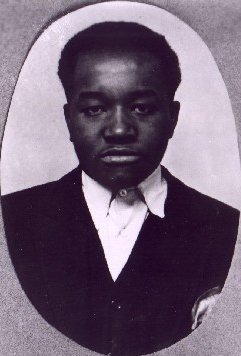
A factory moulder and World War I deserter in his late forties, Peter Kürten commenced a series of uncommonly bestial rape-murders in early 1929 … the harvest of a lifetime’s twisted brutality.

He’d been the oldest of 11 children stuffed in a hellish one-room apartment with a violent drunk of a father who battered the children and openly raped their mother. Well, “if they hadn’t been married, it would have been rape,” in Peter’s words.

The future vampire took his refuge turning his own abuse on younger siblings and, with the help of a degenerate dogcatcher in the neighborhood, on obliging animals he could lay his hands on — which creatures he was soon learning to torture, and to rape, alongside more conventional human delinquencies like arson and burglary.

Kürten is known to have strangled at least one ten-year-old prior to World War I (he would also claim to have surreptitiously drowned a couple of school chums in his boyhood) but it was on the far side of the Great War — which he’d spent mostly in miserable prisons, nursing increasingly twisted fantasies of vengeance — that the beast truly emerged.

The spree that carried him to these pages began in Febuary 1929, when he slew an eight-year-old, attacked a middle-aged woman, stabbed a mechanic to death. Kürten’s crimes were irregular, but distinguished by a fiendish wrath: he abducted one young woman and hammered her to death in the woods outside town; he stabbed a five-year-old to death with scissors as he achieved his orgasm; he asked a teenager to run off and get him some cigarettes, so he could use her absence to slit her younger sister’s throat; he stabbed strangers randomly.

“I derived the sort of pleasure from these visions” of mayhem and cruelty, he said, “that other people would get from thinking about a naked woman.”

Düsseldorf endured a year of terror, finally aborted when Kürten’s own wife — whom he seems to have loved genuinely — turned him in, at Kürten’s own request, for the reward money.

At a packed trial, the accused’s accumulated hatred for the sadistic world poured out in words just as it had done in deeds over the months preceding.

I said to myself in my youthful way ‘You just wait, you pack of scoundrels!’ That was more or less the kind of retaliation or revenge idea. For example, I kill someone who is innocent and not responsible for the fact that I had been badly treated, but if there really is such a thing on this earth as compensating justice, then my tormentors must feel it, even if they do not know that I have done it …

Never have I felt any misgiving in my soul; never did I think to myself that what I did was bad, even though human society condemns it. My blood and the blood of my victims will be on the heads of my torturers. There must be a Higher Being who gave in the first place the first vital spark to life. That Higher Being would deem my actions good since I revenged injustice. The punishments I have suffered have destroyed all my feelings as a human being. That was why I had no pity for my victims.

-Kürten

Amateurs though we are, we incline to doubt the sufficiency of the tit-for-tat explanation. Kürten might well have believed that about himself, but the “vampire” moniker gets at an essential, organic sensuality about his crimes whose roots go quite a bit deeper than revenge.

“Tell me,” the doomed murderer is supposed to have asked a prison doctor shortly before facing the guillotine, “after my head has been chopped off will I still be able to hear; at least for a moment, the sound of my own blood gushing from the stump of my neck?”

The doctor indeed thought it possible the head might survive a few seconds.

“That,” mused the killer, “would be the pleasure to end all pleasures.”

Kürten is one of several predatory sex-slayers — also see the likes of Fritz Haarman and Carl Grossman — who prospered in interwar Germany, and helped to inspire Fritz Lang’s cinematic classic M. (Kürten is often thought the most direct model for that movie’s murderer, played by Peter Lorre. Lang denied that was the case, but in some countries’ releases it went out under the title not of M, but of The Vampire of Düsseldorf.)

Sources:

Murderpedia

TruTV

On this day..

1930: Lee Akers, after the Ohio Penitentiary Fire

On this date in 1930, Lee Akers was electrocuted in Ohio for murdering a Cleveland man at a gas station stickup.

Akers had been held at the death house at the Ohio Penitentiary bound in the end for a May 2, 1930 execution.

The “lucky” break that bought him six extra weeks of life was just the deadliest prison fire in history. (n.b. — Recently surpassed in Honduras)

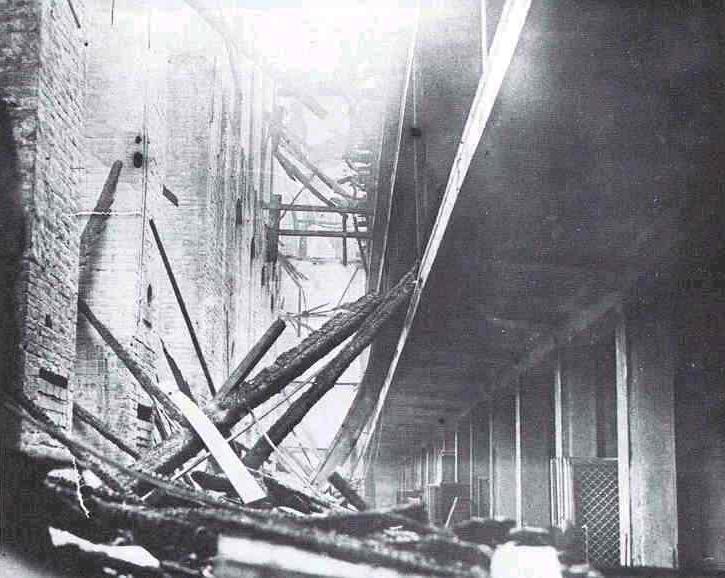
Already a century old and packed to triple its 1,500-soul capacity, the penitentiary had a fire break out* shortly after supper on April 21 in Section “I”. This fire

licked along dry timber into Section “H”, from Section “H” to Section “G”, and thence upward to where 300 prisoners, trapped like caged animals, tore futily [sic] at steel bars that became their pyre.

It was a twilight of indescribable horror.

Some 320 perished from burns, suffocation, and smoke inhalation. Most of the casualties were those who never got out of their locked prison cells, and couldn’t move a meter as death enveloped them.


20th century literary great Chester Himes also happened to be serving a sentence for armed robbery at this prison:** indeed, it was during that sentence that he began to write at all, setting him on a path towards his life’s work.


1991 cinematic adaptation of Himes’s A Rage in Harlem.

Himes’s novel from his time in the Ohio penitentiary was only published well after his death, in 1998 … the same year the disused Ohio Penitentiary was finally torn down.

One of Himes’s first published works was a short story in Esquire in 1934, written while Himes was still incaracerated. Titled “To What Red Hell” (an allusion to Oscar Wilde’s meditation on prison and death row, The Ballad of Reading Gaol: “For none can tell to what red Hell / His sightless soul may stray.”), this story follows the experience of the Ohio prison inferno through the fictional inmate “Blackie”, who beholds tormented prisoners like “condemned souls jumping flame pots in the ante room of Hell” … but also notices the ironic safety of death row, where the literal condemned souls remained un-burned.

From where he stood he could see the death house, a low, red brick building at the end of the cell block. Just above it was a wall parapet. A guard stood on the cat-walk with a sub-machine gun cradled in his arm. Two searchlights shone in opposite directions down the sides of the gray, stone wall. The green door of the death house looked black in the vague light.

The end of the parade! The last mile! What a joke! The death house was on the other side of the yard tonight, he was thinking. It was quiet over here in the shadows with the scared ghosts of the executed men.

In fact, someone had managed to spring the death house doors, momentarily “liberating” the doomed men. As militia arrived on the scene, they attempted to forestall any general uprising or wholesale prison break by setting up machine gun emplacements on prison towers, with orders to shoot to kill.

When the death row prisoners were collared — they hadn’t actually gone anywhere or tried anything** — they were offered transportation to the city jail for their own safety against these potentially itchy trigger fingers. While three of them took the refuge, the others (Akers included) refused, on the sensible grounds that they could hardly be much worse off being shot dead than being electrocuted.


The inmates — reported to have labored heroically alongside guards, firefighters, civilian nurses, virtually without incident — were understandably incensed at the disaster, charging that guards had allowed most of the victims to die out of needless reticence over releasing anybody as the fire began to spread — and that the refusal to turn the keys went straight to the top. William Wade, “a big Negro prisoner” who had sledgehammered a cell open to save 25 men, was quoted in the next day’s New York Times saying simply, “They could have saved these men. They let human beings burn to death.”

Warden Preston Thomas, who comes off in the story as an unmitigated shit,† was the focus of the prisoners’ ire … and when he showed himself, the focus of their raucous jeers (Thomas tried to dump the blame on lower-level guards, who in turn claimed that they’d been directed by their superiors not to open cells). The Ohio governor’s refusal to dismiss Warden Thomas soon triggered a riot in the prison and the arrival of the National Guard for several tense days of teargas-punctuated negotiations.

This mutiny was only just being settled when Akers’s original May 2 execution date came up. The charred prison clearly had some other priorities at that moment than orchestrating an execution, so Akers and another man, John Richardson, both got a gubernatorial reprieve until things were peaceful enough for orderly killing.

The inferno, meanwhile, opened space for some humanitarian reforms: since overcrowding (which had been fretted in internal reports in the years preceding the fire, and had also contributed to several other prison disturbances) was widely understood to be part of the disaster, a parole board was formed in 1931 that released 2,300 prisoners. “Mandatory minimum” sentences that stuffed minor offenders into these dungeons were widely rolled back.


According to the Justice Policy Institute (pdf), the total United States prison population in 1930 was a mere 180,889.

Although we may have made some provisions to avoid spectacular catastrophes like the Ohio Penitentiary fire in our present-day overcrowded prisons, the routine catastrophe of imprisonment itself — “the moral scandal of American life” — has grown more than twelvefold since 1930.

* The mysterious fire was eventually found to have been started by some (non-death row) prisoners in an abortive breakout bid: two of them later hanged themselves in remorse. However, and rather amazingly, there were no reported escape attempts during the nighttime chaos.

** Himes wasn’t the Ohio penitentiary’s only noteworthy litterateur. The facility’s prison yard was named in honor of the pseudonym that a previous scribbling inmate had concocted there in order to get published while doing his time: O. Henry.

† e.g., a committee formed by the legislature to investigate the fire took testimony from convicts that Warden Thomas was a tyrannous martinet even apart from the disaster, even as Thomas was publicly threatening the angry inmates who were demanding his ouster: “If these prisoners don’t quiet down pretty quick, I’ll use forceful methods against them if it takes a soldier to every man.”

Part of the Themed Set: Ohio.

On this day..

1931: Bhagat Singh

I am full of ambition and hope and of full charm of life. But I can renounce all at the time of need, and that is the real sacrifice. These things can never be hinderance in the way of man, provided he be a man. You will have the practical proof in the near future.

Bhagat Singh

On this date in 1931,* India revolutionary Bhagat Singh was hanged by the British in Lahore, together with Shivaram Rajguru and Sukhdev Thapar. The hanging was surreptitiously done, on the evening before it was officially scheduled, with the men’s cremated ashes scattered into the nearby Satluj River.


Statue of the three March 23 martyrs near Amritsar, Punjab, close to the Pakistani border. (cc) image from Alicia Nijdam.

Though only 23 years of age when he hanged, Singh’s renown as a nationalist freedom-fighter was already considerable. It has not lessened in the intervening decades.

The teenage Singh had participated in Gandhi‘s nonviolent Non-Cooperation Movement, but violent British suppression of independence demonstrations soon had Singh looking for a more energetic response.

Till that time I was only a romantic revolutionary, just a follower of our leaders. Then came the time to shoulder the whole responsibility. … I began to study in a serious manner. My previous beliefs and convictions underwent a radical change. The romance of militancy dominated our predecessors; now serious ideas ousted this way of thinking. No more mysticism! No more blind faith! Now realism was our mode of thinking.

-Singh, from “Why I am an atheist”

Singh issued his definitive reply to British violence in 1929 by exploding a couple of bombs in the subcontinent’s legislative building.**

“It takes a loud noise to make the deaf hear,” read their leaflet, vindicating the (non-lethal) ordnance.

Singh’s arrest, along with a fellow bomb-tosser, was an intended consequence, but the official pursuit of the case against him also led back to Singh’s fellow-revolutionaries and bomb-manufacturers. Some of these were induced to inculpate Singh, Rajguru, and Thapar to the theretofore-unsolved murder of Lahore policeman John Saunders in December 28.

Saunders had been mistakenly assassinated: Singh et al took him for John Scott, a police superintendent who ordered a baton charge against protesters and personally helped beat to death one of the independence movement’s revered fathers.

While the law wrapped its coils about him, Singh led a successful hunger strike for better prison conditions, and kept churning out writing.

His example of sacrificial revolutionary ardor — not to mention his leftist politics — kept him a popular martyr figure for years after his death, all the way down to the present day.


Climactic execution scene from the 2002 Hindi flm The Legend of Bhagat Singh — one of many different cinematic adaptations of his story.

The Shaheedi Mela (Martyrdom Fair) is observed across Punjab each March 23 in honor of these men.

* Not on Valentine’s Day, as a 2011 Twitter hoax claimed.

** Shades of Auguste Vaillant.

On this day..