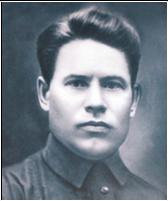
1934: Augusto Cesar Sandino, national hero

“The sovereignty of a people cannot be argued about, it is defended with a gun in the hand.”

-Sandino

On this date in 1934, the first name in Nicaraguan anti-colonial resistance was abducted and summarily executed by the Nicaraguan National Guard.

From 1927 until his death, Sandino led an armed peasant insurgency from the Nicaraguan mountains against the Yankee imperialists and the domestic dictatorship they backed.

Washington had had its nose (and its marines) in Managua’s business for decades, continuously occupying the Central American country since 1912. The Marine Corps saw this country’s people as

Densely ignorant … little interested in principles … naturally brave and inured to hardships, of phlegmatic temperament, tough, capable of being aroused to acts of extreme violence, they have fought for one party or the other without considering causes since time immemorial … a state of war is to them a normal condition.*

All this was the time of Sandino’s own coming-of-age. The son of a wealthy landowner and his domestic servant, Sandino grew up with the unprivileged and the working classes, eventually asorbing an eclectic mix of that period’s revolutionary ideologies.

From 1927 he took to the Segovia and began writing the playbook for the 20th century guerrilla: mobile infantry irregulars, striking from familiar-to-them forest cover, melting away among sympathetic campesinos.

The “Colossus of the North” — Sandino made no bones about his foe; his personal seal showed an American marine being killed — invariably described him as a “bandit” because he also raided towns to commandeer food, clothing, and medicine.

“Washington is called the father of his country; the same may be said of Bolivar and Hidalgo; but I am only a bandit, according to the yardstick by which the strong and the weak are measured.”

-Sandino

The strong, in this case, found little public appetite for the steady attrition of servicemen, and the U.S. employed a familiar strategy of its own: “Nicaraguanizing” the conflict by building up a National Guard to do the dirty work domestically.

That Guard’s head was headed by Anastasio Somoza — the very son of a bitch of whom FDR said, “but he’s our son of a bitch.”

While it’s hardly the only country to have been favored with an American son of a bitch, you could say that Nicaragua has been the American empire’s very own heart of darkness. Washington’s initial interest in the place after the Spanish-American War concerned preventing a canal project to compete with Panama. It invented dive-bombing to hunt Sandino. And it ranged around the world and outside the law to battle Sandino’s successors under the aegis of a modern imperial presidency.

Small wonder that an official anthem of the movement denounces “The Yankee / The enemy of all humankind.”

In the immediate aftermath of the American departure in January 1933, Sandino began coming to terms with the the country’s new president: the Sandinistas disarmed in exchange for amnesty and land. But Somoza, who at this point was “only” the head of the National Guard, was building up his own power … and he meant to have done with this inconvenient insurgent.

After Sandino left a presidential meeting on this date, at which the erstwhile rebel negotiated for his continuing demand to disband Somoza’s Guardia, Sandino was stopped at the gates by Guardsmen. They took Sandino, his brother, and two of his generals and marched them off to be shot. Then the Guard forcibly broke up the Sandinista remnants. Somoza soon seized official power for himself; his family ruled, and plundered, Nicaragua until 1979. Washington never called them bandits.

While Sandino vanished (the whereabouts of his remains are unknown), his revolutionary vision and praxis also persist down to the present day.

Sandinismo (aging much better than Somocismo) would influence Fidel Castro and Che Guevara during the Cuban Revolution.

And in 1979, the Sandinista National Liberation Front finally succeeded in overthrowing the last loathsome scion of the Somoza dictatorship.

The United States, of course, went right back to war against its long-dead “bandit” foe.

* From Julian C Smith’s officially commissioned History of the Guardia Nacional de Nicaragua (1933), as quoted in Michael J. Schroeder’s “Bandits and Blanket Thieves, Communists and Terrorists: The Politics of Naming Sandinistasin Nicaragua, 1927-36 and 1979-90,” Third World Quarterly, Vol. 26, No. 1 (2005).

Schroeder runs the definitive English-language website on Sandino and the original Sandinistas, with a truly vast collection of documents and resources.

On this day..

1937: Tom Steinbock and Juan Mirbol in Sartre’s The Wall

On an uncertain date in the Spanish Civil War, two principal characters are shot in Jean-Paul Sartre‘s first short story, “The Wall”.

“Le Mur” in French, a title also suggesting the dead spirits of Roman mythology, “The Wall” was penned in 1937 as Sartre’s personal response* to the Spanish Civil War.


Sartre published “The Wall” at almost the exact same time — summer 1937 — as Picasso finished Guernica. (Guernica was bombed in April 1937.)

“The Wall” is highly non-specific as to time and circumstance; a mention of “winter” — as of writing, the winter of 1937 was the only one yet elapsed in the conflict — and a few disembodied calendar indicators like “the 9th” and “Tuesday”.

Instead, it’s an existential reflection on the inscrutability of death. The narrator, one Pablo Ibbieta, awaits the morning’s firing squad with an International Brigade volunteer named Tom Steinbock and a Spanish innocent named Juan Mirbal.

All three of us watched [a Belgian doctor] because he was alive. He had the motions of a living human being, the cares of a living human being; he shivered in the cellar the way the living are supposed to shiver; he had an obedient, well-fed body. The rest of us hardly felt ours — not in the same way anyhow. I wanted to feel my pants between my legs but I didn’t dare; I watched the Belgian, balancing on his legs, master of his muscles, someone who could think about tomorrow. There we were, three bloodless shadows; we watched him and we sucked his life like vampires. …

In the state I was in, if someone had come and told me I could go home quietly, that they would leave me my life whole, it would have left me cold: several hours or several years of waiting is all the same when you have lost the illusion of being eternal. I clung to nothing, in a way I was calm. But it was a horrible calm — because of my body; my body, I saw with its eyes, I heard with its ears, but it was no longer me; it sweated and trembled by itself and I didn’t recognize it any more. I had to touch it and look at it to find out what was happening, as if it were the body of someone else. …

[Juan] wept: I could clearly see he was pitying himself; he wasn’t thinking about death. For one second, one single second, I wanted to weep myself, to weep with pity for myself. But the opposite happened: I glanced at the kid, I saw his thin sobbing shoulders and I felt inhuman: I could pity neither the others nor myself. I said to myself, “I want to die cleanly.”

Tom and Juan go to the wall that morning.

Pablo, an anarchist, is subjected to one last interrogation before he’s shot: the fascists are hunting a confederate of his, and they offer Pablo his life in exchange for giving up the whereabouts of this Ramon Gris. “His life had no more value than mine; no life had value,” Pablo muses. “They were going to slap a man up against a wall and shoot at him till he died, whether it was I or Gris or somebody else made no difference.” Impulsively, almost whimsically, he directs them to a cemetery as a bogus location: “It was a farce. I wanted to see them stand up, buckle their belts and give orders busily.”

Except … unbeknownst to Pablo, Ramon Gris had just moved his hiding place to that very cemetery. For reasons as nonsensical as Ibbieta’s own initial condemnation, his life is swapped for Gris’s at the last moment.

* Specifically, according to Sartre, Self-Formation, and Masculinities, after a student asked for help sneaking into Spain to fight the fascists.

On this day..

1936: Allen Foster, who fought Joe Louis

More than twenty-five years ago, one of the southern states adopted a new method of capital punishment. Poison gas supplanted the gallows. In its earliest stages, a microphone was placed inside the sealed death chamber so that scientific observers might hear the words of the dying prisoner to judge how the human reacted in this novel situation.

The first victim was a young Negro. As the pellet dropped into the container, and the gas curled upward, through the microphone came these words: “Save me, Joe Louis. Save me, Joe Louis. Save me, Joe Louis…”

It is heartbreaking enough to ponder the last words of any person dying by force. It is even more poignant to contemplate the words of this boy because they reveal the helplessness, the loneliness and the profound despair of Negroes in that period. The condemned young Negro, groping for someone who might care for him, and had power enough to rescue him, found only the heavyweight boxing champion of the world. Joe Louis would care because he was a Negro. Joe Louis could do something because he was a fighter. In a few words the dying man had written a social commentary. Not God, not government, not charitably minded white men, but a Negro who was the world’s most expert fighter, in this last extremity, was the last hope.

-Martin Luther King, Why We Can’t Wait

This story isn’t precisely accurate as Dr. King told it, but the factual basis for this empathetic legend is Allen Foster.

On this date in 1936, Foster was the first man executed by lethal gas in North Carolina — and en route to this minor distinction he punched his ticket for commemoration in civil rights literature when he flourished a flamboyant uppercut to witnesses as he was led to the gas chamber and cried out, “I fought Joe Louis!” It was an allusion to having matched with the world champ when both were youngsters in Alabama.

This coincidental brush with celebrity was about as strange as the fact that it occurred in a gas chamber at all.

After the arrival of the electric chair, the South adopted it virtually across the board; North Carolina had switched from hanging to electrocution in 1910.

But the Tarheel State was also generally more progressive than its neighbors;* V.O. Key would write of North Carolina, “It has been the vogue to be progressive. Willingness to accept new ideas, sense of community responsibility toward the Negro, feeling of common purpose, and relative prosperity have given North Carolina a more sophisticated politics than exists in most southern states.”

Part of that “sophisticated politics” was, in the 1930s, a growing debate about the application — indeed, the mere existence — of capital punishment.

According to Trina Seitz’s “The Kiling Chair: North Carolina’s Experiment in Civility and the Execution of Allen Foster” (North Carolina Historical Review, Jan. 2004):

North Carolinians were beginning to doubt the effectiveness of the sanction and the method used to enforce it. Furthermore, private citizens, humanitarians, and state institutions alike were increasingly scrutinizing the demographics of those being put to death.

Though this scrutiny did not lead so far as actual abolition, it provided the receptively reformist environment for Mitchell County Dr. Charles Peterson’s “pet project” of switching the execution protocol to lethal gas.

The reason for his fascination with gas seems to be obscure; the method had never been employed east of the Mississippi. Maybe it had something to do with 1932’s remarkably smooth gassing of a North Carolinian from nearby Burke County in Nevada, the nation’s gas chamber pioneer.

Whatever the reason, Peterson took a seat in the legislature in 1935 and won adoption for his idea in this very first session.

Unfortunately for Peterson — and doubly so for Foster — North Carolina didn’t have quite the same facility with hydrogen cyanide, and Foster’s execution was a notorious botch that immediately got people back on the electrocution bandwagon.

Foster was doomed for raping a white woman — this may be progressive North Carolina, but it’s still the South — and according to Seitz’s rendering of the News and Observer‘s first-hand report:

“Good-bye.” The Negro’s lips framed the words so clearly that no man in the witness room could doubt what he had said. As he said it, he winked and then forced a smile at the faces peering in at him. Then he began to suffer. No man could look squarely into his eyes and fail to perceive that they were registering pain. The Negro fought for breath, knowing he was going to die and fighting to get it over with as quickly as possible …

he sucked the gas desperately until his head rolled back three minutes later, indicating to physicians that the man finally had lost consciousness. But after a period of quiescence, his small, but powerfully built torso began to retch and jerk, throwing his head forward on his chest, where witnesses could see his eyes slowly glaze … The torturous, convulsive retching continued spasmodically for a full four minutes.

Officially, it took about 11 minutes for Foster to die, and as those agonizing minutes dragged by a physician broke the witness room’s mortified silence by exclaiming, “We’ve got to shorten [the execution method] or get rid of it entirely.” Um, yeah? The prison warden was quoted the next day as saying that even hanging was preferable to this.

The ensuing political controversy, however, did not succeed in reverting the method to electrocution.

Like the original electric chair, North Carolina’s gas chamber was the beneficiary of some hasty technical fixes: heating the gas chamber (it was at the freezing point when Foster died; Colorado executioners advised North Carolina that this would impede the gassing); tweaking the chemical formula.

The very next week, a white murderer named Ed Jenkins followed Foster into the toxic plume, this time to rave reviews: he “died painlessly and the method of execution was humane”. These advances were enough to keep the gas chamber in place, although the state legislature considered several bills to return to electrocution from 1937 to 1943.

During one such debate, North Carolina playwright Paul Green testified to the assembly (per Seitz),

Some day the electric chair and the gas chamber will be set up in the State Museum as symbols of an age of horror and ignorance. School children will look at them and feel superior to us as they look back upon an era of ignorance

Three hundred sixty-two people ultimately died in North Carolina’s gas chamber. And as Green anticipated, the execution chair resides today in the state’s Museum of History.

* This is still true of North Carolina: it has employed the allegedly more humane method of lethal injection since 1984, when no other Southern state save Texas used the needle until the 1990s; that use has been sparing enough that its per-capita execution rate remains markedly lower than most other former Confederate states; and in 2009, North Carolina implemented a stillcontroversial Racial Justice Act empowering condemned prisoners to challenge their sentence with statistical evidence of racial disparity even though courts don’t require this at all.

On this day..

1937: Martemyan Ryutin, for his affair

On this date in 1937, Martemyan Ryutin was condemned to death and immediately executed in Stalinist USSR.

Ryutin (English Wikipedia entry | Russian | another Russian bio) was a revolutionary from the Far East who by the late 1920s was in the Bolsheviks’ heretical right wing; his affiliation with Bukharin and Rykov got him temporarily booted out of the Communist party in 1930.

Not content to keep his head safely down as Stalin’s star ascended, Ryutin typed out an anti-Stalin pamphlet and the 200-page “Ryutin Platform” denouncing Josef Djugashvili as “the gravedigger of the Revolution” and urging that he be removed — even by force.*

Weeks after Ryutin began circulating this incendiary samizdat the secret police busted him.

Though open discussion of the so-called Ryutin Affair was nonexistent in the Soviet Union until the Gorbachev era, it was a matter of dire importance for the Politburo in 1932; indeed, fleeting as it was, it’s one of the few organized elite attempts to thwart Stalin discernible during the 1930s. Stalin wanted Ryutin executed, but he was outvoted; this is a small milepost on the way to the Yezhovschina indicating that Stalin’s power still had its limits … and Bolsheviks still recoiled at the prospect of killing other party members.** These constraints were not very long for the scene.

Even so, Ryutin got a 10-year prison sentence and anyone else who had read the Ryutin platform without informing on it to the Party was in seriously hot water. Twenty-four were expelled from the party in October 1932 for this reason, including once-proud and soon-doomed Old Bolsheviks Zinoviev and Kamenev.

Ryutin, for his part, had only a few years to wait before the deteriorating political climate dispensed with those taboos about internecine bloodletting. The Supreme Court signed off on his execution this day with just a few minutes’ hearing, and it was immediately carried out.

Ryutin’s two sons were also executed in 1937, and his wife died in a labor camp. Only his daughter Lyubov survived the Ryutin Affair — which convictions were posthumously reversed in 1988.

* Bukharin’s widow later wrote that Stalin’s agents later added the most inflammatory material — like that violent overthrow stuff.

** Had Stalin had his way in 1932, Ryutin would have had the distinction of being the first Central Committee member to be executed, according to Suzi Weissman.

On this day..

1932: Yoon Bong-Gil, nationalist assassin

On this date in 1932, the Japanese shot Korean Yoon (or Yun) Bong-Gil for bombing a parade dais in Shanghai.

A parade to celebrate the emperor’s birthday may be standard enough fare on the home front, but in a China being swallowed by said emperor’s empire it was a provocative act.

In the first months of 1932, Japan had merrily exploited — or incited — anti-Japanese incidents in Shanghai as pretext for an imperialist mini-war, won handily by Japan.

When the aggressors presented their celebratory pageant of arms in the city’s Hongkou Park (today, Lu Xun Park), our young Korean terrorist* “threw a narrow tin box high in the air. In an ear-splitting roar, the grandstand flew apart like a mechanical toy.” (Time magazine, excerpted in this useful Axis History Forum thread.) All seven of the Japanese VIPs on the dais were casualties, and two of them died: one instantly and another succumbing to his injuries a month later.

“A young Korean patriot has accomplished something tens of thousands of Chinese soldiers could not do,” remarked an admiring Chiang Kai-shek. Coming just months after another Korean activist had taken a whack at Hirohito in Tokyo, the generalissimo couldn’t help but appreciate his brothers in resisting colonization.

For this accomplishment Chiang would later go to bat for postwar Korean independence. But for his part, the patriotic Yoon got only a free trip to Japan for military trial and execution.

When calling in Seoul, drop by a well-appointed memorial hall dedicated to Yoon’s memory … or, at the national cemetery where Yoon’s remains were repatriated in 1946.

You’ll find another subtle memorial to this incident in pictures from the decks of the USS Missouri, where a Japanese delegation surrendered to end World War II on September 2, 1945. Leading the delegation is a distinguished gentleman with a top hat and a cane: it is Mamoru Shigemitsu, walking with an artificial leg thanks to Yoon Bong-Gil’s bomb 13 years before.**


Mamoru Shigemitsu aboard the USS Missouri.

* Note: calling Yoon Bong-Gil a “terrorist” is controversial in Korea. We use the word without moral censure.

** Mamoru Shigemitsu had been Japan’s ambassador to China at the time of the assassination bid.

On this day..

1938: Corneliu Codreanu, Romanian fascist martyr

“In place of the weak and beaten man who bends with every breeze, a man who is all too common in politics and other fields, we must create for this nation a man who does not bend, who is inflexible.”

-Corneliu Codreanu

On this date in 1938, 14 political prisoners of the Romanian Legionary movement were extrajudicially executed — including Corneliu Codreanu, one of the Romanian right’s leading spirits.

The son of a Bukovina schoolteacher in what was then Austria-Hungary, Codreanu came to political maturity in the interwar heyday of Greater Romania. It was a moment of national aspiration — the Romanian state had never before grown so large — but it was abutted by the great threats of Germany and Russia, and haunted by nationalism, economic crisis, shaken political authority, and all the other spooks conjured by the first World War.

For Codreanu as for many at that time it was the stage for a blood-and-soil death struggle against Communist agitators and sinister Jewish financiers.

But his vision was an intensely positive one as well: a valiant new Romania founded by a courageous new man, honorable and true to the virtues of the nation’s noble peasant stock. “We shall create,” Codreanu declared, “a spiritual atmosphere, a moral atmosphere, in which the heroic man may be born and on which he can thrive.”

Codreanu’s vehicle for stamping out these heroic countrymen was the Legion of the Archangel Michael* which our principal founded in 1927. Named for God’s ass-kickingest enforcer, this movement/militia was not above creating its spiritual atmosphere with political assassinations by adherents widely noted for a willingness to die for the cause.

Later known as the Iron Guard, the Legion, in the view of German historian Ernst Nolte, “plainly appears to be the most interesting and the most complex fascist movement, because like geological formations of superimposed layers it presents at once both prefascist and radically fascist characteristics.” (Qutoed here.)

As his Legion’s name suggested, Codreanu was intently religious — virtually a mystic, and a messianic Romanian Orthodox Christianity was essential to his new Romania. His movement took root in a peasant society, not an industrial state with a revolutionary working class to crush or co-opt. Rather, it organized in opposition to a mediocre king and a feckless, heavily non-Romanian oligarchy which maintained its enervating grip on the nation with “endless appeals to the Fatherland which it does not love, to God in whom it does not believe, to the Church where it never sets foot, to the Army which it sends to war with empty hands.”*

And also to the police, which clapped Codreanu and his confederates in prison after the revolutionaries declined the elite incumbents’ offer of political collaboration.

In 1938, Codreanu was hit with a long prison sentence for sedition. Uncowed, the Legion grew ever more overtly aggressive when Nazi Germany successfully dismembered Czechoslovakia; Berlin made the Legions plainly aware that it saw their movement as Romania’s future, German-allied government. Futilely maneuvering for his own scope of action, Carol attempted to decapitate the Iron Guard by having its imprisoned leadership “shot while trying to escape” on this date.

This did not turn out to help the king. Codreanu’s movement traded stripe for stripe with its foes; within two years, Carol had been forced to abdicate and the Iron Guard helped govern (albeit with tension) a fascist state.

The contemporary Romanian right aggressively reclaimed Capitanul, “the Captain”, after the fall of communism. Codreanu is now revered among not only among Romanian nationalists but in fascism’s wider populist Strasserite tradition. (Gregor Strasser, who liked the socialist part of national socialism too much for Hitler’s taste, was among those murdered on Nazi Germany’s Night of the Long Knives.)

* Eugen Weber in Varieties of Fascism, quoted by Anthony James Joes in “Fascism: The Past and the Future,” Comparative Political Studies, April 1974

On this day..

1937: Eero Haapalainen, former Finnish Red Guard commander

On this date in 1937, Finnish communist Eero Haapalainen was shot in Moscow.

Haapalainen (English Wikipedia entry | Finnish) was a prominent socialist, trade unionist, and journalist when World War I tipped Finland into civil war.

Despite a lack of military experience, Haapalainen had momentary command of the Red Guards in that brief but bloody struggle. The Reds lost, necessitating Haapalainen’s escape by motorboat to St. Petersburg in May 1918.

There he settled in for a couple of decades’ middle-management service to the revolution: writing, teaching, paper-pushing.

The almost inevitable end came with stunning speed in the autumn of 1937. Arrested exactly one month before his execution, Haapalainen denied the charges of counterrevolutionary activity under NKVD torture.

Denial, confession … it all amounted to the same thing. Eleven other Finns (Finnish link) got it with Haapalainen at the very same time: Saimi Virtanen, Väinö Turunen, Urho Pitkälahti, Armas Raasu, Anselm Mäkelin, Mikko Lehmus, Toivo Rantanen, Aino Forsten, Väinö Savander, Rauno Koivistoinen, Eskil Kyllänen, Anton Uotinen.

The next year, Eero Haapalainen’s son Toivo, an engineer, was also purged. Father and son were both rehabilitated in the Krushchev era.

Part of the Daily Double: Stalinism East and West.

On this day..

1937: Peljidiin Genden, former Mongolia Prime Minister

On earth there are two great geniuses – Buddha and Lenin.

-Peljidiin Genden

On this date in 1937, purged former Mongolia Prime Minister Peljidiin Genden was shot in Moscow.

Genden was in the thick of communist authority in Mongolia, including a forced collectivization that provoked resistance sufficient for Moscow to demand the Mongolians lay off the “leftist deviation.” Eyeballing a likely future conflict with Japan, Russia wanted Mongolia as a buffer zone and couldn’t afford gratuitously upsetting the apple cart.

Genden, himself a former leftist deviant, managed an adroit volte-face and got himself named Prime Minister in 1932.

Stalin’s minions would closely meddle in the business of the Mongolian People’s Republic over the 1930s as it rolled out its own eastern policy. Despite the Comintern’s recent turn towards ideological moderation in those precincts, it soon became concerned that Genden was lax in going after the Buddhist element; in fact, he’d openly declared religious toleration in 1932. But this particular enemy Russia could not abide. “The lama regime,” Stalin tut-tutted, “is stronger than the people’s regime.”

Genden had the ill-chosen moxie to push back against Stalin. On one state visit to Moscow, he got liquored up and bellowed,

“You bloody Georgian, you have become a virtual Russian Czar!”

Other plans for Mongolian leadership were soon put in place, the way cleared via the expedient of framing Genden as the mastermind of a fanciful pro-Japanese plot.

This [Genden] “case” led to the deaths of 639 falsely accused people, including 63 percent of the members of the [Mongolian People’s Revolutionary Party] Central Committee and 80 percent of its presidium members … There is evidence that the arrest of many Mongolian leaders on false charges and their “rendition” to the USSR for execution was organized from Moscow by NKVD chief Nikolai Yezhov.

It was estimated that, from 1934 to 1939, about 171 Mongols were arrested in Mongolia but tried and sentenced in Russia. The charges were usually “counterrevolution” or “espionage for Japan.” It is known that 33 were shot near Moscow, 108 received long terms of imprisonment, 13 were released, and four died “under investigation.”

And that’s just on the political side. With Genden out of the way, anti-Buddhist purges really took off in the late 1930s, to the tune of 18,000 lamas killed.

Part of the Daily Double: Stalinism East and West.

On this day..

1933: Earl Quinn, forgiver

(Thanks to Robert Elder of Last Words of the Executed — the blog, and the book — for the guest post. This post originally appeared on the Last Words blog. Fans of this here site are highly likely to enjoy following Elder’s own pithy, almanac-style collection of last words on the scaffold. -ed.)

I don’t hold it against all you folks because you have condemned me without a fair trial. I don’t even hold it against the jury. Ignorance is not the fault of the ignorant. I don’t even have any malice for the courts although they defied all laws in affirming my case. I forgive all of you. You loved the girls. You let your desire for revenge overshadow your sense of justice.

-Earl Quinn, convicted of murder, Oklahoma. Executed November 24, 1933.

Quinn was described as a “one-time alcohol runner” by the Associated Press, but few other details survive except the names of his victims: schoolteacher sisters Jessie and Zexia Griffith.

On this day..

1935: Del Fontaine, punch drunk boxer

On this date in 1935, Canadian pugilist Del Fontaine was hanged at Wandsworth Prison, “the bravest fellow we ever saw go to the scaffold.”

Winnipeg-born as Raymond Henry Bousquet, Fontaine twice won the Canadian middleweight belt.

But a grueling, 98-fight career took its toll on the man.

By the end — when he had crossed the pond for a couple years traversing the English rings — Del Fontaine was visibly punch-drunk. The onetime champion lost 12 of his last 14 fights.

Punch drunk — scientific name dementia pugilistica — is just the classic diagnosis for “concussed all to hell,” afflicted by traumatic brain injury and its mind-altering long-term effects: Depression, violence, mood swings, loss of judgment and impulse control. Those are the kinds of behavior patterns that tend to brush up against the criminal justice system.

The syndrome’s popular name suggests its most visible injury, to motor skills — a symptom Fontaine’s colleagues in the business could readily diagnose.

Del shouldn’t have been in the ring at all for his last fight. He wasn’t in a fit state,” fellow prizefighter Ted Lewis testified at Fontaine’s trial, recalling a Newcastle bout that ended in a flash on three first-round knockdowns. “As a boxer, he has received more punishment than anyone I have ever seen.” The house doctor at a Blackfriars venue Fontaine had appeared at earlier in 1935 said the fighter complained of double vision and sleeplessness, and couldn’t walk straight. (London Times, Sep. 17, 1935)

If 1935 was a few decades’ shy of our present-day understanding of concussions, it was still well-enough known to those who had experience of the punch-drunk that psychological changes accompanied the physical impairments. Those who knew Del Fontaine knew he wasn’t right in the head.

The reason this tribunal had to sit for the humiliating public probe of Fontaine’s mental crevasses was that Fontaine had left his wife and kids behind when he crossed the Atlantic. Once he got to the Isles, he took up with an English sweetheart in Bristol.

This Hilda Meek, a West End waitress a decade the junior of her lover, became the object of an obsessive infatuation. In a fit of jealous rage, Fontaine gunned her down (and her mother too, although mom survived) when he caught Meek making a date with another man.

Fontaine was captured, unresisting, dolorously on the scene, and openly admitted his actions. Acquittal on the facts would be a nonstarter; diminished responsibility because of dementia pugilistica was the best defense gambit available.

The highly restrictive legal bar against an insanity defense aced out the legal maneuver: however impulsive and moody a lifetime of concussions had left him, they couldn’t be said to have prevented him “knowing right from wrong.” Still, his case attracted a fair bit of public sympathy, and when a petition for clemency went nowhere, hundreds of people, including a number of other boxers, turned up at Wandsworth to protest on the morning the punch-drunk Del Fontaine hanged for murder.

On this day..