1945: Pvt. Benjamin Hopper

(Thanks to Meaghan Good of the Charley Project for the guest post. -ed.)

On this day in 1945, mere weeks before Germany’s surrender, U.S. Private Benjamin F. Hopper of the 3170th Quartermaster Service Company was judicially hanged for murder.

“The case was straightforward,” notes French L. MacLean in his book The Fifth Field: The Story of the 96 American Soldiers Sentenced to Death and Executed in Europe and North Africa in World War II. He describes it as “an excellent example of stupid situations that soldiers could get themselves into, if they had been drinking and did not consider the consequences of their actions.”

Quite so.

On the night of the crime, Hopper and four other soldiers were hanging out in a cafe in the town of Welkenraedt, Belgium, just outside of Liege. Just after midnight, Hopper got into an argument with one of his companions, Private Randolph Jackson Jr.

The two men argued frequently and the other three in the group were used to it, and didn’t take them seriously when they started threatening to shoot each other. Finally Private Jackson handed Hopper his gun, presumably daring him to shoot. Hopper shot him dead, then told the witnesses, “You didn’t see nothing.”

At his court-martial, he did not testify and there was no defense. Hopper protested about this later, saying he didn’t get a fair trial: “My Defense Counsel said he was going to tell them. Told me to stay silent. So, he got up and told them I wasn’t guilty. He didn’t say much else.”

Unlike many military men sentenced to death during World War II, Hopper showed remorse for what he had done. Still he asked for leniency and penned a letter to General Eisenhower beginning:

Gen. Eisenhower

Dear Sir, I was tried for mudder and the court find me guilty and sences me to be hong Sir. And Sir I am asking you to please Sir look in to this mader close Sir for me because I have made a great mucstake Sir and wont you give me another chanch in the armey.

Hopper’s IQ tested at 50, putting him in the moderately mentally retarded range, and a psychiatrist who evaluated him stated he had a mental age of about nine, “bordering on mental deficiency.” Someone with that degree of mental disability would not be permitted to be executed today.

Some people argued that the death sentence should be commuted to life in prison, citing Hopper’s intellectual impairment and the lack of premeditation. Weighing against that was his prior recorded offenses of going AWOL and being in Liege without an official pass. The Brigadier General who reviewed the case recommended that the death sentence stand, and Eisenhower agreed.

Hopper died on a clear, warm morning in Le Mans, France. At 11:00 a.m., his hands and ankles were bound and he said his last words to the chaplain: “Father, I would like you to write to my mother.” The trap sprung at 11:01 and Hopper was pronounced dead at 11:24.

On this day..

1943: David Cobb, the first U.S. serviceman hanged in World War II Britain

David Cobb, Private, Company C, 827th Engineer Battalion (Aviation), on March 12, 1943 achieved the milestone distinction of becoming the first U.S. soldier executed in Great Britain.

On December 27, 1942 — a mere 11 days after arriving in Britain — Cobb was ordered by a Lt. Robert Cobner to surrender his weapon when the private popped off to him during a routine inspection. Instead, Cobb shot Cobner dead.

He was hanged by the British executioner Thomas Pierrepoint at Shepton Mallet prison — a fortress dating to 1610 and still in use to the present day. The U.S. Army employed part of the prison during World War II to carry out 18 military executions; over half of these men were, like Cobb, black.

On this day..

1941: Twenty-one hostages for Igo Sym


Igo Sym tickles the ivories in Zona i nie zona (Wife and No Wife) … his last role.

On this date in 1941, the Germans occupying Poland took revenge for the loss of an artist.

Handsome Austrian-born silver screen luminary Igo Sym, whose silent film credits included roles opposite Marlene Dietrich and Lillian Harvey, had become a prominent fixture of the Warsaw stage when the Germans overran Poland in 1939.

Sym (English Wikipedia entry | Polish) collaborated with the German occupation: he worked manicured hand in glove with the Gestapo, even helping to entrap a former co-star.

This attracted the hostility of the Polish underground, which secretly condemned him to death — and executed that sentence on the morning of March 7, 1941, with a knock at Sym’s apartment door and a sudden 9 mm pistol.

In punishment for this gesture of national defiance, all of Warsaw was clapped under a harsh curfew and dozens of hostages seized as surety for the public’s promptly rendering the actor’s murderers for punishment. But the assassins were not so delivered: in revenge, the Germans executed 21 hostages at the nearby village of Palmiry.* Two University of Warsaw professors were among those hostages, biologist Stefan Kopec and historian Kazimierz Zakrzewski.

* Palmiry had the sorrow to host numerous similar mass-executions during the German occupation of Warsaw. Over 2,000 bodies have been recovered from the site.


Polish hostages (not necessarily those of March 11, 1941) being readied for execution at Palmiry. This photo (and others) via the Polish Wikipedia page on war crimes in Palmiry.

On this day..

1942: Max Hertz, chronicled by Oskar Rosenfeld

(Thanks to Meaghan Good of the Charley Project for the guest post. -ed.)

On this date in 1942,* a middle-aged man was hanged in the Lodz Ghetto in front of an audience of twenty thousand. His name was Max Hertz, son of Salli Hertz and Helena Hertz née Abraham. He was from Germany.

His death was recorded in heartbreaking detail by Oskar Rosenfeld, a resident of the ghetto. Rosenfeld was an Austrian-Jewish writer and translator who’d published six novels before the war. After the Anschluss in 1938, he and his wife emigrated to Prague in Czechoslovkia to escape Nazi aggression. Nazi aggression followed them, however, and the couple made plans to move to England.

Mrs. Rosenfeld left in 1939 and her husband was supposed to come later, but the war started and Rosenfeld found himself trapped in Prague.

Deported to the Lodz Ghetto in 1941, within a few months he secured a relatively cushy position as an archivist with the ghetto administration. He helped write the official Lodz Ghetto Chronicle, a diary of the day-to-day events of the ghetto.

Oskar Rosenfeld

Behind closed doors, Oskar Rosenfeld was keeping his own, personal diary, accumulating twenty-one notebooks in all. Sixty years later, the director of the Yad Vashem libraries described his style as “riveting. At times he is philosophical and literary, at others he is spare and raw. Often instead of full sentences, Rosenfeld writes strings of words words so packed with meaning that normal sentence structure is superfluous.”

The diary was mostly in German, with occasional parts in Hebrew, Yiddish and English.

Rosenfeld employed a simple, fairly transparent code to avoid trouble if his notebooks should come into the wrong hands. He refered to the Nazis, for example, as “Ashkenes.” When he wrote “Germans,” he meant only German Jews. The Ghetto Chairman, Mordechai Chaim Rumkowski, designated Eldest of the Jews, was often called “Praeses.” The words “Gestapo” and “Kripo” were written using the Greek alphabet.

His entries described in painstaking detail the grotesque land in which he was imprisoned: the religious and cultural life of the ghetto, the residents’ attitude toward the administration, the rumors flying around about the war front, the deportations, and above all everyone’s struggle to survive from day to day.

Starvation, overwork, disease and despair wore away at the Lodz Jews, like sand castles crumbling. The Nazis’ Jewish problem, Rosenfeld noted wryly, was being solved “in installments.”

During the frigid Polish winters—unusually harsh in those years—the coal ration was pitiful, and people chopped up their own furniture for firewood. When that was gone, they turned to the streets and stole whatever they could get their hands on: fences, even sheds and outhouses were dismantled for burning. In spite of this hundreds of people froze to death.

A bigger problem was food. Or rather, lack of food.

“According to German scientific findings,” Rosenfeld wrote,

the consumption of calories in normal times was 3,640 calories with 93 grams of albumen [protein] per person. The allocated ration in the fall of 1941 was 1,300 calories and 36 grams of albumen. Since the fall of 1941, the ghetto — with the minor exception of the workers in the factories — received a mere 900 calories and 25 grams of albumen per person. Not taking into account the lack of vitamins. This was no longer nutrition, this was a prescription for a slow death.

People traded everything they had, literally the clothes off their backs, for a few turnips or some sausage. During times when food was particularly scarce, a diamond necklace or a good pair of shoes might fetch a single loaf of bread. And sometimes one loaf was all a person could expect to get for an entire week.

When someone died — and there were deaths in nearly every family — their surviving relatives would often wait several days to report it, so they could claim the dead person’s rations. There were even reports of cannibalism, which Rosenfeld dutifully recorded.

The Lodz Ghetto was a work camp, not a death camp, and was designed to squeeze all the labor it could out of the inhabitants. People who were just too sick or weak to keep up were likely to find themselves on the next list for deportation to mysterious “labor camps in the East.”

Nobody knew for sure where the deportees were going, but the ghetto residents had reason to be suspicious and fearful and most of them did everything they could to stay out of the transports. No one who was deported ever returned to the ghetto. These were supposed to be long journeys and deportees were advised to pack several days’ worth of food, but like as not, the trains would come back empty the very next day.

In fact, the deportation transports usually traveled no more than forty miles outside of Lodz.

Their destination was Chelmno, the Germans’ first death camp. There they used gas vans to asphyxiate their victims. These were relatively primitive and inefficient; it wasn’t until later that they came up with the idea of gas chambers instead of vehicles.

The Lodz Ghetto had its own police force staffed by Jewish volunteers (who were universally despised as collaborators by the others) and a court that presided over criminal trials.

Violent crime, and for that matter most crimes against other persons, was rare: most of the court cases involved crime against the ghetto community as a whole. (Demolishing public fences and buildings for fuel, for example. See above.)

The rules were harsh. Kitchen workers caught sneaking even a spoonful of soup or some half-rotted beets were subject to prosecution. A carpenter could be brought up on charges of sabotage if he took some scrap wood home to burn. Jozef Zelkowicz, another employee in the Ghetto Archives, wrote about one case where a tailor forgot he’d draped a length of of thread over his shoulder for easy access during his work. After leaving at the end of his shift, he was arrested for “stealing” the thread.

Offenders usually got a short jail term of a few weeks or months. That was the least of the punishment, however: when they got out, they were often banned from working again and their families were banned from receiving welfare, essentially a death sentence. Convicted criminals and their families also had priority for deportation, however, and tended to get shipped out before they starved to death.

Not this time, however. For whatever reason, the Nazis decided to make a public example of Max Hertz.

It was the very first public execution in the ghetto. In fact, Rosenfeld said, they’d constructed the gallows just for this occasion:

At 5 p.m. on Friday, the building department had received the order for a gallows to be erected on Fischplatz by 7 a.m. the next morning. Precise specifications were given: wooden beams, heavy iron hooks, bent to a shape just this long and that wide. A man from Germany was entrusted with the job. He worked hard and long, and got it done on time. This worker was, it turned out, an intimate friend of the condemned man.

The Nazis were so pleased with the craftsmanship that they placed another for a set of gallows designed to hang twelve people at once.

Rosenfeld’s description of the execution is worth of being quoted almost in full:

Friday, collective, six o’clock in the evening, impersonal declaration to all members of the collective… Meet at nine o’clock at the Fish Market. Rumors: military parade, directives from the German military, the Eldest to speak. –Afterward some reported that they knew… The sick had express dispensation from attending the meeting. Shabbat from nine o’clock on a queue of men and women being led by room commandant through the almost empty streets across the “little bridge” at the Old Market Place between the ghetto and the city, past Hamburgerstrasse to the Fish Market. Along the way local passersby asked what was going on… Nobody had the answer. Frost. Clear. Biting wind. Terribly uncomfortable in the open air. The closerto the square, the clearer that something terrible was about to happen. The streets usually teeming with people on Shabbat — empty…

The rumor of the true drama seems to have gained credence in the ghetto, none of the local inhabitants want to risk being forced to participate and therefore remained at home.

Goaded by the sharp commands of the Jewish police, took their places, men in the front, women in the back, similar queues were streaming toward the square from other directions. It didn’t take long. Shortly before nine o’clock, Fish Square was filled with a human wall, was encircled, a horrifying silence, a few locals out of curiosity.

Finally the masses begin to understand. Sense of foreboding during the march that they were to attend an execution scene (or a witch burning); in the square, many for the first time, gallows. It had been erected early in the morning by the Jewish police. Several women fainted at the sight, others fell into convulsive sobbing; several of the men managed to send some of the women back home or took them (secretly!) to nearby apartments. Those who wanted to go back later found the street blocked off; then order to seal off the surrounding area of Fish Square.

Quite low on three steps, small podium, to the left across from the post office for newly settled rectangular trapdoor; above the trapdoor a vertical balcony, at the upper end a horizontal beam with a hemp cord.

A cold shudder went through the onlookers… No more illusions, no dream, raw reality, for everybody knew who was Ashkenes.

Several well-fed, field-gray SS officers. At the corner of the square, soldiers with mounted machine guns to keep the crowd in check. Nobody had the courage to flee. The transport leader warned of the most severe consequence for anybody who tried to leave. A few managed to get to the collective. An Ashkenes car was parked not far from the square.

Word making the round: cause and candidate. Cause: Jewish star; another variant: a Communist wanted for a long time, flight only a pretext. Left wife and child to take better care of them from Germany (name: Herz [sic], Cologne). The wife is said to be among the onlookers, unaware of what’s happening.

Men quite numb. Some of the women somewhat worried. The Ashkenes men are in a good mood, well fed, smoking, looking cheerfully at the crowd.

Almost an hour and a half. Cold is intensifying…rubbing to generate warmth, with hands on the knees. About ten-thirty suddenly complete silences. From the direction of Zgierz, probably from the Baluter Ring (Gestapo Headquarters, office of the Praeses — government square), appears a man without a hat, flanked right and left by field-gray soldiers, his gray hair in the wind, no collar, open neck, moving closer slowly, in a short winter jacket…directly to the gallows. Most onlookers, especially the women, avert their eyes, others turn their backs to the square; many look nevertheless sideways to the spot where the scene is to unfold. (Tragic irony…joke, perhaps to be released again!!!) Most of them after all witnessing for the first time such business and desire for sensationalism. Since none had ever attended a witch burning or torture or pillory, they didn’t know how to behave, didn’t find the right style; tugged embarrassed on their clothing, clenched the fists, and waited for a sign that was to tell them what it was they should do. Suddenly the silence was so horrifying that the healthy voices of the field-gray Ashkenes could clearly be heard in the square. A man of more than eighty suddenly remembered hearing from his room a strong voice by the wire around midnight, a song that began with la-la and ended with “and if the world were full of devils,” and began to make, quite unexpectedly, his own observations about this. Yes, this old man even rolled up the torn gloves for a moment to make sure that his fingernails were clean. A women her lipstick —

Not a word was heard. Silence. The candidate shivered in the cold. The field-grays in furs. His overcoat was taken from him. He folded his hands. Saw the entire scene, the crowd. Implacable. Mounted the steps to the podium. There was met by two Jewish policemen and a third man who busied himself callously with the cord.

It was said that a Jewish policeman, a well-known Communist, had been ordered to assist in this execution — as a deterrent. Completely dull expression of the crowd, who didn’t like to see Ben Israel [son of Israel] under the gallows. Sensationalism won out over disgust, women there with handkerchiefs over their faces but peering nevertheless, men completely dispassionate. The symbolism — a people pilloried — did not enter their consciousness. The bareheaded man shivered, folded his hands. Something was wrong with the cord. The Jewish policeman handled it very clumsily. The field gray standing next to him straightened it out, busied himself; the Jewish policemen in their excitement had made a wrong move, not well familiar with the executioner’s tool, more used to tefellin [phylacteries] (observation of an onlooker). The moment came when the crowd thought something was going to happen, a declaration or reading of the sentence or some other matter. But nothing. Continued silence. When the man saw that there was no escape, he again folded his hands and suddenly, with a lamenting voice: “Why don’t you let me live…”


A hanging (not necessarily this one) in Lodz Ghetto.

Many expected instead of this plea some kind of demonstration as a legacy from the crowd, some inspiring motto. But nothing of the sort. He was no hero in our sense. Now eyes averted from the gallows, dull thumping was heard of heavy material and wood, a few seconds for the convulsing body, dangling. The crowd was even able to look at it for some time—seconds (counting to thirteen). The corpse softly in the wind. Rigid features, rigid limbs.

The field grays gave a sign, Jewish police gave a sign, and the crowd quickly began to disperse, going home, the wife of the delinquent was present…

The body remained hanging the entire Shabbat. The Jews avoided the place.

The Lodz Ghetto Chronicle includes an entry on this execution, noting it took place in a large square at Bazarna and Lutomierska Streets. According to the chronicle, Max Hertz had escaped the ghetto and spent several days in Lodz proper. He was arrested at the train station when he tried to buy a ticket to Cologne. This was about three weeks before his execution.

The Polish writer and child Holocaust survivor Henryk Grynberg later honored him in a fragment of poetry:

Max Hertz brought from Cologne
on October 23, 1941
went back to the station
but when paying for his ticket
a star fell out of his pocket
right into the ticket clerk’s eye
and he hung over the bazaar
showing the shortest way back
to Europe

The spectacle of Max Hertz’s death had indeed left an unforgettable impression on its audience, just as the Nazis intended.

As for Oskar Rosenfeld: he continued working in the Ghetto Archives up until August 1944. His final diary entry was on July 28 of that year. He was well aware that the fate of the ghetto hung in the balance:

We are facing either apocalypse or redemption… There are plenty of skeptics, nigglers, who don’t want to believe it and still have doubts about that which they have been long and waiting for years… After so much suffering and terror, after so many disappointments, it is hardly surprising that they are not willing to give themselves over to anticipatory rejoicing. The heart is marred with scars, the brain encrusted with dashed hopes.

It turned out to be apocalypse: in August, before the Red Army liberated Lodz, the ghetto was liquidated and almost all of its inhabitants sent to Auschwitz. Like most of the others, Rosenfeld was gassed on arrival. He was sixty years old. But his notebooks survived him, and ultimately ended up in the custody of Yad Vashem. His diary was published in English for the first time in 2003, under the title In the Beginning was the Ghetto: Notebooks From Lodz.

* Rosenfeld places the date of the execution on Friday, February 20. All other sources, including the Lodz Ghetto Chronicle and Max Hertz’s Yad Vashem page of testimony, place it as Saturday, February 21, but I’m sure Rosenfeld is right. The execution seems to have taken place at the beginning of the Jewish Sabbath. The Sabbath is on Saturday, but to religious Jews it actually starts after sunset on Friday; Rosenfeld writes that the body “remained hanging the entire Sabbath” which implies it hung for some time. If it hung “for the entire Sabbath” starting Saturday night, that would have been for less than two hours.

On this day..

1942: Matvey Kuzmin, modern-day Ivan Susanin

On this date in 1942, German troops in Russia’s Pskov Oblast summarily executed 83-year-old peasant Matvey Kuzmin for leading them into an ambush.

World War II’s real-life Ivan Susanin was conscripted as a guide for the occupying Wehrmacht intending to approach a Soviet position at the village of Makino.

Kuzmin cunningly sent his son ahead to Malkino to alert his countrymen of the attack while guiding the Germans circuitously. By the time Kuzmin et al reached the outskirts, a Soviet ambush was waiting for them.

An enraged German officer shot Kuzmin during the ensuing firefight.

Since Kuzmin’s feat of resistance was not at all anonymous, he was transmuted into a parable of national heroism almost immediately. Kuzmin was posthumously honored as a Hero of the Soviet Union; the Moscow visitor to this day can behold his statuary’s valorous stance at the Partizanskaya metro station, opposite the martyred guerrilla Zoya Kosmodemyanskaya.

On this day..

1945: Anacleto Diaz, Philippines Supreme Court Justice

Supreme Court justice Anacleto Diaz and his two sons were among 300 Filipinos machine-gunned by the Japanese on this date in 1945 during the Battle of Manila.

The distinguished 66-year-old jurist had served in his youth in the forces of independence fighter Antonio Luna. Diaz was captured by the Americans, and honed his English so well as a POW that he later built a career as a legal scholar in the American-governed archipelago. He was appointed to the Philippines Supreme Court by U.S. President Franklin Delano Roosevelt.

Diaz and his comrades were far from the only civilians to suffer during the bloody monthlong Battle of Manila: Japanese troops conducted intermittent atrocities both wholesale and retail, collectively known as the Manila Massacre. Japan’s commanding general, Tomoyuki Yamashita, was hanged as a war criminal in 1946 due to the Manila Massacre in a highly controversial case — since the Manila Massacre’s atrocities couldn’t be attributed directly to Yamashita’s own orders. But the U.S. war crimes tribunal found, and the U.S. Supreme Court agreed, that the subordinate troops’ actions redounded to the account of their superiors who “fail[ed] to discharge his duty as a commander to control the acts of members of his command by permitting them to commit war crimes.”

This is one of the foundational cases for that opportunistically observed precedent known as “command responsibility” (indeed, this is the “Yamashita Standard”).

As one might guess by the late date and the juridical aftermath, this Battle of Manila ended in an American victory reconquering a now-devastated Philippines capital, and driving the Japanese from the Philippines — making good Gen. Douglas MacArthur‘s famous promise to return there.

On this day..

1943: The last five Young Guards shot in Krasnodon

On this date in 1943, days before their city was liberated, five members of the anti-occupation resistance were shot in Krasnodon in the Donbass.

That eastern Ukrainian city* had fallen under German-Italian-Romanan occupation in July 1942.

In response, some 100 local teens banded together into an anti-fascist underground — the Molodaya Gvardiya, or Young Guard. (English Wikipedia entry | Russian) Most of their number would give their lives in resistance.

During the few months of occupation, the Young Guards managed an impressive record of sabotage operations and propaganda coups. It busted 90 people out of the Germans’ concentration camp, and got the hammer and sickle hung up on government buildings to mark the silver anniversary of Red October. In December, the Young Guards managed to destroy the labor bureau (and its list of intended conscripts) on the eve of a planned deportation, sparing 2,000 people that dreadful fate.

The Germans finally got their hooks into the Young Guards and started mass arrests at the start of January. They brought in most of the Young Guards for torture and execution — smashing up the organization in their very last weeks in town.

The five put to death this date were the last of those martyrs, and the more tragic in that the occupiers were even then gearing up to evacuate as the Red Army closed in. (The Soviets took the city on February 15.) They were:


Oleg Koshevoy’s interrogation. Image from MolodGuard.ru’s stupendous images collection.

In September 1943, three Soviet citizens were publicly executed in the liberated city on charges of having aided the Germans in suppressing the Young Guards.

The Young Guards’ youth and intrepidity made them extremely congenial to the Soviets’ wartime demand for martyrs. At the urging of his Ukrainian deputy Nikita Khrushchev — who himself hailed from the Donbass — Stalin approved a number of the Young Guards (including this date’s Koshevoy and Shevtsova) as Heroes of the Soviet Union.

The Guards valorized in a 1945 novel, and then a 1948 film based on that novel. (Russian links, both.)

They’ve featured in postage stamps, public artwork, and every manner of patriotic commemoration ever since. They’ve even come in for a bit of post-Soviet “ownership” conflict (over the Guards’ degree of Communist Party affiliation) between Ukraine’s Russian- and Soviet-leaning east and the nationalist-sympathizing west.

Today the “Molodaya Gvardiya” brand might be most immediately recognizable as a youth organ of Vladimir Putin’s party — no connection to the young partisans, of course.

* Not to be confused with the Russian city of Krasnodar.

On this day..

1949: Hiroshi Iwanami

On this date in 1949, Dr. Hiroshi Iwanami was hanged on Guam for murdering ten American POWs during World War II.

The commanding officer of the naval hospital on Japan’s South Pacific stronghold of Truk, Iwanami was condemned by the postwar U.S. Navy war crimes tribunal for overseeing — and rather reveling in — the sadistic murders of ten American POWs that fell into his hands in 1944.

As described in Timothy Maga’s Judgment at Tokyo: The Japanese War Crimes Trials:

From the Newcastle (NSW, Australia) Morning Herald & Miners’ Advocate, July 16, 1947

In addition to murder, Iwanami was charged with “preventing the honorable burial” of bodies and with “dissection” and “mutilation” of them. Iwanami had used all ten of his victims for so-called medical experiments. Four of his January 1944 victims had tourniquets placed on their arms and legs by Iwanami for long periods. Two of the POWs had their tourniquets removed in two hours, and the other two at the end of seven hours. The latter two died immediately of shock, but the former survived. On the same day, four others were injected with streptococcus bacteria to cause blood poisoning. All four developed high fevers and soon died.

On February 1, 1944, the two survivors from the tourniquet experiment were marched to a hill in back of the hospital. Naked, with their legs stretched out as far as possible, the men were tied to stakes. Iwanami’s staff then placed a small explosive charge three feet in front of each foot of each victim. The resulting explosion blew off the feet of the men, but both victims survived. Their amazing endurance was short-lived, because Iwanami ordered the men strangled; an aide accomplished the task with his bare hands. Their bodies were returned to the hospital, where they were dissected, and all vital organs were placed in specimen jars. Only some of the organs from the blood poisoning victims were kept, and their bodies were tossed off a nearby cliff.

During an evening meal near the end of July 1944, Iwanami asked his staff if they would assist him in experiments on two more POWs. Instead of answering quickly in the affirmative, the men asked about the value of such experiments. Refusing to discuss the issue, Iwanami ordered his men, instead, to participate in the execution of the two POWs. This time there was no opposition to the order. The two Americans were suspended from a bar placed between two trees. With the order to “stab with spirit,” the hospital staff then began their bayonet practice. There was little left of the bodies after the practice was over, and those bodies, one of them headless, were buried near the scene of the execution. Shortly before his capture, Iwanami had the bodies exhumed and thrown into the sea.

… the trial was as bizarre as the defendants. Three of Iwanami’s old hospital staff members committed suicide, leaving word that they would rather die than testify against their commanding officer. Another, Lt. Shinji Sakagami, took great pride in the fact that he had strangled two POWs. A staunch advocate of the Japanese war effort and, like so many of his colleagues, convinced that death was better than surrender, he hoped his actions in Truk would serve as a warning to the future enemies of Japan. Iwanami was sentenced to death, although he attempted to cheat the hangman. Smuggling a small, sharpened pencil into his holding cell, Iwanami stood at one end of the tight quarters, shouted “Banzai,” and vaulted against the opposite wall. The pencil was held close to his heart, but it did little damage. Both witnesses on the scene and the commission wondered why a surgeon would have failed to aim the pencil properly. Iwanami’s hanging proceeded as planned, and the most generous verdict for a member of his staff was ten years in prison.

On this day..

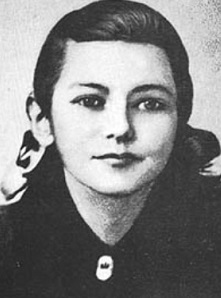
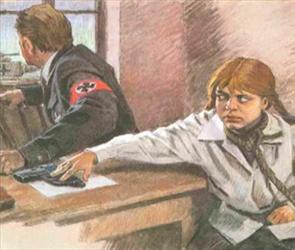
1944: Zinaida Portnova, Komsomol hero

On this date in 1944, Soviet partisan Zinaida Portnova was executed by the Germans occupying Belarus.

The youngest-ever female Hero of the Soviet Union (she was posthumously decorated in 1958), the Leningrad-born Portnova had a rude start in insurgency when the German blitz swept past her summer camp in Belarus and trapped her behind lines.

Said to have been radicalized when occupying soldiers struck her grandmother, the girl joined the youth arm of the local resistance, dubbed the “Young Avengers”.

From surveilling enemy troop deployments and assembling weapons caches, Zinaida Portnova graduated to sabotage and ambushes … and capture. Even then she pulled off an action hero escape by snatching a gun and shooting her way out of custody, only to be re-arrested shortly thereafter.

She was shot a month shy of her 18th birthday.

A large number of Pioneer youth groups were subsequently dedicated to Zinaida Portnova, as was a museum of the Komsomol underground and a public monument in Minsk. She remains to this day an honored martyr of the Great Patriotic War.

On this day..

1945: Karolina Juszczykowska, who couldn’t say no

(Thanks to Meaghan Good of the Charley Project for the guest post. -ed.)

On this date in 1945, Polish Gentile Karolina Juszczykowska was executed at the prison in Frankfurt am Main for her attempt to save two Jewish men in Tomaschow, Poland, the previous year. She was 46 years old.

The people she tried to rescue have never been identified; only their first names, Paul and Janek, are known. According to Karolina, she met them on the street and they offered her 300 zloty a week to hide them. She kept them in her home and locked them inside when she went off to work during the day; they slept on the floor at night.

The arrangement lasted only about six weeks before they were betrayed.

The Gestapo raided Karolina’s home on July 23, 1944 and found Janek and Paul hiding in the cellar. Karolina was arrested and the two men were summarily executed.

Karolina emphasized that she only took them in because she needed the money to support herself. The judges who presided over her case seemed to believe her and, although they issued the mandatory death sentence, recommended clemency, writing, “The accused is in a difficult financial situation and succumbed to the temptation to improve her life.”

Karolina was indeed poor. “I have no assets,” she said in her statement to the police, “and don’t expect to have any in the future.” She’d worked menial jobs her whole life: farm work, construction, domestic service, and most recently in the kitchens of Organization Todt, the Third Reich’s civil and military engineering division. She had never been to school and was completely illiterate; she signed her police statement with three crosses.

But, as Yad Vashem points out when writing of her case, no matter what she said, it’s highly unlikely that Karolina Juszczykowska’s reasons for hiding Jews were primarily mercenary.

The wartime Polish economy had shattered, inflation had soared, and 300 zlotys wouldn’t have even been enough to cover the costs of feeding two extra people. No rational person would risk her life for that — the sentence for a Pole caught helping Jews was nearly always death.

What, then, motivated our Gentile rescuer?

Psychologist and filmmaker Eva Fogelman wrote a book called Conscience and Courage: Rescuers of Jews During the Holocaust, wherein she examines the many and various motivations of rescuers. “Many rescuers,” she writes,

found it impossible to explain to anyone who did not live through those times why they acted as they did. In war, there were no rules. The familiar seemed strange, and the bizarre seemed normal. In retrospect, rescuers’ behavior, in some instances, was not understandable even to them. How could they have endangered their families? How could they have done what they did or said what they said?

In Fogelman’s estimation, many rescuers were motivated by simple morality, either of a religious or purely personal kind.

Moral rescuers had a strong sense of who they were and what they were about. Their values were self-sustaining, not dependent on the approval of others. To them, what mattered most was behaving in a way that maintained their integrity. The bystanders who ultimately became rescuers knew that unless they took action, people would die …moral rescuers typically launched their rescuing activity only after being asked to help or after an encounter with suffering and death that awakened their consciences. Scenes of Nazi brutality touched their inner core and activated their moral values … For the most part, when asked for help, moral rescuers could not say no.

We will never know for sure, but it could have happened like this: In 1943, Karolina, while working for Todt, either witnessed or heard about the liquidation of the Tomaschow Ghetto and the accompanying violence and brutality. Most of the ghetto’s Jews were sent to Treblinka in January 1943; the last few hundred were taken away in May. Janek and Paul went into hiding and managed to stay off the radar for a year or so, but by the time they met Karolina they’d been run to ground and were desperate. They asked for her help. She couldn’t say no.

Although Karolina’s judges recommended she be pardoned, the death sentence was carried out anyway. There were no survivors and all we know about this case comes from court documents. But her sacrifice did not go unnoticed.

On May 17, 2011, over 65 years after her death, Israel recognized Karolina Juszczykowska as Righteous Among the Nations, its official honorific for Gentiles who aided Jews during the Holocaust.

On this day..