This well-favored but evidently unrefined young rowdy had a penchant for the illicit hobby of poaching game, just becoming in this period a conflict zone in the proto-capitalist enclosure movement.
We may suppose that a callow youth of privilege didn’t have the means of production on his mind, just an overweening sense of entitlement about the forests of the next lord over. In any event, a 1537 letter to Thomas Cromwell testifies to the young Fiennes’ vice.
I have received your lordship’s letters wherein I perceive your benevolence towards the frailness of my yoyth in considering that I was rather led by instigation of my accusers than of my mere mind to those unlawful acts, which I have long detested in secret. I perceive your lordship is desirous to have knowledge of all riotous hunters, and shall exert myself to do you service therein. I beg you give credence to Mr. Awdeley, with whom I send some of my servants to be brought before you; he can inform you of others who have hunted in my little park of Bukholt.’
We don’t have the particulars of this situation, but secret detestation notwithstanding, four years’ time finds Fiennes up to similar shenanigans.
In this later, fatal case, our sportsman and a group of retainers went out to hunt deer on the lands of his neighbor, Sir Nicholas Pelham. There, they encountered some men of Pelham’s, and in the ensuing melee, one of the latter party was beaten to death. Pelham pressed the issue aggressively.
“Overpersuaded by the courtiers, who gaped after his estate,” Fiennes tried the dangerous gambit of pleading guilty and casting himself on the king’s mercy. The fact that testimony indicated that Fiennes himself had not participated in the fight might have meant an acquittal, though a guilty plea also positioned Fiennes to exculpate his mates.
Gaping courtiers may have realized better than their prey that the king’s mood this summer tended towards severity. Spurning a recommendation of clemency from the peers of the realm, Henry VIII insisted on Dacre’s execution.
The affairs of the luckless baron’s last day — which was only four days after his trial — remain a bit mysterious. Hopes for a clemency were raised by a last-minute reprieve from a scheduled morning beheading, only to have the noble led out that afternoon to the beneath-his-class death by hanging at Tyburn.
Oh, and the mates Dacre was (possibly) trying to protect? Three of them hanged this date as well, at St. Thomas a Watering on the Old Kent Road.
* It hasn’t been continuously extant, strictly speaking — in fact, it was terminated along with Thomas Fiennes, only restored in 1558 to the hanged man’s son.
On this date* in 1497, two commoners who led an uprising against the Tudor dynasty were hanged at Tyburn.
Sore about a tax hike imposed to fight a Scots army supporting pretender Perkin Warbeck, Cornwall rose against Henry VII early in 1497.
“Henry Tudor’s” legitimacy on an English throne he had recently conquered was still a bit shaky, which is why he had to worry about pretenders to begin with (and also why his son would become so infamouslooking for heirs).
Despite disappointingly finding no help for their cause in oft-rebellious Kent, the Cornish men decided to go it alone.
A statue of Michael Joseph An Gof and Thomas Flamank. Image (c) John Durrant and used with permission.
Under the leadership of blacksmith Michael Joseph (or Michael An Gof; An Gof simply translates as the man’s profession) and barrister Thomas Flamank (or Flammock) — injudiciously joined by one Lord Audley** — 15,000 or so marched to the outskirts of London, where they were trounced in the Battle of Deptford Bridge.
As commoners, Joseph and Flamank were condemned to the barbarous hanging-drawing-quartering death, but Henry commuted it to simple hanging with posthumous dismembering lest the popular leaders’ public torture spark fresh trouble in their native stomping-grounds. (Michael Joseph prophesied that posterity would confer upon these martyrs “a name perpetual and a fame permanent and immortal.” The authorities still did the dismembering bits, only posthumously, and put the heads up on pikes.)
After all, the fact that these troublemakers had marched right up to London before anyone had opposed them underscored Henry’s own potential vulnerability. Even the noble that Henry sent out to whip the marchers might have had one finger to the wind before deciding which side would be the winner.
As events would prove, the king was right to worry.
First as tragedy, then as farce
Seeing how much latent disaffection had been readily converted to action in Cornwall, Perkin Warbeck decided to make his big move later that same year in 1497 by landing there near Land’s End.
A few thousand joined the ensuing Second Cornish Uprising, but it came to much the same end — and resulted, this time, in Warbeck’s own capture and eventual execution.
* Some Wikipedia articles assert June 24, but June 27 seems attested by better authorities. I have not been able to pin down primary documentation proving either date, but the maintenance of June 27th as “An Gof Day” disposes the case. (There was a big 500th anniversary march for the occasion in 1997.) Claims that all three were executed on June 28 appear to be simply mistaken.
** As a peer, Audley got the chop instead of the hemp: he was beheaded on June 28. The rank-and-file were generally pardoned.
On this date in 1554, rebel leader Thomas Wyatt the Younger tied on his own blindfold and laid his head on the block, having declared that not “any other now in your durance [i.e., the Tower] was privy to my rising”.
That remark exculpated the Princess Elizabeth, who just days before had been ominously rowed to the Tower on suspicion of having known of or involved herself in Wyatt‘s abortive revolt.
And Wyatt had had to do more than talk the talk to keep the future Queen Elizabeth I out of the executioner’s way.
Sore afraid that Wyatt’s rebellion had been engineered with the connivance of her Protestant half-sister, the Catholic Queen Mary Tudor had had Wyatt tortured to implicate her.
Wyatt held firm to Elizabeth’s innocence.
Had he not, the princess might have followed her mother to the scaffold, instead of becoming one of the realm’s most illustrious monarchs* — a fraught situation aptly portrayed at the outset of the 1998 Cate Blanchett flick Elizabeth.
It wasn’t only religion that made the political situation in 1550s England so perilous.
Mary Tudor’s marriage to Philip of Spain had roused fears of Spanish political domination. This, much more than theology, triggered the plot that took Thomas Wyatt’s head off his shoulders.
Against this specter of Iberian influence, Wyatt and some fellow-nobles attempted to raise coordinated insurrections in early 1554. Most fizzled or were busted by authorities before they could get going. Wyatt’s alone, in quarrelsome Kent, ignited: he marched 4,000 men on the city of London and for a moment seemed to have a real prospect of capturing it before the crown rallied the city.
A paroxysm of vengeful executions in February 1554 claimed nearly 100 participants in the rebellion, their mutilated bodies demonstratively hung up around town. (It also claimed Lady Jane Grey, the lately defeated rival contender for Mary’s throne, whom the latter now realized was too dangerous to be left alive.)
It could have been uglier, though.
Despite her “Bloody Mary” reputation, the Queen went fairly easy on this dangerous challenge to her authority, making some high-profile examples but paroling most of the rank-and-file traitors in a hearts-and-minds clemency campaign.
The namesake rebel, however, was never going to be in that bunch. He was kept on a bit in the Tower while Mary’s goons “laboured to make Sir Thomas Wyatt confess concerning the Lady Elizabeth … but unsuccessfully, though torture had been applied.”
“Much suspected by me, nothing proved can be, Quoth Elizabeth prisoner”
Having kept his head under torture, Wyatt lost it on this date — and readied Elizabeth’s to wear the crown.
If you find the Elizabethan age worth celebrating, spare an extra thought this date for Thomas Wyatt the Younger’s eponymous old man.**
This Henrician poet is supposed to have been Anne Boleyn‘s last lover before Henry VIII.
In Henry’s snakepit, youthful frolics could come back to bite you; Wyatt the elder was actually imprisoned for adultery with the queen, only ducking the fatal charge thanks to some pull with Thomas Cromwell.
Wyatt pere wrote a melancholy poem about this depressing turn of his fortunes, but considering his times, you’d have to say he was born under a good sign.
A few years later, he was again on the hook for treason, and (Cromwell having been beheaded in the interim) saved by the fortuitous influence of Queen Catherine Howard, who was herself not long before a fall and a chop. (After that, Lady Wyatt, famous for her gallantries, was supposed to be in the running to become King Henry’s sixth wife even though she was still married to Thomas.)
The elder Wyatt managed to die naturally before trying his luck with a third treason charge.
* Many a slip ‘twixt a cup and a lip, but that turn of ill fate for Elizabeth could have set Mary, Queen of Scots on her way to becoming one of England’s most illustrious monarchs, instead of going to the scaffold.
** The illustrious family ties go the other direction, too. Thomas Wyatt the Younger was the grandfather of Francis Wyatt, the first English royal governor of the New World territory named for Queen Elizabeth: Virginia.
February 12 is the anniversary of Lady Jane Grey‘s beheading at the Tower of London. The Protestant teenager was the designated successor of sickly boy-king Edward VI, but popular and aristocratic support went for Mary Tudor in a landslide.
The Nine Days’ Queen landed in the Tower and copped to a treason charge on a tenuous deal for mercy (not applicable to her sponsors and allies, many of whom went to the block). But a January 1554 Protestant rebellion that had Protestant restoration as part of its programme made it a dangerous indulgence for Mary to keep her cousin’s neck attached to its shoulders.
On this auspicious anniversary, Executed Today is pleased to welcome Jane Grey expert J. Stephan Edwards, Ph.D. Dr. Edwards runs the Some Grey Matter site, and is working on a forthcoming book about our day’s famous beheadee.
ET: The conventional wisdom on Jane Grey is that she was basically destroyed by the machinations of the men around her. Is that a misapprehension? Was she more involved in events than she’s given credit for? Can one take seriously the notion that she didn’t want to be queen?
JSE: Having spent almost ten years researching the life of Lady Jane Grey Dudley and her very brief reign as Queen of England in July 1553, I am confident that she was not directly involved in the plans to make her Edward VI’s successor to the throne. At the same time, however, I am completely convinced that she was well aware of those plans at least six weeks before she actually became queen. And it is beyond question that she knew of the plan at least a week before her accession. Thus the standard mythology that portrays Jane as utterly unaware and totally innocent until the last possible second is just that … a myth.
I am similarly convinced that Jane accepted the crown after offering little more than perfunctory resistance. The crown offered a degree of personal independence that would otherwise have been unavailable to her. It also offered power. Despite Victorian-era storytelling to the contrary, Jane Grey Dudley was very much a product of her own age, and that was an age of widespread personal ambition, of duty to both family and God to advance one’s self and one’s family. It would have been a deep betrayal of her family and of social norms actually to refuse such an exalted position.
In the act of accepting, she is recorded to have asked God for some sign that she should refuse, paused for a moment, and receiving no such sign, she accepted. Further, Jane was apparently an adherent to the Calvinist doctrine of predestination, the idea that all things, including our daily lives, are preordained and known to God, and as humans we are powerless to alter God’s plan. Having prayed to God for a sign that she should refuse the crown and receiving none was no doubt to her an indication that her God’s preordained plan was for her to be Queen of England. She therefore accepted without offering further resistance of any kind.
Further, there is ample evidence to show that Jane fully embraced her new status. She signed dozens, perhaps hundreds, of documents with her own hand rather than relying on a privy secretary to sign in her stead (common practice in the reigns of Henry VIII and Edward VI before her). This indicates active and positive involvement in affairs. And on more than one occasion, she countermanded the orders of her council, imposing her own will upon them, again evidence of an intent to rule.
Was she “destroyed by the machinations of the men around her”? I think perhaps there is a better way to phrase it. Jane Grey Dudley lived in an era when women were second class citizens with few legal rights and virtually barred from public affairs. Yet the circumstances of July 1553 mandated that a woman must assume the throne, however much that contradicted 400 years of established English practice. If anything, Jane Grey Dudley was a pawn in a political chess game in which the players, all male, searched desperately for a male king, yet all they had at hand were potential queens. The male players at the chess board were simply struggling with the pieces they had available and trying to make the best of an unfamiliar and even frightening situation. They failed, and Queen Jane was one of the unfortunate pieces swept from the board.
Jane is obviously a romantic figure — small r, big R — in part because she didn’t ever have the chance to start doing the un-romantic things that rulers have to do. How has her image changed over the years? What about her would most surprise people today?
Actually, Jane did “do some of the unromantic things that rulers have to do.” She sat in daily on meetings of the Privy Council. She helped to plan military maneuvers against her cousin, the future Queen Mary … maneuvers intended to bring about the latter’s death. She sent thousands of men off to die in battle. The nine short days of the reign of Queen Jane were packed with unromantic and burdensome activity unfamiliar to a woman of not quite eighteen years of age.
If anything, the years have served to erase much of that non-romantic material and replaced it with the image of an obedient girl-child secluded in study or prayer, uninvolved in the affairs of the world. Indeed, one biographer writing in the 19th century referred to her existence as one of “splendid isolation.”
Yet she was anything but isolated. The historical evidence makes it clear that she was socially active, participating in many of the public celebrations held by her kingly cousin’s court. She traveled a great deal, visiting with relatives and friends of the family scattered across the entire realm. And she had a love of music that was intense enough to give her tutor concern that she was becoming too distracted from her intellectual studies. The picture that has emerged from my own research is of a girl who was quite “normal” for those of her social and economic status in that era, with the possible exception of a gift for languages.
Had Jane, in fact, ruled, how different might events in England been? (and elsewhere, since this was also a key period of imperial competition?)
I am not myself a huge fan of “counterfactual history,” of speculating about “what might have been.” But since a lot of people do ask this question, I will say this: Had Jane remained queen, and had Mary remained on the political periphery (or been executed), it seems to me that the British Isles would be a very different place today. Just in basic political terms, Elizabeth also would likely not have become queen, so the great Elizabethan “Golden Age” would never have happened. Also, Jane would likely have had children, so there would not have been any need to reach outside the realm in 1603 to find an heir. James VI of Scotland would never have become James I of England, and Scotland may have remained forever a separate kingdom and nation. Without a King James of England, there would not have been a Charles I of England, and thus perhaps no religious civil wars in the mid 17th century. Carried still further, James II would never have become king, and no Act of Settlement would have been necessary. The Hanoverians would never have succeeded to the English throne … no George III and perhaps no American revolution. Certainly no Queen Victoria. And the current queen would instead be a German housewife.
All of this would likely have left England as a relatively small nation. It probably would never have become “Great Britain,” either geo-politically or symbolically. It might well have remained a minor actor on the international political stage. The great “British Empire” and the modern Commonwealth might never have existed.
Religiously, England might also have been very different. The more radical strain of evangelical reformism (later called “Puritanism”) espoused by Edward VI and Jane may well have prevailed. The moderate Elizabethan religious settlement of the 1560s likely would not have happened. Thus the Church of England might have looked today more like a Presbyterian or Lutheran church, both doctrinally and physically. Anglicanism today would have been based on simple preaching, with most ritual and liturgy pared down to a bare minimum. No vestments, no decorated churches, and perhaps no bishops and archbishops. All of that would, in turn, have had a huge impact on English culture, art, literature, etc.
In short, had Jane reigned long, the world would be a very different place today, in ways that we probably cannot even begin to imagine.
How did Jane herself change over the course of her experiences in proximity to power, and then as the queen, and then in the Tower?
This is a very difficult question to answer, if not an impossible one, because we have so very little evidence about Jane herself, her character, and her personality. We know next to nothing of her innermost thoughts and attitudes during this period, especially the period during her imprisonment in the Tower. The one thing that we can perhaps say is that religion became Jane’s chief comfort during the last six months of her life, and she clung to her faith with tenacity. The evidence suggests that she was accepting of her death in the belief that she was serving her God and her faith. In fact, she seems to have carried out the activities of her last days with great care and deliberateness so as to leave a carefully constructed final impression on others. She wrote a judiciously worded letter to her sister and penned a brief note to her father, almost certainly conscious that both would be published after her death. She engaged in a semi-public theological debate with Queen Mary’s own Roman Catholic chaplain and hand signed a transcript of that debate in order to authenticate her words. And lastly, she delivered an ambiguously worded speech from the execution scaffold that declared herself simultaneously innocent and guilty. Jane was a relatively unknown private figure when she became queen, and a very public one by the time she died, well aware that she would soon be known across Europe. That transformation from private to public figure must surely have changed her profoundly, in ways we can only guess.
As a researcher, how do you deal with the sketchy documentary trail on Lady Jane?
Historians and researchers deal every day with people and groups of people for whom few written records or other evidence exists. To compensate, many modern historians take pieces of evidence from here and bits of data from there and compile them, then use that compilation to construct snapshots of groups rather than of individuals. For example, we can reconstruct from written records the amount of charity that was dispensed in certain specific regions (e.g., a single parish in London). From that amount, we can gain some idea of how extensive poverty may have been in that region. And from the list of names and ages of those to whom charity was dispensed, we can deduce what percentage of the poor were male or female, young or old … even if we know nothing more than their names and ages.
With Jane, I have reversed the process. Historians have done a great deal of work to describe aristocratic young women in England in the sixteenth century … their education, their religious beliefs and practices, their domestic lives, etc. If that group composite picture is valid, we should also be able to say that if a certain person is a member of that group of young female aristocrats, she is likely to have had similar characteristics. Thus I have proposed that in the absence of any written evidence to the contrary, Jane was probably very much like her social and economic peers in many ways. She was different only in those ways for which we have clear evidence, such as her proficiency in as many as five to seven languages.
How was her execution carried out? Was it typical for its time, place, and circumstances?
Dying was an active process in the Tudor era. It was something a person did, not something that happened to a person. Those facing death were expected to carry out certain predetermined actions and to behave in certain specific ways as demonstrations that they were destined to go to heaven. Dying was to be done with dignity, with a measure of planning (if the death was anticipated far enough in advance), and with particular tasks to be performed by the dying before they took their leave of the earthly world and moved on to the spiritual world. A large body of literature and advice books on how to die, or “the art of dying” (ars moriendi in Latin), emerged during the period. Jane Grey Dudley played her part so well that she was held up as an example to all in later years of “how to die well.”
The condemned were always afforded the opportunity to prepare themselves spiritually, with the method of preparation dependent upon the form of religion then in place. Jane was executed after Roman Catholicism had been re-instituted in England, so she was given the opportunity to confess to a Catholic priest, to be absolved, and to take final communion. Holding firm to her Protestant beliefs that confession was a private matter between penitent and God alone and not necessitating a priest’s hearing, that absolution was given only by God and not mediated by priests, and that the Roman Catholic Mass was erroneous, she instead engaged in a public theological debate with John de Feckenham. During this debate, Jane professed her faith to a sizable audience, outlining its central tenets, an action that itself served as a kind of “Protestant confession” without directly involving a priest in the process.
She then wrote letters to her sister and father bidding them farewell and offering spiritual counsel to them as well. She probably wrote letters to others, especially her mother, but they have not survived. Taking leave of the world and offering consolation to those to be left behind was part of the ars moriendi. Jane’s letter to her sister, in particular, was reproduced repeatedly over the next century as a near-perfect example of how to bid farewell to loved ones. [Available here, the last of several Jane Grey letters reproduced in this public-domain book.]
On the morning of the execution, she would have dressed appropriately in a simple gown of somber color, usually gray or black (certainly not the angelically virginal white depicted in Paul Delaroche’s famous histrionic painting of her execution). Many carried some type of religious text with them to the place of execution, often a Missal or Book of Hours (for Catholics) or a New Testament or copies of the Four Gospels (for Protestants). Jane carried a book of prayers copied from the works of St Jerome, St Ambrose, and St Austin, each a father of the early Christian church of the fourth century (Tudor-era Protestants recognized the value of the writings of these men though they denied their status as saints and intercessors in heaven). That morning, she carefully inscribed the book to her jailer in preparation for presenting it to him in her last moments. Small gifts to jailers, and even to executioners, were considered signs of humility and Christian forgiveness.
Jane was to be executed within the relatively private walls of the Tower of London rather than in the full glare of the crowds outside the walls on Tower Hill. Executions were large public spectacles that often drew huge audiences, so a private execution was considered a great favor to the condemned.
There was no permanent execution scaffold within the Tower. Scaffolds were built specifically for each execution, then immediately dismantled. The eye-witness accounts indicate that the scaffold for Jane’s execution was built against the wall of the central White Tower, at its northwest corner … the corner closest to the Chapel of St Peter-ad-Vincula. Since Jane was housed in the upper storey of the Gentleman Gaoler’s (Jailer’s) quarters, which still stands today, she would have seen the scaffold being built just a few yards across Tower Green. She would also have had a very short walk from her quarters to the scaffold, though she would have been in full view of the many permanent residents, workers, and official visitors within the Tower that busy Monday morning. She is said by eyewitnesses to have made the walk with great dignity and without any outward signs of distress.
Jane was accompanied to the scaffold by at least two of her ladies-in-waiting and by John de Feckenham, her debate opponent of the previous days. Feckenham served two purposes. Firstly, he was available should Jane wish to convert to Roman Catholicism in her final moments, and to offer whatever spiritual comfort he could should she chose not to convert. No Protestant preacher or pastor was allowed. Secondly, Feckenham served as the personal representative of Queen Mary, ready to witness the proceedings and to recount them to his mistress.
Upon reaching the scaffold, Jane, like all those condemned to die, was allowed to make a final speech. Such speeches were customarily written and memorized in advance with great care, as it was common practice for the witnesses present to write down the dying person’s last words. Scaffold speeches were often published within days of the execution and circulated widely, sometimes as political propaganda, sometimes as educational tools or warnings to others, and sometimes simply as “news of the day.” Jane would have been well aware of this practice, and her final speech, as it was published barely more than a month later, reflects a careful choice of words. She stated that she was guilty of having broken the law by accepting the crown, but that she was innocent of having sought it. She acknowledged the justice of her execution, as all condemned were expected to do. Protestations of innocence at the moment of execution were paradoxically considered signs of guilt, of lack of humility, and transgressions of God’s will.
Jane also asked those in the small audience to pray for her soul “while yet I live.” Her choice of words reflected her disagreement with the Catholic practice of saying masses for the dead. She then kneeled and asked the audience to recite along with her as she spoke the words of Psalm 51, the Miserere, which begins, “Have mercy upon me, O God.”
Those of noble or royal status who were convicted of treason were often beheaded, whereas men of lower birth were hung, drawn and quartered and women of lower birth were often burned at the stake (considered more “humane” for the “weaker sex” than hanging, drawing and quartering). The monarch’s consent was required for beheading, but it was seldom withheld. Thus Mary consented to Jane being executed by beheading with an axe. Therefore, following her recitation of Psalm 51, Jane stood again to make final preparations to meet the axe. She handed her gloves and handkerchief to one of her ladies, and gave her small prayer-book to Thomas Bridges, the brother of the Lieutenant of the Tower. The prayerbook has survived and is sometimes displayed as part of the permanent “Treasures of the Library” exhibition at the British Library in London.
After her attendants assisted her to loosen the neck of her gown, the executioner knelt in the customary request for forgiveness from the condemned. The executioner then asked her to stand upon the straw spread around the block to soak up the blood. As she began to kneel, she asked the executioner whether he would take her by surprise and strike before she was ready. Assured that he would not, she tied a cloth around her head to block her eyesight. Then, in one of the most poignant of scenes, she felt blindly for the block, and not finding it because of the cloth over her eyes, she asked, “What shall I do? Where is it?” It was against custom to assist the condemned to find the block, lest the person offering aid be accused of having an unjust part in a death. However, someone -– usually reported as Feckenham –- apparently did reach down and guide her hands to the block. (This instant is the scene depicted in Delaroche’s near-life-sized painting, though most of the details of that painting are quite inaccurate.)
Detail view of Hippolyte (Paul) Delaroche’s The Execution of Lady Jane Grey. (Click for full-size image.)
According to the gallery’s advance publicity, “For the first time, Painting History examines this iconic masterpiece in the context of Delaroche’s great historical paintings, particularly the poignant scenes from English history which made his reputation. The exhibition features seven major international loans of paintings by Delaroche including The Princes in the Tower, 1830 and Young Christian Martyr, 1854–5 (both Louvre) and Strafford on his way to Execution, 1835 (private collection). Displayed alongside are Delaroche’s expressive preparatory drawings for Lady Jane and a selection of comparative paintings and prints by his contemporaries, including Eugène Lami, Claude Jacquand and François-Marius Granet.”
The guy sure had a thingforexecutions. If this blog had a patron artist, it would be Paul Delaroche.
Finally finding the block, she laid her neck upon it and repeated Jesus’s words on the cross, “Lord, into thy hands I commend my spirit.” At those words, the executioner swung his axe and she was dead.
There is a previously unchallenged tradition that Lady Jane Grey Dudley was buried in the Chapel of St Peter-ad-Vincula (St Peter-in-Chains) within the Tower, supposedly beneath the floor just in front of the left-hand side of the altar. A plaque to that effect was placed there in the 1870s, and the modern tour guides of the Tower usually regale tourists with heavily embellished stories of the events.
My own research, however, suggests that Jane may have been buried outside the Tower. Several circumstances of the day support my conclusion. First, the chapel had been restored to service in the Roman Catholic faith by mid-February 1554. The Roman Catholic Church explicitly prohibits the burial of heretics in consecrated ground, and Jane was considered a heretic by that Church. Additionally, there is a contemporary account that tells of the bodies of Jane and her husband Guildford, who was executed the same day on Tower Hill, lying in a cart outside the chapel for several hours. The reason for the delay is given as a need to seek special permission to bury them within. None of the eyewitness accounts of the day go on to speak of the burial itself. Whether this is because none of those eyewitnesses saw the burial take place or because it was considered by them to be not worth the mentioning is unclear. However, Jane’s father Henry Grey was executed on Tower Hill two weeks later for his part in a rebellion in late January 1554, and he is reported to have been buried in the Church of Holy Trinity Minories just yards from Tower Hill. That church was a former abbey of the Order of St Clare that had been closed by Henry VIII during the Dissolution of the 1530s. Henry Grey had purchased the former abbey, together with its church, from the crown in the 1540s. During renovation work in 1851, a workman discovered a carefully preserved severed head that was later identified as the head of Henry Grey. It therefore seems probable that Henry Grey was indeed buried inside Holy Trinity Minories, one of his own properties conveniently nearest the place of his execution. It is equally possible that his daughter Jane Grey Dudley and his son-in-law Guildford Dudley were buried at Holy Trinity just days before Henry.
Holy Trinity was closed as a place of worship in 1899 and merged with the nearby Church of St Botolph’s-without-Aldgate. Henry Grey’s preserved head is now kept in a secret location somewhere on the grounds of St Botolph’s, but the remains of the Church of Holy Trinity Minories were destroyed during the London Blitz of 1940. All that remains is a small public garden in Tower Hill Terrace over the road from the north outer curtain wall of the Tower, a mere 150 yards from the site of Jane’s execution.
A Welsh courtier with the boldness to bed the queen lost his head this date in 1461 … but his career in usurpation was just getting started.
Owen Tudor’s coat of arms.
The House of Tudor that would come to rule England counted Owen its sire; the four-year-old grandson he left at his death grew up to become the first Tudor monarch, Henry VII.
That union was supposed to join the two great realms, but Henry V unexpectedly kicked the bucket in 1422, leaving an infant son who was not only unable to hold the French throne … he was too unstable to hold the English throne, either.
Unless he was a seer, suave Owen must not have been thinking dynasties when he took the Queen as his lover (and eventually his wife via a secret marriage in the early 1430s).
They produced six children, but it wasn’t the bedroom politics that did our prolific father in, at least not directly. Only decades later, when ownership of the crown was up for grabs in the War of the Roses and Owen loyally led Lancastrian forces at a battle he was unwise enough to lose, did he give up his head for the pedestrian crime of backing the wrong horse.
Owen reportedly thought he had stature enough to expect a reprieve until the very last moment, when the executioner’s ripping his collar caused him to sigh,
The head which used to lie in Queen Catherine’s lap, would now lie in the executioner’s basket.
In time, Owen’s descendants would get to pull the same trick, because the doomed cause in whose service Owen Tudor lost his life swept clear England’s political chessboard and made possible his own line’s accession.
Elizabethan poet Michael Drayton later versified Owen’s prodigious conquest in “Owen Tudor to Queen Catherine”.
When first mine eyes beheld your princely name,
And found from whence this friendly letter came;
Is in excess of joy, I bad forgot.
Whether I saw it, or I saw it not:
My panting heart doth bid mine eyes proceed,
My dazzled eyes invite my tongue to read,
Which wanting their direction, dully mist it:
My lips, which should have spoke, were dumb, and kist it,
And left the paper in my trembling hand,
When all my senses did amazed stand :
Even as a mother coming to her child,
Which from her presence hath been long exil’d,
With gentle arms his tender neck doth strain,
Now kissing it, now clipping it again;
And yet excessive joy deludes her so,
As still she doubts, if this be hers, or no.
At length, awaken’d from this pleasing dream,
When passion somewhat left to be extreme,
My longing eyes with their fair object meet,
Where ev’ry letter’s pleasing, each word sweet.
It was not Henry’s conquests, nor his court,
That had the power to win me by report;
Nor was his dreadful terrour-striking name,
The cause that I from Wales to England came:
For Christian Rhodes, and our religion’s truth,
To great achievement first had won my youth:
Th’ brave adventure did my valour prove,
Before I e’er knew what it was to love.
Nor came I hither by some poor event,
But by th’ eternal destinies’ consent;
Whose uncomprised wisdom did foresee,
That you in marriage should be link’d to me.
By our great Merlin was it not foretold,
(Amongst his holy prophesies enroll’d)
When first he did of Tndor’s name divine,
That kings and queens should follow in our line?
And that the helm (the Tudors ancient crest)
Should with the golden flow’r-de-luce be drest ?
As that the leek (our country’s! chief renown!)
Should grow with roses in the English crown –
As Charles his daughter, you the lilly wear;
As Henry’s queen, the blushing rose you bear;
By France’s conquest, and by England’s oath,
You are the true-made dowager of both :
Both in your crown, both in your cheek together,
Join Tether’s love to yours, and yours to Tether.
Then cast no future doubts, nor fear no hate,
When it so long hath been fore-told by fate ;
And by the all-disposing doom of Heav’n,
Before our births, we to one bed were giv’n.
No Pallas here, nor Juno is at all,
When I to Venus yield the golden ball:
Nor when the Grecians wonder I enjoy,
None in revenge to kindle fire in Troy.
And have not strange events divin’d to us,
That in our love we should be prosperous ?
When in your presence I was call’d to dance,
In lofty tricks whilst I myself advance,
And in a turn my footing fail’d by hap,
Was’t not my chance to light into your lap ?
Who would not judge it fortune’s greatest grace,
Sith he must fall, to fall in such a place ?
His birth from Heav’n, your Tudor not derives,
Nor stands on tip-toes in superlatives,
Although the envious English do devise
A thousand jests of our hyperbolies;
Nor do I claim that plot by ancient deeds,
Where Phoebus pasture his fire-breathing steeds:
Nor do I boast my god-made grandsire’s scars,
Nor giants trophies in the Titans wars:
Nor feign my birth (your princely ears to please)
By three nights getting, as was Hercules:
Nor do I forge my long descent to rim
From aged Neptune, or the glorious Sun:
And yet in Wales, with them that famous be,
Our learned bards do sing my pedigree
And boast my birth from great Cadwallader,
From old Caer-Septon, in mount Palador:
And from Eneon’s line, the South-Wales king,
By Theodor, the Tudors’ name do bring.
My royal mother’s princely stock began
From her great grandame, fair Gwenellian,
By true descent from Leolin the great,
As well from North-Wales, as fair Powsland’s seal.
Though for our princely genealogy
I do not stand to make apology:
Yet who with judgment’s true impartial eyes,
Shall look from whence our name at did first rise,
Shall find, that fortune is to us in debt And why not Tudor, as Plantagenet?
Nor that term Croggen, nick name of disgrace
Us’d as a by-word now in ev’ry place,
Shall blot our blood, or wrong a Welshman’s name,
Which was at first begot with England’s shame.
Our valiant swords our right did still maintain,
Against that cruel, proud, usurping Dane,
Buckling besides in many dang’rous fights,
With Norway, Swethens, and with Muscovites;
And kept our native language now thus long,
And to this day yet never chang’d our tungue:
When they which now our nation fain would tame,
Subdu’d, have lost their country and their name.
Nor ever could the Saxons’ swords provoke
Our British necks to hear their servile yoke:
Where Cambria’s pleasant countries bounded be
With swelling Severn, and the holy Dee:
And since great Brutus first arrived, have stood
The only remnant of the Trojan blood.
To every man is not allotted chance,
To boast with Henry, to have conquer’d France:
Yet if my fortune be thus rais’d by thee,
This may presage a further good to me;
And our Saint David, in the Britons’ right,
May join with George, the sainted English knight:
And old Caer-merdin, Merlin’s famous town,
Not scorn’d by London, though of such renown.
Ah, would to God that hour my hopes attend,
Were with my wish brought to desired end !
Blame me not, madam, though I thus desire,
Many there be, that after you inquire;
Till now your beauty in night’s bosom slept,
What eye durst stir, where awful Henry kept ?
Who durst attempt to sail but near the bay,
Where that all-conqu’ring great, Alcides lay ?
Your beauty now is set a royal prize,
And kings repair to cheapen merchandise.
If you but walk to take the breathing air,
Orithia makes me that I Boreas fear:
If to the fire, Jove once in light’ning came.
And fair Egina makes me fear the flame:
If in the Sun, then sad suspicion dreams
Phoebus should spread Lucothoe in his beams:
If in a fountain you do cool your blood,
Neptune, I fear, which once came in a flood:
If with your maids, I dread Apollo’s rape,
Who cous’ned Chion in an old wife’s shape :
If you do banquet, Bacchus makes me dread,
Who in a grape Erigone did feed :
And if myself your chamber-door should keep,
Yet fear I Hermes coming in a sleep.
Pardon (sweet queen) if I offend in this,
In these delays love most impatient is:
And youth wants pow’r his hot spleen to suppress,
When hope already banquets in excess.
Though Henry’d fame in me you shall not find,
Yet that which better shall content your mind;
But only in the title of a king
Was his advantage, in no other thing:
If in his love more pleasure you did take,
Never let queen trust Briton for my sake.
Yet judge me not from modesty exempt,
That I another Phaeton’s charge attempt;
My mind, that thus your favours dare aspire,
Shows, that ’tis touch’d with a celestial fire:
If I do fault, the more is beauty’s blame,
When she herself is author of the same;
“All men to some one quality incline,”
Only to love is naturally mine.
Thou art by beauty famous, as by birth,
Ordain’d by Heav’n to cheer the drooping Earth :
Add faithful love unto your greater state,
And be alike in all things fortunate.
A king might promise more, I not deny,
But yet (by Heav’n) he lov’d not more than I.
And thus I leave, till time my faith approve,
I cease to write, but never cease to love.
That Katharine, queen of England, formerly called Kath. Howerd, late of Lambyth, Surr., one of the daughters of lord Edmund Howard, before the marriage between the King and her, led an abominable, base, carnal, voluptuous, and vicious life, like a common harlot, with divers persons, as with Francis Derham of Lambeth and Hen. Manak [Manox] of Streteham, Surr., 20 and 24 May 32 Hen. VIII., and at other times, maintaining however the outward appearance of chastity and honesty. That she led the King by word and gesture to love her and (he believing her to be pure and chaste and free from other matrimonial yoke) arrogantly coupled herself with him in marriage. And the said Queen and Francis, being charged by divers of the King’s Council with their vicious life, could not deny it, but excused themselves by alleging that they were contracted to each other before the marriage with the King;* which contract at the time of the marriage they falsely and traitorously concealed** from the King, to the peril of the King and of his children to be begotten by her and the damage of the whole realm. And after the marriage, the said Queen and Francis, intending to renew their vicious life, 25 Aug. 33 Hen. VIII., at Pomfret, and at other times and places, practised that the said Francis should be retained in the Queen’s service; and the Queen, at Pomfret, 27 Aug. 33 Hen. VIII., did so retain the said Francis, and had him in notable favour above others, and, in her secret chamber and other suspect places, spoke with him and committed secret affairs to him both by word and writing, and for the fulfilling of their wicked and traitorous purpose, gave him divers gifts and sums of money on the 27 Aug. and at other times.
Also the said Queen, not satisfied with her vicious life aforesaid, on the 29 Aug. 33 Hen. VIII., at Pomfret, and at other times and places before and after, with Thos. Culpeper,† late of London, one of the gentlemen of the King’s privy chamber, falsely and traitorously held illicit meeting and conference to incite the said Culpeper to have carnal intercourse with her; and insinuated to him that she loved him above the King and all others. Similarly the said Culpeper incited the Queen. And the better and more secretly to pursue their carnal life they retained Jane lady Rochford, late wife of Sir Geo. Boleyn late lord Rochford, as a go-between to contrive meetings in the Queen’s stole chamber and other suspect places; and so the said Jane falsely and traitorously aided and abetted them.
On this date in 1541, Thomas Culpeper and Francis Dereham paid the penalty for their indiscretions; the former queen would see her lovers’ severed heads mounted on pikestaffs on London Bridge as she was rowed to the Tower.
The onetime court favorite Culpeper was beheaded for cuckolding the royal person, and that’s no more than one would expect. But the political pull-less Dereham — who had slept with (and possibly “pre-contracted” to wed) the willing young Kate before she meant anything to the king — enjoyed the full measure of the traitor’s torture: hanged, emasculated, eviscerated, and dismembered, all of it basically for having failed to anticipate that his little conquest would one day grow up to turn the monarch’s head.
* Catherine Howard’s confessional letter to Henry VIII … desperately attempting to limit her indiscretions to the time before her marriage:
I, your Grace’s most sorrowful subject and most vile wretch in the world, not worthy to make any recommendation unto your most excellent Majesty, do only make my most humble submission and confession of my faults. And where no cause of mercy is given on my part, yet of your most accustomed mercy extended unto all other men undeserverd, most humbly on my hands and knees do desire one particle thereof to be extended unto me, although of all other creatures I am most unworthy either to be called your wife or subject.
My sorrow I can by no writing express, nevertheless I trust your most benign nature will have some respect unto my youth, my ignorance, my frailness, my humble confession of my faults, and plain declaration of the same, referring me wholly unto Your Grace’s pity and mercy. First, at the flattering and fair persuasions of Manox, being but a young girl, I suffered him a sundry times to handle and touch the secret parts of my body which neither became me with honesty to permit, nor him to require. Also, Francis Derehem by many persuasions procured me to his vicious purpose, and obtained first to lie upon my bed with his doublet and hose, and after within the bed, and finally he lay with me naked, and used me in such sort as a man doth his wife, many and sundry times, and our company ended almost a year before the King’s Magesty was married to my Lady Anne of Cleves and continued not past one quarter of a year, or a little above.
Now the whole truth being declared unto Your Majesty, I most humbly beseech you to consider the subtle persuasions of young men and the ignorance and frailness of young women. I was so desirous to be taken unto your Grace’s favor, and so blinded by with the desire of worldly glory that I could not, nor had grace to consider how great a fault it was to conceal my former faults from your Majesty, considering that I intended ever during my life to be faithful and true unto your Majesty ever after. Nevertheless, the sorrow of mine offenses was ever before mine eyes, considering the infinite goodness of your Majesty toward me from time to time ever increasing and not diminishing. Now, I refer the judgment of my offenses with my life and death wholly unto your most benign and merciful Grace, to be considered by no justice of your Majesty’s laws but only by your infinite goodness, pity, compassion and mercy, without which I acknowledge myself worthy of the most extreme punishment.
** Early the next year, parliament declared, “to avoid doubts in future” — read: “retroactively legislated” — that “an unchaste woman marrying the King shall be guilty of high treason.” This also made anyone who knew about said unchastity guilty of (at least) misprision of treason for failing to report it.
I heartily recommend me unto you, praying you to send me word how that you do. It was showed me that you was sick, the which thing troubled me very much till such time that I hear from you praying you to send me word how that you do, for I never longed so much for a thing as I do to see you and to speak with you, the which I trust shall be shortly now. That which doth comfortly me very much when I think of it, and when I think again that you shall depart from me again it makes my heart die to think what fortune I have that I cannot be always in your company. It my trust is always in you that you will be as you have promised me, and in that hope I trust upon still, praying you that you will come when my Lady Rochford is here for then I shall be best at leisure to be at your commandment, thanking you for that you have promised me to be so good unto that poor fellow my man which is one of the griefs that I do feel to depart from him for then I do know no one that I dare trust to send to you, and therefore I pray you take him to be with you that I may sometime hear from you one thing. I pray you to give me a horse for my man for I had much ado to get one and therefore I pray send me one by him and in so doing I am as I said afor, and thus I take my leave of you, trusting to see you shortly again and I would you was with me now that you might see what pain I take in writing to you.
Yours as long as life endures,
Katheryn.
One thing I had forgotten and that is to instruct my man to tarry here with me still for he says whatsomever you bid him he will do it.
Though this letter is far from conclusively inculpatory, Culpeper confessed that he “intended and meant to do ill with the queen and that in like wise the queen so minded to do with him.”
Possibly England’s last medieval peasant rising, and possibly its first modern revolt, Kett’s Rebellion pitted the agrarian feudal commons against the proto-capitalist world taking shape.
Impelled by the profitable wool export business, landlords began “enclosing” formerly open arable land for pasture, thereby destroying the communal and quasi-communal agricultural models of the middle ages.
Karl Marx
For Marx, among many others, this revolution in agricultural production — and the attendant proletarianization of the former peasantry — marks the dawn of the capitalist epoch, when
great masses of men are suddenly and forcibly torn from their means of subsistence, and hurled as free and “unattached” proletarians on the labour-market. The expropriation of the agricultural producer, of the peasant, from the soil, is the basis of the whole process …
Although, therefore, the English land, after the Norman Conquest, was distributed in gigantic baronies, one of which often included some 900 of the old Anglo-Saxon lordships, it was bestrewn with small peasant properties, only here and there interspersed with great seignorial domains. Such conditions, together with the prosperity of the towns so characteristic of the 15th century, allowed of that wealth of the people which Chancellor Fortescue so eloquently paints in his “Laudes legum Angliae;” but it excluded the possibility of capitalistic wealth.
The prelude of the revolution that laid the foundation of the capitalist mode of production, was played in the last third of the 15th, and the first decade of the 16th century. A mass of free proletarians was hurled on the labour-market by the breaking-up of the bands of feudal retainers, who, as Sir James Steuart well says, “everywhere uselessly filled house and castle.” … In insolent conflict with king and parliament, the great feudal lords created an incomparably larger proletariat by the forcible driving of the peasantry from the land, to which the latter had the same feudal right as the lord himself, and by the usurpation of the common lands. The rapid rise of the Flemish wool manufactures, and the corresponding rise in the price of wool in England, gave the direct impulse to these evictions. The old nobility had been devoured by the great feudal wars. The new nobility was the child of its time, for which money was the power of all powers. Transformation of arable land into sheep-walks was, therefore, its cry … As Thornton rightly has it, the English working-class was precipitated without any transition from its golden into its iron age. (Capital, volume I, chapters 26–27)
It did not suffer its precipitation quietly.
Thomas More
Enclosures were a predominant social problem in England throughout the century, and if contemporaries could hardly descry the shape of the economic revolution taking shape, they worriedly noticed the poverty, the vagabondage, and the depopulated villages.
your sheep, which are naturally mild, and easily kept in order, may be said now to devour men and unpeople, not only villages, but towns; for wherever it is found that the sheep of any soil yield a softer and richer wool than ordinary, there the nobility and gentry, and even those holy men, the abbots! not contented with the old rents which their farms yielded, nor thinking it enough that they, living at their ease, do no good to the public, resolve to do it hurt instead of good. They stop the course of agriculture, destroying houses and towns, reserving only the churches, and enclose grounds that they may lodge their sheep in them. As if forests and parks had swallowed up too little of the land, those worthy countrymen turn the best inhabited places into solitudes; for when an insatiable wretch, who is a plague to his country, resolves to enclose many thousand acres of ground, the owners, as well as tenants, are turned out of their possessions by trick or by main force, or, being wearied out by ill usage, they are forced to sell them; by which means those miserable people, both men and women, married and unmarried, old and young, with their poor but numerous families (since country business requires many hands), are all forced to change their seats, not knowing whither to go; and they must sell, almost for nothing, their household stuff
Commissions studied enclosure; edicts forbade and reversed them; commentators denounced them — all to no effect.
Robert Kett
Robert Kett, from a larger painting (click to see it) by Samuel Wale.
Henrician England had plenty of violent social transformation on its plate, of course, and plenty of violent tools to manage it. When the philandering tyrant kicked the bucket in 1547, he left the unfolding social catastrophe to the weakened protectorate government of his sickly nine-year-old heir.
In East Anglia in the summer of 1549, a peasant riot against an enclosure caught a spark. Unexpectedly, when the mob moved to throw down the enclosures put up by Robert Kett (another small landowner), he committed himself to the peasant cause and ably steered the rebellion for six heady weeks.
Kett was the man for his time and place: proving a natural leader, he marshaled the inchoate rage of his countrymen into an orderly, disciplined force.
Kett’s peasant army marched on Norwich, and stunningly captured England’s second city, thereupon petitioning the crown upon a variety of economic grievances (the petition is available on Wikipedia).
And Kett meant business, as this fiery (perhaps slightly fatalistic) oration suggests; he well knew that he had committed his own person to glory or destruction.
Now are ye overtopped and trodden down by gentlemen, and put out of possibility ever to recover foot. Rivers of riches ran into the coffers of your landlords, while you are pair’d to the quick, and fed upon pease and oats like beasts. You are fleeced by these landlords for their private benefit, and as well kept under by the public burdens of State wherein while the richer sort favour themselves, ye are gnawn to the very bones. You tyrannous masters often implead, arrest, and cast you into prison, so that they may the more terrify and torture you in your minds, and wind our necks more surely under their arms. And then they palliate these pillories with the fair pretence of law and authority! Fine workmen, I warrant you, are this law and authority, who can do their dealings so closely that men can only discover them for your undoing. Harmless counsels are fit for tame fools; for you who have already stirred there is no hope but in adventuring boldly.
Alas, like the enclosures themselves, the matter was to be resolved against the peasantry by main force. [bits and bobs on the daily progress of skirmishes and battles in this pdf] Though the rebels actually defeated the first force sent against them, they were decisively beaten at Dussindale on Aug. 27.
“We were promised ynoughe and more then ynoughe. But the more was an hawlter.”*
Promises of clemency induced the survivors to surrender peacably; though wholesale punitive bloodletting seems not to have been imposed, the leaders, of course, had to be made an example of.
Robert Kett and his brother, William, were convicted of treason and hanged.
Smoothly leveraging his dispatch in handling the rebellion, John Dudley, Duke of Northumberland, overturned the national political leadership of the Lord Protector the Duke of Somerset, who was accused of having triggered the rising with an excess of sympathy for the dispossessed peasant class. (Both Somerset and Northumberland would end up on the chopping block themselves.)
* Quote from a survivor of the rebellion, cited by Diarmaid MacCulloch in “Kett’s Rebellion in Context,” Past & Present, No. 84 (Aug., 1979).
Pleaseth it your lordship to be advertised, that … the same 15th day [of November] the late abbot of Glastonbury went from Wells to Glastonbury, and there was drawn through the town upon a hurdle to the hill called the Torre, where he was put to execution; at which time he asked God mercy and the king for his great offences towards his highness, and also desired my servants then being there present to see the execution done, that they would be meane [communicate] to my lord president and to me that we should desire the king’s highness of his merciful goodness and in the way of charity to forgive him his great offences by him committed and done against his grace, and thereupon took his death very patiently, and his head and body bestowed in like manner as I certified your lordship in my last letter. And likewise the other two monks [John Thorne and Roger James, executed with Richard Whiting] desired like forgiveness, and took their death very patiently, whose souls God pardon.
And whereas I at my last being with your lordship at London moved your lordship for my brother Paulett, desiring your lordship to be a mean that he might have the surveyorship of Glastonbury, which I doubt not but he will use and exercise the said office to the king’s most profit and advantage, and your lordship’s goodness herein to him to be shown he shall recompense to his little power, I assure your lordship he hath been very diligent, and divers others by his means, to serve the king at this time, according to his duty and right…
the late abbot of Glastonbury, afore his execution, was examined upon divers articles and interrogatories to him ministered by me, but he could accuse no man but himself of any offence against the king’s highness, nor he would confess no more gold nor silver nor any other thing more than he did before your lordship in the Tower …
Once one of the greatest religious houses in England (and the legendary burial place of King Arthur), Glastonbury Abbey today is a picturesque ruin. Cornell University has published some 19th century photos of the abbey’s remains in a less manicured, more gorgeously overgrown situation.
Pollard had just a few weeks before exonerated the monastery of any profligacy, and the abbot seems perhaps not to have even been properly charged or attainted … but as one can discern in Pollard’s cloying appeal to keep the surveying position in the family, the practical henchman had no qualms as events unfolded about taking a commercial position on the end of the Abbot of Glastonbury.
“Lord, open the King of England’s eyes!” cried William Tyndale at the stake this date in 1536 … just before he was strangled and burned.
“Translated the Bible into English,” reads Tyndale‘s epigraph; in the Protestant blossoming, this Herculean academic labor was also of itself a dangerous religious and political manifesto.
As with Martin Luther’s translation of the Bible into German, Tyndale’s English version threatened, and was intended to threaten, papal ecclesiastical authority. In undertaking the work, Tyndale defied the 1408 “Constitutions of Oxford”, an English clerical pact further to the suppression of the Lollards and kindred post-John Wycliffe heresies which expressly prohibited rendering scripture in the vernacular.
In Protestant hagiographer John Foxe‘s Book of Martyrs, a young Tyndale exasperated with a Romish divine memorably declared,
“I defy the pope, and all his laws;” and added, “If God spared him life, ere many years he would cause a boy that driveth the plough to know more of the Scripture than he did.”
Tyndale would give his life to, and for, that ploughboy.
On the lam in Protestant Germany, Tyndale produced an English New Testament, and then an Old Testament, of startling poetry.
The scholar also kept a reformist voice in the day’s robust theological pamphleteering — trading fire, for instance, with Sir Thomas More.
Even when the once-staunch Catholic Henry VIII broke with Rome over Anne Boleyn, the English manhunt for Tyndale continued: Henry’s reformation did not share radical Protestant objectives like scriptural authority, and the king was not shy about enforcing his version of orthodoxy.
Tyndale was equally stubborn in defense of his life’s mission to put a Bible in the hands of the English ploughboy. Offered the king’s mercy to return and submit, Tyndale countered by offering his silence and martyrdom if Henry would but publish the Good Book in English.
I assure you, if it would stand with the King’s most gracious pleasure to grant only a bare text of the Scripture to be put forth among his people, like as is put forth among the subjects of the emperor in these parts, and of other Christian princes, be it of the translation of what person soever shall please his Majesty, I shall immediately make faithful promise never to write more, not abide two days in these parts after the same: but immediately to repair unto his realm, and there most humbly submit myself at the feet of his royal majesty, offering my body to suffer what pain or torture, yea, what death his grace will, so this [translation] be obtained. Until that time, I will abide the asperity of all chances, whatsoever shall come, and endure my life in as many pains as it is able to bear and suffer.
Luckily for posterity, the English crown wasn’t biting, leaving Tyndale’s mellifluous rendering of Holy Writ to enter the English tongue.
And leaving Tyndale, eventually, to enter the martyrs’ ranks.
In 1536, an English bounty hunter befriended the fugitive translator and betrayed him to the authorities in Vilvoorde, near Brussels. It was the Catholic Church and the Holy Roman Empire that did the dirty work of their rivals in the Isles.
And — the Lord works in the mysterious ways, they say — Tyndale’s dying prayer was indeed answered.
By the end of the decade, a Bible in English drawn from Tyndale’s version (revised by former Tyndale assistant Myles Coverdale under Thomas Cromwell‘s direction; prefaced by Thomas Cranmer) was by regal authority placed in every parish of the Church of England.
On this date in 1540, two days after disposing of his former Vicegerent of Spirituals Thomas Cromwell, the just-wedded Henry VIII wrote a terrifying message of religious conformity in blood and smoke at Smithfield.
The thirtie daie of July, were drawen on herdelles out of the Tower to Smithfield, Robert Barnes Doctor in Diuinitee, Thomas Garard, and Wyllyam Jerome Bachelers in Diuinitee, Powell, Fetherston and Abell. The firste three were drawen to a stake, there before set up, and were hanged, hedded, and quartered. Here ye must note, that the first three, wer menne that professed the Gospell of Jesu Christ, and were Preachers thereof … [the first three] were detestable and abhominable Heretickes, and … had taught many heresies, the nomber whereof was to greate in the atteindor to be recited, so that there is not one alleged … in deede at their deathe, they asked the Sherifes, wherefore they were condempned, who answered, thei could not tell: but if I maie saie the truthe, moste menne said it was for Preachyng, against the Doctryne of Stephen Gardiner Bishoppe of Wynchester, who chiefly procured this their death … but greate pitie it was, that suche learned menne should bee cast awaie, without examinaction, neither knowyng what was laied to their charge, nor never called to answere.
The laste three … were put to death for Treason, and in their attaindor, is speciall mencion made of their offences, whiche was for the deniyng of the kynge ssupremacie, and affirmyng that his Mariage with the Lady Katheryne was good: These with other were the treasons, that thei wer attainted of, and suffered death for.
Terrifying and confusing: here were burnt three Protestants (Barnes, Gerrard and Jerome) for heresy under the Six Articles, essentially for excess radicalism; beside them were hanged, drawn and quartered three Catholics (Powell, Fetherston and Abel) for treasonably refusing the Oath of Succession, that is, for refusing to admit the King of England as the head of the Church of England. It was that old dispute about Anne Boleyn, who was three queens ago by now. (All three Catholic theologians were advisors to Anne’s predecessor and rival Catherine of Aragon, back in the day.)
The one thing that couldn’t possibly be confused in the day’s proceedings was that matters of the faith were matters of state, and in them Henry would brook heterodoxy of neither the liberal nor conservative variety.
“Good Lord! How do these people live?” exclaimed a foreign observer (cited here). “Here are the papists hanged, there are the anti-papists burnt!”

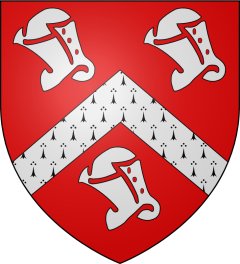
 Thomas Fiennes, scion of an ancient title still* extant today, was more accustomed to doling out the death sentences.
 That remark exculpated the


 “Translated the