
Erna Dorn was executed in secret in Dresden, East Germany on this date in 1953.
Dorn (English Wikipedia entry | German) had been a typist in Gestapo headquarters — real banality of evil stuff — before going to work at Ravensbruck, which was a bit less banal. This is the setup to a fair few executions of Nazi personnel but Frau Dorn got there by a very unusual path.
After the war she was able to pass for several years as a concentration camp survivor rather than a camp staffer, but her cover persona fell apart by the end of the 1940s resulting in her divorce, her expulsion from the Communist party, and her prosecution — first for theft and eventually for the Nazi stuff. However, her sentence was a term of years, not death.
Virtually everything known about her comes from her interrogations over this period and Erna Dorn was your basic unreliable narrator. You’ve got her opportunistically evolving cover stories, and then her swinging into possibly exaggerated claims of responsibility for great abuses, all intermediated by the Stasi with its own interests. “It turns out that everything from Dorn is a fabrication, with zero correlation to truth,” a frustrated interrogator noted after following her tales down one too many blind alleys.
Dorn might have served out her 15 years and been released to take her shifting secrets to an obscure grave. But the June 17, 1953 protests against the East German government threw open the doors of the Halle detention center where she was held, allowing some 250 prisoners a very brief escape (in Dorn’s case, she was out for a single day) before Soviet intervention crushed the rebellion.
As goes the June 17 uprising Dorn was merely a bystander swept into events: it might as well have been the weather that popped open her cell door, and what would anyone do but walk right out?
Save that in the crackdown that followed there was a keen interest in painting the whole embarrassing affair in the scarlet colors of Hitlerism. The camp guard liberated by anti-government protesters made a perfect foil and the unbalanced Dorn was entirely willing to play along at her subsequent snap show trial by doubtfully claiming to have addressed the Halle protesters with an anti-German Democratic Republic harangue.
Dorn was condemned to death as a fascist ringleader by June 22, just five days after her unexpected furlough. The sentence was overturned in the 1990s by the post-GDR, reunified Germany.
* She had to carefully duck a summons to testify at trials of Ravensbruck guards, lest her true role at the camp be dramatically unveiled.
On this day..
- 1912: Sargent Philp
- 1499: Paolo Vitelli, duplicitous commander
- 1818: James Ouley
- 1822: Augustin Joseph Caron, entrapped
- 1970: Hilmar "Henry Stutzbach" Swinka
- 1881: Charlie Pierce lynched in Bloomington, Illinois
- 1567: Pietro Carnesecchi, Florentine humanist and heretic
- 1926: Tony Vettere, who put up a fierce fight
- 1903: Willis, Frederick, and Burton van Wormer
- 1950: The Leningrad Affair "culprits"
- 1788: William "Deacon" Brodie, Dr. Jekyll and Mr. Hyde inspiration
- 1957: Jacques Fesch: playboy, cop killer, saint?


 The Aizawa Incident — an assassination — emerged from the conflict between the
  And on top of all the intrinsic perils of fighting a losing war from the inside of a submerged tin of beans, you’d better do it with enthusiasm or you’ve got the prospect of going up against the wall like
 Bueno (
 On this date in 1941, the fascist artist Alexandru Bassarab was killed in World War II — generally believed to be among captured Romanian prisoners of war summarily executed by Soviet troops.

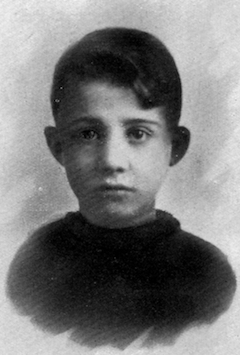 It had been fired by a 15-year-old anarchist named

 An Olympic Greco-Roman wrestler, Seelenbinder’s plan to scandalize patriots by refusing to make the Nazi salute from the podium at the 1936 Berlin games was scratched when he came in fourth in the event.