1701: Gottfried Lehmann, Ferenc Rakoczi liberator

On this date in 1701, the Prussian commander of Vienna Castle was beheaded and then quartered for abetting the escape of Hungarian national hero Ferenc (Francis) Rakoczi.

Gottfried Lehmann was the name of this remarkable Pomeranian dragoon, who as Rakoczki’s jailer became convinced that his charge would inevitably be executed.

His conviction on this point was merited: Rakoczi’s maternal grandfather, Petar Zrinski, had been executed for rebelling against the Austrian empire, and his father, also named Ferenc Rakoczi, had been fortunate to avoid the same fate. After Ferenc pere died young, his widow remarried to yet another anti-Habsburg rebel, one who had aided the Turks at the 1683 Battle of Vienna. Thus, our Ferenc Rakoczi — who is also the Ferenc Rakoczi — labored under close imperial supervision through his childhood and into adulthood. No surprise, his flirtation with aiding the French as a fifth columnist during 1700-1701 outset of the multifaceted War of Spanish Succession led speedily to Rakoczki’s arrest as a for disloyalty.

The prospective doomed was blessed with an intrepid wife, Charlotte Amalia, who went to work charming the King of Prussia — whose intercession to Lehmann on Rakoczi’s behalf was impactful since the commandant was Pomeranian and considered Prussia a primary loyalty — and likewise directly charming Lehmann himself. Only the faithless officer’s shade can ever account which proved decisive in the end: the wife’s charisma, the sovereign’s authority, or the prisoner’s own persuasiveness in his daily interactions with the commandant. For any or all of these reasons, Lehmann eventually agreed to facilitate Rakoczi’s escape.

To this end, he supplied Rakoczi with an officer’s uniform and his quarters to change into it, then looked the other way as Rakoczi bluffed his way out the gates where a coach spirited him away. Within a week the fugitive had reached the safety of Polish soil … but far behind him, Gottfried Lehmann was in irons and under torture. He would lose his head on Christmas eve, his body chopped into quarters for his treason — but gain the eternal gratitude of the Hungarian nation.*


(cc) image by Tulipanos.

Events would prove the Habsburg emperors correct to fear this youth — only 25 years old at the time of his Lehmann-aided flight.

Eighteen months later, Rakoczi stood at the head of a war of national liberation that would run for eight years. Rakoczi’s War of Independence did not secure its titular objective, but it stood long afterwards as a signal of Hungarians’ patriotic aspirations.

* He also gained a lifetime annuity for his widow and son from Rakoczi’s purse.

On this day..

1917: Private Joseph Bateman, shot at dawn

On this date in 1917, Black Country volunteer Joseph Bateman was shot for desertion.

The 2nd Battalion South Staffordshire Regiment private was among the earliest wave of young Britons to sign up, in late 1914 — but his three years of service were marked by intermittent AWOL episodes, including when the unit was on home soil, far from the front lines. It’s not clear the reason for this eventually fatal pattern.

For ninety years, Bateman was, like most “shot at dawn” soldiers, persona non grata for official war commemorations. His name was finally added to Wordsley‘s Great War cenotaph in 2007, thanks to the tireless campaigning of an interested teacher/historian named Graham Hodgson.*

Press reporting on Hodgson’s campaign subsequently turned up Bateman’s relations, including a grateful granddaughter whose only photo of Joseph Bateman was “marked by lipstick where her grandmother kissed it after learning of his death.” (BBC)

He’s buried at Rocquigny-Equancourt British Cemetery in the Somme.

* Unfortunately, Mr. Hodgson was killed in a car accident on Cyprus shortly afterwards. At the time he apparently had a historical novel about Private Bateman in progress, but I can find no indication that it’s been posthumously published; however, Bateman does figure in To War with God: The Army Chaplain who Lost his Faith by Peter Fiennes. Fiennes’s grandfather, the titular army chaplain, stayed up all night consoling Joseph Bateman in the hours ahead of his execution.

On this day..

1892: Jozef Lippens and Henri De Bruyne, Congo Free State hostages

On this date in 1892,* Belgian colonial agents Jozef Lippens and Henri De Bruyne were executed by the rebelling native king who had taken them hostage.

The gentlemen were a lieutenant (Lippens) and sergeant (De Bruyne) of the Force Publique colonial deployment in Belgian Congo.

Their misfortune was proximity when in 1892, rivalry over control of the eastern Congo ivory trade brought the European power into war with its erstwhile Zanzibar “Arab”** allies. (The Arabs were slave-traders, affording a classic humanitarian intervention pretext … which obviously is pretty rich coming from Belgium.)

The Congo-Arab War — which in practice was fought on both sides mostly by black Congolese troops — saw in its opening months the defection of one of the Arabs’ best commanders, Gongo Lutete,† a manumitted former slave who had risen to leadership of the Batetela and Bakussu tribes. In revenge when he switched sides to join the Europeans, the Arab leader Sefu bin Hamid seized Lippens, Belgium’s representative Resident at Kasongo, and De Bruyne, Lippens’s aide — demanding the return of his disloyal general and a settlement of hostilities as the price for these European envoys’ lives.

In fact, it was De Bruyne himself who had the honor of delivering the demand. Escorted by his captors to the eastern bank of the Lomami River on November 15, the emaciated De Bruyne shouted across to Belgian officers on the western side the terms of his captivity. The Belgians, who had the river covered by gunners, urged their countryman to leap into the water and swim for it; De Bruyne declined to abandon his comrade. “By this act of self-abnegation he was to go down in the Belgian folklore as a national hero.” (European Atrocity, African Catastrophe: Leopold II, the Congo Free State and its Aftermath)

His flight would have meant certain death for Lippens; instead, both paid the forfeit together after the Belgian commander Francis Dhanis repelled Sefu bin Hamid’s attack and smashed across the Lomani. According to the account of the war by Sidney Langford Hinde, one of many British officers employed by the Force Publique,

News also reached us here of the murder of Lippens and Debruyne, two officers representing the Free State Government, resident at Sefu’s court in Kasongo. We found out later that, after the defeat of Sefu on the Lomami (which resulted in the death of his cousin and several other noted chiefs), an advance party of the retreating Arabs arrived at Kasongo, and, by way of individual revenge, murdered the two Residents. It is probable, since we have no actual proof to the contrary, that this was done without Sefu’s orders. Twelve of these people, armed with knives hidden in their clothing, made some trivial pretext for visiting Lippens at the Residency, who, however, refused to come out and interview them. They then said that news of a big battle had come to them from Sefu; on hearing which Lippens came out, and, while talking in the verandah, was promptly and silently stabbed. Some of the murderers entering the adjoining room, found Debruyne writing, and killed him before he had learned the fate of his chief. When Sefu returned to Kasongo, a day or two afterwards, he gave orders that the pieces of Debruyne’s body should be collected and buried with Lippens, whose body, with the exception of the hands (which had been sent to Sefu and Mohara of Nyangwe as tokens), was otherwise unmutilated. The strong innate respect for a chief had protected Lippens’ body, while that of his subordinate had been hacked to pieces.

A curious fatality followed these twelve murderers. The chief of the band, Kabwarri by name, was killed by us in the battle of the 26th of February with Lippens’ Martini express in his hand. Of the others — all of whom were the sons of chiefs, and some of them important men on their own account — four died of smallpox, one was killed at Nyangwe, one in the storming of Kasongo, and the remaining six we took prisoners at Kasongo. During the trial they one day, though in a chained gang, succeeded in overpowering the sentry, and thus escaped. One was drowned in crossing a river; three more were killed, either fighting or by accident, within a month or two of their escape; and the two remaining we retook and hanged; — which brings to me a curious point. Of the many men I have seen hanged nearly all died by strangulation, and not by having the neck broken. As compared with shooting, hanging seems to me the less painful death; the wretched being becomes insensible in a very few seconds, whereas a man shot will often require a coup de grace, no matter how carefully the firing party is placed.


Monument to De Bruyne and Lippens in Blankenberge. (cc) image from Zeisterre.

* December 1 is the commonly attributed date for the hostages’ butchery but it can’t be documented with certainty.

** As we’ve noted elsewhere, the term “Arabs” as used for eastern Congo by European sources in this period denotes Muslim bantus. We’re following the prevailing term here, whatever its imprecision.

† As a reward for his services, Gongo Lutete was spuriously accused of treason by a Belgian officer in September 1893 and speedily executed without any form of superior approval.

On this day..

1954: Jonas Žemaitis, Lithuanian Forest Brother

Lithuanian anti-Soviet partisan Jonas Žemaitis was shot in Moscow’s Butyrka prison on this date in 1954. He’s one of the big names in the Forest Brothers movement that kept up a hopeless fight against Moscow from 1944 into the 1950s.

An artillerist of Polish ancestry who deserted the retreating Red Army and surrendered himself the Wehrmacht arriving in the summer 1941, Žemaitis is breezily credited in state histories (and as of this writing, both English and Lithuanian Wikipedia pages) of essentially taking the war years off because “he did not want to serve the Nazis.” That was sure considerate of the Nazis! Instead the fellow just mined peat since he preferred not to get involved.

Now, peat production was and is an important economic sector in Lithuania; indeed, even this seemingly innocuous activity hints at exploitation of Jewish slave labor. But there is circumstantial and even eyewitness evidence that Žemaitis’s participation in one of the Reich’s most thorough exterminations was quite a bit more nefarious than vegetation management.

One could turn here to Joseph Melamed, a survivor of the Kovno Ghetto who collected witness testimonies and published thousands of names of alleged Lithuanian “Jew-Shooters” (zydsaudys). Melamed has charged that Žemaitis put his Polish fluency to use facilitating genocide and “having proved his efficiency and diligence in murdering Jews, was rewarded by the SS and promoted to the rank of Colonel” in the Police Battalions, Lithuanian paramilitaries that worked hand in glove with Nazi executioners.*

Or alternatively, one could rely on the plain fact that Žemaitis was a trained, early-30s officer in a desperate war zone where everyone was being pressed into action, and that anti-Soviet fighters afterwards treated him as a General. That’s not the profile of a figure who simply kept his head down while the Great War raged past him.

The post-USSR independent state of Lithuania, which has not been shy about whitewashing Holocaust collaborators, absolutely rejects such inferences and has retroactively elevated Žemaitis to its officially recognized head of state during his postwar resistance; there’s a Vilnius military academy that’s named for him.

* Melamed is now deceased but during his latter years Vilnius accused him of slander. Modern Lithuania is ferociously determined about apotheosizing the Forest Brothers; officially, the Venn diagram between wartime genocidaires and the postwar anti-Soviet resistance consists of two different shapes on two different planets.

On this day..

1863: Angel Vicente Peñaloza, “Chacho”

Angel Vicente Peñaloza — “Chacho” to friends and to history — was stabbed and shot to death on this date in 1863.

This caudillo was a casualty of Argentina’s long, long conflict between unitarians looking to centralize the state and federalists looking to hold power devolved to their own provinces. Chacho (English Wikipedia entry | Spanish) stood in the latter camp.

A career officer from a prosperous ranching family, Peñaloza had become the caudillo of his native La Rioja province by the 1850s — meaning he was also its key military leader when unitarian-federalist hostilities turned kinetic from 1858.

His skirmishes with the unitarian president Bartolome Mitre saw Chacho hopelessly outgunned, but an attempt between the rivals to conclude a peace treaty turned sour over a prisoner exchange — whose quota Mitre allegedly met with corpses rather than living fighters. Chacho rose again, for the last time, in March 1863, writing angrily to Mitre that his

governors are become the executioners of the provinces … they banish and kill respectable citizens without trial solely because they belong to the federal party.

That is why, Mr. President, that the people, tired of a despotic and arbitrary domination, have proposed justice, and all men who have nothing to lose would rather sacrifice their existence on the battlefield, defending their liberties and their laws and their most precious interests trampled by vile perjurers.

It was just the invitation Mitre needed to crush him: Peñaloza’s several thousand followers were simply outlawed, giving soldiers and militia carte blanche to murder them at discretion. Captured at the village of Olta, he was summarily killed later that same day by the commander in the field and they didn’t stop there: Chacho’s head was nailed up in the town square, and his widow made to sweep the streets of San Juan, manacled in disgrace.

His doomed rebellion has seen him to a heroic posthumous reputation, buttressed by the verse homage of poet Olegario Victor Andrade. There’s also a rampant equestrian monument to the martir del pueblo near Olta.


(cc) image by masterrp.

On this day..

1941: Shura Chekalin, Hero of the Soviet Union

Sixteen-year-old partisan Alexander Chekalin earned his martyrs’ crown as a Hero of the Soviet Union when he was executed by the occupying Third Reich on this date in 1941.

“Shura” (English Wikipedia entry | the predictably better-appointed Russian) joined along with his father a unit of guerrillas in the vicinity of Tula just weeks into the terrible German onslaught.

The city of Tula, a transport hub 200 kilometers south of Moscow, was a key target for the German drive on the Soviet capital in those pivotal months; the Wehrmacht’s eventual inability to take it from determined defenders was crucial to thrwarting the attack on Moscow by protecting her from the southern tong of the intended pincer maneuver.*

Chekalin didn’t live long enough to see any of this come to fruition but in his moment he did what any one man could do: ambushes, mining, and other harassment of the occupation army in the Tula oblast (region) with his comrade irregulars. Our principal was found out by the Germans recuperating from illness in a town called Likhvin — see him defending his house of refuge against hopeless odds in the commemorative USSR stamp below — and then suffered the usual tortures and interrogations before he was publicly strung up on November 6. He hung there for 20 days before the Red Army took the town back and buried him with honors

In 1944, the tiny town of Likhvin was renamed in his honor: to this day, it’s still called Chekalin.

* Tula was recognized as a Hero City of the USSR for the importance of its defence.

On this day..

1974: Walkiria Afonso da Costa, the last Araguaia guerrilla

Walkiria (or Walquiria) Afonso Costa was summarily executed on this date in 1974.

Sickly and emaciated, the 27-year-old was the last guerrilla left in the field after the two-year campaign of the Brazilian dictatorship to suppress the Communist insurgency in Araguaia — or at least she was the last who was taken into custody.

A pedagogy student at the University of Minas Gerais, she had learned to shoot on forest rambles with her father and so perhaps came better prepared for the wilderness life than some comrades.

According to her sister, the sociology professor Valéria Costa Couto, the military had all but wiped out the guerrillas in a Christmas 1973 ambush, with only Walkiria and a couple of others managing to escape and hold out a few months longer.

There is a street named for her in her home city of Belo Horizonte, and an epigraph from her deceased father awaits if her remains are ever located for proper burial: “Do you think they killed me? They raised an ideal. Do you think they buried me? They planted a seed.”

On this day..

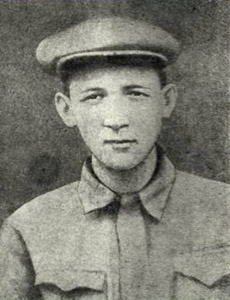
1946: Walter Grimm and Karl Mumm, judicial murderers

Our friends at Capital Punishment UK favored us with an absolutely fascinating story for the post-World War II execution farm manager Walter Grimm and Gestapo officer Karl Mumm for orchestrating the 1942 hanging of one of Grimm’s Polish slave laborers. The pair falsely charged entire story is a fascinating read.

After the war, Szablewski’s brother was able to bring the matter to the attention of the Allied occupation in Germany, which found that Grimm was exacting revenge for Lütten’s spurning his advances; Grimm and Munn were punished by hanging in Hameln prison on October 8, 1946. There’s a memorial plaque to Szablewski — unveiled in 2003 in the presence of the still-surviving Hildegard Lütten — as well as a Stolperstein (stumbling-stone) unveiled in 2016, both at the Hohenbuchenpark in Hamburg where Szablewski was killed.


copyrighted image authorized for general public use by Bully59.

On this day..

1915: Cerkez Ahmed, disposable fanatic

On this date in 1915, Ottoman major Cerkez Ahmed (often Ahmet) hanged in Damascus.

The officer had been an important figure months earlier in the opening campaigns of Armenian genocide in the eastern province of Van where he operated as a paramilitary chief that verged so close to a brigand that he was eventually treated as one. Most egregiously, when two reformist Armenian parliamentarians named Vartkes Seringulian and Krikor Zohrab were arrested and deported to Syria, it was Ahmed who ambushed and murdered them.* (He was also the assassin in the prewar years of opposition journalist Ahmed Samim, but he’d long since been amnestied for that horror.)

Although in this he was enacting the state’s own policy, his proclivity for gorging himself on the valuables of his victims provided an impetus — a pretext, really — to eliminate him. The official communiques between officials determining his fate (and that of an associate) paint a grim and cynical picture. The following quotes can be found piecemeal in a number of sources, but they’re marshaled comprehensively in the open source volume Documentation of the Armenian Genocide in Turkish Sources under the heading “The Case of a Special Organization Major”.

The brigands Halil and Ahmed visited me today. They stated that having completed the massacres in the Diyarbekir area, they came to Syria to do the same for which purpose they said they are ready to receive the orders. I have them arrested. Awaiting your excellency’s orders.

-Telegram from the governor of Aleppo to Cemal Pasha, one of the “Three Pashas” who ran Turkey as a triumvirate


I feel dishonored. I served my country. I desolated Van and environs. Today, you car’t find a single Armenian there … I killed off the Armenian Deputies Zohrab and Vartkes. I grabbed Zohrab, threw him down, took him under my feet and with a big rock crushed his head — crushed and crushed until I killed him off.

-Ahmed, complaining to the intelligence officer Ahmed Refik (according to the latter’s postwar account)


In as much as I am convinced that Cerkez Ahmed committed these crimes by the order of Diyarbekir governor Reshid,** do you still find the liquidation of Ahmed absolutely necessary? Or, should I be merely content with Halil? Kindly respond by tomorrow evening.

-Cemal to fellow triumvir Talaat Pasha


His liquidation in any case is necessary. Otherwise he will prove very harmful at a later date. Talat.

-Talat’s reply to Cemal (on September 15/28, 1915)


The verdict against Cerkez Ahmed is execution. The requisite step will be taken in Damascus tomorrow morning.

-Cemal’s order (on September 16/29)

And he was.

“Undoubtedly Cerkez Ahmed was a scoundrel who deserved to be hanged not once but nine times,” mused the historian Ziya Sakir — who published these ciphered messages in 1943. “With three words uttered by administrative chief Talaat, the life of this creature, who was exploited for the sake of fanatic partisanship, was snuffed out.”

Many years later, Cemal Pasha’s chief of staff Gen. Ali Fuad Erden would reflect on this affair in his memoirs,

Indebtedness to given executioners and murderers is bound to be heavy … those who are used for dirty jobs are needed in times of necessity [in order to shift] responsibility. It is likewise necessary, however, not to exalt but to dispose of them like toilet paper, once they have done their job.

* Reshid Akif Reshid, an Ottoman senator and briefly a state councilor during World War I, provided noteworthy testimony to the postwar Ottoman parliament about the Armenian genocide, detailing the systematic use of extralegal “brigand” paramilitaries in conducting the slaughter: official orders from Istanbul to a provincial official ordered various Armenian communities “deported”; simultaneously, the ruling Committee of Union and Progress “undertook to send an ominous circular order to all points [in the provinces], urging the expediting of the execution of the accursed mission of the brigands. Thereupon, the brigands proceeded to act and the atrocious massacres were the result.”

** The governor referred to here is Mehmed Reshid, one of the genocide’s most enthusiastic agents and “the butcher of Diyarbakir” in Armenian memory. He was arrested after the war and might have been a candidate for this very blog but escaped the prospect of hanging by breaking out of prison and committing suicide when on the verge of recapture.

On this day..

Feast Day of St. Maurice

September 22 is the feast date of early Christian martyr Saint Maurice, and of the legendary all-Christian Theban Legion which he commanded.

This legion raised from Egypt is supposed to have converted en masse to Christianity, and suffered the persecution of Diocletian when it was deployed to Gaul and there refused to sacrifice to pagan gods or harass local Christians. The hagiography — and the earliest source is Eucherius of Lyon, a century and a half after the supposed events — holds that the legion stood a decimation to punish its fidelity, and then another, and then another … and then finally they dispensed with the fractional increments and killed the entire remaining 72.9% of them.

Ancient Christian martyrologies of course boast quite a few soldiers but in their day, from late antiquity all the way to Early Modern Europe, Maurice and the Theban Legion had star treatment on the relic-and-pilgrimage circuit. Many bygone political concerns adopted Maurice as a patron: Burgundy, the French Merovingian and Carolingian dynasties, and their successors the Holy Roman Emperors; the House of Savoy; the Lombard kingdom; and of course such cities as Saint-Maurice, Switzerland, St. Moritz, Switzerland.

Notably, Maurice has been depicted as black since the refurbishment of the Magdeburg cathedral in the mid-1200s, when a piece of statuary (still surviving today) marks an apparent pivot from previous white Maurices perhaps reflecting Europe’s contact with Ethiopian Christians facilitated by the Crusades.

Whatever the reason, the black Maurice quickly became the dominant image in Germanic central Europe, which in turn redounded to a reputation as “the first black saint”. For that reason, Maurice is a seminal figure in European artistic representation of black Africans.

On this day..