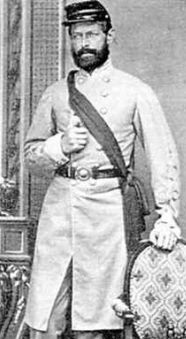
1715: Four Jacobites including George Lockhart’s brother

On this date in 1715, four Jacobites who had participated in the 1715 Jacobite rising were shot together at Preston.

These executions came in the aftermath of the Battle of Preston, with the Jacobite cause in full collapse. It was an affecting scene, the first of many among the Preston captives.

After [Major John Nairn] was shot, Captain Lockhart would not suffer any of the common soldiers to touch his friend’s body, but, with his own hands and the help of the other two gentlemen [about to be executed], laid Major Nairn in his coffin, and, with the greatest composure of mind, performed the last offices to his dear companion: After which, he was shot, and the other two performed the like to his body.

Then the others [John Shaftoe and John Erskine] were shot, and laid together, without a coffin, in a pit digged for that purpose. Which tragical scene being thus finished, Mr. Nairn and Mr. Lockhart were decently buried. (Source)

False Equivalent

The “Captain Lockhart” named here was Philip Lockhart, brother to anti-unionist politician George Lockhart.* George Lockhart, years before, somehow ended up on the committee whose job it was to hammer out the terms on which that union would take place.

As a result, Lockhart’s memoirs record an inside look at the tawdry payoffs that roped Scottish elites into the union arrangement — beginning first of all with “the Equivalent”, a massive British inducement to Scottish lords who had lately gone comprehensively bust gambling on the dot-com scam of New World colonization, the Darien scheme.

the Equivalent was the mighty Bait; here was the Sum of 398,085 Pound Sterling to be remitted in Cash to Scotland (tho’ the Scots were to pay it and much more back again in a few Years, by engaging to bear a Share of the Burthens impos’d on England, and appropriated for Paymnt of England’s Debts.) … here was a swinging Bribe to buy off the Scots Members of Parliament from their Duty to their Country, as it accordingly prov’d: For to it we may chiefly ascribe, that so many of them agreed to this Union. The Hopes of recovering what they had expended on the African Company, and obtaining Payment of Debts and Arrears due to them by the Scots Government (it being articled in the Treaty, that it should be expended this Way) prevail’d upon many to overlook the general Interest of their Country.

Just Deserts

This, however, was not the reason that Philip et al were first in line for punishment after Preston. Instead, they were in trouble because they were British officers who had deserted.

At least, that was the crown’s position. As a legal matter, it wasn’t quite that simple: the “deserters” weren’t on active duty, but rather, were half-pay officers.

This ambiguous category had been introduced as a sort of reserve system to keep idled officers available to the army, but developed into a general dumping-ground of incompetents, invalids, and retirees (half-pay could be used as an ad hoc pension) in an army still only semi-professionalized. Moreover, according to Margaret Sankey, the system

was thoroughly corrupt by 1715. Much of the half-pay list was made up of men who were unfit to be called back into active service, while many of the commissions had been sold to brokers for an immediate cash settlement … [some officers] saw half-pay as a well-deserved personal gift from Queen Anne for … service under Marlborough, and one that carried no obligations to the current monarch whatsoever ‘as no more than a gratuity and a reward for the hazards they had run and the fidelity they had shewn their late mistress.’

It was also a period of dynastic turnover: six different monarchs representing three different houses had ruled England/Great Britain in the preceding 30 years, each man or woman coming to the throne under contestable circumstances. Various gentlemen-officers had sworn various oaths to various entities and they in good faith did not necessarily consider those blanket oaths transferable to the new “British” state and to every Tom, Dick, and German elector who styled himself king of it.

Martial Prowess

These neither-fish-nor-fowl soldiers, then, presented a delicate jurisprudential question. No less a personage than the Lord High Chancellor suggested back in Privy Council that, since half-pay officers would not be eligible to sit on a court-martial jury, they must likewise not be eligible to be court-martialed.

The plurality of the government, and certainly the military, saw it otherwise.

Nevertheless, all concerned were constrained not to be entirely indiscriminate. Of six men prosecuted, the one who was able to prove that he had “thrown up” his half-pay commission walked altogether: he’d been in rebellion, but he hadn’t deserted to do it. Another defendant, who threw himself on the court’s mercy rather than trying to parse a half-reason why half-pay licensed his revolt, received that mercy. (It didn’t hurt that that one was also the child of a (loyal) duke.)

The rest of the lot was abandoned to its fate, leading the correspondent who recorded the particulars of their execution concluded to conclude,

this is a swatch of the usage people may expect that fall into some men’s clutches, from whom all good Christians and true Scotsmen should fervently pray, that God, out of his infinite goodness and mercy, would deliver every honest man!

* These Lockharts were sons of the Scottish judge George Lockhart whose senseless 1689 murder we have previously noticed.

On this day..

1991: Warren McCleskey

Twenty years ago today, Warren McCleskey died in Georgia’s electric chair for the murder of a police officer.

Yet the “question reverberates: Did Warren McCleskey deserve the chair? For the question to outlive him is a damning commentary on capital punishment in the United States.”

The most reverberating commentary on this case was the 1987 Supreme Court decision McCleskey v. Kemp — a landmark 5-4 ruling that still shapes the way judges handle purported racial discrimination in the criminal justice system.

McCleskey (the decision, not the man) “marked the end of an era in death penalty jurisprudence … reject[ing] the last major challenge to the death penalty in America” from the generation of legal tinkering reaching back to the 1960s.

McCleskey v. Kemp was decided on April 22, 1987, at which time just 70 humans had been executed since the “modern” era of capital punishment began in the 1970s. (Today, the count is well beyond 1,200.)

The victims attributed to those 70 were 83% white (77 of 93),* even though blacks and whites are murder victims in roughly equal numbers — suggesting on its face that white victims are treated as disproportionately “valuable” by prosecutors, juries, and/or judges. This was, prospectively, the case with Warren McCleskey himself, an African American who in the course of an armed robbery had gunned down (or maybe not: see below) a white off-duty policeman.

McCleskey’s appellate team marshaled a statistical study by Iowa Prof. David Baldus indicating that black murderers (to a small extent) and killers of white victims (to a greater extent) were indeed more likely to receive a death sentence in Georgia, even when controlling for dozens of other variables. “According to this model,” wrote Justice Lewis Powell for the majority, “black defendants, such as McCleskey, who kill white victims have the greatest likelihood of receiving the death penalty.”

Though it accepted evidence of a discriminatory pattern,** the high court nevertheless ruled that McCleskey was not entitled to appellate relief unless he could demonstrate that that it was at work in his specific case.

And with some reason: the import of granting constitutional relief to a claim of “endemic racism in the system” would open a Pandora’s box of appeals from America’s burgeoning carceral state.

McCleskey’s claim, taken to its logical conclusion, throws into serious question the principles that underlie our entire criminal justice system … if we accepted McCleskey’s claim that racial bias has impermissibly tainted the capital sentencing decision, we could soon be faced with similar claims as to other types of penalty.

Let justice be done though the heavens fall?† Not on our dime, buddy.

This reasoning too backtracked from equal protection concerns that had helped lead a similarly bare 5-4 majority to strike down then-existing capital statutes 15 years before in an appeal originating from the same state — Furman v. Georgia. That old regime had then been replaced with a death penalty system supposedly capable of minimizing arbitrariness. McCleskey served notice that justices wouldn’t be going out of their way to hunt arbitrariness any time soon.

The Court’s remaining liberal lions — it still had such a thing in 1987 — dissented furiously from McCleskey. William Brennan replied to the majority:

Warren McCleskey’s evidence confronts us with the subtle and persistent influence of the past. His message is a disturbing one to a society that has formally repudiated racism, and a frustrating one to a Nation accustomed to regarding its destiny as the product of its own will. Nonetheless, we ignore him at our peril, for we remain imprisoned by the past as long as we deny its influence in the present.

He also found “fear that recognition of McCleskey’s claim would open the door to widespread challenges … seems to suggest a fear of too much justice.”

mccleskey_presentation_314

Brennan was on the losing side of this judgment in a larger historical sense as well — at least, the brief span of history to unfold since Warren McCleskey sat in the electric chair.

McCleskey author Lewis Powell retired a few weeks after issuing it, and not long thereafter expressed regret for the McCleskey decision.‡ Relentless death penalty foes Brennan and Thurgood Marshall would hang up the spurs within a few years. (The circus Senate hearing to place Clarence Thomas in Thurgood Marshall’s seat was ongoing when Warren McCleskey finally died.)

But the deciding vote in McCleskey was cast by freshman Reagan-appointed justice Antonin Scalia, and he’s still going strong.

Scalia was then the Court’s emerging conservative paladin, though he was so new to the Court that McCleskey’s litigators hoped he might be amenable to their suit as a swing vote. Far from it: after Thurgood Marshall’s death in the early 1990s, his donated papers were found to contain a Scalia memo that rubbished the McCleskey majority’s mere consideration of the Baldus study.

I disagree with the argument that the inferences that can be drawn from the Baldus study are weakened by the fact that each jury and each trial is unique, or by the large number of variables at issue. And I do not share the view, implicit in [Powell’s draft opinion], that an effect of racial factors upon sentencing, if it could be shown by sufficiently strong statistical evidence, would require reversal.

Since it is my view that the unconscious operation of irrational sympathies and antipathies, including racial, upon jury decisions and (hence) prosecutorial [ones], is real, acknowledged by the [cases] of this court and ineradicable, I cannot honestly say that all I need is more proof.

Shorter Scalia: racism happens, so what?§ (Ultimately, Scalia opted not to file a separate opinion explicitly making this case; he just signed on to the majority opinion.)

As squishy regret-prone jurists have left Scalia’s Court since, and hard-right ideologues joined it, 1987’s militant reactionary is now one Rick Perry victory away from being the highest court’s median vote. Now that’s moving the Overton Window.

As one might imagine, death penalty jurisprudence at One First Street NE in these latter days has become correspondingly rougher — and the problems raised by McCleskey have scarcely abated.


Although the McCleskey case is what our day’s principal is best known for, he was also caught up in one of the more everyday — but not the less disreputable — toils of the system: the phony jailhouse informant. Very late in the appeals process, McCleskey’s lawyers were finally able to show that the fellow-prisoner who testified that McCleskey admitted the shooting to him was in fact a police plant operating on a quid pro quo to reduce his own sentence. (It’s amazing how often defendants spontaneously confess to these guys; the Troy Davis case which climaxed last week also featured a jailhouse snitch.) Somehow, prosecutors forgot all along to mention that arrangement even when directly asked.

The Supremes ruled, Kafkaesquely, that this issue was procedurally out of order because McCleskey hadn’t raised it earlier, neatly ignoring that the reason he hadn’t raised it was that prosecutors were actively concealing the fact. That’s the subject of the other SCOTUS case under our man’s name, McCleskey v. Zant.

(At issue was whether McCleskey was himself the triggerman. Since he was part of the robbery gang, he was legally on the hook for capital murder whether or not he personally fired the shot; but, his death sentence turned in reality on the jury’s belief that McCleskey was the individual killer — a detail supplied by the suspect police informant. None of McCleskey’s confederates faced execution.)

The final drama this date was a “chaotic” mess of last-minute legal maneuverings, with McCleskey strapped into the chair at one point, then interrupted from his last statement to be returned to his cell, then finally hauled back to the lethal device after an early-morning telephone poll of Supreme Court justices.

* Execution demographic counts via the Death Penalty Information Center’s executions database.

** While the McCleskey court accepted Prof. Baldus’s statistical interpretations even while rejecting their constitutional import, a vigorous pro-death penalty case is made here against the reading that the modern American death penalty is racially discriminatory to any great extent.

† This Latin phrase — fiat justitia ruat caelum — is actually engraved above the sitting justices at the Georgia Supreme Court.

‡ The regret was about more than Warren McCleskey; Powell’s biographer described a complete change of heart in the June 23, 1994 New York Times:

when the retired Justice Powell said he had changed his mind about the McCleskey case, I thought he meant that he would now accept the [Baldus] statistical argument.

“No,” he replied, “I would vote the other way in any capital case … I have come to think that capital punishment should be abolished.” …

Justice Powell’s experience taught him that the death penalty cannot be decently administered. As actually enforced, capital punishment brings the law itself into disrepute.

§ See Dennis Dorin, “Far Right of the Mainstream: Racism, Rights, and Remedies from the Perspective of Justice Antonin Scalia’s McCleskey Memorandum,” Mercer Law Review, 1994.

On this day..

2011: Troy Davis, doubts aside

The reader is likely aware that as of 7 p.m. this evening, Georgia Diagnostic and Classification State Prison local time, a man named Troy Anthony Davis will die by lethal injection — barring some sort of intervention that by this point would rate just this side of the miraculous.

Since Davis already had one of those, an extraordinary 11th-hour Supreme Court intervention the last time he was up for death, you’d have to guess he’s over quota as it is.

The controversial particulars of this case are too voluminously available for this space to hope to contribute much. As Scott Lemieux observes, the affirmative case for Troy Davis’s innocence is not a slam dunk: but the evidence as it exists, of unreliable eyewitness accounts from a nighttime scene, supplied under police pressure and later largely retracted, could today hardly approach the threshold of guilt beyond reasonable doubt. I don’t know if Troy Davis shot Mark MacPhail, and neither do you. Davis dies for it tonight just the same: all the paperwork is in order.

The “demon of error,” Illinois Gov. George Ryan called it, as he emptied that state’s death row. This unsettling matter demands one play bookmaker with a man’s life. Are you as much as 80% sure? Would that be sure enough? Maybe the uncertainties are unusually large here, but at some level this is the calculus for most criminal adjudications, death or otherwise.

“If a case like this doesn’t result in clemency, which is a discretionary process that calls a halt to an execution based on doubt surrounding the integrity of the verdict, then it suggests that clemency as a traditional fail-safe is not adequate,” criminologist James Acker told the Christian Science Monitor. “The Davis case raises doubts about the discretionary clemency process and ultimately raises doubts about whether the legal system can tolerate this potential error in allowing a person to be executed.”

Clemency as an inadequate, dead-letter procedure (Gov. Ryan aside) is familiar to any observer of the American capital punishment scene; Rick Perry thinks he can disdain it all the way to the presidency.

Perry’s state of Texas has something in common with Georgia: the clemency decisions are not directly in the hands of the governor. It’s an interesting arrangement that helps to scatter responsibility for that weightiest of decisions; every actor in the apparatus is in a position to say, “I alone did not have power of life and death.”

Georgia is one of just five states (not including Texas, where the governor has final say and exercises significant behind-the-scenes power over his advisors) where the clemency process is entirely vested in a committee.* The Georgia Governor is a fellow named Nathan Deal, and his autopen will spill much ink in the hours ahead signing form response letters explaining that he doesn’t have anything to do with pardons or clemencies in his state and thanks for writing.

It wasn’t always this way.

A predecessor of Deal’s in that mansion, one with a promising political career ahead, was bayed out of politics for exercising his prerogative to spare Leo Frank because “I cannot stand the constant companionship of an accusing conscience.” The modern office-seeker typically comes with this accusatory module helpfully un-installed, but one can see how there’d be advantages to removing from the office anything to invite experimentation with self-destructive scruples.

The roots of Georgia’s current system go back to the 1930s, when the notoriously corrupt Eurith Rivers held the governorship and used the solemn power of pardons like merchants in the temple — and every bit as lucratively.

The “pardons racket” continued under Rivers’s successor, until a young reformist captured the office and dramatically rewrote the way Georgia did business.

Among those reforms was the progressive concept of rooting out the pardons racket by removing the authority from the governor’s hands. No pardon power, no embarrassing Marc Rich cases. As Gov. Arnall himself explained,

There were those who used to say facetiously, “If you bring the governor a cow, he’ll get you a pardon for your kinfolks, or if you get him a bale of cotton if you do this, or if you get the right lawyer or if you get the right set-up, you can get pardons, pardons, pardons.” So they had gotten a lot of pardons, and the newspapers were after them day in and day out for granting these pardons.

Pardons, pardons, pardons. You can’t get hold of them for a bale of cotton any longer.

These institutions naturally have a life of their own, and what was forward-looking under Georgia’s 1943 constitution seems anything but to Troy Davis’s supporters this day. In the end, the board is still appointed by governors, and it predictably skews towards prosecutors and police — the latter of whom are out for Davis’s blood since Mark MacPhail wore a badge for his day job. It deliberates behind closed doors, and need not record or account for its considerations.

But this is really the lament against the decision itself more so than the process: individual governors are no more bound to broadcast their decision-making process, although some choose to do so. The rules of the game matter, but whatever they might be, it is humans who apply them — human judgment that makes the choices, whether as the first officers on the scene, as jurors, or as a panel of inscrutable bureaucrats with power over life and death.

* Here’s an example of a similar committee in Nebraska granting a pardon, in the relatively less-fraught circumstance of a man 100 years dead.

Part of the Themed Set: Americana.


Update: After a last-second reprieve that extended into a four-hour execution-night drama, the U.S. Supreme Court denied (pdf) Davis’s last appeal. He was executed at 11:08 p.m.

On this day..

1915: George Joseph Smith, Brides in the Bath murderer

(Thanks to Meaghan Good of the Charley Project for the guest post. -ed.)

On this day in 1915, serial uxoricide George Joseph Smith was hung by the capable John Ellis at Maidstone Prison in the UK.
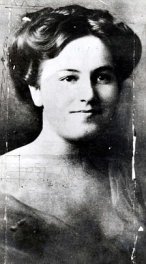
Smith had committed three murders and various forms of larceny as well; he’d earned his noose several times over.

Two things tend to trip people up when they’ve seemingly committed the perfect crime: either they brag about it to impress others, or they repeat the crime using the same methodology as before, since it worked so well the first time. Either of those actions greatly increases the risk of the criminal’s getting caught.

Smith made the latter mistake. He was in a sense a victim of his own success.

Smith was born on January 11, 1872. His criminal record began when he was sent to a reformatory at nine and served a seven-year sentence. In young adulthood he was in and out of prison on theft- and fraud-related convictions.

His complicated marital career began when he married Caroline Beatrice Thornhill, a domestic servant, in 1898. Smith persuaded her to steal from her employers. Caroline served time in prison as a result, and implicated her husband, who got two years for his role in the thefts.

After George Smith’s release, Caroline thought it wise to put a few thousand miles between herself and her estranged husband, and so she left the UK for Canada. She never filed for divorce, however.

Smith remained legally married to her for the rest of his life, so none of his numerous other marriages were legal.

Unlawfully Wedded …

The guy wasn’t good-looking, but he could charm like any good con artist. A year after his marriage to Caroline, Smith bigamously married another woman. He cleaned out her saving account and then deserted her.

Between 1908 and 1914, he married no fewer than seven additional women, usually under an alias, and deserted most of them after a short time, sometimes only a matter of days — but not before he helped himself to their possessions and bank accounts.

As true crime writer Harold Schechter tells it in his book The Serial Killer Files: The Who, What, Where, How, and Why of the World’s Most Terrifying Murderers:

Smith initially limited himself to scamming gullible spinsters out of their life savings by luring them into bigamous marriages … The moment Smith had his hands on his new bride’s money, he would disappear. Usually telling her he was going out on an errand — to pick up a newspaper or buy a pack of cigarettes — he would never return. On one occasion, he brought his newlywed wife to the National Gallery of Art and, after viewing some paintings, excused himself to go to the bathroom. She never saw him — or her life savings — again.

That particular bride was named Sarah Faulkner. Smith had already plundered £350 in cash from her and her jewelry as well, and while she was waiting for him to return from the loo he was back at their hotel, swiping her clothing and the rest of her money.

The only wife that didn’t fit this pattern was Edith Pegler.

Smith was away from her side for months at a time on “business trips” and when he returned it was always to ask for money, but he never left her for good and they remained together for seven years. As to whether he actually harbored some form of affection for her or whether he just didn’t want to kill his cash cow while it was still milkable, we can only speculate.

Yet all these women were, in a sense, lucky.

Smith may have broken their hearts and taken their cash, but he left them their lives.

… ‘Til Death Do Us Part

The first unlucky wife was Bessie Mundy, whom Smith murdered on July 13, 1912.

They’d married in August 1910, but he left her after persuading her to give him £150 in cash. On the way out the door, he accused her of giving him a venereal disease.

Eighteen months later, Bessie ran into Smith on the street. Somehow, the charmer got his ex to forgive him and resume their relationship.

In fact, Smith wanted to get his hands on Bessie’s £2,500 inheritance, but it was in trust and he couldn’t touch it.

After their reunion, the couple drew up mutual wills, naming each other as beneficiaries. Bessie willed her husband £2,579. Less than a week later, she was mysteriously dead.

Smith rented a house for them in Herne Bay and had a new cast-iron bathtub installed. Tragically, Bessie drowned in the bath. Her husband said he’d been out buying dinner and returned to discover the body.

Since Smith claimed his bride suffered from epilepsy and that she’d had a seizure the day before she died, it was easy to believe she’d simply had an unfortunate accident.

In spite of his newfound wealth, Smith had Bessie consigned to a pauper’s grave and even returned the slightly-used bathtub to the ironmonger for a £1 17s. refund.

This, perhaps, is where Smith might have counted himself lucky and checked out of the homicide business — or at least thought about a different m.o. Instead, hubris and habit got him hanged.

The Brides of Bath murder victims: from left to right, Bessie Mundy, Alice Burnham, and Margaret Lofty.

Next to go was Alice Burnham, who was making a goodly living as a nurse. Smith married on November 4, 1913, and became her widower on December 13.

Alice and her new husband were honeymooning at a seaside boardinghouse in Blackpool when she drowned in the bathtub while he was supposedly out getting eggs.

Smith, who claimed she had a weak heart, had insured her life for £500. She too was buried on the cheap.

Margaret Elizabeth Lofty died in her London home a little over a year later, on December 18, 1914. Newspapers reported she had drowned in the bathtub while her husband — identified as Robert Lloyd — was out buying tomatoes. He and the landlady found the body. Lofty and “Lloyd” had married only the day before and, appropriately enough, the ceremony was performed in the city of Bath.

Although it was initially classified as death by misadventure, Margaret’s murder ultimately lead to Smith’s downfall.

Rotten luck, it was: Alice Burnham’s father read an account of her death in the newspaper and, even though the husband had a different name, he couldn’t help but notice that Margaret’s death was suspiciously similar to his daughter’s.

Joseph Crossley, who was the couple’s landlord at the time of Alice’s death, noticed the same thing. Since both the Burnhams and Crossleys had taken a dislike to Smith from the get-go, they both wrote the police, asking them to open an investigation.

Authorities quickly determined that George Joseph Smith and Robert Lloyd were the same man. They sure had the same playbook.

Margaret had made out a will just hours before she died, naming her husband the sole heir to her estate. She had also withdrawn her life savings from the bank the same day, and three days before she had taken out a £700 life insurance policy on herself, with her husband as the beneficiary. Ka-ching.

When the grieving widower showed up at the insurance office to collect on Margaret’s policy, he was arrested. Lloyd/Smith was initially charged with putting a false name on a marriage certificate, but bigamy and murder charges would follow fast.

When news of the arrest was published, a police chief from Kent read the story and told the London police about Bessie Mundy’s death, which was strikingly similar to the other two.

Forever Hold Your Peace

But how could he could have drowned the women in the tub, without leaving marks of violence on their body?

Margaret had only a small bruise on her elbow. For answers, the police turned to renowned pathologist Bernard Spilsbury. The first thing he did was exhume the bodies to determine whether the women had, in fact, drowned. They had.

After experimenting with the very same bathtub Margaret Lofty died in, he determined how it might have happened. John Brophy, a crime writer, describes it chillingly:

With honeymoon playfulness he would enter the room where his bride was already in the bath, admire her naked beauty, bend over her fondly, and, still murmuring endearments, hold her feet. Suddenly, he would tug her feet upward, jerking her head at the end of the bath, below the water, so that in a few moments she would be drowned with no bruises on the body or other signs of assault or resistance.

Effective. Actually, you can see why he stuck to his system.

When Smith went to trial, it was only for the murder of Bessie; British law didn’t permit him to be tried for multiple murders in one go. However, the prosecution wanted to bring evidence in the Lofty and Burham deaths into the trial, arguing that they indicated a criminal “system.”

The judge allowed it, setting a precedent that would be used in later criminal cases.

In pretrial investigations later described in court, Spilsbury demonstrated his murder theory using Bessie’s bathtub and a female police officer in a bathing suit. It worked all too well: she lost consciousness immediately and they had to drag her out of the tub and perform artificial respiration to revive her.

No wonder the jury was only out for twenty-two minutes before it delivered a guilty verdict.

Caroline Thornhill, Smith’s legal wife, returned to Britain for his trial. She married a Canadian soldier the day after his execution.

The “Brides in the Bath” case has remained vividly alive in British memory.

The historian Harold Nicholson compared Smith’s behavior to Adolf Hitler’s in his 1939 book, Why Britain is at War; Smith was mentioned in novels by Evelyn Waugh, Agatha Christie and Dorothy Sayers, and in 1952 the case was made into an episode for the true-crime radio show The Black Museum.

[audio:http://www.archive.org/download/OTRR_Black_Museum_Singles/BlackMuseum-03-TheBathTub.mp3]

More recently, in 2003 the murders were featured into made-for-TV movie called The Brides in the Bath.

Warning: Video contains NSFW naked ladyparts. Oh, and homicide.

At least two plays, Tryst and The Drowning Girls, are based on the story. In 2010, the author Jane Robins published a book about the case, called The Magnificent Spilsbury and the Case of the Brides in the Bath.

Part of the Themed Set: Branded.

On this day..

1994: Glenn Ashby, abruptly

On this date in 1994, Glenn (or Glen) Ashby was hastily hanged at Port of Spain, Trinidad and Tobago.

Ashby’s strange and internationally condemned (pdf) case was a milestone en route to the creation of the Caribbean Court of Justice.

Constrained by a 1993 legal decision from the British Privy Council — still the court of final appeal for Commonwealth Caribbean countries — to the effect that death-sentenced prisoners who awaited execution for more than five years were inherently being subjected to “cruel and inhuman treatment,” Trinidad raced to hang Ashby before his five years ran out. Since Ashby had been sentenced on July 20, 1989 (he stabbed a guy to death during a burglary) that newly-discovered deadline was practically on top of them.

Ashby’s date with the hemp was scheduled for July 14, but his lawyers appealed to the Privy Council. However, in spite of an undertaking by Trinidad and Tobago Attorney General Keith Sobion that the execution would wait on the Council’s ruling, Ashby was hurried to the gallows around 6:30 a.m. Minutes later, word arrived that the Privy Council had actually granted the stay.

Needless to say, hanging a fellow while his appeal was still pending got some legal briefs in a twist.

“I’m disgusted that a country can sign international human rights law and then execute one of their citizens while an appeal is still pending,” death row barrister Saul Lehrfreund total The Guardian.* “From the information I have, this is a summary execution, it’s judicial murder.”

Most Trinidadians felt otherwise when it came to Ashby’s hanging.

And indeed, the jurisdiction of the Privy Council, and especially its reluctance to sanction capital punishment, became particularly controversial in the region during the high-crime 1990s; a similar execution hurried to circumvent the body took place in St. Kitts and Nevis, with similar post-hanging recriminations.

This perceived overseas meddling in local criminal justice helped bring about the creation of the Caribbean Court of Justice as a potential alternate court of last resort. But in the decade since its putative establishment, actual full-on adoption of the CCJ continues to lag: even though the court is actually based in Port of Spain and has judges from Trinidad and Tobago, that country has still not replaced the Privy Council with the CCJ as a court of final appeals.

(The CCJ also handles regional treaty disputes, but overall has “a paltry case load”.)

* July 15, 1994.

On this day..

1938: Anthony Chebatoris, in death penalty-free Michigan

This post was contributed by Andrew Gustafson, a writer and cartographer based in Brooklyn, NY. Andrew’s work can be found on his website, and he regularly blogs about New York City history and culture for Urban Oyster Tours.

On this date in 1938, Anthony Chebatoris was hanged at the federal prison in Milan, Michigan, becoming the only person executed in Michigan since it gained statehood in 1837.

Chebatoris and an accomplice, Jack Gracy, rolled into Midland, Michigan on September 29, 1937, with the intention to rob the Chemical State Bank. They never did get their hands on the cash, and only one of them would leave the town alive, though with a proverbial noose dangling from his neck. The two men, armed with a pistol and a sawed-off shotgun, entered the bank and approached the bank manager, Clarence Macomber, with guns drawn. In the ensuing scuffle, Chebatoris shot Macomber and another bank employee, Paul Bywater. Upon hearing the shots, Frank Hardy, a dentist whose office was next to the bank, grabbed the loaded deer rifle he kept handy and went to the window to see what the commotion was about. As Chebatoris and Gacy abandoned the botched robbery empty-handed, Hardy began firing at the fleeing robbers, hitting Chebatoris in the arm and causing him to crash the getaway car he was driving. As the wounded men looked for another escape route, Chebatoris spotted a uniformed truck driver named Henry Porter, whom he mistook for a police officer, and shot him. The men then tried to hijack a truck to make their escape, but as Gacy attempted to climb into the cab, the sharpshooter Hardy shot him in the head from 150 yards away, killing him instantly.* Chebatoris took off on foot and was apprehended a short distance away, exhausted and bleeding.

Chebatoris would survive his injuries, as would the bank employees Macomber and Bywater. But the innocent bystander Henry Porter put our convict on the road to the gallows: after two weeks in the hospital, Porter would succumb to his injuries, and murder would be added to the charges against the surviving bank robber. Michigan had outlawed the death penalty for murder in 1846, becoming the first U.S. state to do so. But Chebatoris found himself subject to a legal system that had been changed by New Deal politics and the public’s panic over escalating violence and criminality. Federal prosecutors took on the case, under the authority of the National Bank Robbery Act of 1934, which was passed in response to the rash of bank holdups across the country. The law gave the federal government the authority to prosecute anyone involved in the robbery of a bank that was a member of the Federal Reserve System or the newly created Federal Deposit Insurance Corporation. Unluckily for Chebatoris, Chemical State Bank was a member of both.

With a mountain of evidence against him, Chebatoris was easily convicted, and on November 30, 1937, he was sentenced to death by federal judge Arthur Tuttle. The case set off a political controversy in Michigan, one that would pit an anti-death-penalty governor against federal judges and prosecutors who wanted the sentence passed down and carried out in the state. Under the federal statute, federal death sentences could only be carried out in states that had their own death penalty. While Michigan had long abolished capital punishment for murder and other crimes, it still kept an obscure law on the books allowing execution for treason (which has never been exercised, as it is unclear how one would commit treason against the state of Michigan). This loophole allowed the federal capital prosecution and execution to proceed within the confines of the staunchly abolitionist state.

In response to the decision, Michigan Governor Frank Murphy said, “There hasn’t been a hanging in Michigan for 108 years. If this one is carried out in Michigan, it will be like turning back the clock on civilization.” Illinois, which had its own electric chair, offered to finish off Chebatoris, but Judge Tuttle ordered that the execution should proceed in Michigan, noting, “The just verdict having been returned, the law was mandatory in the three respects, namely that the penalty should be death, that it should be hanging, and that it should be within the state of Michigan. These last two requirements resulted from the fact that Michigan has one statute providing for the death penalty by hanging. If the sentence had been different in any one of these respects, it would have been unlawful. I have neither the power nor the inclination to change the sentence.”

Chebatoris was transferred from the Saginaw County Jail, where he had been held throughout his trial, to the federal prison in Milan. At 5 a.m. on July 8, 1938, he was brought to the gallows, and before 23 witnesses, including an inebriated hangman named Phil Hanna, he was hanged. In the middle of the night before the execution, Hanna had arrived at the prison demanding that his three drunken friends be admitted to the hanging. After an argument with the warden and a call to the director of the Federal Bureau of Prisons, Hanna was allowed to proceed with execution, and the warden acceded to his demands (though at the time of the execution, the warden barred the three friends from the proceedings, knowing that the room was too dark, and Hanna too drunk, for him to notice their absence).**

Chebatoris’ execution was both a unique event and a bellwether for things to come in the federal death penalty system. Since 1927, he is the only person to be executed for a murder committed in a state that does not have its own death penalty statute. After World War II, executions, both federal and state, went into a steep decline across the United States, culminating in the 1972 Supreme Court decision Furman v. Georgia, which struck down every capital punishment statute in the land. Four years later, the death penalty was revived in Gregg v. Georgia, and it took barely six months for states to resume executions. The federal government was slower, however, and the first post-Furman federal death penalty statute did not appear until 1988. Since that date, however, we have seen the steady expansion of the federal death penalty, building on the precedents set by the National Bank Robbery Act. Rather than targeting bank robberies, the federal government has used the death penalty to take aim at other perceived scourges, employing it is a weapon in the various domestic “wars” on crime, drugs, and terrorism.

In the past twenty years, the federal death penalty has been transformed from a seldom-used punishment for pirates and crimes committed in the territories to an expansive weapon that can be imposed in a wide range of jurisdictions, leading the Criminal Defense Network to conclude that “virtually every homicide occurring within federal jurisdiction is now death-eligible.”† The greatest expansion of the federal death penalty came with the 1994 Violent Crime Control and Law Enforcement Act, which greatly expanded federal jurisdiction and authorized the death penalty for nearly 60 different crimes. And the reach of the federal death penalty has continued to expand, even into states like Michigan that have rejected capital punishment.

There are currently 58 people sitting on the federal death row, nine of whom committed their crimes in states that either do not have a constitutionally valid state death penalty statute or have active moratoriums on the death penalty.‡ Interestingly, all of those nine were sentenced to death during the tenures of Attorneys General John Ashcroft and Alberto Gonzalez, and their decisions to pursue capital prosecutions marked a departure from the actions of their predecessors. Early in his term, John Ashcroft revised the U.S. Attorneys Manual and removed language about the Department of Justice’s policy towards seeking the death penalty in states that did not have their own capital punishment statutes. Previously the manual stated that in these states, “penalty-driven decisions to file federal charges are inappropriate.” That language was removed, and presumably this opened the door for the increase in prosecutions, convictions, and death sentences handed out in federal districts located within abolitionist states. Since Chebatoris’ execution, no one who falls into this category has been executed, and current Attorney General Eric Holder has signaled a return to the earlier practices, meaning the federal government will be less inclined to pursue these kinds of cases. Nevertheless, it is likely that at least one of these nine will eventually be executed.

When that happens, Anthony Chebatoris will no longer be a solitary historical footnote.

* Hardy was a hero, but he is not nearly as celebrated as another bank robbery foiler, Northfield, Minnesota’s Joseph Lee Hayward, who is remembered annually at the town’s “Defeat of Jesse James Days.” Perhaps Midland could build its own tourist attraction around Hardy?

** For a detailed account of the case of Anthony Chebatoris, read Aaron Veselenak’s article in the May/June 1998 issue of Michigan History Magazine, “The Execution of Anthony Chebatoris.”

† From Burr, Dick, David Bruck and Kevin McNally (2009). “An Overview of the Federal Death Penalty Process.” Capital Defense Network.

‡ These death row inmates are: Carlos Caro (WV), Donald Fell (VT), Marvin Gabrion (MI), Dustin Honken and Angela Johnson (IA), Ronald Mikos (IL), Alfonso Rodriguez (ND), Gary Sampson (MA), and Kenneth Lighty (MD). For a description of their cases, visit the Death Penalty Information Center. All are held in the Federal Correctional Complex in Terre Haute, IN, with the exception of Gary Sampson, who is being held in New Hampshire. For more information on these cases, visit the Death Penalty Information Center.

On this day..

1790: Thomas Bird, the first federal execution under the U.S. constitution

This date in 1790 saw the first federal execution under the auspices of the recently ratified U.S. Constitution, when English mariner Thomas Bird hanged in Portland, Maine. (At the time, still part of Massachusetts.)

This book is also available here, and via the author’s Portland, Me., History Blog, or on order from any bookstore.

Today, we’re pleased to interview author Jerry Genesio, whose Portland Neck: The Hanging of Thomas Bird compellingly reconstructs this once-forgotten story — a small British slave ship making landfall in a North American city only recently torched by the British, where it is found that its violent captain has been murdered at sea in unclear circumstances.

In the aftermath of the American Revolution, the one man to pay life for John Connor’s life was the one British sailor aboard the ship.

Besides a captivating account of an 18th century American capital trial, Portland Neck features biographies of all the principal characters. Portlanders will also especially enjoy a 25-page appendix on the topography of the town at the dawn of the American Republic.

This was a British subject who killed a British victim on a British ship in international waters. Was there any question of whether a U.S. court had jurisdiction?

The people who were on the vessel when it was captured — one was British, one was Norwegian, one was American, and there was a 12- or 14-year-old African boy named Cuffey.

They came under U.S. jurisdiction because in the constitutional convention (article 3, section 2), the federal courts were given jurisdiction of admiralty and maritime cases.

The Supreme judicial court in Massachusetts — Maine was part of Massachusetts then — apparently considered bringing the case before its judges, but then the constitution overruled that when it was ratified.

And then they had to wait for the federal courts to be organized, because they didn’t exist yet. They languished in jail for almost a year while the courts were being organized.

In Chapter II, you describe Thomas Bird’s ship, the Mary, operating on the Guinea coast. It’s a small ship basically working the coast and rivers, making small sales of one or two slaves to the large slavers waiting to cross the Atlantic. There must have been whole niches of the slavery industry occupied by these sorts of small-timers.

Oh, yes. The large slave ships that carried several hundred, three, four hundred in their hold — they were too large to get too close to the coast of Africa. So they would anchor perhaps a mile offshore, and they would wait for these smaller ships, like the sloop Mary — Captain Connor was in business with people in London who sent him down there just to go up the rivers to various villages where they knew there were wars going on, and when there were wars, the captives would be sold to slavers. (They also traded ivory and gold.)

When they got slaves, crews like the Mary‘s would go to the ships who had been there the longest, because they knew they would get the best price. They were known to have been there as long as a year trying to fill their cargo, and the slaves they held were liable to die while they waited. Slave ships couldn’t even allow the slaves topside because they would jump overboard if they could and try to swim for shore.

Incidentally, the Google book project has many slave captain logs online. I was able to read about the ports that Captain Connor and Thomas Bird actually visited, and it gave me such a wealth of information, and I could practically see where they were.

Ed. note: here are a few from Genesio’s bibliography, all free at Google books:

You’ve compiled this book despite a paucity of primary trial data, and there are some spots where you’re clearly reading between the lines. How difficult was the historiography on Portland Neck?

There’s not a complete trial record. Even the examination before the court — the scribe tried, apparently, to write down all of their answers, but he did not write down the questions.

My concern is more around the scribe. Was the scribe hearing these answers properly? Was the scribe hard of hearing? One of them was replaced in the process. Was the scribe able to keep up? He was writing with a quill pen, after all.

And then, on top of all of that, they did not indicate on the court record who was the scribe, who did the questioning, and who wrote the answers down. And the prisoner never signed it!

And you felt that at some level, they targeted the Englishman out of this multinational crew.

I believe that people are so influenced by the events of their times — look at World War II and how we viewed the Japanese and the Germans, or the people involved in the war in Vietnam.

These people on the jury, the foreman on the grand jury, many of them were Portland residents whose homes had been burned by the British just 14 years earlier. The war had just ended seven years earlier.

Every one of the court officials on the prosecutors’ side were all officers in the Revolutionary War. [Notably, the U.S. marshal who actually carried out Bird’s hanging, Henry Dearborn. He took part in the decisive Battle of Yorktown and would go on to become Thomas Jefferson’s Secretary of War, as well as the namesake of the city of Dearborn, Michigan. -ed.]

All of these things influence what was going on. And the fact that they acquitted the Norwegian kid and executed the Englishman makes me feel, certainly, that there was a strong influence there that was hostile to Thomas Bird. But what actually happened and how people felt, we’re just too far away — but I suspect that played a role.

Thomas Bird claimed in his dying statement, knowing that he was to be hung in a couple of hours, that he did not kill John Connor. The lawyers desperately tried to get then-President Washington to give him a commutation, and Washington refused to do it.


Information wants to be free, y’all. The newspaper editor tried to sell a broadside with the condemned man’s final narrative, but public pressure eventually forced him to put it in the July 26, 1790 Cumberland Gazette.

How did you come by this story?

When I was working at Portland Public Library and I ran into a couple of lines referring to a Thomas Bird in books by William Willis and William Goold.

In Goold’s book, Portland in the Past, he actually interviewed a fellow named Charles Motley who was in his 90s, and this interview took place in the 1880s. Motley was the youngest child of the jailer who held Thomas Bird, and Charles Motley, and he describes being five years old and being allowed into the cell where Thomas Bird would carve them little toy boats. With a knife! Then when Thomas Bird was executed, there was a note about the jailer’s wife, Emma Motley, taking all seven children away, to the other side of the land from Portland, so that they wouldn’t know what was going on. They were probably playing with Thomas’s boats as he was being hanged. So it was obvious that the Motley family held this Thomas Bird in high regard, and I got to thinking, I want to know more about this guy.

He (Motley) was five years old at the time, and, with his older brother Edward, at the request of Bird, was often admitted by his father to the cell and spent much time there. The prisoner made them toy ships and boats … At the time of the execution, Mrs. Motley, the mother of the boys, took them over back of the Neck to be out of sight of the gallows, as the whole family had become interested in the fate of Bird.

Goold

For a couple of years, I couldn’t find much of anything. Finally, I took the time to go down to the federal archives in Waltham, Mass., I found a little manila folder that was like a bar of gold. It had 12 little sheets written in quill, and it’s as much of a record of the trial as exists.

The other question in my mind is, why has nobody written about this before? I think maybe it’s because it’s something of an embarrassment, which reinforces my belief that maybe this hanging should not have taken place.

Thomas Bird, if they really suspected he was a participant, should have been punished, but probably shouldn’t have been hung. Unfortunately in those days, captains were like gods on their little wooden worlds. Even though, based on the testimony, [the victim] John Connor was a brutal drunk who beat his men mercilessly. Connor murdered his first mate on that voyage.

It’s sad because Bird probably saw America as some sort of refuge — he probably didn’t expect that he might be hanged for this crime. He’d been at sea since age eight, and all through the [American] Revolution he had been on both American and British ships. The British navy kept impressing him and making him serve on British warships, and he kept deserting and signing up for American ships instead.

One other interesting aspect of this story is that when Thomas Bird was looking for a ship to sign on with and signed on with the Mary, he might just have signed up on the HMS Bounty, because the Bounty was tied up at Wapping before its voyage to Tahiti. Had he signed on with the Bounty, he wouldn’t have fallen into American hands, but he might not have fared any better.

How thick on the ground were slaves and slavers in New England at this time?

There were a lot of slave captains, a lot of owners. Their home ports were in Boston or in Portland. Normally, when they came back to their home port, the product they were carrying was rum and molasses. Slaves would be delivered in the South or in the West Indies, separate legs in the triangle trade.

What’s your next project?

I’m working on a family genealogy.

After that, maybe something about Captain John Lovewell. He was a bounty hunter who went hunting for Indian scalps. In 1725 he was living in Massachusetts, and he got the court to authorize 10 pounds per scalp, and he recruited a small army and took off looking for Indians and found the Pequawket here in Fryeburg, Maine. They were not warriors, they were farmers.

Lovewell and a Scaticook named Paugus ended up killing each other at a battle at a pond now called Lovewell’s Pond.

Lovewell is the namesake of the town of Lovell. A couple of people have written Lovewell’s story, but I wanted to write it from the perspective of the Indians. And not only the Indians, but the true perspective — because John Lovewell was a bounty hunter, not a hero. He was willing to kill farmers who hadn’t killed anyone for their scalps.

On this day..

1393: John of Nepomuk, Bohemian rhapsody

This is the date in 1393 when the Catholic patron saint of Bohemia, John of Nepomuk (or John Nepomucene) was tossed from Prague’s Charles Bridge into the Vltava River to drown at the order of the Holy Roman Emperor Wenceslaus.

Baroque statue of John Nepomuk on the Charles Bridge from which he was hurled. (cc) image from Jaguar Julie

A relief detail ((cc) image from Charles Hoffman) on this statue depicts the moment of Nepomuk’s martyrdom.

This Wenceslaus — not be confused with the good King Wenceslaus of song — had a tetchy relationship with powers ecclesiastical and temporal.

But although Wenceslaus did martyr a fellow by the handle of John of Pomuk or Nepomuk, the latter makes this blog because of political tension centuries afterward. Despite the date of his corporeal death, John of Nepomuk is really a counter-reformation saint.

Between the late 14th century and Catholic Austria’s bloody 17th century triumph over Czech nationalism the historical Nepomucene parted company pretty definitively.

The real John of Nepomuk was the General Vicar of the local archbishop, John of Jenstein (or Jenzenstein), whose skirmishes with Wenceslaus over the boundaries of royal authority caused historian Albert Wratislaw to draw a Thomas a Becket comparison.*

In the event, the latest manifestation of that disputatious relationship — the king’s attempt to seize some monastic revenues — caused Wenceslaus to completely fly off the handle and arrest several of the archbishop’s advisors, among whom was our sainted martyr.

Wenceslaus personally oversaw their torture and ordered their drowning, but someone talked him out of the execution part. The king at that point had a sort of mini-Guantanamo Bay situation: he had in hand several people whom he had arrested arbitrarily and tortured, whose release would only further embarrass his own royal self. He therefore prevailed upon them to trade their silence for their liberty.

The other arrestees counted their blessings and accepted this expedient exchange. John of Nepomuk, perhaps because he was already tortured near to the point of death, refused. He was consequently “dragged through the streets to the bridge, there his hands were tied behind him, a piece of wood was thrust into his mouth, his feet were tied to his head in the form of a wheel, and he was thrown into the river.”*

The Nepomucene’s legend really grew after his death: in its most splendidly devotional form, as the proto-martyr for the seal of the confessional, which he supposedly kept as the queen’s confessor when Wenceslaus suspected her of infidelity. (An ironic inversion to say the least, since it was actually John’s more timorous co-accused who distinguished themselves with their silence.)

This is a much more edifying martyrdom altogether, so little wonder that the sourcing on John of Pomuk over the succeeding centuries is a hot mess; later scholars would actually speculate as to whether there might not have been two priests of this name who were both martyred by Wenceslaus, so dissimilar were the legends.

Nepomuk’s elevation to legend, and thereafter to the patron saint of Bohemia, would come in part thanks to a great Czech religious reformer who arose at the end of Wenceslaus’s reign — Jan Hus.

This other, heretical John became woven into the emerging Bohemian national sense; he still remains there today. When the Catholic authorities beat back a Protestant and nationalist revolt in 1620 and imposed Catholicism from above,** Saint John of Nepomuk, martyr, was ready at hand for propagandists of the new order. At least, the legendary, confessional-keeping Nepomuk was ready … because this was not a job for the random cleric-bureaucrat who’d been done to death in some forgotten dispute over rent.

For three hundred years two holy men have been rivals for the reverence of the Cech people. One of them, Saint John Nepomuk, was exalted by the Jesuits, who after the battle of the White Hill in 1620 sought to win back the Cechs to the Roman obedience. … His rival for the position of national hero has been Jan Hus, who, during the reign and under the favour of that same king Wenceslas, led the revolt of the Cechs against the ecclesiastical domination of Rome and the secular domination of Germany, and was martyred as a heretic and rebel at the council of Constance in 1415. From that date until the extinction of the independent Bohemian state by the forces of the Empire and the Counter-Reformation in 1620, Hus was publicly honoured by his fellow-countrymen as the champion of national and religious liberty. From 1620 to 1918 his rival was exalted in his place …†

John of Nepomuk today is depicted in statuary on the Charles Bridge (the spot on the bridge where he was thrown over is also marked with a plaque) and is well-represented throughout Catholic central and eastern Europe. Owing to his patronage portfolios of bridges and flood victims, you might also find the Nepomucene in many a topical posting throughout the world — like the very spot of Christianity’s European triumph, Rome’s Milvian Bridge.

(Somewhat less gloriously, the promulgation of this saint’s name and fame mean it also attaches to John Nepomuk Schrank, a Bavarian immigrant to the U.S. who attempted in 1912 to assassinate former president cum presidential candidate yet again Theodore Roosevelt.)

* Wratislaw, “John of Jenstein, Archbishop of Prague, 1378-1397,” Transactions of the Royal Historical Society, Vol. 7 (1878), pp. 30-57. Wratislaw wrote a now-public-domain book about St. John available here.

** Bohemia’s Catholicization is perhaps the classic case in early modern Europe of the Reformation being rolled back from above and from afar. The recent (and none too affordable) book Converting Bohemia: Force and Persuasion in the Catholic Reformation takes a nuanced survey of Bohemia’s transformation from a Protestant to a Catholic bastion … and as the title suggests, finds many of the Catholic components home-grown.

† R.R. Betts, “Jan Hus,” History, Volume 24, Issue 94 (September 1939), pp. 97–112.

On this day..

1539: Don Carlos Ometochtzin, Aztec heretic

On this date in 1539, the Spanish Inquisition had Aztec noble Don Carlos Ometochtzin (or Don Carlos Chichimecatecuhi, or Don Carlos Ahuachpitzactzin) burned at the stake for reverting to the pre-Columbian indigenous religion.

Just another Mesoamerican depredation?

Surprisingly, this execution stands out as an exception in the first generations of its conquest. It even cost the first bishop of Mexico, Juan de Zumarraga, a reprimand for his excess severity. Why?

Certainly any European Christian would have had trouble with the Inquisition if, like Don Carlos (Spanish Wikipedia entry | English), he had been caught with idols of Xipe Totec in his place.

But it was precisely the point that these weren’t Europeans. In 16th century “New Spain,” syncretisms of Christianity and the native Mexican cults still in living memory were the norm, a scenario recalling early Christianity co-opting the pagan rites it supplanted.*


Respect Xipe Totec’s authoritah!

And that created for the Spanish a problem: how stringently to insist upon an alien orthodoxy for its new subjects? The problem was pragmatic at least as much as it was theological, because the business of winning converts for Christ had to coexist with the business of running an empire. No sense provoking civil war just because the newest souls in the fold don’t have the Te Deum down; Cortes himself, in his initial conquest, had prohibited human sacrifice but not risked closing native temples.* That wasn’t done until 1525.

Over the 1530’s, a campaign unfolded to pare down the many holdover native behaviors — polygamy, idolatry — and cement Christianity. Of particular concern were the “converted” elites who had both means (their social position) and motive (privileges lost to the Spanish) to use nostalgia for the old ways to make trouble.

So, a powerful indigenous priest who “converted” and then went about preaching heretically was investigated by Zumarraga, wielding the Inquisitorial authority, in 1536.

But even that didn’t draw a death sentence.

In Zumarraga’s 19 Inquisitorial trials involving at least 75 suspects, the one and only instance of an Indian being “relaxed” to the secular authorities for execution came in 1539, when Zumarraga was tipped that the hereditary ruler of one of the Aztec Triple Alliance‘s principal city-states was a secret idolator, and a public declaimer of treasonable utterances like this:

Who are those that undo us and disturb us and live on us and we have them on our backs and they subjugate us? … no one shall equal us, that this is our land, and our treasure and our jewel, and our possession, and the Dominion is ours and belongs to us.

Don Carlos was ultimately acquitted of the idolatry stuff, but convicted of heretical dogmatizing.

So far, so good, right? Executions for heresy might be horrible in general, but if you live in a world where they’re routine, surely having your colonial satrap out there calling the empire parasitical, and telling the unwashed masses to go ahead and take multiple wives (Aztec elites seem to have been especially piqued by the lifestyle austerity preached by Franciscan missionaries) is the sort of thing that’ll get you burned at the stake.** And there were plenty more like him out there.

But though the Christianizing campaign of the 1530’s would continue in many forms for decades still to come, the bloodletting which Don Carlos figured to presage was abruptly canceled.

According to Patricia Lopes Don’s “Franciscans, Indian Sorcerers, and the Inquisition in New Spain, 1536–1543,” in Journal of World History, Vol. 17, No. 1,

[a] holocaust was most probably at hand in the spring of 1540. However, when the Council of the Indies in Spain learned of Don Carlos’s execution, they reprimanded Zumárraga, sent a visitador, an inspector-auditor, to New Spain to take away the bishop’s inquisitorial powers, and left him in a state of some humiliation until his death in 1548. All indications were that they feared further such executions would lead to widespread indigenous rebellion in New Spain. As was the case with the Muslims in the Old World, although orthodox Christianity was central to the concept of Spain and the monarchy, when the imperial Spanish needed to choose between religious orthodoxy and the security of the state, they could learn very quickly to be flexible and politique, yet express their concerns in judicious language. In a letter of 22 November 1540, Francisco de Nava, bishop of Seville, explained to Zumárraga that while he understood that he had executed Don Carlos “in the belief that burning would put fear into others and make an example of him,” the Indians, he suggested, “might be more persuaded with love than with rigor.”

When the Inquisition was formally instituted in New Spain in 1571, the native populace was explicitly outside its jurisdiction: its job was to monitor the European population for covert Protestants, Muslims, and Jews.

Although this development has to count as a break for the locals, it’s interesting to note that the theological superstructure of the Spanish policy tension between religious conformity and practical colonialism turned at least in part on a condescending dispute over the “capacity” of Indians to truly become Christian. In that dispute, Zumarraga and his Franciscan order were the ones who thought more highly of the indigenous “capacity”, as against the more skeptical Dominicans; the logical consequence of the Franciscan position was to impose upon those capacious natives the fullest severity of God’s law.

* Though not to be underestimated is the persistence within the citadel of Christendom of everyday folk beliefs, and occasional social movements, at odds with ecclesiastical dogma.

** Treasonous quote and details about the investigation and trial from Richard E. Greenleaf, “Persistence of Native Values: The Inquisition and the Indians of Colonial Mexico”, The Americas, Vol. 50, No. 3 (Jan., 1994)

On this day..

1865: Henry Wirz, for detainee abuse

On this date in 1865, Henry Wirz was hanged in Washington, D.C. for running a notorious Confederate prison camp.

A Swiss-born doctor (“Henrich” was the real handle) whom time and tide found practicing in Louisiana at the onset of the Civil War, Wirz apparently got into the prison-guarding ranks when a war injury left him unfit for the front lines.

But it was front-line fitness in the northern army that would set the scene for his controversial hanging.

The North’s advantage in men and materiel shaped Union strategy as the war progressed, and it eventually caused the Union to halt prisoner exchanges. Exchanging casualty for casualty was a winning strategy on the battlefield, so why return to your enemy a man for a man? Besides,

[Grant] said that I would agree with him that by the exchange of prisoners we get no men fit to go into our army, and every soldier we gave the Confederates went immediately into theirs, so that the exchange was virtually so much aid to them and none to us.

Benjamin Butler (we’ve met him before)

As designed, then, the South began piling up more and more POWs to maintain with its ever-straitened resources late in the war. And if exchange was out, that really only left one form of “release”.


Andersonville Prison survivor John L. Ransom’s view of the prison, from the Library of Congress.

Andersonville — officially, Camp Sumter, located near the tiny Georgia town of Andersonville — was only established in 1864, but acquired considerable notoriety in northern propaganda for the year and change that Wirz ran it. The prisoners didn’t enjoy it much, either.

Wuld that I was an artist & had the material to paint this camp & all its horors or the tounge of some eloquent Statesman and had the privleage of expresing my mind to our hon. rulers at Washington, I should gloery to describe this hell on earth where it takes 7 of its ocupiants to make a shadow.

Union prisoner diary, July 1864. Note the prisoner’s anger at Washington — whose refusal to exchange naturally infuriated its stranded POWs

Out of some 45,000 prisoners held at Andersonville during its existence (not all at one time), nearly 13,000 succumbed to disease and malnutrition.* After the war, photos of wasted survivors inflamed (northern) public opinion, already tetchy over Abraham Lincoln’s assassination. Walt Whitman wrote of Andersonville,

There are deeds, crimes that may be forgiven but this is not among them. It steeps its perpetrators in blackest, escapeless, endless damnation.

Damnation is up to higher powers, of course, but the North wanted somebody to answer for Andersonville on this mortal coil. Lincoln’s successor Andrew Johnson overruled mooted charges against Confederate President Jefferson Davis and his Secretary of War James Seddon, leaving — in that great American tradition — Heinrich Wirz holding the bag.**

Shatner sighting!

The trial had an undeniable aspect of victor’s justice.† Even at the gallows, the Union guards chanted, “Wirz, remember Andersonville!” as the condemned man was readied for the noose, and then dropped. The hanging failed to break the man’s neck, and he strangled as the chant continued.

Southern efforts to reshape the story of Andersonville began in the lifetimes of Wirz’s contemporaries; this fulsome volume supporting the charges answered Jefferson Davis in terms that sound strikingly contemporary:

So long as Southern leaders continue to distort history (and rekindle embers in order to make the opportunity for distorting it), so long will there rise up defenders of the truth of history … To deny the horrors of Andersonville is to deny there was a rebellion. Both are historic facts placed beyond the realm of doubt.

But of course, it does not require denying the horrors of Andersonville to notice the circumstances — the privation of the entire South late in the war — and to wonder that Wirz and Wirz alone was held to account. Plenty of people think he got a bum rap.


Daughters of the Confederacy monument to Wirz. (cc) image from divemasterking2000.


Pro-Wirz marker in Andersonville, Ga. (Click for easier-on-the-eyes version, reading in part, “Had he been an angel from heaven, he could not have changed the pitiful tale of privation and hunger unless he had possessed the power to repeat the miracle of the loaves and fishes”). (cc) image from Mark D L.

Recommended for general reading: the UMKC Famous Trials page on this case, several of whose pages have been linked in this entry. A number of nineteenth-century texts by (or citing) Andersonville survivors are available from Google books, including:

Since this is a controversy of the Civil War — and one that can be engaged without having to get into that whole slavery thing — there have been thousands of published pages written about it, with many more sure to come in future years.

A few books about Henry Wirz and Andersonville

As an interesting aside, Civil War POW camps including Andersonville (but not only Andersonville) gave us the term “deadline,” which had a more startlingly literal definition in the 1860s — a perimeter beyond which prisoners would be shot on sight, which policy could make a handy stand-in for walls. Gratuitously killing an insane prisoner who crossed Camp Sumter’s “dead line” was one of the atrocities laid to Wirz, who we take it would not have been at home to the word’s decreasingly urgent appropriation in the wider culture.

* Wirz’s defense showed, to no avail, that the prisoners and the guards received the same rations, with similarly deleterious effects among both, and that the commandant was on record pleading with his superiors for more.

** Wirz’s attorney claimed that his man was offered (and refused to take) a last-minute pardon on November 9 in exchange for implicating Jefferson Davis.

† Wirz and borderlands guerrilla Champ Ferguson were the only Confederates executed for their “war crimes”. There was at least one other prison guard who faced similar charges of prisoner maltreatment, John Henry Gee; Gee was acquitted and released in 1866. (For more on the latter, see “A Little-known Case from the American Civil War: The War Crimes Trial of Major General John H. Gee” by Guénaël Mettraux in the Journal of International Criminal Justice, 2010.)

On this day..