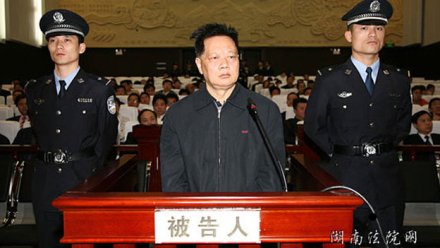
1979: Rahim Ali Khorram and Habib Elghanian, millionaire businessmen

Iranian Revolution firing squads claimed seven lives on this date in 1979, including two multimillionaire businessmen.

One of the businessmen was Rahim Ali Khorram, “an immensely rich contractor who built roads and airports for the government, and sometimes used his 2,000-man work force as a political shock force in support of the Shah.” That quote is from a New York Times profile of Khorram’s son, Hossain, who says that he himself was led out for a mock-execution not long after. (Hossain also says that his father was dead or dying of a heart attack as he was dragged out for execution.)

The charges against Khorram pere consisted of “operating gambling dens, cabarets and a prostitution ring* and feeding a man to a lion in his amusement park.” No lie. He was supposed to have an entire secret necropolis in that park stuffed with the bodies of his enemies. (New York Times, May 10, 1979.)
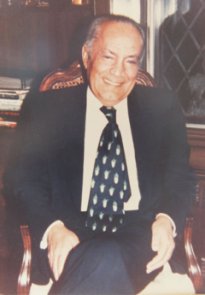
Habib Elghanian

The other businessman was the Jewish-Iranian plastics mogul Habib Elghanian.

Elghanian was the first Jewish person executed during the Iranian Revolution. His death on charges of spying for Israel, fundraising for Israel, and “friendship with the enemies of God” for having met with Israeli politicians, greatly alarmed Iran’s Jewish community: many fled the country, something Elghanian had pointedly refused to contemplate.

Though Elghanian allegedly claimed not to be a Zionist, he had investments and contacts in Israel — and a radio denunciation made clear to what extent such an association would be anathematized going forward.

He was a disgrace to the Jews in this country. He was an individual who wished to equate Jewry with Zionism … the mass of information he kept sending to Israel, his actions to achieve Israel’s designs, the colossal sum of foreign exchange and funds he kept transferring to Israel; these are only samples of his antinational actions; these were the acts used to crush our Palestinian brethren. (Source)

Weirdly, this execution has made news more recently: the Stuxnet computer worm, which is widely thought to have been engineered in Israel to attack Iran, contains the string 19790509. It’s been hypothesized that this apparent reference to May 9, 1979 might allude to Elghanian’s execution.

* Alleged clientele: the already-executed Gen. Nematollah Nassiri.

On this day..

1996: Ravji Rao aka Ramchandra, on questionable jurisprudence

India’s recent re-entry into the death penalty club makes this an apt occasion to recall a past generation when that country was a somewhat more willing hangman than it has been in recent years.

Ravji was among India’s last hangings prior to the near-moratorium in India in the first years of the 21st century.

And considering India’s recent reputation for extreme deliberation, with death sentences routinely stuck in decades-long holding patterns, Ravji’s case was not at all typical. He hanged just two days shy of the third anniversary of his murder — the horrifying slaughter of his three children, his pregnant wife, and his neighbor, all for no discernible reason.

Death sentences in India have to be handed down only for the “rarest of the rare” crimes, but when a two-judge Supreme Court panel (India has a large high court which decides most cases without sitting en banc) heard the appeal in 1995, it had no trouble ruling this filicide easily qualified as rarest-rare. I mean, you’d think, right?

Funny thing.

The judgment in Ravji simply said that “it is the nature and gravity of the crime, but not the criminal, which are germane for consideration of appropriate punishment in a criminal trial.” If the crime is among the most awful murders known and creates “society’s cry for justice against against the criminal,” then it’s among the rarest of the rare: it doesn’t matter if the intent or mental state of the person who carried it out might have been in any way mitigated from full responsibility.

In 2009, the Supreme Court walked that interpretation back, acknowledging that Ravji aka Ramchandra v. State of Rajasthan flatly contravened pre-existing death penalty jurisprudence dating back to 1980* specifying that the characteristics of the criminal counted, too. “We are not oblivious that the Ravji case has been followed in at least six decisions of this Court in which death punishment has been awarded in [the] last nine years,” the judgment noted with some embarrassment. “But, in our opinion, it was rendered per incuriam (ignored the statute of law).”

Subsequent judgments have confirmed that re-reading, and a letter of retired justices even flatly called Ravji’s hanging (along with that of Surja Ram in 1997, under the same since-abandoned jurisprudence) “possibly the gravest known miscarriage of justice in the history of crime and punishment in independent India.”

* A case called Bachan Singh v. State of Punjab was the precedent Ravji erroneously ignored. Bachan Singh delineated several factors that should all be considered in weighing prospective “rarest of the rare” situations:

  1. the manner of the commission of the murder;
  2. the motive;
  3. the antisocial or socially abhorrent nature of the crime;
  4. the magnitude of the crime;
  5. the personality of the victim of murder

On this day..

1928: Charles Birger, bootlegger

On this date in 1928, colorful gangster Charles Birger was hanged in Benton, Illinois.

A sort of social bandit for the Prohibition era, Birger was born Shachna Itzik Birger to a Russian Jewish family that immigrated to the U.S.

Birger was a young saloon-keeper on the make when the U.S. decided to make a go of its first foolish drug war, Prohibition. And in the immortal tradition of drug wars, it made the enterprising purveyor a whole lot richer, and a whole lot violent-er.

While Al Capone‘s Tommy Guns were tearing up Chicago, Birger set up shop in southern Illinois. A literal shop: from his famous speakeasy Shady Rest, he did three-way battle with the (pro-Prohibition) Ku Klux Klan and the rival Shelton Brothers Gang.

This cinematic affair of armored car shootouts, aerial bombings, and gangland assassinations comes off with verve in A Knight of Another Sort: Prohibition Days and Charlie Birger. The bon vivant Birger, bursting with charisma, entertains at his gin joint, aids the misfortunate, corrupts the police, and merrily mobs up Williamson County.

That story reached its conclusion when Birger was arrested for ordering the murder of Joe Adams, mayor of a nearby town who had taken the Shelton Gang’s armored “tank” car in for repairs.

Birger said he hadn’t actually done that, but he went to the gallows grinning, and humorously chatted up reporters before the big show — cementing his myth with that legend-quality indifference to death.

“I’ve played the game and lost, but I’ll lose like a man,” Birger philosophized. “I’m convicted of a crime I didn’t commit, but I’ve committed a lot of crimes. So I guess things are even. We got too strong against the law, and the law broke it all up.” (From the Chicago Tribune, April 20, 1928.)


Birger shakes hands with so-called “humanitarian hangman”
Phil Hanna.


Birger insisted on hanging in a black, not a white, hood — owing to his hatred of the Ku Klux Klan.

Birger is still a legend in southern Illinois, and a live one at that: he’s been in the news lately due to a weird custody fight over the rope used to hang him.

This macabre historical memento also happens to be the last rope ever used for any public execution in Illinois.

On this day..

2007: Taha Yasin Ramadan, Iraqi Vice-President

On this date in 2007, Saddam Hussein‘s former Vice President Taha Yassin Ramadan was hanged for helping conduct the 1982 Dujail Massacre of Shia Iraqis in revenge for an assassination plot against Saddam.

Pushing 70, the Kurd was a longtime pillar of the Iraqi Ba’ath party and had served in a variety of posts since it took power in 1968. For instance, he brought his management expertise to the Ministry of Industry: “I don’t know anything about industry. All I know is that anyone who doesn’t work hard will be executed.”

He was noted for his role in orchestrating Saddam Hussein’s terrifying 1979 internal purge.

While the first operations of America’s 2003 invasion took place on March 19, it was March 20, 2003 local time that the land invasion proper commenced. That made Ramadan’s execution a fourth-anniversary gift to the occupier’s preposterous foreign policy blunder.

Which was all too bad, since Ramadan had also floated a 2002 plan to avert conflict: have Saddam Hussein fight a duel with George W. Bush. Of course, the offer was declined. “An irresponsible statement,” replied the spokesman of a government that was at that moment engaged in a mendacious campaign to justify its coming aggressive war with creative fables about Iraq’s nuclear capacity.

On this day..

2013: Naw Kham, Mekong drug lord

Today in Kunming, China, Burmese drug lord Naw Kham was executed by lethal injection along with three of his associates.

Naw Kham (or Nor Kham), a Burmese Shan, ran a sizable gang of drug traffickers/paramilitaries/pirates, the Hawngleuk Militia, in the Golden Triangle.

In addition to heroin smuggling, this gang also shook down for protection money the many Chinese commercial shippers coming down the Mekong River, and wantonly raided shippers that held out on them. He was untouchable in his lawless zone (with the possible protection of Burmese military to boot) for more than a decade.

Times may have started passing Naw Kham by in the 2000s.*

China’s economic boom has driven more shipping, and a search for investment outlets for Chinese capital, both inevitably increasing its presence on the economically developing Mekong. Ultimately this had to come at Naw Kham’s expense.

He had hit Chinese shippers before to the annoyance of Beijing, but matters came to a head when the kingpin allegedly retaliated against the flouting of his “taxes” by massacring 13 Chinese sailors in 2011 on board two tightfisted merchantmen. (“Allegedly” because Naw Kham blamed the Thai military for this slaughter, and some people believe him.)

At any rate, China put the screws to the drug lord, not only pressuring Southeast Asian governments for his capture but directly hunting him with special forces. Early in 2012, Naw Kham was arrested and his gang broken up after a multinational manhunt; the leader was extradited from Laos to face Chinese justice with five of his associates.** The accused had little recourse but to throw themselves on the mercy of the court.

Executed with Naw Kham — and underscoring the multinational complexion of his outfit — were Hsang Kham (a Thai), Zha Xika (a Lao), and Yi Lai (stateless). The other two defendants received a suspended (reprieved) death sentence, and an eight-year prison term.


Naw Kham being led to an execution van on March 1, 2013. Two hours of footage of the “Mekong River murderers” walking their green mile was broadcast on CCTV News, although not the executions themselves.

The case isn’t entirely closed with his date’s executions, however. China is still pressuring Thailand to bring to book Thai troops whom China says colluded (at the very least) in the Mekong murders. The future direction of that investigation is quite unclear.

* China, Burma, Thailand, and Laos, inked a 2001 pact to regularize shipping on the Mekong. It contained no provision allowing for stateless narco-buccaneers.

** It’s noteworthy that this is a non-Chinese citizen being extradited to China for a crime not on Chinese soil.

On this day..

2012: Three drone strike spies in Yemen

It was reported that a year ago today, Islamic militants beheaded three in the South Yemen towns of Ja’ar (in the Abyan Governorate) and ‘Azzan (in the adjacent Shabwa Governorate) on charges of providing intelligence to help the U.S. to conduct drone strikes.

The executions were announced to the media by text message.

The ongoing shadow drone war in Yemen has steadily drummed that fractious Arabian peninsula state with missiles from flying death robots, piloted from afar (under separate command structures, little difference though that makes to those on the receiving end) by the CIA or the U.S. military’s Joint Special Operations Command.

The deaths one year ago took place in the sunset of President Ali Abdullah Saleh‘s government, when much of southern Yemen was functionally controlled by militants for several months. The Obama administration significantly ramped up drone strikes in south Yemen from late 2011, and kept right on ramping throughout 2012.

The stated target of all this remote-controlled ordnance is Al Qaeda in the Arabian Peninsula, but it’s more than clear that many of the nameless casualties are not militants.

For instance (and this was obviously not the strike being avenged by our February 12 execution in that same city), a May 2012 drone raid on Ja’ar was decried by locals who insisted that not one militant was among the dead.* “Our lives are valueless in the eyes of our government, and that is why civilians are being killed without a crime,” one man told CNN.

Then again, as this post goes to press, Americans have themselves had a bracing reminder of their own killability, courtesy of a leaked memo giving a partial glimpse of the Obama administration’s startlingly expansive assertion of the right to murder American citizens or whomever else on the unilateral say-so of somebody sufficiently senior.

A generation ago, the U.S. had explicit state policies abjuring assassination. Today, there are routine “Terror Tuesdays” at which the chief executive reviews proposed additions to an official kill list.** All of this is claimed as a power of a planetwide war that can never end, but in practice bears an uncomfortable resemblance to something our militants in Ja’ar and ‘Azzan would surely appreciate — extrajudicial execution.†

* Official story: two terrorists dead, “only” eight civilians; locals said around 17 to 26 killed, none of whom were terrorists. The U.S. has been accused of using Vietnam-era “body count” rules and claiming every military-aged male killed by a drone counts as a “militant.” (Contra Vietnam, Washington depresses rather than exaggerates the overall casualty counts.)

** Many drone attacks target not named individuals, but unknown people whose activities from drone or satellite surveillance are held to match a terrorist’s pattern.

† There’s even been a Congressional proposal for a secret court to decide who goes on the secret kill list.

On this day..

2013: Afzal Guru, India parliament attack terrorist

This morning at New Delhi’s Tihar Jail, India hanged the Jaish-e-Mohammad terrorist Mohammad Afzal Guru for the deadly attack on India’s parliament building eleven-plus years before.

In that December 13, 2001 strike, a team of five gunmen infiltrated the New Delhi government building and went to work. No government ministers were killed, but several police officers and a gardener died in the ensuing shootout before the militants were themselves shot dead. Some eighteen others were wounded.

The subsequent investigation led back to Kashmiri separatists, coordinating with the Pakistani Lashkar-e-Toiba.

Afzal Guru, a fruit seller and Jammu and Kashmir native, had found his way into that struggle years before via the Liberation Front founded by Kashmir separatist martyr Maqbool Bhat.

He was condemned for having conspired in the attacks, arranging the attackers’ weapons, and procuring the New Delhi safehouse where the gunmen organized.* (When searched, the place was found stocked with explosives.) Afzal Guru claimed that he was tortured into confessing and denied taking part in the conspiracy.

Though there’s been criticism of the trial’s fairness given the raw aftermath of the shocking attack, India’s Supreme Court confirmed the death sentence years ago:

The incident, which resulted in heavy casualties, has shaken the entire nation and the collective conscience of the society will be satisfied if the capital punishment is awarded to the offender. The challenge to the unity, integrity and sovereignty of India by these acts of terrorists and conspirators can only be compensated by giving the maximum punishment to the person who is proved to be a conspirator in this treacherous act. The appellant, who is a surrendered militant and who was bent upon repeating the acts of treason against the nation, is a menace to the society should become extinct. Accordingly we uphold the death sentence. (from the judgment upholding Guru’s hanging, via this anti-execution pdf pamphlet)

However, actual execution of the death sentence stalled out during the condemned man’s post-appeals clemency petition. It was a sensitive political case, for Kashmir itself (whose towns are reported today to be fortified with added security details), and as a potential irritant to Hindu-Muslim relations and India’s own tense border with Pakistan. (In the weeks following the parliament attack, India and Pakistan had a dangerous military standoff which could easily have become a nuclear war.)

Plus, at the time, actual executions were an extreme rarity in India.

Those times might be changing. While it’s conceivable that Afzal Guru might have lived out his natural life in prison under an empty death sentence, the even more devastating “26/11” plot in Mumbai in 2008 advanced an even more notorious Pakistan-backed terrorist incident to the front pages — and the front of the hanging queue. India broke an eight-year death penalty moratorium on November 21, 2012 when it hanged the Mumbai plot’s lone survivor, Ajmal Kasab.

To judge by nothing but the visible public clues, that execution might have pulled Afzal Guru to the gallows in its train, inasmuch as it ratcheted up the profile, and the perceived stakes, of Islamic terrorism in India. Guru’s hanging was being publicly demanded almost as a logical consequence as soon as Ajmal Kasab’s execution went public.

Kasab’s death also provided a logistical game plan for this date’s hanging: the entire operation arranged in secret, set up to go into immediate motion upon rejection of that long-neglected clemency brief, and the wider public to find out only after the fact.

Kasab and Guru were implicated in extraordinary crimes; it will be interesting to discover whether either the fact of their actual executions or the stealth with which they were conducted will pattern to the more humdrum common-criminal murderers and rapists also lying under sentences of death.

* Three others, SAR Geelani, Shaukat Hussain, and Afsan Guru (no relation), also stood trial for the conspiracy; the former two were condemned, but the sentences vacated on appeal, while Afsan Guru was acquitted outright. All three are free today, or at least are free of of legal jeopardy in this case.

On this day..

2010: Chemical Ali

On this date in 2010, American-occupied Iraq hanged Ali Hassan al-Majid — Saddam Hussein‘s cousin and longtime aide, better known as Chemical Ali.

Ali Hassan al-Majid as the King of Spades in the U.S. invasion force’s playing-card deck of wanted Iraqis.

Al-Majid acquired his chilling nickname for the notorious March 1988 attack on the Kurdish city of Halabja.

That day, after an appetizer of conventional bombing, Iraqi jets dropped a cocktail of multiple chemical weapons — mustard gas, sarin, tabun, and VX, give or take — killing up to 5,000 people.

“It was life frozen. Life had stopped, like watching a film and suddenly it hangs on one frame,” wrote the ethnically Iranian BBC correspondent Kaveh Golestan,* who arrived on the scene after the bombardment.

“It was a new kind of death to me. You went into a room, a kitchen and you saw the body of a woman holding a knife where she had been cutting a carrot. (…) The aftermath was worse. Victims were still being brought in. Some villagers came to our chopper. They had 15 or 16 beautiful children, begging us to take them to hospital. So all the press sat there and we were each handed a child to carry. As we took off, fluid came out of my little girl’s mouth and she died in my arms.”

It was the most emblematically ghastly event in a running ethnic cleansing campaign of the late 1980s, also headed by al-Majid.

The Halabja attack was the last of four separate death sentences Chemical Ali racked up after the U.S. invasion of Iraq, and it was handed down just a week before he stood on the gallows. The larger Kurdish genocide campaign as a whole was a separate death sentence from Halabja; there were also two others for his brutal suppressions of Shia uprisings in the 1990s.

He met all his tribunals defiantly, refusing to enter a plea and then openly embracing the atrocities imputed him. “I am the one who gave orders to the army to demolish villages and relocate villagers,” he once spat in court. “I am not defending myself, I am not apologizing. I did not make a mistake.”

* Himself a casualty of the Iraq War: Golestan was killed when he stepped on a landmine in 2003.

On this day..

2010: Zeng Jinchun, corrupt anti-corruption official

On this date in 2010, a former Communist Party of China (CPC) anti-corruption official was shot … for corruption.

Zeng, former secretary of the Chenzhou Municipal Commission for Discipline Inspection of the CPC and vice secretary of the CPC Chenzhou Municipal Committee, gorged on 31 million yuan ($4.7 million) in bribes from 1997 to 2006, doling out lucrative mining contracts and sinecures in exchange.

Although known in the Hunan coal-mining city as “a modern-day Heshen” — Chenzhou residents whose businesses had been widely subject to Zeng’s crude protection-racket shakedowns set off fireworks to celebrate his arrest — Zeng was all but impossible to dislodge.

Zeng bribed up to higher officials for protection as effectively as he squeezed those below. It’s just another piece of the graft so endemic in China that it’s frankly represented in popular literature. (And has often appeared on the execution grounds, too.)

“Officials, especially high-ranking ones, are basically not held accountable for paying bribes,” a journalist who wrote a book about Zeng told NPR. “This is because China’s judiciary is not independent enough.” Zeng wasn’t even charged with this crime — just extortion.

Zeng’s well-placed protectors defeated at least three investigations. He was only overcome by an order from the very top: President and Party Chairman Hu Jintao, who scribbled onto a secret report of Zeng’s antics,

“To Comrade Wu Guanzheng: Put more effort into investigating corruption in Chenzhou. Signed, Hu Jintao, July 19, 2006.”

Three months later, Zeng was under arrest.

The effects of power, corruption, privilege, and cutthroat economies did not go with him. After all, on the same date Zeng was put to death, officials elsewhere in Hunan province also announced the execution of one Chen Haitao for torching an airport shuttle bus. The blaze killed two and seriously injured three others.

Chen committed the arson to revenge society as he had “blamed his business failure on social injustice,” the court said in a statement.

On this day..

1996: Lem Tuggle, Tim Kaine client

Tim Kaine, who governed the Commonwealth of Virginia from 2006 to 2010 and was just last month elected to the U.S. Senate, had a different service to perform on this date in 1996.

Kaine saw his client, double-murderer Lem Tuggle, to the Virginia execution chamber on December 12, 1996.

In 1983, fresh off parole for a 1971 homicide, Tuggle raped and shot 52-year-old Jessie Geneva Havens.

“From past experience, I would like to talk to an attorney,” he told the officer who arrested him. “I’ll probably tell you the full story later.”

In this selfsame spring of 1983, 25-year-old Timothy Michael Kaine was receiving his J.D. from Harvard Law. He moved to Richmond, Va., with his classmate Anne Holton, daughter of the state’s former governor.

Kaine and Holton married in 1984.

This was also an eventful year for the now-twice-convicted killer Lem Tuggle: together with five other condemned inmates, Tuggle sensationally busted out of Mecklenburg Correctional Center — capturing several prison guards, making up a phony bomb threat, and simply strolling out the gates in their stolen uniforms during the confusion.

The “Mecklenburg Six”* cast a terrifying pall in the headlines of June 1984; it took weeks to recapture them all. Tuggle, sensibly, made a bid for Canada’s death-penalty-free soil, only sparing Ottawa a major diplomatic headache when he stopped to rob a Vermont diner for gas money and got arrested.

Kaine’s path was destined to cross with this notorious convict, but not for some years yet. In the meantime, the idealistic young J.D. in his first year at the bar was getting acquainted with death row when he accepted a pro bono legal appointment to represent condemned killer Richard Lee Whitley.

A lifelong Catholic who had spent a youthful finding-himself year working at a mission in Honduras, Kaine was (and remains) a death penalty opponent. This would later prove a sticky wicket, but mid-1980s Kaine didn’t have a career in politics on his radar, as evidenced by his distinctly impolitic remark that “murder is wrong in the gulag, in Afghanistan, in Soweto, in the mountains of Guatemala, in Fairfax County … and even the Spring Street Penitentiary.”

Later, when he was in politics, Kaine would tell a reporter profiling him during the 2005 gubernatorial campaign that he didn’t want the assignment but would have felt like a “hypocrite” to refuse it. The Commonwealth was less easily overcome than Kaine’s scruples, and Whitley died in Virginia’s electric chair on June 6, 1987.

“I just remember sitting on my back step late and just having a couple of beers and just staring out at my backyard,” Kaine recalled of the night he lost his client.

Having had this first taste of failing with a man’s life on the line while being publicly vilified for his work, Kaine signed on to represent Tuggle in 1989.

By the time Tuggle’s legal rope ran out in 1996, Tim Kaine was a 38-year-old Richmond city council member — the trailhead for his new and now-familiar career in politics.

As Kaine elevated himself into a statewide figure in the early 2000s, his death penalty position came in for some controversy which Kaine finessed by taking the position that while he himself opposed capital punishment, he would enforce the state’s death penalty law in his capacity as governor.**

Death penalty stuff has ample third-rail potential, but especially in Kaine’s gubernatorial race, his own personal legal work at the defense bar became fodder for some truly repellent attack ads by the mouthbreather lobby who tried to put Kaine personally on the hook for Tuggle’s crimes by virtue of having represented the man in court.

* The other five were Linwood Briley, James Briley, Earl Clanton, Willie Leroy Jones, and Derick Peterson. All of these men were also executed.

** That was indeed the case. Gov. Kaine commuted only one death sentence, that of Percy Walton, while allowing 11 others to go forward. D.C. sniper John Muhammad was the most notorious man with Kaine’s signature on his death warrant.

On this day..