2013: Zeng Chengjie, China’s Bernie Madoff

A year ago today, China executed self-made millionaire Zeng Chengjie for corruption.

Once the subject of glowing media profiles (Chinese link) for his entrepreneurship, Zeng was convicted of bilking 57,000-plus investors out of RMB 2.8 billion (US $460 million) which he in turn used to lock up lucrative urban development projects in Jishou.

The case stirred an uproar in China and overseas because Zeng’s daughter vigorously protested the execution on her Weibo page.

Zeng Shen said she was notified of her father’s execution only two days after it took place. The official story would be that Zeng never requested the family meeting; that story was met with incredulity. (And widespread speculation that Zeng’s organs were harvested for medical transplantation.)

“If one day, I’m sentenced to death and told that I have the right to meet my family, I guarantee that I will absolutely ask to see my family,” wrote IT venture capitalist Kai-Fu Lee on one of the country’s most-followed microblogging accounts. “If the court claims that I didn’t make such request after the execution, it must be a lie.”

Moreover, Zeng Shen charged that the whole affair was a political fix-up orchestrated by the successors of Hunan province officials that Zeng pere worked with — and that as a result the executed man’s assets had been snapped up for yuan on the renminbi.

China has made a point in recent years of dialing back capital punishment for white-collar “economic” crimes; most similar cases of fraud or theft result at worst in suspended death sentences, which are de facto prison terms.

On this day..

1950: Chen Yi, 228 Massacre author

On this date in 1950, Taiwan’s former nationalist governor Chen Yi was shot for a dalliance with the Reds.
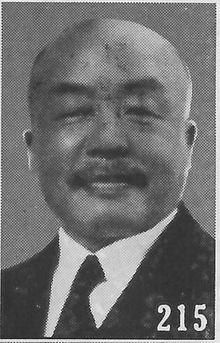
A Kuomintang officer since China’s 1920s Warlord Era, Chen Yi was from 1934 Chiang Kai-shek’s governor of Fujian province — the mainland territory directly across from the island of Taiwan. Chen had the honor at the end of World War II of accepting Japan’s surrender of Taiwan — the occasion commemorated by Taiwan’s unofficial October 25 holiday, Retrocession Day. Postwar, he became governor of that island, back before it was synonymous with nationalist China itself.

His life ended in 1950, when Chiang suspected him of negotiating with the Red Chinese who had overrun the mainland. By that point, however, Chen’s political career was already history, courtesy of the most lasting of his legacies, the 228 Massacre (or more diplomatically … “Incident”).

Taiwan’s new managers — the place had been in Japanese hands since 1895 — made an immediate mess after 1945. Taiwan’s productive economy was essentially siphoned for the civil war the KMT had underway against the Communists, as well as for the venal enrichment of various well-connected mainlanders who hopped over to Formosa for plum assignments that displaced Taiwan’s own local elites.

Billowing inflation fed ethnic resentments, and the whole situation boiled over, as the name implies, on 2/28 of 1947.

On that date, frustrations boiled over* in island-wide protests that turned to riots and even took over administration of Taipei and many other cities. Chen, on whose watch the many grievances had accumulated, suppressed those with enormous violence. Chen regained control of the situation only with considerable violence: well over 10,000 are thought to have been killed in suppression during early March, many of them executed in cold blood by mainland military reinforcements.

An American who had just arrived in China from Taihoku said that troops from the mainland arrived there March 7 and indulged in three days of indiscriminate killing and looting. For a time everyone seen on the streets was shot at, homes were broken into and occupants killed. In the poorer sections the streets were said to have been littered with dead.

There were instances of beheadings and mutilation of bodies, and women were raped, the American said.

Two foreign women, who were near at Pingtung near Takao, called the actions of the Chinese soldiers there a “massacre.” … people were machine gunned. Groups were rounded up and executed.

The man who had served as the town [of Pingtung]’s spokesman was killed. His body was left for a day in a park and no one was permitted to remove it.

While effective in reasserting political power, this didn’t exactly bury the animosities between Taiwanese and mainlanders. It did put an end to Chen Yi’s governorship, however, since it was on his watch that things came to this pass in the first place. Given he then doubled as the author of the bloodbath, he assured himself a place of opprobrium in Taiwanese history.

In 1949, the Kuomintang nationalist government fled rout on the mainland and holed up on Taiwan, implementing an authoritarian state under martial law with a running “White Terror” against dissidence, often broadly conflated with communism. Until political liberalization in the late 1980s, public discussion of 228 was strictly taboo.

Today, there’s enough distance that the event is openly commemorated; indeed, Lee Teng-hui, the politician who embraced Taiwan’s democratic transition around the end of the Cold War, was himself a participant in the 228 protests. There are a variety of memorials and parks remembering 228 in present-day Taiwan … but you’d have to look very hard to find one for Chen Yi.

* The specific boiling point for the protests was a violent confrontation on February 27 when state agents had seized the unlicensed cigarettes of a local peddler. The way things were going, however, there was always going to be something like this to catalyze Taiwanese anger.

On this day..

1905: An unknown spy in the Russo-Japanese War

In the late 1890s and early 1900s, Russia’s imperial ambitions in the east drew it inexorably towards conflict with Japan. This was the period when Russia began constructing the continent-spanning Trans-Siberian Railway linking Moscow to the Pacific port of Vladivostok.

Russian troops came right along with the rails.

On the pretext of protecting its construction gangs, Russian troops occupied Manchuria — and the weakened Chinese Qing dynasy couldn’t do much about it.

But the Japanese could.

Manchuria and Korea (which Russia’s presence also threatened) Tokyo conceived as her sphere of influence. The rising hegemon in East Asia would serve notice in the 1904-1905 Russo-Japanese War that it had now to be reckoned among the world’s great powers.

The decisive land battle in this conflict was the Battle of Mukden, February 20 through March 10, 1905 — a gigantic engagement involving more than 600,000 troops.

In it, Japan cleaned the Russian clock.

The defeat sent a shattered Russian army on a disordered retreat north, to the city of Tieling. The Japanese followed in hot pursuit, so defensive regrouping became impossible and within a couple of days the Russians abandoned Tieling, too.

We are everywhere driving the Russians before us to Kaiyuan,” gloated an official Japanese telegram of Thursday, March 16.

The underwhelming Russian general Aleksey Kuropatkin was there just long enough to get word that Moscow had relieved him of command. By Saturday, March 18, Kaiyuan too was in Japanese hands.*

So it was likely on or about this date in 1905 that a handful of those Japanese forces harrying the Russian flight paused on the outskirts of Kaiyuan to behead an alleged spy.

If this individual’s name is known, I have not been able to locate it — but small wonder. In the charnel house of Russia’s catastrophic defeat, the dead were too numerous to bury.

After Mukden, there would not be many more. It was the last major land battle, and after Japan followed it up with a crushing naval victory that May, hostilities came to a close.


“On the Hills of Manchuria”, a mournful 1906 waltz by Ilya Shatrov.

* The pursuit didn’t last much longer; Japanese forces were themselves too battered and exhausted from the Battle of Mukden.

On this day..

1871: Ma Hualong, Dungan rebel

On this date in 1871, the Qing executed Ma Hualong (or Ma Hua-lung), one of the principal leaders of a 15-year Muslim revolt in northwest China.

Ma was the fifth leader of the Jahriyya, a Sufi order whose founder Ma Mingxin had himself been executed during disturbances in the early 1780s.

By the time of Ma’s ascendancy, the Jahriyya were a major force in Gansu, Shaanxi and Ningxia.

Neither Ma nor any other single person led the Dungan revolt. (“Dungan” was a 19th century term for the ethnicity that’s now known as the Hui.) Rather, a cascading series of ethnic riots led in 1862 — while the Chinese army was absorbed elsewhere with the bloody Taiping Rebellion — to a patchwork of rebellious leaders and movements, operating independently and often viewing one another as rivals.

The Jahriyya was the closest thing to a unifying element among discontented Muslims. According to this volume, though Ma struck a pose of moderation and loyalty, in the Chinese court’s eyes, the disturbances “depend[ed] on Ma Hua-lung.” For the Qing, Ma’s nearly impregnable position at Jinjipu (Chin-chi-pao) and his diplomatic finesse were the lynchpin.

Dispatched to put down the revolt, General Tso Tsung-tang had the prestigious Ma as his primary target: with him gone, the rest of the rebels could be divided and conquered at leisure.

Unable to take Jinjipu by storm, General Tso besieged it unto near starvation, forcing Ma to surrender himself. Notwithstanding his attempts to take all the blame for the revolt on his own shoulders,

Ma was executed, together with twelve members of his immediate family, by the “slicing process”; some eighty of the lesser Muslim leaders were beheaded. Chin-chi-p’u was depopulated, and the surviving Muslims were sent, en masse, into exile or slavery.

Just a drop in a bucket for a conflict with 8 million-plus dead.

The Jahriyya order still exists to this day. And so too, of course, does General Tso — on Chinese restaurant menus.

On this day..

2004: Yang Xinhai, Monster Killer

When I killed people I had a desire. This inspired me to kill more. I don’t care whether they deserve to live or not. It is none of my concern…I have no desire to be part of society. Society is not my concern.

-Yang Xinhai

On this date in 2004, China executed one of its most prolific serial killers ever.

Yang Xinhai was an impoverished migrant worker with previous theft and rape convictions already to his name when he commenced his infamous spree in 1999.

Over the ensuing four years the so-called “Monster Killer” amassed 67 murders and 23 rapes via terrifyingly bold home invasions: he would break into rural occupied rural dwellings under cover of darkness wielding a heavy iron hammer or similar slasher-villain melee weapon, and then just go to town.

“He didn’t leave survivors, and more than a few families were exterminated by his hand,” one newspaper report described. (In fact, about five people are known to have survived Yang’s various attacks.)

The last of his slayings — eight people in two different attacks in Hebei Province villages — occurred a bare six months before Yang himself caught a bullet to the back of his end. A routine police stop in November 2003 made him a little too shifty and prompted beat cops to detain him. Almost immediately the diabolical character of their new capture spilled out.

Yang himself didn’t see the point in resisting the inevitable. He provided a full confession, didn’t bother to defend himself in an hour-long trial on February 1, 2004, and declined to mount any sort of appeal to prevent his swift execution 13 days after that.

On this day..

1931: The Longhua Martyrs and the Five Martyrs of the League of Left-Wing Writers

On this date in 1931, the Chinese nationalists executed 23 Communists at Longhua, including five members of the League of Left-Wing Writers.

Early in what would prove to be the very long Chinese Civil War, the Koumintang government in 1930 mounted a suppression* of Communist outposts. That included military campaigns attempting to encircle communist-held regions, as well as an internal crackdown. It’s the latter that concerns us here.

A Communist-founded League of Left-Wing Writers operating in Shanghai was formally banned by the Koumintang in September 1930. Threatened with arrest, the writers struggled to stay underground but at a January 17 meeting in the British concession area,** British police arrested Li Weisen, Hu Yepin, Rou Shi, Yin Fu, and Feng Keng. They were handed over to the Chinese authorities.


The Five Martyrs: From left: Hu Yepin, Rou Shi, Feng Keng, Yin Fu, Li Weisen (Li Qiushi)

They became the Five Martyrs of the League when they were shot this date in 1931 along with 18 other Communist prisoners, one of them a pregnant woman.

Among the five martyrs, Rou Shi† was particularly close to the great writer Lu Xun, who was heartbroken when he received word of his young protege’s untimely end — “one of China’s best youths,” in his estimation. In hiding himself, Lu Xun composed a “Lament for Rou Shi”:

To long and sleepless nights I’ve grown
accustomed in the spring;
Fled with a wife and babe in arms,
my temples are graying.
‘Mid dream there comes an image faint —
a loving mother’s tear;
On city walls the overlords’
e’er-changing banners rear.
I can but stand by looking on
as friends become new ghosts,
In anger face bayonet thickets
and search for verse ripostes.
The poem intoned, my gaze turns low —
one cannot write such down.
Moonlight shimmers with watery sheen
upon my jet-black gown.

(as translated by The Lyrical Lu Xun: A Study of His Classical-Style Verse)

The discerning present-day visitor to Longhua can pay respects at the Longhua Revolutionary Martyrs Cemetery.

* The suppression claimed, among others, the life of Mao Zedong’s first wife.

** The extraterritorial British concession in Shanghai was a legacy of the opium wars.

† There’s an English translation of Rou Shi’s short story “A Slave Mother” here.

On this day..

2013: Zhang Yongming, cannibal corpse

(Thanks to Meaghan Good of the Charley Project for the guest post. -ed.)

One year ago today, 57-year-old Zhang Yongming was executed in China, just six months after a court in the province of Yunnan convicted him of murder. Zhang, a farmer, was modern China’s answer to Fritz Haarmann: authorities believe he killed young men and boys, cannibalized parts of their bodies and sold the leftover flesh at the village market.

Convicted of eleven murders, he’s suspected of six more.

When young people started disappearing in the neighborhood, the police initially assumed they’d been kidnapped and sold for slave labor, a sad situation that’s all too common in present-day China.

From TruTV:

Witnesses reported that Yongming began selling meat at the local market, which he had never done before, after 1997. The meat, which he sold as ostrich meat, was cured and dried.

When police finally searched Yongming’s house, they found strips of human flesh that were hung up to dry around his house. He kept dozens of human eyeballs preserved in alcohol in bottles, which police said looked like “snake wine.” Investigators said Yongming likely fed human remains to his dogs. In a nearby vegetable garden, police found bones believed to be human.

This wasn’t the first time Zhang had faced the death penalty, either: in 1979, he was convicted of murder and sentenced to death, but the sentence was reduced and he was released from prison in 1997. The government even helped him get back on his feet by giving him a bit of land and a monthly allowance.

But Zhang simply couldn’t stay on the straight and narrow: by the spring of 2008, he’d started killing again, and the murders didn’t stop until his arrest four years later.

Following his conviction in July 2012, he confessed to his crimes and didn’t bother to file any appeals. He reportedly showed no remorse and didn’t offer any apologies for his victims’ families or any explanation for his conduct.


Zhang’s victims.

On this day..

1934: John and Betty Stam, China missionaries

On this date in 1934, Chinese Communists beheaded John and Betty Stam in the Anhui province town of Miaoshu.

The Stams had settled as China Inland Mission proselytizers in the town of Jingde (at their time generally rendered as “Tsingteh”). Betty Stam (nee Scott) had grown up in China, the daughter of a Presbyterian missionary. John was a New Jersey native who had graduated Moody Bible Institute in 1932. They had a three-month-old daughter named Helen Priscilla.

On December 6, 1934, Communist rebels in China’s long-running civil war entered Jingde and seized the foreign family. According to a tribute page kept by a great-nephew of the, John wrote a short note that evening.

Tsingteh, An.
Dec. 6, 1934

China Inland Mission, Shanghai

Dear Brethren,

My wife, baby and myself are today in the hands of the Communists in the city of Tsingteh. Their demand is twenty thousand dollars for our release.

All our possessions and stores are in their hands, but we praise God for peace in our hearts and a meal tonight. God grant you wisdom in what you do, and us fortitude, courage and peace of heart. He is able-and a wonderful Friend in such a time.

Things happened so quickly this a.m. They were in the city just a few hours after the ever-persistent rumors really became alarming, so that we could not prepare to leave in time. We were just too late.

The Lord bless and guide you, and as for us, may God be glorified whether by life or by death.

In Him,
John C. Stam

The author of John and Betty Stam: Missonary Martyr summarizes his subjects’ “inspiring and instructive story” in a blog post here.

A foreboding message, but Christian evangelizing in China had often proved dangerous to its practitioners.

The next day they were marched 12 miles to Miaoshu where they stopped for the night. Facing martyrdom, the couple stowed their daughter away like Moses, hidden in a sleeping bag with John’s last missive and ten dollars that might serve to care for her.

Miraculously, Helen Priscilla would be overlooked when the Stams’ captors came for them on December 8 and marched them through Miaoshu. It’s said that one Chinese vendor made bold to object, and was added to the doomed party for his trouble. At the end of the march, John was forced to his knees and beheaded before his companions’ eyes; Betty and the shopkeep followed him.

Little Helen survived her parents’ ordeal. A Chinese evangelist named Lo found the girl and carried her 100 miles to a mission hospital. She was taken in from there by Betty’s parents and eventually adopted by Betty’s sister and raised in the Philippines before returning to the United States.

Back in China, another missionary, Frank Houghton, was moved by the sacrifice of the Stams to compose a hymn, “Thou Who Wast Rich Beyond All Splendour” (set to an old French canticle, Quelle est cette odeur agréable?).

On this day..

2008: Wo Weihan, spy?

On this date in 2008, Chinese biochemist and businessman Wo Weihan was shot for espionage along with his alleged co-conspirator Guo Wanjun.

Wo had been resident in Austria since 1990, and his daughters Chen Ran and Chen Di were Austrian citizens. In 2004, he returned to his native soil to launch a medical equipment firm in Beijing.

Wo was arrested in China in January 2005 and accused of passing “state secrets” to Taiwan and the U.S. He didn’t have a lawyer until 2006 — by which time he had produced a coerced confession that he tried in vain to retract — and the 2007 trial took place in secret, so the case against him was troublingly opaque at the time of his execution. The verdict publicly released in March 2008 even included such trifles as “discussing the health of senior Chinese leaders” — an actual crime in China but awfully difficult to accept as a factor in a capital case.

“The lack of transparency does nothing to reassure us that the court’s conclusion was the right one,” said a Dui Hua Foundation spokesman.

Allegedly, Wo got information about Chinese ICBMs from missile expert Guo Wanjun, and passed drawings to Taiwanese and American intelligence. Chinese state media have claimed that Wo’s wife was able to open a restaurant in Austria with the payoffs.

His daughters mounted a last-ditch clemency campaign involving European Union officials, Austrian President Heinz Fischer, and U.S. Secretary of State Condoleeza Rice, all to no avail.

On this day..

1969: Liu Shaoqi dies under torture

At 6:45 a.m. on this date in 1969, the Chinese Marxist statesman and intellectual Liu Shaoqi passed away secretly in a room of the Kaifeng Municipal Revolutionary Committee building.

He had not been executed in the literal sense. But his death was the mere bodily consequence of an Orwellian civic annihilation: the onetime President of China, fallen to unperson. Like the Man in the Iron Mask, his identity was secret from his own guards (and later from the crematorium workers who disposed of the remains); his own children did not learn of his death until 1972.

A Communist revolutionary from student days in the early 1920s, Liu was among the first to publicly turn against Mao’s Great Leap Forward. In 1959 Liu succeeded Mao as President of the People’s Republic of China, and led the walkback from the Great Leap’s destructive stab at modernization.

A years-long factional struggle within the Chinese Communist Party would ensue, pitting Maoists against a more reform-minded clique.

Liu and the reformers got the worst of it in the 1960s. Mao and Maoists seized power back in the 1966 Cultural Revolution, and purged Liu as a “capitalist roader” — “China’s Khrushchev” ran one denunciation.

The renegade, hidden traitor and scab Liu Shaoqi and other sham Marxists and political swindlers … dished up the theory of taking the electronics industry as the center … They also said, “The development of a modern electronics industry will bring about a leap forward in our industry, and it will be a starting point for a new industrial revolution in the history of China.” This is a reactionary principle for opposing the principle of taking steel as the key link.*

Liu endured months of frightful public harassment leading up to his September 1967 arrest: there were episodes when Mao’s “Red Guards” broke into his official residence and even plastered Liu’s own walls with anti-Liu placards,** as well as “struggling against” campaigns with mobs of anti-Liu demonstrators hurling abuse while Liu was made to stand in a pose of contrition. The formal allegations, for whatever such things are worth, were that Liu worked as a World War II traitor for the Americans, Japanese, and/or nationalists.†

Liu was badly mistreated in custody, possibly as a way to kill him off extrajudicially or just for the sadistic pleasure of bringing one who once stood so high to the depths of literally wallowing in his own shit. By summer 1968 Liu was suffering from pneumonia, cankered with bedsores, and could only be fed through a nasal tube. His neglectful medical care gradually wasted him to death.

Mao himself died in 1976. A reformist and onetime Liu ally, Deng Xiaoping, eventually emerged as China’s post-Mao leader. Soon thereafter the Chinese Communist Party officially rehabilitated Liu and declared several of his writings, so recently forbidden, to be “Marxist works of great significance.” He has remained an official hero, and political martyr, ever since.

* 1971 salvo quoted in Lowell Dittmer, “Death and Transfiguration: Liu Shaoqi’s Rehabilitation and Contemporary Chinese Politics,” The Journal of Asian Studies, May 1981.

** “The Kuomintang vilified me for years but never used such language,” recalled Liu’s wife — who survived a decade in prison herself after her husband’s fall.

† Mao’s widow would later admit that thousands of people were detailed to comb through the records of the Japanese occupation in search of anything prejudicial to Liu.

On this day..