1453: Stefano Porcari

(Thanks to the estimable historian Edward Gibbon for this guest post on the humanist Stefano Porcari, who aspired to follow the revolutionary trail of the previous century’s great tribune of the people Cola di Rienzi … and did follow Rienzi’s fate. Compare with the account of Machiavelli in History of Florence, who remarks that “though some may applaud his intentions, he must stand charged with deficiency of understanding; for such undertakings, though possessing some slight appearance of glory, are almost always attended with ruin.” -ed.)

It is an obvious truth, that the times must be suited to extraordinary characters, and that the genius of Cromwell or Retz might now expire in obscurity.

The political enthusiasm of Rienzi had exalted him to a throne; the same enthusiasm, in the next century, conducted his imitator to the gallows.

The birth of Stephen Porcaro was noble, his reputation spotless: his tongue was armed with eloquence, his mind was enlightened with learning; and he aspired, beyond the aim of vulgar ambition, to free his country and immortalize his name.

Spirto gentil, che quelle membra reggi

Gentle spirit, that rules those members
in which a pilgrim lives,
a brave lord, shrewd and wise,
now you have taken up the ivory sceptre
with which you punish Rome and her wrongdoers,
and recall her to her ancient ways,
I speak to you, because I see no other ray
of virtue that is quenched from the world,
nor do I find men ashamed of doing wrong.
I don’t know what Italy expects or hopes for,
she seems not to feel her trouble,
old, lazy, slow,
will she sleep forever, no one to wake her?
I should grasp her by the hair with my hand.

I’ve no hope she’ll ever move her head
in lazy slumber whatever noise men make,
so heavily is she oppressed and by such a sleep:
not without the destiny in your right hand,
that can shake her fiercely and waken her,
now the guide of our Rome.
Set your hand to her venerable locks
and scattered tresses with firmness,
so that this sluggard might escape the mire.
I who weep for her torment day and night,
place the greater part of my hopes in you:
for if the people of Mars
ever come to lift their eyes to true honour,
I think that grace will touch them in your days.

Those ancient walls the world still fears and loves
and trembles at, whenever it recalls
past times and looks around,
and those tombs that enclose the dust
of those who will never lack fame
until the universe itself first dissolves,
and all is involved in one great ruin,
trust in you to heal all their ills.
O famous Scipios, o loyal Brutus,
how pleased you must be, if the rumour has yet
reached you there, of this well-judged appointment!
I think indeed Fabricius
will be delighted to hear the news!
And will say: ‘My Rome will once more be beautiful!’

And if Heaven cares for anything down here,
the souls, that up there are citizens,
and have abandoned their bodies to earth,
pray you to put an end to civil hatred,
that means the people have no real safety:
so the way to their temples that once
were so frequented is blocked, and now
they have almost become thieves’ dens in this strife,
so that their doors are only closed against virtue,
and amongst the altars and the naked statues
they commit every savage act.
Ah what alien deeds!
And no assault begun without a peal of bells
that were hung on high in thanks to God.

Weeping women, the defenceless children
of tender years, and the wearied old
who hate themselves and their burdened life,
and the black friars, the grey and the white,
with a crowd of others troubled and infirm,
cry: ‘O Lord, help us, help us.’
And the poor citizens dismayed
show you their wounds, thousand on thousands,
that Hannibal, no less, would pity them.
And if you gaze at the mansion of God
that is all ablaze today, if you stamped out
a few sparks, the will would become calm,
that shows itself so inflamed,
then your work would be praised to the skies.

Bears, wolves, lions, eagles and serpents
commit atrocities against a great
marble column, and harm themselves by it.
Because this gentle lady grieves at it,
she calls to you that you may root out
those evil plants that will never flower.
For more than a thousand years now
she has lacked those gracious spirits
who had placed her where she was.
Ah, you new people, proud by any measure,
lacking in reverence for such and so great a mother!
You, be husband and father:
all help is looked for from your hands,
for the Holy Father attends to other things.

It rarely happens that injurious fortune
is not opposed to the highest enterprises,
when hostile fate is in tune with ill.
But now clearing the path you take,
she makes me pardon many other offences,
being out of sorts with herself:
so that in all the history of the world
the way was never so open to a mortal man
to achieve, as you can, immortal fame,
by helping a nobler monarchy, if I
am not mistaken, rise to its feet.
What glory will be yours, to hear:
‘Others helped her when she was young and strong:
this one saved her from death in her old age.’

On the Tarpeian Rock, my song, you’ll see
a knight, whom all Italy honours,
thinking of others more than of himself.
Say to him: ‘One who has not seen you close to,
and only loves you from your human fame,
tells you that all of Rome
with eyes wet and bathed with sorrow,
begs mercy of you from all her seven hills.’

-Verse no. 53 from this English translation of Petrarch

The dominion of priests is most odious to a liberal spirit: every scruple was removed by the recent knowledge of the fable and forgery of Constantine’s donation; Petrarch was now the oracle of the Italians; and as often as Porcaro revolved the ode which describes the patriot and hero of Rome, he applied to himself the visions of the prophetic bard.

His first trial of the popular feelings was at the funeral of Eugenius the Fourth: in an elaborate speech he called the Romans to liberty and arms; and they listened with apparent pleasure, till Porcaro was interrupted and answered by a grave advocate, who pleaded for the church and state.

By every law the seditious orator was guilty of treason; but the benevolence of the new pontiff [Pope Nicholas V -ed.], who viewed his character with pity and esteem, attempted by an honorable office to convert the patriot into a friend.

The inflexible Roman returned from Anagni with an increase of reputation and zeal; and, on the first opportunity, the games of the place Navona, he tried to inflame the casual dispute of some boys and mechanics into a general rising of the people.

Yet the humane Nicholas was still averse to accept the forfeit of his life; and the traitor was removed from the scene of temptation to Bologna, with a liberal allowance for his support, and the easy obligation of presenting himself each day before the governor of the city.

But Porcaro had learned from the younger Brutus, that with tyrants no faith or gratitude should be observed: the exile declaimed against the arbitrary sentence; a party and a conspiracy were gradually formed: his nephew, a daring youth, assembled a band of volunteers; and on the appointed evening a feast was prepared at his house for the friends of the republic. Their leader, who had escaped from Bologna, appeared among them in a robe of purple and gold: his voice, his countenance, his gestures, bespoke the man who had devoted his life or death to the glorious cause.

In a studied oration, he expiated on the motives and the means of their enterprise; the name and liberties of Rome; the sloth and pride of their ecclesiastical tyrants; the active or passive consent of their fellow-citizens; three hundred soldiers, and four hundred exiles, long exercised in arms or in wrongs; the license of revenge to edge their swords, and a million of ducats to reward their victory. It would be easy, (he said,) on the next day, the festival of the Epiphany, to seize the pope and his cardinals, before the doors, or at the altar, of St. Peter’s; to lead them in chains under the walls of St. Angelo; to extort by the threat of their instant death a surrender of the castle; to ascend the vacant Capitol; to ring the alarm bell; and to restore in a popular assembly the ancient republic of Rome.

While he triumphed, he was already betrayed.

The senator, with a strong guard, invested the house: the nephew of Porcaro cut his way through the crowd; but the unfortunate Stephen was drawn from a chest, lamenting that his enemies had anticipated by three hours the execution of his design.

After such manifest and repeated guilt, even the mercy of Nicholas was silent. Porcaro, and nine of his accomplices, were hanged without the benefit of the sacraments; and, amidst the fears and invectives of the papal court, the Romans pitied, and almost applauded, these martyrs of their country. But their applause was mute, their pity ineffectual, their liberty forever extinct; and, if they have since risen in a vacancy of the throne or a scarcity of bread, such accidental tumults may be found in the bosom of the most abject servitude.

On this day..

1856: Agesilao Milano, near-assassin

On this date in 1856, the Bourbon monarchy of Naples avenged the near-murder of its king … but neither sovereign nor state would much outlive the assassin.

Giuseppe Garibaldi had returned two years prior from exile, and the decades-long stirring of patriots whose loyalties eschewed their peninsula’s various sordid rival kingdoms to glory in a shared dream of the future unified Italy — the era of the Risorgimento — was about to draw towards a first culmination.*

The soldier Agesilao Milano (Italian link) shared the dream too. He determined to speed it by removing the man who ruled the Kingdom of the Two Siciliies, Ferdinand II — and so after mass on December 8, he hurled himself upon his sovereign and bayoneted him. The one wound he inflicted before he was subdued was deep, but not fatal, or at least not immediately so: Ferdinand would die three years later at the age of 49 and he morbidly nagged his deathbed doctors to investigate his old bayonet scar for signs of inflammation. (They found none.)

Ferdinand’s son Francis was the last ruler the Kingdom of the Two Silicies would ever have, for in 1860 Garibaldi’s Expedition of the Thousand marched upon that realm and its polity speedily collapsed, becoming absorbed into the newly forged Kingdom of Italy

Milano shared the triumph only from the plane of spirits, for he had been hanged five days after his treasonable attack at the Piazza del Mercato, bearing a placard dishonoring him a “parricide” and crying out, “I die a martyr … Long live Italy! .. Long live the independence of the peoples …”

The Risorgimento cosigned his martyr’s credentials, with Garibaldi creating a diplomatic furor by awarding pension and dowries to the late parricide’s mother and sisters, respectively.

* The Risorgimento truly triumphed (and concluded) only in 1871 after swallowing up the holdout Papal States.

On this day..

1799: Nicola Fiorentino, Jacobin man

On this date in 1799, Neapolitan Republican Nicola Fiorentino went to the gallows.

A precocious and multitalented scholar, Fiorentino (Italian Wikipedia link; almost everything to his name on the Internet is in Italian) was all of 19 years old when he obtained the professorship of mathematics at the royal school of Bari in 1774 although this honor was a bit delayed since he’d won a competition for a similar chair in Aquila when he had not yet attained the minimum age of 15.

Health problems would bring the Renaissance man back to his native Naples in 1780s, where he distinguished himself in law, commerce, and increasingly in politics: his various texts in politics and economics trending ever more reformist through the years, until he went full Jacobin when Naples got her own short-lived republic in early 1799. Fiorentino’s “Hymn to San Gennaro for the Preservation of Liberty” (image) from that heady moment appeals to the patron saint of Naples to inspire “ardor for Equality and Freedom” so that in their new-made country would prevail “not privilege and flattery, but merit and virtue.”

Instead, a speedy Bourbon reconquest clinched the other thing.

Having held no office in the Republic he was ridiculously condemned for nothing but his prominence and the credibility his adherence lent to the republic.

Fiorentino has the consolation of a present-day Neapolitan street named in his honor.

On this day..

1937: Vincenzo Baccala

Italian Communist Vincenzo Baccala was executed on this date in 1937 … but not by the fascists.

The blackshirted turn of his country in the 1920s had driven Vincenzo into emigre exile, pursued by an in absentia prison sentence for “subversive propaganda tending to insurrection and incitement of class hatred.” He went first in Paris and then in 1931 to the USSR.
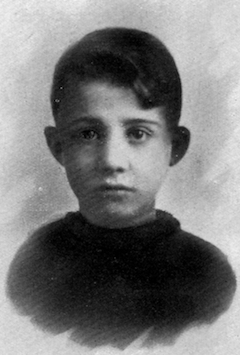
Although present in the fortress of Communism at the Party’s direction, and eventually an outright Soviet citizen, Baccala came into trouble after criticizing Stalin in 1933 and had to leave his family in Odessa as he struggled to find work. Come the height of the purges in the later 1930s, he was predictably denounced.

Baccala’s wife Pia Piccioni swallowed a bitter draught of her own; unable to see her husband or find support amid Stalin’s purges, she returned to her native country, finding little comfort either in Mussolini‘s Italy (for obvious reasons) or in postwar Italy (where red comrades shied from traducing the USSR). She wrote a book about her own and Baccala’s experiences, Compagno Silenzio: Una vedova italiana del gulag racconta.

On this day..

1926: Anteo Zamboni, Mussolini near-assassin, lynched

Halloween of 1926 was a festival of triumph for the Italian fascists … and they crowned it in a festival of blood.

The occasion marked (not exactly to the day) the fourth anniversary of Benito Mussolini‘s bloodless coup via the October 1922 March on Rome. And as a gift for himself and his populace, Benito Mussolini on that date inaugurated Bologna’s Stadio Littoriale by riding a charger into the arena and delivering a harangue.


Fascist-built and still in service, it’s now known as the Stadio Renato Dall’Ara and it’s home to Bologna F.C. 1909. (cc) image by Udb.

After another address to a medical conference later that afternoon, Mussolini was motorcading down via Rizzoli in an Alfa Romeo when a gunshot whizzed through his collar.*

It had been fired by a 15-year-old anarchist named Anteo Zamboni, vainly and sacrificially hoping to turn history’s tide with a well-placed bullet.

Instead, his act would offer Il Duce a Reichstag Fire-like pretext — there was always bound to be one, sooner or later — for a raft of repressive legislation including the creation of a nasty secret police, the dissolution of political opposition, and (of interest to this here site) reintroduction of the death penalty.**

But Anteo Zamboni would see his penalty delivered summarily after the crowd seized him.†

Zamboni was done to death with blows and blades by Mussolini’s fascist admirers right on the spot. In a turn of heart, Bologna — by tradition a leftist stronghold — now has a street named for the young would-be assassin. (Here is the source for the ghastly Mature Content images below of Zamboni’s brutalized corpse.)

The incident is the subject of the 1978 film Gli Ultimi Tre Giorni.

* Zamboni’s was only one of three assassination attempts on Mussolini in 1926 alone.

** Just days afterwards during the post-Zamboni repressive pall, the great Marxist intellectual Antonio Gramsci was tossed into prison, never to emerge. Gramsci’s Prison Notebooks issued out of his dungeon, before his health succumbed in 1937 to the intentional neglect of his captors.

† It’s reportedly cavalry officer Carlo Alberto Pasolini who first detained the youth: the father of postwar film director Pier Paolo Pasolini.

On this day..

Feast Day of Gervasius and Protasius

October 14 is the original feast date* and alleged martyrdom date of early Christian saints Gervasius and Protasius.

Reputedly the twin sons of two other martyrs, their iconographic devices are the scourge, the club, and the sword, all of which implements were rudely employed by Nero’s (or possibly Domitian’s) executioners

Although put to death in Ravenna, their relics repose in macabre magnificence at Milan’s Basilica of Saint’Ambrogio; for this reason, the Roman church considers them patron saints of that city, and keeps their feast date on June 19, the anniversary of their relics’ translation. The Orthodox still mark the October 14 feast, which, being the execution date, is of considerably more interest to these grim annals.


Remains of Gervasius and Protasius at Milan’s Basilica Sant’Ambrogio, along with the remains of the cathedral’s builder and namesake, Saint Ambrose. (cc) image from BáthoryPéter.

On this day..

1499: Paolo Vitelli, duplicitous commander

On this date in 1499, Florence decapitated its chief general for dereliction of command.

Paolo Vitelli, a noted condottiero whose family had taken over Citta di Castello, was hired by the post-Savonarola Florentine Republic during the Italian Wars to campaign against Florence’s traditional rival, Pisa.

“If this man had taken Pisa, nobody can deny that it would have been proper for the Florentines to keep in with him,” mused Machiavelli years later in The Prince. “For if he became the soldier of their enemies they had no means of resisting, and if they held to him they must obey him.”

The prospective kingpin made fantastic progress against the Pisans, and when news reached his Florentine patrons that Vitelli had taken a key gate in Pisa’s walls, the city smugly began drawing up wishlists of humiliations to heap upon the vanquished. But at the critical moment, “just when the whole army, and especially the youthful Florentines who had joined the camp as volunteers, were carrying all before them by their indomitable ardour, they were suddenly ordered to retreat. And Paolo Vitelli, seeing the unwillingness of the soldiers to obey, rushed among them with his brother Vitellozzo* and drove them back with blows.”

As jaws hit tables all around Florence, Pisa’s defenders were hurriedly patching the breach and retrenching. The attackers had ransacked their treasury to finance the expedition; there was nothing for a do-over. Had Vitelli quailed, or was he playing some double game? Either way, Machiavelli lamented — contemporaneously this time, in his capacity as an emissary of state — “We should have preferred defeat to inaction at so decisive a moment.”

With mingled urgency and circumspection, Florence’s leaders arranged to invite Vitteli to a war council at which he was arrested. Interrogated on September 30th, he was beheaded the very next day.

* Three years later, Paolo’s brother Vitellozzo would also achieve the pages of Executed Today … and once again did so under the sharp eyes of Machiavelli.

On this day..

1799: Ettore Carafa

On this date in 1799, a nobleman turned republican was turned into a martyr.

Fruit of the distinguished Carafa family, Ettore Carafa (English Wikipedia entry | Italian) was the Count of Ruvo but preferred the ennoblement of all mankind.

After a youthful trip to Paris on the verge of the French Revolution, Carafa returned to make himself the scandal of the Neapolitan aristocracy by such behaviors as translating the Declaration of the Rights of Man and of the Citizen and wearing the republican tricolor to the opera. Carafa was eventually obliged to break out of prison and take sanctuary in the Cisalpine Republic but he returned in glory (and no little satisfaction) with the 1799 Parthenopean Republic, when Naples briefly went republican, too. Commissioned an officer in revolutionary Naples’s army, he besieged his hometown of Andria.

Alas, this democratic interlude did not even live out the year, and many of its leading lights paid the forfeit to a violent reaction. Naples’s briefly-exiled queen was Marie Antoinette‘s sister and nowise forgiving when it came to Jacobin types and certainly not “such a man as Carafa, fit match as he was to Caracciolo, and held in almost equal terror by the Court.”

Carafa was one of its last holdouts, defending Pescara from siege well after Naples itself had fallen.

On September 4, 1799, Carafa mounted the guillotine with aplomb, his last words a command to the executioner Tommaso Paradiso, “You will tell your queen how a Carafa can die!” Then he slid himself under the knife on his back, boldly looking up at the instrument of death as it crashed through him.

On this day..

476: Orestes, father of the last Roman Emperor

On this date in 476, the father of the very last Roman emperor was put to death by a Germanic chief … a week before that last emperor was forced to abdicate his throne and the whole Roman experiment with it.

The final generation of Roman Emperors comprise a parade of nondescript interregnums, but the very last regnum fell to 16-year-old Romulus Augustulus whose destiny it was to seal the long fall of the (western) Roman Empire.

This youth with the apt nomen had been plopped in the purple by his dad, a Pannonian-born general named Orestes. Orestes had made his bones in the court of Attila the Hun before signing on as a free agent with Rome when the Hunnic polity collapsed after Attila’s death; he accordingly enjoyed the regard of the heavily-Germanic enlistees of Rome’s armies — a simpatico that constituted a great asset for Rome and a great danger for her sovereign. Our opportunistic general was able to turn this force against the previous emperor,* but as Gibbon notes, “having now attained the summit of his ambitious hopes,” Orestes encountered the danger of his disloyal soldiery from the opposite end of the spear.

[H]e soon discovered, before the end of the first year, that the lessons of perjury and ingratitude, which a rebel must inculcate, will be resorted to against himself; and that the precarious sovereign of Italy was only permitted to choose, whether he would be the slave, or the victim, of his Barbarian mercenaries. The dangerous alliance of these strangers had oppressed and insulted the last remains of Roman freedom and dignity. At each revolution, their pay and privileges were augmented; but their insolence increased in a still more extravagant degree; they envied the fortune of their brethren in Gaul, Spain, and Africa, whose victorious arms had acquired an independent and perpetual inheritance; and they insisted on their peremptory demand, that a third part of the lands of Italy should be immediately divided among them. Orestes, with a spirit, which, in another situation, might be entitled to our esteem, chose rather to encounter the rage of an armed multitude, than to subscribe the ruin of an innocent people. He rejected the audacious demand; and his refusal was favorable to the ambition of Odoacer; a bold Barbarian, who assured his fellow-soldiers, that, if they dared to associate under his command, they might soon extort the justice which had been denied to their dutiful petitions. From all the camps and garrisons of Italy, the confederates, actuated by the same resentment and the same hopes, impatiently flocked to the standard of this popular leader; and the unfortunate patrician, overwhelmed by the torrent, hastily retreated to the strong city of Pavia, the episcopal seat of the holy Epiphanites. Pavia was immediately besieged, the fortifications were stormed, the town was pillaged; and although the bishop might labor, with much zeal and some success, to save the property of the church, and the chastity of female captives, the tumult could only be appeased by the execution of Orestes.

As for the young puppet-emperor Romulus Augustulus himself, the conqueror who now proclaimed himself King of Italy wasn’t a vindictive man. “The life of this inoffensive youth was spared by the generous clemency of Odoacer; who dismissed him, with his whole family, from the Imperial palace, fixed his annual allowance at six thousand pieces of gold, and assigned the castle of Lucullus, in Campania, for the place of his exile or retirement.” This gesture of charity did not save Odoacer from suffering a violent death in his own turn.

* Julius Nepos has a claim on being the last Western Roman Emperor, insofar as Orestes’s revolt did not kill him but chased him to an exile where he pathetically maintained an ineffectual claim to the purple until his assassination in 480. It was only with Nepos’s death that the Western Roman Empire was formally abolished.

On this day..

Feast Day of St. Alexander of Bergamo

Saint Alexander, patron of the Lombardy city of Bergamo, has his feast date on August 26 which is also the anniversary of his execution.

A character for the muscular Christianity required by the rising religion’s imminent conquest of imperial leadership, the purported Alexander was a soldier — indeed, he was said to have been a part of the legendary all-Christian Theban Legion, which was violently discharged during the Diocletian Persecution.

Despite a supposed post-military career preaching the outlaw faith on the run from the authorities, Alexander invariably appears in iconography in his martial aspect, dressed in the armor that signified his station and the ambitions of his cult’s later promoters.

One such depiction, ready to stride into battle with the pennant of his faith, surmounts the Bergamo Cathedral which is dedicated to Saint Alexander.

On this day..