Feast Day of St. Sebastian

(Thanks to Jeffrey Fisher [jeffreyfisher at me.com] for the guest post.)

Sebastian In Art


Martyrdom — dying for the sake of one’s religious beliefs — has been one of the defining aspects of Christian self-understanding since at least about 100 CE, when the Book of Revelation was composed. Only a few systematic persecutions of Christians can be even minimally documented, but the idea that Christians suffer and even die for their faith — at the hands of the Jewish establishment, or the Roman authorities, or, today, secular humanists — is absolutely central to Christian identity for many Christians.

One of these ancient periods of persecution for which there is some historical evidence is in the late third and early fourth centuries, around the time of the Emperor Diocletian. On this day in 287, according to tradition, Diocletian martyred Saint Sebastian, at the time an officer in the Praetorian Guard.

The story goes that Sebastian’s Christianity was unknown to the Emperor until Sebastian balked at his job of executing Christians who refused to offer a libation to the emperor (a god, according to the emperor cult of the time). Indeed, Sebastian went so far as to encourage two Christians martyrs in their faith, and to convert several others. Upon hearing of all this, Diocletian ordered Sebastian tied to a tree and shot to death with a firing squad of the ancient sort: bows and arrows.

This, then, is how Sebastian is best known and most commonly represented: as a beautiful youth tied to a tree or a pillar and pierced with arrows.

Like the martyr Saint Catherine, however, whose iconic imagery is also a form of execution* survived by the saint, Sebastian was riddled with arrows and left for dead but did not die. He was rescued by St. Irene, who nursed him back to health. He lived until he heckled the Emperor sometime later, at which point Diocletian had him beaten and, making certain he was dead, threw him into a privy.

The truth is that we know next to nothing of the historical Sebastian. The Catholic Encyclopedia has a very short article that says mainly that. But this has not diminished his importance or cultural prominence, and he has quite the account in the Golden Legend.

Sebastian walks in a solid tradition of military martyrs, including St. George and St. Martin of Tours, and is like George a patron saint of soldiers. Interestingly, while George was also martyred, George is typically represented in strength, slaying a dragon, while Sebastian is represented (again, like Catherine) at an ostensibly powerless moment that is simultaneously his nadir as a human and his pinnacle as a saint.

The image has fascinated artists (and writers) for millennia, including most especially Renaissance Italian artists and early modern artists from all over Europe. Botticelli painted Sebastian twice, but perhaps the single most famous painting is that of Andrea Mantegna, who painted the saint three times. The fame of these paintings may be due in part to the way in which they typify the conception of the saint and his representation as a complex icon of fantastic vulnerability and strength, suffering and fortitude, and with striking homoerotic potential (perhaps having to do with the complex relationship between pain and pleasure), which is more fully realized in, for example, Botticelli’s earlier work or in Guido Reni’s painting.

More recently, St. Sebastian has a cameo in the video for REM’s “Losing My Religion,” which seems to be very much about the hazards of being young and gay in a heteronormative culture.

There is no more or less reason to think that Sebastian himself was gay than to think that he was in the Praetorian Guard, from Gallia Narbonensis, or even, really, that he was martyred. But he has been an important icon in what we might call gay culture since at least the Italian Renaissance, and it’s not clear that it matters whether he was gay any more than it matters whether or not he even existed.

* The breaking wheel, which is said to have shattered at her touch.

On this day..

532: Hypatius and Pompeius, for Byzantine sports riots

On this date in 532, the Byzantine Emperor Justinian I had two nephews of a former emperor executed for participating, however unwillingly, in the Nika riots.

Early in Justinian‘s reign, chariot-racing factions comprised mobs unruly enough to put any modern football hooligan into traction. Riots were a periodic feature of the sport.

The historian Procopius, who is our guide to this day’s events, describes a type the modern reader will recognize:

The Empress Theodora‘s cool head famously saved the day — and the empire — when her husband was ready to bolt. “May I never be separated from this purple, and may I not live that day on which those who meet me shall not address me as mistress. If, now, it is your wish to save yourself, O Emperor, there is no difficulty … as for myself, I approve a certain ancient saying that royalty is a good burial-shroud.”

They care neither for things divine nor human in comparison with conquering in these struggles; and it matters not whether a sacrilege is committed by anyone at all against God, or whether the laws and the constitution are violated by friend or by foe; nay even when they are perhaps ill supplied with the necessities of life, and when their fatherland is in the most pressing need and suffering unjustly, they pay no heed if only it is likely to go well with their “faction” …

When the clubs were pitted against each other, the civic disturbance rated a mere annoyance. But early in 532, they came into an unexpected alliance — around, it should be said in this venue, hangings meted out to their respective partisans — and outright revolt erupted at a race on January 13. Instead of chanting their respective factional slogans, a common cry of Nika! — “Victory!” — heralded a week of mayhem that nearly ended the great Byzantine prince’s era when it had hardly begun.

This day’s victims were nephews of a former Byzantine emperor, and their lot in the affair was an unlucky one. The suspicious Justinian cast them out of the palace quite against their will, for they feared exactly what in fact came to pass: the mob proclaimed Hypatius emperor and thrust him involuntarily — he had to be physically pried from the desperate resistance of his wife — into treason.

It was an old vintage in the Roman tradition, as Edward Gibbon reflected in reviewing the perverse structural logic of civil war during an earlier era of the western empire:

[I]f we examine with candour the conduct of these usurpers, it will appear that they were much oftener driven into rebellion by their fears than urged to it by their ambition … If the dangerous favour of the army had imprudently declared them deserving of the purple, they were marked for sure destruction; and even prudence would counsel them to secure a short enjoyment of the empire, and rather to try the fortune of war than to expect the hand of an executioner.

For a few hours, the throne stood in danger. Justinian mulled flight; his remarkable wife held him steady — and on January 18, their generals trapped the rioters in the Hippodrome and slaughtered some 30,000 of them.

Back to Procopius:

[T]he populace, who were standing in a mass and not in order, at the sight of armoured soldiers who had a great reputation for bravery and experience in war, and seeing that they struck out with their swords unsparingly, beat a hasty retreat … the partisans of Hypatius were assailed with might and main and destroyed.

Hypatius and his brother were taken alive but disposed of on this day, by which time their deaths were but a drop in a bloodbath.

[T]he emperor commanded the two prisoners to be kept in severe confinement. Then, while Pompeius was weeping and uttering pitiable words (for the man was wholly inexperienced in such misfortunes), Hypatius reproached him at length and said that those who were about to die unjustly should not lament. For in the beginning they had been forced by the people against their will, and afterwards they had come to the hippodrome with no thought of harming the emperor. And the soldiers killed both of them on the following day and threw their bodies into the sea. The emperor confiscated all their property for the public treasury, and also that of all the other members of the senate who had sided with them. Later, however, he restored to the children of Hypatius and Pompeius and to all others the titles which they had formerly held, and as much of their property as he had not happened to bestow upon his friends. This was the end of the insurrection in Byzantium.

Bad luck for Hypatius and Pompeius proved a blessing for posterity (and Turkey’s contemporary tourist trade): riot-devastated space near the Hippodrome was appropriated by Justinian to build the magnificent Hagia Sophia basilica.

This gripping affair is narrated in greater depth in an installment of Lars Brownworth’s 12 Byzantine Rulers podcast series:

[audio:http://www.12byzantinerulers.com/audio/07-Justinian-Part_1.mp3]

… and in gripping detail by the History of Byzantium podcast.

On this day..

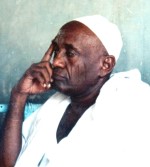
1985: Mahmoud Mohamed Taha, progressive Islamic theologian

On this date in 1985 progressive Islamic theologian Mahmoud Mohamed Taha was publicly hanged at a prison in Khartoum North, Sudan.

Seventy-five years old at his death, Taha spent his youth in the nationalist movement against British control of Sudan where he emerged as the standard-bearer of the liberal/secular Republican Party.

After Sudan won independence in 1956, both Taha and his party maintained — in the face of official hostility that waxed and waned with the changing regimes — nonviolent support for political openness, national unity between Muslims and non-Muslims, and a theology pointing to reform within Islam. Specifically, Taha embraced a women’s movement and opposed the imposition of sharia, at least in the absence of a radical modernization of the Islamic religious law.

The introduction of sharia in 1983 brought matters to a head, and not only with Taha: civil war broke out — the conflict between the Muslim north and the Christian and animist south only recently and imperfectly abated.

Taha and four other Republicans were tried for their intransigence in a two-hour trial under a seemingly muddled mixture of secular and religious law.

Among the hundreds of attendees of Taha’s hanging this day were his four “co-conspirators.” They were themselves under sentence of death to be carried out January 20th, unless they should recant. All four recanted. Hundreds of other Republicans were held around the country on lesser charges until they did likewise.

The next year, with a new government in place, the Sudanese Supreme Court declared the proceedings against the Republicans to have been in error.

Little of Taha’s work has been translated, but his Second Message of Islam is available in English and presents a conception of the faith so unfamiliar in the west that one reviewer mitigates his praise with the regret that “it is nonsensical to talk of reforming Islam, a religion which is doctrinally irreformable.”

Taha’s thought also has a scholarly evaluation in Quest for Divinity: A Critical Examination of the Thought of Mahmud Muhammad Taha. More information by and about Taha and the Republicans is here.

On this day..

1944: Galeazzo Ciano and four other Italian Fascists

On this date in 1944, Benito Mussolini had his son-in-law, the politician Galeazzo Ciano, shot for treason outside the gates of Verona along with four other fascists who had abandoned Mussolini.

A glamorous playboy in public life, Ciano was the scion of a wealthy fascist founder. The youth wed Mussolini’s eldest daughter in 1930 and quickly ascended the party’s ranks, becoming Foreign Minister at the tender age of 33.

Ciano’s treachery, and that of the others seated in chairs and shot from behind on this day, was to have voted with the majority of the Fascist Grand Council for deposing Mussolini as Allied attacks thrust Italy into a desperate position. This confused affair lacked the character of a coup d’etat, but Mussolini was indeed placed under arrest the next day and a separate peace concluded with the Allies in early September.

Soon after, an audacious German glider raid freed Mussolini, who was quickly re-installed as head of a Nazi puppet state in northern Italy.

Ciano’s capture by this body set in motion a final personal drama with implications for later students of the Second World War. Edda Ciano escaped to Switzerland with her husband’s diaries — potentially damaging notes on the machinations of the Axis.

These scribblings she took hostage for the life of her husband. The blackmail was not accepted — to the grief of Edda, who never spoke to her father again.

One final quixotic rescue attempt cooked up by a female SS administrator on Ciano’s guard detail — the last of many women drawn to this charismatic man — foundered; the preordained death sentence came down on January 10th, and the men were shot the next morning.* Mussolini reportedly fretted in the small hours of the night over whether his standing in Hitler’s eyes would suffer should he intervene.

Edda had the diaries published as she threatened, and if they exposed scant novel evidence against his German and Italian compatriots, they offer a window upon diplomatic intrigue and personal relationships within the Pact of Steel.

The last entries were written from prison just three weeks before his execution, and (allowing that by that time the author had reason to lay blame for policy missteps explicitly at Mussolini’s door) the protracted effort they describe to steer the impulsive Duce towards some sane foreign policy — something that might have spared Italy the devastation of war and maintained a fascist government, as Spain managed to do — reads almost farcically in retrospect. Italy could make little material contribution to the war, and probably had as much to fear from Hitler in victory as from the Allies in defeat … but at every turn, Hitler’s inspiring star pulled the Italian dictator away from realpolitik and towards romantic catastrophe.

As the invasion of Poland approached, for instance, Ciano watched Mussolini vacillate on whether to cast his lot irrevocably with Hitler.

The Duce’s reactions are varied. At first he agrees with me [not to commit to war]. Then he says that honor compels him to march with Germany. Finally, he states that he wants his part of the booty in Croatia and Dalmatia.

Like World War II’s every nook and cranny, the Italian experience bestrode by Ciano has received eager literary coverage.

Edda and Galeazzo Ciano’s son Fabrizio also wrote a personal memoir entitled Quando il nonno fece fucilare papa (“When Grandpa had Daddy Shot”).

* Four of the five were only wounded by the initial volley, and the fifth was missed altogether; all were dispatched with a coup de grace.

On this day..

1775: Yemelyan Pugachev

On this date in 1775, the Russian Empress Catherine the Great had Cossack rebel Yemelyan Pugachev chopped to pieces in Moscow for sustaining a major insurrection whose effects would haunt Russia for decades to come.

Pugachev’s Rebellion was the most spectacular specimen in populous family tree of 18th century peasant uprisings.

Most such disturbances were local and fundamentally unthreatening. Pugachev’s was neither.

The Cossack commander raised a revolt in the Urals in 1773, styling himself the long-lost tsar Catherine had overthrown a decade before.

Catherine was slow to see the import, but this hinterlands pretender set up a state-like bureaucracy and began issuing ukases as tsar — and one can readily discern from their content why he attracted a following:

We bestow on all those who formerly were peasants and in subjugation to the landowners, along with Our monarchic and paternal compassion … tenure of the land and the forests and the hay meadows and the fisheries and the salt lakes, without purchase and without obrok, and we liberate all the aforementioned from the villainous nobles and from the bribe takers in the city–the officials who imposed taxes and other burdens on the peasants and the whole people … [T]hose who formerly were nobles living on estates are enemies to Our power and disrupters of the empire and oppressors of the peasantry, and they should be caught, executed and hanged, they should be treated just as they, who have no Christianity, dealt with you peasants.

The insurrection speedily metastasized, and by the time a force sufficient to quash it was deployed, it had stretched itself from the Urals to the Volga.

Alexander Pushkin used the story of Pugachev’s rebellion for The Captain’s Daughter (text in English | Russian), which has been adapted to film several times — most recently in 2000.

Catherine the Great, for her part, was deeply shaken by the affair, and the “enlightened despot”, while maintaining traffic with the era’s liberal intellectual ferment, decisively turned against any reform to serfdom. Catherine’s choice, reinforced by her successors, to uphold their security with nothing but repression maintained Russian serfdom until 1861 on a staggering scale — an anchor dragging down the economy just as industrializing western Europe opened a development gap whose effects persist to this day.

On this day..

1663: Illiam Dhone

On this date in 1663, Illiam Dhone was shot for treason at Hango Hill on the Isle of Man.

William Christian — “Illiam Dhone” is a Gaelic sobriquet meaning “Brown William” — committed his fatal offense in 1651: as a powerful Manx pol charged with defense of the island against a prospective Roundhead invasion, he overthrew the Royalist lords and bloodlessly surrendered instead.

Although documentation seems to be fragmentary, an overreaching assertion of lordly prerogatives by James Stanley, Earl of Derby, of late made Cromwell‘s prisoner, might have prepared a powder keg ignited by the efforts of the Earl’s wife to ransom her husband by the Isle’s sacrifice.

Treason doth never prosper, so with the prosperity of Cromwell’s revolution, Christian earned the Manx governorship. Only upon restoration of the crown did his putsch come a cropper.

“In all likelihood Illiam Dhone was probably executed as an act of revenge by the Stanley family,” Roger Sims of the Manx Museum says. “However, the fact remains that Illiam Dhone’s actions in surrendering the island probably saved a great many lives and a great deal of property.”

The case, however, proceeded despite a general amnesty that should have spared the “traitor”. A week after he had already delivered himself of his dying denunciation against “a prompted and threatened jury, a pretended Court of Justice, of which the greater part were by no means qualified,” his appeal finally reached London — and was granted.

The patriot’s martyrdom made its mark in literature with the Gaelic ballad “Baase Illiam Dhone” (lyrics and translation, sheet music) and Sir Walter Scott’s Peveril of the Peak.

On this day..

1989: Nicolae and Elena Ceausescu

On this date in 1989, 71-year-old dictator Nicolae Ceausescu and his wife Elena were condemned by a secret military tribunal and immediately shot in Targoviste as Communism in Romania suddenly, stunningly collapsed.

The last of the Revolutions of 1989 that toppled Communism through much of Eastern Europe in a matter of weeks left the indelible image of the man who had dominated Romanian politics since the mid-60’s bewildered as a party-summoned mass rally at Bucharest’s Revolution Square turned against him.

It was to be Ceausescu’s last public address. Within a day, the country had slipped from his control; before week’s end, he would face a firing squad with “The Internationale” on his lips at the conclusion of a drumhead trial.

In a confused political situation — the police who intercepted Ceausescu and his wife held them for several hours, attempting to divine which way the winds were blowing before handing them over to the mutinous army — Romanian state television would soon broadcast footage of the trial and the first couple’s corpses (though not the execution itself).

Caution: This video contains graphic footage

Immediately afterwards, Romania abolished the death penalty. Nicolae and Elena Ceausescu remain the last people executed in that country.

On this day..

1684: Baillie of Jerviswood

On this date in 1684, the Scottish patriot Baillie of Jerviswood was convicted of treason and immediately executed, for his part in the Rye House Plot against the Stuart King Charles II.

Baillie was a lesser player in the Protestant scheme — whose nature and extent, or even existence, are matters of historical debate — supposedly to do away with the Catholic-leaning ruler and his outright catechumen brother and heir James. Baillie was implicated under torture, and while disowning any part of a conspiracy declined — “with striking truthfulness” — to deny a design on Scottish rebellion.

His summary hanging would enter the pantheon of English depravities in the north country, but he achieved another sort of immortality as well.

During an earlier stint in prison, a proscribed fellow patriot’s 12-year-old daughter had smuggled him messages — becoming acquainted with Baillie’s own son, whom she would eventually wed. The girl gained fame in adulthood as Lady Grizel (or Grisel, or Griselle) Baillie.

“Werena my Heart’s licht I wad dee”
-Lady Baillie

THERE ance was a may, and she lo’ed na men;
She biggit her bonnie bow’r doun in yon glen;
But now she cries, Dool and a well-a-day!
Come doun the green gait and come here away!

When bonnie young Johnnie cam owre the sea,
He said he saw naething sae lovely as me;
He hecht me baith rings and mony braw things—
And werena my heart’s licht, I wad dee.

…

The legendary tableau of intrigue between Baillie and his future daughter-in-law was itself fruit for literature, given time enough to ripen into legend. Kinswoman Joanna Baillie, one of the great litterateurs of the early 19th century, made use of the episode to open a lengthy ballad to Lady Grizel in Metrical Legends of Exalted Characters:

I.
Within a prison’s hateful cell,
Where, from the lofty window fell,
Thro’ grated bars, the sloping beam,
Defin’d, but faint, on couch of stone,
There sat a pris’ner sad and lone,
Like the dim tenant of a dismal dream.
Deep in the shade, by low-arch’d door,
With iron nails thick studded o’er,
Whose threshold black is cross’d by those
Who here their earthly being close,
Or issue to the light again
A scaffold with their blood to stain,–
Moved something softly. Wistful ears
Are quick of sense, and from his book
The pris’ner rais’d his eyes with eager look,–
“Is it a real form that thro’ the gloom appears?”

II
It was indeed of flesh and blood,
The form that quickly by him stood;
Of stature low, of figure light,
In motion like some happy sprite;
Yet meaning eyes and varying cheek,
Now red, now pale, seem’d to bespeak
Of riper years the cares and feeling
Which with a gentle heart were dealing.
“Such sense in eyes so simply mild!
“Is it a woman or a child?
“Who art thou, damsel sweet? are not mine eyes beguiled?”

III
“No; from the Redbraes’ tower I come;
“My father is Sir Patrick Hume;
“And he has sent me for thy good,
“His dearly honour’d Jerviswood.
“Long have I round these walls been straying,
“As if with other children playing;
“Long near the gate have kept my watch
“The sentry’s changing-time to catch.
“With stealthy steps I gain’d the shade
“By the close-winding staircase made,
“And when the surly turnkey enter’d,
“But little dreaming in his mind
“Who follow’d him so close behind,
“Into this darken’d cell, with beating heart, I ventured.”

IV
Then from the simple vest that braced
Her gentle breast, a letter traced
With well-known characters, she took,
And with an eager, joyful look,
Her eyes up to his visage cast,
His changing countenance to scan,
As o’er the lines his keen glance past.
She saw a faint glow tinge the sicky wan;
She saw his eyes thro’ tear-drops raise
To heaven their look of silent praise,
And hope’s fresh touch undoing lines of care
Which stress of evil times had deeply graven there.
Meanwhile, the joy of sympathy to trace
Upon her innocent and lovely face
Had to the sternest, darkest sceptic given
Some love of human kind, some faith in righteous Heaven.

V
What blessings on her youthful head
Were by the grateful patriot shed,
(For such he was, good and devoted,
And had at risk of life promoted
His country’s freedom and her faith,
Nor reck’ning made of worldly skathe)
How warm, confiding, and sincere,
He gave to her attentive ear
The answer which her cautious sire
Did to his secret note require;–
How after this with ‘quiries kind,
He ask’d for all she left behind
In Redbraes’ tower, her native dwelling,
And set her artless tongue a-telling,
Which urchin dear had tallest grown,
And which the greatest learning shown,
Of lesson, sermon, psalm, and note,
And Sabbath questions learnt by rote,
And merry tricks and gambols play’d
By ev’ning fire, and forfeits paid,–
I will not here rehears, nor will I say,
How, on that bless’d and long-remember’d day,
The pris’ner’s son, deserving such a sire,
First saw the tiny maid, and did admire,
That one so young and wise and good and fair
Should be an earthly thing that breath’d this nether air.

…

On this day..

1559: Anne du Bourg

On this date in 1559, Protestant parliamentarian Anne du Bourg was publicly strung up and burned for his uncompromising defense of Calvinism.

All France burned, figuratively, with the Protestant Reformation — and literally, with Henri II‘s ruthless reaction against it. But that flame tempered and honed the Huguenots’ steel.

With the dissolute crowned head before him to attend a seating of Parlement considering the matter of the heretics’ suppression, Anne du Bourg delivered himself of a rebuke of “more courage than prudence” (Batiffol and Bodley):

While men are conducted to the stake for the sole crime of praying for their prince, a shameful license encourages and multiplies blasphemies, perjuries, debaucheries, and adulteries. (Martyn)

Incensed, the king had du Bourg and others of the “moderate” party arrested in Parlement and drug to the dungeon. And though his compatriots were satisfied to recant what imperiled them, du Bourg remained obdurate and even provocative, smuggling a pamphlet against the monarch out of prison.

Henri would not make good his vow to see du Bourg burnt, having been slain by a freak jousting accident. But it little availed du Bourg inasmuch as Henri’s untimely demise put the Catholic faction even more firmly in the saddle. The agitation of Protestants for du Bourg’s release went for naught, and the sharp-tongued minister of state had occasion to speak to posterity from the scaffold. “My friends, I am not here as a thief or a martyr, but for the evangelium.”

“His one speech did more harm to the Catholic Church than a hundred ministers could have done.”
-Eyewitness Florimond de Roemond, quoted in The Cambridge Modern History

The religious conflict that made an end of du Bourg soon exploded into civil war. Many more, like du Bourg, would find their triumph in death — until, after three bloody decades, a Protestant prince accepted triumph in apostasy by deciding that “Paris is worth a Mass.”

On this day..

1849: Not Fyodor Dostoyevsky

“Brother, I am not dejected or crestfallen. Life, life is everywhere, life is in us ourselves, not outside. Near me will be people, and to be a person among persons and stay him forever, to not be cast down or despondent no matter what the misfortunes are – therein lies life, therein lies its purpose. I realized that. This idea entered my flesh and blood. Yes! It’s true! The head that created and got accustomed to the higher demands of the spirit, that head is cut off from my shoulders. What’s left are the memories and images created and not reified by me. They will ulcerate me, indeed! What I have left is my heart and the same flesh and blood, which can love, suffer, pity, and remember, and this is life, after all …” (quote — in Russian; the translation is mine)

The square — now named Pionerskaya Ploschad’ — where Dostoyevsky faced a mock execution. Image used with permission.

This slightly rambling epistle is authored by a titan of the world literature, a schizophrenic, a gambler, a true believer, a sufferer, a humanitarian, an epileptic, a Russian, a philosopher, a St. Petersburger, the Writer. Let us forgive him a certain incongruity of thought, since that letter was his first salute to a newly acquired chance to live.

On this date in 1849, Dostoevsky, along with some 20 other condemned, was brought out to St. Petersburg’s Semyonovsky platz. They were meant to be shot for affiliation with the Petrashevsky circle, a group of idealistic young intellectuals, apologists of Fourier and fervent advocates of socialism. Just like the generation of aristocrats (alas, some of them will be featured on this macabre blog) before them and generations of intelligentsia (whose destiny is equally unenviable) after them, Petrashevtsy gathered at Petersburg’s flats, read articles and concerned themselves with the fate of the permanently-rising-from-the-knees Motherland.

The formal charges brought upon Dostoevsky were quite bizarre: he listened to a story that criticized the army; had in his possession an illegal printing press; read an open letter to the circle from Belinsky to Gogol which excoriated the church and government; and participated in a regicide plot. The latter accusation Fyodor Mikhailovich vehemently denied, for indeed he was not a bloodthirsty revolutionary, but a proponent of the peaceful Christ’s teaching (this affliction with Christian philosophy was incidentally somewhat of a mauvais ton among the predominantly atheistic circle).

It always seemed to me that Dostoevsky’s participation in the Petrashevky circle was a tribute to the epoch’s fad. It was the imperfections of human nature, not the peculiarities of a hypothetical social structure, that concerned him greatly. The world’s wrongdoings result from something rotten in a man’s soul, and once those internal blemishes are erased, the external harmony emerges. “Beauty will save the world”, a cliché instilled in every Russian by a literature teacher in 10th grade, a phrase attributed to Christ-like kniaz’ Myshkin, and one of Dostoevsky’s most important statements: inner beauty is vital, the rest is a consequence.

The military court condemned Dostoevsky to death. The general-auditor amended this decision and recommended a lighter punishment: “… deprive of all fortune and send to hard labor in fortresses for eight years”. The final resolution of Nicholas I reduced the sentence to four years, “and then [relegate] to [the rank of] private … declare clemency only at the moment when everything is ready for execution”.

“Life is a gift, life is happiness, every minute could be a century of happiness …” continued Dostoevsky his letter. In three days, he received a prisoner’s dress, a fur coat, and valenki. He was put in shackles and dispatched to Siberia …

Novels and Short Stories by Dostoyevsky

On this day..