On this date in 1874, colorful outlaw Sid[ney] Wallace was hanged for murder in Reconstruction Arkansas.*
A large enough figure to merit his own entry in the Encyclopedia of Arkansas, Wallace was a little boy on a farm near Clarksville in Johnson County when his father was murdered by Union men in 1863.
The legend has it that his family’s slave, Missouri Blackard, kept the identities of the killers from the youth until he turned 20 or 21 … whereupon Wallace served his revenge cold, tracking one of them as far as Kansas to murder him.
How Sid learned that one of the killers had relocated to Kansas is never explained, but the account describes him traveling to Kansas, finding the murderer, and staying the night with him and his family, claiming to be a peddler. He even displayed his wares to the family to make his story convincing. Only in the morning, as he was taking leave of the family, did he identify himself as the son of Vincent Wallace, as he drew a pistol and shot his host dead. No charges were ever filed against Sid for this cold-blooded act, nor was it mentioned during his trials for the killings that happened in Johnson County. (Unvarnished Arkansas: The Naked Truth about Nine Famous Arkansans)
Back in Clarksville, Wallace carved out a niche (with his brother George, until the latter got shot) as a colorful James Gang-like populist criminal with a knack for escaping actual or would-be jailers: the most charming adventure attributed him is dodging a posse by hiding under Missouri Blackard’s (evidently quite capacious) skirts while the latter took a casual stroll to the well. We’re not vouching for this story, just reporting the allegation.
To return to Unvarnished Arkansas, Clarksville
was shattered by a pair of murders in the last days of August 1873. Constable R.W. “Doc” Ward was the first victim to be assassinated. Doc Ward had first come to Arkansas with the Federal army during the Civil War; like some other northern soldiers, Ward had stayed in the South after the war to make his fortune. Such men often were described as “carpetbaggers,” suggesting that their only motivation to remain in the South was to profit at the expense of the defeated and demoralized southerners. Carpetbaggers had rebuilt the government of Arkansas and other southern states, even representing these states in the U.S. House of Representatives and Senate, as well as in state legislatures and in governors’ offices. Carpetbaggers had opened banks, built railroads, started businesses, and constructed houses for themselves and their famlies. Many carpetbaggers, like Doc Ward, had been appointed or elected to positions of local authority. Ward does not appear to have been generally disliked in Johnson County; he was just a man doing his job, like so many other men around the county. Still, as constable, he had a responsibility to arrest criminals, and anyone pursuing a life of crime could expect to profit from the elimination of the local enforcer of the law.
Doc Ward was sitting on a wooden sidewalk in front of W.P. Rose’s drugstore one fine summer evening — August 20, 1873 — when a single gunshot rang out, and the constable fell, mortally wounded. He did not die until September 12, however. The shocked witnesses reported that a gunman had fired a double-barreled shotgun at the constable and then ridden away on horseback. No one was arrested for the crime. Exactly one week later, county judge Elisha Mears was walking home for his noontime meal after a pleasant visit to Blind Bob’s Saloon in Clarksville when, once again, a single shot rang out. Mears fell, badly injured — he died an hour after midnight. Witnesses said that the gunman had been concealed, but no one claimed to know who had fired the shots. Tongues began to wag, though, and fingers of blame were being pointed at Sid Wallace. Even in Little Rock, the Arkansas Gazette took notice of the crimes, grumbling that no effort was being made to bring the assassin to justice.** Citizens of Johnson County were not as blind to criminal behavior, however, as the Little Rock journalist suggested. More than a century later, one writer would characterize their attitude with these words: “The killing of Judge Meers [sic], a progressive Johnson County native, turned the tide of public opinion in Clarksville against Sid Wallace. Sid was the prime suspect, and most thought he should not have shot the judge, even if he was a Republican.”
But even under sentence of death, the roue got a pass to escort the prison warden’s daughter to a dance. Unsurprisingly, she returned home begging for her date’s life.
He was hanged publicly in Clarksville on March 14, 1873, with the manful last words, “I have no confession to make to man, but whatever I have to confess must be to God. I die in defense of myself and friends, and I regret not having a dozen deaths to die.” He had only the one, but that hasn’t hindered his rich posthumous life in folk hero-dom, regional class, including a highly dubious rumor that he survived his execution and lived on to rob and murder again on western trails.
* The very tail end of that post-Civil War era: in Arkansas, the terminal event was a factional bush war that broke out in April 1874 and brought about a new state constitution followed by nearly a full century of Democratic governors.
** Arkansas, which was out on the frontier at this point in America’s march across the continent, had a national reputation: the New York Times threw it some shade while reporting Wallace’s hanging: “The determination which has been shown during the past year by the decent citizens of Arkansas to bring murderers to justice will eventually result in making the State a desirable place of residence. For many years it has been heard of almost entirely in connection with the reports of dark deeds.”
Wire report via the Baltimore Sun, March 14, 1979:
12 shot by firing squads in Iran
Tehran, Iran (AP) — Firing quads executed two generals, a legislator, the former head of the national news agency and eight other men yesterday, continuing the purge that has killed dozens of former supporters of Shah Mohammad Reza Pahlavi.
Eleven men were executed in Tehran and one in the holy city of Qom, 100 miles to the south, after secret trials without the aid of defense attorneys.
Since the shah’s government fell February 12, Islamic revolutionary courts are known to have ordered the execution of 57 persons, including 12 generals, for alleged political and sex crimes. The shah is in exile in Morocco.
Meanwhile, there were indications yesterday that the new government is having success in bringing the economy back to life. The National Iranian Oil Company announced that production in the country’s oilfields had reached 2.5 million barrels a day, up from 1.6 million barrels a day last week.
The company said all but 700,000 barrels a day was marked for foreign consumption. Before anti-shah strikes paralyzed the economy, Iran exported about 6 million barrels of oil a day.
The company said it will resume selling Iranian crude on a contract basis to American, European and Japanese companies April 1. In recent weeks, oil has been sold on a spot basis to the highest bidder. Spot prices are in the range of $20 a barrel, compared to the OPEC price of $13.55.
At Tehran University, 40,000 young Iranians rallied to condemn Mideast peace efforts by President Carter and Egyptian President Anwar el Sadat.
Iran’s Islamic Revolutionary Council announced the 12 executions on radio.
Among those shot were Air Force Gen. Nader Jahan-Bani, former director of the National Iranian Sports Organization; Army Gen. Vali Mohammad Zandkarimi, former director of prisons, and Gholam Hussein Daneshi, a Muslim clergyman and former member of parliament who supported the shah.
Also executed were Mahmoud Jaafariian, former head of the official Pars news agency and former deputy director of the national radio and television service, and Parviz Nik-Khah, also a former deputy director of the radio-TV service. Both were former Communists who were sentenced to death by the shah in 1967, but who were pardoned and later went to the shah’s side.
Firing squads in Tehran also executed a corporal in the shah’s Imperial Guard and in Qom a former police officer was shot. Also executed were five members of the shah’s former secret police, SAVAK.
In the dock of St. George’s Hall Liverpool on the 4th of February 1929, stood 21 year old Joseph Reginald Victor Clarke, arraigned on a charge of murder. When asked how he pleaded he replied “guilty”. Mr Justice Finlay asked him if he understood the effect of his plea, and having been assured that he did, donned the black cap and passed sentence of death on him. The whole trial took just five minutes to complete.
-From the March 12, 2020 Facebook post of the Capital Punishment UK Facebook page. Click through to find out why this Princeton alum, dubbed by newsmen “the boy with a hundred sweethearts”, decided to save everyone the trouble of proving him guilty of murdering one of those sweethearts’ mother …
Jessie King, the last woman executed in Edinburgh, was hanged on this date in 1889.
She was a practitioner of that distinctive late Victorian industry of baby farming: for a few pounds (literally just £2 to £5;) King adopted illegitimate children from pregnant working-class girls who couldn’t bear the financial or reputational cost of rearing them, with the promise of moving them on to loving homes that was often a reality of shuffling them off this mortal coil — either via neglect or outright homicide.
This particular operation was detected when some youths found a bundle where she’d hidden one such body, and a raid upon the apartment King shared with the much older Thomas Pearson revealed two more dead adoptees. Pearson, who could have easily been construed as the prime mover in this operation, was suffered to turn crown’s evidence, and save his own neck by stretching his lover’s. That wasn’t all she was up against in the courtroom: she also faced the adverse medical testimony of Dr. Joseph Bell, notable as the inspiration for the literary Sherlock Holmes character.
Contemporaries doubted King’s mental health, and she attempted suicide to cheat the hangman. Her Catholic confessor unsuccessfully appealed for clemency with the suggestion that she’d been steered into her crimes by the domineering Pearson.
To save Pearson she made the statement which has done her so much injury. She now declares that he in one of the cases did the deed and in the other two, he stood near directing and guiding her in the administration of the [whisky] …
It seems a more likely solution of this terrible crime that this hard-hearted man and unfaithful husband — an aged man! was there directing the unsteady and clumsy hand of a poor woman he had made his slave.
“A well-bred gentleman, three years at court, as free and generous as could be desired, and very complaisant; stout in his person, but, not being bred anything of a soldier, wanted the main art, that is, policy in war and good conduct” by a contemporary assessment, O’Neill numbered among the leaders of the 1641 Irish Rebellion against English governance. He issued a noteworthy manifesto of the affair known as the Proclamation of Dungannon.
O’Neill officered troops in this conflict, to no stirring victories. Although far from Confederate Ireland’s most important player, he was significant enough to merit an exception to the 1652 Act for the Settlement of Ireland — which made him an outlaw with a price on his head. He was captured in February 1653 and tried for treason in Dublin, refusing the court’s blandishments to abate the horrible drawing-and-quartering sentence by shifting any blame for the rising to the lately beheaded King Charles I.
* Or for a somewhat broader periodization, the rebellion fit into the Britain-wide breakdown that delivered the Wars of the Three Kingdoms.
(Thanks to the nails-tough journalist Ida Wells for the guest post on the March 9, 1892 triple lynching in Memphis, Tennessee, of African American grocers Thomas Moss, Calvin McDowell and Will Stewart. Born a slave in Mississippi, Wells was in Memphis at this point running the black newspaper Free Press, which figures in the story; the victims, too, were personal friends of hers, particularly Tommie Moss to whose daughter Ida Wells stood godmother. The event is known as the Peoples’s Grocery Lynchings or the Lynchings at the Curve, and as will be seen from Wells’s piece it’s a rich cross-section of American pathologies. It’s also one that reshaped Wells’s entire life: she became the nation’s most ferocious anti-lynching crusader. This text is excerpted from a long address Wells delivered in Boston on February 13, 1893 titled “Lynch Law in All its Phases” — which was also the title of an anti-lynching pamphlet she was circulating. (Find the address and much more in this Ida Wells document archive.) She never returned to Memphis. -ed.)
We had nice homes, representatives in almost every branch of business and profession, and refined society. We had learned that helping each other helped all, and every well-conducted business by Afro-Americans prospered. With all our proscription in theatres, hotels and on railroads, we had never had a lynching* and did not believe we could have one. There had been lynchings and brutal outrages of all sorts in our own state and those adjoining us, but we had confidence and pride in our city and the majesty of its laws. So far in advance of other Southern cities was ours, we were content to endure the evils we had, to labor and wait.
But there was a rude awakening. On the morning of March 9, the bodies of three of our best young men were found in an old field horribly shot to pieces. These young men had owned and operated the People’s Grocery, situated at what was known as the Curve — a suburb made up almost entirely of colored people — about a mile from city limits. Thomas Moss, one of the oldest letter-carriers in the city, was president of the company, Calvin McDowell was manager and Will Stewart was a clerk. There were about ten other stockholders, all colored men. The young men were well known and popular and their business flourished, and that of Barrett, a white grocer who kept store there before the “People’s Grocery” was established, went down. One day an officer came to the “People’s Grocery” and inquired for a colored man who lived in the neighborhood, and for whom the officer had a warrant. Barrett was with him and when McDowell said he knew nothing as to the whereabouts of the man for whom they were searching, Barrett, not the officer, then accused McDowell of harboring the man, and McDowell gave the lie. Barrett drew his pistol and struck McDowell with it; thereupon McDowell, who was a tall, fine-looking six-footer, took Barrett’s pistol from him, knocked him down and gave him a good thrashing, while Will Stewart, the clerk, kept the special officer at bay. Barrett went to town, swore out a warrant for their arrest on a charge of assault and battery. McDowell went before the Criminal Court, immediately gave bond and returned to his store. Barrett then threatened (to use his own words) that he was going to clean out the whole store. Knowing how anxious he was to destroy their business, these young men consulted a lawyer who told them they were justified in defending themselves if attacked, as they were a mile beyond city limits and police protection. They accordingly armed several of their friends — not to assail, but to resist the threatened Saturday night attack.
When they saw Barrett enter the front door and a half dozen men at the rear door at 11 o’clock that night, they supposed the attack was on and immediately fired into the crowd wounding three men. These men, dressed in citizens’ clothes, turned out to be deputies who claimed to be hunting another man for whom they had a warrant, and whom any one of them could have arrested without trouble. When these men found they had fired upon officers of the law, they threw away their firearms and submitted to arrest, confident they should establish their innocence of intent to fire upon officers of the law. The daily papers in flaming headlines roused the evil passions of the whites, denounced these poor boys in unmeasured terms, nor permitted them a word in their own defense.
Headline and excerpt from the Appeal-Avalanche of March 9, 1892.
The neighborhood of the Curve was searched next day, and about thirty persons were thrown into jail, charged with conspiracy. No communication was to be had with friends any of the three days these men were in jail; bail was refused and Thomas Moss was not allowed to eat the food his wife prepared for him. The judge is reported to have said, “Any one can see them after three days.” They were seen after three days, but they were no longer able to respond to the greeting of friends. On Tuesday following the shooting at the grocery, the papers which had made much of the sufferings of the wounded deputies, and promised it would go hard with those who did the shooting, if they died, announced that the officers were all out of danger, and would recover. The friends of the prisoners breathed more easily and relaxed their vigilance. They felt that as the officers would not die, there was no danger that in the heat of passion the prisoners would meet violent death at the hands of the mob. Besides, we had such confidence in the law. But the law did not provide capital punishment for shooting which did not kill. So the mob did what the law could not be made to do, as a lesson to the Afro-American that he must not shoot a white man, — no matter what the provocation. The same night after the announcement was made in the papers that the officers would get well, the mob, in obedience to a plan known to every prominent white man in the city, went to the jail between two and three o’clock in the morning, dragged out these young men, hatless and shoeless, put them on the yard engine of the railroad which was in waiting just behind the jail, carried them a mile north of city limits and horribly shot them to death while the locomotive at a given signal let off steam and blew the whistle to deaden the sound of the firing.
“It was done by unknown men,” said the jury, yet the Appeal-Avalanche, which goes to press at 3 a.m., had a two-column account of the lynching. The papers also told how McDowell got hold of the guns of the mob, and as his grasp could not be loosened, his hand was shattered with a pistol ball and all the lower part of his face was torn away. There were four pools of blood found and only three bodies. It was whispered that he, McDowell, killed one of the lynchers with his gun, and it is well known that a policeman who was seen on the street a few days previous to the lynching, died very suddenly the next day after.
“It was done by unknown parties,” said the jury, yet the papers told how Tom Moss begged for his life, for the sake of his wife, his little daughter and his unborn infant. They also told us that his last words were, “If you will kill us, turn our faces to the West.”
All this we learned too late to save these men, even if the law had not been in the hands of their murderers. When the colored people realized that the flower of our young manhood had been stolen away at night and murdered, there was a rush for firearms to avenge the wrong, but no house would sell a colored man a gun; the armory of the Tennessee Rifles, our only colored military company, and of which McDowell was a member, was broken into by order of the Criminal Court judge, and its guns taken. One hundred men and irresponsible boys from fifteen years and up were armed by order of the authorities and rushed out to the Curve, where it was reported that the colored people were massing, and the point of the bayonet dispersed these men who could do nothing but talk. The cigars, wines, etc., of the grocery stock were freely used by the mob, who possessed the place on pretence of dispersing the conspiracy. The money drawer was broken into and contents taken. The trunk of Calvin McDowell, who had a room in the store, was broken open, and his clothing, which was not good enough to take away, was thrown out and trampled on the floor.
These men were murdered, their stock was attached by creditors and sold for less than one-eighth of its cost to that same man Barrett, who is to-day running his grocery in the same place. He had indeed kept his word, and by aid of the authorities destroyed the People’s Grocery Company root and branch. The relatives of Will Stewart and Calvin McDowell are bereft of their protectors. The baby daughter of Tom Moss, too young to express how she misses her father, toddles to the wardrobe, seizes the legs of the trousers of his letter-carrier uniform, hugs and kisses them with evident delight and stretches up her little hands to be taken up into the arms which will nevermore clasp his daughter’s form. His wife holds Thomas Moss, Jr., in her arms, upon whose unconscious baby face the tears fall thick and fast when she is thinking of the sad fate of the father he will never see, and of the two helpless children who cling to her for the support she cannot give. Although these men were peaceable, law-abiding citizens of this country, we are told there can be no punishment for their murderers nor indemnity for their relatives.
I have no power to describe the feeling of horror that possessed every member of the race in Memphis when the truth dawned upon us that the protection of the law which we had so long enjoyed was no longer ours; all this had been destroyed in a night, and the barriers of the law had been thrown down, and the guardians of the public peace and confidence scoffed away into the shadows, and all authority given into the hands of the mob, and innocent men cut down as if they were brutes — the first feeling was one of utter dismay, then intense indignation. Vengeance was whispered from ear to ear, but sober reflection brought the conviction that it would be extreme folly to seek vengeance when such action meant certain death for the men, and horrible slaughter for the women and children, as one of the evening papers took care to remind us. The power of the State, country and city, the civil authorities and the strong arm of the military power were all on the side of the mob and of lawlessness. Few of our men possessed firearms, our only company’s guns were confiscated, and the only white man who would sell a colored man a gun, was himself jailed, and his store closed. We were helpless in our great strength. It was our first object lesson in the doctrine of white supremacy; an illustration of the South’s cardinal principle that no matter what the attainments, character or standing of an Afro-American, the laws of the South will not protect him against a white man.
There was only one thing we could do, and a great determination seized upon the people to follow the advice of the martyred Moss, and “turn our faces to the West,”** whose laws protect all alike. The Free Speech supported by our ministers and leading business men advised the people to leave a community whose laws did not protect them. Hundreds left on foot to walk four hundred miles between Memphis and Oklahoma. A Baptist minister went to the territory, built a church, and took his entire congregation out in less than a month. Another minister sold his church and took his flock to California, and still another has settled in Kansas. In two months, six thousand persons had left the city and every branch of [white] business began to feel this silent resentment of the outrage, and failure of the authorities to punish the lynchers. There were a number of business failures and blocks of houses were for rent. The superintendent and treasurer of the street railway company called at the office of the Free Speech, to have us urge the colored people to ride again on the street cars. A real estate dealer said to a colored man who returned some property he had been buying on the installment plan: “I don’t see what you ‘niggers’ are cutting up about. You got off light. We first intended to kill every one of those thirty-one ‘niggers’ in jail, but concluded to let all go but the ‘leaders.'” They did let all go to the penitentiary. These so-called rioters have since been tried in the Criminal Court for the conspiracy of defending their property, and are now serving terms of three, eight, and fifteen years each in the Tennessee State prison.
To restore the equilibrium and put a stop to the great financial loss, the next move was to get rid of the Free Speech, — the disturbing element which kept the waters troubled; which would not let the people forget, and in obedience to whose advice nearly six thousand persons had left the city. In casting about for an excuse, the mob found it in the following editorial which appeared in the Memphis Free Speech, — May 21, 1892:
Eight negroes lynched in one week. Since last issue of the Free Speech one was lynched at Little Rock, Ark., where the citizens broke into the penitentiary and got their man; three near Anniston, Ala., and one in New Orleans, all on the same charge, the new alarm of assaulting white women — and three near Clarksville, Ga., for killing a white man. The same program of hanging — then shooting bullets into the lifeless bodies was carried out to the letter. Nobody in this section of the country believes the old threadbare lie that negro men rape white women. If Southern white men are not careful they will overreach themselves, and public sentiment will have a reaction. A conclusion will then be reached which will be very damaging to the moral reputation of their women.
Commenting on this, The Daily Commercial of Wednesday following said:
Those negroes who are attempting to make lynching of individuals of their race a means for arousing the worst passions of their kind, are playing with a dangerous sentiment. The negroes may as well understand that there is no mercy for the negro rapist, and little patience with his defenders. A negro organ printed in this city in a recent issue publishes the following atrocious paragraph: ‘Nobody in this section believes the old threadbare lie that negro men rape white women. If Southern white men are not careful they will overreach themselves and public sentiment will have a reaction. A conclusion will be reached which will be very damaging to the moral reputation of their women.’ The fact that a black scoundrel is allowed to live and utter such loathsome and repulsive calumnies is a volume of evidence as to the wonderful patience of Southern whites. There are some things the Southern white man will not tolerate, and the obscene intimation of the foregoing has brought the writer to the very uttermost limit of public patience. We hope we have said enough.
The Evening Scimitar of the same day copied this leading editorial and added this comment:
Patience under such circumstances is not a virtue. If the negroes themselves do not apply the remedy without delay, it will be the duty of those he has attacked, to tie the wretch who utters these calumnies to a stake at the intersection of Main and Madison streets, brand him in the forehead with a hot iron and —
Such open suggestions by the leading daily papers of the progressive city of Memphis were acted upon by the leading citizens and a meeting was held at the Cotton Exchange that evening. The Commercial two days later had the following account of it:
ATROCIOUS BLACKGUARDISM.
There will be no Lynching and no Repetition of the Offense.
In its issue of Wednesday The Commercial reproduced and commented upon an editorial which appeared a day or two before in a negro organ known as the Free Speech. The article was so insufferable and indecently slanderous that the whole city awoke to a feeling of intense resentment which came within an ace of culminating in one of those occurrences whose details are so eagerly seized and so prominently published by Northern newspapers. Conservative counsels, however, prevailed, and no extreme measures were resorted to. On Wednesday afternoon a meeting of citizens was held. It was not an assemblage of hoodlums or irresponsible fire-eaters, but solid, substantial business men who knew exactly what they were doing and who were far more indignant at the villainous insult to the women of the South than they would have been at any injury done themselves. This meeting appointed a committee to seek the author of the infamous editorial and warn him quietly that upon repetition of the offense he would find some other part of the country a good deal safer and pleasanter place of residence than this. The committee called on a negro preacher named Nightingale, but he disclaimed responsibility and convinced the gentlemen that he had really sold out his paper to a woman named Wells. This woman is not in Memphis at present. It was finally learned that one Fleming, a negro who was driven out of Crittenden Co. [the Arkansas county facing Memphis across the Mississippi River -ed.] during the trouble there a few years ago, wrote the paragraph. He had, however, heard of the meeting, and fled from a fate which he feared was in store for him, and which he knew he deserved. His whereabouts could not be ascertained, and the committee so reported. Later on, a communication from Fleming to a prominent Republican politician, and that politician’s reply were shown to one or two gentlemen. The former was an inquiry as to whether the writer might safely return to Memphis, the latter was an emphatic answer in the negative, and Fleming is still in hiding. Nothing further will be done in the matter. There will be no lynching, and it is very certain there will be no repetition of the outrage. If there should be —
Friday, May 25.
The only reason there was no lynching of Mr. Fleming who was business manager and half owner of the Free Speech, and who did not write the editorial, was because this same white Republican told him the committee was coming, and warned him not to trust them, but get out of the way. The committee scoured the city hunting him, and had to be content with Mr. Nightingale who was dragged to the meeting, shamefully abused (although it was known he had sold out his interest in the paper six months before). He was struck in the face and forced at the pistol’s point to sign a letter which was written by them, in which he denied all knowledge of the editorial, denounced and condemned it as slander on white women. I do not censure Mr. Nightingale for his action because, having never been at the pistol’s point myself, I do not feel that I am competent to sit in judgment on him, or say what I would do under such circumstances.
I had written that editorial with other matter for the week’s paper before leaving home the Friday previous for the General Conference of the A.M.E. Church in Philadelphia. Conference adjourned Tuesday, and Thursday, May 25, at 3 p.m., I landed in New York City for a few days’ stay before returning home, and there learned from the papers that my business manager had been driven away and the paper suspended. Telegraphing for news, I received telegrams and letters in return informing me that the trains were being watched, that I was to be dumped into the river and beaten, if not killed; it had been learned that I wrote the editorial and I was to be hanged in front of the court-house and my face bled if I returned, and I was implored by my friends to remain away. The creditors attacked the office in the meantime and the outfit was sold without more ado, thus destroying effectually that which it had taken years to build. One prominent insurance agent publicly declares he will make it his business to shoot me down on sight if I return to Memphis in twenty years, while a leading white lady had remarked she was opposed to the lynching of those three men in March, but she wished there was some way by which I could be gotten back and lynched. I have been censured for writing that editorial, but when I think of five men who were lynched that week for assault on white women and that not a week passes but some poor soul is violently ushered into eternity on this trumped up charge, knowing the many things I do, and part of which tried to tell in the New York Age of June 25, (and in the pamphlets I have with me) seeing that the whole race in the South was injured in the estimation of the world because of these false reports, I could no longer hold my peace, and I feel, yes, I am sure, that if it had to be done over again (provided no one else was the loser save myself) I would do and say the very same again. The lawlessness here described is not confined to one locality. In the past ten years over a thousand colored men, women and children have been butchered, murdered and burnt in all parts of the South. The details of these terrible outrages seldom reach beyond the narrow world where they occur. Those who commit the murders write the reports, and hence these blots upon the honor of a nation cause but a faint ripple on the outside world. They arouse no great indignation and call forth no adequate demand for justice. The victims were black, and the reports are so written as to make it appear that the helpless creatures deserved the fate which overtook them.
A few books about and by Ida Wells
* Just six months prior to the events described in this post, a labor conflict in Lee County, Arkansas — just down the Mississippi and involving some Memphis workers — had been, in the words of an Arkansas Gazette headline, “Settled with Rope”.
** Many migrated to Oklahoma, which opened formerly reservation land to non-Indian settlement on April 19, 1892.
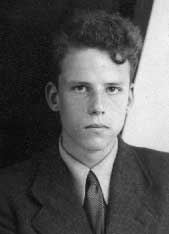
Our Theo was a 23-year-old university student in Amsterdam pulled into anti-Nazi resistance by the imposition of a hated loyalty oath on university personnel and was arrested several times, repeatedly tolling his father for bribes to extract him.
The arrest he couldn’t buy his way out of was a home raid on March 1, 1945 — the very last weeks of the war, while these Germans were in the process of being stranded in the Low Countries. Evidently the collapse of the Reich didn’t dampen their enthusiasm for the cause, because on March 8 the Germans imposed a collective punishment of 100+ executions in revenge for the Dutch resistance’s attempt to assassinate a prominent SS officer.* Theo van Gogh was one of them.
Besides his name-brand ancestry, Theo the World War II resistance figure is also the uncle (quite posthumously — this man wasn’t born until 1957) of film director Theo van Gogh, who’s a far-right martyr in his own right thanks to the vociferous anti-Islamic work that resulted in his 2004 assassination.
Prisoners’ Round (after Gustave Doré) (1890), by Vincent van Gogh.
* That officer, Hanns Albin Rauter, was executed for war crimes in 1949.
This Tyrant at his first entrance here acted and commanded prodigious Slaughters to be perpetrated: Notwithstanding which, the Chief Lord in his Chair or Sedan attended by many Nobles of the City of Ultlatana, the Emporium of the whole Kingdom, together with Trumpets, Drums and great Exultation, went out to meet him, and brought with them all sorts of Food in great abundance, with such things as he stood in most need of. That Night the Spaniards spent without the City, for they did not judge themselves secure in such a well-fortified place. The next day he commanded the said Lord with many of his Peers to come before him, from whom they imperiously challenged a certain quantity of Gold; to whom the Indians return’d this modest Answer, that they could not satisfie his Demands, and indeed this Region yielded no Golden Mines; but they all, by his command, without any other Crime laid to their Charge, or any Legal Form of Proceeding were burnt alive. The rest of the Nobles belonging to other Provinces, when they found their Chief Lords, who had the Supreme Power were expos’d to the Merciless Element of Fire kindled by a more merciless Enemy; for this Reason only, because they bestow’d not what they could not upon them, viz. Gold, they fled to the Mountains, (their usual Refuge) for shelter, commanding their Subjects to obey the Spaniards, as Lords …
In the first weeks of 1524, Alvarado pressed across the Samala River into the K’iche’ kingdom to devastating effect. “The Spaniards, O wonderful! went to the Towns and Villages, and destroy’d with their Lances these poor Men, their Wives and Children, intent upon their Labour, and as they thought themselves, secure and free from danger. Another large Village they made desolate in the space of two hours, sparing neither Age, nor Sex, putting all to the Sword, without Mercy,” de las Casas laments.
In a decisive February 20 battle, Alvarado’s forces felled the half-legendary native hero Tecun Uman — a mortal blow to the empire in the memory of the Annals of the Cakchiquels, a document from later in the 16th century, which bluntly records that “the Quiches were destroyed by the Spaniards … all the Quiches who had gone out to meet the Spaniards were exterminated.”
Indians now fleeing before him, the conquistador marched onward towards the capital city of Q’umarkaj (various other transliterations are available, such as Gumarkaaj and Cumarcaaj; it’s also known from Nahuatl as Utatlan, giving us de las Casas’s reference at the head of this post). To assist blunt force, he had recourse to strategem — as Alvarado himself recorded in his account of Guatemala. Declining an invitation of hospitality from the authorities there for fear of being trapped in a hostile city, he instead convinced those guys to pay him a diplomatic visit to his camp outside the city … then seized them as hostages, who were executed speedily when their capture did not quell all resistance.
by the cunning with which I approached them, and through presents which I gave them, the better to carry out my plan, I took them captive and held them prisoners in my camp. But, nevertheless, their people did not cease fighting against me in the neighborhood and killed and wounded many Indians who had gone out to gather grass. And one Spaniard who was gathering grass, a gunshot from camp, was slain by a stone rolled down the hill …
And seeing that by fire and sword I might bring these people to the service of His Majesty, I determined to burn the chiefs who, at the time that I wanted to burn them, told me, as it will appear in their confessions, that they were the ones who had ordered the war against me … And as I knew them to have such a bad disposition towards the service of His Majesty, and to insure the good and peace of this land, I burnt them, and sent to burn the town and to destroy it, for it is a very strong and dangerous place.
Then [the Spaniards] went forth to the city of Gumarcaah, where they were received by the kings, the Ahpop and the Ahpop Qamahay,** and the Quiches paid them tribute. Soon the kings were tortured by Tunatiuh [Alvarado].
On the day 4 Qat [March 7, 1524] the kings Ahpop and Ahpop Qamahay were burned by Tunatiuh. The heart of Tunatiuh was without compassion for the people during the war.
As Alvarado pledged to make it, this former empire’s former capital is today an utter ruin.
The Baile de la Conquista commemorates the Spanish conquest, personified in Alvarado’s confrontation with Tecun Uman.
Ahpop is the Maya word which has passed without variation to the languages of the interior of Guatemala; its literal meaning is “the mat.” The mat, pop, was the symbol of royalty, and the chief or lord is represented as seated upon it on the most ancient monuments of the Maya Old Empire which had its origin in the Peten, Guatemala. The Ahpop was the Quiche king and chief of the House of Cavec; the Ahpop Camha, also of the House of Cavec, was the second reigning prince; the Ahau Galel was the chief or king of the House of Nihaib, and the Ahtzic Vinac Ahau the chief of the House of Ahau Quiche
Nathaniel Woods was controversially executed by lethal injection at William C. Holman Correctional Facility in Atmore, Alabama, tonight at 9:01 p.m. U.S. Central Time.
Woods and Kerry Spencer — a co-defendant who is awaits execution for the same affair — were in a Birmingham trap house when officers Charles Bennett, Harley Chisholm III, Carlos Owen and Michael Collins arrived to serve a warrant. Of the four, only Collins would outlive the deadliest day in Birmingham police history.
While the facts of the case are contested, one that is universally agreed is that Kerry Spencer, not Nathaniel Woods, killed all three officers. Woods met them but as the police were in the process of taking him into custody, Spencer — just waking up from the commotion, he claimed — burst onto the scene firing an SKS.
“When I looked to the side, there was two police officers trying to train their guns on me so I opened fire with the fucking rifle. I wasn’t trying to get shot, period. I got a rifle in my hand. They’re going to shoot me,” Spencer told CNN. “You point a gun at me, bitch, I’m fixing to shoot.”
Woods said he simply fled from an unexpected crossfire, and Spencer agrees. “Nate is absolutely innocent,” he said. “That man didn’t know I was going to shoot anybody just like I didn’t know I was going to shoot anybody that day, period.” Alabama prosecutors characterized Woods as conspiring with Spencer to lure the cops into an ambush.
Woods and Spencer not only deny this, but developed an explosive appellate argument — never probed by any court — that the slain policemen were hassling the place as part of a routine police shakedown racket, to which the apartment’s owner had fallen behind on payments, and intimidated that owner out of providing exculpatory evidence.
But at a minimum, Woods’s execution presented the disturbing spectacle of a non-triggerman being punished for actions to which he might have been little other than a bystander. The #SaveNate campaign garnered a wide and fruitless call for clemency compassing civil rights leaders …
Governor Ivey cannot allow the execution of Nate Woods. Please call 334-242-7100 and ask to grant him a reprieve, and tag @GovernorKayIvey. We must stop this injustice before it is too late. Please Retweet. #SaveNatehttps://t.co/pyCTYyhEhr
— Martin Luther King III (@OfficialMLK3) March 3, 2020
… celebrities …
#NathanielWoods is scheduled to be executed in Alabama TONIGHT for murders he did NOT commit. Join the broad coalition- including members of the jury and relatives of the victims – in urging @GovernorKayIvey and @AGSteveMarshall to stay Nate’s execution.
— Kim Kardashian West (@KimKardashian) March 5, 2020
… and at least one relative of a victim.
Just got off phone with Kimberly Chisholm Simmons, sister of Harley Chisholm III, one of 3 Birmingham police officers killed in 2004. She does not support the execution of #NateWoods. "He did not kill my brother. This is so unjust. I don't understand," she told me in tears. 1/5 pic.twitter.com/bwt7jKRLPp

 In the dock of
  “A well-bred gentleman, three years at court, as free and generous as could be desired, and very complaisant; stout in his person, but, not being bred anything of a soldier, wanted the main art, that is, policy in war and good conduct” by

 This man was the grandson of the famous
 Woods and Kerry Spencer — a co-defendant who is awaits execution for the same affair — were in a Birmingham trap house when officers Charles Bennett, Harley Chisholm III, Carlos Owen and Michael Collins arrived to serve a warrant. Of the four, only Collins would outlive the