On this date in 1918, 26 Bolsheviks and Left SRs were shot in what is now Turkmenistan, their bid to establish Soviet power in Baku defeated — temporarily.
The Execution of the Twenty-Six Baku Commissars, by Isaak Brodsky (1925)
In a cauldron of ethnic violence and against the military interventions of Turkey and Britain, these worthies were tasked with extending Soviet writ to the stupendous Azerbaijani oil fields* — the predominant source of tsarist Russia’s oil, and destined to be the engine of Soviet industry as well.
Shahumyan and his fellow commissars, meanwhile, fled by ship across the Caspian Sea to Krasnovodsk (now Turkmenbashi, Turkmenistan), where they fell into the hands of a the anti-Soviet factions — backed, once again, by the British — of a brand new locale’s incarnation of civil war.
The commissars’ “presence in Krasnovodsk was a matter of great concern to the [anti-Bolshevik] Ashkhabad Committee, the members of which were seriously alarmed that opposition elements in Transcaspia might take advantage of the presence of the Commissars to stage a revolt against the government.” Said concern was relieved by the expedient of escorting the Baku Soviet to the desert and shooting them en masse.
The Red Army recaptured Baku in 1920, this time for good, and Shahumyan and friends were raised to the firmament of Communist martyrology, and not only in the Azerbaijan Soviet Socialist Republic. Streets and schools throughout the USSR bore their names.
As with many Soviet icons, the commissars had a rough come-down after the Iron Curtain fell. Their monument in Baku stood untended for many years, its eternal flame extinguished … until it was finally (and somewhat controversially) torn down earlier this year.
The Baku Commissars’ monument and its dead eternal flame, prior to its early 2009 demolition. Image (c) denn22 and used with permission.
General de Maud’huy had just been roused from sleep on the straw of a shed and was standing in the street when a little group of unmistakable purport came round the corner. Twelve soldiers and an NCO, a firing party, a couple of gendarmes, and between them an unarmed soldier. My heart sank and a feeling of horror overcame me. General de Maud’huy gave a look, then held up his hand so that the party halted, and with his characteristic quick step went up to the doomed man.
He asked what he had been condemned for. It was for abandoning his post. The General then began to talk to the man. Quite simply, he explained discipline to him. Abandoning your post was letting down your pals, more it was letting down your country that looked to you to defend her. He spoke of the necessity of example, how some could do their duty without prompting but others, less strong, had to know and understand the supreme cost of failure. He told the condemned man that his crime was not venial, not low, and that he must die as an example, so that others should not fail. Surprisingly, the wretch agreed, nodding his head. He saw a glimmer of something, redemption in his own eyes, a real hope, though he knew he was about to die. Maud’huy went on, carrying the man with him to comprehension that any sacrifice was worthwhile while it helped France ever so little. What did anything matter if he knew this? Finally, de Maud’huy held out his hand: ‘Yours also is a way of dying for France,’ he said.
The procession started again, but now the victim was a willing one. The sound of a volley in the distance announced that all was over. The general wiped the beads of perspiration from his brow, and for the first time perhaps his hand trembled as he lit his pipe.
On this date in 1918, a 28-year-old Jewish revolutionary was shot in Moscow for attempting to murder Vladimir Lenin.
Fanya (“Fanny”) Kaplan had actually drawn a life sentence for trying the same trick on a tsarist official 12 years before, so you couldn’t say she was a reactionary element.
No, she was a member of the peasant-based Socialist Revolutionary Party, the SRs — the Bolsheviks’ onetime coalition partners who had splintered into left and right factions, the latter being shut out of power when the Constituent Assembly was closed.
A peasant herself, Kaplan was incensed at the Bolshevik power grab and shot Lenin twice at close range as he left a factory on August 30.
Taken immediately, Kaplan clammed up in interrogation.
My name is Fanya Kaplan. Today I shot at Lenin. I did it on my own. I will not say whom I obtained my revolver. I will give no details. I had resolved to kill Lenin long ago. I consider him a traitor to the Revolution. I was exiled to Akatoi for participating in an assassination attempt against a Tsarist official in Kiev. I spent eleven years at hard labour. After the Revolution I was freed. I favoured the Constituent Assembly and am still for it.
Realizing there was no information to be had from her, the Cheka had her executed four days after her crime — an affair organized by Yakov Sverdlov, the same guy who had recently disposed of the tsar.
On the same day Kaplan took her shots at Lenin, Bolshevik Moisei Uritsky was (successfully) assassinated. The two murders helped justify the Red Terror officially initiated on September 2 — which saw thousands of politically-motivated arrests and executions as the Bolsheviks consolidated their hold on power.
YouTube hosts a great many dreadful student dramatizations of historical events, but this one of Fanya Kaplan by Georgia Tech students is remarkably watchable.
On August 21, 1915, the Turkish governor of Syria had 11 Arab nationalists publicly hanged in Beirut for seditious contacts with the French.
A larger and more famous batch would follow these the next year, like today’s victims the fruit of the French consul‘s leaving an incriminating list of potential allies in its embassy when it bugged out.
[i]n all, fifty-eight individuals were tried and sentenced to death; forty-five of these were either out of the country or avoided arrest; two were given reprieves; and the other eleven, ten Muslims and one Christian, were disgracefully hanged. This public display of terror was only a prelude to additional steps taken as part of the wartime policy of repression…
Lightly defended, Jemal argued that he had no means other than those of terror to hold the area. He claimed that the executions had, in fact, forestalled a rising in Syria. Others, however … see Jemal’s actions in Syria as turning the tide against Istanbul, “causing the Arab Muslims in the area to make up their minds once and for all to break away from the Turkish Empire.” Jemal had perpetrated a “Remember-the-Alamo” for the Lebanese. Throughout the country, the story of his perfidy was passed from person to person and from village to village … One can hardly measure the significance of these hangings in stimulating people to abandon their Ottoman attachment.
By the next year, Arabs had risen in revolt, in alliance — as Pasha had feared — with the Triple Entente.
On this date in 1915, Haitian President Jean Vilbrun Guillaume Sam had his predecessor* Oreste Zamor, and 160 or so of his closest proximity, executed in Port-au-Prince.
Within hours, Sam himself was dead at the hands of an outraged mob — and Haiti on its way to 19 years of American military occupation.
Haiti in the 1910s was a dangerous place to aspire to political authority; Sam was the 7th different man to hold the presidency since 1911. Like many others, he gained it by force, and held it tenuously against rivals who planned to do likewise.
The hecatomb that did in Sam, who had been head of state for less than five months, was seemingly intended to shore himself up in the face of an advance upon Port-au-Prince by one Rosalvo Bobo — or else just done for the principle of the thing. Either way, it left a mess.
A few minutes after 4 a.m., Charles Oscar Etienne, the chief military officer of the Haitian government and a close friend of the President, hurried to the national prison, where ensued the bloody massacre of some 167 prisoners who were held only as political suspects without being even charged with any crime. Among the victims were members of the most prominent families of Haiti …
Stephen Alexis, one of the political prisoners who escaped death in the massacre, has testified before the claims commission that on the morning of the twenty-eighth [sic] of July he has awakened by the prisoner who shared his cell and told that there was firing in town. He heard shots being fired with increasing intensity, and at twenty minutes past four the sound of voices in the conciergerie and the order, “To arms, sound the bugle, prepare for action; fifteen men, forward march.” As the firing squad reached the first cell, Alexis heard Chocotte, the adjutant of the prison, say, “Fire close to the ground; a bullet in the head for each man,” and when the second cell was reached a loud voice cried, “Every one of the political prisoners must die. The arrondissement’s orders are that not one be left standing” …
Except for the very few who escaped by a miracle, the political prisoners were all slaughtered like cattle, their bodies slashed and horribly mutilated, limbs hacked off, the skulls of some of the corpses smashed in, and the bodies of others disembowelled …
The report of the claims commission says: “The barbarous act perpetrated in the prison in Port-au-Prince is all the more inexplicable in that it had no act of war for excuse. There had been no revolt in the interior of the prison. The prisoners were locked into their cells. The prison had not been attacked. The bureau of the arrondissement, which adjoined the prison, had not had to repulse any offensive on the part of the revolutionists. It was with appalling cold-bloodedness that Haitian officers, in whom military authority had been vested, to whom the care and security of the prisoners had been entrusted, perpetrated, with the assistance of their subordinates, the wholesale slaughter of July 27.”
An incensed mob invaded the French embassy (where Sam had taken refuge) and literally tore apart the president.
On July 28, marines from the American ship USS Washingtonlanded in Port-au-Prince to do the usual restore-peace-and-freedom thing. (Greeted as liberators? Surprisingly, “Haitians Dislike[d] Landing of Marines”.)
As a happy side effect, the American occupation froze out French and German commercial interests who had made Haitian inroads, secured debt repayment from the bankrupt country, and allowed Washington to reorder its neighbor to its liking.
From 1915 to 1929 U.S. military tribunals made rulings on political cases. A treaty that provided for American control of customs and construction of roads, as well as supervision of schools and the constabulary, was approved by the Haitian legislature under threat that American troops would remain in the country. American officials dissolved the Haitian legislature when it refused to approve a new American-sponsored constitution, which was then ratified by a referendum supervised by the U.S. military.**
* Zamor was not Sam’s immediate predecessor; rather, Sam had deposed the man who had deposed Zamor.
** Filed under “everything old is new again,” here‘s the American chattering class circa 1921 making a familiar-sounding case for giving the occupation a few more Friedman units on behalf of the Haitian
people, all of whom, less the native ruling class, a small group, recognize the benefits of the American occupation and are grateful for the peace and security they now enjoy … The United States, [Admiral Knapp] says, has only made a start for the good of Haiti, and five years of healing occupation would be lost if the Americans withdrew.
On this date in 1916, a young soldier drugged with rum to the point of stupefaction was dragged to the stake and shot near the western front.
There are hooks on the post; we always do things thoroughly in the Rifles. He is hooked on like dead meat in a butcher’s shop. His eyes are bandaged – not that it really matters, for he is already blind. … A volley rings out — a nervous volley it is true, yet a volley. Before the fatal shots are fired I had called the battalion to attention. There is a pause, I wait. I see the medical officer examining the victim. He makes a sign, the subaltern strides forward, a single shot rings out. Life is now extinct. (quoted in Forgotten Soldiers: The Irishmen Shot at Dawn)
The Belfast youth — who may or may not have been underage; reports appear to vary on this point — enlisted in the 9th Royal Irish Rifles during the initial blush of wartime enthusiasm.
The service of these loyal units from both north and south while Ireland teetered on the brink of of civil war and some of its partisans treated with the Germans was naturally valorized by the crown.
They would experience the full measure of that war’s ample stock of horrors — including numerous executions to enforce military discipline.
Just a few months after 9th was shipped to France, Crozier was found wandering miles behind lines, unarmed and out of uniform, apparently shellshocked.
Events moved quickly from there; Crozier’s lackadaisical service record weighed against him, and it was decided to make an example of him.
Charged with carrying out the sentence* was Frank Crozier (no relation), who would attain some controversial postwar renown. In his memoirs, he recalled the pathos of James Crozier’s fate.
He was no rotter deserving* to die like that. He was merely fragile. He had volunteered to fight for his country … at the dictates of his own young heart. He failed. And for that failure he was condemned to die — and he did at the hands of his friends, his brothers, with the approval of his church.
Eventually, the British government came to agree.
Crozier’s posthumous pardon, from his family genealogy. His Commonwealth War Graves Commission entry is here.
* According to Timothy Bowman, an officer of the 9th Royal Irish Rifles convicted on the same offense received a free pardon days after James Crozier’s conviction, to the consternation of the rank and file.
On this date in 1915, three of the Black Hand conspirators who had assassinated Archduke Franz Ferdinand in Sarajevo the previous June were hanged for treason and murder as the World War that assassination ignited engulfed Europe.
You could say it was too little, too late.
Ironically, the gunman who actually got the Archduke, Gavrilo Princip, was too young to receive the death penalty under Austro-Hungarian law — barely short of his 20th birthday,* a more liberal standard for capital responsibility than even present-day human rights standards require.
In fact, that was true of five of the eight student nationalists convicted; the Slavs’ barbarous oppressor accordingly punished them for murdering the heir to its throne and involving it in a ruinous war with prison sentences of no more than 20 years. Three of the underaged five (Princip included) contracted fatal tuberculosis cases in custody during World War I; the other two, Cvijetko Popovic and Vaso Cubrilovic, outlived the Habsburg Empire by decades.
Three remained, old enough to swing for turning Europe into a charnel house: Vaso’s older brother Veljko (a schoolteacher), Danilo Ilic (a newspaper editor) and Misko Jovanovic (a businessman).
But if their names aren’t familiar, and their comedy assassination plot succeeded almost in spite of themselves, these forgotten radicals still rank among the midwives of modernity for the global cataclysm unleashed by their deed, for its calamitous aftershocks of nationalism and ideology, and for the second war that succeeded the horrors of the first.
According to John S. Craig’s Peculiar Liaisons, Gavrilo Princip left his poetry scrawled on the wall of his cell.
Our ghosts will walk through Vienna
And roam through the palace
Frightening the lords
All things considered, he sold himself short.
* There seems to be some uncertainty as to Princip’s actual date of birth, so he might in fact have been 20 years old. The court, at any rate, took him for 19.
Even the most jaded navigator of World War I’s extensive stock of horror may be gobsmacked to find that military executions in this conflict extended to the Roman-pioneered practice of imposing collective punishment on a unit by killing a random tenth of it. Little more is evidently available about this situation online, but the idea of the French military selecting randomly for salutary executions is used in Stanley Kubrick’s Paths of Glory where one officer, charged with providing an enlisted man for trial, simply has them all draw lots.
And according to Gilbert Meynier’s L’Algérie Révélée: La guerre de. 1914–1918 et le premier quart du XX sie`cle (French review), African soldiers’ experience in the Great War with incidents like this tended to underscore France’s colonial domination … and helped contribute to the national identity-forming that would break the French grip on North Africa as the century unfolded.
On this date in 1917, thirteen black soldiers were secretly hanged at dawn at a military camp outside San Antonio for their parts in a Houston race riot four months earlier.
When white police arrested a black infantryman who tried to prevent their detaining a drunk black woman, then beat up and shot at a black corporal sent to inquire after him, hostility boiled over. Over one hundred soldiers marched through the city — confronting a mob of white citizens and police who had likewise armed themselves. Fifteen whites and four blacks were killed in the ensuing confrontation.
This documentary segment is from Mutiny on the Bayou:
Their lenient treatment has led negro soldiers to believe that the government is in sympathy with their arrogance and impudence toward white people …
A COURT MARTIAL, A HOLLOW SQUARE AND A FIRING SQUAD WILL SETTLE THE MATTER FOR ONCE AND FOR ALL.
No white Houstonian was ever prosecuted for the day’s events, but the largest court-martial in U.S. military history tried 63 black soldiers and condemned 13 to die:
Sgt. William C. Nesbitt
Corp. Larsen J. Brown
Corp. James Wheatley
Corp. Jesse Moore
Corp. Charles W. Baltimore*
Pvt. William Brackenridge
Pvt. Thomas C. Hawkins
Pvt. Carlos Snodgrass
Pvt. Ira B. Davis
Pvt. James Divine
Pvt. Frank Johnson
Pvt. Rosley W. Young
Pvt. Pat MacWharter
The sentence was carried out without appeal, the time and place only announced after the men had already hanged but evidently witnessed by the New York Times reporter who wrote that “the negroes, dressed in their regular uniforms, displayed neither bravado nor fear. They rode to the execution singing a hymn, but the singing was as that of soldiers on the march.”
Two more mass courts-martial would follow, resulting in six more hangings the following year.
For years afterward, the incident clouded and complicated race relations, especially in the War Department.
Some blacks openly applauded the mutiny as a justified resistance against racist provocation. This inflammatory opinion piece, quoted in Mark Ellis’ Race, War and Surveillance, landed the editor who agreed to run it in federal prison:
We would rather see you shot by the highest tribunal of the United States Army because you dared to protect a Negro woman from the insult of a southern brute in the form of a policeman, than to have you forced to go to Europe to fight for a liberty you cannot enjoy. Negro women regret that you mutinied, and we are sorry that you spilt innocent blood, but we are not sorry that five southern policemen’s bones now bleech [sic] in the graves of Houston, Tex.
Meanwhile, the Army noted “the tendency of the Negro soldier, with fire arms in his possession … to become arrogant, overbearing, abusive and a menace to the community in which he happens to be stationed.” It held down its black enlistment throughout the interwar period.
Sympathizers with the policy would continue — until the raw manpower requirements of World War II trumped the discussion — to cite the Houston riots both as evidence of the dangers of arming blacks, and the disloyalty of a populace willing to register open disgust with lynch law during wartime.
* Baltimore was the soldier who had come after the missing men; his altercation with a white policeman who answered, “I don’t report to any negro” and pistol-whipped him — and, it was incorrectly rumored among the 24th Infantry that night, killed him — triggered the riot.
Baltimore’s role is developed in a fascinating study of primary documentation on the case in Edgar A. Schuler’s “The Houston Race Riot, 1917” published in The Journal of Negro History, Vol. 29, No. 3 (July, 1944). Schuler also treats the interesting tensions between the Houston black community and the black regiment, and the emergence of a white narrative of uppity, out-of-control Negroes rather than ones responding (however wrongly) to specific provocations … which conveniently turned Jim Crow law from the problem into the solution.
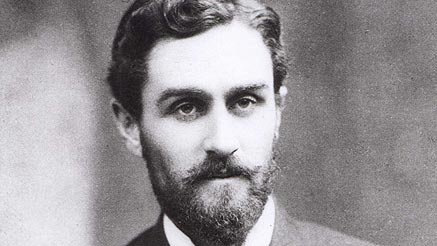
On this date in 1916, Roger Casement was hanged for treason by the British crown that had knighted him only a few years before.
Casement died for his part in the Easter Rising, but this Irish nationalist hero’s layered story has long made him a very different sort of cultural marker than, say, James Connolly.
Casement came to public prominence for his damning report on Belgium’s atrocious treatment of natives in its Congo colony, e.g.:
[T]he great decrease in population, the dirty and ill-kept towns, and the complete absence of goats, sheep, or fowls — once very plentiful in this country — were to be attributed above all else to the continued effort made during many years to compel the natives to work india-rubber. Large bodies of native troops had formerly been quartered in the district, and the punitive measures undertaken to his end had endured for a considerable period. During the course of these operations there had been much loss of life, accompanied, I fear, by a somewhat general mutilation of the dead, as proof that the soldiers had done their duty.
. . . Two cases (of mutilation) came to my actual notice while I was in the lake district. One, a young man, both of whose hands had been beaten off with the butt ends of rifles against a tree; the other a young lad of 11 or 12 years of age, whose right hand was cut off at the wrist. . . . I both these cases the Government soldiers had been accompanied by white officers whose names were given to me. Of six natives (one a girl, three little boys, one youth, and one old woman) who had been mutilated in this way during the rubber regime, all except one were dead at the date of my visit.
[A sentry in the employ of one of the concessionary private companies] said he had caught and was detaining as prisoners (eleven women) to compel their husbands to bring in the right amount of rubber required of them on the next market day. . . . When I asked what would become of these women if their husbands failed to bring in the right quantity of rubber . . , he said at once that then they would be kept there until their husbands had redeemed them.
Casement’s is an honorable name in the campaign for the Congo, an early human rights and anti-colonial struggle; in this 92-minute BBC documentary on the notorious depredations in the Congo, the Casement report’s creation and impact are treated from about 1:15:15 through the end:
A similar investigation undertaken in Peru — where the lens focused on British employers, rather than strictly the malfeasance of foreign states — earned him knighthood in 1911, but Casement’s personal evolution from loyal Protestant* imperial operative with a sympathy for the Irish cause to revolutionary nationalist was already underway. “This journey into the depths of the Congo has been useful in helping me discover my own country and understand her situation, her destiny, her reality,” he wrote his sister. “I’ve also found my true self: the incorrigible Irishman.”
He resigned from the consular service and began recruiting for the Irish Volunteers.
As World War I opened, Casement identified British aggression as its cause, an extension of the violent imperial hegemony he chronicled in The Crime Against Europe:
The British Empire was not founded in peace; how, then can it be kept by peace, or ensured by peace-treaties? It was born of pillage and blood-shed, and has been maintained by both; and it cannot now be secured by a common language any more than a common Bible. The lands called the British Empire belong to many races, and it is only by the sword and not by the Book of Peace or any pact of peace that those races can be kept from the ownership of their own countries.
While any Irish Republican would have agreed with that sentiment, the resulting moral and tactical calculus for the Irish cause to ally with the German was not universally embraced — and was certainly anathema to the British.
All that was beautiful and just,
All that was pure and sad
Went in one little, moving plot of dust
The world called bad.
Came like a highwayman, and went,
One who was bold and gay,
Left when his lightly loving mood was spent
Thy heart to pay.
By-word of little street and men,
Narrower theirs the shame,
Tread thou the lava loving leaves, and then
Turn whence it came.
Ætna, all wonderful, whose heart
Glows as thine throbbing glows,
Almond and citron bloom quivering at start,
Ends in pure snows.
Casement spent the first two years of the Great War in Germany itself, and arranged a shipment of guns that would have supported the Easter Rising, but thought the aid too little and too late. He had a German U-boat drop him at Ireland, trying to get word to the Republican leadership to postpone the revolt.** Instead, he was picked up three days before the doomed rising and hanged after a sensational trial.†
His “treason” — and of course, the very crime of which he was convicted imports a British legitimacy in Ireland that Casement explicitly rejected — shocked many old associates, but he still had friends in high places. To dampen the international clemency campaign, England circulated the notorious “Black Diaries,” photographs of supposed Casement diary pages detailing the author’s homosexuality.
This dirty (and successful) trick brings a personal-is-political quality to Casement’s legacy as well as an enduring debate over the diaries’ authenticity. Since Irish nationalism gained mainstream acceptance well before homosexuality, right-thinking folk long held the Black Diaries a forgery, and time was you solicited a black eye by saying otherwise in the wrong company.
The gay rights movement has seen a posthumous redefinition of Casement; although homosexuality was not on the indictment against him, one could argue that it was the reason he hanged. Given recent handwriting forensics that support the diaries’ authenticity, the general‡ consensus about the Black Diaries has inverted with the effect of only heightening sympathy for their alleged author, albeit at the expense of some tension over how to situate that characteristic within the whole of Casement’s life and thought.
And that is only one aspect of the shifting place of Casement in the firmament of Republican martyrs since his death. His hagiography waxed in the interwar years, with Yeats among those calling for the return of Casement’s remains in The Ghost of Roger Casement”.
But the humanitarian’s German ties were an inconvenience as World War II raged, and not until afterward was that cause renewed. When his body was finally returned in 1965, an Irish state funeral elided the matter of the diaries.
Even Casement himself, who would be the last to die for the Easter Rising, had a hand in the myth-making. His last mission’s purpose to avert the Easter Rising fit neither the government’s interest in maximizing his perfidy nor Casement’s own in identifying with the Irish cause; he himself therefore owned the Rising fully in his defense which made him fine fodder for Republican hymns like “Lonely Banna Strand”:
RTE radio’s What If? series recently explored Casement’s complex legacy:
As Casement put it in his voluminous personal writing, “It is a cruel thing to die with all men misunderstanding — misapprehending — and to be silent forever.”
* Casement’s father was Protestant and his mother was Catholic; he lived with a somewhat split identity between the two faiths, but formally converted to Catholicism while awaiting execution (which surely did not hurt his memory to the Irish cause) and his last meal was simply the Host.
** The guns themselves were interdicted by the British navy and ended up scuttled to the ocean floor.
† Since Casement’s incitements to rebellion had occurred on foreign soil, there was some fine legal parsing over whether he could be tried for “treason.” The dispute resolved to the placement of a comma in a medieval law — leading to the epigram/-taph that Casement was “hanged by a comma.” In the midst of war and before an English jury, however, punctuation was an even weaker defense than it sounds.


 Within hours, Sam himself was dead at the hands of an outraged mob — and Haiti on its way to 19 years of American