The Salt Riot is exactly what you’d think from its name, right down to being over in a matter of weeks.
Common folk irked at a new salt tax* that made the commodity dramatically more expensive besieged tsar Alexei I at the beginning of June, soon joined by opportunistic Streltsy who hadn’t been paid in a while.
The specific target of their rage was the boyar Boris Morozov, the elder brother-in-law of the teenage monarch, and the true power behind the throne. He accordingly played the traditional role of bad cop to the tsar’s presumptive good cop.
Of course, both guys were really on the same team.
A few days of mayhem, a few boyars’ heads on pikes later, the Streltsy had been bought off and the rioters divided and quashed. Alexei avoided handing over Morozov to the vengeance of the mob, and “exiled” him to a monastery. He would return from “exile” in a few months, once everyone had chilled out and the rising could be taken with a grain of salt.
This passing spasm in the Russian polity left a long-lived and troublesome legacy: one of the demands of the rioters was the convocation of the Zemsky Sobor to hammer out a new legal code.
This happened to be a need for the Russian state anyway, since its rulers were governing by the haphazard issuance of countless ukases nobody could keep straight. So, 1649 saw the promulgation of the Sobornoye Ulozheniye, helpfully rationalizing the lawmaking process.
Win, and win! Except that this legislative milestone also codified serfdom in its most heavy-handed form, formally binding most Russian peasants to their estate without freedom of movement, and making this unhappy condition hereditary. The legal code, and the institution of serfdom subsisted until the 19th century.
* According to The Cambridge History of Russia, the salt tax itself had actually been abolished at the end of 1647, but “other direct taxes were tripled to compensate for the loss of revenue.”
Anyone who has ever had an unedifying experience of pedagogy ought to be able to sympathize with Jan Sten, the Marxist philosopher once hired to tune up Joseph Stalin’s intellectual credentials and who on this date in 1937 was purged by his former pupil.
Hardly anyone knew Stalin better than Sten. Stalin, as we know, received no systematic education. Without success Stalin struggled to understand philosophical questions. And then, in 1925, he called in Jan Sten, one of the leading Marxist philosophers of that time, to direct his study of Hegelian dialectics. Sten drew up a program of study for Stalin and conscientiously, twice a week, dinned Hegelian wisdom into his illustrious pupil. (In those years dialectics was studied by a system that Pokrovsky had worked out at the Institute of Red Professors, a parallel study of Marx’s Capital and Hegel’s Phenomenology of Mind.) Often Sten told me in confidence about these lessons, about the difficulties he as the teacher, was having because of his student’s inability to master Hegelian dialectics. Jan often dropped in to see me after a lesson with Stalin, in a depressed and gloomy state, and despite his naturally cheerful disposition, he found it difficult to regain his equilibrium. Sten was not only a leading philosopher but also a political activist, an outstanding member of the Leninist cohort of old Bolsheviks. The meetings with Stalin, the conversations with him on philosophical matters, during which Jan would always bring up contemporary political problems, opened his eyes more and more to Stalin’s true nature, his striving for one-man rule, his craft schemes and methods for putting them into effect … As early as 1928, in a small circle of his personal friends, Sten said: “Koba will do things that will put the trials of Dreyfus and of Beilis in the shade.”This was his answer to his comrades’ request for a prognosis of Stalin’s leadership over ten years’ time. Thus, Sten was not wrong either in his characterization of Stalin’s rule or in the time schedule for the realization of his bloody schemes.
Sten’s lessons with Stalin ended in 1928. Several years later he was expelled from the party for a year and exiled to Akmolinsk. In 1937 he was seized on the direct order of Stalin, who declared him one of the chiefs of the Menshevizing idealists.* At the time the printer had just finished a volume of the Great Soviet Encyclopedia that contained a major article by Sten, “Dialectical Materialism.” The ordinary solution — and such problems were ordinary in those years — was to destroy the entire printing. But in this case the editors of the encyclopedia found a cheaper solution. Only one page of the whole printing was changed, the one with the signature of Jan Sten. “Dialectical Materialism” appeared over the name of M.B. Mitin, the future academician and editor in chief of Problems of Philosophy, thus adding to his list the one publication that is really interesting. On June 19, 1937, Sten was put to death in Lefortovo prison.
Seen in that light, a hostile review on RateMyProfessors.com doesn’t sound so bad at all.
* Menshevizing idealism — here’s an official Soviet definition from the 1970’s — was among Stalin-era “polemical by-words for philosophical heresy.” (Robert Tucker, “The Rise of Stalin’s Personality Cult,” The American Historical Review, Apr. 1979)
On this date in 1938, a Soviet purge claimed (among others*) Yakov (Jacob) Peters, former Cheka executioner and once the subject of a headline-grabbing trial in England.
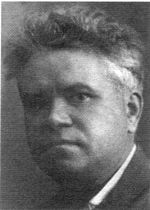
Peters was a trusted (and ruthless) operator in the Soviet internal police from the start of the Revolution: he helped interrogate Lenin‘s would-be assassin Fanya Kaplan in 1918.
And he was the guy Trotsky had on speed-dial when Cheka founder Felix Dzerzhinsky was arrested by the Left SRs during their abortive 1918 uprising against their erstwhile revolutionary allies, the Bolsheviks.**
Dzerzhinsky was disarmed and locked in a room. his assistant, M.I. Latsis, was captured in the Cheka Lubianka headquarters. “No point in taking him anywhere, put this scum against the wall!” shouted a sailor, but one of the leaders, Alexandrovich, intervened, saying, “There is no need to kill, comrades; arrest him, but do not kill.” Dzerzhinsky’s assistant Yakov Peters was urgently summoned by Trotsky, who ordered him to crush the uprising by attacking the Left Eser headquarters. Alexandrovich was caught at a railway station, and Latsis, whom he had saved from execution, personally shot him. Mass executions in Cheka prisons followed. (Source)
Like a lot of old Bolsheviks, Peters’s early service to the cause didn’t age too well. He ran afoul of some bureaucratic intrigue or point of party discipline or other and caught a bullet in 1938. (Khrushchev rehabilitated him.)
For anyone in England watching the fate of this distant apparatchik, the proximity to bloodbaths would have had a familiar hue.
Peters was one of a gang of Latvian revolutionaries who came to cinematic public attention in London when, in the course of being rounded up for a December 1910 murder, they engaged the police in a stupendous East End firefight on January 2, 1911 — the Siege of Sidney Street. (It’s also known as the Battle of Stepney.)
Armed like soldiery, the Latvians easily outgunned the bobbies who had them hemmed into a cul-de-sac, and they fired on John Law with ruthless effect. This necessitated a call to the Scots Guard — whose deployment was okayed by Home Secretary Winston Churchill, the latter captured on film that day awkwardly milling about the scene of the urban combat.
(Translated directly to the city’s cinemas as soon as that same evening, Churchill’s image came in for public catcalls owing to his support for a relatively open immigration policy for eastern Europeans.)
This incident was a landmark in crime, policing, media — recognizably modern in its trappings of nefarious immigrant terrorists, politicized state funerals for policemen, and of course, the live-on-the-scenes camera work.
Since Britain was a ready hand with the noose at this time, one might think an execution would have been just the denouement.
However, responsibility for the policememen slain in the affray had been officially assigned to a different gang member, George Gardstein — who was killed when the besieged house burned down — and there was little usable evidence against those who were finally put on trial for the gang’s various crimes. Most of the witnesses were dead, fled, or completely unreliable, so the surviving Latvians all walked.
(Since the identity of one of the first guys to start shooting when the police rang always remained murky, there are some theories — such as in this out-of-print book — that Peters himself had been one of the gunmen on-site, and/or that he could be identified with the absconded and never-captured gang leader “Peter the Painter”.)
Whatever the exact measure of blood on Yakov Peters’s hands from Sidney Street, there would be a lot more where it came from.
While Peters went off to his different fate in revolutionary Russia, the dramatic scene he left behind has naturally attracted continuing retrospective attention in England. The testimony of witnesses, who also recollect the shootout’s anti-immigrant fallout, is preserved in this BBC Witness radio program:
On this date in 1905,* the last bastion of the abortive 1905 Russian Revolution was smashed with mass executions of the radical Russian proletariat who constituted Moscow’s Presnia district.
The long, uphill struggle of tsarist Russia to adapt its economy and political institutions to modernity was nearing its final failure.
A shadow play of that approaching cataclysm would unfold in 1905, when popular dissatisfaction won a short-lived period of constitutional government.
Radicals disdained these half-measures, however, and shook the realm with a general strike in December 1905 — a small quake only, since Russia’s proletariat was still too small to constitute a real threat to the state.
And the capital of insurrectionary labor was Muscovite factory district of Presnia or Presnya. There, a botched attempt to suppress strikers resulted in an armed standoff; “Red Presnia” (Krasnaia or Krasnaya Presnia) ended in carnage when the overmatched workers were besieged by the Semyonovsky Guard.
A political cartoon trilogy on the annihilation of Red Presnia: from the top, The Entrance, The Battle, and The Pacification (picturing the Kremlin sinking in blood). They’re from this public domain Google book; scroll up from the link to pp. 35-38 for more unflattering drawings of the tsar as a tinhorn murderer.
On the night of the sixteenth Presnya was encircled in an iron ring of government troops. Soon after 6:00 a.m. on the seventeenth these troops opened a remorseless cannonade. Guns were fired as much as seven times a minute. This continued, with an hour’s respite, until 4:00 p.m. Many factories and houses were destroyed and set on fire. The barrage was conducted from two sides. Houses and barricades were in flames, women and children darted about the streets in clouds of black smoke, the air was filled with the roar and clatter of firing.
Detail view (click for the full image) of an illustration of a Red Presnia barricade under fire from the Semenovsky Guard. (Source)
The glow was such that miles away it was possible to read in the streets late at night, as though it were day. Until noon the druzhiny [the workers’ militia] conducted successful operations against the troops, but continuous enemy fire forced them to stop. Only a small group of druzhinniki remained under arms on their own initiative and at their own risk.
By the morning of the eighteenth Presnya had been cleared of barricades. The “peaceful” population were allowed to leave Presnya; the troops were careless enough to allow people to leave without searching them. The druzhinniki were the first to leave, some of them still with arms. Later, there were shootings and other violence by the soldiers, but by then not a single druzhinnik remained in the area.
The “pacification troops” of the Semyonovsky regiment, who were sent to “pacify” the railway, were ordered not to make arrests and to proceed with out mercy.** They met with no resistance anywhere. Not a single shot was fired against them, yet they killed approximately 150 persons on the railway line. The shootings were carried out without investigation or trial. Wounded men were taken from ambulance wagons and finished off. Corpses lay around without anyone daring to carry them away. One of those shot by the Petersburg guards was the engine-driver Ukhtomsky, who saved the lives of a group of druzhinniki by driving them away on his engine at colossal speed under machine-gun fire. Before they shot him, he told his executioners what he had done: “All are safe,” he concluded with calm pride, “you’ll never get them now.”
“No single act during this period of governmental vengeance,” one chronicle remarked, “stands out more senseless than the punitive expeditions of the Semyonovsky Regiment on the Moscow-Kazan railroad.”
In the course of my inquiries about the activities of the Semyonovski regiment along the Moscow-Kazan line, I heard many stories about Engineer Ukhtomski, who showed heroic firmness in the last moments of his life. Part of this information was given by the captain of the Semyonovski regiment which executed him in Lubertzy,† together with three other workingmen. The captain, who observed him in his last moments, was charmed by his personality; the soldiers felt a deep reverence for him, their esteem being expressed in the fact that after the first volley he remained untouched. Not one bullet had grazed him.
His appearance was in no way striking. Of medium height, with vivid, clever eyes, he gave the impression of a very modest, almost bashful, man.
It was a mere accident that he fell into the hands of the punitive expedition. He was traveling in a carriage, when he stopped in the Lubertzy inn, ignorant of the presence of soldiers at the station. He was searched and a revolver was found in his pocket, which caused his arrest. He was brought before the officer in charge.
Questioned as to his name, he refused to reveal it. The officer went over the lists and the photographs of the revolutionists, comparing them with the live original before him. then he exclaimed:
‘You are Engineer Ukhtomski; you will be shot!’
‘I thought so,’ Ukhtomski answered coolly.
This happened in the afternoon, about three o’clock. He was asked whether he did not want to take the communion, and expressed his desire to do so.
After the communion he was taken, together with three workingmen of the Lubertzy brake-factory, to the place of execution. He made the following statement, addressing the officer:
‘I knew that, once in your hands, I should be shot; I was prepared for death, and that is why I am so calm. … ‘
At the place of execution they wanted to blindfold Ukhtomski. He asked the favor of meeting death squarely, face to face. He also refused to turn his back to the soldiers.
…
The soldiers fired. The workingmen dropped. Ukhtomski was not hurt. He stood erect, arms folded on his breast.
The soldiers fired again. He fell on the snow, but he was still alive and fully conscious. He looked around, with eyes full of anguish.
Standing just thirteen years later over the remains of that vanquished tsarism, V.I. Lenin paid the martyrs of Presnia tribute for sacrifices “not in vain”:
Before the armed insurrection of December 1905, the people of Russia were incapable of waging a mass armed struggle against their exploiters. After December they were no longer the same people. They had been reborn. They had received their baptism of fire. They had been steeled in revolt. They trained the fighters who were victorious in 1917 and who now, despite the incredible difficulties, and overcoming the torments of hunger arid devastation caused by the imperialist war, are fighting for the world victory of socialism.
Long live the workers of Red Presnya, the vanguard of the world workers’ revolution!
* New Year’s Eve by the Gregorian calendar; tsarist Russia was still on the archaic, 13-days-slower Julian calendar, so the dates within Russia were (as reflected in the Trotsky passage) Dec. 17 for the storming of Red Presnia, and Dec. 18 for this date’s slaughter.
† Summary executions continued for some days, but a Jan. 2, 1906 London Times wire dispatch datelined Jan. 1 appears to situate the particular slaughter that would have claimed Ukhtomsky:
The majority of the revolutionaries in the Presnia quarter succeeded in escaping. About 100 surrendered to General Min to save the houses of the poor from destruction. Artillery and troops are clearing the Kazan railway and are capturing station after station. Three hundred railwaymen have been killed and yesterday 70 were summarily shot at Lubertsy. Moscow is becoming quiet.
“The river Moskva at the Presnia Verck,” the correspondent observed, “is covered with corpses of revolutionaries scattered over the ice.”
“Seldom is a poet burned alive, no matter how critics may roast his work!”
-Robert Beale
On this date in 1689, German poet and mystic Quirinus Kuhlmann was roasted in Moscow for heresy.
This Silesian millenarian (English Wikipedia entry | German) experienced a mystical conversion and spent his law school hours instead scribbling visionary poetry and devouring visionary texts.
Inflamed with Bohmian fire, I read Bohme with fiery eagerness and capacity. I did not know the Bohmian texts and I knew them the same day. What an admiration (o Jesus!) overcame me when I heard Bohme tell his revelations which I had learned from the universe of nature, with God as my teacher, it were the revelations the first outlines of which I just had begun to delineate in my own works.
Quirinus’s particular vibe was an end-times kingdom of Jesus thing with the Catholic Church as the Antichrist. He cast about Europe vainly imploring princes to ally — Protestants with Orthodox with Mussulmen — to destroy the papal whore of Babylon. This
Prince of Fanatics … wrote a book, entitled Prodromus Quinquennii Mirabilis, and published at Leyden in 1674, in which he set forth his peculiar views. He stated that in that same year the Fifth Monarchy or the Christian Kingdom was about to commence, that he himself would bring forth a son from his own wife, that this son by many miracles would found the kingdom, and that he himself was the Son of God. On account of these mad ravings he was exiled by the Chief of the United Provinces of the Netherlands, and expelled with infamy from the University of Leyden. But his strange mission did not cease. He wandered for some time in France and England … He then proceeded to Turkey on his mission, and presented himself to the Sultan. Although ignorant of the language of the country, he persuaded himself that he could speak in any tongue; but when they led him into the presence of the Sultan he waited in vain for the burning words of eloquence to flow. The Turks dealt with him according to his folly, and bestowed on him a sound thrashing. Thence he proceeded to Russia …
Kuhlmann could have picked a better time to evangelize Russia than the reign of Peter the Great. This progressive despot did indeed look west for Russia’s future: in industry, in law, in war, even in fashion. But certainly not in holy alliances.
It was a fellow-German in Moscow, a Lutheran pastor, who denounced Kuhlmann as a dangerous heretic. He and a follower were duly burned as such.
Fifty-nine minutes after midnight on this date in 1950, five Soviet cadres were condemned to death in a secret trial on trumped-up charges of treason in one of Stalin’s party purges. An hour later, they were shot.
The “Leningrad Affair” saw Uncle Joe — with the urging of other henchmen jockeying for the imminent post-Stalin succession — liquidate the excessively independent leaders of Russia’s other capital.
During the late World War, the “hero city” Leningrad withstood a withering 28-month Nazi siege stretching from the very first weeks of war into 1944.
In those days there was something in a man’s face which told you that he would die within the next twenty-four hours …
I shall always remember how I’d walk every day from my house near the Tauris Garden to my work in the centre of the city, a matter of two or three kilometres. I’d walk for a-while, and then sit down for a rest. Many a time I saw a man suddenly collapse on the snow. There was nothing I could do. One just walked on. And, on the way back, I would see a vague human form covered with snow on the spot where, in the morning, I had seen a man fall down.
One didn’t worry; what was the good? People didn’t wash for weeks; there were no bath houses and no fuel. But at least people were urged to shave. And during that winter I don’t think I ever saw a person smile. It was frightful. And yet there was a kind of inner discipline that made people carry on.
-A survivor of the siege
This horror cost the lives of a million Leningraders, and tour guides will be sure to point out the physical scars still to be seen.
But the city never fell, and its resistance wrote one of the 20th century’s awe-inspiring monuments to human perseverance. Dmitri Shostakovich, caught in the city himself, composed one of the Great Patriotic War’s most famous musical anthems, defiantly performed by the Leningrad symphony itself during the actual siege, and broadcast on Soviet radio and around the world.
One result of a city’s being carved away from its country — and of consequence to this date’s victims — was that it put Leningrad on increasingly autonomous footing.
Voznesensky, who literally wrote the (incautiously heterodox) book on The Economy of the USSR during World War II
And as the war receded, the men who administered Leningrad were left with an unusual scope of action … bolstered by their recent reputation for anti-fascist heroism. The so-called “Leningraders” had become an embryonic rival power center.
[t]he executions of October 1, 1950, were only the tip of the iceberg … The Leningrad Affair probably claimed more than 1,300 victims, including over 100 who were shot, nearly 2,000 people who were dismissed, and many arrseted.
This day’s victims (though not all those persecuted) were officially rehabilitated during the Khrushchev era; responsibility for the Leningrad Affair even served to condemn one of its authors, NKVD torturer Viktor Abakumov, to death in the 1950s.
But compared to the corpse motel of 1930s USSR, this purge was distinctly small potatoes. One of its survivors — a man who could easily have been condemned on the same evidence that doomed the likes of Kuznetsov — was politician Alexei Kosygin, later to emerge as one of the USSR’s leading liberalizers in the 1960s and (in the words of Canadian Prime Minister Pierre Trudeau) “the forerunner of Mikhail Gorbachev.”
On this date in 1976, the real-life Soviet political officer whose naval mutiny inspired Tom Clancy’s Cold War thriller The Hunt for Red October was shot in Moscow for treason.
No, unlike his fictional counterpart Marko Ramius (Sean Connery, in the 1990 cinema adaptation excerpted above), Valery Sablin didn’t make it to the West.
But the real Valery Sablin wasn’t trying to make it.
Sablin was the political officer aboard the submarine-killer Storozhevoy. He was also a dedicated Leninist incensed at the notoriously corrupt gerontocracy of the Leonid Brezhnev era.
When he led his mutiny in Riga, his plan was to take the Storozhevoy to St. Petersburg and, Aurora-like, sound the tocsin for a Soviet Tea Party to restore the ideals of the Revolution.
Basically, Sablin had the exact opposite intent of his literary offspring.
This being the 1970s, when figuring out what the devil was happening in the black box of the USSR constituted its own academic discipline, the incident was misinterpreted in the western media — but understandably so.
The sea route from Riga to St. Petersburg begins in a westerly direction, towards Sweden, and the spectacle of Soviet fighters turning back a vessel steaming for Gotland (combined, of course, with the natural susceptibility of the western audience to the notion) suggested that the mutineers had aimed not at revolution, but at defection.
Under the headline “Newspaper Reports Soviet Ship Mutiny” sourced to Agence France-Presse and datelined Stockholm, Jan. 22, the Jan. 23, 1976 Washington Post reported:
Crewmen on board a Soviet coast guard vessel in the Baltic mutinied and tried to sail the ship into Swedish territorial waters in November, the evening newspaper Expressen said today.
Citing foreign visitors recently returned from Riga, the paper said the mutiny took place Nov. 7 after celebrations in Riga marking the Soviet revolution.
The paper said a Soviet submarine and a number of helicopters forced the ship to return to Riga.
This was the version of the story that aspiring spy novelist Tom Clancy encountered. In his reworking, it became the bold (and successful) defection of a state-of-the-art Soviet submarine and its deft commander … effected, of course, with a little help from the derring-do of the spooks at Langley.
Moscow was pleased to let this be the version that people heard, to the extent they heard anything at all of the incident. Though not exactly flattering, it was much less threatening than the potential storyline of “Soviet officers are so fed up with party corruption that they’re trying to revolt”.
It’s pretty safe to say that the Valery Sablin who died this day would not have had a lot of sympathy for Marko Ramius,* and still less for the Reaganite writer who turned Sablin’s deed inside-out and made it the cornerstone of his own personal mint.
Trust the fact that history will judge events honestly and you will never have to be embarrassed for what your father did. On no account ever be one of those people who criticise but do not follow through their actions. Such people are hypocrites — weak, worthless people who do not have the power to reconcile their beliefs with their actions. I wish you courage, my dear. Be strong in the belief that life is wonderful. Be positive and believe that the Revolution will always win.
-Sablin’s last letter to his son
Russian speakers may enjoy this documentary about the Sablin mutiny.
* Another inversion: in order to make his break for the Free World, the fictional (and, significantly, ethnically Lithuanian) Ramius murders the ethnically Russian political officer, Ivan Putin, assigned to his ship; the real Sablin was himself that zealous political officer, and imprisoned the ship’s captain in the course of the mutiny.
On this date in 1570, Russian tsar Ivan IV Grozny — Ivan the Terrible — carried out one of his most infamous and horrible atrocities with hundreds executed on Red Square.
Ivan the Terrible, by Viktor Vasnetsov. (Cropped image; click for the full painting.)
We find ourselves in 1570 almost a quarter-century into the reign of this complicated, frightening figure. It is the oprichnina, the bloodiest spell of Ivan’s authority: years of torture, purges, and political violence vividly symbolized by the tsar’s black-clad personal Gestapo, the oprichniki.
“Children of darkness,” the exiled noble Kurbsky called these dreadful Praetorians. “Hundreds and thousands of times worse than hangmen.”
A dangerous time to draw breath, but a particularly dangerous time for any boyar, men of the feudal nobility whom Ivan set his iron hand to mastering. This, after all, was the historical task of monarchs at this time, and it was everywhere accomplished with bloodshed.
Already stung by the defection — and subsequent nasty correspondence — of one such noble, Andrei Kurbsky, Ivan was downright paranoid about disloyalty during the long-running Livonian War against Muscovy’s western neighbors, Poland, Lithuania and Sweden.
Ivan became ever readier to equate dissent with treason and to ascribe his military reverses to conspiracies on the part of his aristocratic commanders, rather than to the shortcomings of his war-machine in general. A vicious circle thus emerged – of military failures; suspected treachery; the suspects’ fear of condemnation and liquidation, and flight abroad.*
The innocent have nothing to fear!
Taking it into his head that the ancient, rival city of Novgorod — one of the cradles of Russian civilization — was scheming to deliver itself to the newly-formed Polish-Lithuanian Commonwealth, Ivan led an army there that in early 1570 massacred thousands of Novgorodians.**
He wasn’t done yet.
Returning to Moscow with his blood up, Ivan subjected his numerous Novgorodian prisoners to a savage regimen meant to uncover the extent of their nefarious doings. And it wasn’t long before the locals (who were, after all, just as suspect in Ivan’s eyes) got swept up in it, too. Politically-motivated magistrates with torture-induced confessions and denunciations did the dreadful things they always do.
This date in 1570 turned out to be the affair’s crowning carnival of barbarism.
“The Russian capital had seen many horrors in its time,” wrote Soviet-era historian A.A. Zimin (cited in this biography of Ivan IV). “But what happened in Moscow on 25 July, in all its cruelty and sadistic refinement, outdid all that had gone before and can perhaps be explained only by the cruel temperament and the sick imagination of Ivan the Terrible.”
Ivan Viskovaty (English Wikipedia link | French) had been one of Russia’s leading men on foreign affairs for a generation, as well as a longstanding ally of the tsar.
Nevertheless, he would be the first and most prominent victim on Red Square this date. Viskovaty’s rival Andrei Shchelkalov, who succeeded Viskovaty as the foreign affairs minister, neatly stitched up the senior diplomat for being in on the Novgorod “plot” as well as more exotic schemes to hand over southern cities to Turkey and the Khanate.
On July 25, in the middle of the market-place, eighteen scaffolds were erected, a number of instruments of torture were fixed in position, a large stack of wood was lighted, and over it an enormous cauldron of water was placed. Seeing these terrible preparations, the people hurried away and hid themselves wherever they could, abandoning their opened shops, their goods and their money. Soon the place was void but for the band of opritchniks gathered round the gibbets, and the blazing fire. Then was heard the sound of drums: the Tsar appeared on horseback, accompanied by his dutiful son, the boyards, some princes, and quite a legion of hangmen. Behind these came some hundreds of the condemned, many like spectres; others torn, bleeding, and so feeble they scarce could walk. Ivan halted near the scaffolds and looked around, then at once commanded the opritchniks to find where the people were and drag them into the light of day. In his impatience he even himself ran about here and there, calling the Muscovites to come forward and see the spectacle he had prepared for them, promising all who came safety and pardon. The inhabitants, fearing to disobey, crept out of their hiding-place, and, trembling with fright, stood round the scaffold. Some having climbed on to the walls, and even showing themselves on the roofs, Ivan shouted: “People, ye are about to witness executions and a massacre, but these are traitors whom I thus punish. Answer me: Is this just?” And on all sides the people shouted approval. “Long live our glorious King! Down with traitors! Goiesi, Goida!”
Ivan separated 180 of the prisoners from the crowd and pardoned them. Then the first Clerk of the Council unrolled a scroll and called upon the condemned to answer. The first to be brought before him was Viskovati, and to him he read out: “Ivan Mikhailovich, formerly a Counsellor of State, thou hast been found faithless to his Imperial Highness. Thou has written to the King Sigismund offering him Novgorod; there thy first crime!” He paused to strike Viskovati on the head, then continued reading: “And this thy second crime, not less heinous than thy first, O ungrateful and perfidious one! Thou hast written to the Sultan of Turkey, that he may take Astrakhan and Kazan,” whereupon he struck the condemned wretch twice, and continued: “Also thou hast called upon the Khan of the Krim Tartars to enter and devastate Russia:† this thy third crime.” Viskovati called God to witness that he was innocent, that he had always served faithfully his Tsar and his country: “My earthly judges will not recognize the truth; but the Heavenly Judge knows my innocence! Thou also, O Prince, thou wilt recognise it before that tribunal on high!” Here the executioners interrupted, gagging him. He was then suspended, head downwards, his clothes torn off, and, Maluta Skutarov, the first to dismount from his horse and lead the attack, cut off an ear, then, little by little, his body was hacked to pieces.
The next victim was the treasurer, Funikov-Kartsef, a friend of Viskovati, accused with him of the same treason, and as unjustly. He in his turn said to Ivan, “I pray God will give thee in eternity a fitting reward for thy actions here!” He was drenched with boiling and cold water alternately, until he expired after enduring the most horrible torments. Then others were hanged, strangled, tortured, cut to pieces, killed slowly, quickly, by whatever means fancy suggested. Ivan himself took a part, stabbing and slaying without dismounting from his horse. In four hours two hundred and been put to death, and then, the carnage over, the hangmen, their clothes covered with blood, and their gory, steaming knives in their hands, surrounded the Tsar and shouted huzzah. “Goida! Goida! Long live the Tsar! Ivan for ever! Goida! Goida!” and so shouting they went round the market-place that Ivan might examine the mutilated remains, the piled-up corpses, the actual evidences of the slaughter. Enough of bloodshed for the one day? Not a bit of it. Ivan, satiated for the moment with the slaughter, would gloat over the grief of the survivors. Wishing to see the unhapy wives of Funikov-Kartsef and of Viskovati, he forced a way into their apartments and made merry over their grief! The wife of Funikov-Kartsef he put to the torture, that he might have from her whatever treasures she possessed. Equally he wished to torture her fifteen-year-old daughter, who was groaning and lamenting at their ill fortune, but contented himself with handing her over to the by no means tender mercies of the Tsarevich Ivan. Taken afterwards to a convent, these unhappy beings shortly died of grief — it is said.
Thanks to this sort of wholesale purging, Ivan the Terrible became in the 20th century something of an allegorical shorthand for Joseph Stalin, whose ownreignofterror was a touchier subject for direct commentary. By that same token, and capturing the multifaceted meaning of the word Grozny, (both awful and awe-inspiring) Soviet patriotic mythology co-opted Ivan and his allegedly farsighted cruelty as a state- and nation-builder.
Sergei Eisenstein’s Ivan the Terrible — a planned trilogy of films of which only two were completed, due to Stalin’s distaste for his greatest director’s interpretation — captures a view of Ivan IV Grozny from the shadow of wartime Stalinist Russia. (The two extant films can be seen in their entirety on YouTube, and are well worth the watching.)
The more conventional take is that, especially by his later years, the guy’s tyrannical paranoia had metastasized enough to send him plum off his rocker. In 1581, that favorite son who had accompanied Tsar Ivan to Novgorod, and to Red Square on this date, piqued his father’s rage during an argument — and in a fury, Ivan struck him dead.
Detail view (click for the full, gorgeous canvas) of Ilya Repin‘s emotional painting of Ivan the moment after he has mortally wounded his son. Incited to his own act of lunacy by the tsar’s riveting madman expression, iconographer and Old Believer Abram Balashov slashed these faces with a knife (image) in the Tretyakov Gallery in 1913.
The capable young heir’s senseless death effectively spelled the end for Russia’s Rurikid Dynasty descended from the half-mythical Norse founder of Rus’, Rurik. That argument from order and progress in favor of Ivan’s ferocity inconveniently runs up against the fact that what he actually bequeathed to the next generations of Russians was the rudderless, war-tornTime of Troubles, when rival claimants struggled for the throne.
Ivan IV is sure to remain a controversial, compelling figure for many a year to come. Released just a few months ago as of this writing, and in a time when Ivan comparisons are coming back into vogue for the ominous contemporary Russian state, Pavel Lungin’s Tsar (review) mounts a gory critique of its subject.
* Jonathan Shepard, book review in The Historical Journal, vol. 25, no. 2 (June 1982).
** Novgorod by 1570 was not as important as it had once been, but Ivan’s sack massively depopulated the city, essentially destroying its remaining strength as an independent commercial center.
† The allied Ottoman Turks and Crimean Khanate did in fact devastate Russia (and pillage Moscow) the very next year.
On that day, following four days of torture, he was led to an executioner’s scaffold in Red Square in the company of his younger brother, Frol. The list of Razin’s crimes and then his sentence were read out to him. The punishment was to be “an evil death befitting the wicked — by quartering.” According to eyewitness accounts, Razin then crossed himself and submitted to the executioner. Normally, death by quartering requires that the executioner first chop off the right arm of the convicted man at the elbow, then his left leg at the knee, then the left arm at the elbow, then the right leg at the knee, ending the whole gruesome process by decapitation. In the case of Razin, the executioner made only the first two cuts when, for some reason — perhaps for fear of Razin’s power over the assembled multitude — he was told to end it all and chop off the head. To complete the sentence, the executioner then went back and severed the remaining limbs of the already headless Razin. The limbs and the severed head were taken to Bolotnaia ploshchad’ across the Moscow River and displayed on spikes. The body was thrown to the dogs. Frol, who was supposed to be executed in a similar manner, began screaming his willingness to cooperate with the authorities midway through his brother’s execution. He was led back to prison, interrogated further, and executed on 26 May 1676.
Marshaling the underclasses (literally, the “naked ones”: the Cossacks had class issues) in the semi-lawless southern reaches of the realm, Razin segued smoothly from from a career of brigandage into suzerainty over a quasi-state around the Volga with the help of a sympathetic peasant uprising.
Razin’s revolt had scope and duration enough to trounce a Persian expedition against him. He bestrode the Volga — sailed the Caspian — raided foreign lands — established a Cossack republic.
It was an impressive run while it lasted. But like most peasant revolts, it was ultimately on the receiving end of the trouncing.
Captured and hailed to Moscow for his demonstrative end, Razin’s story lives strong in Russian culture and folklore even though his body ended up in bits and pieces.
Best-recognized and most universally beloved is the folk tune “Ponizovaya Volnitsa”, which celebrates Stenka and the mighty waterway that bore him to posterity, the Volga.
* June 6, 1671 per the Julian calendar. It was June 16 in those countries that had already adopted the Gregorian calendar.
On this date in 1938, former tsarist Gen. Evgeny Miller was executed in Moscow, having been brazenly kidnapped by the Soviet NKVD from exile in France.
Miller opposed the 1917 Russian Revolutions (both of them) and ended up on the wrong side of the ensuing civil war as Aleksandr Kolchak‘s man in Archangel.
There, Miller (he was half-German) was the beneficiary of the Entente powers’ anti-Soviet incursion of British, French, American and Canadian troops.
These powers soon found that their respective peoples, wearied by the late world war, had little appetite for spilling more blood in the service of enthroning a Romanov, and cut bait in 1920.
Miller wisely did likewise, and watched the great workers’ and peasants’ republic take shape from the safety of Paris — where, in the 1930s, he chaired the anti-communist Russian All-Military Union (ROVS).
Soviet intelligence had infiltrated this body, however, and hatched a bold plot* to shanghai Miller and smuggle him out of the country in order to cause ROVS leadership to pass to the Soviets’ own agent, Nikolai Skoblin. Although they got Miller, they didn’t quite pull off the putsch, since the wary general had left behind a note outlining his suspicions of Skoblin in the event foul play should befall him.
Imprisoned at Lubyanka, Miller was personally interrogated by NKVD boss Nikolai Yezhov, but according to Vladislav Goldin and John Long,
little or nothing of what Miller had to report about the recent activities of the ROVS was unknown to the NKVD … the leaders of the NKVD found themselves saddled with a prominent prisoner of no significant value to Soviet intelligence and from whose capture, at the same time, nothing useful could be derived by way of publicity or propaganda.
…
The fall of Ezhov sealed the doom of General Miller, whose abduction had from the outset been his inspiration. In these circumstances, given his continuing uselessness to the NKVD, Miller’s elimination became an inevitable element in Commissar Beria‘s liquidation of the so-called Ezhovshchina, an operation which lasted from late 1938 through at least 1940. Although part of this undertaking involved the release of up to 200,000 of Ezhov’s prisoners, no such option was available in the case of General Miller for whose disappearance the Soviet government had consistently denied any responsibility. Accordingly, on 11 May 1939, after more than nineteen months of agonizing solitary confinement, Commissar Beria, with no viable alternative, ordered the trial and execution of the long-suffering General Miller in a process, ironically, that was fully implemented in less than twenty-four hours.
…
[it was] an ill-conceived, poorly executed and totally unnecessary adventure that, in the end, failed to benefit any of its apparent perpetrators.**
Skoblin, for his part, fled, disappearing to a still-unknown fate. His wife, Nadezhda Plevitskaya, copped a 20-year sentence for helping arrange the kidnapping, and died in prison.
They may not have gotten ROVS, but at least they made celluloid. Skoblin’s shadowy activities in France in this period are the inspiration for the 2004 French film Triple Agent.
* Georgy Kosenko, who we’ve previously met in these pages, helped orchestrate the kidnapping. (Times being dangerous as they were, the wheel of Red Terror turned against Kosenko so quickly that Miller actually outlived him.)
** Goldin, Vladislav I. and Long, John W. “Resistance and Retribution: The Life and Fate of General E.K. Miller”, Revolutionary Russia, 12:2 (1999), pp. 19-40.


 Peters was a trusted (and ruthless) operator in the Soviet internal police from the start of the Revolution: he helped interrogate


 No, unlike his fictional counterpart Marko Ramius (Sean Connery, in the 1990 cinema adaptation excerpted above),