On this date in 1954, Lucretiu Patrascanu was shot in Jilava Prison outside Bucharest.
The widow’s-peaked longtime pol was one of the first inductees of the Romanian Communist Party (PCR) after its 1921 founding. Patrascanu (English Wikipedia entry | Romanian) was 21 years old then: the spirited politicking within the Communist movement would define the whole of his adult life.
By the 1930s, he held a position of national leadership. Patrascanu served in the Romanian legislature, and became a party representative to the Comintern.
It might have been at a Comintern road trip to Moscow in the 1930s that Patrascanu’s disillusionment with Stalin began. If so, it was beside the point: leftists in Romania (like everywhere else) had the more immediate threat of fascism to contend with.
After spending most of the war years under arrest, Patrascanu re-emerged as a state minister. He personally helped to author the August 23, 1944 coup that flipped Romania out of the Axis camp. But by the very next year he was under police surveillance.
He fell in the Soviet-driven late 1940s purge of Eastern European Titoists, for having such insufficiently internationalist notions as “before we are Communists, we are Romanians.” His time in prison was long enough for authorities to model his show trial on the 1952 Czechoslovakian Slansky trial, though Patrascanu himself disdained to denounce himself, or even to dignify the proceedings with a defense.
I have nothing to say, except [that I] spit on the charges brought against me.
On this date in 1941,* Stalin’s own brother-in-law was shot in the gulags.
In 1906, a whole lifetime before, the Georgian Alexander Svanidze introduced young Joseph Dzhugashvili to his, Svanidze’s, sister, Kato. She and Dzhugashvili wed that year, and Kato soon bore her husband’s firstborn, Yakov.
Stalin was already a wanted Bolshevik revolutionary at this time, but so was Svanidze. Kato was a homebody with no known political interest, and sufficient piety to force her communist groom to say his vows in an Orthodox church. Afterwards, his priorities reasserted themselves.
While Stalin agitated, propagandized, and politicked against Menshevism in the wild oil boom city of Baku,** his pretty wife kept an empty apartment tidy and fretted the omnipresent danger of her husband’s arrest. “When he was involved, he forgot everything,” fellow-Bolshevik Mikheil Monoselidze remembered. Many revolutionaries’ wives walked similarly lonely roads.
Kato did not have to walk hers very long: she contracted a horrible stomach/bowel disease and wasted rapidly away late in 1907. Stalin’s own indifference might have been the ultimate cause, for when she was unwell the young cadre took her on a sweltering 13-hour train ride back to Tiflis that greatly worsened her condition — all so that her family could care for her, and free Stalin’s time for his plots. Kato died in Stalin’s arms, but only when he had been urgently summoned back from Baku with word that her condition had become dire.
Whatever his actions said about him as a family man, the future dictator really loved his neglected wife. He “was in such despair that his friends were worried about leaving him with his Mauser,” writes Simon Montefiore in Young Stalin.
“This creature,” [Stalin] gestured at the open coffin [at her funeral], “softened my heart of stone. She died and with her died my last warm feelings for humanity.” He placed his hand over his heart: “It’s all so desolate here, so indescribably desolate.”
At the burial, Soso’s habitual control cracked. He threw himself into the grave with the coffin. The men had to haul him out. Kato was buried — but, just then, revolutionary konspiratsia disrupted family grief. Soso noticed some Okhrana agents sidling towards the funeral. He scarpered towards the back of the graveyard and vaulted over the fence, disappearing from his own wife’s funeral — an ironic comment on his marital negligence.
For two months, Stalin vanishes from the record. “Soso sank into deep grief,” says Monoselidze. “He barely spoke and nobody dared speak to him” … “He cried like a brat, hard as he was.”
Stalin’s deep grief did not change his life’s work. If anything, he would seem in later years almost too aghast by the whole experience (and his uncharacteristic bout of sentiment) to grapple with it. He abandoned little Yakov to the Svanidzes, and would curiously dislike his son so much that he eventually permitted Yakov to die as a German POW during World War II rather than exchange prisoners for his release.
By the time of the great purges, then, being Stalin’s brother-in-law was of little help to Alexander Svanidze. It might have been an outright detriment; certainly Svanidze’s own prominence — he had served as People’s Commissar for Finances of the Georgian SSR, and founded a scholarly journal in his capacity as a historian — were of a kind with Old Bolsheviks who had also attracted denunciations.
In 1937, most of the beloved Kato’s family was arrested: Alexander Svanidze, but also Alexander’s wife Maria, and opera singer, and his sister Mariko. Svanidze defiantly refused NKVD blandishments to confess to spying for Berlin to save himself, perhaps realizing that such a deal would merely sell his pride for a mess of pottage. “Such aristocratic pride!” Stalin is supposed to have tutted upon hearing the way Svanidze went to his execution still insisting he had done nothing wrong. (Svanidze’s ancestors were petty nobility.)
* There are some other dates out there for Svanidze’s execution. I’ve had difficulty identifying a primary source for any of them, but am prepared to be corrected if an alternative possibility can be strongly documented.
** They moved to Baku from Tiflis, where Stalin had helped to orchestrate a huge bank robbery.
† Revolutionary Russia produced a number of similarly curious neologisms on birth certificates, such as “Vladlen” (blending “Vladimir Lenin”), and even the outlandish “Electralampochka” (“light bulb”, inspired by the Soviet electrification campaign).
On this date in 1979, Saddam Hussein executed a terrifying purge of the Ba’ath party.
Hussein had come to power just six days before by forcing out his cousin Ahmed Hassan al-Bakr.
On this date, some 400-plus Ba’ath party leaders were summoned to a pavilion near the Iraqi presidential palace. The secret police locked the doors behind them.
As film rolled, a man named Muhyi Abdel-Hussein came to the stage. Until just days prior, he had been the general secretary of the Revolutionary Command Council, the executive committee that ran the state. For opposing Saddam Hussein’s accession, he’d been arrested and endured God knows what. It was enough to break him, and make him the star in a drama worthy of the old Soviet show trials.
Speaking deliberately, Muhyi Abdel-Hussein* stood at the podium and accused himself of involvement in a Syrian plot against the regime. He had, moreover, been joined in his treason by a number of men in that very room. And then as the names were read off to the stunned audience, Mukhabarat men arrested them and dragged them out of the hall. Colleagues gaped as their ranks were culled around them, each paralyzed with the same panicked thought: am I next? Realizing their vulnerability, some began to chant feverishly their loyalty: “Long live Saddam Hussein!”**
All the while, the emerging dictator — younger and trimmer than we remember him at the end — sat steps away at a simple little table, coolly puffing his cigar. He would be the unquestioned master of Iraq for the next 24 years.
In all, 68 people were hauled out of the room; they were tried immediately and sentenced within minutes: 22 to die, the rest to the dungeons.† The condemned were shot that very day: in a diabolical twist, a number of their former, as-yet-unpurged Ba’ath Party colleagues were detailed for firing squad duty.
Nor was this the end. A wider purge of potential rivals with potential influence — party members, union leaders, intelligentsia, businessmen — unfolded throughout that week; by August 1, several hundred (the exact figure will never be known) had been condemned to die. Muhyi Abdel-Hussein, whatever they promised him, was among them.
* “Al-Khalil gives the last name of Muhyi Abdel-Hussein as Rashid. Matar gives it as Mashhadi. Since Mashhad is a place in Iran, one can only assume that this name was bestowed on the unfortunate Abdel-Hussein posthumously, after it had been discovered that ‘he had reached his position through devious means and that he was originally Persian.'” (Source)
** The entire liturgy of terror was stage-managed by Taha Yasin Ramadan, who became Iraq’s vice president (and, like his president, was eventually hanged for his trouble). Also making an appearance: Barzan al-Tikriti, who was likewise destined to hang during the American occupation; on July 22, 1979, he was one of the judges on the kangaroo court that issued the death sentences.
† Different sources produce slight variations on the counts of 68 arrests and 22 executions.
Set against the background of the Soviet moderisation process, the development of sport in the two decades from the early 1930s to the early 1950s not only established the world-recognised pattern of sport in the Soviet Union and, later, in many other communistcountries (like China, Cuba and the GDR), it also resulted in a phenomenon unprecedentedin world sports history: the arrest and execution of a host of sports personalities. No one knows the exact numberof victims; but the purges carried off five sports ministers, Olympic Committee members for the Baltic states, heads of the major physical education colleges, eminent sports scientists and medics4 and probably thousands of leading athletes.
-Jim Riordan*
Sports and the physical body emerged early in Soviet history as a major doctrinal focus. A 1925 party resolution (quoted in this pdf) declared it
“essential to consider physical culture not only from the standpoint of physical education and health, and as one aspect of our youth’s cultural-industrial and military training, but also as a method of educating the masses.”
Dziga Vertov’s Soviet silent masterpiece Man With A Movie Camera (1929). This clip should cue up at the sports bit (45:26), but the entire film is a must-watch.
In the Stalin years, Soviet athletics took on the institutional patterns that continue to structure Russian sport to this day.
Given his position during the time of purges, Alexander Kosarev might have been bound for a bad end regardless. At least he had the consolation of leaving his fingerprints on a sporting institution that still thrives to this day.
We get to Kosarev by way of another man, Nikolai Starostin, an elite athlete of the 1920s and 1930s.**
A hockey star as well as a footballer, Starostin supported his family with his athletic gifts in the 1920s, and in 1922 helped found the local sports club that eventually developed into one of Europe’s most storied champions.
After juggling sponsorships and team names for a decade, Starostin approached Kosarev about bringing the club under the patronage of the Communist Party’s youth organ Komsomol, which Kosarev headed. He also suggested the name by which the team is still known, Spartak Moscow — paying tribute to the ancient rebel Spartacus.†
Komsomol support was not Komsomol control, however: Spartak remained basically independent, and this set it starkly apart from the other top Soviet teams, each controlled by a state ministry and its associated industry. (e.g., Lokomotiv Moscow, or the Red Army team CSKA.‡)
The football bully on the block at the time was Dynamo Moscow, a club dating to the tsarist age that was in the ambit of the internal security services. Dynamo won the first Soviet championship in 1936.
But Spartak quickly stepped over the Lokomotivs and established itself as Dynamo’s top rival.
Football matches, like everything else in Stalinist Moscow, were about politics, bureaucratic infighting, and the characteristic through-the-looking-glass rules of the dictatorship. Spartak used a controversial goal to beat Dynamo Tblisi (there were six Dynamo teams in the top division) in a Soviet Cup semifinals in 1939, the last before World War II. After Spartak went on to win the final, the Dynamo teams’ scary patron, NKVD boss Lavrenty Beria, ordered the semifinal match replayed. Spartak, already the tournament champion, then proceeded to win its semifinal a second time, compounding Beria’s fury. The referee from the first match was later arrested.
Beria was a passionate fan of the beautiful game — the ultimate football hooligan, you might say. He frequently attended Dynamo matches.
The secret police chief had even played for a Georgian club in his youth; in fact, he had played against (and lost to) a Starostin team. (Starostin thought Beria was a dirty player. Truly the Georgian was a man who tackled life studs-up.)
In contrast to Dynamo’s establishment backing, independent Spartak didn’t even have a home stadium until 1956. Nevertheless, it soon began attracting a sizable popular following. Its tactics were less stodgy; its persona less institutionally leaden; its star, Starostin, was a legend. And Spartak won, a lot.
“The people’s team” became a pole for — not resistance, exactly. But something a little bit alienated. A little bit defiant. Sport might not be your thing, but you have to appreciate any team that can embarrass the national torturer-in-chief. You have to appreciate the opportunity to hiss the secret police under cover of innocent fandom.
Unfortunately, Spartak’s Komsomol patron Kosarev fell. There’s an apocryphal story that Kosarev’s fate was football-related; surely the rivalry did him no favors when his life was hanging in the balance.
But it was actually just the routine infighting that did Soviet bureaucrats in throughout the late 1930s. His power eroded; a Komsomol official whom Kosarev had previously booted went over his head to Stalin himself, and Uncle Joe’s apparatchiks brought him down at a November 1938 Komsomol plenum with accusations of favoritism and alcoholism. (Stalin popped in briefly to see if “maybe this is a system and not a mistake?”)
Kosarev spent November 19-22 desperately fending off accusations at the rostrum, was removed from his post by the end of the session, and resided in a Lubyanka dungeon before the month was out. And you thought your committee meetings were awful.§
Kosarev got the bullet. Spartak lived on.
So did Starostin, who was not executed but sent to the Gulag. In 1948, Stalin’s son Vasily extracted Starostin to use as a coach for the Soviet Air Force’s football team, leading to a bizarre saga as a, well, human football between Vasily and Beria. (Beria’s security services kept trying to arrest Starostin, leaving the coach shuttled from city to city as the political winds shifted — and sometimes even bunking with his young protector and the revolver Vasily kept under his pillow. All for football!)
Kosarev was rehabilitated shortly after Stalin died. Khrushchev mentioned him by name in his “secret speech” denouncing the previous years’ terror.
And since Stalin’s death precipitated Beria’s own execution, Starostin was rehabilitated as well. “It was like the sun rising in the Far North after the long Polar night,” Starostin remembered of 1953.
The exiled football legend returned to coach and manage Spartak Moscow — from 1955 until 1992, when he retired at age 90. Nikolai Starostin was associated with the club he helped create in 1922 almost as long as the Soviet Union was associated with Russia: 70 years … minus those lost to the Arctic labor camps.
“Camp bosses, arbiters of the life and death of thousands upon thousands of human beings, personifications of the GULAG brutalities and horrors, were so benevolent to anything concerning soccer,” said Starostin in his memoirs of the starstruck commandants who treated their special prisoner with kid gloves and invariably recruited Starostin to coach local clubs. (Dynamo clubs, ironically.) “Their unbridled power over human lives was nothing compared to the power of soccer over them.”
“The soccer ball was always out of Beria’s reach.”
* “The Strange Story of Nikolai Starostin, Football and Lavrentii Beria,” Europe-Asia Studies, Vol. 46, No. 4 (1994). Riordan, a Briton, played for Spartak in the 1960s. (He wote an autobiography about it.)
** Nikolai was the oldest of four Kosarev brothers, all four of whom played for Spartak. All four were also arrested and tortured in 1942. Nikolai was the only one of them to remain involved in football after his release.
‡ In the 1930s, the Red Army team was known as CDKA. The reason its name changed was because a CDKA-based national team lost to Tito’s Yugoslavia in the 1952 World Cup, and Stalin in a huff ordered the CDKA club dissolved.
§ Information on Kosarev’s fall and the November 1938 Komsomol plenum from Seth Bernstein’s 2011 University of Toronto graduate paper “‘Lifestyle Cannot Be Separate from Politics’: Degeneracy and Promotion in the Purge of the Soviet Komsomol Leadership, 1934-1938”. This paper no longer appears to be available online.
On this date in 1934, Leonid Nikolaev was convicted and (an hour later) shot for the murder of Leningrad communist leader Sergei Kirov.
Nikolaev was a disaffected young man who’d come of age during the Revolution and latterly been expelled from the Party for his bad attitude. He took his frustration out on December 1, 1934, when he stalked into the (suspiciously unguarded) office of Kirov and shot him dead.
The victim was much the more consequential figure in this transaction — both in life, and in death. Kirov’s murder would stand as a Reichstag fire moment unleashing the darkest years of Stalinist purges.
Kirov was an old Bolshevik agitator from way back. Widely respected, he’d been the party boss of Leningrad for nearly a decade, and a few months before his murder was overwhelmingly elected to the Communist Party’s Central Committee at the party Congress.
He was also, perhaps, seen by anti-Stalin factions within the party as a potential pole of resistance to Stalin* — though his weight as an “opposition” figure has also grown with the hindsight knowledge of what came next.
Kirov’s assassination was a double gift to the Kremlin, for not only did it remove the impediment himself, it licensed a furious security crackdown against the “terrorists” who orchestrated it. Said terrorists conveniently turned out to be dozens upon dozens (and indirectly, thousands upon thousands) of officials whom Stalin found convenient to destroy. “Kirov was killed in Leningrad,” Bukharin remarked upon hearing the news. “Now Koba [Stalin] will shoot us all.”
Within weeks of the murder, the exiled Trotsky was coming to the same conclusion, and charged that the Kirov investigation’s purposes was
to terrorize completely all critics and oppositionists, and this time not by expulsion from the party, nor by depriving them of their daily bread, nor even by imprisonment or exile, but by the firing squad. To the terrorist act of Nikolaev, Stalin replies by redoubling the terror against the party.
Stalin personally oversaw the investigation, even personally interrogated Nikolaev. And no surprise: the investigation’s casualties multiplied with alacrity.
The first commissar who made it to the murder scene “fell out of a truck” the very next day. Nikolaev’s mother, wife, siblings, and other associates were all disappeared and executed. 104 prisoners already under lock and key at the time of Kirov’s murder were judged guilty of conspiring with the assassin and shot out of hand. (Source)
In January 1935, Stalin had his long-neutered old rivals Zinoviev and Kamenev** preposterously convicted for “moral responsibility” for Kirov’s murder. Though they weren’t death-sentenced directly for this “responsibility” their condemnation set them up for their fatal show trial the following year. (Which included public confessions of involvement in the Kirov affair.) Guilt in Kirov’s death would be routinely bolted onto the show trials of political opponents for the remainder of the 1930s.
Stalin mined this terrorism panic so nakedly and purged so widely that the belief that Stalin himself ordered Kirov’s murder has long predominated. This theory of Stalin’s master orchestration also happened to be very convenient (pdf) for the post-Stalin party; Khrushchev directly hinted at his predecessor’s complicity in the secret speech.
That theory remains highly contestable. Matthew Lenoe in particular has vigorously disputed the idea that Stalin ordered everything in his acclaimed The Kirov Murder and Soviet History; there’s an informative Q&A with Lenoe on the invaluable Sean’s Russia Blog here, and a podcast interview on the New Books Network here. For a bit of background on Lenoe’s research, click here.
* Foreshadowing the unwelcome independence Leningraders enjoyed post-World War II … until Stalin smashed it.
** Nikolaev, the disaffected party member, was a Leningrader himself. That meant that when he was still in the party, it was in Zinoviev’s Leningrad party, since that city happened to be Zinoviev’s base and stomping-ground. And that meant that he must ipso facto have been part of the “Zinovievite Opposition”.
On this date in 1937, a 51-year-old Russian peasant by the name of Andrei Stepanovich Arzhilovsky was executed by firing squad, having been convicted of membership in a “counterrevolutionary kulak sabotage organization.”
Arzhilovsky, who had five young children by the time of his death, was evidently a nefarious thought-criminal with a record. He had sufficient literacy to join the regional administration in the nineteen-teens, which led to his arrest in 1919 in the wake of the October Revolution of two years previously.
He denied having ever persecuted Communist sympathizers, but a revolutionary tribunal sentenced him to eight years in prison.
Released after an amnesty in 1923, Arzhilovsky returned home, took up farming again, joined the peasant cooperative and took up a number of other minor civic posts. He owned 8.1 hectares of cultivated land, a house and outbuildings, two horses, two cows and other livestock. He was classified as a farmer of average means — that is, not a kulak or class enemy — but in 1929 he was convicted of “counterrevolutionary agitation” and sentenced to a decade in a labor camp.
In 1936, Arzhilovsky was released from detention early for health reasons. They expected him to go home and die, but instead he took an accounting job at a factory.
Perhaps frustrated by Arzhilovsky’s refusal to expire, the NKVD “uncovered” the “conspiracy” that lead to his death sentence. Under interrogation, he had to admit his opinions weren’t purely Soviet. Perhaps that alone was enough.
Arzhilovsky was a simple farmer, just one of the millions who died during Stalin’s Great Terror from 1936-1938. He probably would have been forgotten entirely today were it not for the forty-page diary he kept during the year prior to his death.
It was confiscated by NKVD agents when they searched his home. The diary was translated and published in 1995 in an anthology of several others from that period, under the title Intimacy and Terror: Soviet Diaries of the 1930s.
On this date in 1978, peripatetic Communist intellectual Hu Nim vanished into Khmer Rouge Cambodia’s charnel house along with 126 others at Tuol Seng.
The child of a poor peasant’s family, Nim was a gifted young state worker who studied in Paris in the 1950s, where he met several future Khmer Rouge leaders.
Nim charted an independent — some might say hypocritical — course over the next two decades, serving uneasily as a leftist parliamentarian in Prince Sihanouk‘s nationalist coalition government, fleeing ahead of a conservative purge into the bush to join Communist guerrillas, then returning once more to Sihanouk’s now-leftist Chinese-backed government-in-exile. It’s a period whose interests and alliances don’t map straightforwardly onto the familiar Cold War axis.
Hu Nim’s stature as Minister of Information in the government-in-exile transitioned directly to that same portfolio when the Khmer Rouge came to power.
Maybe those old ties to the ancien regime did him in — Vietnam, after invading Cambodia, would seize on the late minister’s reputation for independence to damn the Khmer Rouge for purging a moderate socialist — but there was no ideological talisman for safety during those terrible years. Hu Nim’s longstanding pro-Chinese position was also a dangerous association come 1977, and Phouk Chhay, a fellow officer of the Khmer-Chinese Friendship Association, was among the batch of prisoners shot along with Hu Nim this date.
Early in 1977, a massive internal purge shook the regime; as many people (some 1,500) went to Tuol Sleng from mid-February to mid-April of that year as had gone in all of 1976.* Almost every one of these humans would be, in the terrible bureaucrat-ese of the security apparatus, “smashed.”
Hu Nim was one of these, a denunciation wrung from a local commander leading to his April 10, 1977 arrest. Under repeated torture over the ensuing three months, the ex-Minister of Information would write and re-write his confession, fashioning himself “a counterfeit revolutionary, in fact … an agent of the enemy … the cheapest reactionary intellectual disguised as a revolutionary,” a stooge of the CIA since the high school, and a skeptic of the disastrous forced agricultural collectivization who had swallowed his doubts lest “I would have had my faced smashed in like Prom Sam Ar.” The confession ultimately tallied 200-plus pages. (Here’s some of it.)
Four days after his arrest, Hu Nim submitted the first of seven draft “confessions” to his interrogator, who appended a note to Deuch, saying: “We whipped him four or five times to break his stand, before taking him to be stuffed with water.” On April 22, the interrogator reported: “I have tortured him to write it again.” Five weeks later, Hu Nim was abject: “I am not a human being, I am an animal.” (Source
* Official count for all of 1977: 6,330 “anti-party” types tortured and executed at Tuol Sleng, as against “only” 2,404 in 1975-1976 combined.
In the terrible years of the Yezhovshchina, I spent seventeen months in lines outside the prison in Leningrad [queuing to deliver food to or get news of imprisoned loved ones: in her case, her son Lev]. One day somebody in the crowd identified me. Standing behind me was a woman, with lips blue from cold, who had, of course, never heard me called by name before. Now she started out of the torpor common to us all and asked me in a whisper (everyone whispered there):
‘And can you describe this?’
And I said: ‘I can.’
Then something like a smile passed fleetingly over what had once been her face.
On this date in 1940, the first name in Stalin’s terror got his just deserts.
Well. The first name after Stalin’s own, a point energetically made by Nikolai Yezhov’s daughter* in her fruitless post-Soviet attempts to rehabilitate the man.
But clearing a fellow’s name is a tough task when that name is the mother tongue’s very metonym for political persecution: the Soviet Union’s mind-bending late-1930s witch hunt for internal enemies, known as the Yezhovshchina.
From late 1936, when he eliminated his predecessor Genrikh Yagoda (later executed, of course), until his own fall from power in at the end of 1938, Yezhov presided over the apex of Stalinist terror, averaging hundreds of political killings daily — perhaps north of 600,000 for the two-year period, plus a like number disappeared into the Gulag’s freezers. (Just browse this here site’s ‘1937’ tag for a taste.)
Departments and regions received quotas for executions as if they were tractor factories. Security officials well understood that their own heads would be next on the block for any perceived shortcoming; Yezhov had thousands of them arrested, too. (pdf)**
We are launching a major attack on the Enemy; let there be no resentment if we bump someone with an elbow. Better that ten innocent people should suffer than one spy get away. When you chop wood, chips fly.
-Yezhov
The “Bloody Dwarf” — surely there is some of Yezhov in the Master and Margarita character Azazello, the Satan/Stalin figure’s murderous and diminutive attendant — rode this tiger unto his own destruction.
Stalin and other Soviet VIPs with (front right) Nikolai Yezhov. The same photo ‘updated’ after Yezhov’s fall. (For a similarly chilling photographic disappearance, see Vladimir Clementis.)
As Yezhov had once displaced and killed his mentor Yagoda, so Yezhov’s own nominal underling Beria would displace Yezhov.
Power in the NKVD shifted towards Beria over the course of 1938 until Yezhov’s own resignation that November. The former boss was quietly arrested the next April and barely troubled his skilled torturers before copping to the usual litany of official self-denunciations: corruption, economic sabotage and “wrecking”, treasonable collaboration with the Germans, plus a bisexual personal life. (That last one was true.)
Bound for historical infamy, Yezhov salvaged a shred of dignity in the last, when he was “tried” a few hours before death and renounced those confessions — albeit from the twisted standpoint of a man still unquestioningly committed to the man and the system that had destroyed him.
It is better to die, but to leave this earth as an honorable man and to tell nothing but the truth at the trial. At the preliminary investigation I said that I was not a spy, that I was not a terrorist, but they didn’t believe me and applied to me the strongest beating. During the 25 years of my party work I have fought honorably against enemies and have exterminated them. I have committed crimes for which I might well be executed … But those crimes which are imputed to me by the indictment in my case I did not commit …
My fate is obvious. My life, naturally, will not be spared since I myself have contributed to this at my preliminary investigation. I ask only one thing: shoot me quietly, without tortures …Tell Stalin that I shall die with his name on my lips.
And indeed, Yezhov knew from plenty of personal experience how this script ended. It was called the Yezhovshchina for a reason.
The judges pretended to deliberate for half an hour. Ezhov fainted at the verdict, then scrawled a petition for mecy; it was read out over the telephone to the Kremlin and rejected. Ezhov was taken in the dead of night to a slaughterhouse he himself had built near the Lubianka. Dragged screaming to a special room with a sloping cement floor and a log-lined wall, he was shot by the NKVD’s chief executioner, Vasili Blokhin. Beria gave Stalin a list of 346 of Ezhov’s associates to be shot. Sixty of them were NKVD officers, another fifty were relatives and sexual partners. (From Stalin and His Hangmen: The Tyrant and Those Who Killed for Him
* Natalia Khayutina is actually Yezhov’s adoptive daughter. Her birth parents were killed … in the Yezhovschina.
** “I purged 14,000 chekists,” Yezhov later said. “But my guilt lies in the fact that I did not purge enough of them.”
On this date in 1937, Martemyan Ryutin was condemned to death and immediately executed in Stalinist USSR.
Ryutin (English Wikipedia entry | Russian | another Russian bio) was a revolutionary from the Far East who by the late 1920s was in the Bolsheviks’ heretical right wing; his affiliation with Bukharin and Rykov got him temporarily booted out of the Communist party in 1930.
Not content to keep his head safely down as Stalin’s star ascended, Ryutin typed out an anti-Stalin pamphlet and the 200-page “Ryutin Platform” denouncing Josef Djugashvili as “the gravedigger of the Revolution” and urging that he be removed — even by force.*
Weeks after Ryutin began circulating this incendiary samizdat the secret police busted him.
Though open discussion of the so-called Ryutin Affair was nonexistent in the Soviet Union until the Gorbachev era, it was a matter of dire importance for the Politburo in 1932; indeed, fleeting as it was, it’s one of the few organized elite attempts to thwart Stalin discernible during the 1930s. Stalin wanted Ryutin executed, but he was outvoted; this is a small milepost on the way to the Yezhovschina indicating that Stalin’s power still had its limits … and Bolsheviks still recoiled at the prospect of killing other party members.** These constraints were not very long for the scene.
Even so, Ryutin got a 10-year prison sentence and anyone else who had read the Ryutin platform without informing on it to the Party was in seriously hot water. Twenty-four were expelled from the party in October 1932 for this reason, including once-proud and soon-doomed Old Bolsheviks Zinoviev and Kamenev.
Ryutin, for his part, had only a few years to wait before the deteriorating political climate dispensed with those taboos about internecine bloodletting. The Supreme Court signed off on his execution this day with just a few minutes’ hearing, and it was immediately carried out.
Ryutin’s two sons were also executed in 1937, and his wife died in a labor camp. Only his daughter Lyubov survived the Ryutin Affair — which convictions were posthumously reversed in 1988.
* Bukharin’s widow later wrote that Stalin’s agents later added the most inflammatory material — like that violent overthrow stuff.
Sometime in early January — nobody seems to know quite when — North Korean intelligence official Ryu Kyong disappeared, apparently executed.
The number two man, and perhaps de facto number one man, in the State Security Department and a longtime Kim Jon-il ally, Ryu was reportedly “summoned by Kim Jong-il in early January and on his way to Kim’s residence, was arrested by members of the General Guard Bureau. He was interrogated and secretly executed.”
Speculative reason: the Leader viewed Ryu as having grown too powerful, and therefore as a potential rival to a clean succession for Kim Jong-un.
“With Ryu, many others were purged at the State Security Department,” a Seoul analyst said. “We can say that as he gained control of the department, Kim Jong-un needed to give jobs to people loyal to him.”

 The widow’s-peaked longtime pol was one of the first inductees of the Romanian Communist Party (PCR) after its 1921 founding. Patrascanu (English Wikipedia entry | Romanian) was 21 years old then: the spirited politicking within the Communist movement would define the whole of his adult life.
 By the time of the great purges, then, being Stalin’s brother-in-law was of little help to Alexander Svanidze. It might have been an outright detriment; certainly Svanidze’s own prominence — he had served as People’s Commissar for Finances of the Georgian SSR, and founded
 The child of a poor peasant’s family, Nim was a gifted young state worker who studied in Paris in the 1950s, where he met several future Khmer Rouge leaders.
 Well. The first name after Stalin’s own, a point energetically made by Nikolai Yezhov’s daughter* in her fruitless post-Soviet attempts to rehabilitate the man.

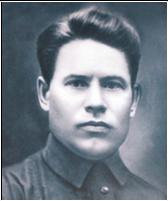 Ryutin (