1997: Chiang Kuo-ching, Taiwan wrongful conviction

On this date in 1997, Taiwanese airman Chiang Kuo-ching was shot for the rape-murder of a five-year-old girl the previous September.

Chiang was nominated as a suspect by a fellow enlistee just a day after the little girl’s body was found in a privy gutter.

So, he and three other early suspects were given “lie detector” tests. Because Chiang was the only one of these who “failed” to acquit himself by this ludicrous mummery, he became the subject of implacable official tunnel vision.

The case was referred — illegally and arbitrarily — to the country’s intelligence services, who subjected Chiang to 37 hours of torture in order to extract a confession: beatings, threats, sleep deprivation, and private screenings of “his victim’s” autopsy.

Chiang broke, and admitted to the crime.

That admission was the star witness against him in his ensuing military trial. Chiang had retracted it by then — but that was much too late to help himself, especially since potentially exculpatory forensic evidence was intentionally withheld from his defense.

As it turned out, the bloody handprint and the DNA trace recovered from the scene didn’t match Chiang at all. No evidence connected him to the crime, except the evidence of truncheons.

Another airman, Hsu Rong-chou, eventually admitted to the killing. (He’d already been convicted in two other child molestation cases, in 1997 and 2003.) In 2011, Hsu received an 18-year prison sentence for the crime that took Chiang Kuo-ching’s life. Chiang was posthumously acquitted that same year.

The latter-day reversal of the sentence was so sensational that Taiwan’s legislature enacted a special law to increase the compensation Chiang’s family received. The family also got an extraordinary televised apology from President Ma Ying-jeou, who bowed three times before an image of the wrongfully executed man.

On this day..

1936: Manuel Goded Llopis

On this date in 1936, the Spanish Republic executed Gen. Manuel Goded Llopis, who mounted an unsuccessful nationalist attack in the heart of Republican Spain, Barcelona.

Goded (English Wikipedia entry | Spanish) was born of Catalan ancestry in Puerto Rico. His family moved back to the mother country when the United States stripped that territory away in the Spanish-American War.

Goded advanced rapidly through the armed forces, becoming dictator Miguel Primo de Rivera‘s chief of staff by 1927. He was dismissed from this post for intriguing against the government, but soon found his way back to command and became (Spanish link) one of the circle of officers conspiring to check the advance of the left.

When the anti-Republican military mounted the revolt that became the Spanish Civil War, Goded was in Catalonia — freshly arrived on a mission to snatch Barcelona for the fascists at the revolt’s outset. Forces loyal to the Republican government, however, defeated Goded in the streets of Barcelona on 19 July. The general himself was captured on 11 August. A Republican court had him shot at Montjuic the very next day, along with another officer, Alvaro Fernandez Burriel.

His defeat, in the long run, might have been a gift by the Republicans to their conquerors: Goded was a partner but also a rival of Francisco Franco’s, and Goded’s presence in the postwar settlement among the nationalist victors might have introduced a fault line into the Franco regime.

On this day..

1949: John George Haigh, the Acid Bath Murderer

On this date in 1949, Britain’s “Acid Bath Murderer”* was hanged by Albert Pierrepoint at Wandsworth Prison.

The name really tells you all you need to know about this enduringly infamous serial killer.

John George Haigh drained puddles of deathly sludge into the pipes at 79 Gloucester Road in London and 2 Leopold Road, Crawley, West Sussex.

He wasn’t a criminal mastermind, but he had that one good idea, and the doggedness to keep going with what worked through the latter half of the 1940s. Serving a previous sentence for fraud, Haigh impressed himself with a jailhouse experiment revealing the efficacy of sulfuric acid for completely dissolving the body of an unfortunate mouse. Perhaps he had been motivated to the test by the memory of a notorious trial in France featuring the same disposal-of-remains expedient. Perhaps he thought it up all by himself.

Shortly after obtaining his parole, Haigh put the insight to foul use by whacking his wealthy former employer over the head and stuffing him into a 40-gallon drum in his Gloucester Road basement. William McSwan’s body dissolved over two days in a sulfuric acid bath. Haigh poured the remnant ooze down a manhole and moved into McSwan’s house, telling the victim’s parents that their son had ducked out to avoid World War II conscription. Once the war ended and the questions came, Haigh made slurry of mom and dad, too.

Undoubtedly a sociopath, Haigh didn’t murder out of compulsive love of taking life. He had a cold, pecuniary motive. “I discovered there were easier ways of making a living than to work long hours in an office,” he wrote of the earlier, non-homicidal frauds and thefts that had started his criminal career. “I did not ask myself whether I was doing right or wrong. That seemed to me to be irrelevant. I merely said, ‘That is what I wish to do.’ And as the means lay within my power, that was what I decided.”

Now the means lay within his power to appropriate a fellow’s pension and estate by disappearing him into a vat of chemicals. Why should he ask himself whether that was right or wrong?

Haigh had blown through the McSwan’s fortune by 1948, and started dissolving hand to mouth. In February of that year, the killer lured a doctor and his wife to his new acid bath station in Crawley. These he shot dead, and rendered as per usual into vitriol compote. But he got sloppy the following year by targeting a wealthy widow who actually shared his same apartment block; when she was reported missing, the neighbor with the criminal record went right into the suspect filter. A search of Haigh’s workshops turned up papers tying him to all three sets of murders … as well as a nearby dump whose “yellowish white greyish matter” yielded “28 lb. of melted body fat, part of the left foot eroded by acid, three gallstones, and 18 fragments of human bone eroded by acid.” (London Times, April 2, 1949) Preserved dentures proved a match for the late Olive Durand-Deacon.

Haigh was a pragmatist, as always.

“Tell me, frankly, what are the chances of anybody being released from Broadmoor?” he chattily asked one guard, referring to the high-security psychiatric facility he intended to inhabit. But his problem would be getting into it. Haigh’s jury needed only minutes to dismiss his longshot insanity defense, and condemn the Acid Bath murderer to die.**

Haigh hanged a mere three weeks after sentence, not even six full months from his last murder.

* Not to be confused with the “Brides in the Bath” murderer. Best just to stick to showers.

** Legal oddity: the Daily Mirror described Haigh as a “murderer” during his trial — that is, before his lawful conviction. Haigh was able to land the editor of this paper in the clink himself for this accurate, prejudicial epithet.

On this day..

1936: Josep Sunyol, FC Barcelona President

FC Barcelona is many a sportive leftist’s major European football side of choice, thanks to the club’s longtime identification with its city’s Catalan anti-Francoism.

That identification, stretching all the way back to the club’s formative early-20th century years (“History of FC Barcelona” enjoys its own voluminous Wikipedia page) put the Barca president at the end of fascist guns on this date in 1936.

Josep Sunyol was born into the Catalan elite, and had a varied career in the public eye: left activist, parliamentary deputy, newspaper founder, and, come 1935, president of FC Barcelona. He’d been serving on the Barca board of directors since 1928. There’s a lengthy Sunyol biography here.


At the center of the rail, Sunyol (left) chats with Catalan president Lluis Companys. (Source)

It was in his political, rather than his footballing, capacity that in August 1936 — just days into the Spanish Civil War — Sunyol traveled from Barcelona to Madrid to meet with fellow Republicans.

He never made it back.

On the return trip from Madrid, Sunyol’s chauffeured car flying the Catalan senyera was stopped by pro-Franco Falangist forces in the Sierra de Guadarrama north of Madrid. It may have been only inadvertently that Sunyol crossed this checkpoint of nationalists, who were already gathering for an attack on Madrid that would eventually inspire For Whom The Bell Tolls. (Indeed, this novel is set in the Sierra de Guadarrama.)

Whatever Sunyol’s intention, he was quickly recognized and detained by his foes on the evening of August 6. Shortly thereafter, they decided to shoot him out of hand.

The civil war and the era of Franco are still sensitive topic in Spain, but FC Barcelona’s politically engaged supporters have pushed the present-day club (with partial success) to more overtly embrace its anti-fascist “martyr president”.

On this day..

1993: Joseph Paul Jernigan, Visible Human Project subject

On this date in 1993, Joseph Paul Jernigan died by lethal injection in Texas. Yet he lives on still.

A career burglar, Jernigan was surprised mid-robbery in 1981 by 75-year-old Edward Hale: the thief promptly shot the homeowner dead, then finished his looting. His life as a free man would be over within days.
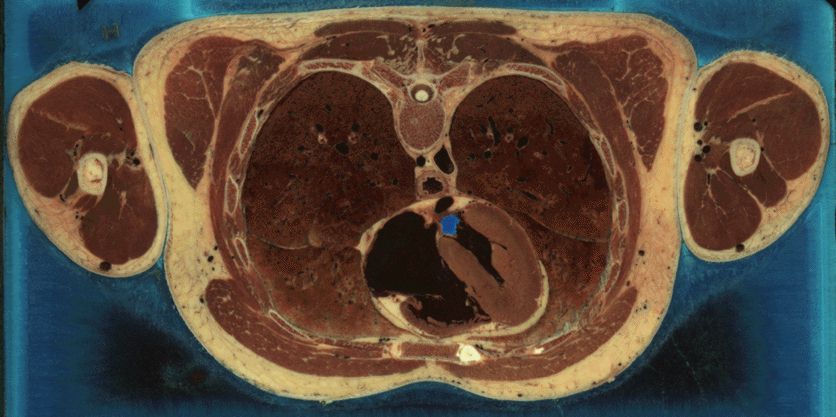
As a criminal you wouldn’t much notice Joseph Paul Jernigan — unless it was your house he was burgling, of course — and you wouldn’t exactly call his smash-and-grab act state-of-the-art. But little over a year after his death, Jernigan was making headlines for a groundbreaking scientific project.

Jernigan donated his body to science, joining an ancient tradition of condemned men and women whose bodies are “cadaverized” for whatever medical material is required of their own day and age.

But instead of serving as a med school’s pincushion, “science” in Jernigan’s case turned out to be — Jernigan had no idea of it while he lived — the Visible Human Project.

This National Library of Medicine initiative built a data set of digital images depicting the complete anatomy of a normal adult man and woman: Jernigan’s cadaver was selected for the male lead.

So, after his execution, Jernigan’s entire body was “sliced” from head to foot into 1,871 one-millimeter slides. (The “slicing” process ground away the body completely; it did not literally slice it like salami.)


Joseph Jernigan’s thorax, including the heart. (From here.)

The project is still online, and has never yet been replicated/surpassed with the the advancing technologies of the intervening decades. It’s a weirdly beautiful, unsettling, and ethically questionable artifact — a Smugglerius of the digital age — but it’s also inescapably awe-striking.

So here: take a tour down Joseph Jernigan at the, er, cutting edge of anatomization.

On this day..

1949: Jacob Bokai, the first Israeli spy executed

On this day in 1949, Jordan hanged Jacob Bokai. The Syrian Jew was the first Israeli intelligence agent put to death in service of the infant state. (At least, the first that’s been publicly acknowledged.)

The flight of Palestinians displaced by the Arab-Israeli War gave Israel a convenient means to insert its agents into its neighboring countries: just disguise them as refugees.

Posing as a Palestinian named Najib Ibrahim Hamuda, Bokai’s mission to infiltrate Jordan started at a Palestinian refugee camp in Jaffa, where he was abused by the guards to establish his credentials. Those beatings went for naught, however, as Bokai never made it past the checkpoint: he was arrested immediately upon passing the Mandelbaum Gate into Jordan on 4 May 1949. Since he refused to cop to his mission or his Jewish identity, he was given a Muslim burial after hanging for espionage.

That charge was indeed well-founded: Bokai is now openly honored at a memorial to Israeli agents opened in 1985.

According to the story related by a former Mossad chief who gave a tour of this place to Tom Friedman back when the latter was the Times‘ Middle East scribe and not its leading nutter columnist — just mind the source is what I’m saying here — the doomed “Mr. Hamuda” still managed to get a message back to his Israeli handlers reassuring them that the enhanced interrogation he enjoyed in Jordan prior to execution had not compromised whatever operations he was privy to: “I did not commit treason.”

On this day..

1996: Sergey Golovkin, the last executed in Russia

The most recent execution in the Russian Federation was that of serial killer Sergey Golovkin on this date in 1996.

Known as “The Fisher” or “The Boa”, Golovkin (English Wikipedia entry | Russian) grew up in Moscow as a shy outsider type (Russian link) with a noticeable slump and a predilection for animal cruelty, the kind of whom oblivious classmates will later say that they never saw it coming. He graduated from an agricultural academy and worked as a horse-breeding expert: people skills just weren’t his thing.

But people killing skills …

Golovkin committed his first murder in 1986,* forcing a 16-year-old boy into the woods near a north Moscow train station where he raped and strangled him and then mauled the corpse. Months later, the same treatment befell a 12-year-old whom Golovkin kidnapped from a summer camp, with even more horrible mutilations: the dead child was beheaded, emasculated and disemboweled. A third victim he killed in 1989.

But Golovkin really got going in 1990, after he bought a car and dug a garage cellar — a spot which he soon realized doubled as a dungeon. There he had the privacy for eight more homicides in the ensuing two years, each of the grisliest particulars.

One example to suffice: after having had his fill of raping, he proceeded to hang one victim to death with a makeshift noose; then, Golovkin trussed the carcass upside-down like a slab of meat, and savaged it from head to toe. Ears, nose, and genitals he sliced off, the skull prised open and the brain torched.** Golovkin even indulged a bit of experimental cannibalism on this occasion, but found he didn’t like the taste and left that particular grotesquerie out of his repertoire thereafter.

Reports and rumors of a monster at work by this time drew the attention of a police force that had been notoriously slow to figure out how to investigate serial killers. Golovkin had his garage in (and, hence, the victims had disappeared from) the vicinity of the outlying horse-stud farm where he worked; however, his registered residence was in Moscow itself, and this discrepancy helped investigators to overlook him as a suspect for a time.

But post-Chikatilo, the police were learning fast. The investigating team was soon able to put together a profile of the killer, and link the furtive and opportunistic 1986 killings to the more methodical maniac at work in the early 1990s. Golovkin was finally arrested in October 1992 and soon confessed all — a confession scarcely required given the macabre artifacts disgorged by his homemade abattoir.

Golovkin was shot on 2 August 1996, with the traditional “single bullet to the back of the head” method. Russia at that time was in the process of implementing a moratorium on executions as part of its entrance into the Council of Europe. Though the moratorium has wavered at times, it has held ever since. Golovkin, as of writing, is the last person judicially executed on Russian soil to date. Even so, the moratorium has never quite become a full de jure abolition of the death penalty.

There the matter rests, for now. For the future, who knows? There’s no indication of a real push to restore the death penalty on the horizon, but it bears remembering that absolutist Russia actually abolished the death penalty for 22 years in the 18th century. That moratorium didn’t stick.

* Golovkin attempted a similar murder in 1984, but the 17-year-old victim whom he raped managed to escape, prompting the rattled newbie predator to lay low for a while. That boy would later testify at Golovkin’s 1993 trial.

** Golovkin worked with animals professionally, and had beyond that the human anatomical expertise appropriate to his avocation. On one occasion when he kidnapped multiple boys together, he dismembered the one in front of the other, giving a little impromptu instructional to the survivor using the viscera. Golovkin later told investigators that the (temporarily) surviving child took it all in with odd calmness.

On this day..

1976: Christian Ranucci, never yet rehabilitated

On this date in 1976, Christian Ranucci, 22, was guillotined in Marseilles … with the last words addressed to his attorneys, “Réhabilitez-moi”.

If that has not yet occurred, it has not been for want of trying.

Many people think Ranucci was the last person executed by France; in fact, this is not correct. But the confusion is understandable: Ranucci has persisted in the headlines and the public imagination owing to a running controversy over whether he was wrongly convicted. It’s a vexing case rife with ambiguous circumstantial evidence, and observers are usually able to see in it what they want to see.

On June 3, 1974, two incidents — a minor traffic accident, and the request by a young man of a local mushroomer to help his car out of a muddy gallery where it was stuck — placed a gray Peugeot 304 at La Pomme, outside Marseilles. This also happened to be the date that 8-year-old Maria-Dolores Rambla was abducted from St. Agnes by an unknown man in a red sweater reportedly driving a gray Simca 1100, a vehicle that would be possible to mix up with the Peugeot 304.

When news of the abduction broke on the radio the morning of June 4, the people who saw the Peugeot(s) later called it in as a tip.

Police got to the bespectacled young Ranucci (English Wikipedia entry | French; most of the links from here on out are French) via the accident. His car didn’t stop for the other motorist, but limped on down the road another kilometer. The other driver’s vehicle was inoperable, but that driver sent a passerby to follow the hit-and-run Peugeot’s path to see if he could track down a license plate number. Indeed he did do that.

And when that good citizen called police, he said he had seen the driver running into the nearby woods with either a sizable package or a small child. (The story has … evolved.) You can see where this is going: when the area was searched after the tip came in, poor Maria’s dead body was steps away from the spot the car stopped. She’d been knifed to death.

The mushroom-gallery, for its part, yielded up a red pullover sweater like the one the abductor wore, and a bloody knife.

After 17 hours’ grilling by the police, Ranucci broke down and confessed. He would later retract the confession, blaming police pressure. (Here in 2013, everybody does know — right? — that false confessions happen with alarming frequency, and that they’re widely associated with exonerations.)

As open-and-shut as this sounds, Ranucci’s many defenders have found a great deal wanting in the case

Journalist Gilles Perrault has been on about this case for decades. His L’ombre de Christian Ranucci drew a 50,000 euro judgment for defaming the Marseilles police.

Among the sticking-points for skeptics:

  • There’s the inconsistency in the reported make and model of the vehicle vis-a-vis what Ranucci was driving.
  • None of the eyewitnesses to the abduction could identify Ranucci in a lineup … until the lineup was pared down to make it a gimme. Sloppy lineup work has been a significant factor in wrongful convictions; on the other hand, eyewitnesses are extremely unreliable in general.
  • The recovered red pullover was much too small for Ranucci, possibly suggesting that this apparent link to the observed abductor did not reach all the way to the accused.
  • Mr. Red Pullover Simca 1100 was allegedly seen attempting other abductions at times and places that made it certain that he was not Christian Ranucci.
  • Questionable handling of physical evidence by investigators.

That’s basically just to scratch the surface. Here (pdf) is a much lengthier exegesis of the potentially exculpatory evidence, in French. Here’s an English summary covering the same stuff on a site whose resources are mostly also in French. (“We do not assert Christian Ranucci is innocent.”) Countless additional search hits en francais await the interested researcher.

Ranucci himself insisted against advice on pursuing an actual-innocence defense, rather than mounting a mitigation case focusing on avoiding the guillotine while conceding guilt. He was convicted on just a 9-3 jury vote.

But neither in his own time nor latterly has that case gained much purchase on the conscience of his prosecutors. The President who denied Ranucci’s clemency petition, Valéry Giscard d’Estaing, has recently given his 1976 decision a vote of confidence; the father of the victim feels likewise.

On this day..

1979: Saddam Hussein’s Ba’ath party coup

On this date in 1979, Saddam Hussein executed a terrifying purge of the Ba’ath party.

Hussein had come to power just six days before by forcing out his cousin Ahmed Hassan al-Bakr.

On this date, some 400-plus Ba’ath party leaders were summoned to a pavilion near the Iraqi presidential palace. The secret police locked the doors behind them.

As film rolled, a man named Muhyi Abdel-Hussein came to the stage. Until just days prior, he had been the general secretary of the Revolutionary Command Council, the executive committee that ran the state. For opposing Saddam Hussein’s accession, he’d been arrested and endured God knows what. It was enough to break him, and make him the star in a drama worthy of the old Soviet show trials.

Speaking deliberately, Muhyi Abdel-Hussein* stood at the podium and accused himself of involvement in a Syrian plot against the regime. He had, moreover, been joined in his treason by a number of men in that very room. And then as the names were read off to the stunned audience, Mukhabarat men arrested them and dragged them out of the hall. Colleagues gaped as their ranks were culled around them, each paralyzed with the same panicked thought: am I next? Realizing their vulnerability, some began to chant feverishly their loyalty: “Long live Saddam Hussein!”**

All the while, the emerging dictator — younger and trimmer than we remember him at the end — sat steps away at a simple little table, coolly puffing his cigar. He would be the unquestioned master of Iraq for the next 24 years.

In all, 68 people were hauled out of the room; they were tried immediately and sentenced within minutes: 22 to die, the rest to the dungeons.† The condemned were shot that very day: in a diabolical twist, a number of their former, as-yet-unpurged Ba’ath Party colleagues were detailed for firing squad duty.

Nor was this the end. A wider purge of potential rivals with potential influence — party members, union leaders, intelligentsia, businessmen — unfolded throughout that week; by August 1, several hundred (the exact figure will never be known) had been condemned to die. Muhyi Abdel-Hussein, whatever they promised him, was among them.

* “Al-Khalil gives the last name of Muhyi Abdel-Hussein as Rashid. Matar gives it as Mashhadi. Since Mashhad is a place in Iran, one can only assume that this name was bestowed on the unfortunate Abdel-Hussein posthumously, after it had been discovered that ‘he had reached his position through devious means and that he was originally Persian.'” (Source)

** The entire liturgy of terror was stage-managed by Taha Yasin Ramadan, who became Iraq’s vice president (and, like his president, was eventually hanged for his trouble). Also making an appearance: Barzan al-Tikriti, who was likewise destined to hang during the American occupation; on July 22, 1979, he was one of the judges on the kangaroo court that issued the death sentences.

† Different sources produce slight variations on the counts of 68 arrests and 22 executions.

On this day..

1909: Dervish Vahdeti, for the 31 March Incident

EXECUTIONS IN CONSTANTINOPLE

(From our own correspondent.)

CONSTANTINOPLE July 19.

Cherkess Mehmet Pasha, popularly known as Kaba Sakal — i.e., “twisted beard,” the torturer and former aide-de-camp of [Sultan] Abdul Hamid, Yusuf Pasha, Commandant of Erzerum, the Dervish Vahdeti, chief of the Jemiyeti Mohammadeieh, Hakki Bey, the notorious spy, and eight officers and soldiers who took part in the recent mutiny, were publicly executed at dawn.

–London Times, July 20, 1909

The Ottoman Empire in 1908 experienced the Young Turk Revolution, curbing the power of the sultan in a brief constitutional-monarchy era that would take the foundering state through the First World War.

Unsurprisingly, the reigning, formerly-supreme monarch was nonplussed at this brake on executive authority.

He backed the 31 Mart Vakasi, or 31 March Incident,* a counter-coup by conservative and Islamist elements in Istanbul to overthrow the Young Turks and re-establish the sultan’s power. Already the Porte was resorting to an assertion of Islamic political identity to hold the “sick man of Europe” together — and already that had resulted in some appalling atrocities.

For a few days the rightists, incited by Dervish Vahdeti, had Istanbul in hand. Vahdeti was a 40-year-old Cypriot who published Volkan, an Islamist newspaper in Istanbul; the 31 March Incident is sometimes also known as the Revolt of Dervish Vahdeti. (Biographical details source)

Once again, Armenian blood flowed. News of the revolt triggered an attack by Turks in the Anatolian city of Adana upon that city’s Armenian Christians. The resulting Adana Massacre claimed 15,000 to 30,000 lives throughout the Adana province.

Indeed, the Adana massacre quite outlasted the counter-coup, resulting in going debate over the extent to which the Young Turks themselves blessed the pogroms. These guys had their own fraught relations with Turkey’s Armenians; of course, they’d eventually have the Armenian genocide to answer for.

As for the event at hand, Second Army Corps and Third Army Corps dispatched Dervish Vahdeti’s revolt with ease. These units still loyal to the Young Turks reached Istanbul from Salonika within days of the uprising. (Among their number was the 27-year-old Mustafa Kemal — later known as Ataturk, the founding statesman of modern, post-Ottoman Turkey.)

The mutiny collapsed with little effective resistance upon this Macedonian intervention, and the military had the run of the place — not for sack but for a severe clamp-down on the Islamic party. According to Nader Sohrabi, “some two hundred movement participants were hanged en masse, on row after row of scaffolds erected in public space by the order of military courts” in the crackdown.

The 74 constitutionalist soldiers who died to put down the 31 March Incident are honored at a Monument of Liberty in Istanbul.

* The Ottomans were on the Julian calendar-based Rumi calendar, so March 31 in Istanbul corresponded to April 13 in western Europe. Similarly, this date’s hangings took place on July 6, not July 19, per the local Turkish date.

On this day..