Contrary to what all the slasher films would have you believe, an ax does not make a very good murder weapon. Axes are big. They are heavy. They are difficult to conceal. When used they create a big mess. And if you are caught with one, it’s hard to come up with a suitably innocuous explanation for it.
Nevertheless, this was Jake Bird’s weapon of choice on October 30, 1947, when he broke into Bertha Kludt’s home and killed her and her seventeen-year-old daughter, Beverly June.
Perhaps if he had used a different weapon, things would have turned out differently. As it was, the two women’s screams — and that’s another problem with the ax: unless you can wield it like Gimli, the victim is going to survive the first blow and start hollering — attracted two police officers, who apprehended Bird after a foot chase.
This excellent History Link article provides a thorough account of Bird’s life and crimes. 45 years old at the time of his arrest, he was a drifter and a ne’er-do-well with an extensive criminal record. He’d spent a third of his life in prison for various offenses. Bird openly confessed to the Kludt killings, saying the murders were the result of a botched burglary.
One of the police officers who testified at the trial admitted he beat the daylights out of Bird after his arrest. Naturally, the defense moved to throw out the murder confession on the grounds that it was obtained under force, but the judge ruled that the police brutality and Bird’s statements were “unrelated” and so the confession was admitted into evidence.
This was the attorney’s only attempt to defend his client; he called no witnesses and presented no evidence at the trial.
In all fairness, it must be said that Bird was spattered with gore when he was arrested, they found his fingerprints in blood at the crime scene and on the ax, and he’d left his shoes at the Kludt house. So the confession didn’t figure to be exactly decisive.
This would be a fairly unremarkable murder case, but shortly after his arrival on Death Row, Bird suddenly discovered he had an excellent singing voice. For the next several months he detailed 44 murders from all across the country which he claimed he’d committed during his wanderings. Most of his victims were women.
Bird’s claims, if true, would make him one of America’s most deadly serial killers, right up there with the much more famous Ted Bundy and the Green River Killer, Gary Leon Ridgway. One inevitably wonders if all of his statements were genuine. Henry Lee Lucas, another violent drifter much like Bird, admitted to hundreds of homicides and captivated police from all over the nation before it was discovered that many of his confessions were lies.
Police in several states did find Bird credible, though. Bird was calm and ready for his hanging, which went off without a hitch. He willed his estate, valued at $6.15, to his appeals attorney.
On this date in 1833, a young woman named Frankie Silver was hanged in Morganton, North Carolina for murdering her husband Charles.
The cover of Perry Deane Young’s book (available at Amazon.com) shows actress Amanda Ladd in the title role of Young’s play Frankie. Young can be contacted at www.perrydeaneyoung.com or by e-mail at pyoung3@bellsouth.net
Silver is a staple of North Carolina folklore, supposed to have assassinated her spouse in a jealous rage and checked out singing her confession from the gallows.
But the reality, as best one can discern from the distance of time, is quite a bit murkier; indeed, quite a bit more dark and dramatic.
ET: Just by way of orientation, what’s the baseline legend of Frankie Silver that Appalachian children learn? And how exactly did this particular hanging come to be so richly preserved in ballads and folklore and the like?
PDY: The legend is that this true story was the basis for the black blues song, Frankie and Johnny.
Frankie killed her man out of revenge cause he done her wrong. The legend is that she was the first — or only white — woman ever hanged in North Carolina, that she sang a confession from the scaffold. This was the story I heard as a child; only later would I learn that none of this was based on facts.
Most historians now think the song, Frankie and Johnny, was based on a murder in St. Louis, although several folklore collections published in the 20th century say it was based on Frankie and Charlie Silver.
What is it that drew you to this case in the first place?
Most people’s mothers tell them stories about Winnie the Pooh and, oh my, Tigger the tiger. My mother told me about a woman who cut her husband’s head off with an axe and burned his body in the fireplace.
As a writer, I’ve always been grateful for that.
Your book makes the case that she was wrongly executed, and not only that — but that “the true story, the facts … are even more interesting than the story as it has been passed down by so many ballad singers, folklore specialists, storytellers and newspaper columnists”. What’s the most important misconception people have about Frankie Silver? What surprises you most about the story?
There are many misconceptions, starting with the murder itself. There is ample evidence from the time to prove that her husband was loading his gun to kill Frankie and she picked up the axe to defend herself.
She did not sneak up on him as he lay sleeping; she killed in self defense.
She was not the first or only woman ever hanged in North Carolina, she was one of at least 15.
She did not read or sing a confession from the scaffold.
A young school teacher plagiarized a Kentucky ballad, “Beacham’s Lament,” had it printed and handed out at the hanging. It is this ballad, in which Frankie laments her guilt, that has come down as factual. However, when I was a college student, I came across 17 different letters and petitions to the governor asking for a pardon for Frankie. In these documents, it is clearly spelled out that Charlie Silver was a drunk, abusive husband and Frankie killed him in self-defense.
Hindsight is 20/20, of course … but it doesn’t seem to require hindsight to think that her lawyer would have been expected to introduce evidence of domestic violence even if that wasn’t the main thrust of his defense. Would it also have seemed that way to the reasonable barrister in the 1830s, or was there good reason for him to avoid it? Can we say that she was hanged for poor lawyering?
The late Sen. Sam Ervin was, like me, a great believer in Frankie’s innocence. A letter he wrote me explaining why is reproduced in the new edition of my book. He explained to me that at the time she was tried, the accused was deemed an incompetent witness and could not take the stand in her own defense. The law was changed in North Carolina in 1859 so that, as now, you can choose to defend yourself but you still cannot be compelled to testify against yourself.
Frankie’s lawyer, perhaps at the insistence of Frankie’s father, pleaded innocence. In other words, he could not introduce evidence of extenuating circumstances such as spousal abuse if he was saying she didn’t do it in the first place. In the book, I note that a man named Reuben Southard beat his wife to death that same year in the same county and got off with court costs. In one of the petitions, Frankie’s neighbors assert that it has often happened that a man murdered his wife with no legal consequences. In an article for his local newspaper, Ervin blamed Frankie’s lawyer for the outcome of the trial, not realizing that her lawyer was his own great great uncle.
Over the longer arc, it’s surprising to me that the claim by a woman who killed her husband that he was an abusive spouse — especially if that claim attracted a lot of support at the time — would go underground in the historical recollection of the case. In its essentials, this is one of the stock templates we have for thinking about a domestic crime. What happened in Morganton, and with the families’ descendants, over the years to shape the popular memory of the event? And does it suggest any larger lessons to you about the way we construct our histories?
The explanation is quite simple. All that survived over the years was this ridiculous “ballad,” in which Frankie confessed her guilt. She had nothing to do with that ballad.
Fayetteville Observer, July 30, 1833
But, in fact, she did write out a confession.
The confession itself has never been found but we know from other sources that it explained that she killed in self defense. The documents that detailed Charlie’s abuse and other details about the case remained hidden in the governors’ papers in the North Carolina Archives until I discovered them in 1963 when I was a student at the University of North Carolina at Chapel Hill.
In 2001, Frankie was finally allowed to have her say in a play which I wrote with William Gregg and which was produced by the Southern Appalachian Repertory Theatre in August 2001.
In the play, a minister who is working to save Frankie from the gallows, overhears a young man singing the silly ballad. He is asked if a hundred years from now people will still be singing that ballad, not knowing what really happened. He answers: “People would rather believe a simple lie than a difficult truth.”
Compounding the historical image of Frankie has been the fact that her family was ashamed of having a convicted murderer in their midst. It was Charlie’s family that became the keeper of the legend and all its misconceptions. The Silvers kept alive the fake ballad “confession” and did everything they could to preserve the image of Charlie as a faithful husband who was killed by a spiteful wife.
Do you find that here in 2012, there are still people whose oxen are gored if your research contradicts their own version of the story — especially if you present Charlie as a violent husband?
You betcha! The Silvers to this day are rather vehement in defense of their Charlie.
It was a historic moment when I was invited to speak in the old church house near the murder scene for the Silver family reunion. In the basement of the church, they have created an extraordinary archive on the murder story and the family in general.
By this time, they have accepted that Charlie may not have been the innocent victim they’ve been told about. Many in the family are serious about their historical researches and want to know the facts. However, a contemporary Charlie Silver also said, “I just wish people would stop talking about it.”
You’re working on a program for Discovery channel’s “Deadly Women”. Does it hold any new revelations about this intriguing historical case?
The chief revelation came to me after being questioned by a very bright young woman named Colette Sandstedt for the program. She had done her homework exceedingly well. By the time we had gone over all the historical evidence I had collected over the past 50 years, I was ready for her last question: “What is the most shocking aspect of this case to you?”
I answered: “The most shocking aspect of the case is the way this poor woman has been misrepresented for almost 200 years.”
On this date in 1952, 58-year-old Chester Gregg nonchalantly died in Ohio’s electric chair for killing his wife the previous year.
Gregg shotgunned Alma Colliday Gregg, his estranged spouse and the head of the “lonely hearts” club through which the pair oiginally met, in her Kenton apartment after she filed for divorce.
As that killing made him a two-timer — he’d been paroled from a 1927 murder rap in Kentucky; the daughter of that victim petitioned unsuccessfully to attend Gregg’s execution — his clemency prospects were remote.
Although he’s of no known relationship to the namesake of the landmark Gregg decision returning death penalty to the U.S. in 1976, Chester has managed to find his way into the news of late.
Apparently, he was acquainted with an Ohio child named Jay Chapman (newspaper reports have termed Gregg Chapman’s “childhood friend”, but Chapman would only have been about 13 at this time: we intend no derogation to intergenerational friendship in saying that this is not the connotation of “childhood friend”). And Chapman would go on, as Oklahoma’s medical examiner in the 1970s, to play a subtle but important role in the modern death penalty: he invented the “traditional” lethal injection three-drug cocktail.
Dr. Chapman, who at least has the comfort of not having the lethal needle named after him a laJoseph Guillotin, knocked out the standard sodium thiopental-pancuronium bromide-potassium chloride sequence at the request of legislators looking for a less unpleasant alternative to that ubiquitous 20th century contraption, the electric chair. (That’s also how Gregg was put to death.)
But apparently, Chapman assumed that trained medical personnel who knew how to administer IVs and measure drugs would be conducting the procedure.
In fact, as executions “medicalized”, professional medical associations like the AMA barred members from participating as a breach of professional ethics. More recently, supply interruptions for lethal drugs have made a mess of the entire process. The upshot has been some high-profile botches — including Ohio itself outright failing in a recent lethal injection attempt — necessitating a 2007–2008 U.S. execution moratorium to sort out legal challenges to the needle.
It’s a far cry from Chapman’s vision of a litigation-proof method: “We felt that by going with this type of regimen, no one could suggest that it was cruel and unusual because people undergo this very protocol every day for anesthetic for surgery world-round,” he said in 2009.
The doctor’s own interest in the subject was merely instrumental: fewer appeals avenues mean more executions. “I’m an eye for an eye person,” Chapman told the London Guardian.* “The lethal injection is too easy for some of them.”
For that reason, Chapman is quite alright with the switch his home state an others have recently made to conducting lethal injections with only a single massive overdose of a single drug, either sodium thiopental or pentobarbital. Whatever gets the case out of courts, and onto the gurney.
As for the ghost of Chester Gregg, he really doesn’t enter the picture either way.
“It’s a totally separate thing,” Chapman said of his executed former neighbor. “It’s just an experience I had along the way.”
It was on this date in 2010 that Texas executed Michael Perry by lethal injection for his part in a triple homicide that netted a cherry-red Camaro.
Perry is the subject of the 2011 Werner Herzog documentary Into the Abyss; being a Herzog film, it comes recommended.
Abyss is “not an issue film; it’s not an activist film against capital punishment,” Herzog has said. “In this particular case, with this very senseless crime, so senseless it’s staggering, what fascinated me was that it points to a decay in family values and the cohesion of society, all these things that looked so big and beyond this case.”
On this date in 1945 — morning after a devastating U.S. air raid that destroyed much of Fukuoka — eight previously-captured American airmen* were summarily executed there in retaliation.
In a precedent that dated back to the Doolittle raids, Japan officially considered as a prospective war criminal any enemy airman who could be connected to indiscriminate bombing. Tokyo didn’t follow this logic to the point of executing all downed Americans — indeed, late in the war, beleaguered Japanese civilians became increasingly hostile towards the government for allowing excess legalism to stand in the way of exacting some satisfying revenge for the cities burning under American bombs — but it did execute some, and it had sanctioned legal theorems that could have accommodated quite a bit more bloodletting.
Finding Tokyo short of prison space, the government ordered on May 1, 1945, that the various armies should no longer send to the capital any downed airmen they captured. In the chaos of the war’s last months, this would create the context for local commanders at the Western Military District in Fukuoka to put those legal theorems to seriously nasty use.
Four captured airmen held in Fukuoka were stuck in an indeterminate judicial process which the army realized was going nowhere slowly. The others were just plain underfoot. Over the period of May-June, between a couple of ambiguously-worded orders and the officers’ annoyance at having to divert scarce resources to these captives, an understanding formed if “the air raids increased and conditions became more chaotic, the prisoners would be executed without a trial.”
About 3,000 tons of … incendiary bombs … were released by the B-24s from low level starting about three a.m. … The three cities [Fukuoka, Toyotashi and Shizuoka] were tasting for the first time the bitter flames of war, roaring over factories, shops and thousands of congested homes.
Timothy Lang Francis, whose “‘To Dispose of the Prisoners’: The Japanese Executions of American Aircrew at Fukuoka, Japan, during 1945” from the November 1997 Pacific Historical Review traces the confluence of factors that made possible this day’s executions, describes the fate that was unfolding for Fukuoka’s eight captive airmen at about the same time those words were going to press.
All were blindfolded and had their hands tied in front. Several swords were obtained from the Legal Section. [Yusei] Wako** then told the twenty or so assembled Japanese that, “in compliance with the Commanding General†’s orders, we were going to execute the plane crash survivors.” One officer, Lt. Michio Ikeda of the Medical Section, volunteered himself, and Wako ordered Probationary Officer Tamotsu Onishi, since he was skilled in kendo, to assist him as a third executioner. Sato watched the proceedings from one side.
The first flyer was brought to the edge of the pit and made to sit on his haunches. Wako then ritually washed one of the swords and stood behind the prisoner, slightly to the left. Raising the sword above his right shoulder with both hands, Wako brought it down on the flyer’s neck. “Both the body and head fell into the pit,” remembered Wako; “I washed my sword and ordered the guard to bring another flyer to the pit. I killed this flyer exactly the same way I had killed the first one.” Onishi then executed a third prisoner in the same manner.
In the pause that followed, Lt. Kentaro Toji, an officer attached to Western Army Headquarters, approached Sato. According to his pretrial affidavit, Toji said to Sato, “My mother was killed in the air raid on Fukuoka this morning, and I think it would be fitting that I be the one who execute these American flyers.” Sato told him to wait while Wako ordered Ikeda to execute the fourth flyer. Toji, after borrowing a sword from Onishi, beheaded the last four prisoners. The pit was then filled with dirt.
This is all well and good, but Tokyo’s orders to its armies had been to do the juridical legwork on these cases themselves — and not just to summarily kill prisoners. So, in a bit of ex post facto bureaucratic butt-covering, the Western District Army’s legal section proceeded to close the matter by shipping the central government a report saying that all these prisoners had been killed during the previous night’s air raid. Problem solved!
No known direct connection to this particular atrocity, but there’s a recent documentary about an elderly Japanese man who used to serve at Fukuoka that looks worth the watching.
* Six of the eight were Robert J. Aspinall, Merlin R. Calvin, Jack V. Dengler, Otto W. Baumgarten, Edgar L. McElfresh, and Ralph S. Romines. The other two remain unidentified. These eight were, maybe, the lucky ones: Fukuoka had had 16 prisoners from downed bombers, but the other eight weren’t around to be beheaded because they’d previously been given over to the local hospital to suffer ghastly deaths in vivisection experiments.
** A Judge Advocate who had also been involved in the Doolittle trials.
† Gen. Isamu Yokoyama. When he’d been briefed prior to the June 19 raid that the army was fixing to just dispose of its prisoners if it came to that, Yokoyama had done the Pontius Pilate act and informed Wako, “I have decided to concern myself only with the decisive battle and hereafter do not bother me with the problem of the flyers.”
Saint Malo, the namesake of a 19th century fishing village that formed perhaps the first Filipino settlement in the U.S., was the leader of outlaw settlements of escaped slaves who found refuge in the French colony’s bayous.
“Prior to the sugar boom,” writes Daniel Rasmussen in his well-received American Uprising, “New Orleans was a poor, multi-cultural city with very few social controls.”
The lines between slavery and freedom were not clearly drawn, and slaves frequently escaped into the swamps to form maroon colonies. There was a history of armed resistance in these areas that drew on French, Creole, and Kongolese traditions. These insurrectionary traditions shaped the lives of the slaves and represented an alternative political culture to that of the planters.
As testimony to that hazy line, Saint Malo had widespread support not only from the escaped slaves who joined him, but from those that remained on plantations. The communities were linked by blood and by trade; attempts to send creole militias out to hunt the maroons tended to founder on the draftees’ fear of retaliation by the kith and kin of their targets.
According to Gwendolyn Midlo Hall, Saint Malo’s prosecutor complained that slaves would grumble, affront their masters, leave land uncultivated … and that owners dared but few disciplinary measures lest they disappear into the swamps.
“Malheur au blanc qui passera ces bornes” (“Woe to the white who would pass this boundary”), was the declaration attributed our man, burying an ax dramatically into a tree outside his largest village, Ville Gaillarde. (The maroons lived in permanent settlements.)
It took several years, several tries, and more than several casualties for Louisiana planters to finally bring Saint Malo’s maroons to heel. And when they did — well, the dirge recorded from a fellow maroon (as related in Creole New Orleans: Race and Americanization) describes Malo’s fate.
Alas, young men, come make lament,
For poor St. Malo in distress!
They chased, they hunted him with dogs,
They fired a rifle at him.
They dragged him from the cypress swamp.
His arms they tied behind his back.
They tied his hands in front of him.
They tied him to a horse’s tail.
They dragged him up into the town.
Before those grand Cabildo men.
They charged that he had made a plot
To cut the throats of all the whites.
They asked him who his comrades were.
Poor St. Malo said not a word!
The judge his sentence read to him,
And then they raised the gallows tree.
They drew the horse — the cart moved off
And left St. Malo hanging there.
The sun was up an hour high
When on the levee he was hung.
They left his body swinging there
For carrion crows to feed upon.
* Coincidentally, June 19 would later become Juneteenth, marking the end of slavery in the United States at the conclusion of the Civil War.
On this date in 1944, a five-foot-one-inch, ninety-pound prisoner walked into the death chamber of the Central Correctional Institute in Columbia, South Carolina and was executed in the electric chair.
He was so small that the guards had trouble strapping him into the chair and fitting the electrodes on. When the first jolt of electricity hit him, the mask fell off his face, revealing an expression of horror.
His name was George Junius Stinney Jr., and at fourteen years, seven months and twenty-six days, he was the youngest person to be legally executed in the U.S. in the 20th century. In spite of this startling distinction, his death went practically unnoticed in the press.
Stinney, a black youth from a poor family in the town of Alcolu, was condemned for the double murder of two white girls he knew: Betty June Binnicker, age 11, and Mary Emma Thames, age 8. The girls had gone out on their bicycles on March 23, 1944, and along the way they saw Stinney and his sister and asked where to look for flowers. The Stinneys said they didn’t know.
The next day, the two girls’ bodies were found in a muddy, water-filled ditch. They had both sustained severe head injuries; their skulls were shattered. A fifteen-inch railroad spike was found nearby.
A few hours later, Stinney was arrested and locked in a room with several police officers and no one else. According to later testimony, at first he claimed the girls had suddenly attacked him and he hit them with the railroad spike in self-defense. However, a short time later he gave a second statement confessing to premeditated murder.
Stinney allegedly stated he had wanted to have sex with Betty June, but he couldn’t do so until the younger girl was out of the way, so he killed Mary Emma with the railroad spike. Betty June ran away, but Stinney caught up with her. When she resisted his sexual advances, he killed her too and dragged both bodies into the ditch. That’s the story.
When the townspeople found out that Stinney had confessed and would be charged with murder, a lynch mob formed outside the jail. Authorities took the boy to another jail in Columbia, fifty miles away, for his own safety; fearing for their own lives, Stinney’s family also fled town.
The trial took place on April 24, one month and one day after the murders, beginning at 2:30 p.m. Virtually the only evidence against Stinney was the testimony of the sheriff who heard the confession: there was no written record of the confession. Stinney’s defense attorney, who planned to run for state office, did not contest the confession and called no witnesses, but only claimed his client was too young to be held responsible for the murders. However, under South Carolina law at the time, a fourteen-year-old was legally an adult.
The jury was sent out at 5:00 p.m. and returned with a guilty verdict just ten minutes later.
There was no appeal.
Some local churches and the NAACP asked the governor for a commutation, citing Stinney’s age — but the governor allowed the execution to proceed. The entire drama from homicides to execution spanned less than 90 days.
One of Betty June Binnicker’s sisters reflected fifty years later, “Everybody knew that he done it, even before they had the trial they knew that he done it. But I don’t think that they had too much of a trial.”
More than sixty-five years after Stinney died, a community activist called for the case to be reopened, suggesting Stinney may have have been innocent. The evidence against him was absurdly slight. He had no history of violent behavior, and it seems unlikely that this short, slender boy would be strong enough to overpower two girls and beat them to death. Stinney’s brother, now a pastor in Brooklyn, said the family always believed in his innocence. Both his brother and his sister recalled that he had been a smart boy, a good student and artistic, and their family had been a close and loving one.
As one article noted, “Stinney’s trial and subsequent execution were suspicious at best and a miscarriage of justice at worst … This was South Carolina in 1944, with a black male defendant, two young white female victims, and an all white, male jury. Stinney never stood a chance.”
Not Ohio’s first execution in the “modern” era — that distinction belongs to Wilford Berry, who voluntarily waived his appeals to hasten a 1999 execution — Jay Scott, who was put to death by lethal injection on this date in 2001, stands at the headwaters of Ohio’s 21st century death penalty binge.
Prior to Scott’s death, Ohio had carried out only that one execution, Berry’s, in all the previous 48 years.
But it’s made up for lost time with another 45 executions in the eleven years since Scott died.
A paranoid schizophrenic and career criminal, Scott entered an East Cleveland deli in May 1983, ordered bologna and crackers, and then shot the 74-year-old proprietess at point-blank range after she served him. Then he went for the restaurant brace by gunning down a security guard at another restaurant. (That death sentence was eventually reversed; technically, Scott died for the first murder only.)
By the time he paid for the crimes, Scott had gotten to know the fledgling Ohio execution process pretty well.
Scheduled death dates on April 17 and May 15 had both been stayed at the last moment over legal appeals around his mental competency — on that latter date, he was three minutes from execution with the shunts that would carry the lethal chemicals already stuck in his arms.
Laborious as it was to finally consummate, Scott’s was the only Ohio execution in 2001.
But the state conducted three the next year — and it’s never carried out fewer than two in any year since then.
On this date in 1930, Lee Akers was electrocuted in Ohio for murdering a Cleveland man at a gas station stickup.
Akers had been held at the death house at the Ohio Penitentiary bound in the end for a May 2, 1930 execution.
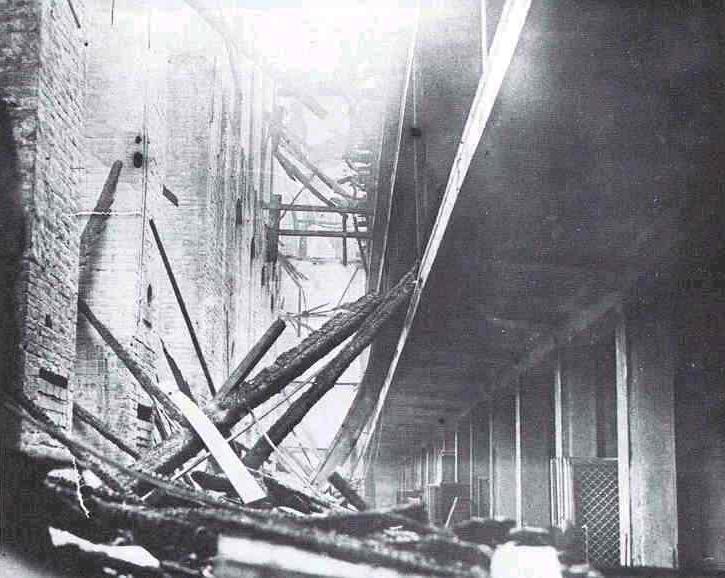
The “lucky” break that bought him six extra weeks of life was just the deadliest prison fire in history. (n.b. — Recently surpassed in Honduras)
Already a century old and packed to triple its 1,500-soul capacity, the penitentiary had a fire break out* shortly after supper on April 21 in Section “I”. This fire
licked along dry timber into Section “H”, from Section “H” to Section “G”, and thence upward to where 300 prisoners, trapped like caged animals, tore futily [sic] at steel bars that became their pyre.
It was a twilight of indescribable horror.
Some 320 perished from burns, suffocation, and smoke inhalation. Most of the casualties were those who never got out of their locked prison cells, and couldn’t move a meter as death enveloped them.
20th century literary great Chester Himes also happened to be serving a sentence for armed robbery at this prison:** indeed, it was during that sentence that he began to write at all, setting him on a path towards his life’s work.
Himes’s novel from his time in the Ohio penitentiary was only published well after his death, in 1998 … the same year the disused Ohio Penitentiary was finally torn down.
One of Himes’s first published works was a short story in Esquire in 1934, written while Himes was still incaracerated. Titled “To What Red Hell” (an allusion to Oscar Wilde’s meditation on prison and death row, The Ballad of Reading Gaol: “For none can tell to what red Hell / His sightless soul may stray.”), this story follows the experience of the Ohio prison inferno through the fictional inmate “Blackie”, who beholds tormented prisoners like “condemned souls jumping flame pots in the ante room of Hell” … but also notices the ironic safety of death row, where the literal condemned souls remained un-burned.
From where he stood he could see the death house, a low, red brick building at the end of the cell block. Just above it was a wall parapet. A guard stood on the cat-walk with a sub-machine gun cradled in his arm. Two searchlights shone in opposite directions down the sides of the gray, stone wall. The green door of the death house looked black in the vague light.
The end of the parade! The last mile! What a joke! The death house was on the other side of the yard tonight, he was thinking. It was quiet over here in the shadows with the scared ghosts of the executed men.
In fact, someone had managed to spring the death house doors, momentarily “liberating” the doomed men. As militia arrived on the scene, they attempted to forestall any general uprising or wholesale prison break by setting up machine gun emplacements on prison towers, with orders to shoot to kill.
When the death row prisoners were collared — they hadn’t actually gone anywhere or tried anything** — they were offered transportation to the city jail for their own safety against these potentially itchy trigger fingers. While three of them took the refuge, the others (Akers included) refused, on the sensible grounds that they could hardly be much worse off being shot dead than being electrocuted.
The inmates — reported to have labored heroically alongside guards, firefighters, civilian nurses, virtually without incident — were understandably incensed at the disaster, charging that guards had allowed most of the victims to die out of needless reticence over releasing anybody as the fire began to spread — and that the refusal to turn the keys went straight to the top. William Wade, “a big Negro prisoner” who had sledgehammered a cell open to save 25 men, was quoted in the next day’s New York Times saying simply, “They could have saved these men. They let human beings burn to death.”
Warden Preston Thomas, who comes off in the story as an unmitigated shit,† was the focus of the prisoners’ ire … and when he showed himself, the focus of their raucous jeers (Thomas tried to dump the blame on lower-level guards, who in turn claimed that they’d been directed by their superiors not to open cells). The Ohio governor’s refusal to dismiss Warden Thomas soon triggered a riot in the prison and the arrival of the National Guard for several tense days of teargas-punctuated negotiations.
This mutiny was only just being settled when Akers’s original May 2 execution date came up. The charred prison clearly had some other priorities at that moment than orchestrating an execution, so Akers and another man, John Richardson, both got a gubernatorial reprieve until things were peaceful enough for orderly killing.
The inferno, meanwhile, opened space for some humanitarian reforms: since overcrowding (which had been fretted in internal reports in the years preceding the fire, and had also contributed to several other prison disturbances) was widely understood to be part of the disaster, a parole board was formed in 1931 that released 2,300 prisoners. “Mandatory minimum” sentences that stuffed minor offenders into these dungeons were widely rolled back.
Although we may have made some provisions to avoid spectacular catastrophes like the Ohio Penitentiary fire in our present-day overcrowded prisons, the routine catastrophe of imprisonment itself — “the moral scandal of American life” — has grown more than twelvefold since 1930.
* The mysterious fire was eventually found to have been started by some (non-death row) prisoners in an abortive breakout bid: two of them later hanged themselves in remorse. However, and rather amazingly, there were no reported escape attempts during the nighttime chaos.
** Himes wasn’t the Ohio penitentiary’s only noteworthy litterateur. The facility’s prison yard was named in honor of the pseudonym that a previous scribbling inmate had concocted there in order to get published while doing his time: O. Henry.
† e.g., a committee formed by the legislature to investigate the fire took testimony from convicts that Warden Thomas was a tyrannous martinet even apart from the disaster, even as Thomas was publicly threatening the angry inmates who were demanding his ouster: “If these prisoners don’t quiet down pretty quick, I’ll use forceful methods against them if it takes a soldier to every man.”
On this date in 1857, a “hulking lout” with the unusual handle of Return Jonathan Meigs Ward was hanged in Toledo for Sylvania, Ohio’s most shocking murder.
Ward makes his notorious entry in the annals of Ohio crime by killing his wife after which, in the words of a wire story, he “sits up nights, with his door locked, cuts her into small pieces, and burns up her remains in the stove. This process occupied several days, in which time he drew largely on the shops around for shavings, and the unsavory scent went forth from the chimney, and filled the nostrils of those who happened to be in that vicinity.”
That’s from the April 2, 1857 Lowell (Mass.) Daily Citizen and News, and indicates that this itinerant character had become a national story. Ward, indeed, appears to have perpetrated a couple of theretofore unsolved homicides in his past, and the experience of dislimbing a previous murder victim to box him in a crate is just the sort of thing to give a man the sang-froid to dice up and incinerate his late spouse.
Anyway, the neighbors being unsatisfied with Ward’s accounts of his wife’s absence, they started poking around his place and turned up the bone fragments he hadn’t been able to completely burn away. Though the evidence against him was circumstantial, it was pretty overwhelming — and a jury took less than a half-hour in a standing-room-only courtroom to convict.
Ward went with the old “accidentally killed her during a domestic fight and cut her all to pieces in my panic” story. You know, the classic. In a post-conviction quasi-confession to the Toledo Blade, he took that tack while giving a stomach-churning description of how he annihilated the corpse (here reprinted by the Newark Advocate, April 15, 1857). Warning: Skip this if detailed descriptions of human dismemberment aren’t your thing.
I tore the clothes open, from the throat down. I then took a small pocket knife and opened the body, took out the bowels first, and then put them on the stove, upon the wood; they being filled with air would make a noise in exploding, so I took my knife and pricked holes through them to prevent the noise; then took out the liver and heart, and put them in the stove; found it very difficult to burn them; had to take the poker and frequently stir them before they could be destroyed; found the lungs very much decayed. I then took out the blood remaining in the cavity of the body, by placing a copper kettle close to the same and scooping it out with my hands. I then dipped portions of her clothing in the same, and burnt it together, fearing if I put the blood in the stove alone, that it might be discovered. I then made an incision through the flesh, along down each side, broke off the ribs and took out the breast bone, and throwing it into a large boiler, unjointed the arms at the shoulders, doubled them up and placed them in the boiler; then severed the remaining portions of the body, by placing a stick of wood under the back and breaking the back bone over the same, cutting away the flesh and ligament with a knife. Then tried to sever the head from the body; it proving ineffectual, I put the whole upper portion of the body into the boiler. Then took a large carving knife and severed the lower portion of the body, unjointed the legs at the knee, and again at the hip joint; cut the thighs open and took out the bones and burnt them up; they burned very rapidly.
On Thursday night, I commenced burning the body, by placing the upper and back portions of the same, together with the head, in the stove. On Friday morning, finding it had not been consumed, I built a large fire by placing wood around and under it, and in a short time it was wholly consumed, except some small portions of the larger bones and of the skull. The remaining portions of the body were kept in the boiler and in tubs, under the bed, covered up with a corded petticoat, and were there at the time the first search was made on Saturday, by Constable Curtis. — Hearing on Saturday evening that the citizens were not satisfied with the search made by Mr. Curtis, I proceeded on Sunday morning to destroy the remainder of the body by burning the same in the stove, cutting the fleshy parts of the thighs in small strips, the more readily to dispose of them. On Monday morning I took up the ashes in a small bag, sifting out the larger pieces of bone with my hands, placing the same in my overcoat pockets, which I scattered in various places in the fields, at different time. Also took the major portion of the trunk nails, together with the hinges, and scattered them in different places. I then burned her trunk and every vestige of her clothing, disposing of small portions at a time, to prevent their creating too much smoke.
Though the hanging itself occurred behind prison walls — and just as well, since the jittery Ward was unmanned and incoherent — Toledo was reportedly thronged with curiosity-seekers on the day of the execution.
That curiosity hasn’t disappeared in the intervening years.

 Nevertheless, this was Jake Bird’s weapon of choice on October 30, 1947, when he broke into Bertha Kludt’s home and killed her and her seventeen-year-old daughter, Beverly June.


 Gregg
Gregg 

 A paranoid schizophrenic and career criminal, Scott entered an East Cleveland deli in May 1983, ordered bologna and crackers, and then shot the 74-year-old proprietess at point-blank range after she served him. Then he went for the restaurant brace by gunning down a security guard at another restaurant. (That death sentence was eventually reversed; technically, Scott died for the first murder only.)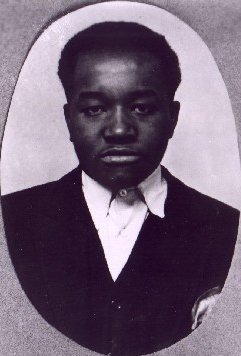

 Ward makes his notorious entry in the annals of Ohio crime by killing his wife after which, in the words of a wire story, he “sits up nights, with his door locked, cuts her into small pieces, and burns up her remains in the stove. This process occupied several days, in which time he drew largely on the shops around for shavings, and the unsavory scent went forth from the chimney, and filled the nostrils of those who happened to be in that vicinity.”
