On this date in 1777, a general of the American Revolution laconically asserted his prerogatives with the hanging of a British spy.
A former ranger in the British service, Israel Putnam — he may or may not be the “don’t fire until you see the whites of their eyes” guy — was camped at Peekskill, New York, when he caught one Edmund Palmer stalking the camp.
It was early in the American Revolution, and American spies were being hanged by the British … but the commanders of Albion evidently entertained some notion that the shoe would not go on the other foot. When Palmer was condemned to death for spying, the British General Sir Henry Clinton hurried a missive to his opposite number under flag of truce claiming Palmer as a British lieutenant.
Old Put firmly believed “the speedy execution of spies is agreeable to the laws of nature and nations and absolutely necessary to the preservation of the army.” (According to the unimpeachable sourcing that is the “about” page of an intel e-learning university named for him.)
And Putnam’s reply to Clinton, a terse little masterpiece answering Cicero‘s dictum that “Brevity is a great praise of eloquence,” was one for the ages.
Headquarters, 7th August, 1777.
Sir — Edmund Palmer, an officer in the enemy’s service, was taken as a spy lurking within our lines; he has been tried as a spy, condemned as a spy, and shall be executed as a spy, and the flag is ordered to depart immediately.
Yours, &c.,
Israel Putnam
P.S. He has accordingly been executed.
(Some versions give the slightly zippier postscript as “afternoon — he is hanged.”)
Read all about this spry American Cincinnatus in Old Put, a now-public-domain book published for America’s centennial celebration; or at this enthusiastic fan page. Also of some now-current relevance: tangential background on the jurisdictional wrangling around military commissions at this period, here.
On this date in 1890 the iconic symbol of the American death penalty made its grisly debut upon the person of William Kemmler at New York’s Auburn Prison.
The long New World tradition of hanging condemned prisoners came under fire as a barbarism in the late 19th century, leading reformers to look for killing procedures less likely to result in a horrendously protracted strangulation or a midair decapitation. As Empire State Governor David Hill put it,
The present mode of executing criminals by hanging has come down to us from the dark ages, and it may well be questioned whether the science of the present day cannot provide a means for taking the life of such as are condemned to die in a less barbarous manner.
On this stage, Executed Today presents a rogues’ gallery of homo Americanus, the salesmen and swindlers who would help the U.S.A. ride the lightning.
The Dentist
A true renaissance man, Buffalo dentist Dr. Alfred Southwick, applied his active mind to the need to better kill a fellow, and soon hit upon an inspiration — that is to say, a town drunk hit upon an electrical generator and died instantaneously, and the observant Southwick said “eureka!”
Without the subsequent industry of this neglected gentleman, who added to his repertoire scientifically-minded electrical butchery of animals alongside political gladhandings to bring a flutter to a busybody’s heart, the Chair’s entire oeuvre of machismo-sadism might have missed the country altogether. Just imagine living in a world where New York had pioneered its other leading reform alternative: lethal injection.
(This, incidentally, is why the chair is a chair, and not a bed or a stake or a St. Andrew’s Cross: because the guy who thought of it spent all day administering his own tender mercies to seated penitents.)
The Plutocrats
As Southwick nagged his senator and shocked stray cats into the great hereafter, the gears of commerce strove relentlessly ever-onward. The business of America was ever business, and never more so than the Gilded Age.
And the business of killing people was about to become the biggest business there was.
The age of electricity was buzzing into incandescence, and two rival standards were at currents amped over eventual dominance of this stupendous industry. Thomas Edison’s earlier Direct Current (DC) standard was being challenged by Nikolai Tesla’s Alternating Current (AC), backed by the financial muscle of George Westinghouse.
Cheaper and more efficient, AC tilted the playing field against Edison. Seeing his days numbered, the Wizard of Menlo Park fought back the way any dinosaur industry would: dirty.
This clip of the electric demise of a circus elephant — don’t hit “play” if you’re not up for animal cruelty — is from some years later (Edison kept tilting at windmills and megafauna carcasses as his DC empire disappeared), but it’ll give a sense of the horrifying spectacle.
With the New York legislature’s embrace of Southwick’s seated voltage people-eater, Edison turned his PR gears on the state, demanding they adopt his competitor’s “deadlier” current for the contraption. And they did, reflecting a widespread belief inculcated by Edison’s experiments — as this New York Times article on an Edison crony’s public livestock-killing show in the days leading up to the advent of the electrocution law indicates:
The experiments proved the alternating current to be the most deadly force known to science, and that less than half the pressure used in this city for electric lighting by this system is sufficient to cause instant death.
After Jan. 1 the alternating current will undoubtedly drive the hangmen out of business in this State.
Too bad for Edison that the business he was really trying to kill was made of sturdier stuff.
The Alcoholic Vegetable Merchant
As the 1880’s wane, we come at last to our subject — in several senses of the term — an illiterate nobody of German stock who chanced to kill his common-law wife with just the right timing to join in a new kind of experiment.
William Kemmler mounted a “cruel and unusual punishment” appeal against his sentence funded by Westinghouse himself: no dice. Perhaps appreciating the odd foothold on history he was about to attain, he showed little worry as he entered the execution room and sat himself — “undoubtedly the coolest man in the room,” a journalist present reported.
The End of the Beginning
That reporter’s description for the New York Herald graphically captures humanity’s first horrible encounter with this “humanitarian” machine, beginning with the prisoner’s parting remarks.*
Doubtless he knew that his words will go down in history and he had his lesson well learned. He addressed his audience [in] a commonplace way and without hesitation.
…
“Well, gentleman, I wish everyone good luck in this world, and I think I am going to a good place, and the papers have been sa[yi]ng a lot of stuff that isn’t so. That’s all I have to say.”
And so with a parting shot at what he was good enough to refer to not long ago as “those d—d reporters,” William Kemmler took his leave of earth. The quiet demeanor of the man as he entered had made a strong impression on those in the room. His self-possession after his oratorical effort simply amazed them. He got up out of his chair as though he were anxious to try the experiment, not as though he courted death, but as though he was thoroughly prepared for it. …
There was no delay. Kemmler constantly encouraged the workers at the straps with “Take your time; don’t be in a hurry; do it well; be sure everything is all right.” He did not speak with any nervous apprehension.
Warden Durston leaned over, drawing the buckle of the straps about the arm. “It won’t hurt you, Bill,” he said, “I’ll be with you all the time.”
A minute later Kemmler said, “There’s plenty of time.” He said it as calmly as the conductor of a streetcar might have encouraged a passenger not to hurry.
…
Kemmler was pinioned so close that he could hardly have moved a muscle except those of his mouth.
The Warden took a last look at the straps. “This is all right,” he said.
“All right,” said Dr. Spitzka, and then bent over and said, “God bless you, Kemmler.”
“Thank you,” said the little man, quietly.
“Ready?” Said the Warden.
“Ready,” answered the doctors.
“Goodbye,” said the Warden to Kemmler. There was no response.
GAVE THE SIGNAL.
The Warden stepped to the door leading into the next room. It was then forty-three and one-half minutes past six o’clock by the prison clock. “Everything is ready,” said the Warden to some one hidden from view in the next room.
The answer came like a flash in the sudden convulsion that went over the frame of the chair. If it seemed rigid before under the influence of the straps, [it] was doubly so now has it strained against them.
The seconds ticked off. Dr. McDonald, who was holding the stopwatch, said “Stop.”
Two voices near him echoed, “Stop.”
The Warden stepped to the door of the next room and repeated the word “Stop.”
As the syllable [passed] his lips the forehead of the man in the chair [grew] dark [in] color, while his nose, or so much of it as was exposed, appeared a dark red.
There was very little apparent relaxation of the body, however. [A] fly lighted on the nose and walked about unconcernedly. The witnesses drew nearer to the chair.
“He’s dead,” said Spitzka, authoritatively.
“Oh, yes, he’s dead,” said McDonald.
“You’ll notice,” said Spitzka, “the post-mortem appearance of the nose immediately. There is that remarkable change that cannot be mistaken for anything else, that remarkable appearance of the nose.”
The other doctors nodded [assent]. They looked at the body critically for a minute and then Spitzka said, [“]oh, undo that now. The body can be taken to the hospital.”
“Well, I can’t let you gentlemen out of here until I have your certificates,” said the Warden.
FOUND SIGNS OF LIFE.
It was while this businesslike conversation was going on that Dr. Balch made a discovery.
“McDonald,” he cried, “McDonald, look at that rupture,” he pointed at the abrasion of the skin on Kemmler’s right thumb. In the contraction of the muscles the figurehead[?] scraped against it and removed the skin, and from that little [wound] blood was flowing-[an] almost certain indication of life.
A low cry of horror went through the assemblage.
“[Turn] on the current,” excitedly cried Dr. Spitzka. “This man is not dead.”
The crowd fell back from the chair, as though they were in danger. The Warden sprang into the closed door and pounded on it with his hand.
“Start the current!” he cried. As he spoke of fluid began to drop from Kemmler’s mouth and to run down his beard; a groaning sound came from his lips, repeated and growing louder each time.
It seemed [an] age before the card was again turned on. In fact it was just seventy-three seconds from the end of the first contact when the first sound was heard to issue from Kemmler’s lips, and it was not more than a half [minute] before the card was again turned on.
RECOVERING CONSCIOUSNESS.
But every second to that time the horrible sound from those groaning lips was becoming more distinct, [a straining] of the chest against the leather harness stronger and more evident.
The man was coming to life. The spectators grew faint and sick. [Men] who had stood over dead and dying [men] and had cut [men] to pieces without an emotion [grew] pale and turned their heads away.
One witness was forced to lie down while one of the doctors fanned him.
But [the end] came at last. There was another convulsion of the body, and … it became rigid with the rigidity of iron.
“That man wasn’t dead,” cried Spitzka excitedly. As he spoke the body twitched again. The electrician had given the current gain new alternation and now 2,000 volts [were] playing in short, successive shocks down Kemmler spine. The sound ceased with the first convulsion, but the fluid continued to trip from the mouth and down the beard, making the body a sickening spectacle.
“Keep it on now until he’s killed,” said one of the doctors. …
“Keep it on! Keep it on!” Cried Warden Durston through the door.
Silence reigned for a moment. A bell without began to [toll] solemnly. …
BURNED BY THE CURRENT.
Then from the chair came a sizzling sound, as of [meat] cooking on hand. Following it immediately a billow of smoke came from the body and filled the air of the room with the odor of burning hair.
There was a cry from all the members of the little group, and Warden Durston cried through the door leading to the next room to [turn] the current off.
More shocking — so to speak — papers ran the next day’s headline “Kemmler Westinghoused,” the verb “to Westinghouse” being another shameless Edisonian bid to stamp his marketing project onto the Queen’s English. This fine, rounded, archaic neologism the right sports anchor could resuscitate as a fresh synonym for thrashing, horsewhipping, poleaxing, or else (in greater justice) for moderation and decency as the only principal in the sordid affair that rejected death-dealing by electricity.
(Officially, Edison also opposed the death penalty. Like Dr. Guillotin, he was doing his part for humanity in the meantime … just with a little skin in the game. Did we mention the business of America is business?)
Official reviews for the “art of killing by electricity” were, ahem, mixed.
“They could have done better with an axe.”**
-George Westinghouse
“Strong men fainted and fell like logs on the floor.”
-New York Herald
“Revolting … a disgrace to civilization.”
-New York Times
“We live in a higher civilization from this day on.”
-Alfred Southwick
Books (remarkably numerous!) about the creation of the electric chair
It should, in fairness, be noted that the U.S. was not the only country (pdf) to mull an electrocution chair in the 19th century … but it was (and for a long time remained) the only one to actually use one.
* The Herald excerpt, along with several other articles from the same paper about the Kemmler execution, is here, but the text has obviously been generated from a scan with uneven results. As I do not have access to the originals, [bracketed] remarks in the excerpt indicate this author’s own interpretations or interpolations of seemingly mistaken transcriptions.
** Some sources make it “would have done better with an axe.”
On this date in 1676, two starkly contrasting women were executed for sorcery in Stockholm.
Anna Simonsdotter Hack — also known as “Tysk-Annika” — is the forgotten one of the pair, who played the expected role of a condemned witch and meekly gave herself over to the judgment. There were rewards for good behavior: Tysk-Annika had her head cleanly lopped off.
Malin Matsdotter, however, did not plan any reciprocal back-scratching with the men who came to kill her.
Accused by her own daughters of carrying their children — Malin’s grandchildren — to Satanic masses, “Rumpare-Malin” obstinately refused to cop to the charge. (Naturally, not confessing was a further indicator to the court that Satan was fortifying her defiance.) Without a confession, the authorities couldn’t assuage themselves by giving her the easy-ish death of decapitation; the law required burning at the stake.* A sack of gunpowder around the neck to speed things up was the best they could offer her.
Matsdotter maintained her innocence to the stake, frustrating the confessors, and when one of her daughters called on her to admit the crime, “she gave her daughter into the hands of the devil and cursed her for eternity.”
And maybe it worked. Judges may well have been wearying of the eight-year-old witch craze, but Matsdotter’s discomfiting end was the turning point; the cases dried up, existing sentences were overturned, and the clergy was summoned to draw a line under the proceedings by announcing from the pulpits that witches had been driven out of Sweden for good. Only one more witchcraft execution ever took place in Sweden — and that in 1704.
By the end of 1676, several of the most notorious accusers in the witch trials were being hunted for perjury by those very same courtrooms. Reportedly, Matsdotter’s daughter was herself executed for her fatal accusation.
* Previously, the law had not allowed a witchcraft execution without a confession, and in a notable case a few years before Matsdotter’s burning, two other women had escaped death by refusing to confess. Evidently, they closed that loophole.
Two years ago today, the strange leader of a mystical Islamic fight club was hanged at Malaysia’s Sungai Buloh prison for waging war on the king.
Caption Contest?: The Headsman could be mistaken, but based on an altogether amateur comparison to the Razali shot on this BBC story, I believe that’s him in the white. Photo from the sect website.
The heretofore obscure Al Ma’unah — just a couple dozen guys — had descended on an army camp in July 2000 and made off with a handsome cache of weapons and a few hostages, apparently the opening gambit in a bid to launch an Islamic fundamentalist revolution in Malaysia.
What actually happened was the army hunted them down and engulfed them a couple of days later.
You’d never know the ambitious designs of this clique from its web site (still online as of this writing), whose English “about us” page rings harmlessly loopy (all grammatical manglings [sic]):
Al-Ma’unah … is a Non-Govermental Organisation (NGO) … involved in the teaching of martial arts particularly the development of one’s inner power and the practice of Islamic traditional medicine.
Literary, the term “Ma’unah” is an Arabic word which means, something extraordinary that happens to an ordinary Muslim individual, for example extra sensory perception or the ability to see “things” in another dimension (paranormal).
“Al-Ma’unah Inner Power” can be defined as “something extraordinary bestowed to a righteous Muslim (in the form of assistance from Allah) in accordance with specific adherence to tradition and proper sequence emphasising on the Islamic principles and Allah’s commandments as stipulated in the holy Quran”.
In teaching the martial art and traditional medicine, the brotherhood placed more emphasis on spiritual development and enlightenment of its members or “ikhwan” as it is known in Al-Maunah, in order to achieve the highest level of proficiency in the art and to attain great healing powers.
… although a section entitled “The Usage of the Inner Power” suggests the training achieves the sorts of useful martial superpowers more commonly found on a Dungeons & Dragons treasure table:
Among the benefit of Al-Ma’unah Inner Power can be listed as follows:
o For health and vitality, both physically and spiritually.
o Making an enemy/attacker to freeze on the spot and to be hurled sprawling backwards without being touch.
o Invincible from sharp objects, weapons, boiling water, fire etc.
o To transfer temporarily the inner energy to another object.
o Able to attain healing powers.
o Able to tie enemies without using rope.
o Able to hypnotise a violent aggressor to sleep or forget his intention.
o Able to pull back a fleeing snatch thief or robber from great distance (without physical body contact).
o Able to make attackers to drop to their knees or fall down with the blink of an eye.
o For marital bliss.
o Able to increase influence over others.
Too bad it didn’t protect against hemp.
Most of the 19 who survived the manhunt and went on trial eagerly cut deals, groveled (“Please don’t send us to the gallows!” one said during the hearing), and pointed the finger at the former army private. Razali didn’t say boo at trial and died stoically at about 6 a.m. this morning.
Although there were 359 executions in Malaysia from 1970 to 2001, the practice has dropped into disuse in this decade; Razali appears to be the last person executed in Malaysia as of this post’s publication. Amnesty International has suggested that Malaysia’s zero figure might conceal some secret (presumably extrajudicial) executions. While the government angrily denied that suggestion, the death penalty has come under growing scrutiny in Malaysia.
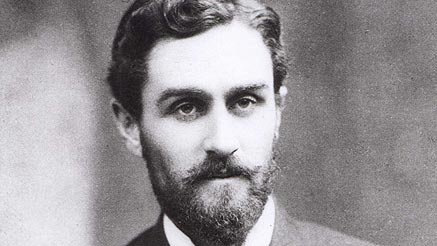
On this date in 1916, Roger Casement was hanged for treason by the British crown that had knighted him only a few years before.
Casement died for his part in the Easter Rising, but this Irish nationalist hero’s layered story has long made him a very different sort of cultural marker than, say, James Connolly.
Casement came to public prominence for his damning report on Belgium’s atrocious treatment of natives in its Congo colony, e.g.:
[T]he great decrease in population, the dirty and ill-kept towns, and the complete absence of goats, sheep, or fowls — once very plentiful in this country — were to be attributed above all else to the continued effort made during many years to compel the natives to work india-rubber. Large bodies of native troops had formerly been quartered in the district, and the punitive measures undertaken to his end had endured for a considerable period. During the course of these operations there had been much loss of life, accompanied, I fear, by a somewhat general mutilation of the dead, as proof that the soldiers had done their duty.
. . . Two cases (of mutilation) came to my actual notice while I was in the lake district. One, a young man, both of whose hands had been beaten off with the butt ends of rifles against a tree; the other a young lad of 11 or 12 years of age, whose right hand was cut off at the wrist. . . . I both these cases the Government soldiers had been accompanied by white officers whose names were given to me. Of six natives (one a girl, three little boys, one youth, and one old woman) who had been mutilated in this way during the rubber regime, all except one were dead at the date of my visit.
[A sentry in the employ of one of the concessionary private companies] said he had caught and was detaining as prisoners (eleven women) to compel their husbands to bring in the right amount of rubber required of them on the next market day. . . . When I asked what would become of these women if their husbands failed to bring in the right quantity of rubber . . , he said at once that then they would be kept there until their husbands had redeemed them.
Casement’s is an honorable name in the campaign for the Congo, an early human rights and anti-colonial struggle; in this 92-minute BBC documentary on the notorious depredations in the Congo, the Casement report’s creation and impact are treated from about 1:15:15 through the end:
A similar investigation undertaken in Peru — where the lens focused on British employers, rather than strictly the malfeasance of foreign states — earned him knighthood in 1911, but Casement’s personal evolution from loyal Protestant* imperial operative with a sympathy for the Irish cause to revolutionary nationalist was already underway. “This journey into the depths of the Congo has been useful in helping me discover my own country and understand her situation, her destiny, her reality,” he wrote his sister. “I’ve also found my true self: the incorrigible Irishman.”
He resigned from the consular service and began recruiting for the Irish Volunteers.
As World War I opened, Casement identified British aggression as its cause, an extension of the violent imperial hegemony he chronicled in The Crime Against Europe:
The British Empire was not founded in peace; how, then can it be kept by peace, or ensured by peace-treaties? It was born of pillage and blood-shed, and has been maintained by both; and it cannot now be secured by a common language any more than a common Bible. The lands called the British Empire belong to many races, and it is only by the sword and not by the Book of Peace or any pact of peace that those races can be kept from the ownership of their own countries.
While any Irish Republican would have agreed with that sentiment, the resulting moral and tactical calculus for the Irish cause to ally with the German was not universally embraced — and was certainly anathema to the British.
All that was beautiful and just,
All that was pure and sad
Went in one little, moving plot of dust
The world called bad.
Came like a highwayman, and went,
One who was bold and gay,
Left when his lightly loving mood was spent
Thy heart to pay.
By-word of little street and men,
Narrower theirs the shame,
Tread thou the lava loving leaves, and then
Turn whence it came.
Ætna, all wonderful, whose heart
Glows as thine throbbing glows,
Almond and citron bloom quivering at start,
Ends in pure snows.
Casement spent the first two years of the Great War in Germany itself, and arranged a shipment of guns that would have supported the Easter Rising, but thought the aid too little and too late. He had a German U-boat drop him at Ireland, trying to get word to the Republican leadership to postpone the revolt.** Instead, he was picked up three days before the doomed rising and hanged after a sensational trial.†
His “treason” — and of course, the very crime of which he was convicted imports a British legitimacy in Ireland that Casement explicitly rejected — shocked many old associates, but he still had friends in high places. To dampen the international clemency campaign, England circulated the notorious “Black Diaries,” photographs of supposed Casement diary pages detailing the author’s homosexuality.
This dirty (and successful) trick brings a personal-is-political quality to Casement’s legacy as well as an enduring debate over the diaries’ authenticity. Since Irish nationalism gained mainstream acceptance well before homosexuality, right-thinking folk long held the Black Diaries a forgery, and time was you solicited a black eye by saying otherwise in the wrong company.
The gay rights movement has seen a posthumous redefinition of Casement; although homosexuality was not on the indictment against him, one could argue that it was the reason he hanged. Given recent handwriting forensics that support the diaries’ authenticity, the general‡ consensus about the Black Diaries has inverted with the effect of only heightening sympathy for their alleged author, albeit at the expense of some tension over how to situate that characteristic within the whole of Casement’s life and thought.
And that is only one aspect of the shifting place of Casement in the firmament of Republican martyrs since his death. His hagiography waxed in the interwar years, with Yeats among those calling for the return of Casement’s remains in The Ghost of Roger Casement”.
But the humanitarian’s German ties were an inconvenience as World War II raged, and not until afterward was that cause renewed. When his body was finally returned in 1965, an Irish state funeral elided the matter of the diaries.
Even Casement himself, who would be the last to die for the Easter Rising, had a hand in the myth-making. His last mission’s purpose to avert the Easter Rising fit neither the government’s interest in maximizing his perfidy nor Casement’s own in identifying with the Irish cause; he himself therefore owned the Rising fully in his defense which made him fine fodder for Republican hymns like “Lonely Banna Strand”:
RTE radio’s What If? series recently explored Casement’s complex legacy:
As Casement put it in his voluminous personal writing, “It is a cruel thing to die with all men misunderstanding — misapprehending — and to be silent forever.”
* Casement’s father was Protestant and his mother was Catholic; he lived with a somewhat split identity between the two faiths, but formally converted to Catholicism while awaiting execution (which surely did not hurt his memory to the Irish cause) and his last meal was simply the Host.
** The guns themselves were interdicted by the British navy and ended up scuttled to the ocean floor.
† Since Casement’s incitements to rebellion had occurred on foreign soil, there was some fine legal parsing over whether he could be tried for “treason.” The dispute resolved to the placement of a comma in a medieval law — leading to the epigram/-taph that Casement was “hanged by a comma.” In the midst of war and before an English jury, however, punctuation was an even weaker defense than it sounds.
On this date in 1343, a noble widow’s career in piracy got its start where such ventures more usually end: the scaffold.
Olivier III de Clisson beheaded with his knights, in an illustration of Froissart.
Olivier III de Clisson, a powerful Breton noble nominally loyal to France, had been persuaded to ally with England’s Edward III in what nobody yet realized was the opening stage of the Hundred Years’ War.
Intriguing to advance a claim to the French throne, Edward knew right where to look. “Brittany was France’s Scotland, choleric, Celtic, stony, bred to opposition and resistance, and ready to use the English in its struggles against its overlord as the Scots used the French in theirs,” Barbara Tuchman wrote. And the Breton War of Succession was just the sort of pretext for meddling.
Clisson was one of the great lords of the region, and in the feudal era where liege relationships counted more than “nationality,” his alliance would swing a considerable network of retainers to the English cause.
The duchies of Brittany and Normandy seemed to [the French king Philip VI] to be seething with rebels, led by the very noblemen who had promised to serve him till his dying day. He was shocked and puzzled.
When Clisson’s (apparent) lord Philip VI got wind of the secret deal, he invited Olivier to a joust in Paris and had him arrested. Then, as knight follows day …
In the year of grace one thousand three hundred and forth-three, on Saturday, the second day of August, Olivier, lord of Clisson, knight, prisoner in the Chatelet of Paris for several treasons and other crimes perpetrated by him against the king and the crown of France, and for alliances that he made with the king of England, enemy of the king and kingdom of France, as the said Olivier … has confessed, was by judgement of the king given at Orleans drawn from the Chatelet of Paris to Les Halles … and there on a scaffold had his head cut off. And then from there his corpses was drawn to the gibbet of Paris and there hanged on the highest level;* and his head was sent to Nantes in Brittany to be put on a lance over the Sauvetout gate [as a sign of his treason]. (Cited here.)
That’s chivalry for you.
The unexpected turn came while Clisson’s headless corpse was clanking away on the gibbet: his warlike, 40-something wife Jeanne de Clisson vowed vengeance, sold off the Clisson estates to buy a small fleet, and turned privateer, murderously ravaging French shipping along the Breton coast and reportedly personally beheading aristocrats she could get her hands on.
After more than a decade of avenging Olivier, the “Lioness of Brittany” retired triumphantly to England to remarry the sort of British toff whose preference ran towards strong women.
Her son, also named Olivier de Clisson, returned to fight in the Hundred Years War on the side of England … and eventually defected back to the French.
* Meaning, at the imposing tiered gallows of Montfaucon.
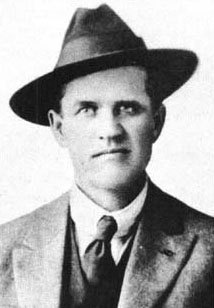
On this date in 1917, Wobbly labor organizer Frank Little was abducted from his hotel and hanged from a railroad trestle in Butte, Montana.
An executive board member of the radical Industrial Workers of the World, the half-Cherokee Little had only rolled into Montana’s copper mining hub two weeks before. A roving agitator who had organized workers all around the west, he would be a signal martyr to America’s nascent Red Scare.
It was a fraught moment nationwide, and worldwide. After winning re-election on the slogan “He kept us out of war,” Woodrow Wilson upon his inauguration immediately (try to act surprised) got the United States into World War I. Just as it had in Europe, the question of war put American labor to the test: would it transfer opposition to war into resistance, or would it line up patriotically with its state?
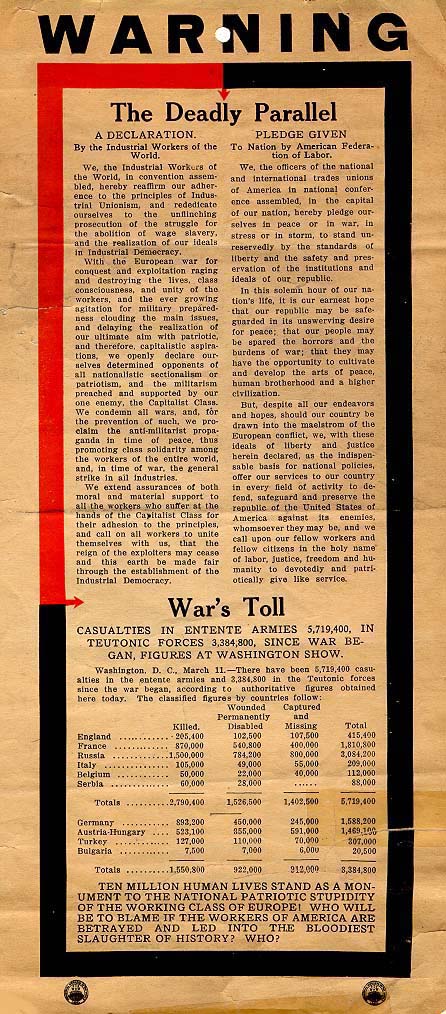
This outstanding IWW poster (via the University of Arizona’s web exhibit on the labor deportations that had expelled Frank Little from Arizona just days before he arrived in Butte) pits the militant Wobbly position against the nationalist American Federation of Labor.*
And Little was one of the most stridently anti-war in his movement.
Either we’re for their capitalist slaughter fest or against it. I’m ready to face a firing squad** rather than compromise. (Source)
Anaconda Copper could nowise welcome this character’s arrival, where he would organize already-striking miners and mix in militant anti-war rhetoric with incendiary potential in the cocktail of immigrant workers being asked (in many cases) to wage war on their homelands.
The local labor conflict, an exceptionally brutal instance of a pattern across the country and especially in western mining country, was probably savage enough on its own to make Little a marked man. Whether his anti-war activity or his union activity motivated his death is not sure, but the dilemma was probably a false one for his killers just as it was for Little himself: they were two heads of the coin. As American troops poured into Europe, and particularly as the Bolshevik Revolution later in 1917 spurred a worldwide Communist scare (and a separate American military expedition), both public and private power violently pursued left-wing elements.
Caption: Copper Trust to the Press: “It’s all right, pal; just tell them he was a traitor.” (Source.)
The film An Injury To One (review) deftly weaves those themes and others together into the tale of a crime which is also the tale of a time and place:
This note was found pinned to Little’s body. “3-7-77”, a Montana vigilante calling card, indicates the dimensions of a grave.
Officially (again, act surprised), it’s an unsolved crime. Even though the New York Timesreport the day after the hanging quoted a labor official claiming “certain” knowledge of five of the six men in the posse, and a prosecutor vowing, “it is a cold-blooded murder and every effort will be used to apprehend the men who did it,” nobody ever went on trial for lynching Little.
Company goons, likely aided by the infamous union-busting Pinkerton detective agency, are the presumed culprits. And it is the nature of lynchings to make extrajudicial the rough justice sought by a certain constituency, as expressed by Montana’s Helena Independent:
Good work! Let them continue to hang every I.W.W. in the state. The time has come. It is beyond the comprehension of the average citizen why the war department has not ordered certain leaders arrested and shot. The people will not stand for much more.
A massive funeral turnout brought federal troops to quash labor unrest in Butte … and in the years to come, the IWW would be hunted from pillar to post.
Pro-Wobbly sites give adoring biographical treatment and fairly extensive resource lists on Little here and here.
On this date in 1963, Iraq’s infant Ba’ath government executed at least 21 soldiers — all Shi’a — who had participated in a Communist coup attempt on July 3.
The Ba’ath were newly in the saddle after overthrowing Qasim earlier that year, and would be ousted again a few months hence before their definitive seizure of power several years later.
For the moment, they were a fledgling government trying to tilt away from the Soviet bloc and towards the west while navigating a minefield of domestic politics. If the coup really occurred as described, it was the fruit of an Iraqi Communist Party with daggers drawn for the regime after the Ba’athists had massacred their membership with CIA help in the course of offing Qasim. (The name is also transliterated Qassim or Kassem.) If it was bogus, it was probably an official cover story to keep massacring Shi’a Communists.
The affair, in either guise, amounted to a minor hazard in the jagged path of the Ba’ath — but of course, we come by that judgment with benefit of hindsight. Far more interesting to follow, courtesy of this site‘s library of historic cables, the perceived unfolding of the situation through the anxious American diplomatic pouch:
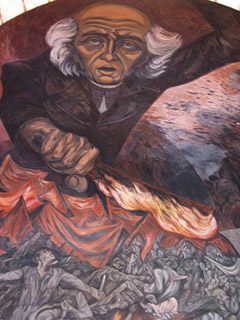
On this date in 1811, Mexican independence icon Miguel Hidalgo was shot for treason at the government palace in Chihuahua.
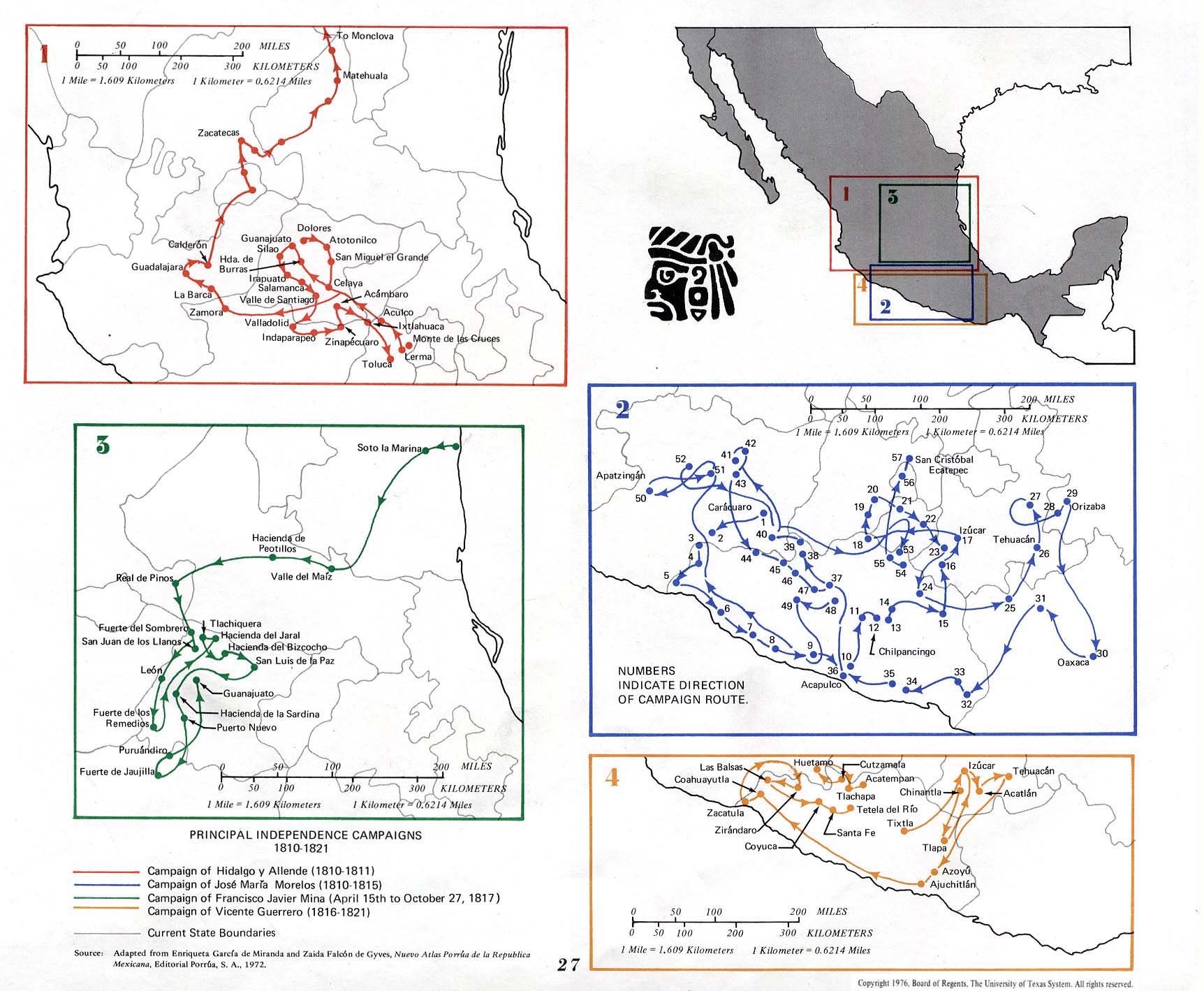
The subversive priest had set the spark to the Mexican War of Independence in the hours before sunrise of September 16, 1810. There, he rang the parish bell in the small town of Dolores and issued his “Grito de Dolores” — “Cry of Dolores” — summoning native Amerindians and mestizos to throw off the Spanish.
The movement got added juice from the fact that the Spanish jackboot was then being worn by Napoleon, who had installed his brother as king.*
Hidalgo tributes are a mainstay of every Mexican town. This Orozco mural is in a government building in Guadalajara.
Hidalgo’s fired-up downtrodden mob slaughtered the local garrison and gathered numbers on a march towards Mexico City before the professional Spanish soldiery rallied to stop it. But the priest wouldn’t make his father-of-the-country credentials in generalship: he’d been relieved of command after repeated combat debacles by the time the insurrection’s leaders were betrayed in March.**
While his comrades Ignacio Allende, Jose Mariano Jimenez and Juan Aldama were shot on June 26, Hidalgo got an old-school detour through the ecclesiastical arm for defrocking (and a highly suspect alleged retraction).
When he was shot this day, he directed the firing squad to aim for the hand he placed over his heart.
Then, his head was cut off and stuck on a pike as a warning.
The struggle lived on, long past Hidalgo’s execution and Bonaparte’s fall, and finally resulted in Mexican independence in 1820. Today, the padre whose call to action not only started the revolt but made it a mass movement is the face on the 1,000-peso note, and his Grito de Dolores is repeated every Diez y Seis de Septiembre as an independence day tribute by Mexican authorities — as in this from 2006:
On this date in 1747,* the Swedes beheaded Scottish-born adventurer Alexander Blackwell for meddling with their line of succession.
Blackwell, “a man of mercurial and adventurous temperament,” had his printing business busted in England for having failed to precede it with the required apprenticeship, and was thrown in jail as a debtor.
To extricate the family from poverty, Blackwell’s wife Elizabeth thereupon launched an amazing career as an herbal limner, drawing, engraving, and hand-coloring editions with hundreds of plants that became a standard reference in the field in the late 1730’s, and whose revenues managed to liberate her spouse. (Elizabeth is still remembered on a plaque at the Chelsea Old Church, in her old neighborhood.)
That mercurial ex-deadbeat might have done better to stick close by his now highly esteemed wife (or possibly his brother, a bloviating classicist), but the wanderlust sent Alex abroad to wash ashore in Stockholm as physician to King Frederick I, where he was soon convicted (on evidence uncertain, apart from the torture-extracted confession) of having intrigued to alter the royal line of succession further to enmeshing Sweden in an alliance with Britain.
He protested his innocence on the scaffold. More memorably, perhaps, he laid his head the wrong way upon the chopping block, requiring the executioner to correct him — whereupon Blackwell cracked wise that he, after all, lacked experience at the art of being beheaded.
* Some sources, like this Google Books biography, offer August 9 as Blackwell’s execution date. The 11-day discrepancy is due to the still-pending adoption of the Gregorian calendar: July 29 was the date on the Julian calendar still in use in the realms both of Blackwell’s birth and death; in 1752 and 1753, respectively, Britain and Sweden would adopt the Gregorian system.



 An executive board member of the radical Industrial Workers of the World, the half-Cherokee